Take Control of Perimenopausal Symptoms with Vanessa Ford. The Functional Gynecologist Podcast.
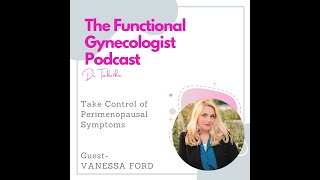
A podcast episode in which Dr. Tabatha Barber interviews Vanessa Ford (co-founder of Meno Labs) about recognizing and managing perimenopause. The conversation covers personal journeys with heavy periods and mood changes, shortcomings of conventional gynecology, lifestyle and dietary drivers (stress, alcohol, sleep), non-pharmaceutical approaches (phytoestrogens, probiotics), and Meno Labs' app and products for symptom tracking and support.
Chapters
Hi, I'm Dr. Tabitha, the functional gynecologist. I'm a board certified OB, GYN and functional medicine physician. I've embraced the world of functional medicine and wellness through my own personal health journey. And I'm super excited to share my wisdom and unique perspective as it pertains to women's health. So if you're struggling with hormone imbalance, weight gain, period issues, anxiety, insomnia, you name it, then you've come to the right place. I want to be your functional gynecologist. So welcome. Hi, ladies. All right, this is going to be a really good episode because it's about perimenopause, the transition time before menopause. And honestly, this can start in your 30s. And so a lot of women are experiencing perimenopause and they're not realizing what it is. They're being. They're being misdiagnosed by their physicians. And we just need to get a greater awareness out there of what the heck is perimenopause and why is it, like, messing with our lives? So I want to quickly share my journey because this was really eye opening for me as a gynecologist. Okay. So I was delivering babies, up all night, sleep deprived, working my butt off, trying to do all the things, take care of my young children, my older daughter, be a busy professional, do all the things. And I went through your basic conventional gynecology process. So I tried to be on birth control pills for birth control, actually, and they gave me migraines. So when later I started having heavy periods, I kind of was like, what the heck am I gonna do? I can't get on a birth control pill to manage my period because it gives me such bad migraines. So I finally talked myself, allowing one of my colleagues to put an IUD in. You know, I put them in all the time. I know they're a little uncomfortable. I was a little bit hesitant, but I went through the process and it was a hormonal based one to help lighten up my periods. That's the point of it. And kid you not, within two weeks, I was very depressed. I even had, like, suicidal thoughts of, I want to jump out this window right now because I can't even handle myself in my own body. And, you know, I said to my partners, like, this is crazy. I feel super depressed. And I hope other patients aren't experiencing this with IUDs. And I started to think about the patients that had said things to me in the past. And I was trained to let that go because the idea is that those hormones stay in the locally in the uterus, and they just thin out the lining and prevent heavy periods when, in fact, they do interrupt your hormone production. The blood, it goes right to your ovaries. The blood flow is very short and close, and it disrupts your own hormone production, especially progesterone. You're getting these synthetic progestin in your iud, and the progesterone is no longer being produced on a regular basis. And that can really feel like depression, worsening anxiety. So I got the IUD switched out for a lower dose progestin iud. I thought, okay, maybe it's just the dose issue. I just need a lower dose to keep my period under control and to not make me so depressed. So I think I kept that in maybe six weeks. I just couldn't take it any longer. And I actually removed that IUD myself. I'm not even kidding. It was that bad because I didn't like what it was doing to my physiology. And that really started to get me thinking. But here I am, like, too busy to even take care of the situation. So I went and I got another gynecologist, and she recommended an ablation, except I had two C sections in the past. And so she ordered an ultrasound. We measured the scar on my uterus that, you know, that's where you cut out and the baby comes out and we sew you back up. Sometimes that area doesn't heal in a very thick, healthy way. And if you do an ablation, which is using heat to destroy tissue, you can burn through that thin area and cause a bowel injury or a bladder injury, usually. So I did the ultrasound, and it turns out that area was too thin. And so I went back to my doctor's appointment, and she said, you know, we can attempt the ablation, but I want to put a camera in your abdomen at the same time to make sure that I'm not burning through and it's safe. You know, worst case scenario, I stopped the ablation, and you can have a hysterectomy. And I kid you not, that felt like a slap in the face. And the worst part about it, you guys, is that I used to have those conversations all the time with my patients, because that's how I was trained. You do the pill, then the iud, then the ablation, and then you have the hysterectomy. Those are your options, and that is the order we offer them in. And to me, that seemed like an outrageous, crazy idea to fix my heavy period solution. And so that was a real wake up call for me. Like, this is how my patients feel. This is really scary. And why are we not looking for other options that aren't majorly invasive? I mean, a hysterectomy is major invasive pelvic surgery. It's a six week recovery with the possibility of injury to the bowel and bladders, blood clot infection, anesthesia complications and death. Right, like that go. All goes in the consent. And so I really, I was on my functional medicine path for my low back issues, my herniated discs, my Hashimoto's. I hadn't studied women's health and hormones yet. And so I dove in and I said, I gotta figure this out. There's gotta be, you know, a more functional approach to handling these crazy periods, these hormone imbalances and oh my gosh, there's so many options. Once you figure out what's driving and causing heavy periods and perimenopausal symptoms, you can tackle it, the root cause issue, and fix it from there. You don't need all of these interventions that conventional gynecology is trying to put on you, you know, and it was really empowering to learn all that, but it was also very disheartening at how I had practiced for almost a decade and all the women that I felt like I could have serviced better if I had known better. So, you know, I've really been on this mission ever since then to help women have a voice and another choice in their health because I feel like conventional gynecology is failing all of us. You know, I no longer want to be part of the problem, I want to be part of the solution. So thank you for letting me veer off for a minute, but I think it's really important for you guys to understand that if you go to the gynecologist and they say, here is your option or here are your two options and you need to pick. That's not true. You can search and find other answers there. You don't have to be stuck in that broken system of drugs and surgery. There are so many other options just to, to optimize your normal physiology and health. So my guest today had kind of the same journey as I did. And she said, you know what, there's got to be a better way. And she went on to create a million dollar business out of it during COVID which is pretty awesome because she's trying to help herself, her friends and all of you take back control of this perimenopausal time in your life and figure out why are you having these symptoms and that you don't have to use the conventional treatments, you know, or band aids that are being offered to you. So I'm, I love this conversation I had with Vanessa today and I'm really excited about it because we need to keep talking about this. We need to make this commonplace. So Vanessa Ford, she's the co founder of Meno Labs. It's a company fundamentally changing the conversation, treatment and research surrounding the menopausal transition. Vanessa was prompted to take action after experiencing severe symptoms and finding there was little in the way of help for her and for the millions of women just like her. She refused to accept the situation as inevitable, found the research and the team and capital to do something about it. So together they built a $30 million company during the COVID breakdown, like I said. And why is this important, you guys? Because 25 million right now in the United States are in this perimenopausal transition. That's a lot of us. And if we can band together and ask for something else, different solutions, we're going to get them right. So about 6,000 women transition into this every single day. So we have to be like Vanessa says in the interview, trailblazers for the women coming behind us, for our younger sisters, for our daughters, for our friends, for every woman we know. So we need to tackle this. So I'm really excited she's going to talk about what she's doing with Menno Labs. They have probiotic formulations, they have their other best selling products, Menno Fit and Mental Glow. And then the really cool part is Menno Life app. So they created this entire app for you to figure out your symptom trends and what help figure out what's causing them and get data and be able to have conversations with your doctors and not just take things at face value as they know best. And you need to do just what they say because I call BS on that. So please listen to this episode. Oh my gosh, you guys. Share it with everybody you know. This is so important. And if you're not in throes of perimenopause, everything's still good and hunky dory. Your periods are regular, not having any symptoms. I guarantee your mom is, or your older sister or your cousin or your girlfriend. So please share this episode with everyone you know. And I'd be super honored if you'd hit the five stars and give me a review because I do this for you and I want to keep growing and keep exciting, expanding this conversation and it all begins with us. So thank you so much, ladies. Let's get into it. Well, welcome, Vanessa, to the Functional Gynecologist podcast.
Thanks for having me, Dr. Tabitha. I'm really excited to be here.
I am glad you're here as well, because women need to hear from you. You know, women want to hear from real women who have gone through experiences and figured out that there is another way, right?
I think so, absolutely. And I think it's important that women just hear from other women on a daily basis to know that, you know, you're not alone, you're not going crazy. Right. These things are real. They're happening in your body and they are happening to you.
Yeah.
I think there's a tendency in the medical community as it is to dismiss us and our concerns after 40.
So, yeah, unfortunately, I think you are very correct. You know, I would like to think I wasn't a physician like that when I was in the conventional world, but even I was under the pressure of seeing more patients, doing more surgeries, cranking people through the system. And as much as I cared, my hands were still tied. Right. And so I would love for you to just kind of just share your story with us.
Oh, I would love to share it. So I'm going to be 50 next year. And when I was 44, I had a period that lasted for three weeks. And it was really intense, very unusual for me. And it wasn't just I spotted for a few days and it was full on soaked tampon, changed the super ultra absorbent tampon four or five times a day for 21 solid days. And there's a history of cancer in my family. Genetically, I am predisposed on both my maternal and paternal side. When I was Googling my symptoms, remember this was almost six, seven years ago, at this point, Googling my symptoms, I was sure I had cancer. I was already. That was already a concern of mine. And I knew that that was something I had to be really sensitive about and really pay attention to. And so, you know, I think I might have come across the word perimenopause when I was doing my Google searching, but I was like, that's like, that's like menopause is 50, right? I didn't even really make the connection that perimenopause was this transition into menopause because I was so freaked out. And so I finally called my doctor about two and a half weeks into this whole thing, and she said, okay, come in, we're going to run the test, but I think you're Going to be fine. Right. But come in and we'll talk about it. And I have a really great doctor who will spend 30 minutes with me, really diving into things. You know, I intentionally found a doctor who would work with me and not, you know, just check the box. 15 minutes is what they've got and they push you through. Right, right. You're shaking your head so you know exactly what I'm talking. So I went in and she said, okay, we're going to run the Test, but you're 44. This is probably just perimenopause, Right. And I say just in air quotations because there's nothing just about it. When you are in it and it's not treating you well, you feel it and you know it. And so she sent me home with a lot of research. She said, here's what, here's where you can go to find credible sources. Here's where you can go to get the information that you really need and get some answers. And there weren't a lot of them out there, quite frankly. And what she said, we're gonna need to find a different solution for you because you can't do hrt. That's just a no go for you. So I went out to find solutions and you know, there's black cohosh and there's gonkwai root and there's, you know, red clover and all of these things. And I was like, well, okay, I guess I'll just put them all in to my supplement regimen. Right. And so I was taking like 28. At one point I was up to 32 different things and it was nuts. And I said, there has got to be a better solution. There wasn't. So I talked to my friend Danielle, who is the co founder of my company, Danielle Jacobs. And we decided that we could actually make a difference. We could create something that was all natural. She is a certified nutritionist and a brilliant businesswoman woman. And so when we put our two heads together with our research partner, Dr. John Kandylis out of the University of Arizona, we came up with some really great things. And we decided to create this company to have three different stools of our mission. One is to give women natural support for their symptoms. There is to drastically change the way research is done. And the other is to make sure that the research is funded. So that is what we do as a company. But it all grew out of a three week period.
Well, I love it. I love when women take their pain and create their purpose out of it and it, you know, changes the lives of other women. Like, I believe that's why we're here on this earth, right? To do such an amazing thing. So, yes.
Bravo to you, ladies.
Oh, my goodness.
And, you know, I think. I think that is a brilliant statement. Making a solution out of your pain, right? Using your pain to drive that solution, because I think it is applicable. You don't have to go out and start a company or start a podcast or whatever, but using your pain to find a solution means that. And then if you can spread that information with other women, boy, that is just so helpful, especially because we don't get the answers we need all the time from the medical community.
Yeah, let's talk about that a little bit. Because I know how I used to practice medicine and how different it is than I practice now. And I saw the struggles that you are describing in my patients. Feeling like you're not being listened to. Those solutions don't work for you, or you don't understand why any of this is happening, so you don't even bother, and you feel like giving up and trying another doctor, you know, so talk about that a little bit. You know, what was your biggest aha. Like, when your doctor said you can't have hormones, Were there other options? Were they all surgical?
Well, that was, you know, that was one of them. You could go into surgically induced menopause. Right? Just have your inner workings taken out, so it's not an issue anymore. But that wasn't, you know, I wasn't down for that. You know, at 44, while I wasn't thinking I would have more children, I have a daughter. She's going to be 25 next year. So that, you know, that wasn't really on my radar, but it just felt like, you know, that seems like a really drastic solution to what shouldn't be such a terrible problem. Like, there's. I started to realize that it's hormone fluctuations and the decrease in sex hormones that we have over time. And it felt like it ought to be a much more natural progression, and it shouldn't be so disruptive. And when I was doing this research, I was reading women in Eastern cultures do not have the same experience that women in Western cultures do. And I think that was my aha Moment. Right. What is going on that is so different between these two cultures? Is it just the way we think about it? Is it the way we educated around it? Is it diet? What is it? And I think it's, you know, a combination thereof, really.
Yeah, it is. And we are just busy from dusk until dawn, every day our body is pumping out cortisol to handle all of our stressors all day long. And that just jacks up our hormones. And I hope the women are listening to you because I want women to understand, like, perimenopause is a very natural thing. God didn't create your body to be in misery for 10 to 15 years. It should be a smooth, a pretty much smooth transition. We make it uncomfortable and miserable by the choices of our lifestyle and our diet and our avoidance of, you know, our emotional stressors and overdoing our physical stressors. And I love that you guys, like, just really took the time to research this and like, let's track it, let's research it, let's change this situation because we're all running ourselves into the ground. And, you know, as society progresses and advances, I see us living longer and wanting to be more productive into our later years. Right. Like 45, you're at your prime. You're just getting started. You're building a million dollar company. So you're not ready to go sit on the porch and knit. You know what I mean?
Exactly.
But our physiology hasn't caught up. They can't handle all of that. And so we really do need to take control. And, you know, I think your app is a great place to start. So women feel like they're in control of this crazy time.
And, you know, I hear it from women all the time that they do feel like they're out of control. Right. Because even thinking back to my own experience, I realized once I started doing this research that when I was about 40, I started to have this thing that I now call menopause rage, where I just would blow up, usually at my husband, bless them, but usually at my husband over the smallest things. And they were things that, you know, oh, year before that or two years before, that would never have bothered me. And when I realized that that was also what was happening and that I could probably smooth out my hormones by the correct supplements, then maybe my relationship could be better too. My working relationships could be better. My brain fog that I realized was part of all of this could get better. And that's. You're exactly right. When women are in their 40s, they are on their peak career trajectory. Right. And perimenopause can absolutely derail that because you're suddenly forgetting words. You prepped this presentation the night before and you go in and you can't remember what's on the next slide. It makes you feel like you're just not in control. Absolutely. But you're not in control of your relationships, you're not in control of your emotional states. You're not in control of your stress levels or your anx or your work life. It can really, really mess with women. And that's not to say that it messes with every woman in, you know, the American culture. But I think there's a really significant portion of us that feel this impact and we feel it deeply.
Oh, yeah, I see women all of the time who all of a sudden have new onset anxiety. They go to their doctor, they get an anti anxiety med or an antidepressant, you know, and they're like 40, 45 years old. It's because their hormones are fluctuating. It is not that they have true generalized anxiety or depression, though. That's how it's manifesting. And I just want women to realize that you don't have to take your doctor's word at face value. You can question, you can get a second opinion. You can do what, you know, Vanessa did and go reading and researching and realize there's a whole other world beyond the conventional broken system of medicine that actually figures out the root cause and works on that, as opposed to cutting your uterus out, which is drastic. You are totally correct. I don't think God created our bodies to have our organs removed on the regular. That's just. I don't believe that.
Or, or you're right. The. I hear from women all the time who say, well, my doctor put me on antidepressants and you know, those kinds of drugs, because that's what they are, can really trigger all a bunch of other symptoms that you wouldn't have had to deal with if you could just get your hormones under control. And I think that's really what it comes down to, is making sure. So Danielle and I like to say that what we want to do is take our hormone spikes, those roller coasters of really high spikes, and then dips and make them smooth out like happy little beach waves. Right. You're still gonna have them, but the fluctuations shouldn't be so high and so low. What we found is phytoestrogens. Absolutely help with that. They're plant compounds that act like estrogen in your body. And also probiotics can help because we're finding that your gut health is about one third of your overall health, and that is really critical. We're just starting to really understand how the microbiome and the gut microbiome specifically, really play a part in how we're created. There are all these little Organisms that live in us and on us. And that's really cool. I think that's fantastic. And, and we ought to pay attention to them because they do affect what can happen in our bodies. So, for example, certain probiotic strains can help deconjugate your own estrogen. And basically what that means is if you put the right probiotics into your gut, they help recycle your estrogen. Right. Instead of passing out your estrogen, once it's used in your waste, you can reuse it again. That's fantastic. And that helps smooth out those roller coaster spikes and dips of estrogen and make them happy little beach waves, which is what we're after.
Yeah, exactly. Oh, I love that you guys are addressing all of this. And I don't know, I would love for you to touch on. Have you seen the alcohol effect on women's hormones? Because I think it's so common for women to use alcohol as a de stressor in the evening, especially since. Right. If one glass is fine, why not three? And once your liver starts getting backed up and sluggish from trying to manage all that alcohol, I see bad estrogen just increase and risk of breast cancer and uterine cancer. And so I would love for you to talk about what you guys are seeing in that area.
Yeah, absolutely. So it turns out that, yes, alcohol is absolutely a trigger for a lot of different symptoms because it messes with your entire system. Right. So it can trigger hot flashes, it can trigger anxiety, it can trigger mood swings. There's a whole lot of stuff going on in your body. And if you're not paying attention to what kinds of things can trigger those perimenopause and menopause symptoms, you know, you're sort of behind the eight ball, right? It's about taking back control and not letting you, you know, your hormones sort of run your life for you. There are all kinds of symptoms. We've identified about 40 that come with this perimenopausal transition. And we've also identified all of the things, or at least the things that we know from research can trigger them. So, for example, alcohol, tight clothing can trigger a hot flash. I think that's something women maybe don't know. But alcohol, if you are drinking it at night, can trigger night sweats. And, you know, you. So I had some night sweats. I live in the desert. So I just chalked it up to being, you know, too hot because it's, it's hot outside. But when I realized that it was actually a night sweat because it, they do feel different. You sort of just drench everything in sweat, right? You got to get up and change your pajamas, maybe sometimes even change the sheets. That's not caused by, you know, normal heat as a flash, Right. That's a consistent thing you experience all night. But when it's just a flash, it's probably brought on by consumption of alcohol after dinner. So if you can track these things and start to see patterns between the triggers and the symptoms you experience, you can then take back control by not engaging in those triggers. And triggers can be environmental. They can be things that you consume. They can be a number of things. And so we, in our app, we have the ability for women to just go in and quickly click the symptom they're experiencing, identify any of the triggers that they may have engaged in or been subjected to. Right. And just check that box, and you'll be able then to go in and see your trends over time and start to suss out those patterns and really take control of what's going on in your body.
That's awesome. I think that's exactly what we as women need to do because we're just now doing that for our menstrual periods. But that took forever. Right. I just think that in America, our culture is to ignore it and it'll go away, when in reality, it's usually worse and more miserable. I don't think women are educated on the what actually happens in their menstrual cycle and what to look for and what are the alarming signs. And the same thing with perimenopause. So I think the work you're doing is super important because you're going to start to see mood disorders. You're going to see joint pain, changes in your skin, you know, loss of muscle, lean muscle mass, brain fog. Like you said, so many things that other conventional doctors might not even realize are associated with perimenopause. Not only does the general public not know, but I promise you, most practicing physicians don't know, because what we were taught in med school was already antiquated, and we haven't learned from there. You know, you come out practicing, 20 years later, you're still practicing the same way that you did for most doctors. And I'm not trying to dig. I'm just trying to explain that doctors are in survival mode just as much as the rest of the world. And we're just trying to wake up every day and do our best. We don't have time to research and learn and continue our education. I just think it's so important for women to take back control like you said, and realize that you don't have to be miserable and uncomfortable. That's not normal. That's not how you have to live. So it's really cool that women can track it and see their own trends, because everybody's unique. Right? Some things trigger women more than others. And if you can get a handle on that, that's awesome.
Yeah. I like to say that, you know, just like we all have different childbirth experiences and pregnancy experiences, we absolutely are going to have different perimenopause and menopause experiences. That's just, I mean, and I think that's really wonderful that we're all so unique and so specific and special. But because of that, doctors often say, or, well, researchers specifically often say that women are too variable to study. Right, right. And I don't buy that. I don't think that that is an excuse anymore. That is why we, that we can use technology to help us figure out what those patterns are. So when we're doing research and looking at symptoms and triggers and all of that sort of thing, we look for clusters because every woman may be different, but they're all clustering around one unique point on the graph. And that helps us say, okay, 75% of women will fall in this branch of clusters. What can we learn from that rather than kind of outdated models of research? I think our research models need to change too.
Yeah. So what you're describing is more like an observational study. Like women are doing their thing and we're looking to see what are they doing and what are their outcomes. Whereas traditionally medicine has been focused on, you know, drug based studies where you have a drug, you have a placebo control and you want to see does this drug change your outcome? And those, I'm going to tell the truth, are driven by big pharma and lots of money. And so if you're not looking to put a new drug on the market, they're not going to research your problem. Right. So.
Exactly.
I'm just so happy that you women are doing this because somebody needs to step up and start studying perimenopausal women and not with a new drug. We don't need more drugs.
Exactly. I'm not.
Physiology work better.
Exactly. And also not with men as the control group. Because I'm sorry, I mean, I'll get on my soapbox about that all day long. I can't believe that men are considered and used as a control group when it comes to women's bodies. That just it's just so mind boggling to me. I don't understand it.
No, it really doesn't make any sense. So women are, we're starting to realize, and this is what you're focusing on, right? Is tracking the symptoms, making some lifestyle and diet adjustments and supporting our physiology with either phytoestrogens or helping remove excess estrogen, supporting progesterone production, you know, getting that cortisol in check because we're all stressed out. Tell, tell my listeners about a few of your products that are really making an impact.
Sure. Well, our best selling probiotic is actually a synbiotic, right. That means it's a probiotic plus some other things because remember I was putting together 28, 32 different pills and I didn't know what was doing what, but I had some ideas. And so when we partnered with Dr. Kanillis, he's been studying menopause for about 30 years now. He is fantastic. He is probably the biggest champion of women's health issues that I've ever met. And he said, let's look at these phytoestrogens, but let's look at probiotics too and how can we combine them to really get the best impacts of phytoestrogens and probiotics? And so we've created this product called Menno Fit. And Menno Fit has four different strains of probiotics that are for helping your gut metabolize estrogen better. Right. We talked about that deconjunctation, that recycling of estrogen. And so we have the four probiotics in that and we also have phytoestrogens, we have some prebiotics in there to help feed the probiotics so that they populate in your gut faster and they're healthier because you probably, if you've been eating an American Western diet full of sugar and alcohol and fatty foods, not good fats, but if you've been eating a diet like that for the last 40 plus years of your life, there's a lot going on in your microbiome that needs to be sort of reversed. You probably don't have as diverse a microbiome as you need to have. And as we age, our microbiome diversity goes down, especially for women because our microbiome dependent on estrogen, go figure to be healthy. And so that makes sense that the diversity would decrease. So if you can add some strains back in that help do things like deconjugate estrogen, you will see positive impacts over time. And those things will include things like reduced mood swings, reduced anxiety Better weight management, all kinds of wonderful things that happen when your estrogen isn't spiking and dipping and spiking and dipping. So that is probably the product that I would say 90% of our customers wind up ordering, and they order it over and over and over. We have a 76% customer rate, and that's pretty fantastic. And we do offer a 90 day money back guarantee as well. And we only have 3% of our customers take advantage of that 90 day money back guarantee because they're seeing fantastic results. So that is the best product by far that we have ever created. Now, we've created several products, but that is the one I think women usually tend to gravitate toward because it does help alleviate so many of those symptoms, including hot flashes.
Yeah, that sounds awesome. Wonderful. And that's on your website, right?
It is. The website is menolabs.com and you can get access to our app there. You can read our blog, which has lots of really great articles about what's going on in your body, how you can mitigate those things, how to keep your relationships strong and intact during this, how to survive at work with hot flashes, you know, all of those things. And we also have tons of products. Actually, we've developed six different products in the last year, which is fantastic because we just incorporated our business in 2019, and we sold our first product on the website In February of 2020, just before the pandemic hit. And all of these things came to a screeching halt. And so we have managed to have this fantastic success during the pandemic, which I think speaks to the level of need that women have, that they are there looking for solutions during the time.
Without a doubt. And I think the pandemic just amplified any symptoms we were having. You know, if we were feeling a little bit down or having a little bit of hot flashes or mood swings, it all just got magnified, you know, because of the stress, the emotional duress, being cooped up, too much, not moving our bodies, too much alcohol, like it was just a perfect storm. And it was.
And you know what? Stress is a trigger for most of these symptoms that women experience in this time. Stress is absolutely a trigger. It's also a symptom. So if you can start to get a handle on your stress, that actually helps get a handle on a lot of different things that are going on in your body, for sure.
That's wonderful. Does your app also track periods and what's happening with your periods?
Yes, it does. It sure does. Because I think especially for Women in this time of their life, your period can really become irregular. And so we have some learning in the background that helps try to predict when your next unpredictable period is going to be. That can be really helpful. Unfortunately, a lot of the period tracking apps that are out there now are based on that 28 day cycle that you have when you're in your peak reproductive years. Well, that's not where we are anymore, ladies.
Right?
You got pregnant today and your doctor would call it a geriatric pregnancy. Guess what? You're in perimenopause.
Oh my goodness. We unfortunately, we call it that after 35, it was a geriatric pregnancy. But I think it's really important for women. Even though you're not trying to get pregnant, you need to track your periods. You know, you mentioned this three week period you had and how it was scary and you were concerned. And for us as physicians to help understand what's going on, it's helpful to know when was your period before that, how were they, were they regular? I have so many patients who have no idea when their last period was because they really don't track it. And you know, if you really sit down and think about it, it's like, oh, I guess it's been every two weeks for the last six months. And you know, that kind of information is really important. Or like you go 12 months without a period, then you should no longer have periods. You're technically menopausal at that point. And the big C word, you know, always is the first thing out of doctor's mouth. Well, we need to rule out endometrial cancer because that's how we were trained. Like it's cancer until proven otherwise. So if you, you know, don't bleed and then you have a bleed, you know, a year and a half, two years later, that's immediately what our focus is and our thoughts. So I think it is helpful for women to have a general idea of how their cycles are changing and know when the heck it was. So you use this app, ladies, please.
Well, you know, what I found personally is that 21 day period comes every 11 months. So there's a pattern even to my irregularity because I've been tracking it for six or seven years now. I understand that that's what happens to my body.
Now.
I still have some irregular periods in between that as well. But that three week period comes every 11 months whether I wanted to or not.
Well, I'll tell you, I have a lot of teachers as patients and their period definitely goes along with their workflow year, you know, in the summer they're chilling, they're not taking care of the, you know, students, they're relaxed and they are having light normal periods and as soon as Sept hits, all hell breaks loose. And you know, if you're not paying attention, it's scary and you're freaking out. But if you realize like, oh yeah, I'm stressed to the max and I'm not doing my self care and all of a sudden I'm like eating garbage again, your, your period is going to shift. And so I see a lot of that with healthcare workers, teachers, that kind of thing. So you know, think about what is happening in my body and maybe try and make some correlations of what in the he going on.
Yeah, and often environment plays such a big part. You're right. If you have a high stress job and then you don't have a high stress job for three months and then you go right back into that high stress, you're definitely going to see your symptoms on the rise. Absolutely. Stress is such a big driver of so many things in our body. If you can take control of your stress even just a little bit, you know, by self care, meditation, eating right, because you know, cortisol can be driven by eating the wrong foods, by too much sugar, too much alcohol, whatever it might be. So if you can really put your well being first, even when you're in a high stress situation, you're just going to do yourself a favor. Really.
Yeah. It's going to be a life changing difference, that is for sure. Thank you so much for sharing your story and for creating such an amazing app and company to just help other women. How awesome are you?
Well, I certainly don't do it alone. I have a fantastic team behind me and two great co founders who are helping drive this through every single day. I think it's really important. And even if women can't go out and do something as big as starting a company, if you can share your experience, talk to your children, let them know what's going on with you so that they don't think that mom's sudden flare up of rage is because she doesn't love them, if you can tell your husband what's going on with you, your partner, if you can be honest with your boss or your HR department or whatever it is, the more we can educate society as a whole, the more we can help educate the people in our lives, the more that education will spread and the better off we will all be. And I like to think of our generation of Women as trailblazers for the women who are coming up behind us who are going to go through this, too. And if we can't lay a great foundation for them now, you know they're gonna suffer, too. And I certainly don't want my daughter to suffer through this. I want her to go into this knowing what she might experience and knowing how to handle it.
Oh, my gosh. I think those are such great points. I remember being afraid of my mom because she would just snap and rip our heads off. Right. And I don't think she knew why it was happening. And looking back, I understand now, but at the time, I didn't. And so if you can get a grasp on that and say, oh, my gosh, I'm so sorry. Like, something's going on in my body. It's changing. I'm having revere reverse puberty. Like, you're just going through. Right. Like, let's give each other some grace. And I see all the time the husbands, you know, your libido goes into the crapper, and your husbands take it personally. Like, oh, you don't desire me anymore. You don't want me anymore. You're like, baby, babe, you don't get it. The hormones just aren't there. Like, it's not you, it's me. And they don't want to hear that. But I think if we can educate them, it's such an important point.
Absolutely. And, you know, honest communication about what's going on in your body is just like, honest communication about what's going on at work or whatever it is. Right. And the more we can communicate honestly with our partner, the better our relationship will be.
Yeah. Love it. Well, thank you, Vanessa. I want everybody to check out mentolabs.com check out the app, because this is amazing, and it's going to help women feel better and have a smoother transition. So share this with your friends. Everybody you know, send this episode to everybody you know, it's so important that we empower each other and lift each other up. So thank you, Vanessa.
Thanks for having me. I really enjoyed it.
Okay. I hope you got something out of that. I thought that was a great episode. Check out mennolabs.com and start paying attention to what's going on in your bodies, lady. It's wise, and it's trying to tell you things, and if you can get in tune to what your body's telling you, that is a huge win, because then you can make different choices and feel different, have a different outcome. So I just. I'm all about the empowerment this week. That's the thing. So I hope you got some golden nuggets that you can take and start incorporating. How about the fact that you've never had depression or anxiety and you hit 45 and you go to your doctor because you don't feel like yourself and they put you on Prozac or Paxil or Lexapro or Effexor because it also helps with hormone, you know, perimenopausal symptoms, but now you don't have any libido and now you've gained another 10 pounds and you feel a little less depressed, but you don't really feel alive. Like I hear this stuff all the time, you guys. It's real. I want you to understand that some medication is not your answer. It's not the end all, be all fix. And it might just be giving you more symptoms that you then need to try and mask those. So keep asking questions. Don't give up hope. Find another doctor if you're feeling frustrated and you're not feeling any better. You know, I'm here for you guys. I'm licensed in over half the country. I will literally see you in any capacity all over the world. So just don't hesitate to reach out because sometimes you can't see the picture when you're in the frame. Sometimes you don't realize what's going on because you might be focused on one thing that you were told and that might not be the right thing to be even focusing on. So, you know, seek alternative help. Don't hesitate to reach out@drtabitha.com and that's three A's, no eyes. You can email me from there. You can call my office, leave me a review, let me know what you want to hear about. If these episodes are helping you. If and you're taking all these golden nuggets and you're like making the changes and you're feeling the difference. I would love to share that with you guys because we need to support each other and learn from each other. That's what I envision this all to be for. So thank you. Keep doing you. Don't give up. You know, you deserve to feel amazing. So go out and have a kick ass week and put yourself first. Bye ladies.








