What If Fat Is The Missing Piece Your Hormones Need?
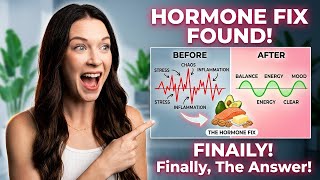
Dr. Tabatha Barber and nutritionist Morgan explain how fat and fasting stabilize hormones and blood sugar. They use the metaphor of fats as
Chapters
The Bible says when you fast, not if you fast. So to me, that tells me that God designed our bodies to fast. Otherwise, that wouldn't work. Like, everything that he says in scripture is how we were designed to be. So Matthew 6:16-18, when you fast— this is Jesus talking— do not look somber as the hypocrites do, for they disfigure their faces to show others they are fasting. If you're tired of doing all the right things and still feeling exhausted, stuck in your body, and disconnected from God, this podcast is for you. I'm Dr. Tabatha Barber, triple board-certified functional medicine physician, and I help women stop fighting their bodies and start healing them God's way. This isn't about another diet or quick fix. This is about restoring your energy, your confidence, and your faith through fasting, functional medicine, and biblical truth. Welcome to Fast to Faith, where you don't just lose weight and feel great, you step into who God created you to be. So let's get into it. Welcome back to the Fast to Faith podcast. Hello, Ashley.
Hey there, how are you doing?
Gosh, I'm so good. I love our dark saturated colors.
Yeah, we are switching it up today. Yeah, well, it's a little dark and gloomy outside. However, it is warm out there.
Yes, lots of rain. I think spring might actually happen.
I know, I feel like our listeners are probably like, why do they always talk about the weather? We're from the Midwest.
Real thing up here in Michigan, like it determines what you do during the day and like how far you walk your dog and all the things.
Is it—
that's Very true. Yeah.
Oh my goodness. Well, today is such a fun day.
Yeah, we have a really special guest. We have Morgan, who is our nutritionist. And Morgan, we're just going to turn to you. Why don't you tell us a little bit about yourself and how you started working with Dr. Tabatha Barber?
Yes. Hi, thank you for having me here. Um, so I am the functional nutritionist for both the Her Higher Health practice and the Fast of Faith team. So I've kind of been behind the scenes helping with meal plans and, um, you know, on the calls talking about nutrition-related topics. Um, Dr. Tabatha Barber and I got connected quite a few years ago. I think it was 2019.
That's right before COVID Yes.
Um, so we worked together at a little local integrative practice, and that closed down unexpectedly, and she's kind of kept me around since then, thankfully. And we've kind of just evolved this program over and over again together, and it's been such a blessing.
Yeah, I really need to give a shout out to God because looking back, I can see his hand in all of it. At the time, you and I were just like, why are we going through all of this? This is crazy. We both just bet on ourselves and went out there and tried to start our own businesses and do our own thing. And I'm so grateful that God brought us together because even though I had become certified in functional medicine, the nutritional piece of it is a whole nother beast. Like, I learned all of the different meal plans and ways of eating and how they heal you, like the paleo versus the carnivore versus the anti-inflammatory, the AIP, all those types of things. But like, to help patients navigate and integrate that stuff into their lives, that's like a whole nother thing. And I'm over here dealing with the thyroid and the sex hormones and, you know, healing the gut issues. So I've needed Morgan from the jump, and God knew that, and he knew that you needed me because you needed the clients and you needed the sick people, right? And so it's just been really beautiful to see it all come together because then COVID happened and that wellness center went bankrupt and like kicked us out the door, and we're We're looking at each other going, okay, now what? And literally we created a virtual medical practice in one week. We had—
it was wild.
Yeah, would we have like 3 months of patients on the schedule? And we had to see them from home and we just figured it out. And so I'm grateful that you've been with me on this journey the whole time. It's incredible.
But oh my gosh, God just keeps upleveling us and I keep saying I like have the two most rewarding jobs in the world right now, like being a mom, a freshly double mom right now, and also being somebody who gets to help women walk through this process and, and learn how to nourish their bodies. Like, it is so rewarding.
Oh my gosh, and motherhood must be so much better because you know how to feel good, right? Like, oh my gosh, yeah, you have two little ones right now, and I, you know, I got my 33-year-old. I'm a grandma. But my— when my other two were little, I was eating so terribly that it was hard to function. And so I just see you thriving, and I'm like, oh my gosh, food really is everything, is it not?
Yeah, I really do feel like this time around, like, recovery and everything has been So good because like I have a good foundation, um, you know, nourishing myself, but also like spiritually and community and everything else is like so much smoother of a process when you have all those pieces in place.
Oh, I love it. And even though Fast to Faith was birthed out of like helping midlife women and, um, just focusing on weight loss and trying to feel better in your body. I love how much younger you both are, but that you are going through that stage in your life of just now having babies, because it really does work for all women. We just need to adjust it, right? Yeah. So that's the cool part. Tell us, tell everybody listening how that journey has been, like we're trying to serve everybody, right?
Yeah, and that's what we found out is that there, we might think that we know what somebody needs or they might think they know what they need and then they come to us and it's like, oh, actually that's not like my main priority. Like I wanna build muscle or like I'm a nursing mom or like I actually wanna run a marathon. Like I'm an endurance athlete and maybe a low carbohydrate, high fat diet isn't necessarily perfect for everybody's goals at that point in time. But we've learned how to really adapt our plans and help women walk through the program in a way that nourishes what they are striving to become.
Yeah, I love that so much. It's just, it's naturally grown organically. We've just been able to figure things out and serve. And it's because you have a master's degree in nutrition, right? Like you actually know what food does for our body. So I think we should talk about that a little bit, don't you? Should we break that down?
Yeah, I think so. And I think this is also going to help with, um, the negative connotation that comes around keto because so many women hear keto— yeah, and the word fasting. And so I think those are two, like, myths we can bust today.
Yeah. So why is keto good for us?
Yeah, so we really strive to nourish the body with lots of good healthy fats, good protein, and, like, really strategic carbohydrates because So many women and people in general are going through this cycle of constantly reaching for sugar over, like, all throughout the day. And maybe it's not candy, but it's the bread, the, the chips, the very quick energy sources of carbohydrate. And they get in this cycle of, like, needing to eat every couple hours and they feel hangry if they don't. But what we really strive to do is, like, flip that and We give the body lots of nourishing, healthy fats and the protein and fiber-dense carbohydrates so that they can feel sustained. They can feel really full and satisfied, and the body has a chance to dip into the stored energy. It doesn't need that constant influx of sugar all the time because we're fueling it with the right sustaining ingredients.
Yeah, and you said something, you're like you might not be eating sugar all day, but you're eating carbohydrates. And I would love for you to explain that to every woman listening, because I think there is a disconnect or just a misunderstanding of what a carbohydrate is. Like, to me, you could drink the pop or eat the bagel, to me that's the same. And women don't see it that way because we tout it as health food or breakfast. Can you just like talk about breakfast and what a joke it is?
Yeah. Oh my goodness, breakfast, that is the sugar, the bagels, the quick toast. Like, that is— I like to think of carbohydrates like kindling for a fire, and our fats and our protein more like the logs, the, you know, the slow burning.
Oh, I love that.
That's good.
Yeah.
So I feel like we need a diagram.
Yeah. So most— a lot of women are just giving themselves kindling all day long, like It's a quick burn and then it fizzles out. It's a quick burn and it fizzles out. And that's why we need to keep eating over and over and over again. Whereas we want to first put the logs on the fire, right? Like, we want to get that smoldering and burning slow and steady throughout the day. That's our fats and our protein. That's what keeps us energy stable for long periods of time rather than quickly and then fizzling out.
Oh my gosh, I'm stealing that analogy. I'm going to use it all the time now. That's perfect. Like, it makes so much sense in my brain when I try and explain to women, like, when I would eat a bowl of cereal, I needed another bowl half an hour later. You know, when I eat eggs and avocado and bacon or something like that, like, I'm good for 4 to 6 hours. And, and my brain functions so much better. For me personally, those carbohydrates gave me such brain fog and fatigue. Like, I was ready for a nap after I would eat. Isn't that what we see most of the time?
Absolutely. Yeah, it's like your brain is seeking out that quick source of energy because you don't have the slow-burning logs there. And so you— that's what you want to reach for all the time because your body knows that it's going to get into your system really quickly. So it leaves you feeling those cravings and then those energy crashes afterwards.
Okay. And you mentioned like carbohydrates with or without fiber. Can you talk about that a little bit?
Yeah, so we really like to emphasize these very fiber-dense, more like non-starchy vegetables filling our plate, lots of colorful vegetables. Starchier vegetables that have more quick sources of energy have their time and place. We definitely love sweet potatoes and fruit and those types of things. But we want to have more of that fiber component so that it's not such a quick spike and crash. The fiber helps to slow down that glucose that goes into your system. And so it makes it more of a slow and steady burn like the logs with that fiber attached to it.
Awesome. So that's why an orange doesn't spike your blood sugar in the same way that orange juice does.
Exactly. Okay. That's because that fiber's slowing it down. Stripped out when it comes into the juice form.
Yeah, I always cringe a little bit when people are like, I'm gonna do a juice cleanse and drink just juice for 5 days. I'm sorry, you're gonna drink just sugar for 5 days? I know that is not good for your liver. That is not a good liver cleanse. Um, let's talk about some myths that we need to debunk like that one, because there's so much bad information out there And women come to us and they're doing these other things and it's like impeding their progress, right?
Yeah.
What are some common things that just drive you crazy that you see women doing?
I would say fearing fasting because they always feel like they're hungry. I think that's a really big one. Yeah. They're like, there's no way I could go, you know, X amount of time without food. There's absolutely no way. And it's like, well, that's because you're on the sugar roller coaster. Exactly. How are you fueling yourself when you do eat? I think that is so important. We— go ahead.
Oh no, I was just gonna say, so can you share a little bit about how the 40-day program teaches you to fast in a proper way so it's not just like, hey, you're doing a 40-day fast? Yeah, because that's— I feel like that's another myth that people see 40 Days Fast of Faith and they're like, we're fasting for 40 days?
Yeah.
So I think what you're saying is— I would love for you to explain a little bit about how the program is written so that you don't just start out with a, you know, 24-hour fast.
Yeah, we're not expecting anybody to just jump right into it, you know, eating the standard American diet and then just go 16 hours without food, right? Like, that's a recipe for a disaster. Like, what we do is really focus on nourishing the body first, right? Like, we are fueling with good healthy fats, enough protein, these fiber-dense carbohydrates so that we can go long periods. Your body has the ability to dip into that fat storage and not rely on that constant source of glucose. So we really focus on that piece first and like fuel the body the right way before trying to fast. I think that's where it's different.
Yeah, 100%. And not only will you get through the fast, you actually feel amazing and feel better than when you weren't fasting and you were living on the sugar roller coaster. So I think that's such a breakthrough for women. They're like, oh my gosh, I didn't know that I could feel good without food.
Yeah, I just had a client recently, and this happens all the time, but she was just getting started and she's like, I, I didn't really realize that I was a constant snacker, but I was. And then I started eating in this way, following the program. And she's like, and I was never hungry. Like, I just felt that my next meal would come and I'd be like, oh, it's time to eat. Like, I didn't even think about food in between my first meal and my second meal because I was so nourished and full. And I think that's another thing that women often are surprised by. They're like, this is the most food I've ever eaten. Like, it's—
yeah, and I'm losing weight and I feel great.
I'm not restricting myself. I'm actually nourishing my body.
Yes, it feels so freeing.
It does.
Like, to me, I travel a lot and I hated eating in the airports and eating the food on the plane. It's like so bad. And when I just realized I don't have to eat, you know, it was so freeing.
Yeah, it was. Another question, Morgan, that we get a lot is, "Do I have to follow the meal plan perfectly?" And Morgan comes to the Monday call. So if you're part of the Var Sisterhood, Morgan is on the calls on Monday, so you can ask her questions as well. And you address this so great on Monday because we have a new group of women. Can you just share a little bit about the meal plan and like, does it have to be followed perfectly?
Yeah, it definitely does not need to be followed perfectly, and I think that's the beauty of it. Um, and what we're trying to do is set that foundation and really drive that home for women. Rather than following these recipes to an exact T forever, like, that's not realistic, right? Like, we want you to get in the habit of building your plate in a specific way so that you can do it anywhere, anytime. And that really comes with just like thinking about the anchors of your meal that we've been focusing on today. We've been talking about where is the protein? Where are my healthy fats? Which we know we probably need a lot more of, more than you think. And where are my fibrous, colorful vegetables? If we just think about our plate in that way, every time. We can choose a meal at a restaurant, we can choose something in the airport, or we can go periods of time without food and it's fine because we have that foundation. Yeah.
Oh my gosh, I was talking to my 15-year-old yesterday and I was telling her, you need to eat more healthy fats. She was, I'm not eating fats, I don't want to be fat. I was like, no, wait, what? You believe this lie too at 15? How did that get to you? Like, I thought we got rid of that lie. It came—
I almost wish we like called it something different, right? You know, like, yeah, fat dietarily is not putting fat on your body, which like it could make so much sense to someone who doesn't know better saying the same exact word, but it's so totally different and it's actually the exact opposite, right? Like the fat nourishes our hormones and our blood sugar and our metabolism. That's what helps us be able to lose weight.
Yes. Oh my gosh, I hope you heard that. Okay, if you didn't hear that, rewind that, hit the 10-second rewind and hear Morgan again. Fat makes you healthy. It regulates and helps you produce your hormones. It keeps your cell hormone receptors functioning. It gets the ATP moving in and out of the cells. That's your energy that you're utilizing, like fat is required to be healthy. I mean, just look at someone who eats fat versus who doesn't. Their skin looks so much better. They look more supple, more vibrant, more youthful. And people who avoid fats have thin, crepey skin, and they usually are holding fat in the wrong places. So sugar makes you fat. Fat doesn't make you fat, right? So talk a little bit more about the 2-10-20-30 plate and how we adjust that. We, we carb cycle, right?
Yeah, exactly. So the 2-10-20-30 guidelines is what we call them. So it's not something that has to be perfect every time. We just want you to get this visual in your brain of, I need more fat than I probably think I do. I need a good serving of protein on my plate, and I need the right kinds of carbohydrates. And so We do that the majority of the time, and then we strategically add in more of those, um, faster carbohydrates, faster digesting carbohydrates, right? So more of the potatoes and the fruit and the more starchy versions, because your body needs those too, just in a strategic way.
And let's do a quick overview of MagLift and why it's important again.
So magnesium is a mineral that is from the earth. It is something that is responsible for hundreds of enzymatic processes in our bodies, and if we don't have it, you're going to feel it. Most people don't get enough magnesium. It's not in our diet the way that are used to. Our soil is very depleted. Even when you consume certain foods, you only get about 10% of the minerals from the food. It isn't always the case, it's just that is oftentimes can be the case. So it's really important to supplement so that your processes in your body can work well. So we're talking blood sugar, we're talking blood pressure, we're talking anxiety, we're talking depression. Every single process in the body pretty much relies on magnesium. So if you want to function well, migraines, it can be— it's been shown to be helpful depending on your situation. If you struggle with the migraines, there was a study where it performed as well as an antidepressant in patients with depression.
So I have been on so many antidepressants over 20 years. I was on Prozac, Zoloft, Wellbutrin, Lexapro, Effexor, which was impossible to get off. I like Effexor, is evil in my mind. Um, it's a struggle. I've helped many patients get off of it, but it's hard. The way I got off of it was getting on Hormone Tame, D3 K2 Lift, and MagLift. Like, I've never once thought I need to go back on those medications. It's Crazy. Like, oh my gosh, I just needed some vitamins and minerals.
I know. And when you look at how hormones are— I'm sorry, neurotransmitters specifically are synthesized, if you break down the pathway, magnesium is literally required. Vitamin C is required. Like minerals and vitamins are required. That's where this tug of war keeps coming in. So when you give your body enough of these nutrients and therapeutic doses, guess what? It can work for you.
I don't think people realize that minerals are the spark plugs of our body. They actually help our energy move and go where it needs to go. Like, they give us life.
It's just, it's, it's a pretty, you know, inexpensive product, and it does wonders, and it just does so many things in the body.
Yeah, I mean, we get our patients and clients saying, I just, I will never live without MagLift now that I understand how well I sleep and how much better I feel. Like, Don't ever take it away from me.
Yeah.
So I hope everybody listening is starting to realize that fat is not something to fear. Fasting is not something to fear. It's actually how God created our bodies to function and thrive, not just like survive, but to thrive. So this idea of eating every couple hours, being on the sugar roller coaster, even if it's bagel and potato chips and whatever. It is not healthy. It is not how we were created to function. So what would you say is like the most common aha you hear? Because you were the original coach of all coaches when it was just the three of us helping women, and they would see Morgan and get their food plan, and then you would check in with them. What is one thing you love to hear?
Yeah, I, I think it's actually— I'm going to piggyback off of what Morgan said earlier. Women don't realize that they're not eating enough. And so once they start eating enough at each meal, they don't need the snacks, and they might be able to get down to 2 meals. But then they have— what we have to then teach is that even though you're only eating 2 meals, you still need to eat enough at those 2 meals and take all of the stuff you were supposed to eat at the 3rd meal and divide it into the 1st and 2nd. And so they also realize how simple this is once they really truly understand the 2-10-20-30. And Morgan has a beautiful diagram that she created that you can But just by joining the 5-day challenge. And so there's so many little tweaks that you can make right away that I see women make that those aha moments happen. And they also get quick wins. And I think that's what really keeps them going and motivated through all of this is the quick wins.
And I think also, like, it's important to note that it's usually like something that we're adding, right? It's not that we're taking things away. It's usually like we need more fats, we need more protein. Like, that's what helps you feel better. You're not exactly stripping something from your life.
And I think too is the feast, uh, feast-famine cycle is so important because women realize that they can actually have a couple days a month where they can eat high carbs, right?
Like go to brunch after church, indulge, enjoy. Like when you are living a Fast to Faith lifestyle, you can have those kind of days and you don't have to worry about it. You didn't fall off the wagon. It's part of the design. Yes, we do it.
And you know what, that reminds me of something. I love when women who are working with us go on vacation or have to travel for work, and maybe they have to have a couple higher carb days, or they're just, they just enjoy themselves on vacation. But they come back and they're like, this is the best I've ever felt coming back from vacation, because they have a plan they can get right back to. Or while they were eating those higher carb days, they were still eating enough protein and fat Because that's where so many women screw up is they're like, "Well, I'm gonna have all these carbs," but then they don't eat any protein or fat because they're limiting themselves.
Yeah, that is a recipe for disaster. I know, I love when they come back from vacation and they're like, "Oh my gosh, I lost weight. I felt great. I didn't have hangovers.
I didn't gain weight like I normally do." They didn't have the guilt either, the food guilt.
We do need to talk about that because it is a huge deal food is so wrapped up in our emotions and the guilt and the shame that we carry. What are some of the things that you love seeing when women are realizing, like, I don't have to carry all this shame around what I'm putting in my mouth?
Food noise.
That's my favorite part of coaching women through this, is that they— it's like all of a sudden they feel free.
Yeah.
If free from constantly thinking about food, free from being on those energy crashes all the time, free from like just letting that run their lives, and they realize, oh, I just have to nourish my body in the right way and I can feel good and not have to be thinking about it all the time. It's so empowering to see.
I know we talked about food noise when I was on the Candace Cameron Beret podcast. That got a lot of traction. Like, what the heck is food noise? But if you know, you know, like if you struggle, have struggled with it, you know exactly what food noise is. And Fast to Faith eliminates it. It just goes away. And when it tries to creep back in, you now have the tools to navigate and get rid of it. Like that was one of my biggest issues for decades. And now food does not talk to me like it used to talk to me. Like I could hear it from the break room all the way down the hall. And now I'm like, oh, it's time to eat. Like, where's my fats and protein? And like, I just— I can walk past the bagels. I walked past a bread company the other day and like, oh, I thought I was gonna choke on the gluten smell.
I know.
Um, I used to like not be able to walk past that. I had to have it. I had to get all the stuff. And now it doesn't even faze me. And that is true freedom.
I agree.
Oh my gosh. Yes. That's our favorite part of all of this. Is there anything else that you would love to just share with the women listening, especially if they are like, this sounds great, but I'm not sure if it's for me?
I would just like to reiterate the fact that it doesn't have to be perfect. It is not about that in any way, shape, or form. It is about just learning how to properly Fuel your body in the right way and then everything else becomes easier because your brain is working better, your metabolism is working the way it should and it doesn't have to be hard and it doesn't have to be challenging either. I guess that's the same word. It doesn't have to be like a burden on your life to like, oh, go cook a healthy meal. Like it's just simple proteins, fats, and fiber-rich vegetables.
So good. And this reminds me of something, a question that we get a lot is, am I gonna have cook 2 meals. And so I would love—
one for your family, one.
Yeah, yes, one for your family, one for you. So I would love to— for you to talk about the recipes and the new cookbook that was just launched.
Yes, Morgan and I launched a cookbook.
Yes, that's so exciting. So the cookbook was really created like specifically for Fast of Faith to provide recipes that align with what we've been talking about today, the metabolic and the fasting rhythms that we go through. And I really want them to be a little more flavorful and there to be a lot of variety, but also really realistic for people too. So they are designed to be really deeply nourishing, blood sugar stabilizing, but also simple and meal prep friendly. We can make a double batch and utilize leftovers so we're not constantly cooking all the time. I know that busy women, that's just not realistic. So these meals are simple in a way that we can do that.
Yeah, that's an important takeaway to mention too, is that the program is designed so that what you eat for dinner is your lunch the next day so that you're not making multiple meals.
And oftentimes the first meal of the day, like we made 3 days prior so that we have that decision fatigue out of the way too.
Yeah, and I also would like to share about the fact that These recipes are all brand new. So these ones, so these are, and it's all based on feedback from women who have done the program and are certified coaches. So I think it's, uh, nice to know that it, it, they weren't just, you know, you created them in your kitchen. Like you got feedback because we have women of all walks of life that work with us. And so we wanted to know like what works for them and they're interchangeable too. That's what I like about the recipes. Whatever might work on day 16 is also gonna work on day 40.
Exactly. They're all constructed in that, yeah, way that like, if I— that doesn't— that meal doesn't jive with me, I can pick another one and pluck it right in the plan and it works beautifully.
Yeah. Oh my God.
Yeah.
So good.
I love it so much. I'm just in awe that God keeps doing amazing things and we just keep upleveling, you know? And I think that is why women are drawn to the program. And as soon as they start fast Fast of Faith, the 40-day program, they're like, can I be a coach? I want to be a coach. This is so cool. I mean, isn't it just so rewarding at this point in your life?
It is so rewarding. Yeah, again, like, to see the freedom, to see people connect with each other is another big one. Just that community piece of it is huge. And they're essentially just taking, you know, back ownership of their life where it was controlled by other things prior. Now it doesn't have to be.
I love that.
Yay!
Yay! Got anything else you want to add? I think that was amazing.
I—
yeah, no, I don't think there is anything. I think, um, just important that if you want to start, start with the 5-day challenge or the 21-day course that Tabatha has with Candice inside of her app and get going. There's so many ways that you can start with us. Just start.
Yeah, and please don't be afraid of the word fast. That's what I want to close with, because the Bible says when you fast, not if you fast. So to me, that tells me that God designed our bodies to fast. Otherwise, that wouldn't work. Like, everything that he says in scripture is how we were designed to be. So Matthew 6:16-18, when you fast— this is Jesus talking— do not look somber as the hypocrites do, for they disfigure their faces to show others their fasting. That means they're doing it wrong. If they're feeling miserable and bad, they're doing it wrong. Truly, I tell you, they have received their reward in full. Meaning you're not going to get the full benefits if you aren't fasting the way Jesus called you to fast. So that's really important. Fasting without faith is your next failed diet because it is a diet. That is not what we're called to do. That is not what we're talking about in this program. We are talking about fasting with faith. So when you fast, put oil on your head and wash your face so that it will not be obvious to others that you are fasting, but only to your Father who is unseen. And your Father who sees what is done in secret will reward you. So truly I tell you, when you fast with faith, you get the spiritual benefits, you get the physical benefits. Your soul, which is your mind, will, and emotions, get renewed. Romans 12:2. That's why we do everything we do around here. And that is why we get transformations and lifelong change that is sustainable. This is not a diet. I don't prescribe diets, you know. And I cannot emphasize enough that you have got to get into the Word when you are fasting. That is where the power really, really is. We can talk about macros all day. I love all your, like, knowledge. It is is so necessary, but we have to put the word with it, right, for it to really have lasting transformation. So thank you.
Yeah, thanks, Morgan.
Grateful for you. I can't wait to see what the rest of 2026 looks like, but I know our cookbook is amazing. I hope people check it out. Thank you for all your hard work.
Thank you so much.
Awesome. Have a great week, ladies.








