What if it's NOT depression? with Dr. Achina Stein. The Functional Gyn Podcast #53.
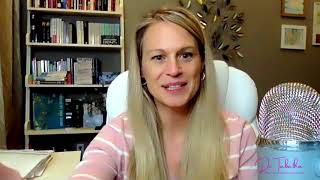
Dr. Achina Stein explains why depression diagnoses often miss the real culprit: thyroid disease, nutrient deficiencies, mold exposure, Lyme disease, or a damaged gut microbiome. Her son's psychiatric crisis in France led her to functional medicine. She walks through how to test for these causes and treat them without jumping straight to antidepressants.
Questions this video answers
December 9, 2020 (as stated in the content header).
HPHPA and creosol (organic-acid test markers; Great Plains Laboratory).
Functional Mind (fxnmind.com), achinastein.do (achinasteindo.com referenced), Healthy Self Boot Camp (healthyyselfbootcamp.com or healthyselfbootcamp.com mentioned); book: What If It's Not Depression? (free PDF on her website; Kindle ~$6.99; audiobook and print rollout noted).
Chapters
Foreign.
Hi, I'm Dr. Tabitha, the functional gynecologist. I'm a board certified OB GYN and functional medicine physician. I've embraced the world of functional medicine and wellness through my own personal health journey. And I'm super excited to share my wisdom and unique perspective as it pertains to women's health. So if you're struggling with hormone imbalance, weight gain, period issues, anxiety, insomnia, you name it, then you've come to the right place. I want to be your functional gynecologist. So welcome. Hi ladies, welcome back. So today we are talking about something super important. Depression, or is it really depression? I am talking to a certified psychiatrist who's been in practice for a long time and she wrote a really important book, what if It's Not Depression? So when I first read this, I was like, yes, this is so important to my listeners because, right. So many of us are being offered antidepressants for whatever symptom. You know, you're tired, you have brain fog, you're not motivated, you can't sleep, you're going through menopause. I see doctors prescribing antidepressants for a multitude of symptoms and you might really not need it. It might be something deeper than that going on. So I love that she has pulled the sheets back on this one. She's exposing the truth that we give out antidepressants way too easily. It's kind of like birth control pills. It's the pill for every ill when it's really not and it shouldn't be. And so this is a really important conversation. So let me just sing her praises real quick. Dr. Achina Stephen Design She's a board certified psychiatrist for over 25 years. Her osteopathic roots set her apart from her conventional psychiatrist because of her use of osteopathic philosophy and biopsychosocial treatment techniques. However, through her many years of practice, she came to understand the limitations of conventional treatment with medications and she now incorporates a multitude of integrative modalities. This was propelled by her son's health crisis in 2010, which she touches on a little bit. It's a really good story. You need to hear it. And she found functional medicine and it resolved his health problems, his mental health problems, and then she solved her own problems and went on to become certified in functional medicine. And also she's certified by the American Board of Integrative and Holistic Medicine. So. So she is well overqualified, tons of experience, and she has the insight that you ladies need to hear.
So.
Dr. Stein is a distinguished fellow of the American Psychiatric Association. She was awarded the Exemplary Psychiatrist Award by the national alliance of Mental Illness of Rhode island in 2008. She's lived in Rhode island since 2000 with her husband and three young children and she's presently in private practice in Rhode Island. She's the co owner of Functional Mind, llc. So this is an exciting time for her because she's recently like in the midst of launching her online health coaching program called Healthy Self Boot Camp. So we're gonna talk about that at the end a little bit, but the links are in my show notes. I want you guys to check her out. And her book, what if It's Not Depression? You can get as a free PDF download if you go to her website. So those links are in my show notes. So much important information because what if it's as simple as a nutrient deficiency or a toxic burden or a stealth infection? Like we're going to talk about reasons that you may not actually have depression. You may have something else going on. So. So super important topic today, you guys. So stay with me through the whole thing. If you have to pause and come back to it, that's the beauty of the podcast, right? And I would love it if you would hit the subscribe button. Tell itunes that you want more of this. That's the only way they'll know. And if you are really enjoying it, you could give me a five star review and shoot me something. Let me read review real quick from Jen J. Excellent resource covering so many relevant health topics for women.
Thank you.
Exclamation point. Thank you, Jen. I love it. It's so good. So shoot me your questions, let me know what you want to listen to. I appreciate everybody's topic ideas. You guys said I need to hear why am I getting put on antidepressants for menopause? I'm not depressed. I will tell you that the conventional medical system has been trained by the pharmaceutical companies that you need that medication to get you through your hot flashes and night sweats. So, you know, we had this study come out in 2003, I think it was the Women's Health Initiative. And they scared everybody off of their menopausal hormone pills. And so the pharmaceutical companies said, okay, what can we do now to, you know, get people back on some medication? We're losing tons of money here. And they came, they started studying antidepressants as relief for symptoms for hot flashes, night sweats, insomnia, all that type of thing. And the studies, they're pretty pathetic. You know, they showed like 1% improvement over placebo or something ridiculous. And so the FDA approved it and said, yep, you can. Those are indicated uses. And so now that is our next go to. We do use hormones. That's a whole nother topic. But let me just say that just because a medication has an indication for that or is being used for a symptom doesn't mean that is the best answer for you. I believe deeply down to my core, that our bodies were created to be imbalanced on their own and not require medications to survive and thrive. Medications are a band aid. They help with symptoms, but they also cause more symptoms, new symptoms. I believe with all of my heart that if you remove the impedances, you remove what's causing a lot of the problems. Your body will get back into balance and feel good again. So we need to figure out, why are you not sleeping? Why are you exhausted? Why do you feel so depressed? Why do you want to eat the crap in, you know, the pantry that's calling your name? There are reasons, and it's not your lack of willpower or your lack of motivation or you lacking as a woman. I promise you there's some physiological imbalance. There's bad bacteria growing in your system. There's a stack stealth infection hiding out in your root canal. There's mold toxicity built up in your cells. There's too much pesticides. There is something that needs to be removed for your body to be able to do the function that it needs to do to get back into balance. So please stay tuned for my conversation with Dr. Achina, because she's super wise and this is a really important topic. If it doesn't affect you, you probably know somebody who would directly affects. So share this episode with them. Super important. Okay, here we go. Well, welcome, Dr. Chena Stein, to the Functional Gynecologist podcast.
Thank you. Thank you for having me.
Yeah, I'm so excited this is such an important topic for women to hear about. I mean, I see it all day, every day in my practice. You know, people being diagnosed with depression, being put on medications and oftentimes not feeling better.
Right, right.
Yeah.
That's usually the only solution for a lot of people, unfortunately.
Yeah. So you are a conventionally trained psychiatrist. So you went through medical school like I did. You had your traditional residency. You learned all the medications. Right. And you realized, hmm, it might not always be depression. Tell me how you figured that out.
Well, I mean, I practiced in a community mental health center, and there were points where I would come to a point where I had a patient and they were just not getting better. And when I did an evaluation, I would look at the biology, the psychology, the. The social aspect of their life. You know, kind of broke it down. The call. It's called the biopsychosocial approach in psychiatry. And I did psychotherapy as well, and we had case managers to try to, you know, help patients along the way. So. But there was always something that I felt was missing, that something that I didn't know that I, you know, was missing. And so I thought, you know, I'm going to get more training in terms of looking at the integrative approach, looking at integrated possibilities. Maybe that's what I'm missing, and I just need to know more. And so, you know, I started searching for, you know, other types of training. But in the midst of that, my son had a major psychiatric crisis, so to speak.
Oh, wow.
Yeah. At the age of 14, we were actually in France. My husband is a professor, and he was on sabbatical. So we took all three of our kids out of school and basically homeschool them in France. And there was this day where he and his brother had a tiff. And he was suddenly on. Outside of the apartment on a ledge when we were five floors up, wanting to jump.
Oh, my gosh.
Yeah, it was. It was horrific. And it was something that happened literally overnight. There was no sign of this happening. I mean, he had some. Was missing his friends, and, you know, he had a tiff with his brother, which, like, that shouldn't lead to something like that. There was just no sign. So, you know, long story short, when we got home, I had him see a psychiatrist that wasn't me. And he was put on medications. He was put on three or four medications. He was seeing a psychotherapist, and he was out of the woods, so to speak. But he was not my son. He had anxiety, depression, sleep problems, and a lot of trouble with attention. But the thing that really made me think there's something else going on here was the fact that he could no longer read.
Oh, my gosh.
Yeah. So. And nobody can find answers. Like, nobody could tell me answers. I mean, you know, so it was just nobody. They just like, okay, well, he can't read. You know, like, you know, it's just part. They kind of just rolled it all into, well, you know, he's depressed. It's like, no, something's not right here. Oh, my gosh. So I figured, like, okay, I need to do my own research. And I happened to Find a functional medicine doctor. And I was so. And this was really more finding a functional medicine doctor to help with my patients. Little did I know that once I saw the kind of work that he was doing because I was on the search to help my patients, that I was like, oh, my gosh, I have to bring my son here. And so I did. And long story short, he did his thing as a functional medicine doctor, looking for root causes, finding all the sources, bringing the body back into balance, and all of his symptoms remitted completely. And I started shadowing him, this doctor. And I ultimately left my practice as the medical director of Community Mental Health center, which was literally down the road, for me to drive an hour away to work for this practice. Because once you know what you know, you just can't go back. I mean, you just can't. So. So it really. It really was a journey for my son and for me. And then. And then, of course, once you know that stuff, you realize all the things that are wrong with you, you know? And I had Hashimoto's and Epstein Barr virus, and, you know, I had hormonal issues, you know, so you could have a field day with me. But all of those. All of my own issues had improved. And I was actually on an antidepressant for a number of years because I had Hashimoto's thyroiditis and caused lots of mood swings and the Epstein Barr and fatigue and just stress and racing for kids. It all rolled up into this big thing. And so I ended up having to be on antidepressants, and I actually stopped taking them about a year ago because I got my body back into balance. I needed to prove to myself that I could do that and that it's doable. And in that process, I also helped a lot of other people come off of antidepressants. But I felt like I needed to do this and prove it to myself that I could. And it's been a year, and it's been fine.
That's amazing. I think more doctors need to have their eyes opened. Right. I wish every doctor could go on that path and find functional medicine. I think that how most of us find it is our own personal journeys or our family's struggles.
Exactly, exactly. It's always been that way. You know, it really makes you. You get so frustrated with the medical system that you really have to find your own way and do your own research. And there are. And when you. When you're. I shouldn't say desperate, but, you know, when you really keep hitting walls, one after the other and not getting anywhere. And I just can't, you know, I just did not want to see my son be there, and I really had to do a lot of soul searching. It's like, oh, my gosh, I've been giving people medications for what, 20 years? Right?
That same scenario a lot of times. Exactly. Right. And same thing with birth control pills for women. You know, it's like this pill that just fixes everything magically, you know, like, oh, you need. You're tired, you need an antidepressant. You're much. You need an antidepressant. You're sleeping too much. You need an antidepressant. You're menopausal. All. You need an antidepressant. It's like, wait a second, what's going on? So, Dr. Regina, I want you to talk about, like, what are the possible reasons to have those symptoms? And it's not actually depression, because you write about this in your book. Right. What if it isn't depression?
Right, right. What if it's not depression? Yeah. What could it be? Oh, it could be a whole slew of things. I mean, first of all, you know, my biggest pet peeve is that there are tons of conventional diagnoses that aren't ruled out like they should be. You know, part of the dsm. You know, one of the. One of the lines in each diagnosis is that medical cause should be ruled out. So, you know, I don't think we do enough to rule out. Really investigate and rule out medical causes of depression or any psychiatric illness, actually. So. And sometimes it could be as simple. Actually. I was on a call with a patient who initially saw me for attention deficit disorder. Right. And he was on his wife. It's always the case. Right. His wife made him see me. Well, actually made him get treatment. And he did not want to take medications for his attention deficit. He had issues with stimulants. And so I know we're not talking about antidepressants, but it's a similar kind of situation where he learned that if his wife wanted to stay. If he wanted to stay married in this relationship, he had to get help. So that's what forced him to come in. So he was taking. He had a bad reaction to stimulants. He didn't want to do that. So that's why he chose functional medicine. So we're going through the root causes, and we come to find that he has been drinking enough alcohol to cause him to have enough symptoms that he was not able to function in the way that he needed to function on his job. And it was. Some of those symptoms was add, Attention Deficit disorder. And he had fatigue and he wasn't sleeping at night. So he had a whole slew of symptoms. But what brought him to treatment was not even the ADD symptoms. It was his wife saying, you better get help. But the thing is, alcohol, I mean, that's a major part of our culture, and lots of people drink tons of alcohol and don't really realize how it's affecting them. And that isn't even investigated in a conventional way enough to be able to say, I mean, they might ask the question, but not really asked in a way to really get the details and make known to that person, like, hey, you know what? That's a lot of alcohol. And even if it's considered socially normal, it might be a little too much for you in the way that you're experiencing it. So a lot of times people are given a diagnosis of depression without really ruling out substance uses. It's not ruling out other medical conditions like hypothyroidism, like menopause and perimenopause, like vitamin deficiencies like folate deficiency, B12 deficiency. So I think we need to do more to rule out real conventional medicine causes, which I do do in my practice as well. But then there is the part where functional medicine doctors know that most conventional doctors don't know or don't really pay attention to is the physiology of how the body functions and what we put in our body and how our body deals with it and. Or we're exposed to our body. So mold. Mold toxicity is a major cause of depression. Major Lyme's disease. Right. Major cause. I've actually diagnosed Lyme's disease because they actually look, there's a certain presentation that I find for people who have major depression due to Lyme disease. And we don't do enough research to even be able to do. But I've seen enough people where I've see say you need to be tested for Lyme disease because of X, Y and Z, you know, so it's a matter of having the time to get the details of a person's history because people don't remember. But it's also really digging and digging and digging. That's what I feel like I'm really good at, especially because I'm trained as a psychiatrist to do that anyway. We spend lots of time with our patients as it is. But most psychiatrists aren't trained to really dig for how things are connected physiologically and in terms of looking at food, whether or not. You've had infections, exposure to toxins, and then stress. It's like those four things and then the hormones. Right. The whole hormone piece. So those five areas is what I look at when I take a history.
Yeah.
So important.
I mean, I need people to understand that what we put in our body does directly affect us. I mean, I always use the simple example of coffee. Like most people drink it because it changes your physiology. It wakes you up, it makes you feel differently. Right, Right. That is a direct effect of putting something in your body and getting a result. And it's the same thing with everything else we're putting in our body. We're just not realizing it. I mean, I will tell you, I suffer from Hashimoto's as well. And when I eat gluten, I will be depressed in bed for three days. Like it destroys my mental health. And it took me almost 40 years to figure out that connection. Right. But once I did, it changed my life. Because now in bed for multiple days out of the month wondering like, why am I so depressed? What's going on? Now I know you just can't eat gluten.
Right. And what, you know what's interesting is that, okay, so we both have Hashimoto's and we both react to gluten, but I react to gluten differently. I get brain fog.
Yeah.
And I have trouble word finding. You know, I have more neurological type of symptoms as opposed to mood symptoms. And I know, and I mean I had mood symptoms from the Hashimoto's, but not necessarily so I was able to even discern how much of it was related to gluten and how much of it was related to the hypothyroidism and Epstein Barr. So it was a combination of things. It's always a combination of things. It's always two to three things, maybe four, maybe five things that come together that create this perfect storm in a person's body.
Oh, I'm glad you pointed that out because that's super important. You know, people always want the answer like, what happened? What's wrong with me? And it's a multitude of things like you're saying. And it's like an accumulation over your lifetime of things that have happened to your body and how your body can function and handle it. And I think so often we have just accumulated so many toxins that like you said, our liver can't even function properly. So you keep adding alcohol to it, your liver's never going to be able to detoxify Basic things. And I find that my patients often don't realize that women should only have one drink of alcohol. They're doing two, three, four drinks and thinking that's okay because it's normal, it's common. But really what the research shows is that for women, one drink is our max that our liver can tolerate, and we're headed for trouble. Right, exactly.
Absolutely.
Like you said, doctors aren't telling patients these things, so they're missing easy solutions. Or vitamin D. I don't know about you, but in Michigan, everybody's vitamin D deficient. And getting that up to like 60 or 80, all of a sudden, you can feel like a normal human being again.
Right, exactly. Getting back to alcohol, a lot of people, I think, know that it can affect your liver. It's common knowledge. People don't understand how much of that. The other thing that people don't realize is it actually is like turpentine to your gut lining, you know, so it shears. It shears the microvilli off of your gut lining. And so then you're not able to absorb a lot of the vitamins that your body needs, particularly the B vitamins. So a lot of times people who are alcoholics have severe B vitamin deficiencies and can have actually dementia to the point of dementia. So, I mean, that's an extreme. But it's important to understand that there's always going to be some deficiency of vitamins as a result of drinking alcohol because of how it affects the gut lining. So it's not. And it affects other organs as well, but it's not as commonly known as how much it really affects the gut that's so important.
And it also affects your ability to make your feel good. Neurotransmitters. Right?
Right, Absolutely. Yeah. Talk about that a little bit. Your neurotransmitters are made in your gut that at some point gets to your brain. Your serotonin, all your neurotransmitters are made in the gut lining, 80% of it, actually. That is where the microbiome is situated. And it's the balance of the microbiome that actually makes serotonin and other neurotransmitters. We don't really know how it gets to the brain. We have this idea. There's some research that shows that it is through the vagus nerve that we have that information brought to our brain. It's that balance of the brain, gut and brain that occurs through the vagus nerve. And that's the simplest explanation I can make. But we're still doing a lot of research and understanding that better. And so if we can get the gut in balance in terms of making the neurotransmitters, then it usually brings our brain back into balance. And that's how I basically approach depression. The treatment of depression is by finding causes of inflammation. That's a major cause of depression, but it's understanding what's causing the inflammation in the brain. So we want to remove what's causing inflammation, what's missing. And so we want to replace the nutrients and the vitamins and the minerals that are missing in the body so that the brain can function optimally, reinoculating the gut microbiome and repairing that gut lining. So it's figuring out what's assaulted all of those different phases or what's disrupted those phases and bringing and really addressing each of those. And ultimately it's finding balance in the system so it doesn't happen again. So stress is a major cause of disrupting your gut balance. And so we want to address. I think that's the hardest thing for people to really work on because it's a practice. It's a noticing and being aware of how much stress people are under. Some people are under so much stress and they don't even realize it because it's just so chronic and really downgrading their overdrive. A lot of times they're in overdrive and shifting down slowly over time. So that's a practice that needs to happen. And people have a really tough time putting that on the front burner, really connecting how much stress can affect their gut and other symptoms. So, yeah, so going back to different causes of depression, food. There's lots of foods besides alcohol and caffeine that can actually cause depression, but there's also foods that can heal your mood as well. So there's many connections in that way. I find that a paleo modified paleo ketogenic, a healthy ketogenic. I know there's lots of people are anti ketogenic, but a healthy ketogenic diet is absolutely fantastic for your mental health. And there's lots of research to support that. So it's understanding what that really means in terms of what healthy ketogenic means.
I remember the first time I put MCT oil on my salad. I had read the book Eat Fat, get thin by Dr. Hyman. I was like, okay, let's do this. I put the MCT oil on my salad, and I swear to God, an hour later, I felt like a rock star. Because, you know, that oil, it can go directly into your cells to be able to make energy. And I was so depleted that it was that obvious to my body. You know, that was pretty eye opening for me. Like food really can heal and nourish you. Like, it's not just a saying. It's true. It's true. So I just, I want people to realize that food is information, you know, information.
Right.
Giving our bodies the worst kind of information, like making you feel ill or amazing information, like giving you all this energy and make your feel transmitters and all of that. So I love that preaching. That is so good.
Yeah. It's not just calories in and calories out.
No.
You know, it really is understanding the whole gamut of all the possible foods. And to me, eating as many vegetables, a rainbow variety of vegetables. If anything, even just making that one change can make a huge difference. But when it comes to the brain, healthy fats are probably going to make, I think, the swiftest change. But in the long run, increasing vegetables. So I try to add foods into the diet and as opposed to removing foods, I mean, unless like, I know absolutely gluten and dairy have to come out. You have to be where the person's at, you know, when you're seeing them and starting with where, how much they know, where they're at, what they're willing to do, what they, what they can do, you physically can do. And so it does require a lot of educating. But I think starting with adding as many vegetables and adding healthy fats is a really, really good place to start. And then maybe taking, taking things out and substituting like gluten free, gluten full with gluten free. And you know, it's, it is, it's a, it's a journey and it's a process for a lot of people. But I think in the long run, people do benefit. I think very few, at least the people who filter down to our practices, very few people find that being gluten free and dairy free is like, you know, neutral to them. You know, most people do find themselves feeling significantly better. And there's always going to be a few that can put it back in right after healing the gut. Yeah.
Yeah. That's awesome. I think it's just so important, like you said, to remember that it's a journey. It's not going to be fixed overnight. It's multiple things that you have to work on. So eating vegetables is definitely an easy place to start. Just add a new vegetable once a week. That's what I say. Try a new color that you don't eat normally. I mean, blues and purples are, like, the least eaten color, but they have so many benefits. So start adding some purple in there once a week.
Exactly. Beets. I cannot believe how much I have never eaten a beet until I started doing functional medicine. It's like, how did I not know about a beet? They're so delicious.
Yeah. I grew up eating them, like, hot, cooked, just sliced up, and they tasted like dirt. But I ate them and trying to get my kids, and they're like, are you.
Were they cans? Yes, those are canned. Yeah. The canned beets are, like, gross, But. Yeah.
But even that, I was thankful that I was at least exposed to it as a child, you know, like. But there's so many more better options. Like a beet salad. Oh, so good.
Oh, my gosh. Yeah, I love beets. You. You know what's interesting is that your palate changes.
Oh, yeah.
As you introduce foods. And I always talk about with kids, like, even if you get a smidgen in, you're still introducing that little piece of broccoli to their microbiome. And then it's the microbiome that wants more that will tell your brain that we want more broccoli. And that's how you know that your microbiome has changed just because your palate has changed. It's amazing. So I like, then when you start craving things like kale and spinach and carrots and all of these fantastic vegetables, you know that you've done the work.
Exactly. I mean, I try to explain to patients that those sugar cravings, that's just the bacteria and the yeast talking. It's not you. You don't really want that. And you kill them off. Those cravings will go away. I mean, I'm living proof. I lived on sugar and donuts and candy. I was awful.
That's not your fault.
To me. To me. And that's how I. When it stops talking to me, that's how I realized it wasn't me. It was something inside of my body.
And.
Right. You'll start craving good food. People think I'm crazy when I say, you know, oh, I crave a salad or whatever, but it's true. You just have to lift your microbiome.
So that's what it is. It really is. Yeah. Keep working on it. Yeah, that's. Yeah. It's definitely been a journey. And so many people have really benefited from our treatment, and it's not necessary. For some people, it can be, you know, maybe three months. And others, depending on what their health issues are, it could be a year. Or two years. So it's, you know, it's a matter of getting started and, and taking your time going through it and learning as much as you can about foods, toxins, stress. And I think the hardest part is probably really figuring out what chronic infections are on board. People don't quite understand how much that can impact you and that it's a body burden that creates a great deal of stress. And so most people think that, oh, if I have an infection, why, I would have a fever and have chills and I'd have. Or I'd have diarrhea, you know, I'd have these. Or vomiting, right? You know, these acute symptoms. So what we're talking about is chronic, chronic infections. And my analogy for that is, and people seem to get it is like sort of like a cold war. You know, there's. If there's like a cold war between Pakistan and India, right? They hate each other, but you don't see missiles flying back and forth, right? But there's soldiers on each side and they're staring at each other, but there's an investment from each country to supply those soldiers. And you have to feed those soldiers and you have to pay those soldiers, and you have these buildings there and these barbed wire things. And God forbid any one of them makes a move, you know, then things will be flying. So your body makes. Is at this cold war sometimes with colonization of certain bacteria that don't belong there that really weighs on your immune system, and it just takes away and takes away and takes away, and you got to put more soldiers there to sort of keep it at bay. And so sometimes if your immune system drops, that's when you start having a feeling like, oh, I'm feeling sick, you know. Well, it's probably because that colonization that's there is now sort of building up because your immune system dropped. The soldiers have been taken away, and then when you feel better, then the soldiers are put back into place. So there's this cold war, essentially, that's happening between your immune system and those pathogens. And so it's a matter of finding those pathogens and bacteria, believe it or not, period, people do have parasites and worms even in this country. Candida you mentioned Candida. Clostridia is a big one for mental health. You know, C. Diff and other types of Clostridia species. There's types of Clostridia that can block dopamine, beta hydroxylase, which is an enzyme, and cause an imbalance in dopamine and norepinephrine. And that can cause psychiatric symptoms. And if you can find that on a particular test that we do, which I'm sure you're familiar with, the organic acid test through Great Plains lab, then you can see if the HPHPA is elevated or for creosol, which are markers that are elevated for clostridia. Then there's a treatment for that. There is. And your symptoms can get significantly better just because you removed that particular pathogen and you don't have to have diarrhea. A lot of times C. Diff is associated with having diarrhea, but that's an acute infection. You can even have constipation with C. Diff, you know, so. And there's all research, you know, there's research that supports this. And it's just that people don't know enough about it. And most conventional doctors are not trained to look at this. They go to conferences to get their CMEs, and they learn about pharmaceuticals. But there's lots of conferences where you could learn about nutrition, lots of conferences where you can learn about infections and toxins, mold and other environmental toxins. And I think the thing that's probably become more prevalent is learning about things like meditation and stress reduction and the benefits of yoga and acupuncture and other modalities, which is fantastic. I'm so glad to see that happen. But I think we need to do more. We need to really integrate these alternative, complementary treatments into conventional medicine. And actually, I think what we do really should be what should be done conventionally for everybody and potentially use medications as an alternative. And in acute situations, in situations where it's absolutely necessary shouldn't be the first. Medications should not be the first choice. And so people who see me are people who have been on medications and have had. And if, you know, I am not anti medication, I want to be really clear about that. I'm not anti medication. If medications work for you, fantastic. Everybody has things going on in their life where they can't do this work or can't afford to do it because it does take time and investment of money because insurance doesn't pay for these kinds of things. So there's no judgment there. But there are a lot of people who don't, who don't respond to medication or have a partial response or have side effects or just can't tolerate them. Sometimes medications cause significant side effects like, you know, manic episodes or, you know, for sure.
I mean, in my patient population, they so often cause, you know, constipation and low libido, and they just slow your system down altogether. And so even though weight gain, right. Weight gain. Oh my gosh, you know, Paxil, the, the joke is pack packs the pounds on. You know, it's bad that that's the first line medication we're putting many menopausal women on now because we're afraid of hormones. And so now we're giving them Paxil and effects or. And.
Right, exactly.
It's like, like you said, there's no judgment, but you might not need that medication.
You might not. You might not. I mean, I'm talking about the people who. Exactly. But there's going to be situations, and I have prescribed medications where a person is so depressed that they can't function at all. I mean, so they're, they're, they can't, they can't function to the point of even giving you the history that you need. And they, they need someone there to take care of them because they're so depressed and they've been and out of the hospital and have needed things like ect. So there, there's a point where, you know, it would be negligent to not give medication because they're not in a place where they could do the work that needs to be done, you know, for functional medicine. Hopefully people don't get to that point, but there's going to be, you know, so then once you're stable on medications and functioning, then you can potentially do the work, you know, to reverse whatever caused you to have that major depression or depressive episode and eventually come off of, potentially come off of medication. So, you know, I want people to know that it's not a life sentence. You know, it's not. And it's not just depression. It's anxiety, it's panic disorder, it's even schizophrenia. I had a couple patients who no longer have schizophrenia. I have a couple patients who no longer have autism or autism spectrum. So these things are absolutely reversible. It's not for everybody, but depending on what the situation is and looking at the whole history and what they've been through, it's not a lost cause for some people.
Well, I really appreciate you saying that. As a psychiatrist, you are trained, you have gone the gambling in training on both sides, conventional, functional, integrative. And for you to say that, I think gives patients hope and they need to hear that because people don't want to feel like they're broken and they're not fixable or there's something wrong with them that they can't do anything about. You know, I mean, if it doesn't feel like you got the right diagnosis and the right thing happening. Dig deeper, ask more questions, reach out and find somebody like Dr. Stein, right?
Yeah, definitely there's. And even if, you know, even if there are situations where, I mean, there's going to be situations where I would will say to a person that, no, you know what, you really need to stay on medication. But I will explain why. And even if they did the functional medicine piece while being on medication, we might be able to reduce doses. We might be able to take maybe some of the medication, but continue others. I have found that I've been able to do that, but overall they would feel better. What's really, really cool, I do psychotherapy as well, and I see patients who also see psychotherapists besides me. They find that when they do the functional medicine approach to, you know, finding root causes and healing their gut, they start making connections in their therapy places where they've been stuck all along, stuck in the same spot over and over again. It's like something shifts in them, you know, psychologically or emotionally, that then they're able to really move forward in their psychotherapy so they're not stuck, stuck as much anymore and overall feel better. And if they come to me on medications, I say we have to do this approach first before we make any changes. Barring, obviously, if they have serious side effects, I'm going to take them off the medication or switch to something. But if they're not, if they're stable and on medications, I really want to have them treat the gut first because then it gives them confidence that, okay, we didn't make any changes in the medications, but yet I feel better, got better. And I can't say it was because of the medications because we didn't change them. And then it gives them that confidence to be able to say, okay, now I'm ready, emotionally ready to come off the, you know, to lower the doses of the medication. So, yeah, it's a journey. It's a long journey. But I've had. I've definitely had people who've come to me on five medications and now they're on one. That's awesome choice.
Yeah.
Yeah. Not because they felt like they've forced to take it and they have no choices. So it comes to choice, like, you know. Yeah, so it's been. Yeah, it's been really, really worthwhile work. It really makes me feel good. I feel like a real doctor. You know, we're really like really treating people and healing people and, you know, and so it's the Best of both worlds. You know, it's the best of the conventional world and the functional medicine world. So. And melding them together is what's really been, you know, really good.
That's so awesome. I can't wait to see more psychiatrists doing what you're doing. It's so needed. I love it. So where can my listeners find you?
Well, they can find me. They can Google functional mind. It's www.fxn mind.com. they can Google my name, achina steindo.com and at that website, www.achina a c h I N A S T E I N D o dot com, you can download a PDF of my book for free. And there is a third website. I'm gonna have to meld these all together, but soon I'm going to be launching an online health coaching program that goes with the book as a companion program. And that's at healthy self boot camp.com.
Www yeah, I'll have all those links in my show notes because. Okay, good. That is so good. There's absolutely no reason that you shouldn't go download this book. The book is awesome. It's free. Like, you gotta go do it right. And I can find it.
Yeah, they might. They might prefer the Kindle version on Amazon because there's a lot of hyperlinks on there that if you get the Kindle version, you click on the link and it takes you to this website or that website for, for more information. You wouldn't be able to do that with the PDF, but.
Okay.
But it's a great. You know, you can read that and then you might want to get it on kindle. It's just $6.99.
Awesome. Okay.
The audiobook will be coming out in the next couple months and the print version will be in bookstores next May 2020.
Awesome. Well, I love everything you're doing. I can't wait to see your program. People need to check you out because you're doing amazing work. And thank you so much for being on the Functional Gynecologist podcast.
Yeah, thank you. It's great. I had so much fun.
Awesome. Wasn't that a good episode? So Dr. Chinna is super wise and you should reach out and connect with her. The links are in my show notes. You know, if you are suffering from questionable depression, you're not sure that what treatment you're on is right for you. I would definitely reach out to, to her and ask her, you know, take a deep dive into my health and let's see if there's a different root cause or a few issues that we can figure out and maybe get you feeling better. And you don't even need that medication that you're on. So she is here for you, just like I am. So thanks for staying tuned. Come back next week and otherwise, go out, support your fellow sisters, have a kickass week, and give yourself some love. I'm serious. Bye, guys.








