Why God Feels Silent When You Need Him Most (And What to Do About It)
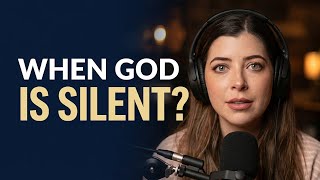
Kirby Kelly shares how she found faith after growing up in a family marked by addiction and trauma, and discovered that God works redemption in the middle of suffering, not just at the end. Dr. Tabatha Barber and Kelly discuss prayer, Scripture, and making God the main character of your story when faith feels absent.
Chapters
the more that I ran to Jesus, both with my praise and my lament, both with the good things and with the hard things, both with the things that ended quickly and the perpetual cycles of pain, as I continued to run to him and invite him in, the load got lighter and my perspective began to change as to who God was and what he could actually do in the middle of these places.
If you're tired of doing all the right things and still feeling exhausted, stuck in your body, and disconnected from God, this podcast is for you. I'm Dr. Tabatha Barber, a triple board-certified functional medicine physician, and I help women stop fighting their bodies and start healing them God's way. Let's get into it. Welcome back to the Fast of Faith podcast. Oh my goodness, hello Ashley!
Hi there!
Oh, do you feel like God always fixes things when you ask him?
Yeah, right?
No, but I know his plan is always so much greater than mine. So even just this morning during my Bible study, there were so many verses and different things that he pointed out, and I was just like, oh my gosh, why do I like go back and forth with trust? And so trust and joy are themes that keep coming up in my life right now. And yeah, he just needs us to trust him fully, and we just have to keep making those steps.
Yes, absolutely. Well, I'm really excited about our guest today. So I know that every woman is going to be blessed who hears this episode. And I just wanted to share because I just got back from California. Was in Newport Beach for a week. And what I learned about trust and is God with us and all of that is we are called to submit to God. And we're always asking the devil to flee. But the verse actually says submit to God, then the devil will flee. And we forget that submit part, that being obedient part. And I was actually at an event with one of my masterminds, and God laid it on my heart to put the word chosen on my arm as a tattoo. He's been doing this for 8 months, and I have not felt comfortable with that. I am like, I don't want to declare publicly on my flesh that I am chosen. That sounds like an egomaniac, right? And he's just literally been telling me and telling me and telling me And during our day, it, it was like a slap in the face. And so I asked a friend to go to the tattoo parlor with me, and I was gonna get it. And she prayed over me. And the craziest thing, while she was praying, I just remembered Acts 9:40 and how Peter was asked to come see this seamstress who died. My mom named me after this seamstress because she was a seamstress. But Peter went into the upper room and he said, Tabatha, get up, you're no longer dead. And that witness of that miracle made people believers in the town of Joppa. And like, God just showed me, like, I have risen you from the dead. It is time to go and glorify me with all that you've done. And you have to stop being afraid and not stepping into that, not trusting. And, uh, so I went in to get to the tattoo, and I was gonna do a lowercase c, and my friend was like, no, girl, you're getting a capital C. You're doing this the right way. You need to really just be obedient 100%, because even 50% is disobedience. And so I, I just wanted to share that because I know somebody listening right now feels like Why is God not coming through? Why is God not moving? I can't trust him. Well, can you trust yourself? Are you being obedient? Are you submitting? So that was a really hard lesson I learned, and I feel so free on the other side of that. I came home just like filled with peace and joy and ready to tackle this conversation with our guests today because it's going to cause breakthroughs and it's going to break chains. And women are going to shift.
Yeah, they're going to learn that they're not alone too, but they're also going to learn the importance of like, you have to make the steps because your steps impact other people's steps. And so sometimes God is using you to impact other people, and if you don't make those steps, they're not going to see it.
So let's go. Okay, so if you're listening, you're watching, and you're just like, why won't this diagnosis go away? Why can't I lose this weight? Why am I still in pain? Why am I still struggling? Why is You know, my marriage still on the rocks no matter how hard I pray, because some things don't break off with prayer and fasting. Some things break off with obedience. So I'm so excited to welcome Kirby Kelly because she is an obedient woman of God. She has given her entire life to him and his calling on her. So Let me just sing her praises. We connected. She's absolutely fabulous. She's a speaker, an influencer. She has a master's degree in theology. She is host of Bought and Beloved. She's an author, a published author, and she's about to drop her new book, The Fabric of Hope, which is absolutely beautiful. You and I were gushing over it before that we started recording. Um, and so I just cannot wait to dive deep into this conversation because she really helps women Trust that God is there in the seasons of pain, in distress, when it feels like he's not. He really is. And so she's going to guide us through all of that. So welcome, Kirby.
You are so fabulous. Thanks for having me. What an introduction. I feel so welcome. You are, girl.
You are just a blessing. When I was on your podcast and we were recording, I just felt so connected to you because of the work you're doing. And how you really are obedient to God in your calling. And it's a beautiful thing, and we need to, you know, celebrate our sisters, right?
Come on, I love that. Absolutely.
Okay, so I would love to just start with redemption because I feel like that's what I've been saying since the new year. God is a redeeming God. He's cleaning up my messes, he's fixing things, making my paths straight. Um, but we tend to say he's a redeemer after it's all over, after the dust settles and we feel like we can breathe again. And, um, I would love to hear what you have to say about that, because he's always there, right? Absolutely.
I think that that is like a huge misconception that we can have, is that when we're in the middle of a really tough season, a place of struggle and strife, trauma, trial, you name it, that we think that the fact that God is a Redeemer means that at the very end of this, that's when he'll tie his beautiful bow on top and everything will be fine and it'll all make sense and it'll all be worth it. And a lot of that is true, but I think that we kind of push him all the way to the end, not expecting him to do something right here, right now, today. Like, as I read scripture and read about the stories of the, the different people, right, God's people, the, the chosen people, the Israelites, how they were going through things time and time again as a nation, as individuals, how God didn't just say, okay, I'll see you at the end of the story, I'll see you at the end of the chapter, that's when I'll make it make sense. But so often he interrupts or shows up in the middle of the story and he's weaving redemption right there. Talk about seamstress language, right? Yeah, right there in the middle of it, he begins to weave and knit together and stitch together beauty hope, purpose, meaning, clarity, direction. I mean, it's right there in the middle. And that's so true for my own life that even now there are areas of my life where there hasn't been full resolution or full redemption. There are also areas where I have experienced full resolution and full redemption. But the common thread in all of that is that God was there through it all. So long as I pursued him, so long as I called out to him and invited him in and asked him, God, what is going on here and what do you want to do here? I think the question that we often ask God is, can this be over? Can you like finish this? Can you just like stitch this up real quick so I can keep playing, so I can go back outside? Um, but I think the more important question is, God, what are you doing right here, right now, that maybe I'm not seeing? What, what is the real work that you want to do in this moment, even if it doesn't feel complete yet, or like, like this, this is the end of the story yet? So I think we need to reframe the fact that what we're going through, if we're really going through something, that doesn't omit God from, from doing something good in the middle of something that we would deem bad. He can actually interrupt and begin the good work right here, right now. And it doesn't just have to be the light at the end of the tunnel. The light is here with us right now, and he can light it up.
Yeah, absolutely. I once heard that God is always working. He might not be working things out externally, he might be working on you internally, but he is always doing a good work. And we don't recognize that because we just want our circumstances to change, and he just wants us to change.
Yeah, and we want it to happen now, super fast.
Oh my gosh, can you talk about that with our clients and our coaches?
Yeah, that's— and, and I actually am thinking about my own self. I'm going to be honest, I was up at 3:30 this morning, and I'm on a healing journey of my own gut right now, and it's been 3 months this week, and I'm like, why are some things still not fixed? And I realized that it was because some of it I wasn't surrendering and I wasn't letting God handle it. I was trying to fix some of it myself. So this conversation is really wild. I have goosebumps because I'm like, this is why I'm here today. I'm going to talk about this. But our clients and our coaches deal with this every single day. And so I think it's so important that they understand, um, that it— everything takes time, and the time is happening for a reason. There's a why behind that.
Yes, absolutely.
Yeah, I would love for you to talk about that because you have walked through the darkest of times, and you, you know, you sit here looking so beautiful and so put together and you know, we make judgments. That's just what we do as human beings. And so I would be quick to think you had an easy, perfect, white-picket-fence life because you look so put together and you're so successful. But there is so much suffering behind you. And the cooler thing is, is you're like, there's so much redemption that God has done. So I would love for you to talk about that and You know, just give Ashley some reassurance. It's okay. Like, the journey is part of it, and we're supposed to find joy in that somehow, right? Thank you, James.
Enjoying the journey. So real.
James is one of my favorite books. It's so real. Oh, he's— I'm like, because I relate.
Yes, yes. Tell us about that.
Absolutely. Um, well, I, I love that you specifically use the word this, like, beautiful picket white fence life, because that's kind of how I describe it from, uh, childhood, like what my life really looked like. Like, my dad had a super good job. My mom was able to become a stay-at-home mom because of that and take care of my brother and I. You know, my dad was super charismatic, like life of the party. He'd walk in the room and everyone would be like, Dave's here, right? And even my mom— like, my mom was this crazy theater kid, like, so she was just the life of the party too. Um, maybe that's where I get it because I'm a big theater nerd. But all that to say Um, from the outside looking in, I think our neighbors, family, friends, even family members, um, would look at our life and it's like, dang, they have it all together. Like, they have everything. They are the epitome of what a successful great American family life could be. But it's like, when you really peeled back the doors and you visited on non-visiting hours, uh, you would see that it was just shambles. Like, our family was in shambles. My dad, he was an alcoholic and dealt with addiction forever, as long as I can remember, from when I existed. But what really— the straw that broke the camel's back was when 9/11 happened. We were living up in New Jersey. My dad worked in New York, and he was there when it happened, witnessed the whole thing. I won't get into all the details of that, but it ruined his life, really. It ruined our life because he lost family, or he lost friends and co-workers. We lost family friends. I mean, students in my class lost their parents and stuff. It was like, it actually affected my community really bad. Um, and that was the thing that just, I think, sent my dad over the edge with his drinking, where it was— it got to the point where my parents' marriage was just unrepairable, even though my mom was fighting for it. So when they got divorced, when I was like 7, 8 years old, we ended up moving down to Texas, my brother and I and my mom. And oddly enough, her coping mechanism, her vice for trying to get through that season, was drinking. And she became an alcoholic. So I went from one alcoholic situation to another alcoholic situation. And though she went to rehab and got sobered up for a while, she ended up relapsing hard when I was 14 years old, just after I gave my life to Jesus. Like, the timing of that, you know what I mean?
Yeah.
But even in between then, there was a lot that happened. My dad ended up dying when I was 10 years old from his addiction. Um, going into middle school, I started— that's just a difficult age for anyone, especially a girl. Going through middle school, having frenemies, getting bullied, started self-harming, and I was suicidal. I did not want to be alive. Like, it was just I felt like, I felt like life handed me— I don't even want to say the wrong set of cards, but it was just like, this is my life. Like, I, I can't believe that this is, this is what my life has come to, that to the point where I was like, I just don't even want to be alive anymore. And I look at a 13-year-old in the face now and I'm like, you're so little. But that was me. I was like, I do not want to be here if this is what life has to offer me, like all these lemons that are being chucked at my face. But then I had this radical and real encounter with God at a Christian summer camp. And it wasn't like the Friday night boohoo fest where they're like, you're going back to the world, give your life to Jesus, right? Playing the guitar, you got bug spray in your mouth. Uh, but it was like a Wednesday night worship session where I just had this, this very honest moment with God for the first time in my life, really, where I was just like, God, I feel like when I'm here and I'm in your presence and I'm learning about you and I'm pursuing you, that I actually feel full of hope, that I actually feel full of joy, that I actually am experiencing peace. But when I'm out there and just going about life, I just— I, I can't do it. I can't do it anymore. And I had this encounter with the Lord where he told me like, hey, like, I'm your perfect and present Father who loves you. Like, you can trust me. And so at that moment when I gave my life to him, that's when my life completely changed. And what I mean by that is not my circle— well, some circumstances did. Um, my mom started drinking again. I was in high school now. It was a completely new season for me, and I was trying to navigate that. And that was, that was in many ways even worse, trying to navigate that season with my mom and parenting my parent. And it just being day after day after day where it's like, why is this load not lightening up? It just feels so heavy every single day, and nobody knows and I'm trying to deal with this and all my other responsibilities. It was just so heavy, but I wasn't carrying that burden alone anymore. I was actually able to shoulder it over to Jesus like he asks us in Matthew, right? Come to me, you who are weary and heavy-laden. I will give you rest. Like, let me shoulder this burden with you, and not just shoulder it, but like, let me actually help you in this. And I experienced an intimacy with Jesus like, like nothing else. I was on fire for the Lord, still am. But what was different in my situation before and my situation after was Jesus. Of navigating life without hope, without peace, without joy, without any sense of direction or security to cling on to— chaos, really— to then encountering the living God and realizing under him everything comes under order. Maybe not like immediately, maybe not in the way that we expect, because we still live in a broken world, right? And we ourselves are dying to the flesh every day and being sanctified. But the more that I ran to Jesus, both with my praise and my lament, both with the good things and with the hard things, both with the things that ended quickly and the perpetual cycles of pain, as I continue to run to him and invite him in, the load got lighter and my perspective began to change as to, as to who God was and what he could actually do in the middle of these places. I think that's the biggest thing that, that I have learned in my suffering is the eternal perspective and the redemptive perspective of what God can do in the middle of that. Because many would look at a situation like that, and I'll close it here just because I'm yapping right now, but even with my mom, it's like, that was the worst. I love my mom, and that's why it aches so much more, is that, you know, she was, she was the best person, one of my favorite people. And I would— I just saw her become this version of herself that was so fallen. And I remember that hurting every day. Every day I would come home, and that was my reality of trying to just piece everything together. But when I surrendered that to the Lord and I was like, God, you have to do it, like, I cannot be her savior, I can't do this, I can't even save myself, let alone her. And I began to allow God to step into that place. She ended up— every time she would drink and act out of character, and then she'd eventually come and knock on my door full of shame and ask for forgiveness. It was just this beautiful moment of redemption where I would forgive her and mean it and mean it. She was like, why do you forgive me? I don't deserve this. And it was like every week I was presenting the gospel to my mom because every week she was going through this cycle to this point where eventually she ended up giving her life to Jesus, like the real Jesus, not this lightning bolt God from heaven that wants to judge you and hates you, but the real Jesus who invites you to sit at his table and, and will do the changing, that who loves you, right? So it was just, it was beautiful what came out of a place that was so broken. And I think that's the hope that many of us need. There's a lot of hope we all need, but that's one of those things that we confidently cling to is that when we invite Christ in and we ask him to change us, not just how we act, but also how we think, how we perceive, how we navigate the situations and seasons we've been thrusted into, whether we brought it upon ourselves or it's just the heart of the cards, what we've been handed in life. When we, when we invite Jesus in and we ask him to, to be a part of it, we can have real hope that he can actually bring beauty from the ashes. That sounds really nice. It sounds super poetic and biblical, but like, that can be your reality with where you're at today in any circumstance that you're in. But sometimes it takes time. That's the hardest part, is surrendering the expectation of God— you can do it, he can— but what do we do when God's will doesn't go our way? And what do we do when God's timeline isn't our timeline? And I think that's where where we can benefit from a lot of pruning and sanctification and just yielding to God. Because now I'm at a place in my life, 28 years old, where I know that whatever season comes my way, whatever situation awaits me— because life will life eventually, even though I'm in a really beautiful season right now— I know that, God, I can trust you because I trusted you in the 10-year trial. I said I trusted you in the, the 5-day thing, you know, and you were faithful in both. And I can have hope and confidence in your patterns, your promises, your personhood, who you are, um, and, and your promises. You've been faithful to all of those things. So I can still hold on to that hope and faith that it will carry over into any other unique season that I'm going to step into.
Oh my gosh, girl, I just want to honor you for really stepping into that role of being like Christ during that crisis. Oh my goodness, you showed up with the love and the forgiveness that he talks about and that he teaches us and that he calls us to do. And you did that as a child.
And I— as the fruit of the Spirit.
Yes, exactly. The so good. But for you to turn around and not let your mother die in vain, for you to go on to share this with other people and say, this is not just for me, like, this is for other people to be healed and freed from, like, yeah, I just— bravo to you. I'm so proud of you. That's amazing. And thank you. I think it's beautiful in a really screwed up way. Yeah, that God allowed a child to go through that because you couldn't change your circumstances.
You can't.
You can pray those for that to happen, but that's not going to change. You don't have any control. You are the child, and you navigated, and you asked him to show up, and he showed up. And I would love for you to speak to our free will and our autonomy. Because a lot of women we hear come to us as clients, and— or they'll be working with our coaches, and they just feel like, yeah, God doesn't care about me, God's not showing up for me. And the first thing we say is, have you asked? Like, do you want him in your life? Because he's there but you're not initiating that relationship. It's a two-way street, isn't it?
Absolutely. And this is— if we're putting on the theology grad cap for a second— the word for that that we see in scripture, uh, to describe the sovereignty of God but also man's free will is this— the fact that there's this providence of God where it's like he is sovereign and he's in control. And a lot of us, we know that and we believe that and we say that, right? Let go, let God. God's in control. Maybe your mom has it like in her kitchen somewhere, I don't know, or your grandma. Like, we love to say that, but at the same time, if we were to back all the way up to the garden, we also see that humanity was created with a free will. And the purpose of that is choice. And at the end of the day, love, because we were made what? For relationship with God. But if we were not given a free will, there would not be a choice for that. So at the end of the day, if you're like, well, then why did God make it that way? Why did he put the tree in the garden? So that we would have choice, so that it would actually be genuine love, genuine relationship with God. And every day we're presented with choices. And one of those choices, like you said, is am I going to invite God into this? Am I actually going to yield my will for his ways? Am I going to surrender? Am I going to allow my relationship with Jesus the healing journey I'm going on, whatever it could be, that might come with a cost where we have to give something to the Lord. I, I know that you all help women, um, with their hormones and their health and so many things. And I think about me even, like, with— we talked very briefly when you were on my podcast just about my own health journey and everything. I'm pregnant now, so it's like there's kind of going to be a great reset here, so I'm on pause with that journey at the moment. But Uh, when I was going through it, there were certain things where it was like, you know, I need, I need to give up sugar and I need to give up these things and I need to, I need to give up, you know, time in my day to, to work out and prioritize my body. I need to give up certain things so that I can actually go to bed on time and get good sleep. And it's like, there are all these things that we are creatures of comfort for, uh, and sometimes even in our suffering, we can be a creature of comfort to that because it's all that we've known. We only know how to function in chaos. And so it's just easier to cling to the chaos. But when we actually get to a point— and I pray we all get to that point— where we are just done, where we are done with how it is, with how it's always been, um, that we come to the end of ourselves and don't just hold on to it and say, well, okay, I'm just gonna figure it out now. No, but that we're willing to actually invite the God of the universe who made us Who made everything, who keeps the world going, like spinning on its axis around the sun, like all over, like all the things that we do not even think about. He keeps our body going, like we don't even have to think about that. What is our para— para-something nervous system? I don't know, you guys are the experts. Yeah, there, I was close. The sympathetic part is what I forgot. Um, hopefully I sound sympathetic right now. I'm not trying to be harsh. But with that, there is this point where we do have to come to a place of surrender, of inviting God in, and not just inviting him in, but inviting him in to do what he wants to do, when he wants to do it, how he wants to do it. That's the hardest part of surrender. It's not just the letting go, it's the letting God— like, actually letting God be God. And sometimes that, that requires us to, to surrender certain things that he calls us to. Other times it's, it's a, it's, there's stillness and we have to get comfortable with the stillness and the quiet that can come with surrender. Well, like you said earlier, we want the instant results. We want to know the 5-year plan that will get us what we want, but what is it that God wants to accomplish today? I think about the 12-step program. Again, both my parents were addicts, so I'm very familiar with that, where it's literally just one day at a time. God, what do you want to do today? What do I need to surrender today? I can't focus on a 5-year plan. I can't. What do you want me to do today to navigate this season, to navigate this situation well, and to, to be tethered to you in it all? Because he's the only thing that will keep you held together when everything else is falling apart.
Oh my gosh, so good. Yeah, I think about what David said, like, if it doesn't cost me something It's not actually, you know, me worshiping you, Lord. Like, it needs to cost something. It really does. People want the resurrection without the crucifixion. Like, let me have the glory and the end result, but let me not go through the suffering. No. Like, if he allowed his only son to do it, like, yes, of course he's gonna allow us.
Because the beauty of the cross is that— is that it ended in redemption. It ended in overcoming. There was the, the worst day in history led to the greatest moment in history. And I think that's a hope that we can cling to, that if God is asking us or allowing us to go through something, but he's walking with us in it, then we can have that hope that, well, he's going to do something good because he's good and he's always done good. Will it look like what we expect? Maybe, maybe not. But let go of that expectation and hold on to a different expectation, that he's a good God and he'll work out a good thing.
Real quick, I just want to interrupt this conversation for something super important. Even though we need to take care of ourselves spiritually, emotionally, and physically, we do have to take care of ourselves at a cellular level. And that is why I have my Fast2Face supplement line. So let's just take a minute to hear about something that might be the game changer that you need in this season.
Let's lock it down.
Let's do a quick overview of MagLift and why it's important again.
So magnesium is a mineral that is from the earth. It is something that is responsible for hundreds of enzymatic processes in our bodies, and if we don't have it, you're going to feel it. Most people don't get enough magnesium. It's not in our diet the way that are used to. Our soil is very depleted. When you consume certain foods, you only get about 10% of the minerals from the food. It isn't always the case, it's just that is oftentimes can be the case. So it's really important to supplement so that your processes in your body can work well. So we're talking blood sugar, we're talking blood pressure, we're talking anxiety, we're talking depression. Every single process in the body pretty much relies on magnesium. So if you want to function well— migraines, it can be— it's been shown to be helpful depending on your situation if you struggle with the migraines. There was a study where it performed as well as an antidepressant in patients with depression.
So I have been on so many antidepressants over 20 years. I was on Prozac, Zoloft, Wellbutrin, Lexapro, Effexor, which was impossible to get off. I like Effexor, is evil in my mind. It's a struggle. I've helped many patients get off of it, but it's hard. The way I got off of it was getting on Hormone Tame, D3 K2 Lift, and MagLift, like, I've never once thought I need to go back on those medications. It's crazy. Like, oh my gosh, I just needed some vitamins and minerals.
I know. And when you look at how hormones are— sorry, neurotransmitters specifically are synthesized, if you break down the pathway, magnesium is literally required. Vitamin C is required. Like minerals and vitamins are required. That's where this tug of war keeps coming in. So when you give your body enough of these nutrients, in therapeutic doses, guess what? It can work for you.
I don't think people realize that minerals are the spark plugs of our body. They actually help our energy move and go where it needs to go. Like, they give us life.
It's just, it's, it's a pretty, you know, inexpensive product, and it does wonders, and it just does so many things in the body.
Yeah, I mean, we get our patients and clients saying, I just, I will never live without MagLift now that I understand how well I sleep and how much better I feel, like, don't ever take it away from me. Yeah.
As a coach, if you have to walk someone through a season— you went through many different seasons— what is, what is one thing that if you, if you would have had a coach in those seasons, you would have wanted them to do for you?
Oh man, that's such a good question. Um, I think I was very lucky, especially in college, that I sought out like counseling. I think that's the closest thing I got to any type of coaching or guidance. That's perfect in my life. And I'll frame it like this: one thing I was thankful for is that they continued to redirect me to the truth of scripture. I know that sounds literally so basic, like, okay, that's like the Christian answer, read your Bible. But a lot of us, when we're in seasons of suffering and hardship, we just won't go there. We will not open up the word of God. And what I mean by that is not just opening up to get something where it's like, okay, I'm just gonna pinpoint something and hopefully this is exactly my situation. I'm David, this is Goliath, right? Like, we always have to frame ourselves in the story, and sometimes it's applicable, but really it was, it was searching for God. Like, God, where are you and what do you want to do? What do I need to know about you? I think that was the thing that like actually grounded me, was not where am I in this story and who am I and me, me, me, because that puts so much pressure on me first of all. But second of all, um, I'm not the main character, even though I'm kind of the main character of my story. Like, this is my POV, I'm, I'm walking around living my life, but really God is the main character. And as I sought him out, not only in the scriptures as the main character of God— what were you doing? How are you redeeming your people unto yourself in this situation? How did you show up? What is your heart? What is your nature? The more that I was able to just like take the camera off of me and point it towards God, I was able to do that in my own situation. And that's what really changed my heart and my perspective with what I was navigating and going through, where it was like, okay, Lord, What do you want to do here? What do you want to speak into this situation? How do you want me to make some, some lemonade out of these lemons? Or really, you— I, I write in the book, we were talking about how you, how you've been reading it, which means so much to me, um, that God really is the sugar. He is. And like, it's a process, but he, he has been the sugar in my life that has made the things that were bitter and sour and that stung my hands really sweet and refreshing. So I think if, if you were coaching or anyone were coaching and they had a biblical worldview and they were open to that, I think this also— to bring it back to the word surrender, we keep using that, I keep using that word at least, uh, of just taking the, the lens off of me and the pressure off of me to get it right, to perform, to perfect, and to really just put it— put the lens on God of Okay, God, what do you say? What do you want to do? You're where my strength comes from. You're the one who's faithful. You're the one who called Israel to step into a million battles and they were not equipped, but you were with them. You were the God that was going before them that enabled them to win because your presence was simply there and their belief was there in you. I think having that shift of, God, what could you— what could you be up to in this? And can you let me in on it? And I want to be a part of it, actually. I actually want to listen and obey and be a part of this. That changed everything for me with navigating any season and situation, but especially the seasons of suffering, because it actually brought perspective and purpose to it that now I'm thankful for. Where it's like I can look back and I can see the whole story now with certain things, um, and it's like I wouldn't have otherwise been able to do that without actually yielding to God, making him the main character of this, the story that I'm a part of. Because that's still true today. God's the main story, the main character of scripture, and we're, we're living that today. He's still the main character of our lives, and it just reorients everything to, to come to a place of order at the end of the day.
That's so good. I, it— I think sometimes we overcomplicate things. And so I was actually having a conversation with another coach earlier this week about this, like just when you're coaching someone, sit back, grab some coffee, be super calm yourself, and just listen. And yeah, go back to like, are— have you asked God? Have you prayed today? Like, have you looked at any scripture today? So you said that perfectly. So thank you, that was awesome.
Yeah, well, and you're so wise because, you know, what did you say, you're 28?
Like, I have a daughter older than you. I'm 29 tomorrow. Yeah, well, happy, happy birthday.
So like, I am 51, and it has just been in the past few years that I have really understood when Paul says, stop drinking the milk and eat the meat. Like, you have got to stop with the secondhand faith, get in the word yourself. And it really helped. Faith— I love that. I know, isn't it? That was Joyce Meyer.
So good.
I was listening to Taylor Welch, and he was talking about the personalities of God, the personality of Jesus, and the personality of the Holy Spirit. And I started reading the Bible looking for God's personality as opposed to where am I in the story, who am I, what about me. Like, I just have been dying and dying and dying to my ego more and more. Like, my theme song this year is RIP. I think it's Lila Gray. I just want to focus on God and who he is throughout these stories because then I can understand, yes, that's who's showing up for me. That's my hero. I don't need to figure it out. I don't need to fix it. I don't even need to have the plan. I just need to be obedient and trust him. It's so simple, yet so hard, right?
Because he's where our hope comes from. It's— it can't be in ourselves. It can't be in other people. It can't be in systems and organizations and nations and politics and this and that and circumstance. Like, it is all sinking sand, it is all shaky ground. But like you just said, knowing who God is and choosing to dive deep into understanding him, that solidifies our hope, like our confident expectation of what can actually happen in whatever we're going through.
So good. Oh my gosh, is there any last thing that you haven't shared with us that you want to share? I want everybody to get your book, The Fabric of Hope, like pre-order it, get all the goodies, all the— tell us everything.
Yeah, well, I'll, I'll leave y'all with, with a Bible verse. Let me pull it up real quick, and then I'll give you guys the website and everything for if you guys want to check out the book, or ladies, I should say. Um, but Romans 15:13 is the foundational and cornerstone Bible verse of this book. That I wrote, The Fabric of Hope, and it goes, may the God of hope fill you with all joy and peace as you trust in him, so that you may overflow with hope by the power of the Holy Spirit. And I'm like, we could just spend an hour exegeting that. Yeah, maybe that's your homework for today when it, when it comes to getting in the word and understanding who God is. He is the God of hope. May he fill you with all joy and peace as you trust in him, and may you overflow in that hope because of the power of the Holy Spirit within you. It is such a good verse, and, and that's what biblical hope is. Like, it's not this, this wishful thinking. It comes from the Lord. It's this confident expectation in who he is, his character, his promises, his faithfulness. It's all on him. And maybe you're like, Kirby, I feel like he hasn't been faithful. In the past with, with my marriage, or with the health diagnosis I got, or the person that passed away in my life that I was praying for, or the relationship that I lost that I really thought would be redeemed? Where was God then? Why did God allow these things to happen? Where's the hope in all of this? I have not walked in your specific shoes, but I will say this: I have walked with the same God that wants to walk with you. And when things didn't go my way or turn out how I had hoped, wished, the, the biblical hope that I found by trusting in God with redeeming those stories and going back and finishing the ending— because we all can dismiss our situations and write our own endings— give it over to the Lord and see if there's a better ending that he can rewrite, and have hope that he can actually do something good. It might hurt It might cause for some healing to happen, digging up some old wounds and scars and stories that we kind of would rather forget about. Even maybe even the thing you're going through today. But the God of hope walks with us, and he wants us to overflow with this hope but also be filled with peace and joy. Like, this is the promise of scripture, but it comes from trusting in the God of hope. And if you guys want to learn more about that, about my own testimony, because it's crazy, uh, and even just what scripture says and how how to actually trust God, wrestle with, with your whys— why is this happening— wisely, and figure out more about how to just live a life of hope and redemption, like actually have that perspective and not just slap a 'God is good' Band-Aid over everything, but really heal, you can get my book. It's called The Fabric of Hope: How God Weaves Redemption into Every Season. And you can get it anywhere books are sold, or you can go to the book website to learn more, which is fabricofhopebook.com.
Oh my gosh, I'm so excited for everybody to hear your story and your message. It's so powerful because if we don't have hope, we don't have anything. That is what most of the women that come to us say. I just— I'm losing hope. I don't feel like anything's gonna change. And so I am so excited for this episode. I know it has blessed everybody listening and some way or another they've gotten something out of it. Oh my gosh, normally I share a verse at the end and I ask them to do the practice of Lectio Divina where you just meditate on it and think about it that week and ask God, what are you trying to say to me? How are you showing up in this season? So share again Romans 15:13.
Romans 15:13. Yes.
So Good. Oh my gosh, thank you, Kirby.
Yeah, thank you for having me. I appreciate it.
Yes. All right, ladies, go be Christ's hands to serve. We will see you next week. We are here for you. We want to hear from you. Tell us what you want to hear more about, how this, uh, changed your, your spirit a little bit today. So love you, ladies.
Take a week.
If you like that episode, I have one favor to ask, maybe two. Can you hit subscribe and give me a heart? I want Apple to know that this is important information to you because when we tell them that, you will get more of it. So use your voice, hit subscribe, hit the like button, share. With a friend. And the other thing, I want you to download the 5-day challenge and get started on it. Take imperfect action. I will see you in the Fast Faith Sisterhood. Till next time.








