Why Your Gut Is Making Menopause So Much Worse
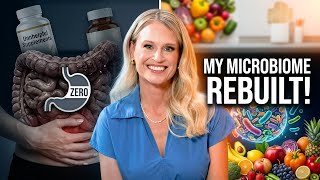
Cynthia Thurlow describes how a severe food-poisoning episode in Morocco during perimenopause destroyed her gut microbiome, triggering a years-long recovery. Declining estrogen reshapes gut bacteria and increases inflammation; she rebuilt her microbiome through a carnivore phase, then slowly reintroduced fiber and targeted supplements like sodium butyrate.
Chapters
So many women have lost hope and they've been struggling with their gut issues or their hormone issues for so long that they just mentally feel defeated. And so it's like, I don't even want to read another book because it's not going to work for me. So give them some hope right now. If you're tired of doing all the right things and still still feeling exhausted, stuck in your body, and disconnected from God, this podcast is for you. I'm Dr. Tabatha Barber, a triple board-certified functional medicine physician, and I help women stop fighting their bodies and start healing them God's way. Let's get into it. Welcome back to the Fast of Faith podcast. Oh my goodness. What an amazing break we just had.
Yeah. So refreshed.
Are you feeling refreshed?
I really am.
You did a lot of driving.
I did a lot of driving, but I think we planned it perfectly so that we could have some time at home. And yeah, I really do feel refreshed. It was weird that we both went back to work yesterday, my husband and I, and we both felt really good. So.
I think it's because we were out in nature. You were out in like the northern states. I was out west, but we were, like seeing the national parks and hiking with our children for spring break. And there's just something about getting back to God's land, you know?
Yeah. You had the sunshine. I had more snow, which was fine. But I will say that I'm sure you felt the same way. There were so many times that we all said like, God is just so good. Like there's so much to see and so much land. And you're just like, he created this.
Yeah. It's pretty, it's mind-boggling. Yeah. Like my jaw was on the floor half the trip. Like, Wow, God, you're, you're incredible.
I know. And your Grand Canyon story that you shared yesterday in the Sisterhood, like it is, it's just incredible.
So, mm-hmm.
Yeah, you're probably right. I know we saw, we had a hot tub at our Airbnb and we sat in that so many nights and just like looked up at the stars and my son was like, you can see the stars. I'm like, yeah, cuz there's no pollution and they were not in our crazy neighborhood. So yeah, it was cool. Yay.
Well, I love that. We need to do more of that.
Oh yeah, and we successfully both went away at the same week. So I feel, yeah, yeah, God is really good. He's worked really hard. Like, we've worked really hard behind the scenes with our business. We have amazing team, like, huge shout out to them, um, on this episode. So yes, thank you to all those people who held everything up so that we could be with our families.
Yeah, amen. Oh my gosh, I'm so excited for our guests.
I know, me too. When I was reading her book, I was like, oh my gosh, this is what we talk about, this is what we talk about. So good.
Yeah.
And you know, we're talking about traveling and she is on tour for her book right now. Yeah. Traveling like a mad woman because she has a really important message to get out to the world. And you know, I've known her for years now and probably 4 years ago she was like, I wanna reach a million women. And I was like, let's go. And she's done it. She's reached like, 10 million, 15 million women. So I am just so honored to have her here and she is an incredible woman. So if you don't have time to listen to this entire episode, make sure you pause it and come back. Like, this is gonna be a game changer for you. I know we talk about this a lot of the times, but she's gonna be connecting some dots with our hormones, our gut, our immune system, and how it all plays together to really make us who we are and the experiences we're having. And things like travel can throw all that off.
Yeah.
So you need to have— Especially airplane travel.
Yes. You need to have actionable steps that you can take and things that you can do. So welcome Cynthia.
Oh, thank you so much. I've been so looking forward to connecting with you both on the podcast and best way to start my Tuesday morning.
Oh, yay.
I love it.
Yeah, and it's a busy morning, so we're gonna get right to it. But I do want to sing your praises because it is no small feat what you have accomplished in, you know, such a short period of time. And I want to get into your story because it's all part of your mission. And hello everyone listening, there's a theme to our guests: pain to purpose. Like We bring you the people who have been through the trenches, who have been down in the pit, and they have climbed out and they have turned it around to help other people. I believe that's why we are here on this earth. We are here to do God's work, and Cynthia is no joke. So she is a two-time TEDx speaker, author of the new book, The Menopause Gut: Balance Your Microbiome to Reclaim Your Health in Midlife and Beyond. But ladies, like Cynthia has reached millions of people with her TEDx talks, especially on intermittent fasting. That's where we first connected. And you are just out there spreading your message. So you mentioned you're on this crazy book tour, you're doing like 5 podcast interviews every day, and yet there are still people who don't know this information, right?
It's so interesting to me because I think because we work in this integrative medicine space, like it's what we live, eat, eat and breathe on a daily basis. But the average woman that's out there is not aware of some of the complex interrelationships between lifestyle and how that impacts our health. I think we still think in many ways of medicine as being very siloed, like you're a gynecologist and therefore it doesn't matter what's going on with your heart or your lungs or your brain. But yet we know that it's all interrelated. And I think the sooner that we are able to make those connections, the more sense it makes. Like, you know, we are connected spiritually, emotionally, physically, and our bodies are constantly interpreting what we are exposed to, whether it's what we use in personal care products, whether or not it's our relationships, whether it's travel. Our bodies respond accordingly, even if we are not cognizant of the information that it's receiving at a cellular level.
Yeah, absolutely. And I love how you open your book with your personal journey of like how your microbiome, your gut health just went spiraled down with traveling. But what I wanna hear more about is like what you were going through mentally and emotionally during that time. Because ladies, go get the book. It's an amazing resource of information and learning what's happening to the microbiome. And things in your immune system. But like, I want to hear from you because so many women have lost hope and they've been struggling with their gut issues or their hormone issues for so long that they just mentally feel defeated. And so it's like, I don't even want to read another book because it's not going to work for me. So give them some hope right now.
Yeah, so I kind of start the book off just to give context about this romantic 15th anniversary trip that I took with my husband to Morocco and how we ate the same food and experienced the same things, and yet one of us got the worst food poisoning of her life, which kind of set into motion— because I was in perimenopause— the right series of events to land me in the hospital for 13 days. And as a clinician there's nothing more humbling than being a patient. You know too much. The hospital that I was hospitalized at was a hospital that I had rounded at. I had been part of a very large cardiology practice for, gosh, almost 20 years. And the awareness that I was, number one, I was as sick as I was because I recall saying to my husband, and as a physician you'll understand, when a patient tells you that if they don't figure out what's going on with you, you know you're going to die, I had this impending sense of doom My husband, who's not a medical person, was like, "I don't know what to do with that information." I was in the emergency room and they didn't take me very seriously because my blood pressure didn't look that bad, my pulse didn't look that bad. But as soon as they drew labs, they knew that I was very acutely sick. I went for a CAT scan. It led to this long hospitalization. I just recall on day 3 being despondent and depressed. And by day 5, they actually had to start IV nutrition because I'd lost so much weight. My muscles were literally being catabolized and broken down. And there was this overwhelming sense of— a sense of spirit, God visiting me, giving me this option and saying, you have two options. I can either end your suffering or I'm going to let you live. And I remember thinking at the time— I'm trying not to get emotional, but, you know, at the time my kids were 7 years younger than they are now. So I had a 13-year-old and 11-year-old, and it was so clear to me that, like, living was the only option. But I had never felt such a strong connection to God. And in that moment, I was like, I'm going to fight. And so I'm going to fight, and I'm going to ensure I get out of this hospital bed. And I had a series of complications. In fact, the surgeon after I had my appendix out 6 weeks after this hospitalization, she actually said to me, "If you had been any other patient, you would have died." Like literally said, "You would have died." And so it really left me with this tremendous responsibility that if I was going to continue living, then I was never going to think small. If I was going to have any intentions, setting intentions, and of course, 27 days after I was hospitalized, I went on to do a talk that, of course, changed the trajectory of my life, my family's life, obviously millions of people that watched that talk. And I just think that there are zero coincidences. I have never felt more despondent than I was during that hospitalization because I felt like if I had no idea that my health was changing in response to declining hormones, how can I expect my patients to know But it also left me with incredible hope that God does have a plan, that sometimes it's not entirely clear in the moment. But certainly for myself, I left feeling like there was a Cynthia before that hospitalization in March— February and March of 2019— and there was the Cynthia after. And so I think for a lot of people, it's, it's comforting, probably validating to know that people go through these life-changing experiences where you're really being asked to dig deep emotionally, spiritually, philosophically, and try to make sense of what you're going through. And I think that it was such a profound experience that I— it took me a long time to even talk about it. I mean, it's now 7 years later.
Yeah.
And interestingly enough, Tabatha, I've had several female podcast hosts who have like started to help me unwind and have this deeper conversation. Because for a lot of people, they don't want to go there. It's like, it's scary. I don't want to talk about that. Someone suffered emotionally, et cetera. But yet I know that that is part of God's plan. Like, yes, I went to Morocco. Yes, I got food poisoning. Yes, that was unpleasant. And then several months later, having this lengthy hospitalization with the awareness that God puts these opportunities in front of us to, you know, to see what, to see what comes out of it, but also what an incredible lesson, like, and a lesson for myself on resilience, a lesson for my family on perseverance, and just realizing that there's so much more to us than we may even realize. Like, I would never have believed if you had said to me the day before I got sick and ended up hospitalized, "You're gonna go on this amazing journey, and what comes out of this amazing journey is that you are going to step into a different awareness, a different person, a different sense of self. And so I always say there was the Cynthia before February 17th, 2019, and there was the Cynthia after. And so I don't even think I recognize that person from before, because there's been so much growth, not just emotionally, but also spiritually.
Mm, I feel that so deeply. Oh my goodness. That has literally been our theme this year at the Fast to Faith podcast is God is doing good works in us, and are we accepting it and getting on board and saying, okay, what do you got for me? Or are you like just going in the fetal position and crawling in your hole and dying? Like, I feel like you have such a choice. I love the word opportunity. I'm so glad you said that because it really is God is not trying to remove your circumstances or prevent you from experiencing anything challenging. He is trying to mold you into a better version of yourself. And for you to go and bless other people with that new version, that better version of Cynthia, it just gives me goosebumps. It is, it is literally why we are here. So bravo to you. I'm I'm so excited for everything that you have gone through. I say that with so much love because you're helping so many people, and I know it was painful. And I hope whoever's listening to this right now who just got a diagnosis of cancer or, you know, told they have to have half their colon removed, which you talk about in the book, or anything just, it feels traumatic. It feels like it's unfair and life is coming against you. No, this is like your opportunity to really redefine why you're here and what you're doing with your life. And menopause is the perfect time for that, you know. I love what you call it, middle pause. It's like there is a previous version of us raising the children, just collecting the paycheck, going through the motions, surviving but now we're stepping into this space of like, wait a second, God's got bigger plans for me. Like, that part is all done. Now what? And what we keep seeing is women are stuck because they're dealing with their gut issues or their nervous system issues, all the things, and they're so focused on that that they're not stepping into what God has next for them. So I hope women listening right now are seeing this as an opportunity to say, okay, let me figure this physical stuff out so I can go out and fulfill my assignment, right?
Yeah, it's giving— it's— we're giving women permission right now to advocate for themselves and to be the best version of themselves and let the past go.
Real quick, I just want to interrupt this conversation for something super important. Even though we need to take care of ourselves spiritually, emotionally, and physically, we do have to take care of ourselves at a cellular level. And that is why I have my Fast2Face supplement line. So let's just take a minute to hear about something that might be the game changer that you need in this season. We didn't talk in detail about the difference in omega-3s versus omega-6s when we talked about Omega And it's so important because the standard American diet, one of the worst aspects of it is the high levels of omega-6s. Like, that's what's destroying our cells, right?
100%. You know, oftentimes we don't really have a choice. I mean, if you look at your labels, if you, if you go out to eat like the average human being, you are going to have omega-6s. Omega-6s and omega-3s are called essential fatty acids. What the name implies, they're essential for the functioning of your body, mostly stored in your fat, but they're very essential for the functioning of your body. Both of them are, but however, in a 1:1 ratio, meaning you don't need a whole lot of omega-6s. Now, omega-3s are phenomenal. Omega-6s though, in too much— like, you could have a ton of omega-3s and you're— it's Omega-6s though, if you have too much of that particular omega, it turns into inflammation. So you do not want to have too much omega-6s.
Before the food industry really existed, you could get away with eating salmon once or twice a week because you were not getting omega-6s in your diet. But now we, we're getting them everywhere we turn. We're getting them in their coffee drinks, in the morning. We're getting them in our, you know, everything. That's why potato chips are bad for you. Not because of the potatoes or the salt, because they're soaked in omega-6 seed oils. And so we're just combating this. And that is why we need omega-3s in such high levels. I can't even tell you how different I feel when I add in Omega Lift because I do tend to consume a lot of omega-6. Just with traveling and having two teenage kids. So we're never eating dinner at the same time, or we're always grabbing and on the go. And so I have to combat that. I have to counteract it. How did you even heal yourself? Oh my goodness.
It took time. I mean, I'll be honest with you. You know, after 6 weeks of antibiotics, antifungals, and then a pretty interesting surgery. You know, your appendix should be a pretty routine surgery, but of course mine wasn't, uh, given all the other constellation of complications that I had. And I reminded myself, I mean, it took 9 months to be able to eat something other than meat. I was full carnivore because my gut microbiome was ravaged. Like, the antibiotics that saved my life clearly, um, had, you know, altered the gut microbiome so profoundly that the only thing I could tolerate was stewed meat. And that might sound fun in the short term, but it wasn't in the long term. And then slowly, you know, it took over another like 18 months to get to a point where I could eat vegetables, cooked vegetables, and even eating a little bit of fruit. So I mean, it completely changed the way that I ate. It changed the way that I lived my life because all of a sudden I realized that I had to be more intentional about sleep. I had to be even more intentional about stress management. Because you can imagine being in a hospital, the amount of stress that your body is under. I mean, it takes— it's like, it's like a ripple across a pond. You feel like it's just, oh, it's just the ripple, the initial ripple, but it's the realization that it's going to take years. Like, I honestly believe that my gut microbiome will probably— will be in the 7 to 10 year mark in order to be able to recalibrate in a way that I'm able to tolerate certain types of foods. Like, I just had a colonoscopy in December because I get them every 5 years. We have a really bad family history of colorectal cancer. And so we had the 2020 colonoscopy to compare to the 2025. I had a new gastroenterologist. I'm in a new city. And he said to me, you know, I was looking at your old scan and I'm looking at this one. And he said, what are you doing differently? And he said, you have no inflammation. No internal or external hemorrhoids like you did on the other. What are you doing differently? And I said, I radically increased my fiber intake. And so he was like, I wish all of my patients' colonoscopies looked like yours. It's like perfect, pristine. This is what I hope for all of my patients. And so it just validated that all these little changes that I was making little by little because my microbiome was desperately trying to acclimate to an environment where it had been decimated. Cumulatively, the things that I have learned over time have really been beneficial. I think for a lot of individuals, you have one round of an appropriately dosed antibiotic or you go through a divorce or you lose your job or you have some other— you have a child that gets sick or a parent or a loved one. We have these sentinel events in our lives that can shift the microbiome in really profound and significant ways. I always remind people there's always things we can do. The microbiome is incredibly malleable, but it does take time. And I think for everyone, it's understanding that as our hormones are declining, as our neurotransmitters are changing, you know, these opportunistic— whether it's an opportunistic infection vis-à-vis picking up Giardia in Morocco, or it's these other kind of sentinel events that people have. Like, as Shawn Stevenson says, life is lifing. Like, as we are going through life, things are happening. That is part of life. Some things we have control over, others we do not, but how we respond and how we show up is our choice, truly our choice.
Oh my gosh, I love that you mentioned that you were carnivore for a while because we put our clients and patients on that when they have no beneficial bacteria and they're like, what's going on? Why are we being extreme like this? So I would love for you to talk a little bit more about the fact that we cannot digest all that fibrous plant stuff when we don't have the right microbiome. Or, you know, the kimchi and the sauerkraut and all this stuff, those fermented foods, they just like blow up in your stomach like a madwoman. Quickly, before we do that, I want to mention— you mentioned fiber, and we need to get to that point. So All-in-One Microbiome Lift is one of my favorite fiber supplements that we have because it has like glucomannan and arabinogalactan and chia seeds and flaxseed. And I want every woman to be able to tolerate that. But sometimes when you take a supplement like that, if it makes you feel worse, so what is going on? Why did you have to do carnivore? And how do we get the fiber back in?
Well, I think first and foremost, you know, we're thinking about carnivore from a therapeutic perspective. I think you and I would both agree we're not doing carnivore for the rest of our lives. We're just using it temporarily as a stopgap while we are helping to reduce inflammation, while we are building back the microbiome. So I think that a lot of women, when they say to me, I don't tolerate any fiber, and I'll usually say it's probably a reflection, it's a mirror of what's going on at the microbiome level. I think that sometimes it is multifactorial, so there can be multiple reasons why this is happening. It could be the decline in hormones, it could be that you don't have sufficient short-chain fatty acids, and I'm sure we'll probably talk about these important signaling molecules. But for a lot of these women, it's helping them understand there is a bioindividual component. But when you don't tolerate any fiber, sometimes it's the amount of fiber. Like, I have a patient who loves Brussels sprouts, and I think Brussels sprouts are wonderful, but when you have someone that is a little more fiber sensitive, eating 3 cups of Brussels sprouts is not going to help your microbiome because the microbes are struggling to be able to effectively, you know, break this down properly, and instead what they're doing is they're producing more and more gas and bloating. So it's really, it's the tincture of the right amount of fiber in the right amount. So sometimes it's starting with maybe you are soaking some beans and you're adding a tablespoon spoon of beans to a meal. It may be that nuanced when we are thinking about what— or cooking all of your vegetables, not so that they're mushy. Like, I grew up in the South, or my grandmother, my southern grandmother, overcooked all of our vegetables, who I loved dearly, but that was just like the South Carolinian way. She would overcook everything, all of her vegetables. Then they're depleted of nutrients. But what we're talking about, we, we kind of work through an algorithm of what are the most easily digestible sources of fiber? And so cooked vegetables, fresh ground flax, and chia seeds are a relatively easy one. And just being mindful of portions because over time— it takes time. It's almost like when your microbiome is decimated, either due to, you know, my example of 6 weeks of antibiotics, but even a round of antibiotics can alter the microbiome enough that it can make it harder to be able to eat some of those foods. But we're really speaking to, you know, when we think about digestion as a north-to-south process. Number one, how many women are eating on the go? They're stressed, they're eating off their kids' plates, they're eating in the car. I used to eat standing up and dictating, so you can imagine there was no real optimal digestion going on. But digestion starts in the brain, and really think about— thinking about it from that perspective, we need to literally be in the right side of our autonomic nervous system. Which is the parasympathetic rest and repose. But most of us are— and this is why my family always said grace, like that was part of what we did before dinner. We would all sit down, we would take, you know, you know, a couple deep breaths, say grace, and then eat. But for a lot of women, busy women, entrepreneurial women, any woman, we're eating in our car, we're eating standing up, we're eating off our kids' plates. And so we're literally not optimizing our digestion from that which means we're not going to break down our protein in our stomach. There won't be enough ability to break it down into amino acids. It means in the small intestine, you're probably not going to be able to absorb and assimilate nutrients the way that you optimally should. It may even, if you're chronically stressed, lead to leaky gut where you're leaking food particles into your bloodstream and triggering an immune response. And for a lot of women in perimenopause and menopause, this is a huge problem. Certainly was for me. You're not able to detoxify properly. And forget about it, by the time everything gets to the large intestine or colon, those microbes are not going to be in an optimal state to be able to, you know, break down fiber and ferment it and create short-chain fatty acids. So, or let alone being able to properly poop. One thing I've learned during this book tour is that no one wants to hear the word defecate. It's too clinical. So let's just break it down and make it as accessible as possible. But I think when we're talking about at a very elemental, fundamental level, women don't fully understand that, that stress, being in a stress state is not going to optimize digestion. It's not going to optimize detoxification. It's certainly not going to optimize bowel habits. And so all of these things will contribute to alterations in the microbiome, like our microbes. There's 40 trillion bacteria, viruses, fungi and protozoa, they are dynamic. They respond to just about every, every input that you can imagine, whether we're getting enough sleep, whether you're running through the airport to make a flight, whether you just yelled at your spouse, whether you're eating ultra-processed foods or nutrient-dense foods, whether you're over-exercising. The microbiome adjusts and shifts accordingly. So I think at a very fundamental level, it's helping women understand that we have to prime our bodies for the acceptance of food. And when we're dealing with elimination diets, if we already have someone that has a compromised digestive system, it's like we have to be even more conscientious. And I think it's really hard to unlearn bad habits. Like I jokingly say, bad habits we learn in our teens, 20s, and 30s that maybe allow us to be incredibly successful people in our career, personally, professionally, can become maladaptive in midlife. And so, a lot of the pause when we're talking about perimenopause, menopause, is really determining like, is our lifestyle working for our physiology? Like that litmus test. And it really is a litmus test of like, is this working for my physiology? Because I know for myself, there were a lot of things I had to change 10 years ago. Like I can, I laugh about it now, but it was actually quite challenging at the time. And there weren't resources like your podcast, mine, or others 10 years ago. There just wasn't enough focus on middle-aged women.
Yeah, absolutely. You should not eat the way you did in your 20s, 30s, or even 40s. I mean, I can't even believe the way I used to eat. It would destroy me now. So you mentioned short-chain fatty acids. How the bacteria produces these, and it also feeds them and, and helps them break down our foods. Do you like to use things like sodium butyrate as a supplementation when you're trying to heal the gut and re-establish the microbiome?
I do like sodium butyrate. I mean, I think that there's a— I kind of think about this digestive fire component, you know. Does someone need hydrochloric acid to help break down their protein? Would they benefit from digestive enzymes? Do they need things like TUDCA? Because we know as estrogen's declining that we don't break down and emulsify fats quite as effectively. And so I always look at it from the lens of like, where do they need the most support? And generally they need both digestive support and then while we're rebuilding the microbiome. Like, I have a significant— my husband in fact was on 6 months of antibiotics, appropriately prescribed, But we have been using a lot of sodium butyrate in an effort to help with that. And that's one of those specialized short-chain fatty acids that can actually cross the blood-brain barrier, which a lot of people sometimes forget that these signaling molecules do more than just one thing. They do a lot of different things in the body. But yes, definitely one of my kind of shortlist of supplements that I think is really beneficial.
Yeah, you mentioned when you were hospitalized, you became depressed and despondent. What's happening in your gut is affecting your serotonin and your GABA and your dopamine. And like, it is all connected, ladies. I hope that they're getting this message that we cannot continue to look at things in silos. Having said that, we do get quite a few women with an elevated CRP level. And, you know, conventional doctors are like, okay, it's just your cardiovascular system. We got to work on your cholesterol. But I love how you describe, like, it is a general inflammation marker and it's probably stemming from your gut issues. But yes, it can cause cardiovascular disease, which is the number one killer of women in menopause. Um, so I would love for you to speak to the fact that our gut health is literally affecting Everything. It's not just our ability to poop and to digest our food and break down our food, right?
It's far more sophisticated. And I remind people all the time that the, the gut is interconnected. There's a gut-bone axis, a gut-brain axis, a gut-ovarian axis that dictates when we go into menopause. So I think that there is not one organ system in the body that is not interfacing with the microbiome. And for anyone to think that the gut is irrelevant, they're really missing out on opportunities to support their patients. You know, to your point about that inflammatory marker, high sensitivity CRP, we would tell patients it's sensitive but not necessarily specific. Well, it can be high for a lot of different reasons. And I think for a lot of women, they may be transitioning between perimenopause and menopause, and they'll say, I don't feel bad, I'm not having symptoms, therefore I don't need to talk about hormone replacement. I don't even need to have this conversation. I said, if you understood at a cellular level what is happening, because all of these hormones have cellular receptors, it's important to understand that there— it's not as if menopause exists in a vacuum. It's not bikini medicine. I'm sure, Dr. Tabatha Barber, for you as a GYN, you understand this better than most. I think that in many instances, women have kind of had this understanding that their hormones are just responsible for fertility, for breast development, and yet they don't understand that as these hormones are declining, every single system in the body, including the immune system, including the cardiovascular system, including our ovaries, which are the most mitochondrial dense tissue in our bodies, every single system is having to shift and acclimate. And at the basis of inflammation is aging. It's aging of the immune system. And I think about this a great deal. Obviously, my story is a really good example of what's happening as the, as the immune system is aging. But I think for a lot of women, they unknowingly don't realize that when they decline discussions around replacing hormones, that that can magnify all these other side effects. It doesn't mean that every woman listening is going to develop heart disease, although it's 1 in 3 that will probably get it. It's a larger conversation about this baseline inflammation that goes awry. It's like a wildfire that starts and it becomes systemic. It shows up differently. Like, brain inflammation can show up as brain fog. It can show up as trouble with word finding. And I think for a lot of people, they don't understand this bidirectional relationship between the gut and the brain. You know, the vagus nerve, which is a very important nerve— and I, I chuckle about this now, although I don't chuckle, like, at the expense of a patient, but I worked with a lot of cardiovascular surgery patients in cardiology who had their vagus nerve severed, and I literally cringe thinking that we didn't think that was a big deal 20 years ago, but now we know so much more, but how important that communication pathway between the gut and the brain is in terms of transference of information, transference of inflammation, depending on what's going on. So I think for a lot of individuals, they're humbled to know that our body is all interconnected and the gut really is at the forefront. In fact, I've started to go out on a limb in saying that it is the key longevity organ that you might never have heard of because in so many ways it is at the, you know, forefront of communication pathways, inflammation pathways with every other organ system in the body. And I'm sure we'll probably talk about the cumulative net effect of chronic stress and how that ages us. Not just our ovaries, but ages our entire body.
Well, I completely back you on that. I absolutely believe that our gut health determines our gyn health. It determines our overall health and our longevity. It really does. And the more that I have really dove into the word and studied scripture, you know, I've come to understand that Genesis, God tells us we were made from the dust. He took the dirt, he made us from it, he breathed life into our nostrils and regulated our nervous system and our microbiome all in one fell swoop. And so it's all very interconnected. And Ashley, I know in our program you see a lot of women who, they go through this initial detox, they're trying to clean up their diet and heal their gut. And then the rashes pop up and all of the skin system issues and they're just like, what's wrong with my immune system? What's going on there? Can you speak to that a little bit?
[Speaker:DR. TABATHA BARBER] Yeah, so actually what I was thinking about was I hope any woman who's listening to this that thinks, I don't have a gut issue because I go to the bathroom every day, because I hear that so much between discovery calls and coaching, like that's what they'll say, like, oh, my gut's fine, I go to the bathroom every day, but they're not sleeping, they have brain fog, they're depressed, they have anxiety, they have skin rashes, all this stuff. And so what you're doing, Cynthia, is literally bringing it all together. So I know we're gonna have so many women listening to this being like, oh crap, my gut is a mess. And so yeah, I think that is something that I really wanted to share, was that this is so much bigger than what you think it is.
Yeah, absolutely.
It's interesting. I will, I will share transparently with both of you, uh, because I had to have like a telemed visit with my integrative physician, but I woke up one day and I said, "I haven't had plaque psoriasis in 20 years," and I had a little plaque on my shoulder and I was like, "Wow." And so even though I'm doing all the right things, it's the cumulative stress of the book launch over time that was impacting my immune system. And so we changed some of my protocols and it's now resolved. But I think skin things are really a true reflection of what's going on in the microbiome, what is going going on with that, you know, leaky gut, you know, small intestinal hyperpermeability. But I use it as a, again, another litmus test of, you know, how well am I taking care of myself? Do I need to be even more conscientious about stress management? Do I need to be even more conscientious and diligent about sleep there, you know, sleep hygiene? And so I think for a lot of women, it's validating to know that even those of us that know a lot, even we can sometimes have skin things pop up. And it can be an ability to course correct. I look at it as it's vital information, but it's, it's a way of identifying an area that we need to do more in or do more with.
Yes. And you know what, so the program that we do, Healthy Her, one of the things that I love to say when the women are getting ready to transition and they're finished with that and they're healed and they're feeling so good, I say things to them like, if you have anything that starts to pop up, like just the smallest amount of psoriasis again Come back, get ahead of it instead of letting it cover your body before you come back and see us or you have another follow-up appointment. And so that's what we try to teach them is the knowledge to know how to kind of catch some of these signs. If you see that brain fog coming back, you do need to adjust. I think sometimes people misinterpret that it's a one-time fix-it. And they don't realize, I mean, Dr. Tabatha Barber could tell you how many times we've healed our own guts. It's embarrassing. But we're using our test as our testimony. Like, we both went through so much stress in our past careers, and then you take that stress away, but it doesn't necessarily mean that you're healed. Like, we're still doing so much healing. And so I feel like women just need to understand, you said it at the very beginning, I wanna bring it up again before we talk about stress, it takes time. And we're not just talking weeks, months. I mean, you're, like, listening to you, it's years. And you're, I mean, you said 7 to 10 years. Before you feel like you're going to be fully healed. So that's— women want to heal in 6 weeks, and I'm like, it took you 6 years to get here, maybe 60 for some women. Like, you haven't done anything in 60 years and you want to heal in 6 weeks? Like, you know, it's kind of like dream on a little bit. But I, I wanted to make sure that that was clear because women just don't understand that it's not a one-time fix it, especially because of our environment. And if you don't keep up with some of the daily nutrients and you don't keep up with your stress management even if it's good stress, like your book tour is good stress, but it's still stress on your body, right?
Absolutely. In fact, I was telling a group of women the other day that we were talking about in the context of blood sugar and continuous glucose monitors, and I said I had to absolutely take my CGM off the past 6 months because what the irony was, yes, sometimes when I'm engaged in a conversation, doing a podcast, my blood sugar goes up a little bit, but it's because my cortisol goes up, because I'm engaged. It is the airport travel. It is trying to make flights, trying to get connections, um, you know, being stressed trying to find your Uber driver. I mean, these things that seem kind of benign, but for me spike my blood sugar more than anything else. And so I said, for my sanity, I'm taking it off and not putting it back on because I already know what's happening at a cellular level. Like, it's just enough stress that Definitely. But I think it can be valuable. The point I'm trying to make is that I think for each one of us, you know, the power of the N of 1 and having that transparency about the input of stressors in our lives can be really valuable information.
100%. And the stress never stops. You know, you said our past careers were stressful. So is running 3 businesses currently and having a coaching business. It is. Just because you enjoy it doesn't mean your physiology reacts differently. Right?
Well, and I feel like we, um, we can be more honest with ourselves too of like, nope, this is not working. Like we got too much going on. We've gotta pull some stuff back. And kind of like you said, Cynthia, before we started the podcast, like you, you had to set some firm boundaries and that's what you have to do. But I feel like the three of us sitting here, we can do that and say that, but it took a long time. So to get to this spot.
Yeah, absolutely. Okay. So I want to hear, what are your non-negotiables at this point to maintain all of the health that you have recovered for yourself?
Oh, gosh. I mean, number one is sleep. I mean, it's comical when I go to the West Coast, I live on the East Coast. I try to stay on East Coast time because I've just learned I do better going to bed early. Being really conscientious about sleep quality, not doing as much socially. Like right now, I've scaled back enormously on what I'm doing socially so that I can maintain that focus on my sleep. And it's not just getting to bed on time. It's like getting off electronics. It's being really targeted with supplementation. It's red light therapy. It's PMF therapy if I feel like I need that. Obviously, anything that stimulates my vagus nerve is going to help me decompress. And there's lots of free things that people can do like humming, singing, gargling. But I do have one particular device that I actually didn't know about when I was writing the book, but I have found has actually raised my heart rate variability. So along with sleep, I'm tracking my heart rate variability metrics. Not that I live and die by those metrics, but it's a good litmus test of how well I'm taking care of myself. So number one is sleep. Number two is stress management, which goes along with sleep. But this is being vicious about boundaries. Like, I have a very toxic family member who I've been no contact with since last summer, and that has helped me so much. I've had to explain to my children— my husband's 100% supportive— but my autonomic nervous system is so much better regulated when I don't have to interface with this family member, which has been confusing for other family members, but I'm protecting my peace. But it also means, you know, I don't say yes to everything anymore. That includes like podcasts, press things, things that put me on an airplane, speaking events, whatever it is. I've declined working with certain clients. I have said no to certain podcast guests because it's just not good for my autonomic nervous system. But it also means I have to be more proactive. So stress management means connection to nature, For me, the right types of exercise, breathwork, being surrounded by the right people. Nutrition is huge, and I can tell you that I am not fasting right now. I still have 12 to 13 hours of digestive rest, but making sure I'm getting enough protein into my diet has really been prioritized. And on some days when I can't, I'm adding in essential aminos just to round it out, not because I don't believe in eating the whole, whole food piece. But sometimes with travel, it's impossible. Like this past weekend, I was at a medical conference, I had two book signings, and I spoke. And by the end of the day, I was like, oh my God, I actually never ate a decent meal the entire day. This is not acceptable. So being really conscientious about nutrition and meal timing, um, hydration is huge. And I don't drink alcohol. That has been something that's been a choice over the last 6 years. Um, I never drank much to begin with, but For me, that's a non-negotiable. And then I would say exercise is certainly really important. I think for many, many people, part of the challenge of this perimenopausal transition is figuring out like the types of exercise I did in my 30s, by that I mean like CrossFit, really high-level conditioning classes, I couldn't recover like I used to. And so there's strength training, there's zone 2 training, I do flexibility work, but the level of intensity, if it is intense, is brief. Because I know that I don't want to be additive. And certainly during the past couple months, there's been a lot of back off on intensity. And my trainer who I work with, who I hire so that I'm accountable and so that I'm working towards certain metrics, she knows. She always says, like, I can tell as soon as I see you what you do and do not need. And then, you know, I would layer in, you know, the gut health piece. So being really conscientious about fiber intake, that's something that's consistent for me. I try to get as much food-based sources as I can. I do have some supplementation, but it's usually super targeted. It's usually on a day when I know I didn't hit my protein macros, like rounding out my fiber is certainly really important. And then beyond that, it's, you know, we're really dealing with subtleties. Hormone replacement therapy, I don't think that there is yet a primary indication for estradiol therapy, but when you look at the research, it's incredibly compelling. And I do think that will be primary indications for estrogen, progesterone, and testosterone at some point. It's just not at the same level of influence as cardiovascular disease risk, bone health, although I'd make the argument if your gut's not healthy, your bone will also not be healthy, and brain health. Those are kind of like the big tenets that I think about. Then the targeted supplements, but I always say supplements are meant to supplement. It's like you have to major in all these other things First, and then targeted supplementation based on what you uniquely need. There's always key things like, things like magnesium and vitamin D. Almost everyone needs those. Some adaptogens I think can be helpful. But beyond that, it's really, you know, the personalized approach that I know you take with your patients and I do as well that let's figure out what you uniquely need. Like before you add a probiotic, please have probiotic-rich foods. Please have some fermented foods, please focus on your fiber. And then if we need to add more than that, then that's where supplementation I think is really important.
Oh my gosh, I couldn't agree more. That was a fabulous little synopsis of where you can get started right now. Like, go back, rewind, listen, write it all down, and see what you're missing on the list of what Cynthia talked about, because that is literally what you and I do to get our health back on track every time we travel and we're dealing with day-to-day life. So this has been an absolutely fabulous conversation, but it is just the tip of the iceberg. Like, I know women want to understand this better. So where can they find your book? When is it coming out? All the things.
Well, thank you so much for having me. Always a pleasure to connect with you both. Right now the book is on presale. It is on publication. Publication date is April 28th. So you can go to any of your major retailers, Amazon, Barnes Noble, Target, Books-A-Million. You can go directly to my website. There's a big banner. You can just click on that and that's www.cynthiathurlow.com. And we do have presale bonuses, actually bonuses you want. Things that you actually need. A lot of it is— you can play a little bit of detective work. We have a gut health guide. We have a little mini-series talking about additive things for the book. But these are things that my community asked for in terms of what would be most helpful to them. So, presale bonuses that will be available up until the week after publication. So, I know some people may not have heard of the book before or may not be familiar familiarize with my work. And so we want to be able to continue to offer those presale bonuses to individuals up to a week after publication. So that would be May 5th.
Awesome. Oh my gosh, thank you so much. Ladies, get your All-in-One Microbiome Lift. You can use the coupon what?
Podcast.
Podcast.
Okay, simple.
Get 20% off. But we need to start increasing our fiber and doing these things for our gut. And if you're new, you got to do the 5-day challenge because we just gotta—
you gotta clean up your nutrition, clean up your nutrition, get you closer to Jesus.
Yes, exactly. So I just want to leave you with one last thing. If you're new here, I give you a scripture to meditate on for the week. I just want you to think about it and ask God, what are you saying to me in this? How does this relate to my life right now? And I would encourage you, go read the chapter around that scripture and start to dive into the word because there is so much healing that can happen. The word is living and active. That's what the Bible says. And it is for you, I promise. So Jeremiah 30:17, "I will restore your health and heal your wounds," declares the Lord. That is a promise that's actually for you, not just Jeremiah back in the day. It is for you right now. So talk to God about that, meditate on that. And, you know, I hope if nothing else you take away from Cynthia's story that God did not design you in this season to just survive. He made you to thrive in it. And like, let's actually turn it around and give it to him, because he doesn't waste anything. He will use it all for your good and his glory and to bless other people if you will just get on board with it. So thank you for being such an incredible example of how we should be living our lives, Cynthia. You're just so awesome. I love you so much.
Thank you. So good to be here with you both today. Thanks again.
Awesome.
All right. And it's never too late and it's never too early to start.
There you go.
I think that's important. See you next week.
See you next week.
Bye, ladies.
If you like that episode, I have one favor to ask, maybe two. Can you hit subscribe and give me a heart? I want Apple to know that this is important information to you because when we tell them that, you will get more of it. So use your voice, hit subscribe, hit the like button, share with a friend. And the other thing, I want you to download the 5-day challenge and get started on it. Take imperfect action. I will see you in the Fast Faith Sisterhood. Till next time.








