Capital doesn’t stop at borders - Dr. Thomas J Powell at the EXLLM Conference in Madrid.
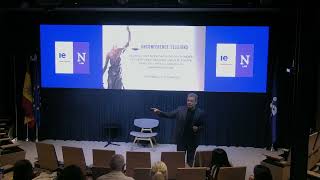
A recorded conference talk by Dr. Thomas J. Powell (EXLLM Conference) about cross-border capital markets and challenges founders face when raising capital internationally. He discusses scale of wealth, why many non‑US companies list in US exchanges (accounting/tax incentives), regulatory and disclosure complexity across jurisdictions, and practical founder-level issues (lack of preparation, due diligence, and legal/financial support).
Chapters
Work with founder led ventures or in the capital markets. We've got a couple. How many are interested in that?
I like that. Let's start with just a little bit of quiz. I know that in the United States many of our lawyers chose to go into law because they were very much good at debating, but they were also very bad at math.
Is that true? Okay, so I'm going to do a little bit of math quiz here. So what's the difference between a million and a billion in seconds?
In seconds.
So a million is about two weeks. A billion is 32 years, 100 billion. So when we start talking about math is 30 years, 3200 years, which is about the equivalent of our large sequoias over in Yosemite. So you see those trees? Big trees there. And 400 billion is about how long we've been around in society. So we go back to medieval times. Why do I say that? Well, something happened this last week in the financial markets that one person in one day net worth changed by $100 billion. Does anybody know who that was?
Oracle. Larry Ellison. Now see, when I was early in my career. Larry Ellison was early in his career. Yes. I'm a little bit older and I actually know down in Redwood City, I was down in Silicon Valley. And why I say that is $100 billion, when you put that in perspective and a concentration of wealth and the capital markets that are going on in the United States. And we were talking about competition. Thank you. Competition. Is there a consolidation when Nvidia does roughly 75% of one single part of that business, which is the processors, that process for basically AI and Oracle does a joint venture with them and that joint venture ends up getting $100 billion net worth. And where the 400 billion came in is that's now how much Larry Ellison is worth. So when you put that in comparison that in timelines, how much longer he lives now, he's looking pretty good for 82 years old, I think. But I don't know that he's going to live to be.
32,000 years. But why I say that is because this last year, 2000. Well, let's just go even 2H20, 25 or 1H25.
Do you think the US IPO market was still the biggest in the world?
It was. So more companies listing in New York right on our exchanges than anywhere else. But what's interesting about that is 62%, 62% were not US companies.
So that's impacting everyone else in the world. Why would they come to the US and why would there be a greater number of foreign companies in the US or then in the US filing on our exchange? This is a participatory part for you guys to talk in. So, and I love.
So I mean any part of that is an interesting part. Does that interest you guys? Okay, so what it says is, I think one of the professors talked about capital markets. What do they require? What do capital markets require that we in this room all bring in. Now I'm still in law, even though I'm not aware.
Huh. Stability, Stability. You've got to have stability of laws to be able to trust that the markets are going to be there. Because there's plenty of other markets that they could list in and probably get the liquidity event. But would they know that the markets are probably going to be reasonably stable in the law side? Now here's the other statistic that's interesting. So 62% of the listings last year or the first half of this year were international companies. 93% of all international listings were done in the United States. All cross border. Isn't that interesting? We've got a lot of other markets. So they didn't choose to go to any of those other markets. So this is a group that would know why is that?
We couldn't say that it's stable.
I think that's partly it. So I've worked in Singapore, I've been in London, I'm dual citizenship with eu. So I see these other markets and see why would you want to do that scenario? One of the major things is the financial accounting changed, the rules changed. Because it used to be that we use this very archaic and not that great system called gaap. And of course in the United States it takes forever to change anything. Very complex systems. So GAAP is not the clothing store. For those of you that remember that the G A P, it's spelled G A A P.
Believe it or not. I know an awful lot of people in business that don't actually understand what GAAP is. But the international financial standards became dominant in the marketplace to where now those are actually better standards. And most US companies are actually starting to go towards the international standards. They still have to do gaap. But an international company that's listing in nasdaq, guess what? They don't have to do. They don't have to do gaap. So two companies of the same size, it's about a million dollars difference in annual costs for them in their. So what would have happened in the past is that an International company would be invested in by the US Company that would go public. And then they take that money and go international with it and maybe repatriate it back to the United States, but maybe leave it in Ireland if the tax laws are better. But what this is saying now is because of some of those changes, it's actually more advantageous for a foreign company to come over to the United States and list on the foreign. On the US Exchange. So taxes.
Don'T really change. Right, Just. But the tax accounting changes. What else changes do you think?
Say it again. Yeah, no more acquisitions. Right. So you have partnerships that are going on, but you don't have whole takeover of companies that still have then this corporate office back in New York scenario. You're having this now my career, I don't know if I actually. I didn't do any. I don't know why I even have this out of use, I guess. So our company, my background is in Silicon Valley. I started as a banker. I came very late to the law partly because I had general counsel department reporting to me. And I said, boy, I need to start learning a little bit more about this segment over here. As we're.
It's one of those things when all of a sudden you're spending more on legal fees than you used to spend on everything else in it. So that's why I attended the LLM program, which was excellent for me, and then I actually took that and went on to get a Doctor of Law and Policy. So in the United States we have too many north universities. So I went to the other north university, which is Northeastern.
And I teach at Eastern for Law and Policy, which if you want one of the more complex, you think the common law for everybody else that doesn't deal in common law is complex. Start dealing with federalism, which is the states and the federal government. And if you do business in the United States, you know what this is like because you're dealing with the federal rules and you think that's all it is. And then you go to State of California and all of a sudden you're dealing with something else. Then you go to Massachusetts. Why can't you guys systemize this? So. So I teach that for Northeastern now. But the reason for that part on the law is we work with founders, usually early stage founders that are raising their first round of real capital. And I've done it across the world. We've worked in Guernsey, worked in Hong Kong. And I've seen how it's done in various locations, but it's still Very similar in every single location, most every founder. What do you think that the very first step that they think is in raising capital?
It's a little bit before that, calling the lawyer. Right. They call the outside counsel because this is first round of capital. They don't have inside counsel yet. Right. So they call the outside counsel, and then what do they ask the outside counsel to do?
Draft documents. Right. Has anybody talked to a founder that has never raised capital before? Do you think they show up prepared?
No. So we were talking about what's it like to be counsel to a founder. When you're getting them through the documentation stage, they are thinking, oh, I need $10 million, because we've run the financial analysis, and if we can raise $10 million, we can grow this into $100 million company. And then before you know it, I'm going to be the next Larry Ellison. Right. That sounds like the typical story.
Right.
So. But how much goes in before you guys could ever even start drawing the documents?
Deal size. Yeah. What else?
You know? Nothing. Right. And does the founder know much?
No. How much due diligence do you think they have set up in their company relative to everything that you're going to put in those documents saying that they actually do nothing? Almost nothing. Can you imagine this? And then what happens in the United States? Do you think we have one or two regulatory companies that oversee founders when they first raise capital? No.
We have almost a number of listing. So I love this. My daughter started a coffee shop. She's 38 years old now, but when she was finishing up her mba, she decided she was going to be an entrepreneur. She starts a coffee and wine bar and she opens up the store. And of course, she's got labor laws that she has to worry about. Then she has the inspectors come by to see how clean everything is. And then they have to do a grease pit, which says, we don't even serve food here. But no, we have to have a grease pit. So then that's a whole nother. Then the construction, the fire department, all the various things that come in to do that. All of these things are actually disclosures that go within a document when you're raising capital. Right. And then the best one was they're playing music. And she was smart enough to know or had been learned or maybe took advice from her dad. She was using a radio instead of a CD player. Why would that matter?
Because of the intellectual property rights.
Right. Who would know that?
A lawyer.
But could you possibly give a new founder every single thing that they have to Watch out for.
Pretty close. Would they read it all? No. No. So how do they find out?
Experience. And what is it? It's another lawyer coming by who's going to, I hate to use the word extort them, but is actually going to extort them to pay a fine so that they don't. This is kind of like how you used to watch Boston or New York where you'd have the police officers in with the mob. Sometimes it feels like that with the regulators. Right. But it's our job to make sure that those documents are right there. Now why am I talking about this? Because this is just in the United States. What I really wanted to talk about with everybody here is the cross pollinization of capital. How do we create products? How can we from Silicon Valley and the entrepreneurial world world look at how can we get more ventures funded? That can be cross border ventures and think about that. Because I don't know, everybody's home rules. If I go into Peru, it's going to be different than if I go into Colombia and if I go into the United States, it's going to be different throughout the States. Apparently we should go to Switzerland. That's where I love to go ski. So it's all good up there. My classmates know that I ski a lot. I live in Lake Tahoe. So what ideas would you guys have if a founder was coming to you and whatever countries that you're in? What would it be? If they said, I want to open in the next door country, I'm doing something here, I want to raise capital. And by the way, I have investors from both countries. How does that start going in the documents?
Yeah, so do you have to collaborate with a lawyer from the other country as well? Right. And then can you blend one set of documents or do you do two separate fundings?
You can blend them. Okay, so we've seen it in both ways because again, in federalism in the U.S. if you raise capital just in, let's say California, you can just live under California securities laws and not worry about at all about US securities laws. No SEC doesn't matter if you raise $100 million. If you do it all from California, you can do that. Kind of interesting, right? But if you take one investor, you have 10,000 investors, you have one investor that comes in from Texas. What just happened.
You now are in an interstate offering, which means you just brought in the sec and so you just put all those other things in there. So it's the same way with the international side, is that if we are Doing it in the US and we bring in zero international investors into a US Company.
You can just do it in a state, maybe you could do it in the sec. But as soon as you bring in an international investor, what do you need to start complying with.
International laws? Believe it or not, so especially if you travel there. So in our cases, when we had an office in Guernsey and we're doing business throughout Europe, we have to comply with every single law that we're doing. There's got to be a better way.
Don'T you think? Not as lawyers.
We don't like that. So who has raised capital in here or been part of a transaction that raised capital? So give me an idea of what it looked like. How much was it? Was it a public company, was it a private company?
You prepare a white paper with the investment memorandum and then you should comply with the requirements of the local regulator.
You just have one regulator that you have to comply with. General.
No, no, the crossboard, the all jurisdictions you are.
Raising the capital.
Okay.
For example, if you are doing investment fund in the US Raising capital in U. S. Canada with assets in Mexico, you should comply with the free jurisdictions, Canada, US And Mexico.
Perfect.
And you can lend some documents. But other.
And we're seeing a lot more deals between the three countries. A lot. Tremendous amount, which is interesting because we didn't used to see that.
We saw a lot of international investment coming into the United States, but we didn't see necessarily a lot of US Investors going down into Mexico.
Yeah, I think that the international structures that the Latin American venture capital are using is to have Canadian LP with vehicle in the US to raise the capital and then the vehicles in each local jurisdiction to have the assets or to spread the investments.
Okay, yeah, that's what we're seeing as well.
So Canada, U.S. mexico, again, people that are everywhere else in the world know geography better than people that are in the U.S. but we actually have two border countries. A lot of people in the U.S. don't actually realize that. Sometimes I laugh about it, but.
It'S kind of funny. So what he's saying is you set up, the LPs are up in Canada. Right. So they're generally a family office or it's a collection of some of the pension funds. And then the GP is going to be in the US and then the actual assets are down in Mexico. And then there's an operator and then the fund is set up from Mexico. Okay. Well, I guess the operating expenses are done for Mexico.
What accounting system are they going to use? In that one, which kind of accounting model are they going to follow?
Well, usually international accounting system, but since we have the US Component, we should vote.
You do you still do gaap?
So is that three minutes? Oh, cool. Okay. Wow. I'm like, hi. Okay. So what that is, is that. So that's a very, I think, US Centric scenario in that you have to do both. Right. But we have an awful lot of money that goes into Mexico that's not actually from the United States. Is it easier if it's not from the United.
States?
No.
And then how much is buying real estate in the United States from Mexican investors? Do you do that as well.
To the United States investment?
No, I'm not an expert in real estate in the United States, but there is a lot of people that is doing some investments in industrial facilities, in house developments, but I don't know how it works.
From Mexico to US and then you're in Georgia. No.
Well, I raised money in Washington state when I was not a lawyer and I didn't care about anything.
You didn't know what.
Yeah, yeah. So they figured it out. There were a lot of filings to do with the state law, business license, with the SEC, fundraising, etc.
And you did that for a business in Georgia, is that right? In Washington. Oh, you were in the U.S. okay. In Washington state. Okay.
From the government side, we invested in Delaware venture capital, but I was dealing with from the government side as an lp.
Got it. Okay, that's great. So I guess the point, the point of the question was on the starting of the math scenario is you said the lawyers took care of it. Right. Do the lawyers generally do the finance side of it.
The math? No. How do they validate the math?
They go back to the. Yeah, they go back. Or they get the finance. The outside finance people. Right. So basically everything's in there. I think one of the biggest complexity things that we find for the founders is they don't really know, first of all, all the pieces that go into it and your disclosures, regardless of where you are in the world, they don't explain it to the founders of what actually is needed to go into all of this. And then the third part of that is as soon as they have the documents, how did you raise the capital? So it's great that you. That you personally did it. Was it because you had the documents? No.
It's a very complicated process. So you go out to meet the investors, you decide. This takes months.
So basically we got.
One seed investor. Then who was the anchor then the others followed up. One of the anchors, he said that my team will follow up with your team and they will do the deal, and then we let them take care of everything else. Honestly, the thing is, you really don't care about those things at all.
You're focused on the building, the business. Yeah.
You're focused on your thing, and that's a big issue.
So that, I guess that's the piece that I want to talk about, was crossing all the borderlines. If you can imagine how hard it is to raise capital just in your jurisdiction. And when you do cross border, they don't know. But in a lot of cases, you don't know either if you're not in that jurisdiction. But to the point of the founders do not know what it's like to raise capital. And I say this from experience. We've worked with over 500 founders, $3.2 billion in capital raised. And I will tell you that until someone has done it for about the fourth or fifth time, they don't even know what it is that they're doing. And they don't realize how many problems there are that they don't even take up in advance. And so those disclosures that you do are critically important to give them informed decisions in that. So I live in San Francisco and Lake Tahoe. If you want to follow up anytime with it, or if you're coming into the States and want to chat about venture capital, we are looking at deals across the world. So it's always something fun to at least chat about. Appreciate the time. Thank you.
More from Dr.

The Business You Built May Not Be the Business You Own | Founder’s Office™ Lunch & Learn



Your Business Isn't Worth What You Think It Is | Founder’s Office™ Lunch & Learn


Complexity Is Quietly Destroying Enterprise Value | Founder’s Office™ Lunch & Learn


Simplifying The Complexity of IP | With Tony D'Angelo | Founder’s Office™ Lunch & Learn


