Founders As Investors (The Secret to Raising Smart Capital Every Founder Must Know)
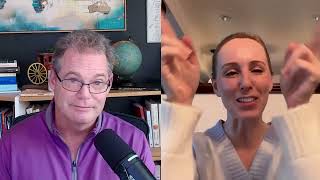
A conversational interview where Dr. Thomas J. Powell and Jackie Kuiper discuss why "not all capital is created equal." They contrast investor and founder perspectives, present a simple due-diligence framework (problem → market → moats), emphasize storytelling and resilience as critical founder traits, and introduce the "founder's isolation paradox" (founders feel alone despite surrounding teams). They also describe the Founders Office's deck analyzer feedback service and recommend matching founders with investors who already recognize the problem being solved.
Chapters
Foreign.
Well, hello, it's Tom Powell with the Powell perspective. And joining me today is our general counsel, Jackie Kuiper, or Jacqueline Kuiper, if you actually ever send her an email. It's like, my, my Siri always goes off on that because it doesn't know who Jackie is. But, Jackie, how are you today?
I'm awesome. Glad to be here.
You are awesome. We're so fortunate. I am one of the lucky men just in who I surround myself or get to surround myself with as team members. And Jackie's a very special part of our team. And for those of you that don't have general counsel as part of your team, I got to tell you, it's probably one of the best investments you can ever do if you find a great person. So Jackie and I work together a lot on investment deals, both deals that we invest in and more. So sometimes the investments we're doing ourselves and then specifically working with founders on their raising of the capital. So we've got all sides of the spectrum. I've done a little more than $3 billion in investments over my career. Jackie's been along for the ride for a big chunk of that last segment, which also had some ups and downs, but which is interesting. And today at the founder's office, we are talking not all capital is created equal, and both sides of the table need a framework. So I'm going to just let you kind of start in there, but in, you know, we've had some recent deals where we're looking at the cap table and how that's come together and how that has impacted either life for the investor or life for the founder, and in many cases, life for both. So with that, tell me a little bit about your background, why you're so special, and how capital stacks play into this.
I like when other people talk about why I'm so special more than me talking about why I'm so special. But my first career was as a bankruptcy attorney. I came out of law school at a really interesting time, 2008, and I was fortunate enough to land a job, and it was by chance with a bespoke debtor and creditor rights and remedies firm. We were doing a lot of bankruptcies at that time. I became a Chapter 7 trustee. Learned a lot about asset identification, asset management, liquidation of estates. And I learned kind of in a backhand way about capital and what goes wrong surrounding different capital situations, primarily those that are unexpected. I think with capital, there's a good chunk of things you can plan for and then a hefty amount that you can't plan for. But as you mentioned, having frameworks around what you're doing can really help you prepare and protect yourself.
So.
Let'S also mention you are a unique JD with the law degree. You also have an mba.
I do.
From Pepperdine.
I do.
All right. Which is also, it's an awful lot of fun because we talked to so many attorneys that even put, you know, documents together or believe they're going to litigate the documents that have, you know, something went wrong and they have no clue of how the business actually works and understand that. But you've got a, you've got an in depth knowledge about that, both practical and educational.
I have a strong educational background. But you mentioned in one of your prior episodes ope other people's experiences learning from that. I will say the bulk of my learning has been through either my own experiences or being on the periphery of.
Other people's experiences, including my experiences which are always fast moving and multi, multifaceted at different times. Where we can look at it. So tell me about this. Not all capital is created equal. We see out on LinkedIn has become one of my bone of contentions at the founder's offices. There's a lot of people that are putting stories out there about how to raise capital, how important it is to get the pitch deck right, how the capital is going to look like this, or this is what VCs specifically do, or this is, you know, tell me what, first of all, what is capital?
Capital can be a lot of different things. It can be equity, it can be debt, it can be a shared appreciation loan. There's so many different ways to structure capital. And I think we're having two conversations here, really. Right? There's capital from a founder's perspective. Perspective. Do you need capital? Are you preparing to receive capital? Whether it's from investors or maybe you're preparing for an exit. And then there's capital on the investment side. Are you diligencing a deal and considering placing your own capital? And if so, what matters to you? And there are so many different factors to consider again from both perspectives.
Well, so we've created a model A that comes out of the experience that I've had over the years and as well as one of my mentors, a guy named Bill Fisher. And one of the primary things that we start looking at is what problem is being solved, right? We call it the bad guy. And then from there we move to if you solve this problem, is it a big market? Is it a big enough market to make sense, and is it a big enough market that'll keep you interested? And then the third part of that is the intellectual property or the moats. So that's really the. The problem side or the persuasiveness of the problem side of that. How do we put that or how do we discuss that? When we're looking at our own due diligence for deals or when we're helping a founder raise the capital, they don't tend to articulate that really well.
I think there's a lot of buzz out in the industry, I'll call it on what matters. And I don't know that that buzz always hits the mark. There's a lot that goes into your pitch deck as though you can create a perfect pitch deck and go out and then the capital just lands in your lap. And the pitch deck is part of a formula. But I think from the founder perspective, you really have to have the story down like you're talking about the problem, and then why are you the solution to it? Right. And it kind of tracks this hero's journey. Why are you the group or the person to solve that problem? So it kind of leads you through this arc of. It's a story arc A to B to C, and then from an investment side, same thing, kind of look at their story. There's a lot that can go in a pitch deck. Does it all matter? What's the level of trustworthiness? And Candice and I have had huge conversations surrounding what to look for in an entrepreneur when you are investing in them. The number one thing we would look for is resilience. Someone that is transparent about failure. They've failed before and they're here giving it another swing.
Yeah, Kenneth, actually, I mean, she has that as one of her benchmarks. When we're sitting around the kind of credit committee, the investment committee, and if they have not been bloody, she doesn't want to do the deal. She's like, they have. We don't know what the resilience is. We know that the market goes through ups and downs. We know that ideas ebb and flow as they go through. How have they been able to get through those challenges? How have they gotten through the Friday when they didn't make payroll and they held their team together? How does that happen? And I think that's a big part of the storytelling yet again on. On all the Facebooks and everything out there, everybody wants to make it look like it's perfect. Right. I love the one entrepreneur who talks about she's Taking all the customer service calls from the bathtub. Right. She's every single position that's a founder. Right. And any billion dollar founder will tell you that's the same way. It just is.
I think there's also a word of caution to be on the lookout to founders who are too attached to their story. I mean, our history and our story is one thing, but it's a narrative. And it is a narrative that's true and accurate and we're using it as a launchpad to move forward. Or is it a narrative that really anchors us in the past, in our victimhood, what happened to us? Right. So the storytelling is super important, but within that, how, how much attachment is there to someone's story?
Yeah, well, and, and that's interesting because it's, it's. Are they stuck in the problem? Yeah, they find the solve the solution for the problem. And is it so myopic that that problem's not what everybody else is sharing? Well, so, so you, you work with founders, you work with me, but you work with other founders as well. And one of the things that we measure is can that founder work with a team? Can they actually attract and then retain that team of the right individuals to help them solve the problem? Because no founder can solve the problem. That is scalable. It takes a team. Right. So that team is the next big part of that. How do you, how do you do some due diligence on the team? What's, what are we things we're looking for?
First of all, I think before you turn to the team, you have to look at that founder and say, is that founder coachable? Is that founder the smartest person in the room with nothing but ego? Or is that founder, again, transparent? And say, you know, are they open to saying, I've, I've screwed up, I want to hear other people's ideas? Because the most open founder that's willing to say, I've messed up, here I am again, let's go. When they're open to hearing out team members, they can attract good people. If that founder, it doesn't matter who you attract, what team you build around you. If you're not willing to be supported by and told no, or if you're not willing to listen to your team, it doesn't matter what type of team you can put around you. So it really does come back to the entrepreneur and the founder. Are they coachable? Do they care what other people think?
That's interesting. So we do have experience with founders that were the smartest person in the room. They wouldn't listen to anybody else's idea. And generally, how does that turn out?
I can think of a specific founder. Can I tell a story? It's pretty, I'm not going to use.
A name, but it's an ugly story.
I can think of a specific founder that had an accounting team, but alleged that the accounting team could be replaced by monkeys with 2 cent pencils and software.
Right.
That does not inspire passion, morale.
Strong confidence in leadership. It doesn't inspire much at all.
No, it doesn't. And it also is one of those things on a conversation earlier today and I said, one of the things we found is that when founders get to about that $10 million level, they've started to bring in the accounting team that's more solid and they may even be looking at hiring that CFO. Part of that challenge is do they hire the CFO that has ran a $200 million company or do they actually hire a CFO who maybe is a junior CFO, but has been in a startup? So a junior CFO from, you know, Google is not the same as a junior CFO that is in a startup that maybe just passed the $10 million mark because that, you know, they've got one has a very established 20 year company. Yes, it's great, but it's not that entrepreneurial anymore. Now if they were there in the founding of Google when it passed the $10 million mark, that's a big deal. Right?
This, what I love about chatting with you is that we start like on the base of a tree and we go up and just take all these branches, 15 different. I know, yeah. And we could do an entire episode just on this. But what you're getting to is the team you build.
Do they talk to each other? We've got, I mean, we've got this founders isolation paradox. A founder say they do build this team, they build a great team. They, they inspire their team, their team believes in them, they're open to hearing their team. Okay, teams all around them. But the founder can still feel very alone. They've surrounded themselves with professionals, but they discover that.
Unintentionally just because these, you know, careers and different roles get so siloed. Accounting is not talking to legal, and legal is not talking to marketing. And all of a sudden you've got a founder that feel they're surrounded by people, but they feel like they're carrying all of the burdens alone. So it is super important, it's critical, even mission critical, to resolve that paradox for the founder.
So in in our, I guess, journey of finding that founders isolation paradox and when we named it, and it's actually our name that we've now taken right. As a trademark on that in education. The thing that has been interesting for me is everybody around the founder recognizes the founder is in the founder's isolation paradox. Generally, the founder does not recognize that until it's gotten so painful that they're on the border of the, you know, the families falling apart on one side, their capital's falling apart on another side. The bankers are calling in on a personal guarantee, even though they're highly profitable. Their attorney has just informed them that, no, I'm not really your attorney, I'm your company's attorney. Which the attorney's been telling them that that whole time. Right. The spouse is saying, I was a founder too, remember me over here? You know, all those various things are coming in there and it usually comes out when they're starting to set up their trusts and they're like, oh my gosh, I don't know what's going to happen if I'm not here anymore. And everybody else is like, it might sometimes be easier.
That's kind of, kind of true in that space. Right. And our job is to help at the founder's office get them through that. Because the Ben Hardy's of the world are talking about scaling, but until you have something you can actually scale from, you can't scale.
Right. So we started our conversation talking about how not all capital is created equal.
Nice to bring it back around, all.
Us back on that track. How would you start that conversation with let's start with founders before investors with founders. How would you start that conversation saying not all capital is created equal? Let's start thinking and talking through this.
Well, I'm going to actually say let's start from the other side, let's start from the investor side. And the reason I say that is it is far easier to get investors that already say me too than it is to find investors that you convince that this is a good investment.
And that's why I start at the story and why we don't start at the solution. We start at the problem. So it is the odyssey, right? One of the oldest stories, if not the oldest story that we've been telling, at least in the western civilization, which is you've got someone who's out there in kind of a total mess up and until there's a problem to solve, he can't be the hero. So the hero is about solving a problem and going on that journey Right. And so that's where this comes in. So if I, as an investor have identified that I want to have a calendar system that works a certain way and is able to call people back and make sure that they are on time for their appointments and it happens with or without my staff in there, because it's a pain point for me and someone brings that idea and a solution to me, I'm going to write a check because I personally experience that problem and if I can have an ease of understanding it, then I will write that check. Because I'm like, man, if I can solve this and it's a big problem and these guys show that they can do it, then we have an opportunity. Right.
So is it fair to say you'll invest in things that are solutions for you?
Solutions for problems that I've recognized. Right. So how did we get into a cannabis business? Well, we got into a cannabis business not because I was interested in cannabis or partying or any of those other things. I got interested in cannabis because my kid's grandmother got breast cancer. And then with the breast cancer, cannabis was what allowed at least a.
Moderate level of comfort while going through the chemo. Right. And so at that time, they're saying, okay, well, we will do a legalized cannabis as a medical solution. And I'm like, well, it absolutely should be, because you shouldn't have to be going to a back corner to get illegal cannabis if this is something that actually solves it. So that was a problem that didn't impact me directly. It impacted me on something I saw. And it's like, okay, this should be. This should be something that we can solve. And it is a big market and that's what it is. So the reason I start with that is as a founder, if you are looking for capital, you don't just find rich people or rich offices. It doesn't matter how many high net worth people you go talk to, if they don't resonate with the story, then all you're doing is educating them about the problem. And then the next time it comes around, they may invest because they've gotten more educated and more aware of that problem. What you really should be doing is looking for the people that have already recognized that problem and are looking for the solution. And then when you can articulate it through your deck and all of your documents and everything is aligned, you will raise the capital. And that's what we do at the founder's office, right? That is what we do. And I got to give you shout out because you Created the system that is so amazing. So someone can come to our website, they can load up their deck in, I don't know, it takes less than a minute. Maybe at the Founders Dash office, if.
You'Ve got your deck ready, if it is on your desktop, on your laptop, on. If you have it in a folder and you're ready to drag, it takes 10 seconds.
Yeah. So you can drop that in.
All of the thoughts that we've had for 30 years of me raising capital and what you have from the legal side, we've put into this deck analyzer that comes through and our team looks at it, and within 24 hours, we give you a detailed report about what's missing in your deck or relative to a storytelling model. That does not mean you're going to absolutely raise the capital, but if you aren't there, then what it means is you've got inconsistencies or huge missing parts in your deck, Right. So you get this feedback back. It doesn't cost you anything to do. We're not upselling anything. So there's nothing else on that. You go drop that deck in there. And on the opposite side, we also do this for the investors, because what we find is many of the investors out there are actually founders, and those founders identify with some other founder instead of identifying with the problem the founder solving. Right. And so what we have found over our time is these founders put a whole bunch of money in after a founder instead of after the problem that's being solved. And that always ends up messy, or in almost all cases, ends up messy. So it really does start back with that problem, and then being able to articulate it and then being able to have that the background and the framework match it, which is what we were going through on the other side before you so eloquently pulled me back into this. Not all capital is the same, which is a whole nother part of this whole conversation. So if you're an investor, we do the exact same thing for investors that we do for founders, right? You drop that deck. So you're looking at a deck. You get a deck, you put it in there, and we will give you the notes of what we think about it. Now, we don't know a lot about you, so you'll still have to take a look at it and say, do I actually know the problem that's being solved? And here's how these people need the help of being able to do it. And you're fine if you share it back with the founders. Right. But it really Is now let's go to what we started with and we'll make it very quick. The right capital, I think of it as Jenga. So there's pieces and all these capital stacks that go within there. And if you've ever played Jenga and you. You are able to move the right pieces out at the right time, generally you'll win at Jenga versus somebody else who's being haphazard with it, because not all capital is the same. And we started. What I started back in 92 was because I watched other founders lose their companies to predatory lenders and predatory capital that came in and I said, you know what? That is not how we're going to do it. We're going to grow these founders, and if we have to grow the founder out, because that's the right thing to do, then we're going to do that and give them, you know, a habitable exit. But for most parts, if we can keep them involved and we'll surround them with the right team, that's where it comes in. And that's the right kind of capital that you want to look for. There's all sorts of capital. Every time you reinvest your own profits into the company, you're making an investment in your company. Every time you go without a paycheck as a founder, you're investing in your company. So you should give that same look at that capital as you would any other investor. It's not less important. If anything, it's more important. So not all capital is equal.
Yeah, great way to round that out. There are a lot of different branches we can traipse down here, but a lot of really important considerations there, again from both sides, founders and investors.
Well, and as Jackie said, I can go off on all sorts of tangents, so that's why she's here, to round me back in. But here at the founder's office, we've got an awesome feedback loop for you from our general counsel and our team. It's not legal advice, it's not financial advice. It's going to give you story advice relative to what it means to actually raise capital. As a founder with literally billions of dollars of experience behind it and over 500 founders that we've worked with. So please feel free to load up your deck and we will be happy to give you some feedback. Jackie, thank you so much for being on the PAL perspective as always, and thank you for being part of the team.
Thank you for having me.
Yeah, absolutely. And thank you. Please join us again here at the PAL perspective It's always a pleasure. Take care.
More from Dr.

The Business You Built May Not Be the Business You Own | Founder’s Office™ Lunch & Learn



Your Business Isn't Worth What You Think It Is | Founder’s Office™ Lunch & Learn


Complexity Is Quietly Destroying Enterprise Value | Founder’s Office™ Lunch & Learn


Simplifying The Complexity of IP | With Tony D'Angelo | Founder’s Office™ Lunch & Learn


