Lunch & Learn - Session 10
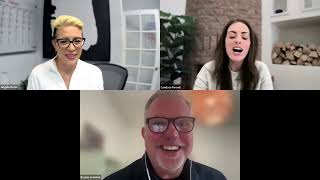
Brian Levinson, founder of CYTK, talks about why people start companies, what he learned from failing repeatedly, and how to build trust with investors. He shares stories from early layoffs that pushed him to start a business and a cliffside lunch that became a decades-long mentorship.
Questions this video answers
Brian Levinson — founder and CEO of CYTK.
A platform giving automotive technicians instant hands-free access to repair knowledge at the vehicle.
December 4, 2025.
About 80% of his investors have invested more than once; about 70% have invested more than three times.
Chapters
Hi everybody. Welcome to the founder's office lunch and learn. You've got me, Candace Powell and Angela Flores here. Angela and I've been working together for 15, 17 years.
Yeah, about there.
So we were 12 when we started.
Maybe 10, I don't know.
Yes.
We'Ve built, we've, we've been like joined at the hip like on every project. Probably not so much by choice by Angela, but because I need Angela. We have built investor relation teams from the ground up multiple times over. And so today's topic is very much in our lane, our wheelhouse. And so we have Brian Levinson. He is the founder and CEO of cytk. It's a platform that gives automotive technicians instant hand free access to repair knowledge they need right at the vehicle. I am not in automotive at all, but I am a tinkerer and a big DIYer and so I fell in love with this product immediately. It's one of those tools that you kind of understand once you see it in action. And Brian's done a great job of showing us how it works and, and how it serves his clients.
Brian and I also share a lot in common, except height. But between the two of us, we average out to one very normal sized.
You guys just get to see the floating heads on screen.
But Candace is much taller than I am. I just caveat there.
That's what it is. Yeah, I'm actually, I'm actually six five and Brian is five foot two, so.
And also I, I really, I just really like Brian. I like him as a human and as a founder and that really matters. Investors talk all day about product and market, but at the end of the day we, we invest in founders that we trust and we want to support and want to see them build something great. And so even though CYTK isn't necessarily in my investment niche, I love supporting exceptional founders and that is in my niche.
So.
Brian has been at the front edge of machine learning for years, building early cloud based analytics tools, working with the I'm going to get this with Tongue Twister Rolls Royce Turbine team and contributing to several major exits. But what stands out most is his philosophy. He builds technology that strengthens people rather than replace them. So Brian, we are really excited to have you here today. Thank you so much.
Oh my God, thank you so much for having me. I want to express just right out of the gates that especially for any founders listening to this podcast, a lot of times you'll be in conversations and you'll try to be engaging people and there will be souls that jump out of, at. Out of you and that understand what you're doing and that support. And you'll be able to feel that immediately. And that's what we felt with Candace and Tom. So it's just been wonderful to be with you guys. So I just want to say that up front. Candace, you're right. You know, it's really interesting because I always, I never thought actually that I would become a founder of a startup. I, I didn't think that was going to be my path in life. But I reached a point where I had some personal success and AI was starting to take over and take. Take over the world, so to speak. What a tidal wave that we've all been faced with. And I started to think about the effect of AI on humanity and the effect of AI on jobs, the effect of AI on just people's enthusiasm of what they were doing. And if all of a sudden there was this great force that was a million times smarter and a million times faster, would that leave the human behind and what would that look like? And, and then how could we kind of create technologies within that context that would empower and embolden that human and make them, in essence, a better version of themselves? And you touched upon that. But that was really at the heart of why we started our company.
And it's so obvious in every update that you give too, that, that is your, your underlying, like, thread of.
What you do, what drives you. And I think that's the part that I really appreciate. There's such a human to everything you do and even how you communicate. But I want to go back to.
You talk about you didn't think you would be a founder. You didn't think this would be your journey. Why do, why did you become a founder? Why do people become founders? It is kind of a gritty place to be. It's definitely. It looks sexier on TV than it is in reality, for sure.
I mean, it's hilarious because now I have found it over four companies over the last 20 years or so. And, and you know, of course it's not always the best thing to do when you have a wife and family.
And so there's always that consideration. But it's a funny story, actually. For me, there was, there was really two. Two foundational learnings that happened to me. And hopefully we're all still learning. Right? That's, that's the best part of life. But one of those was I was sitting with my father years and years ago, and he looked, he looked over at me and he he was a builder. He would build apartment buildings and shopping centers. That was his line of work. And he never. He looked over at me and he. He expressed to me, you know, Brian, you. You probably don't want to work for the, you know, for a company for your entire life. And I'm like, well, you know, you know, why. Why is that? And he. He was like, well, because most people you work for will try to get as much as they can from you for as little as possible. So the math usually never really quite adds up. So what you really want to do is you want to kind of use your own brain and create something in this world and create something you can become passionate about. And so that kind of sticked. And I know you have a very similar dad that I have. And so that. That kind of stuck with me for years and years. And then the second thing that happened was I was in this kind of marketing/bd product role at Viacom. We had a very special SWAT team where we had control of all the assets, like mtv, when MTV was really big. The. When you see, you know, on the roadside, you'll see billboards by Viacom. There was websites like CBS Sports Watch, all of these different things that we had kind of access to, cbs.com/t cetera, et cetera. And what I was able to do was I was able to create marketing programs that leveraged all the different assets, you know, whether it was radio or television or billboards or whatever that might be. And I was in my 20s. I was still a punk kid, but it was. It was a wonderful, you know, it was. It was wonderful to have that kind of control and power and to be able to go to the huge brands and do those things. And what happened was our division, which was comprised of other, you know, other components and other teams we met. We missed our Ebitda basically by a penny. And that triggered a massive layoff. And. And I experienced that like, you know, as a younger man. And. And the layoffs came from, you know, some, you know, overlord in New York. And all of a sudden, you know, I saw like a third, you know, of the team just get. And I. I couldn't understand. And Candace, what I did was I actually from. I wrote my first startup business plan, and I thought to myself, if I start to do absolutely nothing, how long will it take for the overlords in New York to figure out I'm doing absolutely nothing? And it took them about seven months to figure that out. And that's how I launched my first company.
Yeah, they're not in it. They don't know that's. Well. And I think you bring up an important point of, I mean, a lot of times founders are built out of.
I don't want to say like desperation, but it is why they say like recessions make more millionaires, right? Like, that is when, when you experience those moments that founder, like spirit can shine and come out and go, oh, okay, now's my time.
And it's so true. And I think the other big piece of that on, on what is, is that a lot of the founder's journey is, is a negative context, is failure. It's really interesting because if, if you ever thought about, okay, I'm going to do this line of work, and 98% of the time my efforts probably will not amount to anything, and I will continuously be faced with skepticism and negativity, and yet here I am on this journey. It's a very, it's a very unique path to go down and to try to keep, you know, a, a positive attitude as you're going through that and, and try to understand the learnings as they're happening, you know, here in Silicon Valley. And, you know, this can. Is better than anyone, but a lot of the venture capitalists, you know, they, they praise, you know, the young Stanford graduate or the young Berkeley graduate that has been at Facebook for three or four years, was in the product team, all of a sudden, you know, spurted out on her himself and they're doing their own thing and, and that, that kind of creates the ecosystem. And what's interesting is I was, when I started to found companies, I was a little bit older and I had that experience of just massive failure, like time and time and time again, like over and over and over again for years and years and different things. And so when I finally did get to a point where I founded scitech.
And I was able to kind of create that path for us. It's been, it's been really the learnings of the failures that has helped us get to the point where we are, are now.
I love that. I, you know, I love, because we've talked so much and I, I love a failure story. Not because I sit here and I'm like a Gore fanatic for people's wounds, but it's what builds us, you know, it's true.
And there's this, there's this famous gentleman, not a lot of people know of him. Um, his name's Bucky Phil Fuller, Buckminster Fuller. And he was really popular during the 60s and 70s. He was a Harvard dropout, all intents and purposes. He had really extreme alcoholic issues. And he was a genius. He. He became famous because he created something known as the geodesic dome, where that dome, every point of the dome, actually has a foundational piece to it.
And what was really. Oh, we might have. I'm seeing Angela now.
Oh, did you not see me?
I see her. I've seen her the whole time.
Oh, okay. No, no, no. I was just wondering because I was talking, then it switched over to Angela.
Well, good. Everyone, here's Angela.
Here's Angela.
What's really, really fascinating about Bucky and what Bucky talks about, if you kind of dive into his is he talks about a lot of life is actually climbing out of the hole, right? We have those. We have those moments, you know, in the sun where, you know, where we have a sunny day on the slope. So those moments do happen, but a lot of times we're kind of in the blizzard and climbing out of that hole. And if you can appreciate that climb, understand that you're in the climb, it kind of makes those days and, And. And that journey a little bit easier. And so that's always really kind of carried with me, you know, as. As we've been building our company.
I love that. Thank you. I think Angela and I can relate to so much what you said, because from the investor.
Investor management perspective, which I know we're kind of weaving part of that in a little bit today.
But I think. I think I can relate a lot to that. I don't know, Angela.
No, I agree. No, I do have a question for you.
Yeah, please.
You know, every investment investor is a different personality, their risk tolerance. How do you adjust your communication style without creating mixed messages or.
You know, it's with. With the investor relations, the. It. It starts. It starts at the very beginning.
And.
The first. The first piece of it is, is Candice can say that, you know, we've met in person, right? We've. We've had that time to interact in person. Granted, I wasn't able to meet Candace in person until after she made the investment, but usually I try to make that effort to meet. To meet someone in person. There's a famous stories about Steve Jobs, about how whenever he was hiring someone important, he would take walks with them. And so he would show up sometimes he would go to their house. There was one guy who would talk about Steve came to my, hey, I hope I'm not, you know, interrupting anything.
Just show up.
Yeah, he showed up. He's like, hey, would you like to, you know, go for a walk. Famous story in Silicon Valley, like, oh.
Hey, yes, yeah, okay.
And you know, they, they, they went for a walk and he asked Steve like, you know, hey, you know, why, why are we going for a walk? And Steve was like, well, because I wanted to get to know you.
On who you are versus how you present yourself in a, in a boardroom, in a leather chair and with the lights on. So this enabled him to like, really, you know, kind of take that time and get to know that person. And that, that kind of always stuck with me. So the first answer to that, Angela, is like, you know, go out there and go for a walk, right? With folks that are, that are investing. Get to know them.
Understand? And Candace, we talked about this at our summit, you know, a couple months ago now, or whatever it was, but understand that you're doing the interviewing as well, right? It's bi directional, it's not one directional. And try to learn as much as you can about that other person and about their philosophies. And some of the times I've gone away thinking that probably wouldn't be a person that would, you know, appreciate our community. Like, that's happened to me. And it's the hardest thing because.
As a founder, you're, you're scraping a lot of times, you're scraping by, right? And that, that's your context for months, years. And to not accept something or to not follow up with something, it's, you can imagine the insanity that goes through your brain as you're kind of going through that.
I mean, you're, you're speaking to the choir here because like, we, we've had, and I'm going back to you talk about like climbing out of the hole. It's why my, my kids asked me why it can't be like we had Halloween. They're like, why can't it be Halloween every day? And I'm like, because you would never appreciate Halloween, right? Like, you would never appreciate that time in the sun if you weren't sitting there clawing your way out of a hole all the time. So Angela and I've spent so much of our career having to communicate as, you know, we, or the founders that we're working with or whomever are climbing out of the hole. And sometimes you fall right back down into the hole and you're starting over. Or worse, the hole's deeper now.
But I think a lot of it is trust too. Like, you build, like building that relationship and the trust that the investors have in you, the Founder and what they invested in that. And you know me as an investor relations, like, I've built that trust and relationship with the investors, you know, so them being able to reach out if they have a concern, if, you know, I think is really important. And it's more of the relationship. If you're building that trust and relationship, you know, they're, you know, they're more, I don't want to say willing, but like, you know, comfortable making that investment. You know, not just, yes, it is the product, what the return is, but they want to trust and feel that comfortable. Be comfortable with what and who they're speaking with.
Yeah, no, absolutely. And I told this story. It's. It's. It's really relevant for. For what we're talking about. I told this story at, At. At our event. But I had this opportunity through one of my dear friends. He's like, hey, there's this gentleman that wants to meet you. He might be interested in investing. I'm like, great. You know, and he's like, I can't really, you know, talk about who he is or anything like that, but, you know, just go to this address on Saturday, like, you know, so you showed.
Up at somebody's house.
I showed up at somebody's house.
You pulled a Steve Job.
And it was on a Saturday.
And this. This house happened to be in San Francisco. There's a street called Broadway. We call it Billionaires Row. And it's all the homes that are basically above the Golden Gate Bridge and above the marina, and they have the whole view of Alcatraz and the bridge and all those beautiful things. So I pulled up at this. This wonderful, beautiful French Tudor home.
Four stories. They're all cliffside homes. And one of the people there came out and met me and walked me around, and there was this beautiful yard. You could imagine a cliffside home having like this huge flat yard.
It's, you know, sounds like a real dump.
It was a real dump. And it was about 11am in the morning, and I had just gotten my Starbucks, and I go and I sit down with this gentleman. I know this podcast will be broadcast online, but I sit down with this gentleman who was one of the founders of one of the largest companies in the history of the world. And he's. I think. I think he was drinking a martini.
And as you do on a morning.
What else are you gonna do? Not a care in the world. And I. I kind of looked, you know, over to my right, you know, and we were basically on top of the Golden Gate Bridge. His I was looking down like at one of the piles of the. And. And then I looked at him, he's kind of giving me a shitty grin, right? And then I'm like, you know, wow, you have a yard here. And he's like, oh, Brian, the upkeep is such a.
Anyway.
What. My landscape.
Anyways, we, we sat there. He basically, he was such a bright individual. He told me what the journey was going to be like, some of the obstacles that I was going to encounter. He told me he loved what I was doing. Cut me a check right there. Didn't make me wait or didn't say, I'll wire you. Just gave me the check. And on my way out, I said to him, I said, hey, you know.
Would it be okay if, you know. And this was to your point, Angela, I said, would it be okay if, you know, once every three months I, I took you out for lunch? That'd be okay. And he's like, wait, you, you want, you, you want to take me out to lunch? I'm like, yeah. He's like, but, but I just gave you the check. Like, I'm like, no, no, I, I would, you know, thank you very much for the check, but I would, I would really love to take you out to lunch. And so without fail, every three months for the last six years now, and by the way, I've got in more checks from this individual, but every, every three months, just take him out to lunch. And it reached a point now where I'll be in my day to day business and I'll come across something that is challenging for me and I'll text one of the most incredibly successful humans that have ever walked the face of the planet. And I'll text him and I'll say, hey, what do you think I should do? And then within seconds I will get a text back on what I should do. So it really was never about the money. In, in a lot of the cases with a lot of the people that invest with us, what it is, is, is, hey, what kind of community are you building? What type of people are you bringing into the fray? What's what, what are their experiences? Is there a diversification? Do we have wonderful, thoughtful women like Candace? Do we have, you know, other spectrum of maybe ethnic groups participating and really getting a full mix of understanding and of, of ideology and of experience? And it's being conscious as you're building that, of those diversifications and of that mix. And that usually works much, much better than seven white guys.
I obviously love that you said that I said it. You said it. You know, I mean, there's. I've now gotten to a piece in my age and career where I now just blatantly call people out. If I look at your board of advisors.
I'm like, we go to.
We click on.
It's one of the things they look at. And I'm like, hi, there's no women Love this. Where's your diversity? It's the same white dude. Copy paste.
You know, it's funny, Candace, you remember this. One of our CTOs, she actually recently left, which hurt us all, but she left for this extraordinary opportunity which will be set up for life. So we were kind of proud to.
So it was a mix that's so.
You to be proud.
And like, I was very proud. But basically Kate, I can say her first name.
Very rarely agreed with. With anything that, you know, me or David, the other white person, you know, had to say it was. And it was. It was awesome. Because a lot of times I would just take a step back and I'd be like, oh, my God. Like.
I think I agree with Kate.
Different perspective, different. You know, different. Just a completely different context of approaching problem.
And I look for that a lot in founders. So anybody on the. On the line or watching the recording, as an investor, I look for that a lot in founders. I will ask a question. I'll see how it is received. Because I'm looking for, do you take.
Other information, other perspectives? Are you coachable? Do you surround yourself with people that are smart and that you take their advice or their opinion? I will never invest with a founder. I mean, I have in the past, unfortunately. But who's the smartest person in the room? Biggest red flag to me as a founder. Who is the smartest person in the room? And I think like Brian, your humility or your. The humanness to you just even what you said about being proud of her for getting to that next thing, that's like, that's. You continue to remind me why I was such a solid yes. On investing. Every phone call with every single phone call is a reminder to me and a confirmation of like, yep, this is why I invested. I do want to ask you, because you're so good at the communication and you do have this human element and I want to like shift it a little bit to you keep in such great contact with all your investors. How do you balance between. I owe you this update per the covenant, per our documents. And I want to keep you aligned without over sharing. Because I've also seen other. Other. You you walk this line so well. You're one of the best of navigating this line. I've had lots of investments where they either over share, under share, or puff or they're not abiding by their covenants and keeping to what it is that their covenants, like what their documents require for communication. How do you walk this line?
You know, there's a few things. So it's funny because.
I, I have some investors and they, and this is when we were sending out monthly correspondences and my, my idea there was, I wanted to write the story of the company and just share, you know, that story. And just the most honest, you know, just, you know, investors know, companies go through cycles. Investors know that bad things happen and good things happen, and it's not just always a joyride. And so honest you are with people that have actually been there before, the better, ultimately the outcome. So I've really tried to just be as honest as I can in the communications. Granted, I have this extreme optimism that I'm always trying to temper. If, if the founder isn't overly optimistic, it's going to be a little bit of a challenge for that person. Not to say it can't be done, but you really need, you know, an optimist. And then on the flip side of that, though, I do have the, I do have balance with my COO and other people who are kind of more pessimist. So as you know, glowing in optimism, I'm also getting a really nice balance. Right. But I think, just to answer directly your question directly, I've had people who've told me I overshare. So that's something that, just to let you know, like, I, I've, you know, there's been two or three, but the majority of people that I talk to are like, Bry, like, thank you so much, like, for your updates and just for keeping me in tune on what's, what's happening. And I just really appreciate that effort that you make on that front. And so that's been the majority of the feedback that I've received.
Even when the updates are not positive, you know. Yeah, yeah, we hit a snag, we hit a delay.
Yeah, yeah, you know, and, and everything's, you know, nothing just goes up the entire time. Like, it's there, there's, there's nothing that, that does that. It's actually, you know, when things are becoming challenging, articulating those steps that you're thinking about how you're, how you're working towards that improvement of whatever that area is and what that means, that makes everything much more real.
Not only for the investor, but for your team as well. My team reads the updates, so I purposely CC everyone on the team so they know exactly what I'm thinking as we're going through everything. So it's extremely important to keep your investors updated. And then, you know, what happens is I would say about 80% of my investors have invested more than once, and I would say about 70% of my investors have invested more than three times.
Yeah, it's that trust in that relationship that you build. And the fact that they're an investor doesn't want to feel ghosted, you know, like, what's happening with my investment. So some may think you overshare, but they might think differently if you didn't share anything.
Yeah.
Better for you to reach out first than having them reach out, hey, where is my update? So, yeah, very highly important.
And because. Because of this, because of the support system that we've been able to establish, I don't think we're going to need to do a Series A, you know, as a company.
So that's absolutely, utterly fabulous for all of us. Right. Because we're going to be able. I strongly believe we're not going to have to do a Series A. And then if we do end up wanting to do institutional funding, maybe it will be in the context of bank financing. Right. Like a traditional business. And the only reason why we're in this position and why we got here was while we were frugal and we've run, you know, a really tight ship and we haven't overly paid ourselves and we manage the money very well. But the other reason why we're here is because of folks like Candace. Right. Like, they believe they come back in to help. They don't want the Series A financing either. And they want to see, you know, a traditional business take. Take hold of, which we don't all get diluted to hell and have. And have that success, you know, with that team. And so I, I think we have a. There's no guarantees, but I think we have a really good shot.
And you were really choosy about your investors. I think that's one thing I repeatedly hear from you, is that, like, you, you're friends with all of your investors, whether you were friends before the investment or not, but you're selective. That's why you're seeing so much, is because you're choosing people who see the same, you know, maybe the same vision or at least are on board with. With where this could be going and because investors, if you get the wrong investors, they could really tank your whole project. I mean, at the end of the day.
Yeah, no, absolutely. I mean it's, it's, it's scary. Like a lot of, a lot of my investors I, I was friends with before and they had seen me, they had known what I'd done before in the past, successes that have happened before. So I had that advantage also. I'm in a beautiful part of the world where there's just a lot of folks that love entrepreneurs, where I live and love to support entrepreneurs. So that physically where we live has really helped. But to your point.
It hasn't always been pretty. Like you can never be perfect with everything. You know, you try, you try your best, you try to, you know, you try to put in those protections that you can, you try to be as honest as you can. And it's, it's never a perfect science, but you're right understanding, you know, those folks that, that you know, are coming together. And a lot of, a lot of this came from, I was at companies that were, that got venture capital funding. So I went through those experiences and what a lot of people don't realize is when the VC cuts the first series a check, you don't get the entirety of that check. Right. Everyone's like, oh, when, when I was, When I was 27 years old, I was at a startup. We raised $40 million. A lot of that came from business development, product deals that, that my team did, honestly. And we were so happy.
And we ramped up our staff. We hired the ex CFO of Gap to come join us. It was great learning for like a 28 year old. Yeah. And I'll never forget, I was, I was on the phone, you know, this was right before the dot bomb. I was on the phone with my brother and I, I was like, Dave, you know, I'm so much more talented than you are. I'm so much more successful than you'll ever be. It was a, you know, a pretty normal brother to brother conversation. And, and he's like, Brian, you're the greatest. I can't, couldn't agree with you more. He's like, out of curiosity.
You know, what's, what's your startup's burn rate? I'm like, oh, you know, we're burning about 4 or 5 million quarter. He's like, oh, wow, you have like hundreds of employees now. I'm like, yeah. It's like, well, what was your revenues last year? I'm like, oh, well, you know, we we did 11 million in revenues. I was responsible for 5 million. He's like, you're terrific, Brad. He's like, you know, it's interesting. I have a 711 at one of my shopping centers in Hilo, Hawaii. And I think they did 11 million in revenue last year with seven employees.
And I'll never forget, like I took the phone like away from. And I, I looked out over this mass of people and I thought to him, I'm like, oh my God, we're so.
You gotta love a sibling too. Just like, really, nothing brings you back to center.
Like, nothing brings you back to center like a brother or sister.
Yeah.
And. And that was, you know, three months later, of course, what the VCs like, not enough revenues, not hitting your milestones. Way too many op. Way too much operational expense. This thing, you know, ding. We're cutting you off. Whole company goes under. And that's happened time and time again. Like you remember and you experience this with us, Ken, like when we went through Covid, like a lot, I'm sure a lot of companies that you guys looked at or invested went under, you know, during COVID because, you know, they took that, that venture capital funding, they ramped that staff, they didn't hit those milestones. Everybody was pinch pocketing. I had a scenario where I didn't even know, like, I didn't know what was going to happen. We had, you know, we had seven people. A lot of my investors were like, you know, Bri, sorry. Like, you know, we don't. No one knew what was going on with COVID Right.
And fortunately, one of my cousins best friends.
He. I'll never forget. Like, I actually earlier that day I'd been crying because I thought I was going to lose, you know, I thought I was going to lose the company. And he, he calls me and he's, he's like, I got you. Doesn't matter, you know, doesn't matter how long Covid. I'm trying not to cry right now. Doesn't matter how long covet lasts, you know, love what you're doing. Totally have you don't worry about anything and keep going, you know, and, and so a lot of folks, there's never been a venture capital capitalists in the history of the world. And of course I'm generalizing. I'm sure there's been several, but most would never have made that call, right? Most. It's very analytical. It's okay. We have this SaaS software company doing this. There have this growth. I don't like to use tam I like to use Sam. The Sam is this, you know, we're going to see what happens there. But no one says, oh, hey, it's still here. But I see that it's going to get here. And there's a relationship and there's a human factor in keeping that company alive. And that's what, that's what's been missing in the age of Morgan Stanley. And that's what's been missing really in our society is that we're basing everything on the wrong things a lot of times. And it's important what the revenues are and it's important what that growth looks like. But there's other aspects that are important as well.
On that question. Sorry.
No, I love it.
Brian, what was something you did wrong in investor relations early on that you do differently now?
Oh, yes, Pick one. Oh, God.
You know, I had, I had.
I do actually have one VC that's involved in her. He's my friend and.
But his name's Mickey. I'm actually getting breakfast with him tomorrow.
Oh, great. Of course you are.
And this was like four years ago, something like that. Mickey's become one of our largest investors, actually. He just came back in like last month. He just loves what we're doing, doing. But.
I said, mick, I'm, I have, I have 400k coming in. I need you to put in like 200.
And, and, but I didn't, I didn't have that entirety of that 400k signed. Excuse me? I had it signed, but it was, it had an all wired. Like a lot of times, even if you get it signed, you don't get the wire right. Like that, that happens a lot of times. And so even though the safe was signed, I hadn't received the wire. And I told them that I had it because I hadn't gone through the experience of having a safe sign and receiving the wire.
And boom, I went through that experience and he had already wired over his money. And I told him after the fact, I'm like, buddy, like, I, I took him to breakfast, so I'm doing tomorrow. And I, I said, you know, I'm so sorry. Like, I thought I had all of this, but I didn't. And he was upset. You know, he, he was upset. He had a partner. They, they were upset. And I kept working on that relationship. I offered to send the money back to him, of course, and I just did all of those different things. And here, here we are years later and he's become one of my largest investors. And he was, he was the One investor that I, you know, I, I made a large mistake with, but he still hung in there with us. So that, that's an example of you took ownership.
I mean, like, I think that's the biggest piece is just taking that ownership and.
Communication.
Right.
You know, it's true.
Yep.
You know, and the other thing too, like that, that I'm learning. And, and this is, this is.
If, if Tom and probably ends up hearing this podcast, he's gonna pull his hair out. But I, I always think financial models are kind of a joke. Personally, I think he would agree.
I mean, they're. Yeah, like, I think he would possibly agree. I don't know, dad. We'll see. Let's get your feedback.
Well, we're gonna get your feedback on this.
Yeah, tell us.
But I, I would always be in meetings, and of course you have to present your, Your projections and stuff.
Yeah.
And. And what I would realize is, is, so I would be talking about the vision and I would be talking about the product, which to me is the financial model. The, the spreadsheet is not the financial model. The vision and the product is the financial model, because that is what creates a financial model. Right. And so I, of course, you know, it's not so black and white, but I would always be in meetings, and a lot of times that possible investor or human that wanted to get involved, they would skip over the product. Right. And then they would go right into the financial model. And I would always be like, wait.
You know, we. We should talk about why there's going to be a financial model. And then I started to realize those people actually didn't believe in what I was doing.
Right. So if you're in a meeting and you're pitching, and you're pitching your idea, which we had great practice a couple weeks ago, but if you're in the meeting, you're doing that and that group starts to immediately jump into the financial model, and they're not jumping into ideas around the product that you're building. You're probably not going to. You're probably not going to. To be able to do business with. With that group or with that individual. And so that was a lot of frustration.
It rarely works out exactly as you hope. Project, predict.
Do a seance about. It's. It's. There's so many factors, so it's to. To give a general idea, but there's a lot of things we couldn't have predicted a Covid. I mean.
Major economic shifts globally, there's. There's things that happen, and I think under. That's where you're interviewing the investor too.
Yeah.
They can understand that. That likely things are going to.
Be different than maybe what your plan is, what your model is, what your projections are. They're probably a better investor than somebody who's holding super firm to what it is that, you know, that's, that's my thought.
No, no, you're absolutely having done this a few times and, and what happens, what ultimately happens is if you, if for whatever reason that person who was skeptical on the product.
But liked your financial model and then you don't hit your financial model, what do you think happens with that person? Right. Like, yeah, you know, there it. It immediately. You know, it immediately start. The, the great irony is, is like we canis knows this. We have this old ancient automotive company that the only reason why we were able to get the distribution that we got was because they didn't have the resources basically to build what we built. And so we were. And that was what our plan was. That was what we were hoping would happen. And. But there's issues, right? There's cancellations that are constantly happening. Our monthly numbers are affected by the operational infrastructure of this large company. At least at this point. We're going to be extending out soon. But if I had investors that just were based on the financial model, you know, it would have been, you know, it's, it's, it's a different, it's a difficult communication. And then to that, to that end, here we are like, we're seven years into this now, whatever it is, and we actually beat our financial model this year by 50 grand. You know, it's going to look like we, it could have been, it could have been more, it could have been less, you know, but this is like the first time in a long time, like, where I made projections. We, we did. We revised the financial model in April, you know, months ago, and we were pretty much, you know, we, we beat it. So, you know, that, that's, that's extremely rare.
I think that's always speaking to like, I typically want people to be more conservative on what it is that they're projecting, especially when they're distributing out as part of their, their, you know, offering.
Yeah, yeah.
We, I want you to be passionate and excited and aim for the moon, and I want you to hit it more than anybody. And when you're talking to investors, sisters, let's, let's be, you know, more than realistic. Be, be, be conservative.
Be conservative. For sure.
We do have a question from. We've got a few Questions. I've got one pinned here I'd like to take and then I'm sorry, I can't get to all of them because we are running up against time.
So we've got this one.
Can, can you talk about raising money during pre seed and seed. What are the most important things and your investors were looking for?
Yeah. So the first, the first thing I'm just going to take a step back. I know this is going to sound weird but are you doing this company because.
It'S something that you think you might be able to make money for from. Excuse me. Or are you doing this company because it's something you think might become your life's work? It's. It's actually an interesting question. Right.
A lot of times when I was part of companies that did not make it, I don't think any of the founders and any of I, I call it the foundational seven. It's really important to have seven really strong people. Not it's not just one, it's I and it's just my own, you know, personal belief but I always try to have a real strong seven that, that can help with create that nexus for that company. So I call it the foundational 7. But a lot of times in the foundational 7.
Does is what, what is, you know, is that the life's pursuit. So for me I wanted to create artificial intelligence that enhanced the physical operation of blue collared workers and I wanted that to become my life's work. So I had that as the basis going into the angel raising. And I think that helped me because as I was talking about my story, I was talking about my life's work. I wasn't talking about an idea of which I thought I could make money from from and that would be my advice.
That's your humanness which I think is so that, that is. I get pitched a lot. So I like that you and I want to say you are the same human I am imagining and I've seen you in a lot of like I, I've seen you now so much and I hear your stories. I know you showed up as the same human you with me that you did with the martini man on his cliffside villa. Because you were just a very authentic person and that really shows up and AI and all the tech stuff, those are the pieces that can't replace that connection. They can support you, they can do all the back end stuff for you. But still showing up as a person.
Is what really, I mean really sets you apart.
We are out of time And I swear we could do like 20 episodes of this because it's one. It's Angela. It's where Angela and I have lived our entire adult career.
And so we. We just love this topic and love how you. How you approach your investors and investor communication and relationships. I know we've got a few more questions, but I wanted to.
How can people reach you? Can I post your. Can they find you on LinkedIn?
Yes, please find me on LinkedIn if, especially if you're a founder, please reach out to me with anything and let's pass the buck together.
I love that. I'm gonna try to post. I don't know actually how to post, so if somebody could help me post.
Brian.
This is why I love Angela.
Yes.
I don't actually. I just.
I don't know how to do it.
Candace, thank you so much, by the way, for having me today. And I'm always here to support anytime. And I can't wait for our next conversation together.
Always. It's just always such a joy to talk to you and I love what you're doing. I love the updates. Like I said, I wish you had had one for, For IBM Selectric Twos. I've been painstakingly putting my. My Selectric tube back online, and I wish that I had your app. I know there's a big market there. As your investor, please don't build that.
As a user, antique items would be great for me to have a tinkering app.
I. I think. I think there's many of you out there. Actually, I don't. Wonderful. We'll talk next time, everybody.
Yes, thank you.
Bye.
Thank you, Brian.
Thank you.
More from Dr.

The Business You Built May Not Be the Business You Own | Founder’s Office™ Lunch & Learn



Your Business Isn't Worth What You Think It Is | Founder’s Office™ Lunch & Learn


Complexity Is Quietly Destroying Enterprise Value | Founder’s Office™ Lunch & Learn


Simplifying The Complexity of IP | With Tony D'Angelo | Founder’s Office™ Lunch & Learn


