Lunch & Learn - Session 12
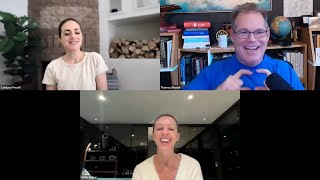
Dr. Thomas J. Powell, Jackie, and Candace cover year-end IP planning: trademarking your name, protecting processes through patents and trade secrets, and how strong IP increases what your business is worth when you sell. They walk through entity formation, licensing, and systemizing so founders can actually exit.
Questions this video answers
December 18, 2025
December 24, 2025 and December 31, 2025
January 7, 2026
11
Chapters
Well, actually, I'm going to start by saying happy birthday to you, Miss Jackie.
Happy birthday.
Thanks, guys.
Although it's really not your birthday. It's not your birthday. It was yesterday. Right. But it's today where we are.
It's today where you are. It was yesterday for me, based on where I'm at. But that means I get extra hours of celebrating. So I'm milking this one, baby. I'm milking 29.
Exactly. Exactly. I'm so happy.
I'm proud of myself because I figured out the math on that yesterday.
Candace was like, it's tomorrow.
Time zones throw me sometimes. I've been in many. I've been in so many of them. And for whatever reason, it's like some people have their. I have, like, the compass. I can tell north and south. Wherever I am, time zones will always throw me. I. I have to, like, take the time to do it.
It's tricky. It's some hard math that makes your brain hot. But the pro tip, Add a four and flip the sign. So that's what I do.
No, serious. I mean, no, it's. It's serious.
Add a four and flip the sign. So if you're in California. Well, so I would subtract a four. So it's four. So it's got to be noon. And then it's a.m. for me. So it's p.m. for you.
Okay, I see what you're saying.
So you add a four from noon, you'd add four. So four and flip the sign.
Got it.
You're on pm, so I'm on am.
So I always tried to explain that. I said, you're in the world. You're really never any difference than nine hours one way or the other, wherever you are. Because, you know, it's 24 hours. It used to be eight. But because of time zones and things, you get changed. So you're always able to add or subtract and move the day or like, in your case, change the sign. I just always think about changing the day. But that's good. I like it.
Mine is which way I'm going.
It's all math. It's all math.
It is. But mine is which direction I'm going.
Oh, yeah, yeah, yeah. Ahead of you are behind.
Yeah. So takeaways for today. If anybody's leaving this lunch and learn.
They'Re like, what is this lunch and learn about? Okay. It does have some relevance because the people on a standardized calendar are also coming up to. To a birthday on January 1, where we look at the new year Right. So we're finishing up.
Way to weave that in this year.
I know, wow. Storytelling. But so we wanted to end our last lunch and learn of the year talking about our year end models and then how do we utilize those as we go into the new year? And it's everything from taxes to, you know, your business planning, your estate planning. Do you have your intellectual property lined up? And if not, let's get these things thought through. And we've had some really good conversations here, Jackie, recently, and Candice and I just got off the phone with another young inventor. That was the first thing we want to do is you're never going to stop thinking of things. Let's get it down in a process of how we one, immediately get that a licensing scenario and two, then how do we get that actually formalized into an IP process? So let's start there because all of you are thinkers out there. Jackie, how does someone go about actually doing intellectual property?
Oh, that's a big question. What does it mean to actually do intellectual property? There's many facets, right? One is I think, identifying first what you have up here in your noggin that is unique and that you can apply in such a way that you have something that ends up being transferable to somebody else. That right there, unique and transferable. It can be, know how it can be processes in your head, it can be thoughts and knowledge and all the things you've acquired over your lifetime. And that is your intellectual property. So one, you got to identify it. What is there that's unique that can be transferable?
I love it. So where does that fit into a capital readiness model? And on the other side. So two part question, I guess we're talking about how we, we just recently had a client that I guided through a sale and initial valuation was 15 million and by a handful of pivots within that business within a reasonable period of time, they exited two weeks ago for $45 million. And there was a number of things that were, you know, that we were able to guide them through, one of which was what processes and how can we make that intellectual intangible property that becomes goodwill within that purchase thing? So I guess that that's kind of the question there, but how does that work? How do I actually start making my ideas into something that actually becomes a business process gets named and then where do we possibly hold those?
So again, lots of good questions. Identify them first, give them names. Because to protect your intellectual property, there's a few different ways. At least in the United States, we Have copyright, which is a way to protect what you've written, your content. We've got trademark, and then we've got registered marks. So those are things like brands. You can put a brand to your name, you can put a brand to a concept, and you can put a brand to. When you're talking about identifying these processes, name them and make them part of your brand. So, for instance, I don't want to go. I do want to go into the individual that you helped when the valuation's 15 million, but it ends up getting moved up to 45. What that would tell me is there was a lot of value that wasn't originally being identified as unique and transferable, right? There was value being left on the table. Once that asset or those intangible items, that ip, once it's identifiable, all of a sudden it's like, oh, there's way more here. Maybe I can protect these assets, this intellectual property. And then you all of a sudden, like, heap up the assets on the balance sheet and if they're transferable, boom, unlock all this value. So the first thing, Tom, is identify it. Give it a name, right? Like, recognize what you can protect. And then maybe go form an llc, go form an entity to hold your ip, because then there's more you can do with it.
I love it. Now, I'm going to take the opposite side of this because Candice and I have this shit show of a business that we own that for about 18, 20 months. We've been telling them actually a longer time than that, that there's a major problem in that the principals, the owners are so embedded in the business and that they don't know what they're doing, that when it comes to this, the only value is going to be the license. And because you suck at creating revenue, you have no processes that have actually gotten in place, or very few processes. And you have absolute pathetic accounting systems and people that do the accounting. The value of the business as a business is almost zero. And, Candace, what happened when they finally hired a business broker to discount our. Or to say, no, you're wrong. And what happened with that valuation?
Yeah, the valuation came in right about what we said it was going to be. We were removed. Process. I will say this is an investment we made that we've talked about before. Not the specific investment, but when we invest outside of what our expertise is, it typically does not end in our favor. And this is a great example of that. And, um, we just love the opportunity to relearn that lesson over and over and over again. But I would say one of the biggest things we see, and I think it's really important, I know a lot of the people on our calls that listen to our webinars, that watch the recordings of our lunch and learns. They're founders, they're entrepreneurs, they've purchased a business. One of the biggest risks you could be causing to your business as far as valuation goes, is being being too, almost too involved, having your business too dependent on you, that actually devalues your business when your business is dependent on you. And we see it all the time, and now it's something we really, really care about. That's why, yes, we invest in founders. We like to see the passion behind them. But what's the next piece? We like to see. We like to see the team, we like to see the people that they've empowered as well, the people behind them. Then we like to see the systems that they've built and developed, the things that make them unique. And so this concept is super important to the beginning. When you're in that startup phase, thinking through that, it's important when you're in the growth phase, raising capital. And it's critical on your exit. It could mean tens of millions of dollars on your exit.
Yeah, I mean, it is. And the best time to plant the tree is 30 years ago. As you guys, you know, we know that old adage, and I'm saying the next best time is to do it today. The time to start thinking about your exit is at the start. So when we're meeting with the founders, we're oftentimes working with getting the IP aligned from the very beginning. It's not too late when you do it down the road, but it's much better when you go through that right up front and then you can get it. Jackie, we have a process that is our process. Actually, we hadn't seen it many other places is where essentially a founder can license their idea to an enterprise, and then that enterprise becomes the valuable on the balance sheet for the founder that's outside of the company. And that company then license it for a value to the enterprise or whatever they're going, and then can license it to other places so that when a purchaser comes in, they actually have to buy and pay for because it's actually a line item that. Oh, we need to buy that.
Yeah, it's, it goes back to what's unique and transferable.
Oh, I lost you.
Yeah, I lost jackie. I lost sound.
Boy. We, we, we, we're talking patents and we lost our patent attorney last yeah.
Oh, my gosh. But it's really funny. I could do some sort of funny, like those voiceover things where the mouth doesn't match the. The sounds.
So.
Okay, I'm seeing in the thing it says the chat is disabled. Yes. We. If you guys want to send questions, we've got quite a few questions coming in through the Q and A. The chat is. We can send things out. We like Q A to come in because it helps us keep it organized so that we can make sure if we've answered it, we can mark it. I know sometimes we don't get through all these questions and already today we're. We've got quite a few. So.
There'S some coming through. I can actually see them. There we go. I can see the questions today for some reason.
Oh, you're back. Yay. You guys let me know when you're ready for me to fire off some of these questions too. But I don't want to break the flow. I know, Jackie.
Let me finish. About process. Yeah. Okay. So think about a company where the value is like the founder that's there and its team and there's loose processes, sloppy processes, no processes. What, what can you hand off to a new buyer? Not much. Right. The value is in the person that's there. So you can create exponential value by having everything you do in a process have systems, have good systems. It is cumbersome. If it's the number one thing you look at doing in the new year, it is worth the time, the energy, the effort. You and your team look at where you don't have processes yet and then work to get processes in place because that is handoff able. That is when a founder can step away, step aside, pivot, work on other things and hand something to a buyer. And a buyer can go, oh, there's, there's something here for me to work with.
So we all, we all hear these, we hear these stories. This is, this is. And there's some great questions coming through. So we'll make sure we get through them or try and answer them as best we can. But think of it this way. There are great stories that people hear about founders that when they get sold to a company, they've got a three year or five year job and it never ends well for the founder. The founder. Most founders are some statistic out there. And I won't quote it. There's a statistics says the majority of founders after they sell are disappointed that they sold. And there's lots of reasons for that. There are also many other Founders, a small minority that have put everything in place so that when they exit, it was just simply a change of an asset that they owned because it was no longer their heart and their soul and everything they put into it. They looked at it as the business that it is. And many founders don't run it like that. So they run it like it's an extension of them personally and they're selling a part of their body or their mind. Whereas in this process, just doing through that IP and, and to put it out there, we do have the founders Law group. We are not giving legal advice here at this point for everybody. So, yes, for the disclosure there, however, we will talk about generalities. We can't talk about your specific, and it's not specific to that, but it is our lessons that we have learned. And the number one lesson is if you are a founder and you're so wrapped up in the business that you are the business, the value you're going to get is very small. And if nothing else, you're going to get a job which you're probably going to hate somewhere down the line. So if you can actually separate out those parts from there, you may not even have to stay on as part of the buyout agreement. And so within that, that's because you've been able to set. So for the business that did exit at 3x, part of what happened was through the process of IP and everything else and processes, we were able to show that the founder himself was no longer the value within the mechanism. So the IP and the processes and the systems and the management team he had in place that were retained through some various different ideas became the high value of that segment because we separated it out through processes and systems and naming. And that's really where the value came in. It wasn't just that we got his IP tied up, it was that we then showed he's actually not part of that.
Yeah, well, so. And you keep referring to exits because that is kind of where we see the, the real value behind all of this work. But, and this isn't one of the questions here, but we're talking about this end of the year. Is this only relevant to people who are maybe considering an exit sometime soon? Is this information?
No, it's. It's back to the when do you plant a tree? You plant a tree 30 years ago. Right. So these are conversations you and I have been having since you're not 30 yet, for those 30 years. 29. Right. So, you know, we've been having these conversations about our own legacy and our own planning and how things are done in that process. Process. And so the best time to do it and the best habits to get into is from the very beginning, treat yourself as an employee and as a founder separately. It keeps it much cleaner altogether. And so those ideas come in and I will say there, there's one of these. Should the IP be in the name of the founder instead of the business? Are again, not giving specific legal advice, but our general thought is the IP that's created by employees that are employed by the business becomes property of the business and that gets held within there. The founder generally should have, and again, not giving specific specifics, but should have an entity outside of there that they license to the business that they own because it's separate again, separating it out. And they license that to the business. Employees don't get that opportunity. They're taking a paycheck and they have to put that inside there. Right? That's everything that they create during that time. If it has to do with the business generally, your employment agreement should say, hey, this is the property of the business. Doesn't always work out that well.
And that goes to. My answer on that one is it depends, right? Depends what the IP is you as an individual, the founder. You have unique processes on how you do things. You have unique talents, skills, know how, knowledge. You've got all of that and that lives with you. The business is like its own person wearing its own little baseball cap. The business has processes that it follows. So that would belong to the business. Anything that adds value to the business, like as a business process, something that is systemic within your business, that can be your business IP and that adds value for when you do go to exit someday. But just like you wouldn't download and data dump your whole brain and image it and pass off and be like, here's my brain. Like, that's, that's your ip. That makes sense. You like that, Tom? We put your brain on, on a hard brain.
I mean, I don't think we're far. So the reason I say that is because we have a client we just got off the phone with. We're prepping for the new year. And I think it's really important to understand where we're strategizing on what we need to get done in the for in the next 30, 60, 90 days of the new year. This is a, this is a newer venture and so it's not too early to get these things done. It's going to add value to your organization. So the takeaway for the end of this year, for our new year strategy is take these next couple weeks of this year and really start to do your 30, 60, 90 day plan of what it is that you could start putting in place to increase that value no matter what stage you're at of your organization.
Well, I think, I think so let's take this even into future forecasting. One of the things that I and many others are out there saying is some people are very much about afraid of AI. AI itself, when it creates something with your help isn't going to get the trademark or the patent right. The human is still going to be required to do that. And so ever more importantly, is it to get your stuff trademarked, copyrighted, some intellectual property processes put in place, because as that comes through, we're not using augmented people to do this. We, we've tried it a little bit and I just couldn't stand it. I said, I want to show up when you get me, you get me, right? Type scenario. And so that's going to be the difference because of how my brain may process something, so versus what the computer memory of my brain might process it. So that's even more value.
I had a great, I actually was chatting with somebody to join, potentially join our team, and they said, we were talking about AI and she said, I'm not afraid of AI taking my job, but the person who knows AI better than I do could take my job. And I thought that was relevant for kind of everything, right? Every one of our businesses, it's, it's not about AI necessarily replacing us, but how can we use AI as an accelerator, which is an. And then make that process something that is part of your system and your structure.
Well, as a perfect example of that, Candace, one of our, one of our recent guests, you guys had. I don't think I was actually on. Brian was on. And what he's talking about is people who spin wrenches for a living, right, In a most affectionate way. And they're dealing with computers, whatever. And I hear people be like, well, I'm a plumber, I'm a mechanic, I'm, you know, a gardener. AI is not going to replace me. And I'm like, yeah, it is not AI itself, but people who use AI will be able to design faster for the architecture design. They'll be able to get and ask better questions and hear what the person is saying. And so someone's going to come along and utilize that tool and they're going to put you out of business and.
Their business will be more Valuable upon exit for sure or next round of investment they'll be able to scale because they've incorporated.
Because if you can, if you, if you can fix that car faster, your mechanic shop becomes more valuable. Right. And it's, and if you can do it with, you know, better talent that are able to work on. And if, if it's a super high end car that's very bespoke even that's still going to require that you're going to want the best of the best, but that they're also utilizing tools for those type of things. Not in every case but, but in almost every case.
I want to jump to these questions because we've, we've been getting a lot in and us, we always run out of time for all the questions. We probably will as well today but want to get as many as we can in. Should you get a trademark before a C Corp or C Corp first?
It doesn't need to be a C Corp but get an entity first. And the reason I say that is because when you go to patent or trademark or copyright or protect, when you go to protect any ip, the uspto, which is the United States Patent and Trademark Office, they are going to ask you for a demonstration of your idea, brand phraseology, whatever it is that you're protecting your ip, they're going to ask you for a demonstration or an example of how it is used in, in commerce. That's a key thing. If you're not using it in commerce, you're going to have a really, really, really tough time, if not an impossible time. Submitting and getting intellectual property approved has to be used in commerce.
Can we use a really off brand one? But Thomas J. PAL itself is not necessarily easy to be trademarked because there's other people that use it out there in commercial use, right? Somebody else could be doing, they could have their web, they could do whatever. But Dr. Thomas J. Powell was not being used in any land of that we could find out there. So we submitted that. Right? And then that is owned by an IP company that I have because it licenses that to be able to use out there. Is that right?
And why is that intellectual Property? Why was Dr. Thomas J. Powell. This is a little bit of a trick question. Why was that something that was protectable?
That's a great question. I don't know. I asked you and you said yes we could.
Brand recognition. It is your name, it is your brand recognition. And because it's your brand recognition, you are using it in commerce. You're hoping that that name Dr. Thomas J. Powell is recognizable. And someone will say, oh, I've heard of him. I'd like to work with him. I'd like to hire him for consulting on this. And that becomes commerce and it's Prince.
Or it's share or it's anything that becomes those just unique places. But you know, Tom Powell isn't in of itself a trademarkable. Now I could trademark a logo that's with that in a special way, right?
Yep.
But I couldn't necessarily trademark or register the name. But Dr. Thomas J. Powell, I was.
Able to register, yes, because it is unique and because you use it in commerce.
Oh, cool.
We've got a question regarding patents. And I think this was back. You guys were talking about some various steps. When should a patent be done? In those three steps, I don't know what three steps.
We were talking when, when should a patent be done? So a patent is a little different than a trademark or a registered mark or a copyright, a patent. Let me actually Google this because there's more of a specific definition for a patent. And I believe a patent applies more to a specific idea or process.
Hold on. It's process driven. Generally, the trademark would generally be the naming of it. The patent is actually the process itself or the product itself.
It's also very specifically tied to an invention and it's for a limited period of time. Whereas other things have a durable nature where they may. Like if you trademark something, it may be trademarked in perpetuity. A patent is something that is limited in duration, so it may expire. So the patent link it directly to an invention. So if I'm answering that question, when should a patent be done? Again, remember, go back to something that's uniquely identifiable and transferable. Have you invented something that is unique and transferable? Then go get a patent. At least start your patent application. You're going to have to show, I believe, what makes your invention unique. Why is it distinguishable from something else that already exists? But if you've got that, if you can identify that, start your patent application now.
So Naga's got a question. How to change culture, or is it typically better to start independently, especially as a minority owner in the cap table? If you're a minority owner in the cap table. So I'm going to. We're going to be making some assumptions and you can clarify it. If you're a minority in the cap table and you haven't already put this in place, you may have to come in and say, this is something I'd like to give to the company, as, you know, intellectual property, and here's the licensing agreement or vice versa. It's very hard, once it's been done, to put it there. Now, if there's other owners within there that are the actual principles that are inside the company, you may be able to come to a conversation. This is something we actually help people through with the negotiations at times is you may be able to come to a win, win, win, which is. They've also got. And they're like, hey, let's all put our processes in here and let's get them named. We just were working with this on one of our other clients, Jackie, where it's like, they've got ip, they've got ip. We. Where do we get joint ip? Where do we get, you know, releases for this type of stuff? And one of them was a minority owner that had actually walked us through that, that process. So that's a really vague scenario. But what it is is once you have investor one and they've come in and you don't have that in place for something that's already there that they invested in, they already own that within their investment committee. And I wouldn't screw around with that. But in future processes or if you don't have any investors, then that's an easier thing to do going forward. Then you just want to have that negotiated. And again, relative to your employees or not your employees. You know, 3M has a list of patents that came out because of their employees that they paid for that are scientists within there, and they become. That's part of the company's intellectual property. They then set up, you know, bonuses and other things to pay people out for that. But somebody can't come up with the idea while working for 3M and then go patent that, Pat. You know, those companies actually chase them down and say, no, that doesn't, that's ours. That was kind of fun. I don't know if that answered the question at all.
I think you did so little to.
Do with the next year, but it was, I thought it was a really good topic that took us.
I think it has a lot to do with the next year because I would say in a lot of our end of the year planning, this is a significant part of what we've been doing.
Oh, I, I absolutely. I mean, and we're, we're, we're cut. We, we constantly are in this process, looking at it every 90 days and saying, what have we did done? And I just saw one today because of what somebody else did. So I've trademarked this scenario of, of study that we've done called the Founders Isolation Paradox. And we've come up and we've talked this through with the team and boy, I have certainly lived it, but most every other founder has lived it. But we named it because that's partly what academia does. And, and so take my real world and name it. And I saw someone talking about a process or a thought process in their world with entrepreneurs and they're like, hey, here's this Venn diagram. And I'm like, you know what? It'd be so much easier to come up with that is to use a Venn diagram when explaining the founder's isolation paradox. So we draw it out and it's like this is new intellectual property for us. So it's taking our process. So no one else would have been able to use Founders Isolation paradox. But now we can better explain it in an easy way in a photo. And that is new intellectual property. Right.
Talk about how that adds value to a company. Like say let's suppose we were going to exit in three to five years. How would protecting that specific item add value going forward or unlock value?
So there's a number of different ways you can look at it. Musicians do this that have happened that. You have actually some great case studies on that where somebody comes in and buys their future songs. And there's a great case study on that that was one of the first releases of that. You have people like Nightingale, Conant, Earl Nightingale and you have people like Anthony Robbins and others that have done that and extremely wealthy off of their intellectual property. And you'd think, hey, Anthony Robbins is a trainer, right? How you know, you got to have Anthony Robbins to deliver it. But no, that training became a valuable piece. John Maxwell, I'm told, you know, is one of the wealthiest from doing that. So here's the, here's the number one business guru of all times has all these processes to have other coaches out there selling his stuff and then sells that business to where essentially John is a is as I again as I understand, I'm not spe a fact or knowledge, but he's essentially an employee at this point with his name on the building. But he doesn't actually even own that process anymore. So that's a huge value for something that's intangible.
Yeah, we talk, we've been talking about intangible assets and unlocking value. If you don't have it protected and you have no intellectual property around the Founders isolation paradox, for example, and you go to sell someday that's not an asset that can hit a balance sheet. That's not an asset that can be sold. It's not anything of value. So you'd probably hold it back. It wouldn't occur to the buyer like, oh, I have a teachable concept here. A teachable concept becomes a saleable product.
Absolutely.
A teachable. Yeah. A teachable concept becomes a saleable product. So you've, by protecting it, you've just made it. You've given your company an additional asset that is unique, identifiable and someday can be transferred.
It also takes them being out the whole organization being fully dependent on them.
It absolutely does.
Such a killer to value to raising capital wherever you're at in your stage of your organization. If you. And if they can make their presence what they say, how. I mean these are, these are coaches, right? Which seemingly on the surface would be. This isn't scalable. This is your one person. This isn't duplicatable. This isn't something you can add value to. What they've been able to do is they've been able to make it a system and a process. They've been able to make it a product. Now that is a something that is. Is valuable outside of just them as a person. They've been able to somehow take themselves and but remove the dependency on them from their business. And that is a very important evaluation for all owners to be doing, all founders to be doing to increase that value.
Well, I'm going to use this one. I don't think you're on the call, but you kind of got dragged into the last of the call yesterday, Candace, with John Asaroff. So John Asaroff is in the midst of having a capital raise. It's a CF crowd. CF your. However you say that, Jackie, it's a crowdfunding model for the initial because he's got so many people that have used his educational process over it. So his new business is Neurogen or something along that line. He's done great getting his story told, all the various pieces in there. And you talk about a business that's taking John Asaroff's models and being able to then become a valuable with stand up all on its own. And that's a cool deal. And then other people that are buying his products or people that know him are able to invest and have a win in that scenario. And so that's how you're seeing this intellect become even more valuable than it's ever been before and the processes and systems within there. But it's reported that roughly 80% of Wall street is actually intangible. Not fixed assets, not the real estate, not anything along the line. It's not ebitda. It's the intangibles, which is crazy. Okay. Gilbert asked us about a graphene super capacitor. And I would say that if there's a process for doing anything, you want to do your best to get it into a trademark and patent. Meaning if you've named it, you do that, you go the trademark pass. If you've got an actual way and there's no one else that has found that exact way to do it, you are going down that patent scenario. Even if. Sorry, go ahead.
No, no, no. Finish. Finish what you were saying.
Nope.
Even if. Okay, so this goes back to. Remember the steps. What can you identify that is unique and transferable working on a graphene super capacitor? I don't know what graphene is, but it sounds like a material, right? Is it?
Yeah.
They own graphene mines. Okay, I'm glad you guys took that on. That's a tongue twister.
Comes out of the earth. You can't patent that. A patent is an invention. So look at your. From the minute you mine the graphene, the graphene is not patentable. But what there is. Do you have your own process for mining gonna be. I mean, mining has been around for a long time. So look at. Do you have anything going on that's really unique? If not, once you start building the super capacitor, that's where you may have an invention. Yeah.
And the process to generate the one terawatt, is it your. Is the super capacitor your creation or did you make modifications? Right. And how.
Yes.
How many modifications away do you need to be to get a whole new. To get it. Like, let's say you took a product that's been in existence. Maybe there is some sort of super capacitor out there, but you've modified it enough to now create one terawatt of power.
This is a new invention.
Is that a new invention? Is that patentable?
Yeah. Well, I would say if you've got a new way of producing power, it's. It's probably lots of there. There we go. Naga's got another one. Trade secret versus patent of tooling.
Somebody just told Papa P how to access questions. So welcome everybody to.
I know. Isn't this fun? They shouldn't have done that. I don't think you guys.
I showed you where the buttons were.
I don't think you guys gave me access before now. No, I think this is an error.
And they showed them how to push them.
Yeah, ADHD people. You don't want to do that to.
You adhd, sir, you answered this one. This is a good one to end on. And then we can wrap up.
Yes.
Great. Secret verse patent of tooling and parts post competition released.
What's the question?
If the. I'm thinking what they're saying is they had the idea somebody else released it. Nobody's gotten it patented, you're gonna have a battle. And so I'm gonna go back now into the more area that I understand generally, which is litigation. And it's gonna be proof of concept who has that, who put it to market first and you know, who has the rights to it. And that happens. That happens a lot. And it's an incredibly costly, incredibly costly battle. So the best time to do it is when you have it out there. And then you still have to be prepared that you. I mean, there's plenty of times, Candace, we had people that would infringe on our in two Homes name ages ago, deca, you know, decades ago. And so we'd have to go out there and they, they liked our name in two Homes and they'd use it for their other services. And we're like, no, that'. That's. That's a trademark. Sorry. And they'd be like, oh, but I'm doing this other thing that are. And nope, doesn't work. So we didn't just trademark the whole name. We trademarked parts of the name as well. That became things. So that's kind of that there end of the year.
The point of doing it early enough, get it done and, and then so because what you don't want is to go into that battle. So that's why we say don't wait till you're planning to exit. This is, this do get these things done as soon as you can.
So question for you there. At the founder's office, we oftentimes are invited to people that are starting or growing their companies early stages. Or as we say generally, we're in the 10 to 10 to 100 million. We're in the 10 million to 100 million space. But we get a lot of early stage people. Part of what we really do in the value add is, is we take the group that are at 10, 25, 50 million and we help them systemize themselves. So it ends that founders isolation paradox, mostly because it gets the founder out of the processes, right? It gets the intellectual property tied up which, whether they're going to exit or not, Makes the company tremendously more valuable and gives that founder a much, much higher quality of life and their family, much higher quality of life. And it gives them legacy building. And it takes a look at, you know, what's it going to look like for my family if something happened to me type scenario. All of those pieces get answered within there. And that's what we really do at the founder's office. So I know we push these, the pitch decks. And how do you tell a good story? It's always about telling the good story, but the good story is really only there if you've got the processes down.
And this adds tremendous value when you're going into a capital raise or any sort of growth opportunity. If you're looking for any sort of financing or whatever it is, this is, it's a great, great reason to do this. I think. We do look at a lot of pitch decks, but what I tell people is we look at a lot of pitch decks, but pitch decks make up like this portion of what we actually do. We aren't impre. We are helping you with your, with your storytelling, but what we're really doing is we're strengthening the story that's behind you. And that is all this back end work that is adding the value, tightening up your organization because it just adds to one, your life, but also the value of your business. And so there's always a good, good reason to do that. You guys have two weeks, we've got two weeks of this year to plan for what it is you're going to do. Q1 to add value to your business. And so I really hope that today was a great takeaway from, you know, this team.
So I saw the one question, you know, it was a thing there for John McEnroe with. You can't be serious. There is an awful lot of people that have taken those type of things and a phrase can definitely be trademarked, copyrighted, you know, that type, that type of stuff. So that. And I just took away your closing.
So you didn't. I was going to hand it. I was going to see if Angela could put up our thing and I was going to hand it to you to close us out. By the way, Tom didn't do any sort of intro to us today. So we're the founders.
You guys don't need any intros. It's Jackie's birthday. And by the way, I'm gonna do.
A shout out celebration.
I'm gonna do a shout out out there too, because one of my other favorite little people in the World is a birthday coming up this week, so the mother of that little person gets to celebrate that as well, which is awesome because that's actually the people who should get flowers on the child's birthday.
Yes.
So, Jackie, Jackie, we need your mom to get flowers for yesterday.
She's here.
So today, tell her happy Mother's Day.
Happy Mother's Day. Yes.
Happy Mother's Day.
So, Candace, happy Mother's Day this next week.
And thanks. Okay, dad, focus on the thing. Do you see the screen?
What am I supposed to do?
You're supposed to close us out. You didn't open us or anything today. You just went wild.
We were right. Okay, I'm gonna. I'm tell you the story. So we were right in the middle of a story as we were there. Here's my adhd. If you guys don't care to listen to it, it's okay. But. So I get a letter in the mail about my uncle has passed away, and I've got to prove, you know, my lineage to him. Now, he was a Catholic priest, so I don't think that there's a lot of things there. But he was the keeper of family mementos and pictures and things. But the lawyers won't get there. And I told this funny story that when I was 12 years old and I didn't have my parents around, I wrote my uncle. I'd found his address, and I wrote my uncle a letter and said, I've bought a ticket. He lived in Denver, and I'm flying out to see you. I will arrive XYZ date. Now, I didn't have his phone number. He did call back at this point, but this was. That. That was the story. And I actually did show up, sleep on his floor, got to meet my uncle, and I was 12 years old. So that. But it was a different times. So what did you say, Candace? What did you say? It was closer to the times when you sent your children with a pin on their short. When they were orphans to someone else.
Through the United States Postal Service. You could send children through the mail, I think, until like the 60s, 60s, through the United. Something, somebody. I'll fact check it. But you could send children through the United States Postal Service. Maybe it wasn't the 60s, but it was longer than I thought. And I was like, this was closer to that time than it was to TSA PreCheck.
So look at that. Now. You gotta be through their parents. Gotta wait there till the plane takes off. And then when it lands, different things.
Tag your kid with a code and.
Stuff, you know, as Xers, we actually drank out of hoses of your neighbors who you didn't even know. Totally dangerous times back then. So anyway, with that, I love when.
That first, first hose hit came in when it was like 90 degrees on a July day and it's hot. You're like, ooh, this is nice.
And you did not have to know your neighbor, by the way. You. You just were anywhere. You walked up to the hose bib, you grabbed the hose, and of course the answer was you could. So, okay.
And I fact checked myself. I was wrong. It was 1915. Still feels a long time to be sending kids through the postal service, but there you go.
All right, so now my question, guys.
It says, where do we find the link? Angela, where do they find the link to the show? I have no idea.
Register for future events. I hear this is monthly. Starting January 7th, we're. Yeah, it's weekly. We're taking two weeks off for the holidays. December 24th and 31st, we're giving holiday time back to everyone. Then January 7th, we're picking it back up. We will be weekly on Wednesdays at this time, noon Pacific, 2 Central. And Angela's typing an answer to that.
And what time is it? Bali time. What time is it? Bali time.
In Bali, it is 4:45am There you go.
Do the math.
Candice, thanks for asking that. I appreciate that you would ask that after this. Now, for the 85th time, Papa P, can you close?
All right, Happy? Chanika, look at your screen.
You've got links. Tell them about the links.
Ah, you can send stuff to us@foundnersoffice.com and yes, go. Or if you want to raise capital, that is what we help with a lot of cases. And you can actually run your pitch deck. We have a piece on there where you can drop it in and have the pitch deck come back. And one of our people will give you, by our six Cs some feedback on what that is. So that is our trademark piece that we go through about how we've systemized how you actually raise capital. Angela, you're on there. Angela, your screen's totally there. All right, wrong screen. There we go. This is fun. I've had a great time this year. Thank you so much. We're going into 2026. We're going to take a break over these holidays. And I can't ski because there's no snow up in Tahoe. So I'm going to Arizona to ski.
So getting out of our hair. Thank you guys for joining us today. We look forward to seeing you in the new year. Please send your pitch decks in. We. We will be off offline for two weeks, but looking forward to getting you guys those reviews back. And we do occasionally host live pitch reviews, so if you're interested in being a part of our live pitch review, let us know.
We answered 11 questions today.
I'm so proud of you. You almost stayed on topic.
All right, talk to you guys later. See you later, Jackie. Happy birthday. Bye.
More from Dr.

The Business You Built May Not Be the Business You Own | Founder’s Office™ Lunch & Learn



Your Business Isn't Worth What You Think It Is | Founder’s Office™ Lunch & Learn


Complexity Is Quietly Destroying Enterprise Value | Founder’s Office™ Lunch & Learn


Simplifying The Complexity of IP | With Tony D'Angelo | Founder’s Office™ Lunch & Learn


