Lunch & Learn - Session 5
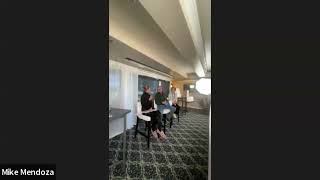
Jackie and Tom teach the Six Cs of storytelling for founders: challenge, champion, change, credibility, call to action, and connection. Most founders spend too much time on solutions and not enough explaining the problem, which kills investor alignment. They walk through live examples of founders sharpening their one-line problem statements.
Questions this video answers
Lake Tahoe (Capital Edge Summit)
16 weeks
foundersoffice.com — the 'Enhance my pitch deck' upload button (promised feedback within 24 hours)
Chapters
Welcome to the behind the scenes lunch and learn at the Capital Edge Summit. We are here, Tom, Jackie, Candice. We're here in Lake Tahoe and we've got a live studio audience with us. So we're gonna have.
Live questions. Live questions, primarily. Our guests here at the event are working on identifying their problem that they solve their unique challenge. And we're working on refining and refining and refining and calibrating that problem statement. So we're going to have a few people come up and practice their problem. They got a little practice.
We should probably introduce the six Cs of storytelling first. You've heard some of these keys or six Cs on previous lunch and learns they are the six Cs of result focused storytelling. If I can grab that and like put it up to the camera, do you think people can see it?
Okay. Challenge champion change, credibility. Call to action and connection. We're going to have Tom give a little bit of context around this framework, how to implement it and why it's so important when raising capital.
And we're live, so you're seeing it all behind the scenes. Going to show video right now.
Video first.
Okay. Then we'll move.
That's perfect because then I can slowly ban a whiteness off the audio. Beautiful.
See if it works better this way. There we go.
Do we need this light off.
It?
Yeah.
What's that?
It said they want me in the center between you two.
Okay.
So, okay, so what we're doing with the Avengers and this team is mostly grabbing lunch now. But to bring everybody up online with that, start having anybody that wants to come up and have the conversation about it is.
The 60s, right? So when we're watching that Avengers, Jackie, what is the very first absolute opening scene?
You're seeing chaos, a problem. You're seeing a bad guy.
And when we get to see most decks, what are most decks about?
The solution, the deep intricacies of a solution.
It's absolutely that intricacy, see, of the solution. We got one sent to us two nights ago, I guess, and you let that in there. We won't say whose it was, what it was about, but how many pages of that deck.
It was lengthy and probably 90% of it was deep into the solution to the point of it being more of a patent application.
Which was excellent because that's exactly where and why do we think that the founders really actually live in the solution so much?
They may not have the right framework in place. There's misalignment between what the founders believe, investors and stakeholders want and need to hear. And then the truth of the matter, what founders, what founders believe investors need and what investors need is often this a lot.
Yeah, we have, we have a group of people in here and I know most everybody's eating lunches of house or sold this point. But what do they, if, if a founder is coming to an investor, what do most founders think? The investors care about returns. Always about returns. Right. So they juice their returns, they show how many of you guys have seen the.
The forecast, the presentations, and they're always in what shape.
Wow, this is where it's gonna go. And then what is their total achievable market.
And it turns over every single day. Right. So we get 24 billion people in three days to be able to do this. Right. I mean this is the standard of the decks that we see when they start coming up. We laugh about it because it literally even go to some of these pitch scenarios. So we have a different approach and it's great. We have a. We had a wonderful guest here earlier named Gary Sanchez. And Gary Sanchez is talking about the Y Os. If you haven't ever checked out Y Os, please do. But in that he had a picture of both a barbecue and a piece of cake. And he said that you really can't take a piece of cake by just putting all the ingredients in at the same time. Right. There's a, there's a process to that. And so we've got these little Rubik's Kids. I can't see them on the screen. This one here. And what this represents to us is first it starts with the six Cs, which again is challenge, champion, credibility, call to action and connection. And put them in simpler terms, what that is, is the challenge is always the problem that you're solving. It is the only ingredient that really, absolutely always has to come first. And it is the hardest ingredient we find consistently for founders and storytellers to be able to do. So we can take a three day workshop. People come in, they always want to be like, are there investors in the room? Well, are there investors in this room? Absolutely. And are there founders in this room? Absolutely. And ideally, are there founder investors, which is who we cater to? Absolutely. So the, the people that are coming in here and they say if I just get in the room with the money, I'm going to be able to succeed at it. Right. But not all money is looking to solve the same problems. And when people take it from a standpoint of they only money only cares about returns, then they really don't Understand the money side of this problem. Right.
Yeah.
So.
And I think it's important to give the full name of this framework. It's the six Cs of result focused storytelling. You can tell a story and there's different purposes for story. Right. But if you are a founder trying to pitch investors, your purpose is different than a bedtime story. Your story has to have a call to action. So that's why there's one piece in this formula. All of these, the challenge, the champion, the change, the credibility, the call to action and the connection. They're like chains. And if any one of them is missing, the story really falls apart and doesn't land. And I think that's why this framework is so important is because people move forward and they go out and pitch not recognizing that they have one, if not more broken or missing chains.
Well, so we say the most important one to start with is what problem you solve. What and why. I love that. Preview from the Avengers is two and a half hour movie, less than two minutes.
Trailer.
Trailer. Right. And yet how much time do you think they spent on making that trailer? Did they just cut up the movie and put it out there or how much thought do you think goes into that trailer?
Probably quite a bit.
Quite a bit. It's running on a major sporting event. They're going to spend millions of dollars and they look at that. Not the movie. A movie took, you know, whatever it was, $80 million or whatever. It's many scenario. That trailer disproportionately costs way more than the movie did to make. And the reason is, is because it's the selling point to get people who actually go and engage in the movie and it starts. That's one of the best trailers that's out there. There's a number of other ones that are really good. And we'll put up on our website the link to one of the worst trailers that's out there. And. But the challenge is the start and then the heroes. And the hero was the second part of that by. And in that movie, what can they show? Simply the faces of now the actors that have become, you know, known about being that. Right.
The symbols sometimes, I mean, you know, the Marvel characters are so.
They have a long history. So now we can just even see the shield of Captain America. We know the hero is coming, but if you are having to spend a ton of time explaining your solution.
But you haven't identified the problem. I can't. I don't understand the. The hero. I don't understand. It's Captain America. And how does this show up? And I don't want to call them bad, right. I'm going to say they're ineffective or not as effective as they could be. We've seen founders that have a deck. They think they have their story, they think they articulate their problem, and they may be out trying to raise capital. We've seen two years efforts at capital raise, and a little money may drip in, or someone will launch and have some money come in. Maybe they've raised two, they're trying to get 10, then they stall out. So more effort up front, getting these six Cs really clear, getting your story really tight. What happens then? They go out and pitch and the alignment is there. And money comes in organically because they get every chain their story lands.
So, yeah, we're. So we're moving from the six Cs, which is really the bad guy, good guy, happy ending, right? The challenge, the champion and the change. And then, sorry, guys, these are all new terms to us as we're putting this in there. But throughout that movie was credibility. Throughout that trailer, they said Rolling Stone, if you notice. And then it said someone else who's well known. And then it comes from the Marvel Studios, which is also credibility. Right? So that's why when you have people put it in there, if you can say, hey, I'm a graduate of Harvard University, that may make for certain audiences, a great sense. It may not. Some people don't like Harvard. Right.
But the credibility is throughout. But here is also the other part of that. What happens if you lose credibility?
You're done.
It's hard to come back from that.
It is almost impossible to come back from that. Right? So then the call to action. How many times do people make the presentation and there's no so what? So that. Right? So, yeah, I'm just talking about this, and they forget to ask that. What I'm doing is we're in the midst of raising $10 million that's going to take this to a scalability challenge, you know, opportunity over the next three years. And the team that I brought in have been able to show that we can execute on this model. And with that $10 million, we expect a 3x return, 36 months based off of revenue projections and exits that have been done in the marketplace. Da, da, da. Right. Now, the last part of that was connection. Is the Marvel movie for everyone.
No, no, no. There's people who don't like it.
No.
So does Marble care?
Does Marvel care? They do not. They want to. They know that their market size is their market size. It may expand slightly. It may expand, you know, a little bit, may increase a little bit. But does that actually matter to them? No, no. They just want to capture the market they have because they raised the money. Be able to say, this is our market share. This is what we're going to get out there.
I'd say often when I see pictures and I, I review a lot of pitches, especially lately, I see a lot of champion and I see a lot of change. And that's almost the entire deck. For the most part.
I see attempts at credibility, but oftentimes that's missing. They're. They're. People are showing why there's a market, but they're not, they're not saying, who said. I get that a lot. I'll see great graphs or I'll see statements, you know, this marketplace is X, but I'm not getting a. Who said the marketplace is this? Who said there's a market for this?
I. It's not. Shockingly often do not see a call to action.
Right.
You're seeing people hesitate to put in a call to action. Rarely do I see challenges. So you're seeing like, I'm a good guy or a good girl trying to do this, Seeing the solution. Yep, I'm seeing the solution in there pretty much. And I'm not really always sure what we're solving. So I would say there's so many story pieces that are missing in the, in the decks that I'm reviewing, and some of them are challenging to get over. You know, like those are things we have to spend a lot of time on. Some are pretty simple, easy to add in. The credibility sometimes is like doing some research, adding in who is saying this. We've had a couple of great things here that we just tweak that slightly. Why do you think people miss it? I think people are so focused on their solution, everything else seems like an additive. They forget that that's kind of part of the overall sorting.
I, I would, I would 100 agree. I think it's partly that they start living in the solution and founders in general breathe life into a solution that most people didn't even think existed.
Well, a solution. If you can't identify a problem, a solution is just an idea.
Right? But they, they do. They know the founder knows the problem. They wouldn't be doing the solution unless they identified that there was bottles of salt.
They just forget.
They forget to articulate that because they're so far down the road that it's being solved. That they forgot that that's actually the purpose of the why that people are looking at why they would get involved problems like this.
They have a hard time sometimes communicating what the problem is. They have a hard time almost time traveling back to why they even solved it in the first place. And so what we're going to do here and what we've been working on for the last day to have is the challenge. And you think that'd be an easy thing, but that's honestly sometimes half of my call. The entire call is just trying to drill people down to like, what is their problem that they're solving?
John.
Okay, so we're going to actually try this out and see now, John, are you going to do your whole presentation? You're just doing your. Your bad.
Just the challenge.
Just the challenge, right? What problem you solve?
Yes.
All right. First, we're going to give a little background. John's one of our partner companies that I actually sit on the board for you. Okay. So he did such a great job in presenting this to me ages ago. We have made an investment. We did a. A.
Part of the whole group trying to grow this. Absolutely. So what is the problem that you solve? We solve multiple problems. Three major. One. First one, the homeless situation. Solution, right? We have multiple folks who are on the street, nowhere to go, they can't really find assistant. What can Government. The second problem that we solving is basically making sure that we provide care at most integrity. Right. When we have fragmented services, like right here, everyone has to go to five different providers. So our strategy is how do we put all this together so that you don't have to.
So at this time right now, what I heard you say is.
Imagine living in a breezeway. On the street, you're cold, you can't get off the garage, the alcohol or the bad memories that you have, there's nowhere for you to go. And not only that, when you try to go somewhere, there's five different places, five different agencies. And so when you're on the outside trying to solve that, homeless on the streets, you can understand why these people would be looking off or you yourself are that person. We help solve that problem. And we've brought together a team of professionals that collectively have over 300 years. Our revenues right now are at a run rate of $25 million per year. And we have three locations in the D.C. maryland, Virginia area. And we are looking to do our operational excellence and roll this up into 15 more units over the next four to four months. We've identified two sites now we're looking for $3.7 million to help us execute on that. And we estimate that there will be a return of $9 million to the investors in 36 months. That's correct. Okay. There we go.
Thanks, John.
Did that cover it?
We've got. Yeah, we've got some more.
We've got more.
Yeah. Do you want to call David or.
David. All right. That's fun.
Look, I wasn't even. Simon, was I? No, no. I'm kind of more the Paula.
Definitely.
Definitely Paula. Okay.
I think he's the. Yo dog.
Yo dog.
What if he.
All right. Ready to go again, Damon? Sure. All right. Probably solved. The problem I solve is that I unlock athletic potential through the use of altitude exposure and in a portable, convenient product. Getting closer, getting closer, getting closer. That's still the solution. That's what you do. What problem are you solving? I'm solving athletic performance and potential. Which is what? In somebody. What's an athlete want to achieve better results? What are they performance.
Currently. The alternative is to travel to altitude in order to talk more potential. What? Have some. Because you come from the cycling industry. So not to fit on that industry, but because it happens in all industries. But what in that industry? In one particular race that is seemingly well known all over the world. They toured France. Tour of France. What did one team. Sure. Yeah. One. There was an era of doping which was using an illicit drug and. Yes. Why did they do that? Because they were seeking to win and be a dominant factor in the sport. So athletes will do just about. Many athletes at that elite level will be just about anything. Including illegal activity. Yes. To achieve that top. Right. What we do is bring them a legitimate enhancement. Yes. Legitimate product that's safe. Safe. Legal. Legal. And gives them the results that will get them on the board. Yeah. Unless their competition.
That's my hope.
All right. James. Mr. College.
Huh?
You're doing great.
Hey, Tom, on that last one, why isn't the answer just not the way to address it? To say not everyone. Granted, high altitudes. That's a great one, too. Here's. You know, Nick, that's a great question because we had this earlier from Betsy. Right. I do not. Our team does not answer the problem for you. We give you ideas to prompt you. The thing that you're looking for, the reason that the problem that you solve is so important goes into our capital alignment method, which we haven't gotten into yet in. In the workshop here. And we actually get to more in the 16 weeks. But the capital alignment method is once you identify the problem you solve, you then go out. And in today's research tools, you can find it better than you've ever been able to do it. You find the people who've already identified that they're trying to solve and have put money in there. So Crunchbase is a great example. Right. So you say, okay, who's trying to solve cancer in there? Who were the last ones? What pitch stocks were they looking at? What was it that was drawing them in there? Because money is sometimes kind of like lemon lemmings, right. It follows other leans in. Right. So if Andreessen Horowitz say, we're in this market, what does every other fund say we're in? We're in that market. Right. So that's why all you're trying to find out is the, you know, the problem you're solving. You're then trying to articulate that problem so that you can then identify the right investor that's also identified. And here's the key to that. If you identify the problem and then you go talk to an investor and it's interesting, the investor will get interested about what you're talking about, but they likely won't invest. They will invest the next time the problem comes up because they'll start doing their investigations. Whereas instead, if you can articulate that problem that fast, you can then go out and say, who's already identified this in the money world and wants to solve that problem? Right. Does that make sense? Yeah, makes sense, brother. How are you good scholars from this office?
Desperation. We are solving Brent Winners living quiet life desperation. Expand on that. It's at least got my interest. Yeah, too many folks who have to go out, make a living every day. Do it without meaning, without purpose. Our business solves that problem.
Do that through sense of community. Do that through a business, a business model that actually allows you to make a difference while making a living.
What proof to that?
Well, we have thousands of associates who actually do it every day and thousand tens of thousands of clients who are having that experience with those associates.
Now, was it working on it? Keep working on it.
Betsy?
Yeah. No, she's now shaking.
Ah, he's got his dollars.
And make it up for others who haven't.
Yeah. Who do I need to make up for?
By the way, we put the money in because this is a money show. You put it in, we're going to have the end. You're going to get a nice cool trophy, but then also.
Credibility of what you guys are.
Oh, thank you.
All right, what do we got? All right, we'll try to improve on yesterday. So.
The problem we're solving is it costs far too much to sell your home and it's far too complex. Through what has been established as the traditional process of using real estate agents, people get frustrated by absorbing a large portion of their equity that could be used for their retirement in their kids through through school or buying their next home. And as a result of that, we have put together.
A place where just like TurboTax made it easy to file your own taxes, we make selling your home is easy to sell me a card. Cool. Now I'm going to work on this a little bit on this one. Okay. So we're just going to use this as an example. Last night, I think when you did this, you actually talked about the percentages. So in your presentations, a race percentage. Okay. In your disclosures and everything. And the reason is most people cannot calculate percentages. When you're in finance, you can do anything backward, right? The majority of people can't. They actually. And then, you know, I get test ts for saying this, but they can't do corporate math because they get caught up in the fractions and percentages. Most of the finance people use percentages.
So. But we all spend dollars or whatever our currency is. So if you could say what's the average price of the house that you guys are working? Do you know what that is? I do. What is that? 500,000. Okay, so 500,000. And by the way, as a money person, because I know that there's probably zero chance that it rolls to 500,000. If you said $502,350, I would actually pay more attention to you because you know, your right. Okay, but if you said so, but then you said let me roll it down to 500,000, it's a little higher than 5. You can even say it's a little higher than 500,000, I'm going to roll it down and the average fee that they pay for that is 60 grand to sell the house. Okay, sure. So what we do is we put $60,000 back in our clients pockets so they can use that to help their kids go to college or whatever else they need to do. We solve that problem. Yeah, Kevin, isn't that funny? Those are the numbers we talked about.
It's very like visceral.
You can dollars, you're in a great business because you can talk about dollars, they talk about dollars and it means. And you can talk about the dollars that it's just slipping out of their pockets. Whatever it is, don't don't worry about that. Well, then you can save me $60,000.
Now, I'm gonna pay attention to it, right? So if I'm your client, I'm gonna pay attention to it. If you're the money, I'm gonna pay attention to that. Yeah.
What was your opening sentence?
What was it?
You coming up. I don't remember what it was.
Think on it, because it was really good.
Okay.
I forgot to. But you said it. I like that. And you kind of kept going, explaining. I really liked your opening sentence. Good.
So instead of, you know, in the world, especially in the United States, more so than the United States and a lot of other places, people start a conversation like, what do you do? That is not the most interesting thing about what problem do you solve? That is, they're not going to walk up and say, what problem do you solve? So you have to control the conversation. Right. Okay. Another one is, instead of asking, what do you do? Say, where you from? What brought you here today? How far did you travel? Then get the conversation going somewhere else. But it's really about changing that because everybody just. I'm fine. I'm good. Yeah, I love it. All right. Thank you. You got it Learning.
All right.
Here.
All right. First, Bessie, thank you. You did the presentation for us.
Thank you.
You can see. You can see around corners. Actually, you help your clients see around sorters, Right. So the boogeyman can be taken out on there. I'm not trying to give you the problem solve. Oh, keep going.
That's great.
Why are my teammates running off?
I'm just throwing away garbage. I'll be back.
All right, we'll probably solve.
We solve the problem of being able to see around corners before it derails revenue decision.
So why does that matter?
Because when things come out of nowhere, which they always do, it can create really bad decision making that can derail.
The growth of the company. That's a better point. That's a better promise.
Well, the good thing is we've got it on tape, so we play it back to you. But when. When you have to say you see around corners, that gives somebody. It's like, oh, it's trying. It's commonplace. Or it's. I don't. You can't really see around course. Unless you have a drone or cameras. What you said is things come out and blindside you when you're building, and it can be in the best of times, and it can destroy your company, your team, all the value build. We helped see around that corner. This is our process how many. How many companies have you helped sell?
Oh, gosh, over the years, probably I would just. 50, 60.
So instantly right there, you lose credibility. 52. So I've been doing this 35 years. My team's been doing this for 32 years. Together, we've created this framework policy program, whatever it is. Where we have. It is at this point, estimated that we say one client. $132 billion. One client. So that's what we help do. Anything like that of interest.
We're looking to scale this across the world, because this is not a product that is just here in the US As a matter of fact, we've been down in South Africa working with one of the largest groups in the. In that region to help solve a critical problem.
Yeah.
This works in nonprofits. It works in for profits. And we're scaling this program right now. And other than that.
Yeah, yeah, yeah. You want to.
Josh. No. I am unemployable. We all are.
Everybody in this room, wrap it up.
Thank you. Good job.
Thank you. Yeah. We have just a few minutes left if we want to. If anyone else wants an opportunity to go. Otherwise. Back here again.
I thought you guys were leaving.
No, no, we're back here. No.
Where are we? Bonnie, by the way?
What do you mean, where are we? Our location. Oh, right behind those windows is beautiful. Lake Tahoe.
Can't really see up. I think the. But it's a beautiful day. It's fall time here in Lake Tahoe. Just about ready to start. Se. So it's. And it's also where she grew up. I grew up.
I did not grow up.
Frequent visitors. Frequent visitors. No stranger to the lake life.
I have, like, 10,000 lakes. Yes, yes.
I think the count is like. I think it's over that. Actually.
Over 10,000.
Yeah. This one is a one good one. It's a good.
We share with our neighbors. Like, you're stat. And then there's. When you guys have your neighbor stick there, you don't share any of those.
All right, can we talk about this really quick?
Let's talk about the capital alignment method. Let's remind the audience about the 60s, the framework, why it's so important. And then.
Yeah. What we're doing next at the event is like a live Shark Tank Sheepdog pitch panel session. So.
Sheepdog. Okay. Sharks. Sometimes the ethos of the founder's office is very much. We advocate for founders. We are not here to rip you off. Anyone. Anyone. To rip someone apart and send them on their way. So it's very much an ethos of a sheepdog will attack wolves, but will also watch over its flocks. So founders, being the advocates for founders, were a little more kind of a cool deal.
Because when that sheep goes off, what does that sheep dog do?
Brings it back lovingly or it needs.
To be bites it in the heel.
Right.
Scenario. Right. Also keeps.
Yeah. So it's kind of Shark Tank kind of. It's a little different. A little different flavor. It adds the founder's ethos into a normal shark Tank.
Use a Wy Coyote kind of.
I have a costume. And you're welcome to.
Okay, so that's our plan for the day. We're doing that next. Let's talk about the six Cs and why they're important. And then please talk about the capital alignment method. And then just a reminder for our audience, we do these live lunch and learns every Wednesday. And we're going to keep teaching these concepts. We're going to break them down, we're going to keep presenting them. We're going to make them really solidify for our audience.
And I think we're stuck with the name.
Oh, yeah. And if the audio isn't great, we will be posting. We have a great video team here. We'll be posting a video version of this, I think, on our website. So, yeah.
So just briefly, what we've been covering so far in the day and last night is the six C's. And it starts with the challenge and getting founders to articulate that challenge. And you saw that almost a day later. What were the. What were the majority of founders still having a challenge?
Articulating their problem.
Articulating the problem. Right. And every founder that we work with, what they do believe is that they just need to get with the right investor or any investor, and that investor is going to fund in them because it's such a great story. Right. But until they get their story down, they don't align. And so our capital alignment method is about alignment because there is the possibility and actually the probability, which is why I started the company back in 1992, which is having the wrong capital can not only destroy the company, it can destroy the founder.
Because it can have everything along with her. And capital is not just the private capital raise. It can be the institutional capital that you take on. We had last night a great example of someone who was doing an SBA loan initially do that. So they started with a franchise. It was a $65,000 investment. That's what they think they're tipped into. And all of a sudden they're using an SBA to do a half million dollar loan. Right. To improve this. And then they were signing on a million dollar personal guarantee.
What does it do? The founder loses control.
And the system is constantly wanting to do that to founders. The system's constantly wanting to take more and more flesh from founders. And there are ways to navigate through that. And I think that's really such a key piece of what we're doing.
So capital MMF is 6.6C's and then the six keys is where we actually use that. We have a 16 day sprint or 16 days. 16 weeks.
16 weeks.
Wow. If we could do that in 16 days, that would be like the capital though.
It really is a sprint. Four months. Sixteen weeks.
Yeah.
We do 16 week cohorts where we take groups through teaching them all these keys, getting them fully capital ready or commitment ready in those four months.
In those four months. And people can utilize some of the tools right now. They can go on our website, they can put their presentation, whether you're an investor looking at a presentation, you could run it through and we'll give you the green, yellow, red lights of what we have found. We will not give investment advice on that but we will say from this, this is what we see as a probability of success of raising the capital for that model and more so for the founders. You run it through there, you get a. Within 24 hours, I think you get a meeting with one of our team members that goes through the deck and what you can do to possibly improve that deck.
Yes, it's on the website founders office.com and there's a little button that says enhance my pitch deck. That's what you want to go. You just upload your deck and then within 24 hours we'll have a look and we'll give you complimentary feedback.
And I think we're also adding which is like another $140 value, whatever. And anybody that does that will give them a link to be able to their Y right in there. So that's another we're doing as well. So that's a gift from. We partner with Gary Sanchez. I know. And we're making it up as we go along.
We've got a couple. Yeah, we can wrap it up. Yeah. Okay.
We got, we got questions from the field or not?
Do we have questions? Okay, then let's do. Let's go have some lunch and get ready for our Shark Tank Dog panel. Thank you for joining us. We'll see you next week on the lunch and learn with the founder's office.
More from Dr.

The Business You Built May Not Be the Business You Own | Founder’s Office™ Lunch & Learn



Your Business Isn't Worth What You Think It Is | Founder’s Office™ Lunch & Learn


Complexity Is Quietly Destroying Enterprise Value | Founder’s Office™ Lunch & Learn


Simplifying The Complexity of IP | With Tony D'Angelo | Founder’s Office™ Lunch & Learn


