Lunch & Learn - Session 8
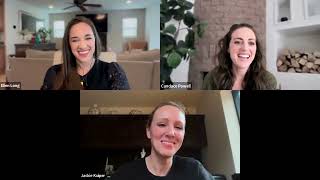
Ellen Long, who's advised founders on exits and spoken at TEDx, talks about why relationships matter more than ever for founders. She recommends researching investors before pitching, sending small personal notes, and identifying mentors two to three years before you plan to exit.
Questions this video answers
buildprovesell.com
The Friendship Letters (Substack)
Tech Mountain (tech incubator/mentoring)
Two to three years before selling the business.
Chapters
Hello and thank you for joining us from our Founders Office lunch and learn. We are so excited. Today we've got a guest with us, Ellen Long. Ellen's mission is to help entrepreneurs build the best business story for the most profitable exit. She is a woman to Watch award winner, a graduate of Leadership Wilmington, course creator for Wealth Fit Inc. And a TEDx speaker. The journey to enough finding your minimum viable happiness. Ellen, thank you so much for being here. Tell us all about the things you do and what your core principle is.
Give us your life story.
Yeah, my entire life story.
Start at the beginning.
I was thinking about this because I've realized that I've started at the beginning and now I'm kind of at the end. Meaning when I first graduated college, like my first job out of college was working for a business consultant who owned an angel fund. So I actually got to be in angel fund pitches every month and over time realized, uh, wow, it is a special gift to be able to pitch to investors who are doctors and lawyers and some of them aren't business people at all. So I kind of started in that became a mentor at a tech mountain at Tech Mountain, which is a tech incubator space. And so got to also like mentor startups, got to see the startup journey. And now I help entrepreneurs get their company ready to sell. So we work with investment bankers, deal lawyers, and we kind of work on the process two to three years before they sell their business. So I've really gone like full circle business cycle, which has been really fun.
And you gave your TEDx talk when you were in your mid to mid to late 20s. Yeah, tell us about that. And you spoke about happiness. So I'd love to get into how you link happiness to business.
Yeah. So I think what I've realized is I work with so many driven entrepreneurs, right. So we're very success oriented. We're super driven. We're out in the world trying to change the world. I love entrepreneurs. It's one of my favorite things in the whole world. I think entrepreneurs really change the world for the better. And so at 26, I was looking at, okay, I'm watching these driven entrepreneurs building businesses. How can you also be driven and fulfilled? And I think it's been kind of a theme throughout my life. And one of the questions I have been thinking about recently is, you know, how do founders and entrepreneurs have an edge in today's world and how can they be driven and fulfilled? Like all of these, these topics are kind of merging together for me. And so for, for me, the Way I think about it is AI is taking over the world. We know this. You guys have been in the industry long enough. Pitch decks used to be, man, if you saw a really good pitch deck, you're like, oh, this person really knows what they're doing now. It's like, oh, AI can build a beautiful pitch deck in five minutes. And what is the differentiator between entrepreneurs, founders who are doing really good pitches? They're getting money. We're talking about capital raising, which is, I think one of the hardest things you could possibly do in your life is to try to get money from other people to believe in your idea, in your thing. And the thing I keep coming back with is I think the edge in the next 10, 20, who, who knows, however many years, is the quality of relationships. I think the founders who have really strong quality of relationships are going to have the edge in, in the future.
I, I mean, I think you're spot on. And you and I have similar, I guess, like, kind of have had similar opportunities in sitting in those rooms at a young age. Right. Sitting in, seeing pitch decks and seeing pitch decks now for nearly 20 years. You're right. I, I, I totally agree with you. It has changed quite a bit. And now to the point where when I see a deck, I'm like, is this AI? How quick did this person get this done? And how much of it was AI?
And to me, going back to the relationship piece, it's why the relationship and the person is so important to me now. Knowing the individual that's pitching, understanding their personality, the relationships they've built, how they've taken care of relationships.
Because.
AI now can replace so much of, I think what used to wow us, what would have wowed us 20 years ago on a pitch, now I really expect more out of the individual. And something that you touched on being the relationship, building one of our, one of our investments. This individual is masterful at managing his relationships. And he actually mentioned to us, like, for the most part, a lot of his investors have been friends.
Yep.
They've either they were friends before or they've become friends over time. And I will say it is so true to who he is. It's how he, he nurtures his relationships. And to me, this shift to tech is really increasing that, the level of importance I place on that.
Yeah, absolutely.
I talked, Sorry, Ellen, you talked at length about the underlying quality in relationship being actually the same qualities that you find in friendship. And that's the one piece that AI really can't replace.
No, yeah, absolutely. Yeah, I Like, to say, you know, the foundation of every healthy relationship, no matter what relationship we're talking about, is friendship. And so I think about when I. When I'm talking about relationships, especially for the type of audience we're talking to, it's, who are your mentors? Do you have really strong relationships with your mentors? Do you have really strong relationships with your investors? Do you have strong relationships with your peers who are cheering you on and encouraging you and, like, let's freaking go. And then what is your network? What's the quality of your network? I. I kind of hate the word network because I really like, almost like a friendship connection, if you want to think about it that way. Like, even when I was in my 20s, there was two entrepreneurs in the town that I grew up in. Tom Looney, who sold his company to Apple for $300 million. He worked for Steve Jobs. He was the dude in town. And everybody wanted to pick his brain, right? And tell us everything, you know, Tom, because you're amazing.
And then Toven Getz got him.
Yeah, yeah. And then Tobin Getz, too. He was a huge venture capitalist. And everybody was asking them for advice, and I was like, man, these men are so interesting. And so I just sat down and we just talking. We were chatting and talking, and I became friends with both of them. It became two of my, like, strongest mentors. And to be able to just call someone up and say, hey, like, will you please look at this? Can you please? I mean, there's nothing like having friendship versus just trying to get something from another person. So to me, that. That core idea of friendship really goes beyond, you know, it's not just, oh, I have a good. I have good friends. No, it's. If you can be. Have friendship be the quality that ties you with everyone else, I think your relationship is stronger. And one of the best example, like, for example, if I said to you, I'll give you $20 million from random people who you don't know, or you can have Elon Musk be one of your best friends, and he is completely dedicated to the success of your startup. Which one would you choose?
You know, like. But people don't think that way. They think, how can I get something from this person? They look at investors as money bags. Like, all of these things, and it's like, no, these. You want your investors to be team members. Like, we used to tell people who were raising capital, you don't want just money. You want teammates.
This goes the. The client that Candace was talking about, the. And he's A friend of the Powells. That was his core component in talking about his life as a founder and what he sought in the ideal investor. And we work with a lot of clients to help them identify their ideal investor avatar. Because your ideal investor is not the person that walks up to you with the first and biggest check that could be a nightmare waiting to happen.
His investors are his friends, and he treats them as such. Meaning when an investment isn't working out, he's the first one giving him a call saying, hey, here's what's going on. Like, he's communicative, right? The friendship comes before the business, and in that way, the friendship doesn't get ruined. And he's. He's very transparent about a number of investments not working out. But those same people knowing him and trusting his character and appreciating the communication, they're still there to try the next one.
Yep. Yeah, exactly. And you think about, like, you guys work with wealthy people. They have so many opportunities to put their capital in places. I mean, it's like they're getting hit every single day, sometimes with a new opportunity to make lots of money in this startup or this oil venture or this. Like, it goes on and on and on. And so when you realize, oh, these people are actually being pitched all the time, what can be the. Like, what's the difference? How can you be different than all the other people who are just blind pitching? And I read an article once that the best interview, which to me, it's basically an interview, right? But the best interview is the interviewer actually speaks 60% of the time. The interviewee only speaks 40% of the time. And it's funny because it's like, you think about it makes perfect sense. Of course, we like to talk about ourselves the most. The person who listens to us the most, that's curious about us, that's interested in us, that cares about us, that person's going to go straight to the top of the list, as long as they have the qualifications necessary, of course. But how. But to me, that is a massive differentiator. Like, when you go in, hey, I'm curious about you and who you are and what you are and what you care about. And I think, you know, some founders, like you were saying, some of the most. I think the most intelligent founders are the ones who say, hey, you're an awesome investor, but you're not the best investor for me. And I think that's a really powerful thing for founders to do.
Yeah, I think, I mean, it goes to one of the most common questions we get, it's either, will we make the investment or do we have access to capital? A lot of times, too, if we host, like, an event, they're like, well, are there investors in the room?
Yep.
And I think that's like jumping to. That's jumping the dates, right? I mean, I can't tell you how many calls I've been on where people are kind of like, right out of the gate wanting to know if we'll invest. And I'll tell you, the gentleman, we. We were talking about.
His.
That his. His business is actually outside of our typical investment wheelhouse. We would probably say no, had we seen just a pitch deck, had we seen just a kind of standard pitch. But he built a relationship with us. We really got to know him, know that he's a really solid guy. His level of communication, the way he greeted us every time, the way he engaged in a really authentic manner.
We ended up making the investment. And it's not in our typical portfolio. And we try to really stick to our knitting on those things. We still. We made those investment, that investment, and likely make another one just because of, like, who he is, his character, and how he treats us. You're right. It feels great.
How would you. I was thinking about this the other day.
Because same sitting in those rooms as now, having my experience and having those opportunities as a really young.
Yeah.
What would you. How do you take what you do, what you know now, into pitches that you've been. You've been sitting in these for so long. How would you do a pitch differently now at your age, with your experience?
I mean, what would you, like, tell your younger self sitting in those pitch rooms? What questions would you ask now?
I mean, I think I would try to develop relationships with the people I'm pitching to. Before I did the pitch. If nothing else, I would learn everything I possibly could about the group. I would ask whoever was the leader of the group, who are these people? Where did they come from? How do they know each other? I'm a speaker. I love to do keynotes. And one thing I always ask is, who's the audience? How old are they? What are they interested in? What are they excited about? How can I tailor my talk to your audience? Because what I'm trying to do is I want to connect with the audience. I want to give value to them. I want them to see my talk as, like, the best talk that's ever happened. And so how do I do that? The only way you can do that is to know your audience. And so I would do a ton of research on whoever and whatever. I'm always blown away by people who ask for advice, and they've never even looked the person up. So for me, I have a TED Talk now. You don't. Nobody has to watch the TED Talk. But I'm always like, I'm always shocked by people who are like, oh, I want to learn from you. I want to be mentored by you. And I'm like, have you read anything about me online? Have you watched any of the talks I've done? They're like, no. Like, okay, so your level of commitment is zero, but you're asking me for full commitment. And I think a lot of times founders do that, which is, I want you to give me your time, your energy, your effort, and your money, but I'm not going to do any investment in you. And I think, wow. So if I was to go back or if I was to tell any founder, it's like, no, understand the group, understand who they are, what they care about, or to your point, what do they normally invest in? If you're way outside their investment parameters, it might be a complete waste of your time to show up to that room, because that's not the audience that you need to be pitching to. So I would do a lot more research and try. Shoot. I'd go to the city, in the restaurant and see if I could find them at the bar, for heaven's sakes. Like, I would ask my network, do you know anyone in this group that I can talk to beforehand? So. So I can get an inside scoop on who these people are?
Kind of want that on a T shirt. Like, you're asking me for full commitment, and your commitment is zero.
Don't be that per. I agree. I've had so many of those where I'm like you. You're coming to me, asking me for money, and then you didn't even bother.
To even Google me at all. Exactly.
If there are founders who have joined us or investors or founder investors that are among us, or other entrepreneurs that are just at this stage in their career where they're learning, like, oh, I want my. I want these business relationships to be less transactional and more relational. And, you know, they're learning that these friendship qualities kind of underlie really good relationships, where do you start? With someone to help guide them towards understanding friendship. Being a better friend, finding better friends. Where do you start that conversation? Especially when you're giving keynotes on friendship?
Yeah. I think the main thing is we always talk about, oh, well, you know, we want clients or customers or vendors that we know, we like and we trust. And I'm like, that is friendship. So to me, it's number one to be insatiably curious about the person sitting across from you. I think we've lost this curiosity. I have yet to meet a human that I don't find interesting. Because to me, if you don't find the other person interesting, it's probably because you're really bad at asking interesting questions. Because every single person has this unique perspective on life, this unique background. Like, I mean, come on. I mean, even you two are, like, insane. Like, I love. I love a lawyer, mba, personal trainer, goes to Bali. Knowing a person like that is so cool.
I agree. I know her, and she's so cool.
Okay, turning that back on both of you. Also, we haven't discussed Candace's DIY abilities. Like, this woman would choose to assemble IKEA furniture if she had spare time. She would choose that.
She does that. That's my dream job. I just, like, I'm waiting for IKEA to scoop me up and have me just assemble their furniture.
Exactly.
No time. No time. Because she did all of the cabinets in her own home.
Like, amazing. See? Incredible. So, like, to know someone like you, even though. Even the smiles on your faces, like, if you can get that out of the person across the table, you're instantly above everyone else in. In the line. I mean, and the other thing to me is, like, actually knowing a person means you remember things about them. The amount of people that I talk to, and I'm like, oh, yeah, I remember XYZ about you. And it's like, I. We go from, oh, I met her once to, oh, she, like, knows me. She remembers what I talked about. Like, it's important enough for her to remember these details. And it's like, man, immediately we have a connection that's way greater than if I had just met them again. Oh, yeah, I remember I met you at so and so's. No, it's like, oh, remember when I asked you about your dream? I do this a lot. I asked people like, what's your next dream? This actually happened to me. I was at. I was in New York City. I was in Manhattan, and there was a woman speaking, and she was the editor in chief of Success magazine. And everyone's like, how do I get in Success magazine? Like, how do I get in magazines? You know? And she came to the back of the room, and it was just. She was sitting by herself. And I walked up to her, I said, hey, like, what's your dream after this? Oh, when I tell you that woman lit up, she was like this and this, and I want to start this network and do this thing and blah, blah, blah and all that. And that was the only conversation we had. And fast forward, like two months later, she's like, hey, do you want to be in Success magazine? Sure, girl. Why not? Love that. So I think people, they have this straight line in their minds of like, these are the steps that I take to get what I want. It's like, actually, it usually goes like this. These are the people that I'm interested in. I'm curious about them, and you actually care about them. Here's the thing. You can be very manipulated in this. You can ask, oh, what's your dream? And not care at all, because all you really want from them is a transaction. And I will tell you that people know, especially intelligent investors, they know they can feel the way that you're coming into a relationship. They can feel the person across the table. So to me, it's like, if you can be actually genuine and authentic and. And find that inside of yourself, I think it's a game changer. And I would say, too, by the way, your spouse or your partner founders, it matters that they support you in your endeavor. That relationship is so, so important. I was keynoting at this functional medicine conference. This woman came out to me. She's like, I'm burned out, and I'm mad. You know what? I'm mad because my husband has a startup. He's bringing no money in. I'm supporting the family. I'm working my ass off, and I'm pissed about it. So we talked for, like, two hours, and I said, I was like, look, number one, let's get your company in a place where you're not burned out and mad, and you're actually making really good money. So we talked about that. And then, number two, your husband is in a startup, which means he's not going to make money for a while, okay? And by the way, this whole thing might crash and burn, but here's your two scenarios. Number one, it becomes a massive success, and he resents you for the fact that you gave him crap and you bitched and moaned the entire time it was happening. In fact, he'll probably look at you and be like, you shouldn't even share in this glory and this wealth and all this stuff that I made because you were against me the whole time. There's a reason why most. Most of the successful people are like, oh, all the people in my life supported me. It's because your husband's chance of success goes up exponentially if you actually support him and believe he can do this. And then number two, what if it all goes down? Like, let's say it all crashes and burns, okay? Cause a lot of them do. If you were nagging the whole time you were nagging, you're like, this is never gonna work. All he's gonna think is, oh, she's probably thinking, I told you so, I told you so. In both scenarios, you lose. And so I was like, look, you. You actually are doing a barbell strategy. You guys know this as like, investor chicks. But it's like, barbell strategies are amazing. I'm like, you have the perfect setup. You have monthly income that's pretty stable. And he's going, you know, you're hitting doubles and singles, and he's, man, he's swinging for the fences. I'm like, you guys actually have. Are the best team. Go kill it. Well, a year and a half later, I see her at another conference. She literally runs up to me. She's like, Today is day one of my 10 week sabbatical. I did everything you told me to do. And I was like, you know what? I'm going to support my husband and let's see what happens. She's like, he was just on Shark Tank last week. He just pitched, it went amazing. I can't tell you because the episode's coming out in like three weeks and, you know, hush, hush and all that, but she was like, you freaking changed my life. But to me, it was like, again, relationships, like the quality of your mentors, your friends, your spouse, your partner, who, whatever it is, if you want to be successful, you know.
You have to make those a priority.
That's such a gift you gave her to allow her to look through that lens and see it differently. I think the current scenario she was in was that there were two spouses that probably both felt very, very alone, right? And it takes a special friendship or it takes a special person to tell the truth, even though that's the harder thing to hear, because in that moment there'd be a tendency. I do this myself. You commiserate with someone. You're like, you're right. That's. That's wild. That's shitty. Like, he needs to do this, this and this. You deserve this, this, and this. There's some. There's different pathways to take.
Right?
But that lens you gave her is. Yeah, that was a gift.
I. So my husband and I have Both been through and we kind of alternate and we joke. It's like we take turns on who's starting a new venture and we've ridden through absolute disasters like real solid stinkers together. And I feel like it is a marriage test.
Some of them were, when we were really young, just starting out, like, just bought our house. And then we're like, let's buy this business. And you learn a lot about how to support your spouse through that thick and thin. And it can be, it can be really difficult. And I think something Jackie and I have seen quite a bit of, and Jackie touched on it is like these founders, they have a lot of people around them, but they feel very lonely. Like they feel alone.
And I'm curious, in your experience, how many high performing people are struggling with these, like, deep friendships, deep connections? I mean, obviously your spouse, partner, significant other is one of those, like, really primary ones, but we see those sometimes going pretty rough in the middle of a chaotic business issue. How many people, like, how many of your clients are in that boat? And what is your kind of next piece of advice? What's their next step forward?
Oh, I would say absolutely the majority.
Absolutely the majority. Doug Brackman has a book called Driven, which I highly recommend anyone who's an entrepreneur to read. He's a good friend of mine, Ingenious. And he talks about driven. People are lonely people because they are the smallest or tiny percentage of the population. Really truly understand you as a driven entrepreneur. There are just so few people who are living that type of lifestyle. So, number one, yes, I would say the majority of people are lonely. But I would say just as a challenge, you know, entrepreneurs, we, we are problem solvers, we are fixers, and we're really good at priorities. And so my challenge is, if you feel really lonely, take agency in that. Take agency in the fact that, like, being able to look in the mirror and go, I'm lonely because I'm choosing loneliness. Because what I find is most of them do not prioritize deep friendships and deep relationships because in their mind, they believe that it is going to hold them back from success. So the lie I see the most is success means, like, they've accepted this idea that if I'm successful, therefore I will be lonely. Like, that is the price of my success. I was sitting down with a woman, incredibly successful. We were having dinner together and she looked at me and she said, if I have to sacrifice fulfillment for the sake of success, I will do that every single time. Like, if I, if you're asking me to Prioritize relationships over success, then I'm. No, I'm. I'm choosing success. And at first of all, I was like, thank you for your honesty. I really appreciate that. Um, and secondly, I wholeheartedly believe that is not true. In fact, the most successful people that I see actually do deeply prioritize relationships and friendships. And really, the, you know, the higher up you go in the. I guess, if you would call it like, the success circles, you realize that it's actually quite incestuous, to be honest. Like, I mean, they're all friends. You know, it's like, oh, this friend is on this podcast, and then they pitch this person's product and they use their network to help this person. And you're like, no, actually, the most successful people actually have really deep relationships. That. And, you know, it's all connected to me. And so it's like, once you understand. No, actually being fulfilled and having deep relationships actually helps you become more successful, not less. It's not a chicken or the egg situation.
And redefining success, babe, like, redefine what success means to you.
I like that.
Having a lot of money and being wildly lonely is not success to me.
Yep.
So what do you recommend? If someone's gone down the pathway of choosing their definition of success, which means they've burned some bridges, they've not focused on relationships, they do feel very alone. How do you start digging out of that? Do you cut your old relationships? Do you work to mend them? Do you. Can you turn them into friendships?
Yeah, I would say. I mean, for me, I see a friend everywhere. Like my keynote speaker coach friend, my doctor friend, my. Like, it's like, instead of trying to go out and. And find new places to find friends, it's like, what if you just, like, looked around? Because there are probably people in your sphere right now, in your circles, that would actually love to have a deeper relationship with you. They're just. They're. You just haven't said yes yet or. There was a great article about opening doors that a lot of people put doorknobs places, and all you have to do is open the door. Like, the doorknobs are available, but you have to turn the door and open it. And so people are offering doorknobs to you all the time if you have the eyes to see it. And it's like, if you just saw that and took and actually went for it, you would actually find that the world is full of lonely people who actually really want friendship. It's like, we have this idea that we're the only one. I'm the only one who's lonely. I'm the only one who wants more friends. I mean, no, especially in these circles. Everyone probably there could use a better friend or a deeper friend. And so I kind of enter these spaces thinking, well, everyone's looking for friendship, and I'm here too, and let's do it. You know, it's like, why not? What. What do you lose by having a couple deeper relationships? I mean, even my coach. My coach has this thing, actually, if you want to, like, a really practical thing. My coach at the end of every year, so his name's Dr. Jeff Spencer. He helps. He won eight Tour de Frances with Lance Armstrong. He was a coach for that team. He went on to coach Bono and Richard Branson. And like, all. Basically anyone who wants to be a champion, he really knows how to help champions win. And he always has me do. At the end of the year, you just think about, hey, this past year, who actually made a positive impact in my life this past year. And all you do is just send a text. Hey, was thinking about this past year, and I just wanted to say thank you for bringing me out to Amsterdam and let me speak on your stage or for. For, like, sending me a care package when I was really sick or, like, just. They don't have to be long. They don't have to be crazy. But it's just like, hey, I was thinking about you, and I wanted to thank you for having this impact in my life. And he has me do that at the end of every year. Just like a really quick. And it's like, those. It doesn't take much. I think that's what people think. It's gonna take so much time. It's gonna take so much energy. No, the bar is in hell. Like, the bar is in hell right now. If you just did one little thing, people. It's amazing. People are like, oh, my gosh, thanks for thinking of me. That was so nice. Because nobody else is doing anything, honestly, especially nowadays.
Like, the bar is super low. It's not the old timey days where you had to take out your quill and write a really nicely crafted letter to somebody, and it took weeks to get to them. Like, you can pop a text over. But my. So two of my best friends are really great at writing notes, and I recently got a note from one of them, and she went through her photos and she wrote me this really pretty card, and it's sitting on my dresser because I, like, see it every day. She went month by month. And thanked me for little things.
Oh, my gosh, get a girl.
And I was like, what a nice random piece of mail. And then Jackie is super secret pen pals with my daughter. And I will tell you, there's no greater. I know. I gotta be quiet. I didn't. I don't know your secret code.
Yeah, exactly.
You will not believe the joy on her face when she gets a piece of mail in.
And I think it's mutual.
Yes.
But the bar is really low to maintain relationships. Right. To have that personal connection. And it does translate into business. But we send notes all the time. Like, we send handwritten cards to this day, because it's. And it does bring people joy. And as an investor, when I've gotten handwritten notes, or just like you said, a text.
Yep.
Or somebody remembers something important, I am like, wow, that's. That's. That means a lot. Thank you. And I'm not talking the cookie baskets at Christmas or anything like that. Just a quick note is fine to say, hey, I appreciate you. You made this year amazing. You transformed. You know, I've been reflecting on the call we had back in June, and you don't know how often I think about it. Those things matter to people.
Yeah. And I would say too, you know, play your game. I tell people, like, they're like, oh, what should I do? Play your game. What are you the best at? What's easy for you? Is it voice notes? Is it videos? Is it writing notes? Is it. I'm a poetry girl. So, like, if I send a little poem out, man, I tell you what people are. They lose their minds. They love that. Yeah, but it's like. But that's easy for me. So. So it's like, play your game. What are you really good at? Stick to your strength. And also, it'll be more authentically and genuine you. So if you're not a note person, great. I have a one guy who. He'll send me literally a video every quarter, just like, hey, Ellen, how. What's going. What's going on in your life? How's life? How's. How are you doing? You know? And so, yeah, you can maintain. I mean, somebody asked me the other day, they're like, how many relationships are you maintaining? And I looked back, like, through my texts, and, like, I Talked to probably 80 people a month, which is insane. People are like, how do you do that? And it's like, well, it's not a.
Lot level talk, like, actually connect with them.
Yes. Yeah. Actually connecting with. But, you know, it takes A lot less time than people think. Because it doesn't have to be a lot. Like, it doesn't have to take a lot of time. It could be like, hey, what's going on in your life? Just thinking about you. The end. They might send you a voicenet back, and you're like, that's incredible. Let me know if I can help you. The end. Like, so, yeah, I do think the quality. Everyone talks about the quality of your network, and it's like, no, actually, it's not. It's not who you know. And it's not even who knows you. It's who knows. Likes. Who knows you, likes you, trusts you and cares about you.
Love that.
Like, if someone knows you, likes you and cares about you. Oh, well, now we're talking a totally different game. Now we're talking. I always. I always tell people this. If you can't pick up the phone and ask them for a favor, you don't have a quality relationship with them. That's. I kind of call it like your inner circle. Your inner circle can be a big circle in what we're talking about. But if you. But that's how you know. If you can pick up the phone and say, hey, can I have. Can you do me a favor? If. How many people. The quality of your network is. How many people would say yes to that question?
I've heard the, like, how many people would pick you up from the airport? Yeah.
How many people.
Not me going through my phone later, making, like, a little spreadsheet with Tally.
Would pick me up for sure.
Yeah, exactly. Like, would do me a favor. And why would they do you a favor? That's the other question. Why would that person do you a favor? Probably because you've done them a favor. Probably because you've listened to them, cared about them, heard their dreams, supported them. It's like. And I won't say this too, I tell people there are moments that define relationships, and you have to know that those are important moments to show up in. If your friend wrote a book and she invited to the book launch party, you better freaking show up. I flew to Austin, Texas, because one of my friends, and it's crazy because one of the ladies in GS Network's a good friend of mine and she publishes. She's a publisher at books, and she tells authors, your best friends won't come to your book launch party. She's like, I just need you to know most of your best friends will not come. And that always blows my mind because it's like, no, no, no, that's the moment you go. And so to me, if you want to develop quality relationships, you have to know when those moments are and you have to show up for them and they don't. And if you're there in those moments, those are the moments that matter more than all the other moments combined. You could go to. You could have 50 normal days, but that person showed up to your stepdad's funeral. Right. Like you're going to remember that over the 50 coffee dates with someone else.
So we opened the conversation kind of jokingly saying AI is taking over the world. What we're talking about is very. Not AI, it's very human element in relationships and friendships and business. And we've got a question that I think leads so nicely into this. I'll read the question and I've got some thoughts, but I'd love to get both of you your take on this as well. So Katherine's question is, if someone uses AI as part of their pitch creation, how do we still ensure that the personality, lived experience, and founder quality come through? Especially when the investor's first impression may be the pitch itself? And I think that's. It's such an awesome question. And it goes to the use of AI at large. Right. Use AI for the things that any single human could do, the things that save you time, get you started, and then the rest, whether that be the magic 20%, the magic 80%, the magic 4%, whatever, you must insert your humanness, your quality. It's gotta be you coming on and showing yourself doing the pitch. I would recommend that no one ever just blindly send a pitch deck out by email and be like, have a look, let me know what you think. No, like, wire the money as a tiny little piece that supports then and amplifies. Like, your humanness comes in and it's your personality, it's your character, it's your lived experience that infuses that pitch with all its magic.
Yeah, I would say Tom gave a great talk at Genius Network about investors should bet on the jockey, not the horse. Because any investor knows whatever you start out with, whatever your idea is, there is going to be a moment where you're probably gonna have to pivot. It'll probably end up completely different than where you thought it was gonna be. And your pitch deck mostly is bs, let's be honest. Like, the numbers are bs, like, it's all. It's all hopes and dreams and projections and nobody, no investor looks at a pitch deck and goes, that's exactly how it's gonna go. So to me, AI is great for that sort of stuff because we all know we're betting on you. Like we're betting on the jockey. We're not betting on the horse. Has to be good enough, right? Like a jockey can't win on a terrible horse. I'm not saying it's not worth anything, so it's like so to. But to me, it's really understanding that what they're betting on is you more than they're even betting on the product. Because they want to know, can this person pivot when the time is right? Can this person go through the ups and downs of entrepreneurship? Because there's going to be greed and fear and greed and fear and greed and fear through throughout the entire process.
So to me, it's, I think the emphasis should be on the founder, the entrepreneur, more, even more than their product and their service and all those things. And then I would also say, I would, I would hope that you have mentors or someone who's been in the space before who can look at your pitch deck and say, hey, this sounds like you threw it through. AI, can you please fix this thing? Like, I have a mentor. He's an investment banker. He sells like billion dollar companies. He's insane. But anytime we're looking at, oh, hey, you know, my friend or our client is looking, is creating a confidential information memorandum, which is literally just a pitch deck to sell your company. I'm gonna ask him, okay, I'm gonna be like, yo, can you do a girl a favor? And look at this, y'. All. He's selling one of my friends companies. Because I was like, hey, will you sell this company? I know it's kind of like way below your normal target. He's like, sure, that's the power of friendship. Like, he's literally selling a company in the 25 to 50 million when he, when he just sold a billion dollar company. So again, the quality of your relationships really matters. But to be able to have someone like that who can look at your pitch deck. So quality of mentors, quality. I think you guys have like a founders club. Get in the founders club, like get people that can help you look through this. So you're not doing it on your own. But I would say the quality of your question already puts you ahead of all the other people doing pitches because that is such an, like, you're already thinking about it, which means I'm sure you're going to crush it.
I think you're totally right. And when you said and we, we kind of, we don't say this a lot, but when we see it a lot, it is about the founder, it is about the person, it's about the team. It's about the human element behind the idea. Listen, Pet Rock was a thing, okay? Like, it. It isn't always that you have the best and brightest idea. I still, like people bought it. That dude became pretty wealthy from selling rocks. The neighborhood kid down the street is trying to model it too. She's like, I got an idea. I'm going to steal rocks from your yard and sell them back to you. I'm an investor at this point on it. But it's. It's so about the person. And so much of the time, I am getting pitched about the product, about the idea. Sometimes a little, like, so deep that it's. I'm like, this is too far. I need to know the who. Who's behind it. Why are you even doing this?
But it does go back to one of our. So we have a model that we follow, which is the six Cs, and one of those is connection. And you really, like. Kind of everything you've been saying really lays into that. I'm very against. I think you need to have a standard pitch deck, right? That is important, but your pitch should understand who your audience is. So when somebody's pitching to me, they should be hitting the high notes on the pieces that are important to me. They should be trying to make a connection to me. They should have researched me enough to understand what it is that I'm going to like about their idea enough or about them and really tailor it that way. Even if you're using AI, it should have your voice. It should. If you're a creative. And I see kind of a lame pitch, that's a big disappointment because I'm sitting here talking to a creative. This. The visuals of this should blow my mind, because that's going to sell me who you are as a person. So I think that's really important. If you're using AI, make sure it's you. Make sure it's you.
Look, if I was pitching you two, I know what I would do. My pitch deck would have the 60s. Here's how my pitch fits the 60s. Come on, y'. All. Like, you can put that through AI, for heaven's sakes. How to redo my pitch deck for Candace and Jackie based on the six Cs. Like, this is the kind of stuff I'm talking about, about tailing to your eyes. How blown away would you guys be if someone like, now you're going to get so many pitches with the 60s. But I looked you up right before this call. I'm like, what are the 60s? Oh, cost of capital. Like I went through cash flow, all these things. Right. It's like you can do that. Like you can make your pitch decks easily. It could. Oh, you could change just the first slide of every, every group that you went to. If you change the first slide so it was actually applicable to them, you would blow their minds and it would take you literally 10 minutes.
Do you know how many slides I, how many decks I see that doesn't even mention the founder?
They don't even have their own name or their. Who they are. And I love. So I actually dislike LinkedIn. It's public. People know this. Somebody mentioned it to me at an event. They're like, you're not on LinkedIn. And I'm like, no, because that's the fakest thing I've ever seen. I don't like LinkedIn.
It's great for dating Candace. I get multiple offers every now.
I've been with my husband for 20 years. But it's good to know. Good to know because I wouldn't know where to start. But, you know, I think it's.
To me, it's because it lacks authenticity. I'm like, I don't wanna it. No, that doesn't tell me anything about who you are as a person. So I love when people have really personal pieces on their deck about who they are, what they love to do, what they do in their free time. Those pieces actually speak to me a lot.
Yeah.
So I would say really try to incorporate those in. Yeah.
My best friend just started working for a Silicon Valley startup and she was doing her little like three minute, this is who I am. And I'm like, oh, this is all wrong, we have to redo this. But it was. But to me, it's the golden thread. What's the golden thread? Why is this product so important to you? Why do you believe in this product? Tell me about your background that makes this product the best thing that you've seen for this market. So in her, in her case, she worked as a counselor for addiction recovery, basically, and then went into tech and learned all about tech. And now basically she's pitching a combination of AI and counseling, essentially. But it's basically how can, basically behavior analytics. How can we predict what this person is going to do? And I told her, I'm like, that's what you do in real life. Her superpower is she can look at a person, get to know them and she knows how they are going to act. And I'm like, I'm like, honestly, all you're doing in this product is you're taking what you do naturally and putting it into an AI product. That is a super cool story. That's a story that investors are going to be like, wait a second. I see the golden thread of why this matters to you, why this is important to you and why you believe in it and why you are doing it now. Like, that's what we want to know. Why does this matter to you? Why are you going to put all your energy, time and commitment into it? The best inventions, in my opinion, are someone has a personal reason for it. They're inventing it because they're solving their own problem or their spouse's problem or their kids problem. Like they care. Tell me why you care about this, please, in your pitch deck.
Love that. We've got. So we'll wrap up shortly. We've got one more question. You can go to founders office.com all one word. Founders is plural. Founders office.com. there's a little button that says enhance my pitch deck. Please upload your pitch deck. We are glad to give complimentary feedback. And Ellen, before we answer this last question, and I'm. I know you've got fantastic advice on this because we've had this conversation. How can people find you, book you, contact you if they're interested in getting a tailored keynote relative to what they've got going on in their own business?
Sure. So buildproofsell.com buildprove p r o v e sell.com and there's speakers, bios, there's pages. You can contact me or Instagram, Ellen Long lifestyle or Reach out.
We'll connect to.
Yeah, reach out.
Have them. Can you tell them how to sign up for your newsletter? Because I love your newsletter.
Oh, my.
This one made me really emotional.
Oh. Oh, gosh. I don't even know how they do that. It's on substack. It's called the friendship letters. If you put Ellen Long in the friendship letters. Yeah, I've been doing a really. I love it. It's basically just about friendship and it's been fun.
Okay, so our last question. I found myself going through major success from a deal that just went through and I felt the majority has not shown up to support me. And this is from personal to professional. So the gamut which makes me feel insecure with how I developed relationships. I'm a very sincere, direct and kind person. And it's disappointing to Feel alone while finally seeing success. What do you suggest someone does when you've realized the majority of people were just surface level interest or support?
Ooh, oh, this is, that's a tough one. I would say make it positive. Look at the people who did. Write a list of the people who did show up, who supported you, who celebrated you, and celebrate them. Like, I would go to them and say, like, hey, thank you for supporting me and celebrating me on this journey. What I have realized through this process is that you're the real deal, and I'm so thankful you're in my life. Um, and then also, I think, realizing, look, sometimes it's hard for people. It's, it's, I call it peaks and valleys. It is real. It's way easier for someone to go from a peak to a valley for you, meaning it's way easier for someone to show up for you when you're going through a hard time.
Because it's easier to have empathy for hard times because you're like, oh, my gosh, that person is going through this really hard thing. And I can support, support them, and I can care about them. It takes an entirely different person that can be in a valley and climb up a mountain to celebrate you at your peak. And so I would say to have some empathy and compassion for some people, because there is a, there's always going to be a level of jealousy and a level of, why is she on the mountain and I'm in the valley? It's hard. I just had this with a friend of mine, actually wrote about in the friendship letters, but she was having a baby and I was having a hysterectomy. And to climb up the mountain to celebrate her baby at the top was honestly one of the greatest joys of my life. And that is really hard. And it's okay that it's really hard. So understand that some people might be drowning in debt in the valley themselves. They're looking at you going, oh, my gosh, she has so much success. She's so lucky. You're not, you're not lucky. You worked really hard. We know that. But it's really hard. So I would just have some empathy and compassion because it's, it's really hard to climb out of valleys to celebrate someone at peaks. And then I would look around and say, who's standing at the peak with me, man, they're the real deal. And if you have one or two people, you're doing really well. And I, I, I tell people that. People tell me that all the time. It's like, if you can, if you have one hand of people that support and celebrate you, you're actually doing really well. Um, so celebrate those.
I love that. I also think it's up to us sometimes to put the invitation out. I'm guilty of being like, oh, here I am. Everyone knows where I'm at. Whether it's a peak or a valley, a success or a low. I'm just waiting for people to come to me and show up. And you encouraged me in this. You're like, put the invitation out. You can invite. And I've had friends that are like, hey, I just want to share this with you. I'm so excited this happened for me this year. I needed to share it with someone. And I was like, this is an invitation to celebrate with you. I wouldn't have known you were going through that and celebrating that had you not told me and trusted me. So now that I know, I'm there with you. So we can't assume that those, even our loved ones, know everything going on. So this might be an opportunity, like, throw little invitations out and then see who is open to celebrating with you.
I would also say I was in a group of very successful women, and we were talking about spotlights, and they're like, you know, there's this whole this is hot take, and I'll try to make it quick. There's this whole thing about, like, don't dim your light for other people that can't handle your spotlight. Now, there's a bit of truth to that, but I will tell women who are, like, wildly, crazily successful, sometimes your spotlight is actually too bright in the sense of if. If you want other people to celebrate you, you have to celebrate other people, even if their wins aren't as big as yours. Like, it's easy to be like, well, I was on a plane and I went to Amsterdam, and now I'm in Bali. And, like. And everyone's like, wow, that's amazing. And it's like you have success after success after success, and you're like, let's all celebrate me. But sometimes, you know, when you're driving down the road and someone's, you know, got their, you know, lights blinding you, it's like, okay, I'm just trying to drive. And sometimes I think you should be able to have normal friends that you celebrate just as much as they celebrate you, even though in the world's eyes, your successes are higher than everyone else's.
So to me, it's like, no, no, we should be. We. If. If no one's celebrating you at. I also look in the mirror and just have an honest conversation with yourself. Am I celebrating them as much as I want them to celebrate me? Because a lot of entrepreneurs, they think they can only be friends with extraordinary entrepreneurs who are changing the world. And I'm like, no. Some of my best friends in the whole world are normal people doing normal things. And I think that is incredibly beautiful. And sometimes I'm absolutely jealous of them because that's amazing. You have a husband who loves you and kids who love you, and you have a. You have people that care about you and you get to do normal life things. Sometimes I'm tired of doing all this travel. I'm tired of hotel rooms. I'm tired. Like, I should celebrate their cool stuff as much as they celebrate mine. And I think sometimes when you live such a big life, it gets to be where other people are. Just tired of only hearing about your big life. You have to also give as much as you take.
I love that. Thank you. I'm. My brain is like, I'm sitting here thinking, I'm going to go through my text messages and I'm going to try.
To.
Connect with everybody. 1 thank them for everything this year. But then I love this idea too, of almost like a challenge of like thanking them, but also maybe having a moment of like, hey, I'm really proud of you for this, or I'm really excited for you for this. Like, taking a moment to honor what is really awesome.
Yeah, you do that. You do that naturally.
Do I?
Yes.
I love it. You guys are like all second guessing yourself. Yeah, I know. And. And when you sell when you are excited for someone's dream and you get to celebrate the dream being realized, man, that is such a cool connection. There was a guy at Genius Network, we talked about this talk like a year ago, and I was like, dude, you should totally do it. It'll be awesome. Like. And we really didn't talk about it for like a year. He gets on stage, he gives the speech, and he immediately sends me a voice note. Like a couple hours later, he's like, oh my gosh, it was so cool that we talked about this a year ago. And you were like, dude, totally do it. Look, I did it and it meant so much to me that you were in the audience. And I'm like, you killed it. You crushed it. I'm so freaking proud of you. Way to go. Like, we need more relationships like that.
Yeah, I love it.
Well, I love both of you and I'm glad we've got our friendship and our relationships and our business stuff together. I hope this has been valuable for all of our listeners. We can post the links that we shouted out during the discussion and the book that you recommended as well, Ellen, in the post show posting, or you can also watch the replay. But thank you both for the conversation. Yeah. Wherever we put it.
To your sub stack.
Oh, thank you. Amazing.
It's great.
And I love it.
Yeah. And Mike reposted that to the chat. To the chat.
Oh, yes. Mike posted it.
Cool.
Thank you so much. Thanks, everybody. We appreciate it. We appreciate you, Ellen.
Bye, y'. All. Thank you. Bye.
More from Dr.

The Business You Built May Not Be the Business You Own | Founder’s Office™ Lunch & Learn



Your Business Isn't Worth What You Think It Is | Founder’s Office™ Lunch & Learn


Complexity Is Quietly Destroying Enterprise Value | Founder’s Office™ Lunch & Learn


Simplifying The Complexity of IP | With Tony D'Angelo | Founder’s Office™ Lunch & Learn


