Unlocking Financial Prosperity and Building a Legacy with Kim Butler (EP007)
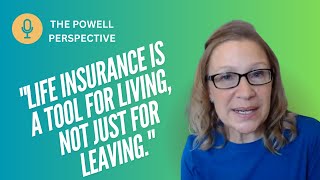
Dr. Thomas J. Powell and Kim Butler discuss using whole life insurance to build wealth and protect assets. Unlike term insurance, whole life policies accumulate cash value you can borrow against tax-free for emergencies or opportunities. Mutual insurers like MassMutual and New York Life pay dividends and have been around for centuries.
Questions this video answers
About 11 books.
Children starting at age one up to about 25.
15 to 30 times income (younger = ~30×; older = ~15×).
Approximately 150 to 200 years old.
Chapters
Foreign.
Well, hello and welcome to another edition of the PAL Perspective. Thank you for joining us. And I'm sure as you started your day today, if you got in the car and drove, you didn't think about the fact that you had insurance on that vehicle or if you live in an area where you have a home and like myself where I live up in the mountains and we have these fires or you're right now on the east coast which will time date this and you've got these storms going on, or you just have somebody slip and fall on your property. You don't think about the fact that you have insurance. But there are, there are literally thousands of different ways that we use insurance. And most of us don't think about it as something that we do a one and done buy it and don't even really know what the coverage is. We are so fortunate to have a person that I just consider one of the leading experts on how to use insurance as a vehicle that helps build prosperity and longevity and purpose even in life. And so joining me today is my good friend Kim Butler. And I'm just so thrilled Kim's got her own podcast. She's actually one of the leaders in the podcast areas. And so I'm just, I'm thrilled that I was able to grab Kim and have her come on here. But Kim, thank you so much for joining us today.
Tom, it's always a joy to talk with you and the fact that we're recording is just ancillary and I'm thrilled to share.
Kim and I have some of the most fun, interesting conversations. And you know, as we were starting off today, I said, you know, Kim, it is just wonderful to always see her bright eyes and smiley face. And in reality, as most of the entrepreneurs that are out there, and this podcast is geared towards entrepreneurs, but as many of us know, it's that saying of if you find yourself in hell, just keep going. And so we share that, that at times we've gone through that, but it's always with grace and humility and a sense of humor. And also we grow from that. So, Kim, thank you again. Tell me a little bit about your podcast. We were just talking about that. I want to know about your podcast because you've been doing this. I mean, you are a professional in that area.
Well, thank you. I have a great producer with Podkick and I started on blog talk radio, which was a quasi radio podcast shift space even before podcast was a. And what was really interesting is somebody said radio as it, as the podcast became More common. Radio is about the past. Podcasts are about the future.
That's all it took. I was all in. And I am very grateful to be gifted from father, mother, God, the ability to speak, speak quickly and succinctly and not use the word a lot. So I think that contributed to having fun on podcasts.
That's great. And you have amazing guests too, which, you know, is attributed to just your network of people that you've been able to.
Cultivate. And it is a cultivation to have a network. Right. So I always find it interesting that when, you know, you're around someone who is really a wonderful person, when people that they've not even gotten along with at certain times still pick up the phone when they call. Right. And you are a person that people pick up the phone when you call. And I really feel that honored to be with you. Okay, we said this is going to be a little bit about insurance. I know, because we have like 20 minutes and we're already five minutes roughly into it. You can cover about this much of insurance. But give me that overall thought about insurance product as it is for being a beneficial part of our overall existence as opposed to just a one and done leave it and never think about it again.
Absolutely. And it's because of the specialty that I have around life insurance that we can have this conversation. Because while I have some knowledge about car and home and other types of insurance, life insurance is the one type that has an absolute w h e n event. It is a when, not an if. And in theory, somebody could go through their whole lives not using their car insurance, not using their health insurance, not using disability insurance, not ever having any issues with their home, et cetera, et cetera, et cetera. And yet all of us die, last time I checked. So because life insurance is a win product, life insurance is a w h e n event. We can use that guaranteed event called death and pull it into our lives while we're living. And that is one of the most unique aspects of it.
So explain what you mean, because I think most people, one they think of, they don't even know what necessarily the differences between term and whole life and universal life and all these other tricky terms that are out there industry special. Right. But then by being able to pull it into the current life. What do you mean? You know, when I was younger, I had to have it because I had children and I wanted to make sure that if I died because I was the primary income earner, what would happen to them? That, that, that was the initial introduction Absolutely.
And so what you're talking about is term insurance. Most people have it at work. They might buy it outside themselves as well. You know, a really fun fact in Canada, the day people get married, and again, the day they have children, they buy term life insurance. Because Canadians operate from a position of fear in the US we don't think we're ever going to die. And so we either ignore it, do nothing, shove it down the road, what have you. And I meet many, many people whose human life values. So we'll come back to that term. Their human life value is literally 3 million or 10 million or something like that. And they have $500,000 of term insurance at work and that's it. And so we would never go down and drive our car that's worth $50,000 but insure it for only 20,000 because that's the only insurance we need. We insure our car for what it's worth. We insure our homes for what it's worth, but we don't do a good job of insuring our lives. And so that's. Huh. Go ahead.
Wow. No, I'm just saying, like, that is such, like.
And the younger you are, in many ways, the more valuable your life is. And it's. The insurance is less expensive.
Right.
Because you've got this forward forecast.
Let's just bunny rabbit trail the human life value so that people don't get stuck on it. It's got a mathematical approach and it is 15 to 30 times income. And when you're younger it's 30. And then when you're older it's 15. Right. And correspondingly or one times gross worth, not net worth. I'll tell a fun story about that in a little bit. But you asked, how do we bring it into our lives today? Well, term insurance has been around for literally centuries. Always cracks me up when somebody says, well, insurance is a scam. Then how did it survive so long? Whole life insurance was brought in kind of depending on the research you do, between 600 and about a thousand years ago by the churches who realized that people were paying for term insurance all during their life and not getting anything for it because then they would get rid of it closer to death because it got so expensive. Because term insurance is either going to go up every year or, or it'll be level for 30 years or 20 years and then it'll take a huge jump because you're closer to death. So they installed the idea of creating a savings component, an asset. And so Tom will write a CPA that you And I both know I love his sentence. If you want to have an expense, buy term insurance. If you want to build an asset, buy whole life insurance. And you're right, there's a lot of variations. But Whole Life is literally the oldest financial product on this country and definitely in England and some other places where it was first started. So Whole Life is literally a savings component, not an investment. Along with that, insurance that guarantees there will be a payment upon death, which as we've stated, is a guaranteed event. You put those two guarantees together and you can bring it into your life while you're living.
How do you do that? I mean. Well, first of all, let's go back to this. Most people have heard the term Lloyd's of London, right? And the interesting thing about Lloyd's of London, because we have done through a reinsurance company and some previous to that even. You've met my friend Rick Jeruso, who launched the first private satellite launch company and he, you know, raised it, raised his initial billion dollar round uniquely using insurance products. But it was through Lloyds of London and Lloyd's of London, the one thing they don't insure, they'll insure somebody's legs, they'll insure somebody's arm, that's a, you know, quarterback their hands and everything else. But what they don't insure is life. Right? So this is what is left up to a lot of the others because Lloyd's of London is actually not an insurance company. It's a conglomerate of people that said, hey, we're going to put the stuff on the ship, we're all going to pay into it so that if the ship gets trouble and it goes down, the crew doesn't have to pick which items to be able to do so they can get the rest of the items there. We're all sharing that risk, right? So that was one of those financial products that was about an event and it may or may not happen. But I love your idea that this idea of life insurance is it's a when and yet in the benefit of certain financial products within that, you can bring it into the now, Right? I mean, that's what you're talking about.
You are correct. So the insurance companies in the United States that offer this type of product, again, Whole Life, the longest standing, are all 150 to 200 years old. And they go by names like Guardian and Massmutual and New York Life and Penn Mutual and Northwestern Mutual. Notice the mutual word. Now not all mutual companies actually have the word mutual in their name. Nevertheless, Mutuality means they're owned, the company is owned by the policyholders, whereas the John Hancocks, the Prudentials, the somewhat more common names out in the marketplace, are owned by the stockholders. And that is a extremely different category of life insurance. And so we're talking about the mutual companies that align with your own desire of living a long and healthy life. And they pay dividends and they have amazing histories and they have all these guarantees. And what's interesting is they actually fund most of the large deals that are done in the real estate market. In business buyouts. It's not funded by a bank. It's often funded by these large mutual insurance companies.
Yeah, so I just want to go back to that just to give a clarity. It's kind of like a credit union versus a commercial bank. So union is members, and at the end of the day you get a dividend back. Like my REI also dividend at the end of the year, which is a membership versus. I don't think that Nordstrom's or Macy's, not that I shop a lot there, but. Or even Amazon sends me back a dividend at the end of the year, but REI does and I'm always excited to get that dividend. Right. And the same way with the my credit unions versus our commercial banks, they have shareholders and they have to produce at a level to give a return to the shareholders. Right. And this is like the New York Life, not to pick in on anybody. But is a New York Life like a credit union type or is that more like the shareholder type?
It's a credit union type. And because of that they think long term.
Cool, I like that. All right, continue on. I keep interrupting you on this, but just always like, well, it is fun.
Because this product that we're talking about is called life insurance. And whole life insurance should be called life insurance because we can use it while we're living. Term insurance technically should be called death insurance. And I want to make it really clear that there is nothing wrong with term insurance. People should have lots of it. I still own it. Nevertheless, as Tom Will Wright said, if you want to build an asset, buy whole life on top of. So really the question is not do you buy one or the other? You buy both and you get to that human life value number by purchasing both. And what the asset is that gets built with whole life insurance is a savings account equivalent. Sometimes people look at it as a bond equivalent, which is accurate. I just call it your emergency opportunity fund. And that additional word is so important. Everybody knows they're supposed to have an emergency fund, but really, how much time do we want to spend thinking about that? We want to get that handled right and then build for opportunities. Well, opportunities require cash. Whether it's buying a business, buying investment, real estate, could be buying a car, down payment on a home, the list of opportunities is endless. How high is up? How big do you want your opportunity fund to be? And that's what Whole Life does. It builds that Opportunity fund. It's very efficient because that fund grows without tax. It earns cash type rates right now, 4%, give or take. But good heavens, that's without tax and that's after the cost of the death benefit and any commissions that get paid. Because this truly is a product that must be sold. It is not typically bought, meaning there will be an agent involved. The only Whole life that's out there that is sold through a company without an agent is non participating, which means no dividend.
Wow. You said something interesting about its cash equivalent. Right. And again, in our side of the business, as you know, I'm an investor in this group that we've launched called Laughlin Black, which after battling with the United States government for a number of years and then having, you know, the ambulance chasing attorneys come after assets and everything else, all the wonderful things that we get, that was literally not anything that we did at the end of the day, but it still ends up being an event that happens. It could be an economic event, it could be whatever happens in running businesses. It's an economic event and people take advantage of that, or the government takes advantage of that. Properly utilized Whole life as an asset, unlike any other asset that you can have, except possibly your retirement account is protected. Is that, is that a pretty fair statement?
It is a fair statement. It does depend on the state that you live in. Each state has different laws and life insurance is a state regulated industry. It's not federally regulated. So there is that additional caveat. Nevertheless, it can be very well protected and that can be an incredible foundation for a family to build on so that that asset cannot be accessed by the people that are causing challenges.
So let's cover through that on the risk side. And again, I know we're not giving legal advice or holding you to a scenario, but so I buy it in Nevada and Nevada has this long standing asset protection kind of valuation and privacy and all these other parts. And I move to a state, let's say, I don't know, Massachusetts or somewhere else that may be less inclined to do that.
Is it the move that then all Of a sudden changed my life insurance to become more accessible by an agency.
I believe that that would be accurate in that it is the state of residence for you at the time. Nevertheless, as you're well aware and as Laugh and Black does so well, there are LLC and trusts that can be encircled so that the life insurance product is doing whatever it's doing, but you have that additional ownership that will then dictate the state.
How did you know where I was going with that? Like you read my mind. So I could physically as a person move, but I could use one of the vehicles out there, such as even a charitable remaining trust or, you know, an insurance trust or other products out there to maintain it in the most valuable protected state. And in this wonderful country of ours where we have federalism and some people hate it, but it's where you've got federal laws and you've got state laws and these little independent of five times, you could have it structured in the best state for your whole overall purposes.
Correct.
That's awesome. That is awesome. Okay, so I'm taking you so off track on this scenario, so continue on why this still is being able to be brought into the current. So it's a. It's an account that we've just agreed is can be protected against events when people want to, you know, get after your house or your cars or other things that you've done. I would guess banks too, if you had to sign a personal guarantee, they can't come after that insurance unless you pledged it against it somehow, which would be not really an easy thing to do, I guess. But then how do you bring it in for. You've got life events and it's your thing that's going on.
Well, in addition to the solving of emergencies, the taking advantage of opportunities typically of what you're going to borrow against your cash value for that is the best way to access that cash value stays at the insurance company. But it's collateralized or leveraged so that you can solve emergencies and take advantage of opportunities. You also have that death benefit that's sitting out there. And the easiest way to think about utilizing your death benefit while you're living. So the cash value is fairly obvious to use while you're living. The death benefit. Little harder. Easiest way to think about it is if somebody told you that you are absolutely positively guaranteed to win the lottery at age 100 or 105. The age doesn't really matter. Just sometime way out in the future, would you spend your assets differently from say 80 to 100 well, obviously, yes, because you'd have that influx of money coming in at age 100. So this has been called permission to spend. This has been called the Rockefeller method by a lot of people. This has been called pay down permission because you're in essence enabling other assets to get paid down or spent during your 70s, 80s and 90s, because you know you're going to have this infusion of cash upon death. This also sets you up for doing legacy work. I have a book out called Perpetual Wealth. A lot of people really like the idea of leaving financial legacy. And of course we know there's other aspects of legacy that are important as well. And so that guaranteed death event combined with a guaranteed payment event of the death benefit can come into play. And the specific examples are things like reverse mortgages, charitable remainder trusts, which you mentioned, that pay down idea, a pension maximization idea for people that still have old style pensions, and there's a few others. But those are the main ways to utilize the death benefit while you're living. And then that's in addition to the utilization of the cash value while you're living for emergencies and opportunities.
That's a whole nother show in of itself and probably 15 shows. As you go through your stuff, talk about your book really quick because it's not just one book. You have a series of different things that you do with your podcasts and in your books and this new Prosperity.
Prosperity Parents.
Prosperity Parents, Yes. Oh, this is so exciting because I love, you know, we've got these grandchildren, these little beans that are coming up and, and my children, I, I will say, you know, it's wonderful to see them doing so well and experienced in life and being able to take care of the opportunities and then to be able to reach out and do more with that. So tell me about this Prosperity Parents.
You asked about the books. I'll talk about those quickly first. So I love asking people how they learn. Do you like to read, watch or listen? All of our books are on Audibles. I also have a YouTube channel. I've got about 11 books on Amazon, so help yourself. And the additional thing that we've just added is a free community called Prosperity Parents. And so it is designed for those that have children literally starting at age one up to 25 or so. But a little PS that I've heard a lot of parents have gone through it with the intention that they will help their children with financial competency. It's not just financial literacy. We want, we want financial competency and they got more out of it. Themselves than what they were able to impart to their children. They were so excited to have the learnings and the community and the ideas that went along with it. So we're really excited to put the community out there. There's a course as well that people are able to purchase. It's all on our Prosperity Thinkers website. But there is a special section specifically for Prosperity Parents. And like you with young grandchildren, it is the love of my work to be able to help these young families with teaching financial competency to their children, which just like good habits must start at 1 years old or even 6 months old. And yes, you can start teaching money then.
Prosperity Thinkers is the website. We'll put that up there on a QR code. And Prosperity Parents is the process that you can go through on part of this. Right. As well. You said 11 tips out on Amazon.
I do.
That's incredible. We're going to close out for now. We're going to come back and do another segment with Kim Butler, who's just a dear friend. Just there's, there's so much depth. I could have her on like 10, 15 times probably. And we'll hope to have her back again in the future. But I can't tell you how much I appreciate you coming on, especially in this early stage of our podcast. You know, 25, 30 years ago, I had a radio show and they always used to joke, you know, I had a face made for radio. But now podcast, you actually put the face out there so it doesn't work as well, you know, so, so scenario wise. But thank you for my team as well, Kim. Thank you. We're going to put the, the QR codes or the, the links up there. Please follow that. Check out Kim Butler. She is just beyond. This is only even a small taste of how amazing she is. And we'll be back with the PAL perspective. Thank you for joining us today. Have a great, great day. Sam.
More from Dr.

The Business You Built May Not Be the Business You Own | Founder’s Office™ Lunch & Learn



Your Business Isn't Worth What You Think It Is | Founder’s Office™ Lunch & Learn


Complexity Is Quietly Destroying Enterprise Value | Founder’s Office™ Lunch & Learn


Simplifying The Complexity of IP | With Tony D'Angelo | Founder’s Office™ Lunch & Learn


