How EBS Helped Me Turn Around My DPC Practice with Dr. Vladamir Barayev
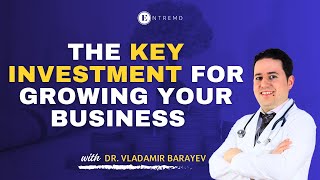
In this Entre MD Business School interview, host Dr. Tamara Beckford talks with Dr. Vladimir (Dr. Vlad), a direct‑to‑patient pediatrician in Staten Island who specializes in autism. Dr. Vlad shares his experience after 60 days in the school. He reports tangible wins such as a surge in patient sign‑ups and greater practice visibility, which he attributes to a new “panoramic” business perspective. Intangible wins include a dramatic boost in confidence, a shift from a negativity bias to a positivity bias, and reduced mental drama. He outlines key lessons: narrowing his focus to families with autistic children, embracing a simple, consistent revenue‑generating framework, and daily execution of core tasks. Looking ahead, Dr. Vlad plans to scale his practice, using a “future‑self” coaching technique to stay motivated. He strongly recommends the Entre MD Business School to other physicians, likening the program to a personal‑trainer for elite performance and emphasizing the need for both time and financial investment to reap the benefits.
Chapters
Oh, hello. Hello, everyone. It's Dr. Tamara Beckford and I am welcoming you inside the Entre MD Business School. This is our show. We are going to highlight one of our star pupils today. This is Dr. Vladimir. I'm going to have him introduce himself. He's going to tell us all about his business and where he's located. Go ahead, Dr. Vladimir.
Thank you so much, Dr. Beckford. My name is Dr. Vlad. I am a DPC pediatrician and I specialize in Autism spectrum disorder, diagnosing children, helping them navigate the treatment options and a lot of the challenges and pitfalls for parents along the way. And I currently am working in Staten Island, New York, the forgotten borough of New York City.
Staten island, where Wu Tang Klang is from, and also Latin America. Alrighty. So, you know, there's so many things that has happened since you've been here inside the Entre MD Business School. Let's talk about the last 12 months. How has your last 12 months changed for you? It's even in the last, what, 90 days, like, how has it changed and what are your tangible wins that you've had since you've been inside the long trim d business School?
The tangible victories that I've had so far in the business, I like it.
Victories
have been getting patients to sign up for my practice and having a lot more interest in the practice and what I do and having a lot more exposure and visibility for myself and my practice. These are things that have come about because my, the glasses that I'm using to see the world through are different now. I was always using glasses that would make the world seem really, really small and limited. But being in the business school, my glasses have been, my prescription has been changed and now I look at everything of having bigger impact, doing bigger things and just thinking bigger and dreaming bigger and showing up with a lot more confidence. For all the expertise and the knowledge that I have hard fought on one and gained over the years, I'm able to display it now in an appropriate fashion.
I love it. I love it. So, you know, within the last, I'd say, what, 90 days have you been here for? What, 90 days?
60 days.
I've been here 60 days. Oh, wow. For the last 60 days. So just in 60 days your lens have changed. So we changed your prescription lines already. Right. So you've now, instead of being myopic, you're now looking at a panoramic view of your business. You're looking at things from the impact that you are now having. And your tangible win so far is that you're like, hey, I'm bringing in people in to the practice. Like, I'm getting patients like coming in to the practice. That's one huge win that you've had so far. Alrighty, so what? That's a big tangible win. But then we have some intangible wins. I know you kind of mentioned a little bit of it with your, you know, being able to look at a panoramic view, but what are some other intangible wins that you've had in these last 60 days of being inside the entrepreneur business school?
So the confidence levels have been boosted dramatically for the outlook on my business and what I'm expecting over the next. Over every quarter, how I set my goals and how I follow up on my goals has changed my, my negativity bias that everyone has that usually looks at what's going to be the bad news for today has now become more of a positivity bias. So I try to, to balance it out like 75% of the time being more positive and leaving some negativity down at 25%. And there's a lot of mind drama that I still have, which I'm slowly letting go of. And I have more to let go of. And it's. The funny thing is I know some other students who have been in the business school before, they've gone through the same process of having to let go of certain mind dramas like, oh, I'm afraid to increase my prices for the services that I provide. And they've gotten over that. And I still have not yet gotten over all of that yet.
Oh, just keep in mind you're 60 days and the fact that you've been thinking about it, right? That means that you're slowly infusing and getting into the subset of, like we said, the mind drop drama. So you've had some huge, huge intangible wins. One, you said, the way that you're showing up daily, right? So prior you were showing up with, okay, what's the bad thing that's going to happen today? And as opposed to that, you're like, okay, what are the awesome things that are going to happen today? And still leaving room recognizing that everything's not going to be 100% on good versus, you know, 100% on bad. You're like, yeah, there might be some sprinkle of challenges here and there, but now you're showing up looking forward to all the positive things that are going to happen in your day to day life. Now we have ups and we have challenges. Now what are some of the challenges that you were able to overcome, which we call lessons here in the business school. What are some of the lessons that you could say that you were able to learn and overcome as a part of being in the business school?
One of the lessons, the lessons that I learned being in the business school are that I already have the answers to the questions that I was looking for. For example, when I wasn't sure exactly what direction I wanted to take my marketing, for example. Because when you're a general pedician, you have so many things you can talk about focusing down your message on exactly what you get energy from doing what you enjoy doing the most, the type of ideal clients you enjoy working with the most. When I had a come to Jesus moment and I thought about, what is that for me? I said, okay, I know what that is, and that's what I'm gonna attack wholeheartedly and kind of ignore everything else. And that's exactly what I did. And the results have been dramatic from keeping a very strong focus on one singular topic of working with families with children with autism and the power of simplicity. So learning about the revenue generating framework, just building in all those individual components, doing each one is not rocket science. It's not super complex. It's simple, but it's not easy. You have to do it. You have to show up every day and you have to keep doing it. But it's simple. Like, when you really think about what is it that you're actually doing, doing the same things every day, you're just consistent with those things and then they're like second nature. I don't really have to push myself to do these things on a daily basis. I kind of just like, if I don't do them, I feel a little bit sick inside. When I do them, all my sickness goes away. The revenue generating framework, I would say, is like the On Dance a Tron for me on a daily basis, it takes my nausea away.
I love it. I love it. You're like, I know what I need to do. It's simple. But as we say in the school, things that are simple to do are also simple not to do. Right? Because it's not shiny, it's not exciting. It's the simple things on a consistent basis that brings in the revenue. So keeping it simple, being focused, and being consistent are some big lessons that you've learned. You're like, I really thought it was all of this, but it really is just narrowing it down and keeping it simple. Love it. All right, so over the we've talked about, like, you know, the lessons that you've learned. We've talked about some of your tangible wins. We talked about some of your intangible wins. Now we are really gonna go and let's ask this question is like, where do you see yourself within the next year within this business school? Like, what are you seeing? What's next for Dr. Vlad?
Oh, I'm gonna go from growing my business to scaling in the next year. That is what I see for myself in the future. One of the first books that was recommended to me when I started the business school was to think about. Talked about thinking about myself in the future and having my future self called to my present self, as opposed to looking at my past self. And I looked at myself. I'm looking at myself from 10 years down the road. So I'm looking at 20, 34, Dr. Glad. And he is calling me every single day to, like, just keep working at it, keep doing it. I have his. I have his picture on my phone, and I have his message on my phone. And I just keep trying to not let him down.
I love it. I love it. So see your future self now and be your future self now. So Dr. Vlad has his future self there on his cell phone that's talking to him daily. That's telling him, hey, this is where we're going. This is where we're going. Stay the course so that I can meet you when you get here. Love it, love it, love it. Now, there's some people who are, you know, they're on the fence. They've heard about the business school. They're kind of like, I'm not really sure if this is for me. What would you say to those people who are on the fence about joining the business school?
So I was one of those people myself. I can empathize very strongly with what those people are going through right now. It's always comes down to a question. This group is for physicians. We have a very unique experience in our lives of having to go through education and training. It's. It's a very long and challenging road. So we have all already experienced a similar experience in this school in that we've invested in ourselves in the past, and we have received a massive return on our investment. And I just thought to myself, if I'm going to partake in a school, I'm not going to expect the school to do the work for me. I'm gonna have to. Have to do all the work and. And reap all of the rewards from the skills that I gain because since this is a school, you will gain skills and gaining skills requires you to work. And I think of it also similar to personal trainers. So you can, you can go to the gym and work out on your own and you get a certain type of results or you can go use a personal trainer who can get you many, many more results in a much, much shorter period of time. It's a shortcut, but it's one that you're going to have to make an investment and you're going to have to put your time and your and your money into. So you have to invest both of those things. You can't just do one or the other. You got to invest in both and it's definitely worth the investment. And the people who have been in this business school before, when I was on the fence and I asked them for their ride, I said just go for it, you won't regret it. And they were right. And I don't regret it at all.
I love it. So it is an investment nonetheless. And like you said, you're going to get the skills that's needed to get and to move your business forward. Once you put in that investment, it's an investment in time and it's also an investment like financially. But the rewards is that you're a bigger business, a better business and the skill set to keep the business going so that you can meet your, your future self when you get there right and at a faster pace. So there are so many beautiful stories that are here within the Onchimd Business School and Dr. Vlad just gave us a glimpse of his story. So with that, are you going to invite them, Dr. Vlad, are you going to invite them to come join the business school? Let me know.
I wholeheartedly invite anyone considering joining the business school. So please join because it will only grow our commonwealth of very influential, innovative and creative thinkers who have a passion for helping the world but need a little bit of the accountability, need some of the skills and mindset shifts and the way they perceive problems and go about solving problems in their business. If they would like to to join the elite performers and believe that they deserve to be in lead performer Michael Jordan also had a coach. So it's. There's nothing wrong with going to a school where you get coached to become an elite performer, even if you're doing well already.
Love it. Love it. So hey, he said it right. There's nothing wrong with joining a school with other elite performers who are being coached to be even better. So even if you are an elite performer, this place is for you. If you want to be amongst elite performers and also level up to that status of an elite performer, where you're breaking down mindset, you're crushing your goals. You're amongst other innovative thinkers, right? You're amongst others who are ready to change the world. Because we are all filled with ideas and we're passionate for. For the care of others. The OND Business School is for you. So if you're ready to invest, if your time, your treasure, and to put out those talents, we welcome you inside the OND business school. I'm Dr. Tamara Beckford. Thank you so much, Dr. Vlad. And we will see you on the inside, Sam.
More from Dr.



Adopting Telemedicine in your practice in the COVID19 era with Dr. Sogol Pahlavan
Building a Multi-Million Dollar Real Estate Portfolio with Dr. Elaine Stageberg