How Physician Entrepreneurs Can Solve the Healthcare Crisis
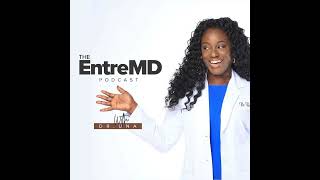
In this EntreMD podcast episode, Dr. Nneka Unachukwu opens with a promotion for the EntreMD Business School, describing it as a unique, application‑only program that has helped hundreds of physicians build six‑ to multiple‑seven‑figure businesses and achieve financial and lifestyle freedom. She then shifts to a pressing industry crisis: Walgreens‑backed VillageMD is closing about 50 Florida clinics, potentially leaving up to 50,000 patients without primary‑care providers. Dr. Unachukwu frames physicians as the "calvary" who must step in to fill the access gap. She shares responses from the EntreMD Facebook community, highlighting diverse ways doctors are already acting—advocating, expanding practices, building billing companies, creating wellness resorts, and taking leadership roles in hospitals and policy. The episode stresses that business acumen, advocacy, and leadership are all essential tools for physicians to restore access to care and counter corporate withdrawals. Dr. Unachukwu repeatedly urges listeners to recognize the impact of their work, acquire business skills, join the EntreMD community, and become ambassadors by sharing the episode and embodying the movement that aims to put physicians back in control of the healthcare system.
Chapters
Before we get into the episode, I am thrilled to announce that the ontram D Business school is open for enrollment. The On Trendy Business school is the only school of its kind for physicians who want to build six, seven and multiple seven figure businesses. Over the last two years, we have had hundreds of doctors go through the school with unbelievable results. Some of them run brands, some of them run private practices, some of them are coaches, some have other kinds of service based businesses or product based businesses. And we've had people come in and cross the six figure milestone, cross the seven figure milestone, cross the multiple seven figure milestone. You will be in a place where you'll get the coaching, the community, the accountability that you need to thrive as an entrepreneur, especially in the times that we're in. So maybe you've been following me for a while. Maybe you've been getting so much out of the ontremd podcast and you've been wondering, how can I work with Dr. Una and the community more? Well, this is your chance. Come join us in the Entremd Business School. It is application only, so go to entremd.com forward/business to turn in your application. I cannot tell you how many doctors have made statements like this. I recovered my investment in the first week. I recovered my investment in my bank account in the first 90 days. This is the best investment I've made in myself ever. I want you to have that kind of story. Not just a story of building a great business that serves a lot and earns a lot, but having a business that gives you the freedom to live life on your terms. So don't wait any longer on tremd.com business. And now for the episode.
It doesn't matter what you're doing. I want you to understand that you are creating a huge change. Go for it. You may think, well, somebody else is going to. There is no somebody else. Like, somebody else is doing what somebody else is supposed to do. There's a part that is as unique as your fingerprints waiting on you. Hi docs.
Welcome to the EntreMD podcast where it's all about helping amazing physicians just like you. Embrace entrepreneurship so you can have the freedom to live life and practice medicine on your terms. I'm your host, Dr. Umna.
Well, hello. Hello, my friend. Welcome back to another episode of the On Trendy podcast. And this is going to be maybe one of the most important podcast episodes that I've ever done. And you'll see why in a second. So a day before this recording, I saw this article on drugstorenews.com. And it talked about the Walgreens backed village MD. So this is a group of clinics attached to the Walgreen pharmacy that, you know, they had decided they are closing down about 50 locations. So they said they're shutting down all their Florida clinics and they have over 50 clinics in Florida. All right, so these 50 clinics are going away, which when you think about it, you're like, okay, 50 clinics. But let's put it in perspective. If those 50 clinics each have a panel of 1,000 patients, which is a small panel, by the way, for an insurance based clinic, if they have 1,000 each, it's not just the 50 locations. It is the 50,000 patients who no longer have doctors. I want you to think about that 50,000. How many clinics is it going to take to take care of the 50,000 patients who technically have been displaced? 5, 000. Okay, so when you think about that, it's, I mean, it's just, it's staggering when you think about it. And as I thought about it yesterday, I said, well, this is the deal though. Who's going to fix this? Who's going to take charge of this? Because you can say, oh, this is bad and all of that, granted, but we have 50,000 people who do not have doctors anymore. They do not have a place to go, right? And so I thought about it and I said, of course, we're the calvary. We, the physicians are the ones with the answers. We are the solution. We're not going to stand by and have 50,000 people not have access to healthcare. And as I thought about it, I went into the EntreMD Facebook community, which if you're not a part of us on Facebook, come join us. Okay, it's Entre MD on Facebook. And I asked a question, I said, if you knew for a fact that right now you are the answer to the chaos in healthcare, what would you start doing today? I'm gonna read that again. If you knew for a fact that right now you're the answer to the chaos in the healthcare space, what would you do starting today? And the reason why I asked that question is it's easy to complain, it's easy to be a reporter, talk about what's going on and all of those things. But it's very important that we stop to think like, okay, but I'm part of the answer. What does this mean? What could I do? Sometimes it's just, you know, coming to the realization that, wait a minute, I am part of the solution. Like, I need to do what I do, like I mean it, because I am part of the Solution. There are 50,000 people, and I want you to think about. Because the reason why this is so staggering to me is we're talking about primary care, right? And we're talking about one state, and we're already at 50,000. Imagine if this happened across 10 states, and there are 50 states, right? Imagine if it happened across 10 states and it was the same numbers, right? At a zero, that's half a million people. This is a problem, and this is a problem that needs a solution. And this is a problem that we are in a unique place to solve. And you'll see why I say this in a second. So I asked this question, and I want to read because some of the answers were so phenomenal. One doctor says, I will say my message courageously and clearly to keep creating change and show patients and other doctors there's another way. Another doctor said, keep pushing through to make this new baby practice flourish, even in the hard days. And this person has been in practice for less than a year, and she's doing. She's doing amazing. A third doctor said, I would do what I'm doing now and work to get heard in spaces where implementation can take place. Place. Right? This doctor, amazing. She's a. She's a surgeon. She has a podcast. She has a private practice. She's thriving in private practice. She said, exactly what I'm doing. I'm moving in the advocacy angle to do bigger with the message. If not me, then who will? Right? And on and on. Another doctor said, I'll reach more people. And this person runs a billing company. They do a fabulous job. So really, what she's doing is saving private practices. This doc said, I would work harder to grow my business. I'll work harder to grow my business, right? Because my business matters. Like, think about all these people who are displaced, and the more thriving private practices you have in Florida, the better for everybody, right? If there are people who've built the capacity, where they're like, okay, we can solve this problem. We can add on a new location. We can bring on some other doctors because they have the business skills and they can pull it off, guess what it translates to? Access to healthcare. I want you to think about it. Business skills translating to access to health care. Okay? And then another doctor talked about, you know, building a resort for healthcare workers and, you know, kind of helping them decide what they will or will not take. So this burnout thing, there can be an end to it and all of that and on and on. Okay, so so tons of responses. But the idea is this. People coming up with, huh? More of what? I will amplify what I'm doing now. I'll become a rock star at business. I will embrace advocacy. The part I hadn't seen yet is the part of embracing leadership. Like leadership of organizations, leadership in the hospital spaces and politics and all of those kind of things. Right? Because the decisions of leaders affect us and if we're not there, we don't have representation and all of that. And this is important again, because we are so conditioned to believe, to believe that the only thing we can do is take care of patients. I've had people who were offered positions like, come be the chief medical officer of this hospital. And they're like, oh, yeah, but I, I don't have a master's in whatever. I can't possibly do it. And I'm like, what? That, what, they can pay for said masters. Okay, There's a reason they reached out to you. But anyway, so there's business, there's advocacy, there's leadership. And of course. Right. I'm going to talk about the business angle because, you know, that's, that's, that's really my jam. But I want you to think about it, right? The more businesses there are that are thriving, the more physician owned practices that are thriving, the better it is for patients, the better it is for patients everywhere. Because if you look at a lot of organizations like the corporate side of medicine, a lot of them are going, you know, they did these big acquisitions and they're like, yeah, we don't want to quite do that. And when they move away from the space, the void is staggering. Sometimes when they move into a space, doctors interpret that like, we can't compete, so they leave the space. And I want to invite you to fight for health care. Now, am I saying they're not reasons why things can happen and people will shut down practices? No, that's not what I'm saying. But what I am saying is what you're doing matters. So some of you, it's private practice. You're building a profitable practice and you're building a bigger practice. Your work matters. Some of you, you are life coaches and you help doctors with burnout and all of those things. Your work matters. Some of you are career transition coaches. Guess what? Those 50 locations have physicians, right? Well, a lot of them have physicians. But now, like, how do we transition out? How do we find other spaces? Your work matters. You know, some of you, you have telemedicine, you're crossing state lines. And all of those things your work matters. Some of you are advocating for things your work matters. Okay, so the reason why I came on to record this podcast is because I want to, I want to tell you a few things. Number one, your work matters. So do it like you mean it. Do it like you mean it. Understand that there's a lot of at stake. There are patients having access to care at stake. There are with your work. Maybe, you know, like we have a doctor, big shout out. Dr. Lara Huckman, she is the medical matchmaker. She's an alumnus of the Entrepreneur Business School. She helps place doctors in private practices where they are valued, they're respected, they can create win win situations. It's a win for the private practice owner and it's a win for the doctor because they have a beautiful workplace. She's keeping doctors in medicine that matters. Like, that work matters because now instead of having people get so frustrated and leave, she's having them go from frustrated to getting jobs that they love. So your work matters. Whatever it is you're doing, it matters. And I want you to do it like you mean it. Okay? There was a time when I was a hobbyist with Entre MD because I had a private practice, had a thriving private practice. I have no need to do anything I am doing now. Like, there's no, when I say no need, I'm not doing it, you know, like I have to do. I don't have to do it, but I have to do it because I want to do it right? Because of, because it matters, because of the life change. Because, you know, the healthcare space is waiting on me like it's waiting on you. And I had, you know, two or three one on one clients and all of those things, but it was up to me to say, you know what, I'm going to do this. Like I mean it. I'm going to create a business school. I'm going to help hundreds and hundreds and hundreds of doctors build profitable businesses in this container. I'm going to produce a podcast where the stuff I deliver on the podcast is more than what some people get in paid programs they're in. I'm going to write the books, I'm going to speak at events, I'm going to do all these things. Why? Because my work matters. Right? Over the years, there are hundreds and hundreds and hundreds of doctors who have built beautiful businesses with such huge impact. And they've changed their lives, the doctors, they've changed their family's lives, they've changed their patients lives, their clients lives, and that's the ripple effect. But it all started from me realizing that my work matters and I started doing it like I meant it. And so I want to invite you. It doesn't matter what you're doing. I want you to understand that you are creating a huge change. Go for it. You may think, well, somebody else is going to. There is no somebody else. Like, somebody else is doing what somebody else is supposed to do. There's a part that is as unique as your fingerprint prints waiting on you. Waiting on you. Okay, two, I want you to start identifying as the Calvary. We are the calvary of the healthcare space. We can take ownership, we can take responsibility for it and we can turn it right side up. But it requires a different way of thinking. Where I'm not the victim, it's not woe is me. I may not have answers to everything, but I can start from where I am. If you remember the post, I said, what would you start doing today? So today may go like, okay, I'm not going to quit on my business. I'm going to acquire some business skills. For many of you listening, you might go like, you know, I'm going to do this. Like, I mean it. So I'm going to join. I'm going to join a group of physician entrepreneurs who are learning business skills so I can learn to do this. The same way you didn't treat your, your medical care like, oh, I'm going to Google all the things till I get it and just ask questions randomly till I get it. I want to invite you to say, okay, I'm going to do this. Like, I mean, I'm going to learn the skills. I'm going to acquire this. I'm going to become proficient, competent at running a successful business. Come join us in the Ontarim, the business school, right. Ontremd.com forward/call, okay, to talk with the team to see if that's the next best step for you. But identify as a calvary, take ownership, start from where you are and decide me not know all the things, but I'm going to start from here and I'm going to go to the next and the next and the next. But I'm going to be part of the people who are going to fix healthcare. Healthcare needs you. The healthcare space needs you. Okay? And then finally, I want you to be an ambassador. So entremd is more than a book, more than a podcast, more than a business school. Beyond all of that, it's a movement. It's a movement of change sweeping across the Physician community, which really is empowering physicians to take back control, to build these big businesses, to create financial freedom, to create time freedom, and ultimately to turn the physician space rights, the physician community right side up. And I want you to be an ambassador. I want you to identify as an ambassador for the on trendy movement. What does that mean? It's so simple. It means take this episode, take the link, share it with the doctors in your network. I like, I want you to listen to this. It means you becoming an example of what is possible. So take the things you listen to on the podcast and start applying it in your business, applying it in your career, applying it with what you do. Start thinking in those terms, right? That's really what it means and I want to invite you to do that. So take this episode, share it with the doctors in your world, take these things, start applying them so you can become an example of what is possible. But mark my words, mark my words, A time is coming when, when you look at the leaders in the health care space, you will see physicians. A time is coming when private equity backed companies get distressed. Physicians will come to the rescue as an organized event like, we got this, we're taking responsibility for these 50,000 and notice I said a thousand per location. If it's 2,000 per location, we're already talking 100,000 people and we're like, we're not going to leave them without healthcare. This is what we've done. These are initiatives. The time is coming and what is required is for us to evolve, to become the kind of people who will do that. And I am inviting you to evolve. And yes, you know, healthcare is an interesting space, but I want you to realize that this is the best of times. It looks like a challenge, it looks like a problem, but this is the best of times times. It does our job to evolve and for us to steer this ship aright. Okay? So if you're going to do it, let me know. Take a screenshot of this episode, put it on your social media, tag us
ont MD and say, I'm part of the Calvary, I'm part of the change that healthcare has been looking for.
Okay? So go share this with another doc
in your life and I will see
you on the next episode of the on podcast.
More from Dr.



Adopting Telemedicine in your practice in the COVID19 era with Dr. Sogol Pahlavan
Building a Multi-Million Dollar Real Estate Portfolio with Dr. Elaine Stageberg