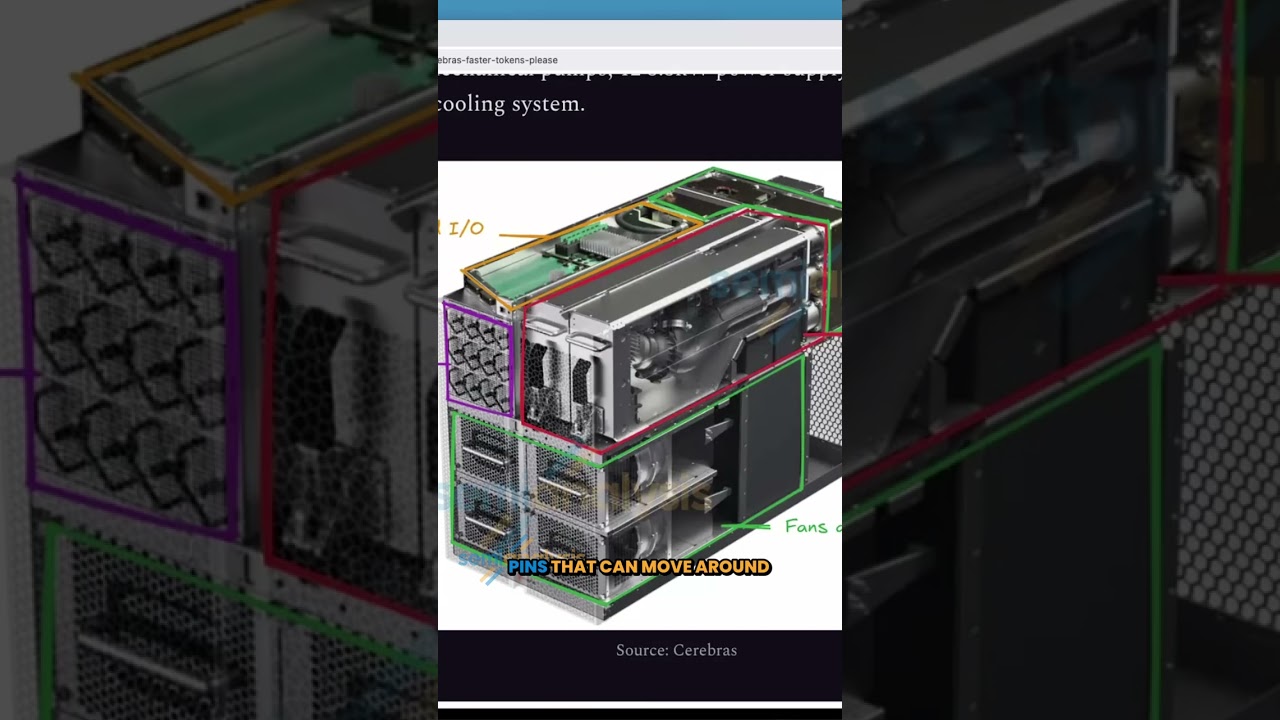
Vertical power delivery, flexible moving-pin interposers, and direct-impingement water cooling. Cere
4 Jun 2026 · 1 min
1:08
Dylan Patel explains three advanced cooling and power techniques for wafer-scale systems: vertical power delivery into silicon, flexible moving-pin interposers that handle thermal expansion, and direct-impingement water cooling that channels coolant to 84 individual dies.
Chapters
More from Dylan





youtube.com
"It's like a zombie apocalypse, but you don't know how many waves of zombies are coming."
6d ago

youtube.com
Open-source models are already taking the easier tasks. The bull case for frontier labs rests on one
1w ago

youtube.com
A $200 AI subscription can be worth $12,000 in tokens. Which plan delivers it is not close.
1w ago

youtube.com
Ep. 036 - Anthropic Subscriptions Beat OpenAI 5x, Depending on Your Workload (Tokenomics)
1w ago


youtube.com
Ep. 035 - Tech DD’s, Performance Projections, Supply Chain, Investment Thesis (Consulting)
1w ago
See all content
