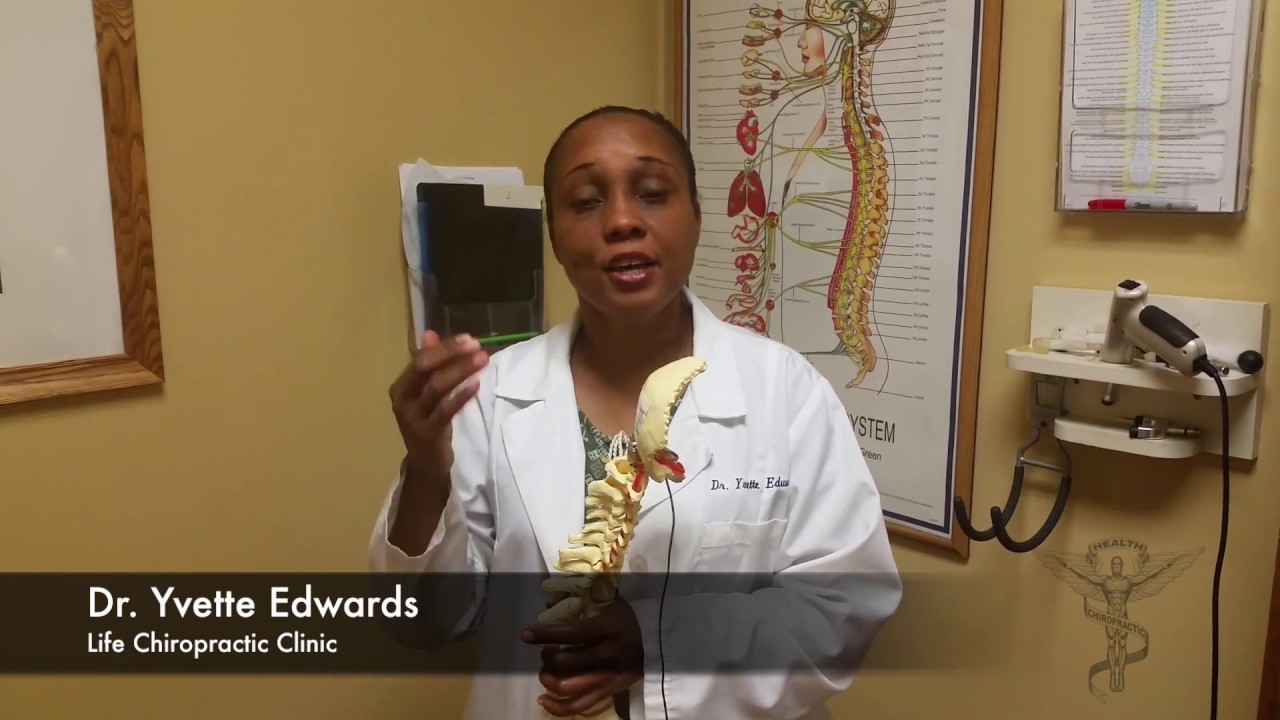
In this video Dr. Yvette Edwards explains that many severe, debilitating headaches are not relieved by over‑the‑counter medication and often require a dark, quiet environment. She describes typical symptoms—intense pain that can keep sufferers from family, work, and daily activities—and outlines the most common physiological sources: pressure on nerves in the neck, rotational misalignments of cervical vertebrae, and tension in upper‑back muscles that attach to the head. Dr. Edwards emphasizes that headaches can originate from both the neck and the upper back, so a thorough spinal assessment is essential. She invites viewers to visit the Life Chiropractic Clinic for a professional evaluation to locate the exact source of the pain and receive targeted chiropractic care, aiming to restore normal function and quality of life.
Chapters
Good afternoon, everyone. Dr. Yvette Edwards here again with you. And what we're doing this month is we're talking about headaches. And we're talking about what can cause headaches and also what the primary thing I wanna do is, I wanna talk about what we can do to remedy a headache when a headache comes on. A headache, a lot of times when it comes on, some of the symptoms we have or you can have is it's so severe the only way you can get this headache to stop is to go into a dark room. And a lot of times it's so debilitating it's going to keep you from your family, from your kids, from being able to go to work, and no amount of aspirin or Tylenol or whatever the headache medication seems to be able to touch it. A lot of times it's because there's something going on in the spine, and it could be pressure on the nerve in through the neck area. But a lot of times when folks come in here, they're thinking that because Because the headaches, a lot of them, they crawl up from the neck area into the head, and they're thinking, oh, it has to be a neck problem, 'cause the pain seems to be coming from back in through here. Sometimes it is because of a rotation in one of the nerves, of one of the bones, and it's putting pressure on a nerve. But sometimes it's actually coming from lower down in the spine, because these muscles also, some of them between the shoulders, those actually attach into the head as well, and the pulling can be from lower down between the shoulders. So when someone comes up in here, I'm not just looking for, oh, it's got to be a neck problem or it's got to come out of the head. Sometimes it's actually coming out of the upper back area. So rather than you staying home and guessing, come on in the office, let's get you checked and at least find out where the problem is coming from. If we can find out where it's coming from, then maybe we can find a solution for it, correct the problem, and get you back out to be able to work and play and just enjoy life on, on the level That you were able to enjoy life on before, right? So stop sitting there with that headache. Come on in. Let's discuss what we need to do to get you better.