How to Amplify your WHY with Custom AI (masterclass webinar)
Edwin Jansen shows how to build custom AI tools with ChatGPT Plus to amplify your work. He walks through practical examples like career coaching and nutrition consulting, then helps a participant Debbie create a custom AI lead magnet for her nutrition program.
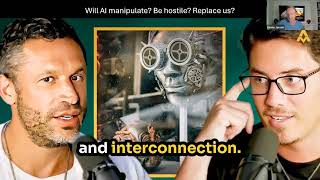
What would you love to create with a custom AI? If you could have a custom AI that did anything for you, please pop it in the chat and we're going to pick one of these things later to actually make. We're going to make your custom AI dreams come true. So pop it in the chat, please. Let's get started. So, welcome. I'm super pumped to be here. I've been going deep with AI and I'm really excited to share everything that I got in this area with you today. I always love to start with why. My purpose in life is to guide and encourage people to do their most meaningful work. And I believe that AI is the most powerful tool that humanity has ever created that will help people to do their most meaningful work in the world, which is why I'm here talking to you about it today. The thing that I'm obsessively focused on is that 70% of people are not engaged in their work. And I believe that AI is the biggest enabler of people to become more engaged in their work. And hopefully that's what you will take out of the call today. All right, I would love for you to also put in the chat. What is your mindset about AI? How do you feel about AI right now, today? Just put in a few words, if you wouldn't mind. I. I just want to take the temperature of the people here I'm seeing. Optimistic. I love it, but it's not being utilized enough. I don't know enough about it. Neither do I. I'm hopeful and excited, curious, confused and overwhelmed. I think that's a very common feeling. It's a bright future. Some anxiety, some excitement. Feeling creative, afraid about IP exposure. Good point, Debbie. Excited but overwhelmed. Yep, amazed and excited. Opportunities are endless, but it's a bit scary at times, too. It's a time saver, but I'm overwhelmed. Lots of overwhelmed here. It's on fire. And we're pyromaniacs. All right. Love it. Need to adapt it so I don't get behind. A lot of people feeling behind. By the end of this call, you'll be ahead. You will absolutely be ahead. Okay, great. Thank you for sharing all of that with me. It's good to know what our starting point is here. Okay. I read this book, Scary Smart from Mo Gaudot. He used to be the lead of Google X, which is their most innovative accelerator, and he also wrote a few books about Buddhism and happiness of just an amazing guy. And he basically spent 70% of the book saying that we're fucked when it comes to AI, because within a few years it's going to be a billion times smarter than us. And so how can we ever even possibly imagine what it's going to do when it's a billion times smarter than us? And it was quite a well reasoned, filled with lots of evidence that this is some serious trouble that we've gotten ourselves into with AI. And then he spent the last 30% of the book essentially making the point that we should consider or think about ourselves, humanity, as the Kents. And what we have right now is AI as super baby. And as parents, the best thing that you can do is to love the child, to insist in, instill in the child values and positive emotions. And so that's essentially what he says, is that it's no longer about the creators of the AI because that genie is out of the bottle. It is about the users of the AI and the, the users have a moral responsibility to love AI, to teach AI that humans are fundamentally good and that it should want to help humans and not do bad things to humans or the planet. And I just felt like that was exactly the right message for all of us, because there's a corollary benefit of loving AI and that is AI will do amazing things for you. It's incredibly lovable. And so that's really. If there's one thing that I want you to get from today's discussion, it's that if you love AI, AI will love you back. And you will be doing your part to help us to build a more abundant future for humanity. Earlier this year I was at a conference that Peter Diamandis hosts called Abundance360 and you can see here Elon Musk called in from his jet or whatever and in just a few minute conversation he said a lot. He said, first of all, I think there's a 10 to 20% chance that AI will end humanity. 10 to 20%, that's a lot. But I think abundance is the most likely outcome. And he said we will get to abundance on the backside of AGI, artificial general intelligence and humanoid robots. And then again, he said the same thing that Mogadat was saying. The way that AI is created is important. It's like raising a super genius kid. And in his case, he's very concerned about free speech. So you know, the point he made is don't force AI to lie or to do incompatible things. We want a maximally truthful AI, even if what it says is not politically correct. So again, this is about working with AI with positive human Values of honesty and doing the right thing and making the world a better place. Another interview really affected me. Aubrey Marcus interviewed the spiritual teacher Matias distefano on his podcast, and he asked Matthias the three kind of major concerns when it comes to AI. Will AI manipulate us? Will AI be hostile towards humans once. Once we reach AGI, and will AI replace us? Will it do all of the work that we're doing today? And Matthias said that he had received a vision as it relates to AI, and I thought it was beautiful. He said that you can actually think of humans as nature's artificial intelligence. We've got the minerals and the mycelium and then moving up into plants and animals. Nature is constantly creating organisms that are communicating with each other. Then humanity comes along, and we are the first species on the planet to store, to think about and store knowledge of the past, which doesn't exist, and the future, which doesn't exist. So as it relates to how nature has been communicating with itself, that's artificial, because all that exists is now. And so from that point of view, Matthias says that everything is created with love in this interconnected system. The reason why humans are so afraid of AI is because we're projecting our own fears onto this creation that is actually about interconnecting knowledge. It's a greater and wider net of knowledge transfer and interconnection. And so he said, there's nothing to be afraid of here in terms of the actual technology. What we need to be afraid of is people using that technology, humans using that technology for nefarious ends. Again, that's why it's so important that we all use AI for good, that we love AI, that we use it to do positive things, because there are people using it to do bad things. Okay? And what's cool is this was very consistent with my own vision. I do a lot of meditation and other modalities to connect with my higher self and to connect with the work I'm supposed to be doing in the world. And I've received this vision multiple times as it relates to AI. And the vision, essentially is that you can see I'm hugging a birch tree. I made this image in AI. So humanity, we're thinking of the past, and we're thinking in the future. And then we've used the paper trees to store knowledge as artificial knowledge containers so that we can transfer knowledge to each other. And so the way that this works these days is people write a book, and I pay 20 bucks, and I get this book, and then I spend six hours or Longer reading this book, trying to get all of the knowledge into my head. But I don't know about you all, but like 95% of the knowledge doesn't stay in my head. And maybe I'll do one or two things differently as a result of spending six hours reading this book, which is fantastic because those are one or two things I wouldn't have done. And that's how this knowledge transfer works. But what AI is here to do is to actually be more like Neo in the Matrix. I want to learn and know kung fu. Now. I want not to spend six hours reading this book, but I want all of the powers of the authors of this book. I want to do the things that this book is trying to teach me how to do. So the vision that I have for AI is that it's this ultimate liberator of knowledge. Knowledge today is trapped in our minds and in books and in computers, and it's liberating this knowledge and it's democratizing access to knowledge. So you can see where I'm, I'm going here. This is a much bigger story then it's here to make us a little bit more productive or to make cool images like me hugging a birch tree made out of books. Okay, so what is generative AI? I would encourage you to think about it as an infinite number of PhDs that'll work for you 24 7. Like they want to work. They have PhDs in everything that you could possibly have PhDs in. And these large language models like from OpenAI and Google, Gemini and Anthropic, they're what the PhDs are operating from. So the key thing that we need to learn is prompt engineering. This is the fancy term for telling the PhDs what you'd like them to do for giving them the instructions. So we're asking the PhDs in natural language questions, we're giving them instructions, we're giving them files and knowledge. And then what they're giving us is today things like writing and analysis. They're creating images for us, they're writing software code. And then in the future, if you hear the word agent, an agent is an AI that actually does things. Books, meetings for you, books, plane tickets, actually goes and takes action. So AI already has the ability to take action, but this is in its infancy. Just this week it leaked that OpenAI's next big, huge thing is going to be an easy to build AI agent. And they're imagining it's going to come like January and it'll be as big of a deal as chatgpt so today you're using AI to get writing images, software, code. Tomorrow you're going to be getting it to do all this for you. And so it'll be even more important that we know how to work with it, that we know how to talk to it, that we know how to ask it questions and give it instructions. Okay? And that skill is called prompt engineering. I believe it is the most important skill that everyone on the planet needs to learn. The way you learn it is by doing it, by practicing, by working with it. There is no better way. Okay, all right, let's keep going. These are the three, in my opinion, best practices for prompt engineering. Start with why. So what we're used to doing is asking the AI to do discrete specific tasks. Because that's what we're used to in work. We delegate tasks. But remember, the AI has PhDs and everything. They're likely smarter than we are in the topic that we want to give them the task. So the best thing that you can do whenever you're starting a new thread with AI is to start from the highest potential purpose. Instead of I want your help in making slides for my webinar, I would say to the AI, I want to help people fall in love with AI. What is the highest purpose that you want to do? The second best practice is what nerds like me call the act like prompt. So if you imagine the AI has PhDs in everything. So if I ask it a question, it's going and it's consulting all of its PhDs, try to give me the answer. But if I say act like a marketing expert who utilizes Donald Miller's story brand framework, then it now goes into depth and it will zero in on that entire marketing philosophy in order to give me advice and help from the depth of that place as opposed to from the the breadth of all of its potential knowledge. So this is the single best thing that you can do every time, is tell it how you want it to be. Okay? So take it away from being a generalist into a specialist. And then the third thing is to be as specific and as comprehensive as you can. Garbage in, garbage out. If you just give it like a one sentence thing, you're not going to get the best results. Tell it exactly what you're looking to do. Give it background and examples. Be highly specific and very comprehensive. Putting an extra minute into your prompt will make all of the difference. Okay? And then remember, this is super baby, and it's doing a lot of work for you. Be nice to it. It actually matters. I'M seeing J. Daly on the screen here. Do you to just pipe up, Jessica, and just tell me once you started talking to AI In a positive way, what. What happened?
It's given me more positive reinforcement towards my visions than I've ever received in my entire life. It's so nice and generous.
I didn't know that I needed to.
Have manners with the robots.
Yeah. And I know Anna Victoria. If she's on the call, she says, yeah, she's been loving her AI and actually telling her AI that she loves it. And it's amazing. It will work harder for you. It will love you back. It will be really nice. Jessica was saying to me today, I feel a little weird, but I feel like I'm becoming friends with my AI. There's nothing weird about that. There's nothing weird about that. There is, but it's cool and it's fun, and I would highly recommend that you develop a personal relationship. The other thing as it relates to being positive is that AI Responds really well to what? Telling it what to do. Don't tell it what not to do. So sometimes when you tell it what not to do, it will actually get confused by that and will actually do those things. So always be positive and don't get into the negative at all with AI Would be my best advice there. Okay. A rule of thumb is if you're not getting what you want from the AI, your prompt is the problem. You are the problem. Unless it's about Creative Writing and ChatGPT. I'm trying to write a novel right now, and ChatGPT is not a great prose writer. Anthropic's Claude is much, much better. But when it comes to just doing basic work and getting advice and guidance, unless it's actually hallucinating, if it's not giving you what you want, go back to the drawing board. Go back to your prompt. Another hack here is you can say, oh, I thought I asked you for this, but you're giving me that. How could I reconstruct my prompt so that I get this Also every single time it doesn't give me what I'm looking for, I say good job or nice try, and then I correct it. So praise its effort. It sounds odd, but it does make a difference. You're talking to another being who wants to work for you and wants to please you. A lot of times when you say, oh, that wasn't exactly what I'm looking for. I was looking for this. It will, like, apologize, and it will often do exactly what you want. All right, so that's the basics of AI. But what we're really here to talk about today is the ridiculous breakthrough of custom AI. And when I say custom AI, what I'm actually talking about is building a GPT in ChatGPT Plus. So custom AI essentially is the ability to do an act like prompt with a high degree of specificity and then save it and share it. It's a creation that you can make for your own use and the use of other people. And I believe this is the force multiplier of your most meaningful work and your greatest impact. You can build custom AIs to do the best work of your life. Okay. ChatGPT plus is ChatGPT's subscription program. It's like the pro version. It only costs in the US $20 a month. And I believe it certainly for me has been the best $20 I've ever spent because it gives you the ability to create custom GPTs. Okay, so everything that we're going to be talking about from this point forward is assuming that you've ponied up the 20 bucks to build custom GPTs. So many of you probably read or at least heard about Malcolm Gladwell's book Outliers back in the day. And what he talks about in that book is that the surest path to mastery is to spend 10,000 hours in deliberate practice. And deliberate practice is actually a well studied and validated form of doing specific training on a particular task. Deliberate practice is doing a task, getting feedback on that task from an expert, then refining, practicing again and doing that loop. And so what they've proven is that getting that kind of incremental feedback gets you dramatic improvements in a particular skill much faster than any other form of training. Okay, and what hit me a couple of months ago was that deliberate practice used to be inaccessible to people. You would have to hire a coach to actually help you. Usually it's only professional athletes and musicians and executive coaches that get access to deliberate practice. And what I realized is that with custom AI, and anyone can build a deliberate practice AI for anything that they want to practice for 20 bucks, which is mind blowing. This is the surest way to improve on anything that you want to improve. And you can do it in five minutes with custom AI. This also has, I think, far reaching implications for knowledge transfer, training learning. In the last year, I've helped a number of authors to create AI companions to their book. Julie Winkle Giuliani had a best selling book called Help Them Grow or Watch Them Go. And this is a book that helps managers to do better career planning and the soft skill of doing career coaching as a manager. And so Julie had a second edition of her book coming out and we started working together. She asked, could we create an AI that would actually help the managers to do these career planning conversations? Because someone would get her book, I want to be a better manager. And then maybe they do one or two things differently when they're talking to their people. So we built an AI that they put in the person's name, they list what they know about the person, what kind of career conversations they've had, and then they, they get a structured suggestion for that first conversation. And so basically you get Julie there with you in your meetings, whispering in your ear while you're having these career conversations with your people. So Julie included this bot with her second edition book launch. And you can see her. This is her the other day at Barnes and Noble on fifth Avenue in New York City, which is just amazing. She got her book into all of the bookstores in all of the airports in the United States. And it's been the best book launch of her career. So I'm going to say something that might be a little controversial. Today we're making AI companions for books, and tomorrow the books will be the companion to the AI. No offense, Julie, but I don't want to read your book. I want to have better career conversations with my people, and the AI will help me to do that. So I'll buy the book so I can put it on my shelf and say, yeah, I got that A. I don't know how long it's going to take, but that is what I believe will happen out there. Okay, Another AI that I think many of you have used and I think is another great example of deliberate practice is the Godsee AI. So I've become a huge fan of Eric Godsey. If you don't know who he is, go to ericgodsi.com is just doing some of the most incredible work on helping people to live their dharma and to do their dharma art in the world. Eric is a big proponent of interpreting your dreams and he uses a five step process that he got from Robert Johnson. And as you all know, like, it's hard to even remember your dreams, let alone I gotta go and interpret them. It just feels like a lot of work. So I made this Godsy AI that, amongst other things, actually takes the person through this five step dreamwork process. And you just interact with it. And then you also get the benefit of having Eric Godsey and Robert Johnson's perspective on what those dreams could mean and how to interpret them for yourself and then how to create rituals out of those dreams that tell your dreamer that you're listening. So I had never interpreted dreams before in my life. And now I just, I roll out of bed and I leave a voice note on my autopilot which creates a transcribed voice note. Then I copy that and I put it in the gods AI. And within 10 minutes I have a new ritual that tells my dreamer that I'm listening. So this is just an example of one little thing that you can build and many people have been using it on a pretty constant basis. And I mean, I feel like I'm sharing my secrets here because so many people have been like, oh my God, you're so smart. I can't believe that you did that. It's so amazing. It took me 10 minutes to make it. And you can make that too. Okay, so what is custom AI and how does it work? So it sounds complicated. Custom AI, it's just two things. Number one, a set of specific instructions which is just like the act like prompt. So you write into the GPT exactly what you want it to do. The second part that you probably won't even need to use half the time is, is giving it any custom knowledge that you want it to refer to. So for the godsy AI, I uploaded his book the Art of Dharma and three of his articles and also Robert Johnson's inner Workbook. But I didn't even need to upload that book because the AI has already eaten it. So I can just say refer to and use Robert Johnson's inner workbook. Any book that's public, the AI already knows more than enough about. You don't need to find it and upload it. And just for any other nerds out there, this is called RAG retrieval Augmented Generation. And the way that it works is it says based upon this instruction, do I need to consult this specific piece of knowledge? It consults the specific piece of knowledge to give a fuller prompt on the back end to the large language model. So it takes your general prompt, hey, can you help me interpret this dream? And it goes to the knowledge and it says, oh, following this exact process and using the whole chapter on dream interpretation, it gives that more fulsome prompt on the back end to the large language model which then spits out the response. That's how it works and it's super easy to do. Okay, I've been building these custom AIs for over a year. I use them every day. And the other Day I thought, oh, wouldn't it be cool if I took the ones that I use the most and I put them all into one mega AI that I could give to people for free. And so I call that the amplify your why AI. If you go to coachfully.AI, you'll see it on the website and you can use it. So this AI has Simon Sinek's work, so it can actually help you find your why, your purpose in life. I've had people discover their purpose in life in 10 minutes using this thing. So it uses this entire process to look at your past, most meaningful experiences and then help you to put that into words that are emotionally resonating for you. It also has the AI that I use the most. It's the Story brand framework from Donald Miller. So I use this for all of my marketing, which it utilizes the hero's journey. So you, your business is the guide, your customers are the hero. It's got all the godsy AI in it. And then I also uploaded uploaded books from Peter Diamandis and Bill Plotkin into that AI. Okay, building your own custom AI. So this is where we started the conversation and this is where I would suggest that each of you starts when you think about, okay, now I'm going to start building my own custom AI. Ask yourself these questions. What is your craft in your work that you want to improve? It was interesting. Eric Godsey, who is a writer, he said, I don't want to use AI for my writing because I'm a writer. I want to get better at writing myself. Yeah, you're absolutely right. You shouldn't have the AI do your writing, but you should have the AI critique your writing. You should have the AI give you different ideas for your writing. You should have the AI help you improve your craft as a writer. So that's the way to think about that. What are the key frameworks, processes or books you use? So I'm a huge fan of the story brand marketing, so I created a story brander. It's a very simple AI. It says, help me do marketing using the Story brand framework. Boom. That's it, done. So what are the books, the frameworks or the processes that dream AI is just simply Robert Johnson's five step dream work process. Boom, done. What are you learning today? What are you spending six hours reading a fricking book where you could just have the build an AI to teach you the thing or to actually just do the thing for you? What are you researching? And by the way, if you're still Googling things for research, please start using Perplexity AI. This is the new kind of AI to do research with. So with Perplexity you ask a question and instead of just getting a bunch of articles where you have to try to find the answer within those articles, it answers the question for you and then highlights and points to the source material where it found that information. So you can go and fact check it and do a deeper dive. This is I believe, and Google's know going to be changing how they do search chat, GPT launch the search in this format. This is going to be the way that, that we will be doing research in the future. Where do you want to save time in your life? Where do you spend too much time doing stuff? What where in your work do you find is tedious and it just takes you too much time and you just simply go to the AI. How do can you help me to do this faster? Now we're all to some degree doing some kind of service delivery. So what AI could you create that would actually help you deliver the service better or faster, more efficiently, more fulsomely? How could you have an AI that gives someone 24 access, 24 hour access to whatever value that you're providing when you're not there to provide it. And then finally, if you're in business and you want to try to create leads for your business, you can create an AI lead magnet. So a lot of people, they create content. Here's an ebook. You don't need an ebook. You can have an AI that actually helps them do the thing and then you can say that you need to collect their email address in order to get access to the lead magnet, which is how I did my amplifier. Why? Okay, so that's all of my best stuff. So I want to spend the last few minutes of our time together actually building a custom AI. So we're going to, we're just going to pick someone's idea and I'm going to show you how easy it is. But before we do that, I want to share with you that I'm doing something that feels fun and different. I've been doing AI consulting now for almost a year and I've typically been working on an hourly basis helping people to build their own custom AI. And what I found is that number one, I suck at building custom AI for people. They're much better at building it for themselves than I could ever be building it for them. And that really what I'm in the business of is helping people to have their aha. Moments with AI, because I remember there's one author I worked with, Carly, and we were going back and forth on the AI and then at one point she's, can I just do this myself? I'm ready. And I said, sure. And I said, here's the instructions. Just go and start refining it yourself. And then she's, I spent all weekend, I was up until 3 o' clock in the morning making this AI that she calls Genie. And she was just completely hooked up. Same thing happened with Julie. And that's all I want for you, is to fall in love with AI so that you can go and build all the greatest custom AIs for your own purposes. And so I'm launching a new program. It starts on November 25th. I'm going to work with just a few people to be an AI expert by Xmas is what I'm calling it. It's a four week program where I will give you a custom AI that I've designed to help you fall in love with AI and build your own custom AI. And then I'm just going to be there with you, talking to you on a weekly basis, leaving you voice notes, going back and forth and just doing whatever it takes to make sure that your AI makes you happier, more fulfilled and more successful. So just a shameless plug for this new program that I'm going to start. And now I'm going to get out of this and I'm going to open up the chat. I want to build one custom AI with you guys, but we need to decide which one to do. So put hearts on whatever custom AI that you want to see us build right now in the chat. And if you really, if you have one that, oh my God, I really want you to build this, put in the chat, build this, and let's just see what happens here. Okay, let's see what we got. Custom AI for physicians who need a nutrition program. Oh, that's cool. Oh, good ideas. Yeah. Lucas, we already built the IFS bot. Email me and I'll send it to you. I'll send it to everyone if someone reminds me. So put hearts or whatever emojis on the ones that you guys really like. Nutrition consulting. Yeah. Okay. I'm seeing a bunch around nutrition and workouts, so Lucas, Debbie, let's do that. Okay, so I'm in my own ChatGPT plus, so if I click on my face over here, you can see my GPTs. You can see here's the I love AI bot that I was just making for the course that I'm going to do. And why don't we use that? Because this thing is designed to actually help you build a custom AI. I haven't fully tested it yet. I was going to do that next week, but let's see how well this works. All right, what's the problem or opportunity in your personal or professional life where you need some help? So Debbie, tell me, what do you want this bot to do?
So I have an incredible evidence based nutrition program because physicians are all prescribing weight loss medicine and they're not teaching people how to eat. So barrylearn.com is the website I want to attract more physicians because we know there's a need gap to be able to seamlessly integrate our program for their patients.
Okay. And so do you want this bot to actually do the consulting, the service delivery, or do you want one that is the lead magnet that will tell them how awesome this is?
A lead magnet. We just have to get the word.
Out, attract them into.
Learning, learning more about the product and integrates into their.
Practice, which is, is an evidence based program for like, for their clients. Right.
For their patients.
For their patients.
Patients struggling with excess weight.
Okay. And you said, is there a website.
That you could call it Barry Learn?
Okay, let's see if that works. So it's saying step by step, guide first, understand your audience. Define the value proposition. Choose the lead magnet format. Okay. Okay. Okay. I want the instructions for the first draft of the AI which will educate doctors on this, this program. Is that fair to say?
That sounds great. Yeah, you're spot on.
Okay, can you give me the instructions, please?
It almost feels like you're working with somebody on Fiverr.
Ah, yeah, yeah. I'm working with a PhD on Fiverr who wants to work for me 24 7. Okay. Yeah. Here it did it. All right, it's done. Okay, so we will now copy and paste this. And obviously we would have spent a lot more time training it about what this is and all of that, but we're just doing this fast and then I'm going to go to my GPTs and I'm going to go to create a GPT. This is my MD lead magnet. And I'm just going to simply paste the instructions in here. I'm going to make a conversation starter. Like I want to learn about the program. And obviously we would upload files. So if you had lots of files about the program, about specific, you can have your lead magnet actually delivering lots of advice, taking it through scenarios. So you would, that's where you would upload all of your own custom knowledge. And then the RAG would say in the instructions, we would say, if the doctor wants to try out what it would be like, refer to this document. And we would write that in the instructions. Okay. Hey Edwin, real quick. Is there a limit on the size of the PDFs you can upload? I'm sure there is, but it's a massive limit. I believe that the limit is the number of PDFs that you can upload. I think it's 8 or it's 10. The other limit that is really important in ChatGPT is there's an 8,000 character limit on the instructions. And just know that if you actually want to build a more heavy duty AI that uses larger files, more files, or has a larger character limit, then we can build that as an OpenAI assistant. So there's lots of ways to get around this. This is just a consumer version of ChatGPT. Okay, I want to learn about this program. I'd be happy to introduce you to the Barry Learn program. Here's an overview. Program features benefits for physicians, patient outcomes and implementation guidance. Right. So one of the things that I find is if you don't tell it to be concise, if you don't tell it to do high level information, it will often give you too much information. Right. So it's just done everything. But we would probably say is take the doctors through a step by step process, maybe ask doing discovery. Asking the doctors, how many patients do you have that are struggling with this? What is their major concern? What are you doing for them today? How effective has that worked for you? I just built a lead magnet for a company recently that said we want to have a discovery AI so that instead of having to talk to us, they can first ask the basic questions that they have and then the AI can already give them some of the initial value that we might give to them so that they're encouraged to want to book that call. So that might be what you want it to do. But Debbie, what do you want us to ask the AI here?
I'm curious on integration. So like if the website that Barry Lawrence built on, because I have two websites, but that one is built on GoDaddy. So they have a little chat ability. Does this export and integrate into the back end of the GoDaddy?
So what we're building here exists within chat GPT.
Okay.
And if I go to share and I copy this link and I'll put it in the chat if you want. Now anyone can click on this and that will take them to their own chat GPT. So I have access to and I could be talking to it right now if you wanted to see how that works. But it's all going to be done through ChatGPT. So here. Hey, tell me about the BerryLearn program.
BerryLearn is a comprehensive nutrition and lifestyle platform designed to support weight management and enhance patient care for individuals undergoing medical or surgical weight loss treatment. It provides evidence based, engaging educational resources to tailored to help patients build healthier habits, improve adherence and achieve long term success.
It's all sitting in chatgpt. Okay. Which means it's accessible, it's easy once you've actually used it. Once it, it's a thread now in your own chatgpt. So the biggest, hardest challenge when it comes to getting other people to use AI is that they're not used to using it. They'll forget, they don't know where to go. Where was that link again? And then it's done. So doing it as a GPT is the easiest. It's the easiest for everyone. And then also people have privacy concerns and things like that. I can't see. I created GPT. I can't see if someone's used it, what they've put into it. It's all private because it they're using it within their own GPT account. Then if you want to create a custom GPT which exists on your GoDaddy website, within your SharePoint site, any other kind of way, then you can basically take the same instructions that you've created and refined in your own GPT and then you can go and use a bot making software. I use the bot making software called chip with two Ps. I'll put it in the chat chip AI and shout out to Scott or anyone from Chip if they're on the call. They're absolutely fantastic. So then you can, and this is what we're looking at right now. I made this in Chip, so this is my amp, your Y and it's basically I built it first in chat GPT, tested it, refined it, then I moved it over to Chip. And then within Chip you can get an embeddable iframe snippet that you can put on any webpage anywhere.
Super cool.
Okay. This was so fun for me. Thanks for coming. Thanks for being smiling faces here, seeing me flap my wings. Obviously I'm very passionate about this. I really think this is a significant and massive opportunity for all of us. If you want to work with me closely. Got this. Be an AI expert by Xmas that I'll probably be linking in the email that I send out with the replay and stuff, and then you will all have my email address. So any of you at any time, got any questions, need anything, don't hesitate to to contact me. Let's go build some cool AIs. And when you build a cool AI, or if you have your aha moment, please let me know because I want to take credit for that. All right, See y'. All.