Understanding The State of Your Book of Business | Ejieme Eromosele
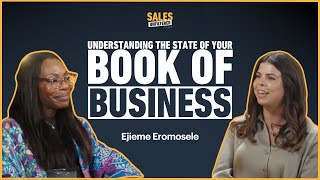
Podcast interview (Sales Unfiltered) featuring Izzy and Ejieme Eromosele about account mapping and the state of a book of business. Key points: start by taking an overview of each account along the customer journey and evaluate customer health; segment accounts for expansion or remediation; customer success roles are increasingly tasked with revenue and should be trained in sales methodologies; use discovery questions (cost of doing nothing, day-to-day workflows) and joint success plans to surface white space and expansion opportunities; measure both engagement and delivered value (both matter for expansion); tier accounts by spend, value metrics and expansion potential; time management guidance (approx. 80% proactive strategic work, 20% reactive/support time); and customer advocacy (definitions, activations, and the need to ask customers). The guest also shares a personal challenge (immigration/bullying) and leadership lesson (lead with kindness, build confidence).
Chapters
If you're interested in account mapping, you won't want to miss this episode. Ejume Eremisel, GM at Quick, is one of the most impressive CS leaders I've had the pleasure in interviewing. She has worked for the likes of Accenture, PwC, the New York Times, and most recently Quic, and is the founder of Success in Black. There are so many things that we unpack in this episode, such as assessing the state of your book of business, understanding customer health, research why AMs and CS reps need to think like sellers, propensity to buy versus engagement, and customer advocacy. If you want to learn how to become a top performer and maximize the potential of your existing book of business, learning from an expert in their field, then keep listening to this episode. Hi guys. Welcome to the next episode of Sales Unfiltered. Today I am joined by the Queen herself, Ejamee Eramaseli and we are gonna be talking about account mapping. So if you are in customer success or account management, I ur you to listen to this episode because gold dust just always comes out of your mouth. But thank you so much Ajmee for joining us today.
I appreciate that so much. Izzy, excited to be here.
So when we talk about account mapping, I think the best place to start is really understanding your accounts and understanding the state of your book of business. So would you maybe share with us a little bit of some techniques that you use when talking about mapping out your accounts?
Absolutely. So as you mentioned, the first place to start is to get an overview of the state of affairs with your book of business. Right. So taking your overall book and understanding where each account is in their journey with you as a provider, software service provider. And we like to look at that from the customer journey lens. Right. So are they a brand new customer, are they still in onboarding or are they fairly mature and have maybe renewed already two to three times? So just understanding a bit of where they are in the journey can influence how you want to approach account mapping once you do that too. The other dimension I would say to include is understanding the customer health. So we can talk all day about customer health. There are many different ways to evaluate that, but assuming you have a sense of the state of each account and the health of each account, start to segment those accounts based on which might be prime for, let's say expansion or which might need other sorts of intervention to get them to a healthier state. I would say for account mapping it really depends on what your ultimate goal is. Most of the time when we talk about account mapping or account planning. It's to say an account is ready and primed for expansion. Right. We're all revenue oriented, we all want to see growth on these accounts. But it could also help to reinforce, let's say, an account that is not healthy. Right. If you've only got one thread or one group of contacts and you want to expand and show greater value across an organization, account mapping can also help you get to other parts of the business, other functional areas that could also see benefit and value, not even just to sell them, but to understand the value that you're already delivering, let's say with one part of the organization.
Yeah, I love that you said we're all thinking about revenue and how we can expand. Yes, good. We want that commission. But I think that's something that I'd love to touch on with you because that has changed and especially you being a CS leader. CS seemed to have been in the past a part of the business that just focuses on custom customer health and maintaining your customer experience. But actually now, especially through our retention seekers community, we see a lot of customer success reps are now targeted on revenue.
That's right.
How, like when did this shift happen?
Yeah, you know, I think if you look at the posts and the trending topics around customer success on LinkedIn, I would say in the past year and maybe even two years is when this topic really emerged. And I think a few things were happening. You know, tech was cutting roles and cutting jobs. Right. And so organizations had to work with leaner teams and had to give more responsibilities per role or per function. Right. So I think cs, unfortunately we did hear stories of CS teams getting cut and then saying, okay, cs, now you might need to do more because we need again to grow revenue to sustain the business. So I think the dynamics of just, you know, the kind of slowing of the tech industry layoffs meant that people had to do more with less and it meant that CS teams had to maybe pick up some of that revenue responsibility. I also think it's a function of CS teams needing to kind of justify their existence too. Right. So it's kind of like a chicken or egg situation where it's like, you know, okay, teams are getting cut now. CS needs to justify why they should still continue to exist. And a good way to do that is to say, hey, we can contribute to the top line. Right. So I think probably in the last year or two, the dynamics of the tech market really accelerated this convers. But this is something that I've always believed in, you know, I don't think that, you know, there's a world where CS is not a primary revenue driver. It's like why the organization and why the mission exists is to say that your, your customers are going to be happier and they're going to spend more with you and they're going to continue to spend and then the holy grail, they're going to tell others to do business with you as well. Right. So I'm actually happy that this conversation has happened. It's how I've grown my career as a CS leader. You know, when I first started as a VP of C, I didn't own revenue. I didn't even own the renewal. You know, it's all about to your point, customer health, making sure that the customers are happy and seeing value and then own renewals. And then eventually I said, you know what, like, we're so close to the customers, like, we understand the pain points, we understand their challenges. I think there's a way for us to genuinely also help them grow with us too. So that's been my journey of eventually owning a book and owning a target as well. Yeah.
Customer centricity, I think should be at the forefront of the business. And it is so important if you're looking to drive more revenue as a business, making sure that you are investing in your customer success teams. They are playing such an integral role in the state of the business at the moment. And we've done so many events off the back of what's happening in the market and I think it's really great to see this shift because you are right. Why should it be to somebody else that is managing that upsell and the renewal? And you mentioned pain points and I think when we talk about really uncovering those and really mapping out your accounts, do you think, think that CS and account managers as well, to speak about both need to start thinking like sellers? And maybe people have mentioned before that they should start using methodologies to really unpick those pain points. What's your view on that?
I think short answer is it depends. Right. I mean, when we say CS should think more like sales, sales should also think more like cs. Right. I think the reason why there's this like divide of, you know, CSMs can't, shouldn't sell, can't sell is because sales has a bad rap. Like, let's be honest, right? Like no one wants to be sold to. It feels icky, it feels weird. No one likes it. Right. But I think if we think about the purpose of selling and a good seller is someone that helps you with the problem that you have. Right. And I think inherently that's also what CS does. Right. Like, we are there to help you get through your challenges and to use our service and our product to help you get over that. Right. So I think if we really take a step back of, like, what is the purpose of selling, you know, we're not as misaligned as we think we are. But I do think that to make CSMs and AMs better able to do that, absolutely. We should be training them. You know, I was fortunate in our organization, we spent a whole year with a sales trainer, and he came in and he helped us learn a sales methodology. By the way, they're all the same, right? Medic, med pick. You know, they cross over. They all. They all are the same and they're all the same in a good way. Right. Because they all start with, what is the problem? What is the challenge? Right. And I think that that is inherent for anyone that wants to learn how to sell is starting with what's the pain? And so, yes, if an organization is asking CS to own a bit of revenue and to have a target, they should 100% provide some sales coaching and training. And a lot of that sales coaching and training is really understanding that sales is a process. Right. I think we all also think that, oh, that guy's just so charismatic. He's a natural born seller. He could sell water to a well. Okay, maybe.
However, I've never had water to a well. I've had oyster Eskimo.
That's a good one.
That's a great one.
Great.
Yep.
Right. And everyone thinks that, oh, he should. Maybe he's born with it. No, sometimes it can also be trained. Right. Because it is a process. It's a way of thinking. It's a way of diagnosing and understanding a problem and putting some tools and tactics against it. Right. So I think any organization, again, that's asking CS to own sales and to own revenue should absolutely give them the same type of sales training that we give to our sellers. Obviously, the lens is a little bit different, but I think because the lens is different, it actually can make CS really instrumental into growing that book.
When you spoke about mapping an account and you mentioned the white space, I think unpacking that pain point that you just mentioned is so important for you to really understand where that white space will sit. What are some of those questions that you would ask your customer to really uncover the core of their pain?
Yeah, good question. We actually do some of this exercise are training our team as well. So let's say you're CSM and you already have an existing customer, right? They're already working with you, you're already seeing maybe some low hanging fruit opportunities, obviously start there. But I think the challenge sometimes CSMs have is going up a level and getting out of the sort of the day to day in the weeds and asking more strategic questions. One of the questions I love to ask is, you know, if we were to stop delivering this value today or to turn off our systems today, what impact would that have on your business? Like what would stop working? What would cease to exist and how would that negatively impact your business? Another lens of that same question is like, what's the cost of doing nothing, right? If you didn't, let's say, buy more of these widgets, right? Like what would happen to your business? Would anything happen? And I think we're oftentimes afraid to ask those questions because maybe the answer is like nothing, right? So it's a scary question to ask.
Want to know the answer?
You don't want to know the answer, but honestly knowing the answer can help you understand. Okay, that's interesting. Well, tell me why, right? And I love the follow on question of tell me why. I think a lot of the things that we teach in kind of the sales process is like trying to understand like the why behind a certain question, right? So someone can give an answer while like, oh, well, we're not seeing a ton of value today. Well, why? What is something that we could do to deliver more value? I think another good line of questioning is trying to understand the actual day to day of the person that you're selling to. And we should realize that like we are just one small piece of their entire day in their world. So, you know, if you can, and oftentimes these are better suited in more casual environments. So if it's, let's say at the beginning of a call, right, when people are still joining, asking, well, what's your day look like? You know, what other things are you working on? What other projects are you working on? Because being able to actually tie what you're doing to a broader mission and a broader objective is another way to reinforce the value and also to maybe unlock new areas that you hadn't known existed. So I think we can again be very tunnel vision with our buyer and our function and our solution. But sometimes lifting yourself up and seeing what else are you working on, what other projects or priorities are on your plate can help you see areas of opportunity.
Oh my God, 100%. And also when you're talking about like selling other areas and it's not, they might just be using such a small part of your platform and they don't realize that, oh, I could use this and this would really help me, because they don't know your product as well as you know it. So as the seller and expert you need and the CS or AM rep, you need to really be educating them. And what point do you, obviously you've got them on, you're looking after them throughout their life cycle and their journey. What kind of point do you ask these questions? Because obviously you want to get to know them. But if you're asking questions like if you want to be with us anymore, what effect would that have on the business? You're probably not asking that on day one.
You're not.
And you don't want to leave it right till the end because you want to understand.
Right.
If there's areas that we need to fix, we need to do that with enough time.
Yeah, yeah, that's a great question. It depends on, you know, the types of conversations and the types of touch points you're having with your customer. Right. I think we're fortunate. We work with primarily enterprise customers, so we meet with them very often and it's okay to inject some of those conversations, especially in a relationship where you're more familiar and it's a bit more of you have built some level of intimacy. Right. With that, with that person. So definitely, as you mentioned, not in the beginning, if you're doing some sort of strategic business review or an operating review, that's, that's always a good place to actually have time on the agenda to get an opportunity to have a higher level discussion. I think absolutely put those in your agenda when you have those types of strategic conversations. If you're not having those types of strategic conversations, I understand that some people might have a book that's full of SMBs or full of mid market accounts. So maybe you don't have the same opportunity to have strategic conversations like that. But I would say still look for those opportunities where it can be casual. The question of what else is on your plate, else are you working on in your day is something that's casual enough, you know, and it's not, I think, daunting in a way that, you know, tell me the cost of like not continuing with us. Right. So there's ways to kind of inject a more of the casual questions to still understand the world in which your customer is living in and the piece that your solution can provide to that.
And then when you have those answers, do you then sit down with them again and go, right, I'm going to build this plan with you. Because you, you've mentioned that XYZ is not working. I want to make sure for the remainder of you working with us that we can hit all those areas and then you kind of build something together.
I think that's a great way to initiate what you're kind of describing as a success plan. So usually at the beginning relationship, you should be doing success plans proactively. But absolutely, if someone mentions that something is not working or delivering value in the way that they've expected, that should be a red flag to say, okay, let's put a plan in place to right course where we're going off track. Right. And so I think that's a great example of, you know, a month ago you mentioned that this wasn't working for you. Here are the things we put in place. Here are the things that we'd love for you to do to support this. Right. Because. And that's the beauty of success plans when done well. It's a joint accountability document. Right. So it's saying, I, as a solution provider, we're going to work on these things. Thanks for the feedback. But there's also oftentimes situations where the customer needs to provide something, whether it's additional resources, whether it's visibility to help support that plan as well. So being able to document it and go back and say, here's what we've done, here's what you're doing. How are we doing now? Do we need to right size yet.
Again, you need to keep me on track because as I said, we can talk about every topic in the world. We could do a whole episode on success plans, but back to the account mapping point. But I think there's really interesting for us to see, kind of like the journey and how you can weave that in and it all links really. But when you're looking at those white spaces and the areas of your account maps of who has propensity to buy. But then also if you're looking at engagement, how do they. If an account is highly engaged, do you think that they have the propensity to buy? And how do you figure out, yeah, which one is the more heavy weighted and the one that you need to focus on?
It depends on what we're defining as engagement. Right. Do they have a ton of support tickets? That's highly engaged, but that could be a good or a bad thing, depending on the types of questions they're asking. Right. I think we need to understand what engagement means for the context of what you're selling. But let's say it's highly engaged, as in it's a good thing. Right. It doesn't necessarily mean that they're ready to buy, because I'd want to. The other dimension I'd want to look at is, is, are they seeing value? Right. So do you have a way to measure that value for them? I think the ultimate place for an account to be that's ready to expand, it's they're seeing some value and they're highly engaged. Right. Expansion forever. Right. But if someone's highly engaged but they're not seeing value, I'd focus on trying to get them to see more value. Right. Before we start talking about expansion. And sometimes, though, those two things can come hand in hand. Maybe for them to see more value, they need to upgrade to a certain feature or function. Right. So that's the beauty of having those two dimensions of engagement and value to see. Okay. Sometimes a little bit more of an investment can really unlock that value equation. But sometimes it's okay, they're already paying for something, now they're engaged, but they're not actually using what they already have to the best of their ability. So maybe they need more training and enablement to get them to that value equation and then they can be ready to expand. So I'd really understand adding the value dimension there as well.
Is that what you would look at? People often tier their accounts off into that Tier one. Tier two, is that what you would look at to make sure that you're structuring your accounts in the most effective way?
Yeah. So structuring them in an effective way, meaning to.
To understand which one. Which accounts are your Tier one accounts, which ones are your Tier two? What are those areas that would be those defining characteristics?
Yeah, sure. It really depends. I mean, for us, the way we define our tiers is by spend, current spend, but then also, like, based on our value metric is number of conversations, based on their ability to drive more conversations. Right. It's an incomplete tiering, but that's what we have for now. I would also think about tiering based on, you know, their opportunity and their ability to expand with you. Right. So based on your icp, based on the types of customers that you know do really well and have the likelihood to be a large account, what are the ways that you can kind of understand how to look for that in your existing book and how to tier them? Is it by the use cases they delivered is it by the industry that they're in. So I think there are other dimensions based on success that you've seen with other accounts that can give you an indication of. This is where I want to prioritize and spend my time, because they've got the likelihood to be more successful and they're being more successful has a likelihood for them to continue to expand and grow with us. So I would say take a page from what you know about the counselor doing well and trying to see patterns of characteristics or behavior to your book, that you can also apply an additional segmentation like that, too.
I'm really glad you mentioned where you spend your time, because I think that is such an important topic because we would love to spend the same amount of time on every account, but unfortunately there's only so many hours in the day you've got to come do podcasts like this. You can't be focusing on them all, but it is important that they all get enough attention. But you don't want to be wasting your time on accounts that really don't have that propensity to buy. You obviously want to keep nurturing them and make sure that you're checking in, but it probably can be quite difficult to figure out, right, well, where do I spend the majority of my time? So what advice would you give to people on that?
Yeah, I would say definitely back to where we started this conversation with like understanding the state of your book of business. Right. Whether it's through a customer health model, whether it's through that customer journey lens, probably a combination of those two things, and then understanding, okay, which your accounts are at risk. And I think there's also this balance of, like the type of account that's at risk too. Right. So if you've got that segmentation of a tier one account is at risk based on how you define Tier one, obviously you want to spend some time there, right. And prioritize that. But if you've got, let's say, a Tier 2 account that's ready for expansion, then it becomes, okay, again, you only have a limited time in the day. But I would advise CSMs and AMs to spend a bit of time on accounts that can be healthier, that are your kind of tier one segment, but also accounts that are already, let's say, at a certain baseline of health, but can expand even more. So I think it's spending time on accounts that could be healthier, but also spending time on accounts that are already healthy and can expand because especially if it's a Tier one account that is not so healthy. Healthy. Getting them even to baseline means that, you know, they're going to be likely to renew and then they're going to be likely to expand. I think you can expand an account that's no longer there. Right. So you need to make sure that at the baseline your renewal rates are consistent and you can at least keep them buying and then you can think about, you know, growth on top of that. So I would say definitely make sure that accounts that are not so healthy, especially if you're top tier account, get them back to healthy and then also think about expansion for maybe like a smaller tier in your book.
Right. Makes sense. I'd love to get your thoughts on this. We did an event the other week and I don't know if you know Brian Mulrey, but he used to work at Sales Loft. He was talking about, excuse my French here, bullshit hours. Because there's a lot that people. Yeah, stay with me. That customer success account management reps have to endure. And a lot of accounts might be reaching out and maybe asking questions that are not necessarily going to move the needle and are like small jobs. And that's where he buckets it into that hour that he mentions. Because otherwise you can probably feel quite scattered throughout your day. You're responding to an email from a customer that's not really gonna help you in your plan for what you're focusing on at the moment. And when we're talking about time management, how as a leader, do you encourage your team to split out their day? Because you can probably get sidetracked so much with where do we put our focus to make sure that you're being as efficient as possible?
Yeah, to me it's like an 80, 20 rule. 80% of your day should be spent on proactive strategic work and conversations. Leave 20% for the bullshit hour. So maybe it's the bullshit two hours. Right. But still. And whatever you want to call it, bullshit or not, but like, you know, the job of a CSM is inherently strategic and proactive. If you're doing transactional and discreet stuff, then you're a customer support person. Nothing wrong with them, they're great, they keep the business moving, but it's a different job. Right. If 80% of your job is that you're a customer support person and that's okay. Maybe you don't have customer support at your team, but if you do have customer support in your team, then you should be funneling more of those conversations to that team. And if there's processes that are broken down or retraining of your customers that need to happen, make that happen. Right. But I think that having that 80, 20 mindset in the CSM and booking the time and the activities of your day to map that is kind of how I coach our team in terms of how to think about managing their time.
Love that. And yeah, two hours only on bullshit. No more than that.
Yeah, no more than that.
Right. This has all been so, so helpful, and I'm learning so much from you. But I know one of the things that when we, before we press record, we want to talk about is customer advocacy. I know you're a huge champion of this if people don't know what it is. Can you just give us a brief definition of customer advocacy?
So customer advocacy is when your customers are telling other people about the great work and the great value that they're getting from your product or your service. So this is a customer that has seen great results. They're happy with the experience, and they're willing to put their professional credibility on the line by telling other colleagues or other people in the industry about the great work you've done and the great success you've seen together. It's the holy grail to me in terms of customer success. Right. You know, you should measure other things like customer health and retention and nrr. Those obviously drive business value. But free revenue is when your customers are selling you just not even. Just as well. They sell you even better than any salesperson or any AM or csm. So to me, it's the holy grail.
And how do you manage that? Do you ask the customer, please advocate for me? Put in a good rug.
Yes. You go and you beg with your cup. I mean, I do think that there is a level of asking for it. Right. So even customers that are happy and they're like, this is great. Like, I love you guys. And they're like, great, bye. You know, log off the zoom call. So I do think that.
Can I just record that for a second?
Already posted it on LinkedIn. Yeah. I think there is a sense of sometimes you do have to ask for it. Right. Right place, right time. There's different types of advocacy as well. Right. So, you know, things like case studies, things like having customers speak at conference that you're presenting at. Even things like testimonials or sound bites are great. So there's different levels and different weighting of value of those customer advocacy activations, let's say. So talk to your organization about what your organization values in terms of customer advocacy. Even Things like reference calls. Right. It's not broadcasting on LinkedIn, but let's say you've got a big deal the sales is trying to land and you've got a happy customer. Same industry, same use cases. Talk about value and helping close that deal. Right. Come a long way. So think about those different activations. But we do have to ask, right? Internally, we've got a playbook for CSMs. We've got some kind of guidance and some wording. We again, work with enterprise. So it's not always approved by Corp, comm or PR for a large organization to speak publicly about the work that we're doing. So understand the state of your customer's internal process and what's allowable and not. But it starts by asking, right? And I think again, if you have a happy customer, shouldn't be a hard ask. Right? It's hey, we're seeing a lot of value together. It'd really help our business. If you can talk more broadly about the success you're seeing, would that be okay? Can I send you more information? That's it, right? Super easy. They could say no. Right. Which would suck. But like, that's okay. But you don't know unless you make that initial out ask.
We're all so British and too polite. Oh, really?
Get to the point. Direct.
Oh, rich people hate asking for compliments. We're just, yeah, it's a really uncomfortable thing. And I. It's so true. If you don't ask, you won't get. And people need to be a lot more confident to just say we had a great time together. And people are willing to do that.
Absolutely.
But they won't do it if you don't ask. And it's that uncomfort of. Of I guess you're always fearful. What if they say no? That's really embarrassing. It's psychology of just everyone every day.
I think two things help. Right. So that script that I talked about. Right. So have a script, have it down, practice. But I think the other thing is also putting yourself in your customer's shoes. Because I think we ask of, oh, they're going to feel uncomfortable or they're not going to want to do it. Many customers love doing customer advocacy because guess what, it makes them look good too. Talk about, let's say, digital transformation. They were able to save their business millions of dollars. Who wouldn't want to talk about that? You look good internally as a customer. I might get promoted. I might get seen by my industry peers as a thought leader. Right. Let's think about it this actually benefits the company as well in terms of you guys do employer branding. Every corporation wants to be known as innovative and digital. Think about this also from your customer's perspective. It's also good for them them and.
Showing them that probably of how can you. By giving me a good reference or case study. Yeah, let's work together. Let's scratch each other's back. So yeah. And you've given them so much help hopefully throughout the whole life cycle of working with them that they're more than happy to do that.
Another suggestion on this, something we've been doing as well is internal case studies. So this is again large organization. You're working maybe with one small team if they're seeing success, success. Start with, hey, we're seeing great success. Can we work on an internal case study that can help show other teams or adjacent teams the work that we've been doing and the success helps you in a few ways. One, talking about back to account planning and account mapping. It helps you get broader awareness and visibility to a broader organization. Other parts of the business that may also benefit from your solution. And two, it helps your customer look good. And three, it's a starting point to a broader advocacy campaign that can then move outside of the organization and to the public as well.
It's a great point because yeah, you should be multi threading within your team as well and not just being in one section. And there's so much more potential probably for a lot of accounts that you don't realize.
Absolutely.
Great, great piece of advice, Ajmei. See gold dust. I knew it was gonna happen. This conversation's been phenomenal. I am sure everybody at home has learned so much, much. I definitely have. So thank you for coming on. But as we finish every episode here on Sales Unfiltered, I'd love to ask you what is one challenge that you face throughout your life or your career that's really shaped you to where you are today?
Tough question, but good question. I was born in Nigeria. My parents decided to come to the United States with me when I was quite young. And so I was always a bit of an outsider. I didn't used to sound like this with my American accent. Apparently. Apparently I had a slight Nigerian accent at the time. And I got bullied quite a bit when I was younger. I was also nerdy. I had the weird name, I had a weird accent. So that was a personal challenge that I faced when I was quite young. And I was quite introverted because of that. And I think when I tell people that I'm an introvert. They're quite surprised. But I think that that was probably part of the foundation of that introversion. But I think what it's helped me do is understand that people, when they bully each other, they're also hurting. And so when I see that and when I think back to being a young girl and like getting bullied, I'm not upset. I'm just like, what was going on with those other children that caused them to make fun of me and pick on me? And so now I just lead with kindness and, you know, you never know what's going on with someone else. And just being kind is the best way to be.
They always say bully, are only doing that because they're insecure themselves and it's their own pain that they're projecting that. Thank you for sharing that because I think more people need to talk about things like that and it can really have a knock on effect on how you grow as a person, as a leader and the amazing person that you are today. You've probably learned so much from it. So I guess not to be too cliche, but if you were to look back at yourself when you were younger, what advice would you, would you have done anything differently or do you feel like all of those, those learnings have really played such an integral role and you wouldn't change it?
I would have stuck up for myself more. I think I've developed confidence over time. I'm still working on it.
Everyone is.
Everyone's faking it till we make it exactly. Key point there. But I think I would have allowed myself to be a little bit more confident.
Yeah, love that. Thank you for sharing it and your confidence radiates and you're such a great person and amazing mentor to such many.
People in the industry.
So thank you for coming on the channel and sharing today.
Thanks for having me.
Thanks so much for listening. Check out the channel for more episodes like this one and we'll see you next week.
More from Ejieme

The Reality of Career Growth: Everyone Does CS ft. Ejieme Eromosele (Success In Black)

Clare talks with Ejieme Eromosele about perfectionism and leading with emotional intelligence