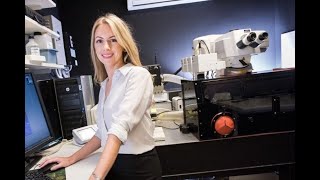
Founder Stories: Helmy Eltoukhy, Founder & CEO of Guardant Health

In this interview, Helmy Eltoukhy, co‑founder and CEO of Guardant Health, discusses recent breakthroughs in cancer therapy, the limitations of traditional tissue biopsies, and how Guardant’s liquid‑biopsy platform (Guardant 360) overcomes them. He explains the historical discovery of circulating tumor cells and cell‑free DNA, and highlights the dramatic reductions in genome‑sequencing cost and error rates that now enable highly sensitive, specific detection of tumor‑derived DNA from a simple blood draw. Eltoukhy describes Guardian’s clinical validation studies, reporting ~85% sensitivity and 99.3% concordance with tissue biopsies, and notes the company now processes over 20,000 tests annually across major cancer centers and internationally. He outlines the business model—private payer contracts, hospital agreements, and pharma partnership for trial enrollment—while acknowledging physician adoption challenges. Looking ahead, he envisions liquid biopsy moving into routine annual screening and broader omics applications, but stresses the need for clinical studies and careful patient management. Finally, he shares a personal health scare and family loss that motivated him to pursue this technology, emphasizing a mission to give physicians better tools and improve outcomes in oncology.
Chapters
I'm speaking with Helmi Altoukhi. He's the co-founder and CEO of Guardant Health. Helmi, thank you for joining us.
Yeah, thank you, Bambi, for having me.
I want to start with a 50,000-foot view question. What have been some of the technological breakthroughs in cancer treatment over the last 5 years?
Yeah, that's a great question. You know, cancer is an area that, you know, there hasn't been much progress since, you know, recorded history for thousands of years. Even look at cancer deaths, If you look at the death rates for the last, you know, 30 to 40 years, they haven't improved very much. But the last 5 to 10 years have been very promising in terms of the treatments that have come out. So the one area that has been a game changer are targeted therapies. So these are drugs that target specific defects in the genome that cause cancer to be cancer in patients. So you'll have certain genes that are just defective that cause those cancer cells to grow and multiply much more rapidly. And so we've come up with, the pharmaceutical industry has come up with these targeted therapies that can actually specifically surgically strike those defects in those cells and kill the cancer cells much more specifically than old standard cytotoxic chemotherapy. So we used to just bombard patients with mustard gas and stuff like that that would just hopefully kill the cancer cells faster than it kills our normal cells, and that was the first class of chemotherapy we had. The second class, targeted therapy, is much more like a smart missile, a smart bomb that can go in, just target those cells. The side effect profiles are much, much better, just typically rashes or very slight side effects rather than these horrific adverse effects that cancer patients would have to normally go through. And then now over the last 2 years, there's been a new class of therapies called immunotherapies where they essentially are able to employ and exploit our immune system to go and help fight against the cancer. So that is the latest and greatest and most exciting development right now. On the diagnostic side, one of the challenges we've had is, you know, we have these targeted therapies that are out there, they're genomically profiled, but how do you know, you know, which genomic defects there are in cancer patients? Right now, or before Garnet, the best way to do that was to cut a piece of tissue out of the cancer patient through a biopsy and then sequence that on a DNA sequencer to find out, you know, what was unique from a genomic level. In terms of those cancer cells. Unfortunately though, there's a big inertial barrier with targeting, with actually performing these biopsies. The average lung cancer biopsy costs $14,000 and has a 19% complication rate. And so these cancer patients, you know, are sometimes, you know, hospitalized or dying not because of the cancer but because of these biopsies and these surgical procedures just to try to access the genomic information about the cancer or other information about the cancer. So, you know, what we're really excited about is what we've launched about a year and a half ago in June of 2014, which is a liquid biopsy. It's essentially a way of targeting and finding out what the genomic alterations are through 2 teaspoons of blood. So much, much cheaper, no complications, And so we're essentially, it's almost like wireless technology versus corded phone technology in terms of the implications of what we can find, how we can follow, how we can monitor these patients in a much more humane and much more routine manner than we used to.
Give the analogy about the camera and the pixels in terms of, you and I spoke before and you brought up that liquid biopsy or at least looking at these CTC cells that have been around for since the late 1800s.
Yeah, we're really standing on the shoulders of giants is the way, you know, I put it. The first circulating tumor cells, so there's multiple ways you can access the genomic information in tumors without doing a surgery. One is there are whole cells called circulating tumor cells that kind of slough off these tumors and circulate around the blood. The first CTC was discovered in 1869, believe it or not. So it's been almost 150 years that people have imagined we could do something like this. What we look at aren't CTCs, we look at basically shed DNA that's, you know, that's this detritus DNA almost, waste DNA that's being shed from these tumors as they turn over. That's called cell-free DNA. And that cell-free DNA was first discovered in 1948.. So also been almost 67 years since we've known about these biomarkers. The nice thing about cell-free DNA is there's about 100x more tumor-derived material in a tube of blood than CTCs, so it allows us to get a very rich and complex profile of the cancer, not just at a single location like you do with a biopsy, but essentially the entirety of the disease within an individual. Many of these late-stage patients have multiple metastases, multiple tumor sites, how do you know which one is actually gonna kill the patient? And each one of these may have a different genomic profile or a slightly different genomic profile that may respond differently to different targeted therapies. So when you make a choice to do a biopsy, you're making a choice to only look at one small part of a patient's cancer versus what we see is essentially a superposition or a kind of a sum total of all the genomic alterations there are in that individual.
When you do a biopsy of tissue, you take it from a certain part of the body, but when you take a— take a blood sample, how do you know where that's coming from, or how do you identify where that tumor is in the body?
So we don't know where it's coming from, but what we see is basically a sum of all the genomic alterations that are being shed by different parts of the tumor. So what that allows us to do, it's very quantitative, so we can say that. We may not know exactly that this tumor is, you know, has this gene mutation, this one has this one, but we can say that this patient is 90% this genomic material, the genomic mutation, they're 70% this one, you know, 15% this new one that's coming up, and so we should be watching out for that. And so that's really what we're bringing to the picture with liquid biopsy is this concept of time. Right now cancer patients are being treated on the basis of old information from a tissue biopsy they may have, you know, received or obtained a diagnosis 3 or 4 years ago. Nowhere else in medicine are we treating patients based on old data points from, you know, a few years ago.
Well, you mentioned that liquid biopsies and looking at cell-free DNA that sort of was discovered in 1950, circa 1950.
Yeah.
But talk about what's happened in the last 5 years that's enabled you to actually advance?
That's a great question. So I've been working in genomics since 2001, since, you know, the first genome, you know, was sequenced by NIH and others. And, you know, that genome cost anywhere from $100 million to a couple billion depending on how you do that counting. And, you know, when I left Illumina just about, you know, 3 years ago, the genome cost about $1,000. So that was really the first ingredient, the enormous decrease in cost that happened over the last decade in terms of sequencing a human genome. We just couldn't generate that information fast enough, cheaply enough for this to be feasible. So that was the first breakthrough that happened, that happened, you know, basically as a result of many, many different players in the field working to make that happen. The second though was even these off-the-shelf technologies that exist today, you buy a sequencer from, you know, some of the big names, the error rates are too high to be able to see these tiny concentrations of fragments in a tube of blood. And so we had to improve these error rates, we had to improve the accuracy by 1,000-fold for us to be able to see with very, very high quality these minute, you know, concentrations of DNA. It really is like going from, you know, a grainy black and white television to your 4K TV today, or kind of cameras, digital cameras from 10 years ago to what we have now. We had to do, we had to essentially build that kind of improvement in the technology for this to be possible. And that's what's proprietary about Vergeon's technology, is essentially our ability to both improve the sensitivity by over an order of magnitude, but more importantly improve the specificity or the accuracy by almost 1,000 to 10,000 fold. And so that really is what has enabled us to employ this technology on a—
So you stand by that, that your testing will be able to uncover and see more granularly than other tests?
Yeah, yeah, it's exactly— it's like almost like, you know, if you need glasses and your vision's, you know, 20/200 and you can't see the letters That's kind of what using kind of current sequencing technologies on blood samples gives you, and we essentially get you 20/20 vision on that.
And just to confirm, this is not, this does not detect if you have cancer, this is just to detect, this is if you have cancer already, this is to show you the progress.
Yeah, this is for this product, Guardant 360, which we launched about 18 months ago, is really for late-stage patients. About a million patients in the US that currently have cancer, you know, their treatments may stop working, the physician is wondering what's going on here. You know, instead of going back and doing another biopsy in these patients, we can just take a simple blood draw and stay ahead of the disease. The nice thing about the technology and why it's so profound, at least we believe, is that as we improve the sensitivity and sequencing cost continues to come down, we can then target the 15 million cancer survivors out there. They're obviously, right now there's no quantitative detection for these patients for recurrence. I'll give you an example. A breast cancer patient who's had a double mastectomy has an 8 to 9% chance of recurrence in their lifetime, and right now the standard of care is symptomatic detection. So they ask them how they feel every year, Do they have back pain? Are they coughing up blood? And unfortunately, that's how we detect recurrence in those patients, which, you know, is really not where we should be in the 21st century. And then as we continue to make the technology cheaper and more sensitive, we can then think about, you know, why we started the company, which is essentially that test at an annual physical that every one of us can take and hopefully detect cancer, stage 1, stage 2, rather than stage 3 or 4, like many patients are blindsided by today.
And just be part of the annual checkup cost. Exactly. How much does it cost today?
Right now the list price is around $5,000. You compare that to doing a biopsy, which is $14,000. Getting the biopsy is just getting the tissue. You still have to do genomic profiling on top of that, which can cost another $5,000. So it's basically $5,000 versus somewhere between $15,000 to $20,000. So it's obviously much better side effects profile, a simple blood draw, a Band-Aid is the worst complication, and much, much cheaper for the system. So it's a nice value proposition.
How do you measure the success of the efficacy or the efficacy of that test? For instance, you have a late-stage cancer patient who decides to take the blood draw versus a tissue or surgery for biopsy. How would you know if, unless they did both?
Yeah, so we've done, you know, large clinical studies, concordance studies or clinical validity studies where we've taken, you know, now hundreds of cancer patients, we've gotten tissue biopsy from them, sequenced it. Hundreds, so hundreds, tens of hundreds or? No, I mean, it's probably approaching 1,000 right now in total. The first of those studies was 165-patient study that we published in PLOS ONE a couple months ago, and so that's all publicly available, people can take a look at it. And then we've had other external validation studies by other cancer centers where they've given us blinded samples, they've sequenced the tissue and they're testing us. And what we found in these studies is neither tissue biopsy nor blood gets 100% of all the mutations. Everyone misses a little bit, so we get 85% of what you see in a tissue biopsy. Tissue biopsy only gets about 80% of what we see. So we actually counterintuitively see a little bit more of the patient's cancer than a tissue biopsy, but in terms of where we match, we're 99.3% concordant. So our diagnostic accuracy is 99.3%. So if we see it, it's really there. [Speaker] And it's cheaper. [Speaker] And it's cheaper and it's less invasive. That's the reason why this test, since we launched in June of 2014, to our knowledge has been one of the fastest growing tests in this segment of the market. We're running more than 20,000 samples a year right now, which is something that has not been seen in this field.
What does that mean, running 20,000 samples?
So 20,000 patients are taking, a year, are taking Guardant. You know, 360 tests, and, you know, I think to put that in perspective—
Oh, I thought you said there was only 1,000 patients.
I'm sorry. No, no, that's part of the study.
Oh, okay, for the study. Got it.
For the study. So that's under a rigorous kind of, you know, study where we're getting tissue biopsies from these patients and looking at the data, you know, in between the two. But in terms of actually running the test commercially, clinically, and, you know, we're in 20 out of 24 NCCN centers, most of the top-tier centers are using Guardant 360. We sequence more patients than either, genomically, than either Memorial Sloan-Kettering or MD Anderson. I believe we sequence more than both of them combined, which some people find surprising. So we—
And for a particular, for one specific patient that would, who would typically do one tissue biopsy a year or even every couple of years.
Well, sometimes in their lifetime.
Most of them at least once in their lifetime. Your typical patient now, are they doing a couple of liquid biopsies a year?
Yeah, it's still, it's just starting to come up. It's a new paradigm of being able to watch these patients, you know, over time. So when we started, you know, very few were getting repeat Guardant 360 tests. Now we're approaching about 15% of our volume. Are doing it serially? Yeah, are doing it serially. So it's been really exciting to see, because you know, these drugs out there are still limited, right? There aren't very many choices for these patients. So the drug may work for a while, but eventually it stops working, and whenever the physician has to ask that why question, why is this drug not working, and what better drug can I put this patient on, that's when they really need to do a biopsy to see why the cancer's changed at a genomic level, and why it's not responding anymore. And so that's where another Guardant 360 test is appropriate.
Got it, got it. But you still have to rely on the judgment of the oncologist.
Yeah, it's a learning process, right? It takes 7 years for physicians, for 50% of physicians to change their behavior on average. That's the half-life that's there, and so the fact that we're at this point where so many patients are having their first Guardant 360 test is something we actually, is beyond our expectations. —right?
And so these are late-stage cancer patients, right?
You got these—
Yeah, these are all late-stage. And there's about a million of them. Is there a certain type of cancer that this is—
that works better? Yeah, so a large percentage of our volume is lung cancer, breast, and colorectal, so the three main ones that you'd expect. We have good detection rates there and there's more you can do from a genomic level in terms of targeted therapy. So lung cancer, there are seven different genomic targets and multiple drugs that work on those targets. And so it's very rich genomically for being able to follow it and give the patient options when you see those genomic alterations there. There are certain cancer types where, for instance pancreatic and so on, that there aren't very many drugs out there. It's just difficult, you know, sarcomas, it's just a difficult cancer there aren't very many genomic targets that are there yet, and so those aren't as well suited. But we still have a fairly high percentage of volume from some of those cancer types. So I'll give you one example. Brain cancer is the one that we have a lower detection rate than almost all the other cancers. That's because there's a blood-brain barrier that prevents DNA from going back through the blood. So in most cancer types, we're around that 85% sensitivity. Across 40, 50 different cancer types. And brain cancers were more 40% sensitivity, but we still have fairly high volume even though it's less than 1% incidence just because doing a brain biopsy is so difficult. What's less than 1% incidence? The incidence of glioblastoma is very low in terms of cancer types.
Brain cancer is an uncommon cancer.
Oh, it's only 1% of all. Yeah, but it's a much higher representative percentage of our volume though, because, you know, doing a brain biopsy is, you know, talk about a difficult procedure. So even if there's a lower chance of seeing something, they'd rather do a blood test first in case you see something and then resort to a more invasive procedure.
But that's always been the case, I guess, with brain biopsies. I can't—
You know, it's always difficult, but there's— until our test, there hasn't been an option to do anything through blood or an alternative. Basically, it was just do blind chemotherapy or let's do a brain biopsy.
So right now you have 1,200, about 1,200 oncologists? Actually approaching 2,000 now. Approaching 2,000. And how many is it, 10,000 in the country? About 10,000, yeah. What's been the biggest challenge, if there's been a challenge, in getting this out and more ubiquitous?
It's really awareness. You know, we're a small company, young company. There's a lot of noise, you know, a lot of people talk about liquid biopsies, but as far as we— In roundabout ways, right? Yeah, but as far as we know, we're still the only commercial comprehensive liquid biopsy in the market today. So it's really just getting physicians, getting in front of them, letting them see the data, know that this test exists and you can order it today. We find that when we get in front of a physician, we have much greater than 95% conversion rate. They'll order the test. Test, there's always patients they have that they have no options for that Garden 360 can be a good solution for them. But it's really, yeah, it's really just getting to their busy schedules and getting in front of them. And so we've had a very small sales force, but despite that, we've got the 20% from Cultages, which is pretty fast progress. Just in the US, or are you also overseas? We're in now over a dozen countries. We announced a fairly large partnership with Labco, which is part of Synlab. They're probably one of the largest international distributors outside of the US. We'll be covering most of Europe and a large portion of South America with them. We have relationships with multiple distributors in Asia and in the Middle East. Middle East as well. So we're seeing some good volume from there as well.
When do you see these tests going to your physician, your primary physician, where you can take an annual, get an annual and also do a blood draw and know whether you even detect the cancer?
Yeah, yeah, I mean, I think that's something we're definitely committed to in terms of proving out the science and the technology. I think that's the biggest When would that be? When's your— You know, I think technologically you could do it in the near term, in the next year or two, but it's really the clinical studies that are the gating item, and doing them large enough that prove out the technology works. 'Cause I'll give you an example, right? I mean, let's say you have a really sensitive version of this technology that finds these mutations in the blood in a patient. You think you're healthy, and you take this test and you find at least 4 or 5 mutations. So what do you do next? You don't know where the cancer is, you just know that there may be something lurking there. And so we have to think about what are the treatment paradigms that we create around that. Do we have an active surveillance kind of mode where we're doing CT scans for that patient every 3 months until we find something, or do we just monitor them every 3 months with a blood test and see if those mutations go up in concentration. So a lot of that has to be formulated before we just create anxiety in patients and so on. So there are certain things you can technologically do today, but it's kind of also, it has to be gated and put in check by how we actually use them in practice. And that's some of the things we're working towards.
And do you see this liquid biopsy for anything else beyond beyond cancer?
Yeah, you know, I think— you think about it, every organ system in the body is shedding DNA or shedding different biomarkers that are there. So I do think when we think of sequencing the human genome, we think of that as a static event that happens once in our lifetime. Like, I had my genome sequenced. I think over the next couple decades, that will change where We're gonna have our genomes sequenced potentially every year because we're a multicellular organism. Every cell in our body has a genome that's changing slightly. And not only that, the human genome is only a small fraction of the genetic material in our body. The gut microbiome, all of that, apparently only, if you only took the human component out, it's less than 1% of the genomic diversity that's in our bodies. Most of it is bacterial and all these, you know, other organisms that are living within us. And so our definition of sequencing the genome will change over time and become much, much more complex. I mean, it's really going to be the difference between, you know, a car phone back in the late '70s or early '80s versus, you know, an iPhone. Omics today, just in terms of what you can do with it and how pervasive it is and how useful it will be.
And do you have an idea of what would be next beyond cancer then?
Yeah, so I mean, I think there are many companies working on infectious diseases. Would you be working on that though, Guardian Health? We're pretty focused on oncology. You know, it's a $30 billion market by itself, so we have a lot of work to do.
You brought up value— market size there, and just to clarify, you make Garden Health is not doing this as a philanthropic venture. So you make money by, for every test?
Yes, every test we run, we have 4 sources of revenue for most of our volume. You know, most of our volume we work with private payers, so like, you know, large national payers to essentially work with them to get paid for the tests that we run. So that's a large portion of our revenue. We also have direct contracts with many hospitals where they pay us for every test and they take the risk. We also work internationally. All of that is directly contracted. And then finally, the largest growing part of our business has been the work we do with pharmaceutical companies where they're just looking for these patients for these trials and they can't find them. Some of these genomic alterations only occur at 1% frequency in lung cancer patients. So right now they're doing 100 biopsies to find 1 patient when we could be doing 100 blood tests in the comfort of the patient's home and finding that patient and putting them into these trials. And so we're doing active screening for many pharmaceutical companies among other things, and so that's also a large portion for revenue.
Okay, well, Helmi, we're at 25 minutes now, but I don't want to end it there. Last question is oncology and why, why personally for you, why did you want to solve this problem?
That's a good question. So back in 2011, I went through kind of a little bit of a personal healthcare scare where, you know, I just started feeling really bad, you know, like 50%, had a brain fog and arthritis symptoms and stomach pains and, you know, just a whole bunch of symptoms. And I went to maybe 12 different specialists, had a CT scan, colonoscopy, endoscopy. There were certain things that were off, but no smoking gun. And one weekend we had, you know, this make-your-own pizza night and then, you know, bagels, and we had all these guests. So I had this basic gluten overload, and even though I had been tested for celiac's and I was negative, my physician— so I broke out into the worst symptoms I had, you know, over this 6-month period. And, you know, I basically found out that for whatever reason I was gluten intolerant all of a sudden, even though I love bread, and, you know, it's painful for me now, but I cut gluten out, and within 3 to 4 weeks I started feeling, you know, 90% better. 50%, you know, approaching 100%. And so, you know, what I realized through that process was, you know, you have physicians with the best of intentions, but they're lacking so many tools. Like, I went through this diagnostic odyssey, basically, where, you know, test after test— I probably had 40 different blood tests, and none of them were really that informative. And, you know, I could be, you know, staying, you know, and working on sequencing technologies and trying to make the $400 genome and $200 genome, but what I realized was there's so many basic healthcare questions we can answer today with technology that's sitting on the sidelines that we're not doing because there aren't enough people who have the courage to try to push these technologies into the clinic. And so me and my other co-founder felt that if we weren't going to do it, then who would? And it's definitely something we would have regretted for for the rest of our lives if we weren't part of that push to really give physicians the tools they need to help patients. And what area besides cancer, you know, we think that's the one area when you look at every area in healthcare where we're spending the most amount of money in terms of increases and seeing the least outcomes in terms of improvements there. And part of it also is I lost my grandmother to colon cancer. She was young, she died at age 40, and so it runs in my family. So it's definitely something that both me and the other co-founders think about and have had personal kind of relationship with. So there are multiple reasons of why we're so committed to this cause.
Well, that's a great reason and great story. Helmi, thank you so much, and we will see you on February 23rd at Bader Splash Health.
Yeah, really looking forward to it. Thanks, Mami. Thank you.
More from Joshua






Scientist Stories: Hans Waterham, The value of phenotypic assays in peroxisomal disorders




Scientist Stories: Joel Zlotogora, Genetic carrier screening programs for reproductive purposes