11 Reasons Why Your Webinars Suck (And How to Fix Them)
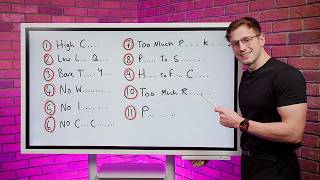
Elliott Botterill, CMO of Entrepreneur's Circle, shares eleven fixes for underperforming webinars using his own results: £160k ad spend, 10k sign-ups, 159 enrollments, £2.2M revenue. Key fixes include WhatsApp communities for 70% show-up rates, 20-30 minute pitches, multiple CTAs, and higher pricing to signal quality.
Chapters
Ladies and gentlemen, welcome back to the YouTube channel. If you are spending any money on live webinars or have ever thought about launching a live webinar, then I'm going to show you 11 reasons why your webinar might suck and why it might be costing you money or not working as well as it could be. And importantly, I'm going to show you exactly how to fix them. So if you're new around here, my name is Elliot. For my regular viewers, welcome back. I'm the CMO at a business called Entrepreneur's Circle where we have a low ticket community, a software company and a high ticket coaching program that cumulatively we do around £1 million per month. And my channel, it's all about sharing the marketing lessons and wisdom that we are acquiring from growing and scaling these different types of businesses and passing them down to people like you. So in this video we're talking about webinars. We love live webinars. I love live webinars. They're one of my favorite ways of acquiring new customers, especially cold customers, I. E. People who have never heard of us before. Now we run on average two to four live webinars every single month, primarily for our software company and for our high ticket coaching program. And so these are stats from one of our webinars for the high ticket coaching program. It's cumulative, it's based on about six webinars. We spent around £160,000, just shy of 10,000 people signed up. And from that we got 159 people enroll or sign up to our high ticket coaching program, giving us a cost per acquisition of just under £1,000, which is our target. And as a result, last year that added 2.2 million alone in additional revenue just from these new clients, just from these webinars. Now we love these webinars, but webinars are complex and whilst they are truly fantastic at taking cold people and compressing what would otherwise be weeks and potentially months of relationship building into a single 90 minute session, many things can go wrong. And so today I'm going to be sharing the 11 reasons why your webinars might suck and exactly how you can avoid them. So if you're running any type of live events, you can maximize it and get the most from it. So strap in, this is going to be action packed. Starting off with reason number one, plain and simple, high cost per lead. This is where most people's webinars die because in order to run a successful webinar, we have to get people signed up. They don't have to show up, they don't have to watch the pitch and then they have to do the call to action, whether that is buying something or scheduling a call to then talk about buying something. And so if we don't get enough people on or the right people, then we are kind of dead from the get go. Now, couple of things happen here and ways in which we address this. Firstly, the main driver of this is people's ads. People's ads are just not very good. And so I've got lots of other videos on my channel specifically about ads. But for each live webinar, couple of pro tips. Number one, we do the ads seven days out from the webinar. Any longer and we find we get a drop in the show rate from people that sign up too far away. And any closer is not enough time to optimize the ads. Now, when we do a live webinar, we make new ads every single time. So even if we are running a webinar bi weekly, which is our most common frequency, we make new ads. And while a lot of people do, you watching this might be you, they get complacent because they find filming ads not fun or a bit awkward. And as a result, they film some and then never film anymore and they just chug along with the same ads week after week and their cost per lead just goes up and it completely ruins your chances of having a successful webinar. So number one, make sure you're creating enough volume of ads. And if you want more help on the ads, check out the other videos on my channel. They're there to sort you out. But specifically with the other webinars, one of the biggest things that people get wrong is what I call the concept. Now the concept is what is the topic the webinar is on? But more importantly, how are we framing it to the prospect? What is it actually called? What is the title? Because the title of your concept will by and large have the biggest impact on your cost per lead out of everything. Because this is what they're signing up for. It's the title of the webinar. So we have to put a lot of thought into how we make this the most compelling title possible. But not compelling to everyone, compelling to the right people. So we get the right people there. So I have a little four step framework that I share with my friends inside my secret vault on how to create the perfect webinar concept. And the perfect concept takes all four of these criteria. So firstly, it attracts attention. Okay, I. E. It's interesting again, it's to the right people, but it has to be compelling enough to stop someone scrolling and actually stand out in what is otherwise a crazy sea of noise. Because one of the reasons webinars work so well in today's day and age is people's attention spans are fried. They are cooked, thanks to Temu and TikTok and all this kind of shit. And so hosting a live event, there's magic in the live and it gets people to actually spend 90 minutes to two hours with you. They're engaged because they know it's live. And so we need to make sure it's interesting so we grab their attention in the first place. Secondly, it has to be really specific and qualify your ideal customers. That is this event, this topic is not for everyone. Yes, we want it to be compelling, but our counterbalance here is we want it to be specific enough that only our ideal customers, our dream customers, are going to opt in. We want to repel all the time wastes, all the people it is not for. Thirdly, we want it to be value based. We want this to be something that people deeply care about. It's going to be something that enables them to learn and acquire an insight that will lead to some kind of profound change in their life. Because the more value it is and the better we can articulate that in the title. A, more people will sign up, but B, they're going to be way more compelled to actually show up when we go live with the actual event. Finally, it obviously needs to be directly tied to your offer. Yes, we love giving away free stuff. Absolutely. And value is at the core of this. But make no mistake, this is a marketing and sales exercise. Therefore, we are going to try and sell some of the people at the end. And as a result, we want the title and the concept to directly lead into what we are selling. So it's a natural segue for those that do want to get some additional help implementing or taking action on the stuff that we're going to share. So those are the four criteria a good concept will tick off. So lots of ads, good concept. And that should deal with your cost per lead. Okay. The second reason people's webinars suck is they get terrible lead quality. Now, this is normally because of negligence in the signup process. And what I mean by that is people very rarely add qualifying questions. Again, I got a whole other video on lead quality, but when we run a webinar, we get name, email, phone, and then we ask one simple qualifying question. Now, for us, our audience is business to Business. And so we say, do you own a business? We then have three options. No, I do not. Yes, and it makes more than 100k a year. Yes, it makes less than 100k a year. So two options here. If they say no or if it makes less than 100k a year, we consider them unqualified. But if they say yes and it makes more than 100k a year, boom, we consider them qualified. So not only can we see at the point of opt in how qualified people are broadly, because yes, some people lie, but most of the time people tell broadly tell the truth. But not only that, we route these people to different thank you pages. So the qualified people go to thank you page. A qualified people, unqualified people go to thank you page. Bing. As a result, we only track and send back to Facebook where we run most of the ads, the qualified people. And as a result we train the algorithm on high quality data so it goes and finds more of the high quality people. Very clever, little distinction here. The second thing you want to do in today's day and age, which is really easy thanks to modern technology, is we enable email and sometimes phone verification. So we've all had that. When you get a bunch of leads and then you try and email them or try and call them and they just completely bounce the email and phone just does not work. And so email verification is where we enable for our email field and we do this in our software, genie, AI and there's a little button, validate email. And when that is pressed, when someone enters the email to opt in, they have to press the verify email button. It sends them a one time passcode to their inbox that they have to put in. And as a result this increases our cost per lead a little bit, but it drastically increases the quality, ensuring we get validated emails that will deliver and therefore the person's more likely to show up, they're going to receive our communications and we stand a much better chance of actually, you know, engaging with them. So those are two simple fixes for your lead quality. Number three, having a bare thank you page. This is such a common mistake that we see when people opt in and then they send them to a thank you page that says, boom, thank you, you're in, can't wait to see you on the day of the webinar. Boom. And that's it. Let me tell you why this is such a grave matter mistake. You see, if we were to map on a chart a prospect's level of interest in our stuff over time and let's say the live event is happening here. And so we've launched our ads. The second someone opts in, their level of interest in our stuff is currently at its all time high because they've discovered us from an ad which has got their attention, they've clicked through and they've now opted in on the website for the live event because I've decided it's going to be really interesting. The last thing we want to do is nothing. If we say thank you, see you in a few days, all that happens is their level of interest just completely decays and then we have to rely really heavily on all of our follow up systems to try and keep them interested so they show up for the live event. This is where the thank you page comes in. Because once they've opted in, their level of interest is all time high and therefore not everybody, but a big chunk of people are in a state of mind where they want to consume more about us, they want to consume more about what the event is, about what they're going to be learning and so on and so forth. And so what we do is we build out very extensive thank you pages and we inject lots of video content in them. So you'll see here we say, congratulations, you're in. Please watch this two minute video. And then we record a video saying, boom, thank you, you're in. Here is everything you need to know. Not only that, I say, look, you probably have never heard of us before, so you're probably going to want to do your due diligence on us before the live event. And so in order to help you, we've made a series of videos on this page that you can watch the answer pretty much every question you might have about us, about the topic, about what we're going to be covering before the webinar. So you are primed and ready. And so this page goes on because beneath it we just have a series of videos that again cover key bits of information. Who are we? What gives us the right to speak about this topic? We talk about our proof, our credibility, we explain here's what's going to happen on the live event and we give them an overview of the content and what they can expect. We, you know, tackle common objections that is this just a big sales pitch? And we say no, you know, you're going to get ton of value from this at the end we will, you know, extend an offer to small people that want a little bit of advanced help, but you absolutely are going to walk away with tons of implementable actionable value and so on and so forth. So we want to bake that in, because when they opt in, their chance of consuming this is very high. And if they consume this, we know their chance of turning up to the webinar increases. And their chance of buying at the end also increases, because every second they spend consuming content is adding up and stacking additional bits of relationship building in their mind. And they're becoming more familiar with us so that they're going to be way more likely to do business with us. So a simple little trick to get the most out of your thank you pages. That brings us on to problem number four, not having a WhatsApp community. So WhatsApp communities are absolutely legendary. And so when it comes to driving attendance to live events, there is Nothing beats the WhatsApp community. Nothing beats the WhatsApp community. So what we do on the thank you page again, we have this big section that says, look, make sure you join the private WhatsApp group. And there's a big green button. And so within WhatsApp for every live event, we create a new community. So it's not a group, it's a community. The community is where you as the admin can broadcast announcements out and people, they can only, they can only react. They can react and they could reply, but it's not like a WhatsApp group where everyone can post. And that's very important because you maintain control as the kind of moderators of the event. But what this does is it gives us a direct line into the channel and that most people are most active on, certainly in the uk. And as a result, we can pump very specific messages to them that have a very high likelihood of getting read. So when they join the community, we will send a variety of different posts like this one. That effectively is here's all the information you need to know about the live event, specifically around the mechanics. Here's the link to sign up is going live at this date, at this time. We have a workbook that we create for everybody to help them follow along with the live event. And we post that workbook in the WhatsApp so it's where they can access that. But we use it as a way to stay in touch with them and feed them bits of insights, get them excited, share and reiterate the value they're going to get from the webinar, but also just make sure they have got the link so they're going to be able to join. When we do actually go live, we like to share a lot of behind the scenes, little images as well, of the studio, of the setup. And I call this kind of world building, because again, if we're running this live event for cold people that never heard of us before, we like to send little videos. I'll do little videos showing the studio setup and showing the behind the scenes, because it adds a much more richness to the whole thing, and we become much more trustworthy, and people get much more bought into us because they're seeing so much more. And so the WhatsApp community is just insane. Now, having done this now for well over a year, and on dozens of webinars, we have discovered, I call it our mother of all metrics when it comes to our webinars. And we know that whatever number of people we get in this community, 70% show up to the live event. So 70% of the people that join the WhatsApp community will show up to the live event. And that has been plus or minus, you know, 2 or 3% across, like, dozens of webinars and hundreds of thousands in spend. It's spooky how accurate that is. But so now when we're running our webinar, yes, we track the cost per lead from Meta, but we mainly track the cost per webinar joiner, and we put a lot of effort into getting people into that group. So you're missing a trick if you're not doing that. This brings us to number five, having no incentives to actually show up live. Again, we're all about live webinars. There is a genuine magic in it being live. People will show up and they will stay for a much longer period of time because they know it's live. And we make a big song and dance about how it is live, about how we say the date. We have a slide with the date and time on. We talk about current events that might have happened that week to really prove that it's live. So people don't think we're recording it, because the second somebody gets a sniff, it's recorded, then, boom, they're out of here. They're going to watch it on their own time. And that's important, especially if your target audience is busy, which, guess what, pretty much everyone is fucking busy. So we want to not only bang on that it's live, we want to give them specific incentives and reasons to show up. So what we do is we have not one, but two bonuses that we give to everyone that is live. Excuse my spelling. So we tell everybody that for everybody that shows up live, you get not one, but two Bonuses. Now, we keep the bonuses a bit secret, but we say both of these bonuses are designed to help you action and implement a couple of the key things that we're going to share in the webinar. So one of the bonuses in one of our webinars is this beautiful booklet, we call it your life plan. This is from our high ticket coaching program. And because we talk about this step in the webinar and then we say, look, thanks for joining us live dropping in the chat. Now you've got this whole document that's going to enable you to go through and do this process yourself. And that's our first bonus. The second bonus is actually a spreadsheet that helps people calculate the numbers, but they're just tangible little assets that we have already that enable people to take action on the stuff we've been talking about. And as a result we get a much higher show rate than if we didn't do that. The other little thing we do is we always have a Q and A at the end and we hype that up quite a lot because we say, look, at the end of this you're going to get a chance to speak directly with the speaker and get their specific advice on your business, on your situation. So make sure you're around for that. And that does drive the attendance as well. But generally we want bonuses, clear incentives that we then share and hype up in the WhatsApp group as to what you're going to get if you show up. If you don't show up live, you don't get the bonuses. So good clear incentives. Number six, chat cheerleading. So one of the amazing psychological effects a live webinar can have is it gives people an insight into what other people are thinking because it has a live chat. So we always make sure we are active in the live chat and that our team are active in the live chat and that we are hyping people up and sharing lots of messages. Because what is going on in the chat is having an effect on how all the prospects are are perceiving the content of the webinar. Because yes, whilst we all love to think we have total ownership and control over our minds, the reality is we are very easily influenced and persuaded. And you do not want to leave the chat just completely out to open and to risk of just the people that show up to be messaging in it. What do I mean like that? We want to make sure we are putting positive messages in, we are getting people hyped up, we're asking thought provoking questions and that we are cultivating a very positive experience within the chat especially. And this is especially important as you get towards the pitch. People are scared to be the first one. And so when you start talking about the call to action, we want someone and we want to provoke people to say, you know, that they're booking in, that they're clicking the button, that they're opting in, that they're booking calls. Because by enabling that to flow in the chat, people will see it and they will now feel like they're not alone and they will take more action. So we put a lot of work into chat cheerleading and hyping everyone up and keeping it busy and positive and dealing with any annoying people, which you inevitably get a few of in a very prompt and decisive manner. But making sure the chat is popping is key. Okay, problem number seven is actually sharing too much of the wrong information in the webinar. So what do I mean like this? Well, when we build out a live event, there are really two types of information. There is what we call declarative and procedural. So declarative knowledge is more high level. This is how this conceptually works. And procedural is the step by step, more tactical. This is exactly how you would implement this. So as an example, if I was talking about lead quality, my declarative knowledge would be around the fact that lead quality exists on a seesaw and the actions that we take to increase lead quality more often than not lower the volume. And so we have to constantly adjust it to find the right level where we're getting a good enough volume of leads and a good enough quality. My procedural knowledge would then be okay, how do we actually tactically do this? Well, what we would do is first of all ensure we're adding qualifying questions. We'd use the Banff framework to do that. We would then make sure we're pixeling, conditioning the pixel with the right information and filtering people out and so on and so forth. And I give you the step by steps on how to go away and execute this. The mistake people make is when their event is filled with too much procedural knowledge. Because if you're giving away too many to dos, too many tactics, then what will happen is people leave with a huge long to do list and as a result, they're less likely to take you up on the offer because they feel that they've got work to do because they need to go and execute all of this procedural stuff that we gave them. Whereas when we focus on the declarative knowledge, we are enlightening them as to how this stuff works, they're understanding the concepts, which in alone is very valuable. But then our pitch is effectively where we can sell the procedural knowledge and we can sell the help on enabling them to take action on it. So this is the classic, you know, the epitome of the phrase, you want to give away all the secrets and sell the implementation the secrets. We want to keep more conceptual and then the implementation of the actual, you know, step by step tactics, that is what we sell at the end. So that is a common mistake. Which brings me into number eight, when the pitch is too short. So if we were to look at the lifespan of a highly effective live webinar, most of ours run for two hours almost exactly, and they're structured into four key parts. We've got the start, the value, the pitch, and then a Q and A at the end. And so how this normally breaks down is we have the start, which is only about 20 minutes, and the start is all about introducing the speaker, building credibility, sharing our story and getting people hyped up and in the right mindset to consume this stuff. Then we get into the core value. So the core value is going to be between 40 and 60 minutes. And it is pure value, where we are sharing incredibly insightful, valuable stuff that is blowing people's minds. Because again, if you don't deliver enough value, then your whole thing is not going to work. The best way you can ever prove to someone you can help them is by actually helping them. And so the sign of a good webinar, in my opinion, is that it is genuinely so valuable that anyone could attend for free and not buy anything and actually, you know, take action on things and move forward. That is the sign of a very good webinar, in my view. Then we get to the pitch. Now, the pitch, You want it to be between 20 and 30 minutes. Most people, they make their pitch like five to 10 minutes. It's really, really short, and that sucks. We take our time with the pitch because everybody that makes it through the pitch, yes, you get a little bit of drop off here, but that's fine once the pitch starts, generally if you do the pitch properly, you don't get that much drop off, but we want to make it decently long. Now, depending on the price point or the complexity of the thing you're selling, it will vary. The simpler and cheaper your thing, the less pitch you need, the more expensive and more complex your thing, the longer the pitch you need. And that is because we are allowing people time to digest and understand and properly think through why this offer is a no brainer. And sometimes it takes people a while. And because in the audience there will be different types of buyers, we'll have more logical buyers, we'll have more emotional buyers, you'll have everything in between. And so during the pitch, not only did we go into, you know, what the actual offer is, the mechanics of it, here's exactly what you get. But we then tell three to four different stories and analogies that help provide a different perspective on our offer. And we do that because each one is designed to appeal to the different types of buyers. And each one reinforces different key points of why the offer is so good. And when people see all of this and they hear all of this, you can just feel the cogs whirring in their brain. And it enables them the ability to actually process the pitch. But also it gives them the time to really think about it so they don't feel like they're rushing into it or making an impulse decision. So one of the things I will often do with some of my private clients inside the Secret Vault is we will extend their pitch and we will just make it a bit longer because that can help massively. We then also have a. Normally it's about a 30 minute live Q and A at the end, which is super powerful because what normally comes up in the pitch, you get a bunch of people opt in. But then we see, you know, the vast majority of all of our opt ins come during the Q and A. And that is because once we've done the pitch, people have questions. And one of the most common questions is, is this going to work for my specific business, my specific situation right now? And so we are chat, cheerleading, encouraging people to ask and give good context on their question. And then we are covering them all in the live Q and A. And as a result, as we tackle all these questions and reiterate, yes, you know, in this specific situation, this would be what we would do and that's why it would work. So there you go, take action, book the call and let's chat it through. And as a result, you drive huge uplift in calls, booked purchases, whatever it is we're going for. So that is problem number eight. This brings us to number nine, hard to find call to actions. Again, one of the easiest things to fix. That has a profound impact. This was top of mind because one of my clients in the Secret Vault the other week wanted some feedback on their pitch because they changed the pitch, they made it longer, but still they didn't quite get as Many conversions, as they'd hoped. And so I watched it through and it became blindingly obvious why. And it was because when it came to the pitch, they had one single call to action that was just a little button that appeared in the box and that was it. That was it most of the time. The reason why marketing is not that effective is not even because it's not compelling. It's because mechanically, we have made it difficult for people to take the next step. And so we obsess over making it blindingly obvious that anyone, my blind drunk grandma, could take action on this call to action. It's so in her face. Okay? And so I call this the nuclear call to action. Because when we are pitching, we drop the nuclear call to action everywhere. So we have a button that appears on the landing page. One of our team drops a link in the live chat, we drop a message. In the WhatsApp community, everyone receives an automated SMS message. They receive an email as well. And we have a QR code on every single one of the slides during the pitch section. That way we just completely mitigate the possibility that anyone is unsure of how to make the next step. And importantly, we meet people where they are at. We meet people where they are at. We provide them the option to opt in in whichever method is their preference. Some people like to do it on their phone in WhatsApp. Some people like to do it on their desktop from the email. Some people like to pull out their phone and scan the QR code. I don't care which one you do, as long as you do one of them. But I'm happy that it's my job to provide all of them for you and we make it as easy as humanly possible. Then we get into number 10. Another big reason why conversions at the end of the webinar are low is if it is too risky. Three things we do to counteract this. When we're making an offer and we are hyping up how this thing is going to change somebody's life in whatever way, the balancing act that's going on in their mind is, okay, what is my perceived likelihood of achievement? That if I buy this thing, I will actually get the result. And it is our job as the marketers to increase that perceived likelihood of achievement and provide things that are going to make them feel very certain that if they do take action with us, they aren't going to get the result. Now, we have to do a lot more of this these days because people are used to being scammed. People are used to Seeing all sorts of crazy ads everywhere and trust is generally low. So we need to make sure we have an absolute butt ton of proof, tons of proof. We do this at the start of the webinar because we talk about our story, our credibility, and then in the pitch, we share dozens of testimonials and specific examples showing that our thing works and we have to be grounded in absolutely loads of proof. The second way we do this is adding a guarantee. This is specifically designed to reverse risk because we say, hey, look, if you take action on this, we promise that you will get the result or you don't pay. Now, we're very happy to do that because we know our stuff is so good and if people come in and do take action, then we'll get the result. And so we put our money where our mouth is. And one of my favourite ways to frame things is, you know, in our live events, it's always an application. You have to apply and we will then have a call and see if we're the right fit. And like, we don't just say that for marketing sake. That is genuinely true. With our offers, we know some customers will get amazing results, other customers would get terrible results, and we know what those two different customers look like. So the calls that our team have, we literally say, look, we need to ask you a few questions now, understand your business, your situation. If we're fit, we'll let you know, we'll offer you an invitation to join. If not, we'll also let you know, and that's okay too. And so we turn people away because we know we can't get everyone amazing results, but that's fine. But by doing so, it empowers us to properly give a good guarantee. Because if we are filtering the people in and making sure they are actually good, then hell yeah, we are happy to guarantee they're going to get results because we've done the due diligence on our side. So that is incredibly powerful. But definitely having a guarantee is key. But this is also where the Q and A comes in because some people will have very specific, nuanced questions. And pretty much every person on the planet thinks that their specific situation is completely unique. And whilst there's some truth to that, we can tackle it in the Q and A and we can say, look, put your questions in, give us some good context, okay? Not, don't you, but will this work for me? Tell us what your business is, what your problems are right now, and we'll give you a really good answer. And so we use the live Q and A to address all the people that are scared. You know, we have people say, I spent, you know, 20 grand on a business coach last year and got no investment. They just tried to sell me more courses. And so we've put that in the Q and A. We'll be like, oh God, that is awful. Look, here's exactly why this is not going to happen here and why we're going to cover you and so on and so forth and we tackle it and we deal with it live once we've removed the risk. This brings us to number 11 and that is that your price is just too low. You see, nothing kills a live webinar than selling something that is just too cheap. Because when we do a model or a forecast of the webinar, we can look, we say, right, we're going to spend ten grand. We think we're going to get, you know, ten pound cost per lead. We can then forecast based on all the metrics we know around the landing page conversion rate, the cost per lead, the show up rate, the pitch rate, the conversion rate, how many people we can expect to get for that 10 grand. And one of the biggest impact that will affect your return on ad spend, how much money we make from the webinar is what the price of the thing we are selling is. And most people default to something that is quite low, especially in the early stages. And more seasoned people, you will know we want to sell high ticket stuff so we can deliver amazing results because we have the cash to do it and also reap the rewards ourself. And so I was working with a client. One of my first clients in my agency that I used to have is about six, seven years ago and we were running a live webinar and he had a program, an online course, six week thing. And it taught people how to open the doors to how to reach decision makers. And we did a series of webinars and we tested the price points. We started off at £4,000 and then we worked our way down. We did 3,000, 2,000, 1,500 because we wanted to see which price point would yield us the most amount of sales or the most amount of revenue and profit. If we lowered the price, would we get proportionately significantly more sales? That would make sense, doing it at the lower end versus at the higher end. Here's exactly what happened. We did the first webinar at £4,000. We got five sales. Pretty pleased with that because we spent four grand. We then did the second webinar at three grand. We got five sales. We then did it at two grand. We got five sales. We then did a one grand, Actually got four sales, and then we did it 500. We got three sales, three sales at the cheaper price. Now, this was crazy for all sorts of reasons. Number one, it showed us how price affects the perceived value of the thing. And actually, sometimes when you price higher, you sell more because it's much more believable that your thing is more powerful and more effective. Because if it was so good, why would you be selling at 500 pounds? Not only that, but the people that bought at 3, 500 pounds, they complained. They actually complained about the thing. Whereas the people that bought up here were the best customers. They dove in, took action and got results and they loved it. And they left amazing testimonials and results. So these people were very happy. And so this was a big lesson to me very early on in the power of pricing. And not only did we make tremendously more money here and were the economics in our favor, but it yielded us to completely different side of the spectrum customers. And so, you bet we switched and we did way more of this. Because what I have also found to be true, especially with live events, is that it just. It takes the same amount of effort to sell someone for something for, you know, £1,000 as it does to sell something for, like, four or five thousand pounds. So we might as well sell on this end of the spectrum. Of course, assuming that our thing is valuable enough that it drives an outcome that is well worth that. That is, you know, the key thing that underpins this. But otherwise, make sure your prices are set right. Boom. Ladies and gentlemen, there you have it. The 11 reasons why most people's webinars suck and how you can fix them. I hope you found this useful. If you did, please consider subscribing. We put a lot of effort into these videos every single week, and I hope you find them valuable. But equally, you don't have to. That's up to you. Your prerogative. Either way, I've been. Elliot, you've been awesome. Thank you so much for tuning in. I'll see you in the next one.








