2024 in business was hard. This is what I learnt...
Elliott Botterill reflects on his hardest business year, sharing lessons about masterminds, branding, client retention, and product quality. He explains what worked, what didn't, and what he's focusing on next.
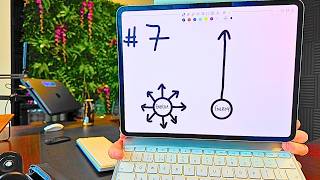
Ladies and gentlemen, welcome back to the YouTube channel. My name is Elliot. It is great to see you. It is New Year's Eve and I have been compelled to come to the office today for a couple of reasons. One, to catch up on some work after Christmas and two, to film this video. Because as the year draws to a close, it is time to recount some of my key lessons from 2024 and some of my core focuses for 2025. And I thought they might be useful for some of you as well. So if you have no idea who I am, my name is Elliot. I run a company called Botters. It's a digital growth agency based out of East London. And so we celebrated our fourth year in business this year, which was awesome. We grew from seven people at the start of the year to 14 at the end of the year. We grew our top line revenue by about 51%, which is awesome. And we in total spent around £9 million on advertising across our portfolio of clients this year and generated around 74 million pounds in revenue for that portfolio of clients. So all in all, it's been a pretty good year. And so in the grand scheme of things, we're still a relatively small business, but I've just spent some time going back through the year, combing through everything that happened and pulling out my kind of key thoughts and lessons. And I wanted to share them with you today. Hopefully they might be somewhat useful. So to start off with lesson number one was this, that masterminds equal return on investment. Now, there's a big caveat there. You have to be the right mastermind with the right people. Of course, not all masterminds are great, but I've been a part of many masterminds for many years now. And so this last year I was part of two. One in the uk, where I went six times throughout the year. I was a part of one over in the us, based in Austin, Texas, where I went four times last year. And then there was a few one day masterminds that I went to as well. And every single one paid for itself within a month or two months of me attending. Now, the reason being, I have always found that as I've progressed in my very short career in business, the points at which I've got stuck, the best way for me to continue to grow and find the solution is simply to find people who've already done what I'm trying to do, learn from them and go and implement it myself. And as a result, I have been hooked on attending masterminds and I Spend a lot of money on attending these masterminds every year because every single time they literally just pay dividends. And so they pay dividends for two reasons. Number one, you typically find these solutions to your current constraints in your business, and then providing you actually implement it, then boom, you grow. Secondly, the right masterminds bring you in a room with the right sort of people. And so my network has grown immensely throughout this year. And in fact, there was one. I wouldn't call this a mastermind, but I went to one of the scaling workshops ran by Alex and Layla Hormozy acquisition.com earlier in May this year. And you know, we had a great time there. Lots of useful stuff that was helpful. But in that room, I met three people that ended up becoming clients of ours, and then one person who we partnered with and did a lot of work and actually helped us dial in a lot of our sales side of our business, which has paid massive dividends, all from literally like one workshop. Now, the workshop was $5,000 and it was in Las Vegas, so you had to, you know, pay for the flights and all that kind of stuff. But that literally paid for itself by the time I'd landed in the new clients that we'd signed. And so for me, 2025, I'm doubling down on this. I am going to more masterminds and making sure that you implement stuff, because I've been to plenty of these events as well, where people go and they love it, they get excited, lots of new information, they get that dopamine hit, but then they never actually implement anything. And as a result, it's pointless, it doesn't pay dividends, they stay in the same place, yada, yada, yada. You've heard that all before. You got to actually take the action on it. I've also found that, like, my strategy for those when I go to these masterminds is just to try and be as useful as possible. Because if you're in the right room with the right people and you're able to share lots of value, then good things come from it. I didn't pitch any of these people, I didn't try and get any clients from these events. They just naturally happened as a byproduct of the conversations we had because I was able to share useful advice around what we do with growth engines, paid ads, landing pages, et cetera. And that turned out to be something that they needed. So it's very natural, non salesy thing. So definitely don't go to Mastermind trying to like, you know, Sniper clients, because that's not the purpose of it. You got to go and be valuable, and then good things will come. So that was lesson number one. And in 2025, we're doing more masterminds. Lesson number two. Dun, dun, dun. Is this the idea that brand is the ultimate equalizer? So this is like a lesson I feel like I'm constantly learning because my background was working a big performance marketing agency, and so everything for me was always about performance, you know, performance, advertising, directly getting a result. And I always, you know, wasn't a big fan of running brand stuff, brand awareness, whatever it might be, because it seemed wasteful because you get loads of impressions reach, and, you know, you can't directly attribute that to sales. I'm completely flipping the script on this because now, you know, I've had enough experience now to see that brand is a ridiculously powerful thing. And in fact, it is the most powerful thing I've experienced this myself with, like, to reference the hormosis again, my willingness to spend $5,000 on a workshop and fly to Vegas. I didn't need a sales call. I didn't need anything. I just wanted to go because their brand they had built up with me was so good. And then furthermore, when I was in the room at that $5,000 workshop, at the end of it, they pitch you on the next thing, which is like $15,000 thing, and lo and behold, like 75% of the room signed up, right? And then a room full of 100 people. You can do some numbers there. That's a lot of people, and that is the power of brand. And so for me, I've kind of known this for a while, but it's taken me a while to, like, internalize it because I've not actually actioned it too much. So for me, that's why YouTube is a big focus for this next year, as well as rebuilding my LinkedIn and just putting more effort into building brand, because once you have developed a good brand, a good personal brand, then everything just is much easier. And, you know, that is a big lesson for me. Okay, lesson number three. Dun, dun, dun. Very simple. Don't forget what worked. So, again, I've had to relearn this lesson a few times, but it's come to light a lot this year. So what I mean by this is that in all of our businesses, we have done things that have worked really well. And what happens as entrepreneurs, business owners, is we can suffer from bright shiny object syndrome and, and always have this urge to do new stuff that actually Takes us away from the stuff that we were doing that was already working. There's a great book called the Slight Edge, which describes this cycle that we go on. And it's where we're in a place where we need growth. And as a result, we start doing all of these things, these actions, getting up early, being diligent, doing this, blah, blah, blah. And as a result, we get the growth. But then once we've got the growth, we take our foot off the gas because we're complacent. We stop doing the things that got us the growth. And as a result, we start to, like, go down a little bit until we go, oh, shit, I need the growth back. And then we start doing all this stuff again. And for us, this manifested itself in a couple of ways. Number one, in our core business, we used to track two key metrics for our agency clients. So we would track positive comments. So this was the number of overly positive comments our clients sent to us throughout the week by email, Slack, WhatsApp, whatever. And then the second was a magic moment, which a magic moment is defined as a time where any of us on the team have gone above and beyond for a client way outside the scope of our agreed work to kind of like surprise and delight them, if that makes sense. So it could be as simple as sending them a gift for their anniversary. It could be doing a deep piece of analysis on a certain thing. It could be actually helping them out with some other project that, again, is actually completely outside the scope of our normal work. And we classify that as a magic moment. And the reason we track those two things is because I figured, well, if we are just delivering an amazing service and we're generating loads of positive comments and we're delivering these magic moments, then the clients will be very happy and they'll stay with us for a long time. For some reason, at the start of this year, I think as we got bogged down with recruitment and building out the team, we kind of just lost this, and it was totally my fault. And we ended up stopping tracking these two metrics each week as a result. These are the type of things that you stop doing it and then you don't actually see the impact for a few months. But it was a few months down the line. Actually. There were a couple of clients that we lost that I think were directly as a result of not tracking this, because we lost our focus. Because if we weren't tracking it, all of a sudden, the team's focus on driving these positive comments and driving these magic moments was just gone because no one was holding them accountable. And again, totally my fault. So that was lesson number one, how we felt that ourselves. And since then, we brought it back and like, oh, my God, the impact has been powerful in the last two months of the year when we brought it back. So we finished the year really stronger than. But the other way it manifests itself is with campaigns. So because we are running a lot of paid ad campaigns, Facebook ads, Google Ads, etc. Like, as an agency as well, we constantly, I think, feel a pressure to have new ideas and new stuff to keep the clients happy, because clients always want new stuff. However, sometimes the best strategy is to actually look back and just do more of what works, because we're in quite a lucky position where our client retention is very good. And so most of our clients have been with us for two, three, four years. And as a result, we have loads of data, historical learnings, previous things we've done that we know have either worked or haven't. And so we have the blessing of going back and going, okay, let's just do this again, let's do this again. Let's do this again. And we have definitely fallen victim into just doing too much new stuff rather than actually just doing stuff that works. If it ain't broke, don't fix it. So in 2025, we're focusing in on doing more of that. And in fact, we're trying to, like, catalog all the things that we've done that have worked so that at any point, when we need new ideas, we can actually reference all of the historical stuff first and go, okay, let's try this again. Let's try this again. Let's try this again. That brings us to lesson number four, which is plan for the good and the bad. So, as I mentioned, our clients stay with us for a long time. And whilst that is very good, this year made me make a few bad decisions. And that bad decision, it was really a singular bad decision. And that was to not plan for any churn, because my ambitious, optimistic mind figured we would be able to run through this year and not lose a single client, which in hindsight is just stupid. And I feel a bit stupid saying it out loud, but really, we, you know, I have very high standards for the business, and we have such an emphasis on the relationships that we build that it's not crazily impossible. But anyway, as a result, we did end up losing some clients this year. And because we didn't plan for it, it kind of caught us off guard. And so planning for the good is helpful, and it's important to have a plan for all the obvious reasons, but also planning for the bad. And in my case, because we're a recurring revenue business, planning for the churn is very helpful. This year would have been way less stressful had I accounted for a few clients leaving, which is just a very natural thing. And because in the realm of what we do, clients leave for all sorts of reasons. And as we found out, you know, there's one period throughout this year, we had a bunch of new clients join, and then all of a sudden, in one month, we had three clients where, like, extraneous circumstances just hit us all at the same time. So what I mean by that was one of them brought on a new digital marketing manager, and they decided they were going to turn off their ads off temporarily, which is fair enough. Another one started working with a new mentor, and that mentor had a specific agency in their niche that they wanted to move to, which, again, is okay, fair enough. One just had some internal issues with their sales team, which meant sales completely stifled despite us generating loads of leads, which meant their revenue was taking a hit. And so, again, that was kind of outside our control. And as a result, you know, three clients lost in the blink of an eye, all because of things that, like, we couldn't have done anything about in practice. There's arguments there to say that we could have, but, you know, in reality, things like that are going to happen, and so you got to plan for them because, you know, I had a very stressful time dealing with all that when it happened, because it wasn't in our forecast. So we learned that lesson the hard way. Brings us to lesson number five, which is that the little things matter. So again, for me, I've learned this year, it's the accumulation of lots of little things over time that make a massive difference. Now, what do I mean by that in the business context? Well, for us, it's little things. Like, we did a whole big project getting the whole company onto Asana this year, and that's been great. And it's great when people are using it properly. And so when we actually take time to put things in Asana properly with appropriate context and, and the right due dates and the right levels of notes, then things get done on time really smoothly. When we rush those little things that in the moment might seem like a little annoying piece of extra work, then things get slipped and things are delayed and people have questions and it slows everything down. Similarly, before doing any task, actually spending 5, 10 minutes thinking about why we're doing this thing and how we're going to approach it before actually doing it can often yield a significantly better outcome than if we just try and blitz it because we are feeling like there's a lot on our plate, whether it's staying an extra 5, 10 minutes extra at the end of the day to follow up with someone who you spoke to earlier on in that day and get it across the same day like that has a big impact. And so I've kind of had to relearn this because as we've grown and we've had lots of other things putting our attention, whether it's hiring new people, finding new vendors, dealing with whatever challenges, issues we might have at any point, not compromising on those little things, uphold the integrity of the business. And I've noticed it's a big difference between really high achievers and what I define as kind of average mediocre achievers is like their ability to stay on top of all the little things and not let them slip even when they are getting busy. Because overall it stacks up to a tremendous difference. And the difference between I think a really good business and a really average business is built on the foundations. And the foundations of the operations all comes back to these little things being done properly. And so sweating them, I think is very important. Number six lesson is that the power is all in your product. So what I mean by this is that your thing, your product or your service is the most important thing. Many businesses struggle because their product or service is just not that good. And so I felt this firsthand this year because towards the later half of this year, we launched a new product called the Hypergrowth Accelerator. I'm not here to sell you on that, but the Hypergrowth Accelerator, very epic. It's a 90 day program where we work with you to build a growth engine into your business. And it's epic. But this is such a bold promise, especially the price we sell it for, that we know we can deliver on because we've taken people through it and it's been so easy to sell. Now we haven't sold many, we've sold, I think eight or nine. And we've only spoke to, I think 13 people on the phone to sell them this thing. It's not a public thing yet, but those people that we spoke to, it was a really easy sell. Like there was. It was a really easy sell. And so as a result, this just reaffirmed to me that the power is in your product. Like when you have got a product that is genuinely so good that people want the selling of it becomes very easy. Now the challenge is having a really good product is really, really hard. And hypergrow accelerator. Well, that's the culmination of like 8 plus years of me working in marketing. Thousands of hours of work, literally hundreds of millions of pounds generated in revenue for our clients at the moment. So like we put in the hard yards over the last few years to gain the knowledge and build out the systems and process to do this. So like it's been very difficult. We haven't just magicked it up, you know, so there's a lot that goes into it. But once you have got that, then the actual selling of it becomes very easy. And a lot of people think that really good marketing can help mask and save an average product. But actually if your product is just so good, then just the marketing is just beautiful. And more often than not, the key to the growth that you want might actually be looking internally and looking at how can we make our thing better before we continue to amplify out to the masses. So that is a big focus for us as well. Just honing in on our service, kind of big believer. You know, we agency service. I firmly believe if we just focus on nothing more than delivering an amazing service, our business will be fine, we will grow, we will hit all of our goals and it will be great. And all we have to do is focus on doing what we say we're going to do and just delivering an outstanding experience, getting positive comments, delivering magic moments and literally everything else take care of itself. Which brings me to the final lesson of this year. Which is my favorite chart. Well, it's a little picture, not a chart. So if you've read Essentialism, you'll know this picture. I love this. It's probably my favorite little picture ever. And it's one that I have to keep looking at because I fall victim to this a lot and I certainly have done this year. But it's the idea that our energy is totally finite and we choose how we spend our energy and we can choose to spend it in those different ways or we can choose to spend it in one focus way and achieve massive results. I think that's a great saying where a distracted genius. Oh no, a focused fool would accomplish more than their distracted genius. And that is so very true. And so for me, 2025 is the year of raw focus. It is the year of deleting as much stuff as possible to from my calendar, from my life, so that I can keep that focus on the plan that we have for 2025 so that we can hit it. And so historically at this time I've made a whole bunch of goals for the new year. This time I am trimming it. I'm having a maximum of three goals and everything is just going to be focused around that because I am an overly ambitious person that, you know, over, over. I'm always overly optimistic with what I think I can achieve and as a result I bite off way more than I could chew. And honestly this year there have been points that have been hella stressful. Hella stressful. And it's totally my fault because I took on so many things, so many commitments that I was so stretched thin that it took a big strain on me on the work that I was doing. And it wasn't fun. It wasn't fun. So I feel like I've finally learned this lesson the really hard way thanks to a few, few periods of intense self inflicted stress this year. And so I'm really pulling it back, keeping that focus tight and narrow and trying to embody this image which I truly love. So there we are. Those are my key focus areas for this year. Lessons that I have learned and had to relearn because again, many of those things I have are not new to me. I've like known of those things for a while, but it's actually taken a few experiences this year, both good and bad, to really reaffirm them to me. And you know, as they say, you only learn something if it affects your behavior. And so now my plan for 2025 is to truly adjust my behavior accordingly. Anyway, I hope this was useful and you got some kind of value from it. Thank you so much for tuning in. I greatly appreciate it. I wish you a tremendous New Year's Eve. Have a fantastic time. I'm having a little dinner party, so over and out. I will see you very soon. Over. I'm always overly optimistic with what I think I can achieve and as a result I bite off way more than I could chew. And honestly this year there have been points that have been hella stressful. Hella stressful. And it's totally my fault because I took on so many things, so many commitments that I was so stretched in that it took a big strain on me on the work that I was doing. And it wasn't fun. It wasn't fun. So I feel like I've finally learned this lesson the really hard way thanks to a few, few periods of intense self inflicted stress this year. And so I'm really pulling it back, keeping that focus tight and narrow and trying to embody this image which I truly love. So there we are. Those are my key focus areas for this year, lessons that I have learned and had to relearn because again, many of those things I have are not new to me. I've like known of those things for a while, but it's actually taken a few experiences this year, both good and bad, to really reaffirm them to me. And you know, as they say, you only learn something if it affects your behavior. And so now my plan for 2025 is to truly adjust my behavior accordingly. Anyway, I hope this was useful and you got some kind of value from it. Thank you so much for tuning in. I greatly appreciate it. I wish you a tremendous New Year's Eve. Have a fantastic time. I'm having a little dinner party, so over and out. I will see you very soon.








