How We Generated £250,000 from One Live Webinar (Full Breakdown)
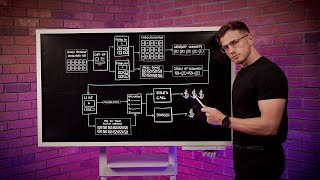
Elliott Botterill broke down how a single live webinar generated £251,640 in revenue. He spent £7,500 on Meta ads to drive 1,126 registrants, achieved a 69% close rate on sales calls, and built a system using retargeting videos, value-dense emails, and a 72-hour follow-up sequence that turned unqualified prospects into additional applications.
Questions this video answers
£7,500
168,000 impressions
1.39%
2,341 clicks
£3.23
Chapters
A live webinar can be one of the most profitable ways to grow your business and acquire a big chunk of customers in one go. However, the challenge is most people get them very wrong, over complicate them, or simply try and copy and paste some formula from their favorite guru and it ends up falling absolutely flat. Done well, these can be absolutely profit machines. And in this video I'm going to break down some real life stats from a live webinar that we ran in August and I'm then going to show you the complete strategy that we use to get these results and show you how each part of the strategy influences each of the key metrics associated with a webinar. So before we dive in, my name is Elliot Bottrill, I'm currently on holiday in the beautiful Florida at the moment and just felt inspired to make this video for you today, having gone through some of the most recent stats from our current webinars and I've been running webinars for a long time. So I had a digital growth agency where for five years we worked with a bunch of private clients, generated over 150 million pounds in revenue for them, and webinars were a big part of that. And earlier this year I sold my agency and I joined Entrepreneur Circle where we're helping scale the UK's largest community of entrepreneurs as well as selling software and coaching and other fun stuff. And webinars are still still our most profitable and biggest acquisition channel. So trust me when I tell you these things work. Now this is going to be quite a long video, it's going to be in quite some depth, you're going to want to take notes, get a pen and paper ready because if you're running live webinars, if you ever thought about doing it, or if you've ever run one in the past and it wasn't quite profitable then, this is the video for you now. Quick disclaimer. A lot of the strategies I'm going to share are I have not invented, I have gathered them, accumulated them through all of my various mentors, masterminds, and trial and error over the years as well. And so what I'm about to share is an amalgamation of all of the best knowledge that I have acquired from other people when it comes to running webinars that we have then tested ourself. So this is all validated. I'm going to start off by sharing the numbers with you now, so let's dive in. So, bit of context for this webinar. We were selling a 12 month coaching program that was priced at 699 pounds. Now, the purpose of the webinar was a live event that ran on a single day. It ran on a Thursday at 4pm in the UK. It was targeting business owners and it was a call to action, to book a call. So you couldn't buy directly through the webinar, you have to book a call through an application of which our sales team then spoke to you and then sold you onto the program. So that was the flow. Run ads, get them on the webinar, get them to book a call, sell them the coaching program. So with that in mind, let's dive into the stats. So for this webinar we spent £7,500. Not that much in the grand scheme of things. This was a brand new webinar concept and so this was our initial testing budget. Okay. And we actually spent money on ads, but we also hit our email list quite hard, as you will see. For that seven and a half grand we spent that exclusively on meta ads, which again is working for us for this type of funnel, the best out of any platform at the moment. We got 168,000 impressions and a 1.39% click through rate, which meant for that spend we had 2,341 people click on our ads. And that gave us a £3.23 cost per click. Not too crazy, but generally middle of the range when it comes to targeting business owners which are typically inexpensive and competitive audience in the UK on metro ads. Now we sent them to an opt in page and on that opt in page we got a 25% conversion rate. So that is bang in the middle of where we would expect anywhere between 20 to 30% is kind of benchmark standard. We want to try and push that high. So that became an area of optimization. But all in all we're pretty pleased. We had 592 people actually register for the event, which meant our cost per webinar signup was £12.76, seven pence, which honestly for business owners in the UK is actually, is not too bad. We were pretty pleased with that. As I said, we bolstered this campaign by going out to our email list as well. And so we had 534 additional people sign up from a bunch of emails that we sent out at the start, which meant going into this live event which took place on a Thursday at 4pm, which we deemed a good time for business owners during the working week, but also at the end of the day, so likely to not be too Busy. We were going into that with 1126 people registered. Now, the hardest thing when it comes to running a live event is actually getting people that have registered to show up. Anyone who runs webinars knows this is the challenge. Sa. And this is where the quality of your content and presentation really comes into play. Luckily, this wasn't our first rodeo. We're pretty good at this. So we had 64% of these people that showed up actually stay all the way until we hit them with the pitch, which is about 50 minutes into the presentation. So that meant we had 335 people be tuning in as we went through the pitch. And then we hit them with the call to action to apply now and book a call with our team to talk about potentially enrolling them onto our coaching program. Now, out of the 335 people that heard that pitch, 16% of them applied, which meant we had 55 applications come in. This gives us a cost per application of £137, which we were very pleased with. Now, as part of that application, we qualify people because. Because we don't want our sales team to talk to everyone. We only want them to talk to qualified prospects who actually are eligible and are likely to buy our thing. So as they go through the application form, depending on what they answer, they either are able to book a call or we downsell them something if they're not eligible for the main offer. And so out of those 55 applications, 64% of them were qualified. So we had 64% actually book a call with our sales team, which meant from 55 applications, 35 people actually booked a call, which meant we got a 216 pound cost per booked call. When we divide that by our ad spend. Now, once the calls are booked in, that's great, but the calls are, you know, the following days after the webinar. In most cases, even though we did open up the evening, so it was at Thursday, 4pm, we had slots all evening, and then we had over the Friday, Saturday, Sunday as well. But a lot of the calls took place on the Monday, Tuesday, Wednesday. And so the next challenge is getting people to show up to these calls that they have actually booked. And so our show rate was 75%, which was pretty solid. We were pretty pleased with that. Again, 60% here is like a benchmark for good. Anything below 60%, that is a big constraint you want to work on. But we got 75% and we were happy with that. That MEANT we had 26 live calls out of the 35 scheduled calls. AKA calls that actually happened. People showed up and we had a conversation, which meant we had a cost per life call of 288 pounds. And of that we had a 69% close rate, which was absolutely superb. So we closed 18 deals out of those 26 calls. Which goes to show you just how effective these live webinars are because they compress so much relationship building in such a short period of time that these people were on the call, they were qualified, they knew the offer, they knew the price, and therefore our sales team was were able to close them at very, very high rates because again, a benchmark there would be 30%, 40%, we got 69% and we were absolutely chuffed. So all in all, 18 sales from 7,000 in spend gives us a 420 cost per acquisition. Now, our average sales price was 699. As I said, it's 699amonth coaching program. However, it's a 12 month contract and we know because we have hundreds of these customers already that on average they stay for 20 months. So our lifetime value of these customers is actually 14 grand or 13,980. And so what that meant after we ran this webinar is we collected £12,582 cash in the bank immediately. But we know the revenue from these customers is going to equate to 251,640 pounds and that is not even factoring in if they buy any of our other things, of which we have quite a few. So we were absolutely chuffed with this because it meant our return on ad spend in month one was 1.66. So for every pound we spent on this webinar, we got £1 66 back, which is great. And we know our ROAS based on the lifetime value of these clients that we are going to pull in because again, these are contractual sales is going to be 33.29, aka for every £1 we put into this webinar over the next 20, 20 months, we're going to get £33 back, which is one hell of a return on investment. So this was a very successful test for us. Those are the God's honest stats. We believe in transparency here and yeah, this was a big success. So since then we've ran another one of these and we doubled the spend and we're about to run another one and guess what, we're going to double the spend again because we're onto the winning formula here. So let me show you the strategy that was able to produce this Results. So results like this absolutely do not happen by accident. And the strategy was very, very complex. And where most people go wrong with a live webinar is they vastly underestimate the amount of work required in order to do it properly. And so what you can see on the screen now is an overview of the strategy, all of the different components. I'm going to run you through them and talk about how it works, what to do, and in particular the particular metric that this part of the strategy helps to improve. So let us get into the nitty gritty of it. So first up is the direct response meta video ads. So we love meta ads. They are by far and large the most effective way to drive people to your live webinars. And this is for many reasons. Number one, you just have to follow the attention of your ideal customer market. And for us UK business owners, a lot of them are on Instagram in particular, and indeed Facebook. And with Instagram basically copying reels and short form video and pushing that a lot currently a lot of the market's attention is on that platform. And therefore the opportunity to get in front of them and convert them onto our webinar exists there right now. So we were a big fan of that. We ran exclusively video ads because if we only run images then we don't show on the reels, placements and therefore we miss out on a huge chunk of inventory and eyeballs and attention. And that's just a really dumb strategy. So we ran a bunch of video ads. Now our approach for the video ads is very simple. They are direct response, meaning they are directly calling out the title of the webinar, which in this case was how to hit 100 grand months in your business, revealing our nine step system that we have used. And that was basically it. The concept of the webinar was how to hit 100 grand months. And so our ads were saying, hey, we're going to show you in this live broadcast exactly how to hit 100 grand months. Now that alone is not impressive and will go over people's heads as kind of sales puff and bullshit unless you can tie in sufficient proof to actually substantiate your claims. So what we really go hard on in these ads is trust and proof and evidence and showing that we are actually legitimate and can validate our strategies to get into 100 gamuts and basically show you that we're not full of shit and not some random schema that is out there trying to preach some bullshit. So we do this by sharing case studies. We have you know over 350 clients on the coaching program already, many of which have already hit 100 grand months. And so that was very central part of the ads. Now the ads we did film in a studio initially because we're lucky and we have a nice studio setup. But we also dropped in some selfie style videos, literally selfie style on an iPhone, walking around basically saying, hey, we're running this live broadcast on how to hit underground months. These are the reasons why it should hit us. So on and so forth. And they worked incredibly well. The selfie styles were absolutely cranking. Guys, you're gonna have to excuse the sweating. It's 32 degrees out here and absolutely roasting. But with a webinar, a live webinar, we can't advertise too far out, otherwise people will forget about it and not turn up. So we advertise typically 10 days out from the actual event. And so what that means is we have quite a constricted time period to test a large volume of creative because you don't want to go into a live webinar campaign with only a few ads because you don't know if they're going to work. So we produced I think 60 plus AD variants for this that we launched all on Facebook. Broad targeting let the algorithm decide what was working best and allowed it to push the budget there. So mistake number one is if you go in with not enough ads because then you're like 2, 3 days in or 30, 40% of your advertising time and some of them might not work, and then your webinar is dead because your cost bleed is too high, you're not going to people and the whole thing is going to be an absolute flop. So you need to go really hard with the ads at the start. And so the way we do that is with modular ad filming. And so that is where we basically turn our ads into hooks, into bodies and into calls to actions. And we might film ten hooks, you might film two bodies, we might film two call to actions. And that is going to give us effectively 40 different ads right there. And it takes literally half an hour to film and stitch together. So that is the, that is the sneaky tactic on how to produce large volumes of ads, which you really, really need when it comes to running a live webinar. Now all of those ads will go into an opt in page. That's the opt in page is critical. We need this to be converting ideally 25 plus percent, because again, the amount of people that register to the webinar is one of the biggest indicators as to whether or not it will be a success. Because all of the other metrics that trickle down beneath that are going to depend based on the how many people come in at the very top. And so the page should be very simple. Your concept, your title should be very strong. I typically use a three step headline formula that is attention ideal customers. How to achieve this big goal without common objections that they might have. So for us it was attention business owners. How to get your business to £100,000amonth without going insane, sacrificing your soul in the process or burning yourself out. Okay, typical formula like that, keep it simple. And we have the optum. Now, one of the most important things we did is we had a qualifying question in our form. So the qualifying question was there. We captured their name, email and phone and then we got them to answer this one question which told us about their business revenue. Because we know in our business you have to be over a certain revenue level already in order to benefit from our coaching program. It's not for startups and people that don't have a business already. And so that question, depending on what you answer, would route you to one of two pages. So we would have a qualified thank you page and an unqualified thank you page. And so both pages visually looked exactly the same, except the qualified one, we had our Facebook tracking event on and on the unqualified one, we did not track it. So this is called pixel conditioning or calibrating the pixel. And what this meant was as we showed our ads to people and as they opted in, we only tracked people that were qualified and over a certain revenue threshold. And as a result, we only sent back to Facebook the event data of these qualified people. And therefore the Facebook algorithm was optimizing its delivery of our ads to people that were more like qualified business owners over the certain revenue threshold. So this has a huge, huge impact on the quality and caliber of leads that you have in. Because if you get a ton of very unqualified leads, that is going to mess up your webinar because you might have a ton of people show up, but none of them are qualified to buy your thing. And therefore your overall stats are going to be absolute dog shit. And we want to avoid that. And using the Facebook picture like this and splitting out your thank you pages is a must do in today's day and age. So on these thank you pages we have a bunch of content because also you gotta remember when someone opts in for a webinar, their point of interest in Consuming information about that thing is currently at its all time high. Okay. In that moment. And so we don't just wanna say thank you and leave them hanging, we wanna give them lots of information whilst they're ready and prepared to consume. So on this thank you page, we do lots of things. Number one, we introduce ourselves a bit more. We introduce them to the speaker, we, we tell them more about the speaker's story, we embed more trust. We outline exactly what they're gonna learn on the webinar to get them more excited about it and to give them further context. Cause we know the more people know ahead of the live event, the more likely they are to actually show up. And on top of that, we then have a bunch of additional videos on this page that answer all sorts of different questions. But not only that, they begin to answer the common objections people would have or worries or concerns about these types of webinars. Because if you're like us and you operate in the business growth space, there's all sorts of crazy charlatans and scam artists and con artists out there that preach all sorts of bullshit. And so it is likely that if you're in a similar industry that your prospects that are registering might have some pretty bad thoughts and worries about showing up to webinar. And so that thank you page gives us an opportunity to put their mind at ease and effectively show, show them that we are the real deal, that we're going to help them out, we're going to give them loads of value and that we're not like these other people that may have burned them in the past. Because this is very important pre framing that is going to get the prospects A ready to show up, but B ready to show up with the right mindset and actually be more engaged and willing and open as we share the content and ultimately pitch them with the offer at the end. So that's a critical step as well. So now, once people have signed up to the webinar and they've gone through those thank you pages, we then have our four part show up sequence, which is absolutely a lot of work, but works a charm. It was the reason why we're able to get this outrageous 47% show rates, which we are very proud of. So the first part of these indoctrination videos, so this is a play on the hammer them strategy that I learned from my mentor, Jeremy Haynes, absolute goat, check out his videos on webinars as well. And this is where once they've signed up, we then create a bunch of ads that we retarget them with on Facebook that again showcase that we know what we're talking about, that we are going to be able to provide them with value, that this webinar is going to be worth showing up to. And just that we are a very credible name in the space. And because what this is designed to do is again, increase the level of framing the person has ahead of the event, but also to just increase the familiarity that they have with us and our business. Because if they see us, you know, 20 times, Facebook and Instagram in the run up to the webinar, by the time they actually show up, we are now familiar face and we are now trustworthy. It's the familiarity bias, which is a very important psychological lever that we can pull on. And it's why, you know, in any marketing, people need to see your stuff many, many times before they actually opt in in the first place. So we create the secrets of videos. Some of them were specially created videos for this live event, others were some of our top performing short form pieces of content that we just rotated in there. And so if you signed up to the webinar, you were then basically seeing us everywhere as we indoctrinated you more and more into our kind of world. The second thing alongside that was we had value dense emails. So again, another strategy from Jeremy Haynes. What a goat. Value dense emails are all about emailing them several times a day in the run up to the webinar. Not to annoy them, not just with reminders about when the webinar is going to be, but with actual, real, genuine value dense content. So sharing lots and lots of valuable stuff, showing them that we really are experts in our field and that we know what we are talking about. Because the more value we can provide to them before the webinar, it's going to get them so excited about what we're actually going to share on this live event, but it's also just going to build that relationship and show us that association that we are valuable and that we can help them with their problems. Because again, there's no better way to convince someone you can help them than by actually helping them. Now alongside this, we have a WhatsApp community that we create for all of these events. And I learned this again from a guy called JP, who's an absolute legend who operates over in France. And we create a WhatsApp community for each live event. And everyone who signs up to the live event joins this WhatsApp community. Now this is like a broadcast community so we can post stuff into this community, but people can only respond to it or they can reply. But it's not like a WhatsApp chat. Now what this does is it gives us a direct window to all of our prospects onto this webinar because WhatsApp messages get, you know, 90 plus percent open rate and we can just broadcast reminders showing them that the webinar is going to happen. But not only that, we do behind the scenes stuff. We show them the studio setup, but importantly, we show them that we are going to offer specific bonuses to everyone that shows up live. Okay, so we promised that in the WhatsApp community, and this is one of the tactics to getting a high show rate is we say, look, we're working on this thing. If you show up live, you're going to get access to this. And because we drop that in the WhatsApp community, pretty much everyone sees it and it has a massive impact on the webinar show rate. Now, of course, alongside this, we have a regular show up sequence where which is emails and SMS messages that go out really just with reminders of timing. So 24 hours to go, 6 hours to go, 1 hour to go, 10 minutes to go. We are live right now. Come in and join us. Okay, that's the bread and butter. Now most people, when they do a webinar, they might have the show sequence where they don't do any of the other three things and then they wonder why no one shows up. Okay. A lot of work is required to get people primed and ready and willing to show up and give their very valuable time to use. You can actually present and ultimately sell them stuff. So once you've done all of that hard work, it's time for the actual live event. And so the live event, we take place on a specific live page where we have the live stream embedded. We have a chat. Now, very important, you must be able to manage and control the chat. So we have several people on our team in the chat answering questions and also just making sure the conversation is going very fluid. Now what we do after the presentation has gone through the core value part, which again, we delivered 50 plus minutes of actual proper value. Okay, I'll do a separate video at some point on actually how to structure these webinar presentations. But in a nutshell, we do a quick introduction to build our credibility. We layer in some proof that we know what we're talking about at the start. We overview the value that we're going to give them and then we get straight into the value. Because these webinars only work if you provide actual, like, turn of value. It has to be tactical, practical value that anyone that shows up, regardless of if they're going to buy your thing or not, can go away and be like, you know what, that was good. I can actually use that. I can get a result from that. If you skimp on the value, if you try and tease people and don't actually give them anything they can use, then your webinars will not work very well. You have to be value loaded. It is the most effective way of getting people to eventually take action. But that is the feeling you want every single person to have you, even if they buy or not. It's, wow, that was really genuinely useful. And so after about 50 minutes of that, we then transition into the pitch. Pitch is about 15, 20 minutes and then we go into a Q and A and we drag the Q and A out quite a lot. Hopefully, if you've done the webinar properly and the pitch properly, there will be lots of questions in the chat. But if not, we have questions on standby that we will feed the presenter to make sure the pitch is going, because you will see you'll have a large chunk of people still there right at the end and they just won't leave. They will just stay because they're hooked and interested. And the more questions we can ask and get answered about the offer, the more people are going to convert. So we drag that on for quite a little bit. Now, when the time comes to actually reveal the call to action, we do what I call a Nucleus eta. And so the nuclear CTA is all about dropping a call to action literally everywhere, like a nuclear bomb. Okay? We drop this call to action everywhere. And so in our webinars, this comes in many forms. Firstly, we have our page especially coded so that at a specific time when we go into the pitch, a massive button appears. Okay, so at the 50 minute mark, this huge button appears that says, you know, click to apply now. And the call to action is there. Not only that, but we drop a link to the call to action in the live webinar chat. So everyone watching it sees it there as well. Not only that, we send out an email that has the link to take action there as well. We send out an SMS that has a link to take action there as well. And we go back to the WhatsApp community and we drop a link to the call to action in there as well. So the Nucleus CTA is all about dropping in five plus different places, all at the same time. The Actual link to take action. Because nothing is worse than doing all of this work, getting people pumped and ready to buy, and then they can't find the flipping button because they're out and about watching the bloody webinar on their iPhone on a bus or something stupid. Okay? We want to make people's life easy for them, and we do that by just putting the CTA flipping everywhere. In my experience, there's always a direct correlation between the size of the call to action. You know, the bigger the button, the more people will click it, but also the more calls to action available typically yield to higher conversion rates as well. So again, don't rely on one little webinar button and think that that's going to do the job. You want to be everywhere to maximize the advantage. Now, that call to action in our case was an application form. So this was an application form we built on Typeform, which is very, very good from a conversion rate standpoint. And this application form had several questions in. It only had five questions in. But there were two questions where we asked again about their revenue, but we also asked them, are, are you willing to invest 699 pounds a month in order to achieve your goal of hitting £100,000amonth right now? And we have two answers. Yes, if I'm confident it will work, or no, not right now. So we flat out ask them, look, would you be willing to invest this amount? And we put the price in there. Because we do put the price in the pitch, by the way. I do recommend that you do that, but we say front up, are you willing to invest this amount in if you were to hit your goals and you were confident that it was going to work? Because the right people will say yes and the wrong people will say no. And that is totally fine. And so what happens there is the people that say yes, well, they book a sales call and bada boom, bada boom, we get them on and we sell them the thing, but we get a bunch of people that say no. And you know, in our case, if I go back to the stats, out of 55 people, 35 said yes. And basically the remaining 20 said no. So we had 20 people there that were really interested, went through the application, but they weren't qualified. So rather than just wasting them, we direct them to a downsell. So in our case we have a lower ticket community that we can point them to where they can still get a ton of value and it's still going to be great for them, but the financial barrier is way reduced. And hopefully over time they will earn more money through using our stuff and we will be able to get them onto the main thing. But in the meantime, we're not wasting any money and we're directing them there. Now. Key part of webinars is the follow up after the live event, because even if we do all of that, we do a great pitch, we do a long Q and A, we drag it out, we get a bunch of applications, you will get 50% of your total applications and therefore sales from the two to three days after the webinar ends. Okay, two to three days after the webin ends, you will get another 50%. In this particular case, on the live event we had, I think it was 35, I think it was 35 people actually did the application in total. And then over the next two days we got another 20. Okay, so not quite 50%, but a very big chunk. And in the past I've had it where it's been more than 50%. And so that extra 20 applications came from the 72 hour hellfire sequence. And so this is a very intense again, email sequence that goes out the 72 hours after the live event. And so the purpose of the sequence is to, number one, give people more chances to buy. So we send at least three emails a day for these three days. We actually sent a total of 12 emails over these three days. And so we send them in the morning, at lunchtime and in the afternoon. And these are all valuable emails. They're not annoying sales spammy reminders. They are all valuable, meaning they share useful and relevant insights that relate or elaborate on the content we shared in the webinar, but also tie into a call to action at the end. Because by doing so we increase our familiarity, we provide more value, we build a better relationship, and we give them an opportunity to buy as well. And so again, I'll do another video at some point of how we create these, because we have email playbooks that I share with my private community and we actually take the transcript of the webinar and we put it into an epic tool called main us and we layer on our email playbooks and it basically takes the content, elaborates on it, and produces these value dense emails for you. Because back in the day, writing, you know, 12 properly valuable emails is actually a massive task. Whereas in today's modern age, with the right sequence of AI, it's absolutely easy as piss, which is fantastic. So there's no excuse not to be doing it. And so we give three additional opportunities to buy an opt in every single day. And that just generates a whole bunch more inquiries as well. After 72 hours, we tone it down then obviously, because we are sending a lot of emails. The window, the kind of halo effect of the excitement of people being on the webinar has kind of died down. We will send out a replay as well to try and convert a few more people, but generally the vast majority always come from the people that were there live. So there you have the overview of our live webinar strategy that we use in August to generate £251,000 of revenue from £7,500 in ad spend. And we have since been cranking that, doubling it on track to double it again. And I will share more insights as we make this bigger and better and as we tweak this system. But yeah, I hope you found this useful. This is just a fraction of the stuff that I share with my private community because I have individual playbooks on how to actually execute all of these things. So if you're interested in that, click the link below and let me know. But otherwise, hope this was useful. I hope you get some fantastic results with this and I will see you in the next one. I'm off for a shower now. I'm so sweaty. Peace.








