Marketing Lessons From $100m In Revenue Ft. Elliot Botterill [EP 001]
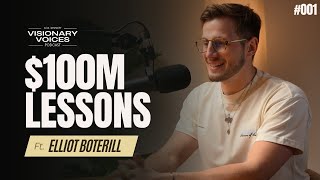
This is a YouTube video titled "Marketing Lessons From $100m In Revenue Ft. Elliot Botterill [EP 001]" published in March 2024. It features a podcast-style interview between Akil Genati and Elliott Botterill, the owner of Botter's growth agency. The conversation covers Elliott's journey building a successful marketing agency, key business growth frameworks, the importance of ideal customer profiles, landing pages, backend CRM systems, and the strategic use of AI in marketing. The discussion provides deep insights into scaling businesses through digital advertising and data-driven marketing strategies.
Welcome to the Visionary Voices and Insights podcast where we explore the world of business through the eyes of leaders, founders and innovators. Whether you're just starting out or scaling up, we've got the insights and the stories to inspire your journey. On this episode of Visionary Voices, we are speaking to Elliot, who is the owner of Botter's growth agency. In just three years, he's generated upwards of 100 million in revenue for his clients, spending close to 19 million profitably in paid advertising. With his team of 12 people, he's the writer of the Hyper Growth Blueprint, which is the number one marketing and business growth newsletter and overall has the knowledge you need in order to grow and scale your business. So welcome to the show, Elliot.
Akhil. What a pleasure it is and what an introduction. Thank you very much, my friend.
Awesome. So generating 100 million in revenue for your clients and spending 19 million profitably on advertising and just three years of starting your agency. So tell me how Botter's agency came to be. You know, what pushed you to really start the business?
100%. I mean, it's been a wild ride, shall we say. But so my story was, I went to university up in Leeds and safe to say, I was a little bit of a lost soul up there. I wasn't quite sure what I wanted to do with myself, so I thought, right, do a generic business management degree and, you know, I'll go there, explore a few things and eventually find the route that I want to take. And whilst I was there, got involved in some marketing modules, as you'd expect from a business management course, and just found it really kind of interesting. And so post university, I, like many people from the Midlands, originally wanted to migrate down to the big smoke and have a taste of the big city life. And so I just started looking for jobs in big agencies. And as it happens, I was able to land one at MT Saatchi, quite a big global independent agency. And I was just there on their search and social team, starting to run Facebook ads for the likes of Amazon, Audible, all these big global players. And so that was the perfect little testing ground for me to cut my teeth, learn the trade and see how it works when these big players are spending literally millions and millions of pounds every month on these forms of advertising. So I was there for like three years and I, I really enjoyed it. And the big circuit breaker for me was actually the pandemic.
Really?
Yes, because I enjoyed the agency life and I was learning a lot, but I was very much stuck in the cycle of living for the weekend.
Right.
And as you do when you are down in London and are very young. And so one of the challenges with these big agencies as well is they're so in demand. There's so many people that want to work there that they pay you very little.
Really.
So I was on 21k when I moved down and living in London on 21,000, you're taking home about 1400. My rent at the time was over 900. Chucking bills there I was living on 15 pounds a day was my daily budget.
Yeah.
And I was still having a good time. But there's only so much you can do that. Right.
Yeah.
And so Covid back home, I moved back out of London, back in with the parents and had this circuit breaker. All of a sudden I was away from just spending my Fridays and Saturdays in the pub drinking and then lamenting on a Sunday and like going back into work on a Monday. And it gave me that space to kind of think about what I wanted to do with my life.
Yeah.
I always knew I wanted to, you know, at least give running a business a go.
Yeah.
But it was also during the pandemic where actually, dare I say it, the stars aligned in a way. Because what I've learned is a lot of businesses just see marketing as a cost, something they have to do.
Yeah.
And I think the real reason is because most of them struggle to really see the bridge between marketing and new customers and also profit, which sounds really rudimentary when you have been in the game. But actually a lot of businesses don't see that. And so you throw in a really uncertain time, like a pandemic, when all of a sudden no one knows what's happening. Rumors of lockdowns. Businesses start to get very cautious and they start to pull back on their expenditure. And what a lot of businesses do is they pull back on their marketing, they see it as a cost. And so I realized there was an opportunity for me to use the skills I've learned in digital advertising and actually take it to some businesses that I knew. Because the blessing of digital ads is, you know, everything is so measurable and transparent that if you're a business owner, for every pound one that you give me, I should be able to demonstrate that I can make you two or three or four or none back. Like it's very transparent.
Yeah.
And so providing you've got the skills to do that, then it actually becomes a no brainer and it becomes something that you can spend on even when economic times are, you know, uncertain. So I took the plunge started my business. I had a small network of people that I knew that ran businesses that I just knew I could help. And so, you know, I went and met them and spoke to them and convinced them to kind of give me a little shot. And then it all kind of, kind of spiraled from there. And yeah, here we are three and a half years later with a nice growing business, a nice team, and being able to work with some really cool clients at, you know, a level of scale now that three years ago I couldn't even foresee. So that's the story so far.
No, that's incredible. That's such incredible growth over just like three and a half years. You know, I mean, and for me as well, the pandemic did give me that space as well to think about what I want to do and to be honest, for a lot of others as well from like people I've spoken to. So, yeah, that's very interesting. So in terms of growing the business over three and a half years, I mean, has there been a moment where kind of like everything has gone wrong? Because obviously it sounds really great, like 100 million generated all these, all these different things, but was there any key, pivotal moments where, you know, things did go wrong and you're like, oh, damn, like, how am I going to sort this out?
Oh, yeah. So yes, it is not just one smooth journey. There's plenty, plenty of things that have gone wrong. And so, I mean, the things that stand out to me were both related to, funnily enough, actually growing too quickly and also growing too slowly. And so you really feel the pains of growing too quickly, especially in a service based business like mine where we run ads and build landing pages for businesses to generate the results. So we just deliver that service and that's all well and good as long as you have the capacity to deliver the level of service at the standards. And so one of the big challenges was actually bringing on clients almost at too quick of a rate whereby now there becomes a lot of stress on your service delivery. And that's when, you know, people start to drop the ball and things go wrong and clients get a little bit unhappy. So that was a big learning curve because, you know, for me, I was very good and skilled at the doing of the stuff, the doing of the ads, the running of the ads. But I knew Bogart all about building a business and like operations and like managing people, that was just way out, out of my remit. So learning that has been very, very challenging. And that would be probably the number one Challenge. So the other challenge was with kind of growing too slowly because I realized in the marketing world there's loads of agencies and unfortunately there's plenty of bad ones. This because there's no prerequisites to starting a marketing agency. Anyone can do it. It's become a very trendy thing. You see all these online gurus talking about building an agency.
Yeah.
And so your reputation as an agency is a critical thing. And if you've got a good reputation, then it's quite easy for your business to flourish. And that's what we found. Because if you can, businesses are giving you money and you're generating them more money back. That's a very rare and valuable thing. And so other people will want that. Yeah. And if you have a bad reputation, then, you know, the opposite happens.
Everyone will stay very clear both ways, isn't it?
It does. And a reputation can take a lifetime to build and a split second to destroying. So I was very conscious of not growing too quickly for that same reason. I didn't want to overload the service and deliver a bad job. And then you're like, whole reputation's down the path. So we did take it quite slow and at some points way too slow. And so we would try and bring on some new people. At one point we tried to hire some graduates and we were like, right, for the next six months, we're not going to bring on any clients. We're just going to focus on getting these guys up to speed and then we'll be able to onboard some new clients. And that sounds like a great idea on paper. But then we underestimated the time it would take to get people up to speed. Then also forgot that they're graduates, so they don't know what they want to do with their life.
Yeah.
And so as it happened, like, they both ended up just leaving before we even could bring on the clients. And so then you look at the year and you're like, have we wasted half the year not bringing any clients? Stunning our own growth for like, what was. No. No benefit? Apart from the many lessons that were the lessons. Yeah, yeah. So that's been a challenge as well.
Okay, interesting. So, I mean, through your experience of working with these clients, these businesses and things like that, I guess. Are there some specific frameworks or, you know, like the top three things that you look at in order to grow a business? Let's say. Is there anything that you look at a business you like? Yeah, let's implement these three things. And this will move the needle for.
Most Businesses, Yeah, there certainly are. So we have a nine step framework, we call it the Hypergrowth framework. And this is our kind of proprietary methodology, if you will, that we take all of our clients on. And funnily enough, the first three steps are what I call the foundational steps. And they're the foundational steps because without them, it doesn't matter how creative, how persuasive, how unique your marketing is, it's just not going to work. And so the foundational steps are, number one, the numbers behind a business. Because business models and the commercials that underpin a business in terms of their average order value, what a, what their lifetime value is, what their gross profit margins are, and all these other figures that underpin a business have got to be in line in order for especially paid advertising to work. Because we need to look at, okay, what can we reasonably afford to spend to acquire a customer at a rate that then is going to be profitable for the business? And I speak to loads of businesses and some of them just have such terrible business models where they require like such ludicrously high volumes of customers and their margins are so tight, tight that they just can't afford to spend on ads because they've got like, they would need to get like a £1 CPA in order to generate profit. And it's just like you can't do that at any reasonable scale. So actually having a business with a proper business model and understanding it is rule number one. Secondly, then it is really getting really clear on who your actual ideal customers are. It's marketing 101. But a lot of businesses get this wrong. The two mistakes I see people make with it are just going really generic and being like, my product, I can. This would work for everyone. And whilst there might be some truth in that, if you go really generic, then you just end up appealing to no one.
Right.
Appeal to everyone, accidentally appeal to no one. And so actually having a really clear view of who that customer is informs then exactly how we should go and find them and how we should go and speak to them. And the other mistake is that people have got, particularly in existing businesses, they will have lots of customers already and they will focus on acquiring more of all of them.
Yeah.
Whereas what we do when we go into a business is we apply the 8020 principle, you know, Pareto's law, and we look at their customers because typically 20% of the customers are going to be responsible for driving 80% of the revenue.
Yeah.
And so we want to profile the top 20% of the customers and Actually find out exactly who they are and what makes them tick and then build a whole strategy around that because then it becomes much, much easier. And then finally the other piece of the puzzle is the offer. Like, what are we actually selling here? Because I have had some experiences over the last few years where you realize when you have got something that people really, really want, it's incredibly easy to market and sell it.
Yeah.
When you've got something that people don't really want, or it just requires so much education and convincing.
Yeah.
From the outcome, it's very, very difficult.
Yeah.
So really aligning, making sure that the product or service is something that the market genuinely needs and is validated and then understanding how we communicate it to the customers that we've outlined before, that is, you have to have a good understanding of that. If a business knows that, then they'll find it hard to not grow.
Yeah.
And the ones that struggle have not put the thought in there. And so they try all these little things and get hooked into the bright shiny objects, expecting it to work and the results never come.
Yeah, yeah, no, definitely. Especially about the offer that's so important. I mean, I had a experience a few months ago actually where I was working with a lead vendor. So they work with big clients. You know, they want leads for, you know, home improvement, these different things. But the issue is, is that they're like, okay, want to, you know, we're going to pay $20 per lead, let's say. You need to get it underneath that you have no control over the offer. You're very limited on the wording you can use, and you have no data in terms of the ideal customer profile. You have to, you know, you just do it all yourself, basically. And it was just so difficult to get leads in for a reasonable cost. Like, it just didn't make any sense. So, yeah, dialing in that offer is definitely very important. And also that ideal customer profile is so key. I mean, when I first started out in marketing, I didn't, I didn't know any of that up until like two years ago is like when I was introduced to what an ideal customer profile is. And before then it was like, you know, I just weren't really working, no research was done. But then when I made that switch to doing like really in depth ideal customer research, even going to clients, and when I'm talking about marketing and things like that, they're like, we've never actually been told this before and so it's new news to them. And so when you implement those things, it Just, it just takes off. I mean, I ran ads and I still run ads for health insurance in America, basically. And before what we were doing, it's like a free health insurance, they get paid commissions with these agents. And so we were running ads to just like the generic kind of open market for this health insurance thing. And then we sat down and we were like, well, who's the people in America that really needs this? And we really nailed down a segment of the market which is like Spanish speaking, recently moved there, they don't really understand the health insurance game there and all those types of things. And we managed to get our CPL down from like $20 to $3. Like yeah, like it's just, it's just crazy when you do that extra research, which isn't actually much time either. It's just knowing kind of how to do that research is really the biggest thing. So when it comes down to doing that research, what, what are the kind of factors you look at? Obviously you said the 8020 principle, but is there anything else you look at in terms of doing that, that research?
Yeah, so we work with. It will depend on the type of business because if it's an established business, then we really hone in on that customer base and we will profile them, we'll find those top 20% of customers and we'll try and survey them so we can really gather lots of information as to how they found us, what their real problems were, when they found us, how they found it so far, what actually convinced them to buy all this kind of stuff. And that's a really valuable project. But then we do work with a lot of new businesses that might have secured some funding and now need to go to market. And so that's where we have a lot of hypothetical ICPs that we kind of need to test. And so how we'll look to kind of pull those together will be really understanding the business and the product and then going, right, there's normally going to be two or three different types of customer that it just makes sense are going to be really into this and we'll start there and we'll start kind of profiling that out in terms of who we think that person is looking at, where they live, what their income is, all that basic kind of stuff, but then also really focusing in on more of the emotional side and, you know, the potential problems or pain that they might be having because we're all emotional beings at the end of the day. And whilst, yes, it's useful to know, you know, some demographic or Thermographic information about like an icp really, you know, the moments when we've nailed it is because we found the right emotional appeal and that's when the difference becomes palpable. That's when you launch some messaging and some ads and it just absolutely flies because you're hitting those right emotional buttons. So we'll do that and as with anything in marketing, we'll make our best assumptions that we think are going to yield us the highest probability outcome. But then we just got to test it because we could be totally wrong. And time and time again, whilst we might establish all this knowledge and experience and think we've absolutely nailed it, you just get proven wrong and then have to go back to the drawing board. And that's why just being able to understand the data and interpret the data is just very helpful.
So I guess how important is setting those expectations with the client? Like this is the plan, but we're going to have to go through these iterations of testing things first. Like how do you set that expectation with the client?
Yeah, them understand that expectations are everything. They are literally everything. And I'm reminded of this all the time and I have fallen victim to this very early on in my career where you set expectations far too high and then struggle to meet them. And I've also seen the benefits of it where you're able to actually manage expectations and then far exceed them. And so, you know, understanding that psychological frame is critical in any service based, customer service based business. How you manage expectations has a big impact on your retention. And so what we do is quite lucky because again, tying it back to this nine step method that we have, you know, when we outline this journey, we show exactly what we're going to do and also the volume of work that's involved with it. And we make it very clear that, look, this is going to be the route we're going to take. It's going to take us, you know, three to four weeks just to do all this foundational work before we've even got any ads running. And then when we've got those ads running, hell, we could hit it out the park and we could be hitting target from literally day one. Chance of that happening. Probably quite slim.
Yeah.
And so what is more realistic is it's going to take a few months of testing and optimizing and learning before we really hit the nail on the head. So we get very clear on that. And what I found very helpful is I've then crunched the numbers from a lot of our clients and I Know that from, for example, I think it's 52% of our clients, we hit the target within four to six weeks. That jumps up to 75% between kind of two and three months. And then by six months, you know, we're at like 94% of clients are hitting target. Of course there's some that take a little bit longer or you never get there. But on the whole, actually crunching those numbers helps to align the expectations a bit more.
No such good points. I see all the time now when I'm, you know, on Instagram seeing the ads. It's like we're going to book you a thousand appointments like in like four weeks. It's like, realistically you're probably not going to do that. And they set that expectation so high and then they fall short of it and then the retention is obviously terrible and it's obviously easier to retain a client than find new ones. So no, that's definitely very interesting. So zooming in more in terms of marketing technicals, I know you mentioned before that, you know, you think maximizing things like WhatsApp and SMS for businesses is going to be a very huge part of like a marketing strategy now. So you want to like explain a little bit more about that and like list building and those types of things 100%.
So when it comes to, especially this year, we are really doubling down on building lists, owning first party data and then communicating them through channels that get really good open rates. And what are those channels? For us it's WhatsApp and SMS. Why? Because how many times when you get a WhatsApp or text, do you read it? Yeah, pretty much all the time. So you get 99% open rates pretty much. And if they're good, well written, short text messages, you get really good click through rates as well. So in this year where there's all sorts of things going on in the marketing world, our ability to just track conversions has been a bit out of whack over the last few years Anyway, thanks to iOS 14 and a big push on user privacy. And Google are going a step further this year and they're going to make Google Chrome go cookie less, which basically is going to affect all of our ad tracking as well even further. And so as a result, we are really wanting to hone in on all of our clients having a big, big database of people that we can contact. And I was really reminded of this in December because one of our clients, they came to us at the start of this year and they were really struggling. They were established business like 40K, which was like just below their break even point, really, with all their costs. And so they were like really, really kind of last throw of the dice kind of thing. And so I don't have many clauses in our client agreement, but one does say I confirm that I have suitable levels of working capital and this is not my last throw of the dice because we definitely don't want to be doing business with businesses that are dying out. However, in this case, we did a bit of due diligence and it was just the perfect business from a model standpoint and from a market standpoint that we knew we could just destroy it. So we took a bit of a calculated gamble and took them on. And lo and behold, within, you know, two months we were back exceeding 100k, got them up to 160k and they've just had a very good year. However, in December, for a bunch of reasons, this all kind of slipped. And I think there were two weeks into December and they'd done £2,000. So it was crisis mode. It was crisis mode.
Yeah.
Then everyone's going off for Christmas.
Yeah.
People start placing orders over that Christmas break as well. So we basically had seven days to pull in at least 40 grand, otherwise they were going to have to take out a loan just to cover all the salaries. And so we're like, right, what do we do? What do you do in that situation? You can't really run ads because it takes a few days. Yeah, that's not going to work. It's like the only thing we can do is leverage our first party data, leverage our list, the customers and the prospects that we've got. So we pulled together an offer and then we sent out loads of text messages. Like we had this crazy morning where, jeez, it caught me a bit by surprise because we sent out this text message campaign and instantly it was like 1500 quid in, like text message usage. But lo and behold, what happened, it pulled in £102,000 just in that week before Christmas and it absolutely saved the day.
Yeah.
And so it's incredibly useful in times like that, but how you can then actually leverage that power systematically throughout a year to really boost your bottom line is great. And so having a strategy that revolves around bringing in leads and prospects that you can then communicate with, and when the time is right, hit them with a well placed WhatsApp text message. It's just a great action driver.
Yeah.
And it's a big thing what we do for our own business as well.
It's basically building an asset for the business, isn't it, having that database. So I guess that's the shift like some businesses need to take is like it's not just a lead, it's an asset which is going to grow over time, compound over time. And then when you do need it to, you know, to bring it, bring in that money or that revenue or you know, run those seasonal market campaigns or whatever it is, you can just tap into that for Obviously you spent 1500 on it, but relative to ads is obviously going to be much, much cheaper.
I mean spend 1500 to get 102 grand back any day.
It's a good roas.
Yeah.
But yeah, I think some business owners sometimes they don't see the value in building a long list of leads and that's normally because they don't have any way to keep in touch with them and they're uneducated on that side. But the value in doing that is just, I can't understate it, especially in the world that we're moving in and these big kind of technological changes. But whether you're goal as a business owner is just to have a sustainable business that throws off excess cash for you every week, then having that channel and that list to support all of your other marketing is going to be a dream. But if you're the type of business that's growing with an exit in mind, well, the bigger your list of data, that is a huge consideration that goes into your exit multiple as well at the end.
Yeah.
So either way it's just a very useful thing.
It makes sense. Yeah, yeah, I know for sure. So landing pages. I know you mentioned before on LinkedIn that you predict that landing pages will be more important than ads in the near future. So do you want to explain a little bit about that and we can kind of go from there?
Absolutely. So my whole skill set was paid ads. And so when I started my agency I quickly realized that it's not good enough to just do paid ads. You start working with businesses and they want to run some ads and their website is just terrible. It's just utter dog shit part of my language. And so it doesn't matter how good your ads are, if the website is not going to do the job of engaging and then converting them, then it doesn't matter. So we were like, right, okay, need to learn and understand landing pages very quickly here and incorporate into what we do. And so that has served us very well because again, ads, you're just hijacking someone's attention. The landing page's job is way more significant because you've got that intention. You now have got to convert it into the meaningful action that you want next. Whether that's signing up for something, whether it's buying something, but that is the critical stage. And so making sure they're dialed in has always been very, very important. And it's become a big part of what we do now. The prediction for the future is in line with the technological evolution of these ad platforms because Facebook and Google over the last few years, the level of automation and the advancements in there algorithms and the machine learning and the AI that underpins these advertising platforms has been huge.
Yeah.
And so, you know, I can remember two years ago, I stood on a, a virtual stage in front of about 1200 business owners and spoke about how to run Facebook ads back in the day. And this was only two years ago. And my view two years ago was that you should do everything very manually because Facebook had all these automated options. But, but two years ago they were just terrible and didn't work. So we steer clear of them. Fast forward two years. Oh my God. Everything I said in that presentation now is just null and void. And we would not recommend it because times have changed and the level of advancement in the platform has just got much better. And so as a result, now these, our platforms are doing all kinds of crazy things. So if we assume any rate of technological improvement, things are going to get more and more automated. We've seen it with AI. Now Facebook's beginning to incorporate AI when it comes to just the ads platform. Google's using it a lot now, and you can natively use it on some accounts to just write your ad copy for you and this kind of stuff. And that's just going to continue, continue and continue. So the advertising landscape will become more and more just powered by the machines, the machines that these platforms have built. Therefore, the real area where you're going to be able to differentiate yourself is, is going to be with the landing pages. And the big difference between the people who maximize the value out of these platforms and the ones that end up wasting a lot of money will be those that have beautiful, tailored, personalized landing pages that really speak to their ICPs and have a banging offer that just convert them like crazy. That is going to make all the difference. So we're really focusing on getting that dialed in and it's become a big part of our infrastructure because I think ads are just going to get more and more automated and you'll have to stand out in a different way.
Yeah, yeah.
So with the landing pages, I mean, is there like a framework you go through when it comes to building the landing pages itself?
Yeah, so we have got different frameworks for different types of pages because of course, you know, a lead capture page might be different to a product page on an E commerce site and all that kind of stuff. But the framework is pretty simple and it's always rooted in what I call maximum simplicity. Because in order for anyone to be persuaded to do anything, they must first understand. And where I've gone wrong with marketing before is trying to be too fancy with the language, too fancy with the graphics that you end up actually causing hesitation. And any hesitation in marketing normally leads to inertia in action. And so we focus on brutal simplicity, clarity of messaging, and really making sure people understand from the second they're on this page, what is this thing? Who exactly is it for? Why on earth should I even care about it? And then what should I do next? And if you answer those four questions above the fold, then you tend to be in a pretty good stead. We will then, based on the client, build out the page with enough information that for those that want to scroll, do. But that critical above the fold stage that answers those four questions is where all the money's made.
Yeah, no, I completely agree because part of what I do is conversion rate optimization for squarespace websites. And that's the biggest thing is above the fold is you got to have, you've got to build that trust, that authority, educate all those things within that section that, that first bit that loads on the screen, which can be tricky to do sometimes, depending on obviously what it is that you're, you're trying to sell. But no, no, definitely, I, I think that makes so much sense what you said about landing pages become more important as well, because it's all good getting the traffic, but if you have no systems, processes to actually convert it into, into the next step, then it's kind of pointless in a way, isn't it, so.
Exactly. And I just foresee the traffic side getting easier and easier.
Yeah.
And so that's where the landing page will become more of an important block.
Yeah, for sure. I mean, you've seen the barrier to entry get lower and lower to run ads. I mean, Facebook have made it all matter, made it super easy now to just launch like boosted posts or all these different things. Same with Google as well. They got like a, they got like the complex side of Google where you can use the easy mode, which is like two clicks and you launch campaign and you start getting traffic. So yeah, so the skill set is going to be in actually how you convert that traffic and then the systems after that. So I hope you're enjoying this episode of Visionary Voices. Now, if you're like me and you love to listen to podcasts, but you struggle to remember or even retain the information that's provided to you, then I've actually created a webpage with all of the actionable insights, the lessons and everything else in between, all timestamped ready for you to go for this episode. Now, you can get access to this by just connecting with me on LinkedIn so I can send you over the link to the page. So if you open up LinkedIn and searching my name, Akil Genati, which is spelt a Q, I, L space J, a double N, A T, Y, send me a message, connect with me and I will send you over that webpage. So in terms of, you know, once you've converted that traffic, do you build out any systems after that? So what you do with the, with the leads with, you know, any of those things, do you do anything there?
Absolutely. So we will help build out the back end kind of CRM system to, to make sure that all of the appropriate follow up communications are in place so we can really maximize what's going on. Because again, we quickly learned you can run great ads to great landing pages. But then if there's no proper backend communication strategy, that's either turning leads to appointments and sales, or turning initial buyers into repeat buyers and raving fans, then you're just missing out on a huge piece of the piece. And so again, we have found it's much easier and makes more strategic sense for us to come on board and do all of that for our clients because we want to do the ads, do the landing pages and do the follow up. Because that way we own this end to end what becomes, in essence a money printing machine that we're accountable for. So whether it's working, it's our fault. Whether it's not working is also our fault. And we've tried it in the past doing elements of it, but. But then it leads to a difficult client relation if things aren't going well and they're responsible for a really critical component. But yeah, I'm more and more reminded of just how important that backend CRM is not only for like a communication standpoint, but also from a business data standpoint because one of the biggest areas I see, I notice in businesses that are super successful, they are so on top of Their data and their data sources are so accurate that it enables proper decision making. Because we all have these mental models in our head that make us decide what we do. And those mental models, if they're calibrated on data that is good and accurate and easy to access regularly, then you're going to make good decisions.
Exactly.
But if it's not, and if you don't have the data or you can't find the data, if you have questions that you just don't know how to answer, then you're going to be making assumptions. And as we frequently say in my office, what happens when you make, when you assume you make an ass out of you and me and it never goes well. Happens when you make, when you assume you make an ass out of you and me and it never goes well. And so you know, one of my clients, who's one of our biggest clients, turning over many tens of millions each year, his office is really, really cool because on his office he's got this huge, it's like a 20 foot wall and it's just a whiteboard. And he has got back from 2013 when he started the business, every year, hand drawn these tables and it shows for every single month how many leads were generated, how many appointments were set, how many appointments were sat, how many sales were made, and the revenue and the corresponding conversion rates for every single month. And it's just written in and it's just all across his office. He's just got this huge, just living and breathing monument to all of his business data. And when you realize and appreciate how on top of it he's been, it's no surprise that his business has just grown from him to this huge empire doing tens of millions in a very short span of time.
Yeah, I mean, if you have that data, you can look at it and be like, okay, what little changes do we need to make to each component of the sales process to just increase the results that we're getting? Because some of the businesses I've worked with, you look at their data and it's just like a mess. And it's like, where do we even start trying to, trying to clean this data? So if you start from in the beginning, just make sure your data is up to date, clean, then you can make those decisions. And then as you said, you can just scale so much quicker. So when it comes to AI, because I know you like talking about AI, how are you implementing this for your clients with all these systems, with the ads, with the data, all those different things, how are you Going about that.
Yes, AI has been a very big part of, was a big part of our 2023 and is a huge part of our strategy moving forward. We recognize the opportunity, we recognize the threat as well, because frankly, over these next few years, so many businesses are going to be either created and elevated or completely, utterly destroyed.
Yeah.
And it's going to be a big gap between those people who got on board and used AI and those that don't and have just been destroyed. So my view, you just have no option but to get on board and use it. And so we recognize that. And since the start of last year, I was in Vegas at the start of last year for a three day AI event which was fantastic. It just opened my eyes to the realm of possibilities of what is possible. And so coming back from that, me and my team, we sat down and we said, right, first of all, if we want to understand how we can use AI, we've got to really understand its capabilities. And so how do you do that? You just got to sit down and use it.
Right.
You got to play around with it. You got to test things. So we bookmark, you know, three hours every two weeks now, which is an afternoon where all work stops and we just play with AI, all of us individually, to try and find new ways of doing things that are relevant to all of our roles. And so once we began to understand that, we then mapped out literally all of the processes in our business that we do, exactly how we deliver value to all of our clients across all of our different teams. So we have this beautiful visual map of what we do. This then turns your business into like a bit of a video game. You can just see all the little components of what goes on. And so you can start to play with it, you can start to go, right, well, understanding now what we know about using AI, what if to this particular process, we started doing this and we started doing this and we start playing around with it. And so for me, the big value is, can we use the AI to increase the efficiency or can we use it to add additional value by. By doing things that previously we would have not been able to do?
Yeah.
And if it passes one of those two tests, then we're like, right, let's try this out. Is it a feasible process? Has it done one of those two things? If it has, then boom, that's the new way of doing it. And so I try and inspire and motivate my team to constantly be evolving and constantly be finding new ways of doing things. And as a result, you know, we use it now from a rudimentary level, from creating content and creating ad copy to creating images and from a creative standpoint all the way to. We use it a lot for data analytics. So actually taking all the data we've got and running that through it to interpret how landing pages are performing and finding these little hidden constraints in the business that actually if we patch that hole and patch that hole, it's going to lead to a huge outcome. I think the big avenue we're looking forward to exploring with it more is all around AI video and AI voice. Because we've been trialing a lot of AI voice notes, for example, like cloning our voices and building models around it. Because again, as a conversion follow up tool, how we can actually reduce the stress on our clients and the physical manpower needed and use AI to do that and actually do a better job of it. It's way more responsive and we can prime it so it knows everything it needs to. I think it's just a ridiculous opportunity.
Yeah.
And you know, talking about the business numbers there, business is literally just a game of numbers. And so now AIs come along, it's given us an opportunity to look at these numbers and actually begin to incorporate these things that can just cause big incremental increases across them and as a result massively explode businesses.
Yeah, yeah.
Now what I like is the level of research we're doing into these different AI tools because I see a lot of the time now a lot of people go on chat, GBT says give me ad copy for this and that's it. But it will come down to the prompt you use. For example, prompt engineering, I think is going to be such a big thing within AI. What is it is right now, but it's going to get even bigger in terms of like an industry because if you know how to prompt an AI properly, your output is going to be 10 times better than what it would be just naturally.
Absolutely. And on that I've got a bit of a thesis around how the advertising landscape is going to be impacted by AI and again, why it's so important that as an agency or anyone running ads, you get on the front foot. Because you're absolutely right, most people are going to come along and they are going to prompt these tools with write me a Facebook ad about this, write me a Facebook ad about that. And what's going to happen is everyone is going to be posting these ads and other bits of content that are just these generic AI written pieces that just look and feel the exact Same. So the whole landscape is going to become awash with just this very generic, boring content. So therefore the way you cut through that is learning to go not just one step, but two or three steps deeper with your ability to prompt. Because your quality of your outputs completely depends on the quality of your input. And those that understand that and can utilize, you know, very complex prompts and all this kind of stuff is what will yield you the really unique good outputs that then you'll still be able to perform with it in the general landscape. So it's going to be really funny seeing that pan out as everyone.
It will be, yeah.
Because AI taps into solving everyone's kind of lazy needs because it's so easy and all of a sudden now press two buttons, type percentage, you got some stuff. So those that go the extra effort, that's where the big rewards are.
Yeah, for sure. I mean, especially in like the cold email side of things, which is something that I work on a lot is, you know, a lot of people now just go into ChatGPT, say create me a cold email for this business and then send off. But like Google and all the different providers, Outlook, Yahoo, whatever, they've all got such strict spam filters now that they want obviously reduce spam in the inbox. And so they got AI filters now so they can pick up if it's an AI generated piece of content. They said that originality, you know, being able to really stand out from everyone is going to be so important to just get results because in cold email, if you, if you go to spam, no one sees the email anyway and you make no money and then you burn your domain and it's just a whole, it's a whole thing. So. No, for sure that makes sense. So I mean, with your team, because, you know, you managed to cultivate this culture, it seems of, you know, like constantly improving, constantly looking for new things on how you can make, you know, the results better overall. Like, how have you built that team? Because obviously went from just yourself to 12 people in three and a half years. What did that process look like in terms of building out that team and how did that happen?
Yeah, it's been a very interesting process and certainly very challenging process. I'm very blessed that the team that we've got at the moment are just fantastic and many have been with us for, you know, a really long time and the culture is very, very strong. But it's definitely been one of the biggest challenges by mile because like I said, I was good at running paid ads. I knew F all about running a business and building a team and like, what even is a culture? Like this buzzword like, how do you even build a culture that people want to be a part of? So in the beginning, I got really lucky because my first team member was actually my childhood best friend, which really, I'm very grateful to him because he got us off the ground because back then I'm working by myself in my mum and dad's front room. So to try and like, hire externally would have just been really difficult.
Yeah.
And luckily he wasn't happy in his role and we spoke about it and it ended up being, you know, the perfect first hire to get us moving. My second hire then was a very good friend from university who again, got a bit lucky there because even there's two of us, it's still kind of awkward and kind of strange to hire someone from the outside when you still don't have an office or anything like that. And so he helped propel us even further and then to keep up with the trend. My sister then, funnily enough, was at university at the time and she was looking for a placement and she wanted to get into the kind of fashion space. But that is fiercely competitive. And some of the internships there are wild, where you actually have to pay the company to go and work there, crazy. Rather than the other way around. Wild. And so, you know, after a few conversations and a bit of sweet talking, managed to convince her to come and join us as well, which was again, it was just really propelled us because she brought in this beautiful creative skill set and she's now our creative director where she's thriving and really, really took us to the next level after that. Then we recognized that, okay, we're running out of friends and family members, time to get some actual outside hires. And so luckily then that was when we started to actually had a friend who ran a recruitment agency. And again, this is where the kind of power of your network comes in. And he was just getting off the ground with his recruitment agency and he flung me a few candidates that basically were the perfect fit for a role we were hiring for, as that's how we got our next hire. And then it's just grown from there. You know, we. Your business at any one point is always limited by a particular constraint. And we always, you know, quickly realize it's been our people and how we've hired them has been to kind of plug the gaps of whatever we needed to kind of go to the next level. And it's not been a smooth journey. And there's been quite a few times where we've had to restructure things and change people's roles and be a bit dynamic with it. And we've learned a hell of a lot from it. But that's kind of been the process, but it's definitely not been smooth sailing. You know, we've had lots of people come and we've had a few people go as well because wasn't the right fit or they came and, you know, came from a really big agency and then they're now in this really small agency and actually it sounds cool on paper, but it's a very different environment and so they don't like it. So there's a bit of battling with that. But the number one thing we did for recruitment that really changed the game for us, I will say, was our Instagram. So when we were first hiring, it was very difficult to get good quality applicants because we didn't. We had a pretty terrible website and other than that, no digital footprint. So if you found us and tried to research us, you basically wouldn't find much. So therefore I'm not gonna work for this mysterious place. So we realized this and then launched our Instagram where our goal was just to showcase that we're real people, that we had an office, that we did some cool stuff and that we were kind of fun place to work. And that absolutely changed the game because now on a weekly basis we all get messages from people just asking if there's any roles open. When we put a job ad out now, we'll just get 350 applicants, like in the first few days.
Yeah.
And it just takes off and we've not really got a big following at all. You know, we've got less than a thousand on Instagram and like 1600 on TikTok. But we have had videos that have had quite a lot of views. And more importantly, when you put the job ad out now, first thing people do is look at your socials and if they're in line and it looks cool, then the applications come in. Yeah, so. So that's been good. The culture side has been very, very interesting as well, because the big agency culture I was a part of before was very. It's a very young office, which I did like, but it was very centered around going to the pub on a Friday afternoon and just, just like boozing all the time was all the core social activities. And so, you know, I got stuck into that when I was there. But post Pandemic, very much set myself on A path of self improvement because I realized there's bigger things in life to do than just sipping a few pints every weekend and getting pissed in a pub. And so, you know, a big part of what I love about our culture is everyone is really into their own self improvement. They really want to develop and they care about their body. We do a lot of health and fitness related stuff as well and everyone's very mindful on that. And I think in truth, you know, that definitely stems from the top a little bit because it's something that I'm really, really into and that kind of permeates across the business. But also it's the instinctive traits of those that we manage to bring on board. Like they do care about achieving big things in life as well. And we are creating this environment where we can hopefully do all of that together.
I think everyone has within them that want to, you know, self improve and all those things, but it's just having that environment which brings it out of you. I mean, I had it when, when I first started working in corporate back, you know, 2019, big, big business, the team was like a very old team. I was in doing accountancy. I was basically just there by myself. I was like, I feel like I'm meant for more than this. But the environment wasn't such that I could kind of bring that out. And so because of that, it's like it just did not work and then, you know, leave and then and all those things. So yeah, the fact that you've managed to cultivate that environment and then bring that out from people is very powerful.
Because I'll go as far as saying that, you know, I do think our British drinking culture is so intense and I do think that the nature of it, especially pre pandemic, was so stifling to people's hopes and dreams because so many people get sucked into going to the pub, just drinking. I mean, the amount of drugs you notice when you come and live in London is insane. And people just spend all of their lives living for these weekends, getting absolutely off their head and then back to square one in their jobs. And I think, you know, many of us saw Covid as the circuit breaker out of that and propelled us to new heights. But I think the innate culture and kind of peer pressure around it that a lot of businesses were built on, it does stifle a lot of people's dreams. And so for me, having a place where actually we are all striving for more. Yeah, like, has been a really, really important thing.
Yeah, no no, that's. That's really good. So one question I did want to ask was if you could go back to when you were 18 years old and you can only take three lessons, whether it's business philosophy, mindset, whatever it's going to be, what would it be? And why would it be those things?
That is a great question. So the first lesson I would take is I tell myself to just. Just go for it and have ridiculous levels of confidence, because I think that confidence is an absolute superpower. And almost manufacturing, you know, a bit of Dutch courage to take steps and do things that seem really scary is what separates people who move forward a lot and that don't. And I've seen this in many people that I know, people I'm very close with, you know, who unfortunately, for whatever reasons, they lack the confidence to take these big risks and take these big steps. And luckily for me, you know, that's a big thing that my dad in particular, drilled into me when I was younger, and that served me very well. But that would be the number one thing I'd emphasize, is have the confidence and just do it. Like, take the risk, ask the question, make the pitch, just do it. The second thing would be understanding the 8020 principle, because this has just blow my mind when I fully, fully have internalized it. And then you begin to see it in just every avenue of the universe, pretty much. And understanding that principle, which really is just a principle of leverage, focus on the activities that are going to really move the needle and really drive you forward, would be lesson number two, because again, I'm also reminded of it doesn't matter how hard you work, it's what you work on that matters.
Yeah.
And so I wish I would have had a bit more of that when I was very, very younger. And then number three would be to seek out being uncomfortable, because I have this little mantra that I say to myself, because running a business, mate, is, you know, it looks great, and you could talk about big stats, 100 million revenue generated, all that kind of stuff, but. But me, is it stressful, man? Is it stressful? Like, it's been incredibly hard, it's been incredibly challenging, and sometimes the stress has been not quite unbearable, but it's rough. And so there's been times where I've really beat myself up about that and let the stress get to me. But I've got this sort of mantra that I say now, which is just embrace the stress. Embrace the stress. And you should smile at the stress, because at the end of the day, it's what you've asked for. And you can't achieve big things in life without paying the big price for it. And in many cases, it is the stress. And. And all stress is. Is a necessary precursor to growth. And so now I've got this kind of twisted relationship where when I'm really feeling the stress, shit's going crazy and fires are just popping up everywhere. I'm like, internally, I'm just smiling because I'm like, this is what I've asked for. This is a chance now for me to grow and to not shy away from those opportunities and to not let it completely crumble and destroy your life.
Okay. Brilliant. Well, that was a great first episode of Visionary Voices. Thank you, Elliot, for coming on. I think we'll probably have to do you another one in the future.
The pleasure all mine. Akil, thank you so much. It's been an honor.








