Most Funnels Fail Because They're Missing These 3 Things
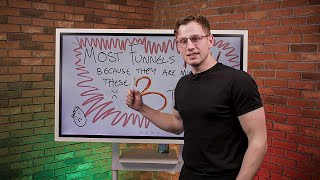
Elliott Botterill breaks down why funnels flop: they skip urgency, scarcity, and a clear reason why. A webinar that added these three elements doubled conversions, jumping from 15 to 30 customers on the same 25k spend.
Questions this video answers
A webinar where ~25k was spent typically yielded ~15 customers; after adding urgency, scarcity, and a 'reason why', the same spend generated 30 customers (doubled conversions).
Chapters
Ladies and gentlemen, most funnels fail because they are missing these three things or they are not using these three things to nearly the extent that they should be. So if you're running any kind of marketing funnel, the three things I'm going to talk about in this video are going to help you get more conversions, get more people through your funnel, close more people and make more money, which is what we're all about, ladies and gentlemen. So let's dive in. These three things are seriously important, some would say foundational elements of marketing and persuasion. And you will have heard of all three of these things before. But chances are, if your marketing funnels are not running quite as profitably as you would like, or you're not able to scale them quite as far as you would like, then you are likely not doing these three things to the full extent. Okay? And so the reason I'm making this video is because even I, someone who's been marketing for over 10 years, had to remind myself of this lesson because a bit of context. In our business here at Entrepreneur Circle, we run webinars, okay? And I love webinars, one of my favorite types of funnel. And so we run these webinars normally with two to three weeks for our high ticket coaching program. And we might spend 25k on a webinar. And that webinar would normally get us about 15 customers, which is honestly is not too bad. We don't mind that because people pay a lot of money on the program, so it makes a lot of financial sense. However, just this last week we ran a webinar and because we are approaching the end of the year, we added a few of these extra elements to the offer that were all very real, that I will explain and give you the examples of. But when I re implemented the three things we're going through today myself, goodness me, that same 25k, instead of getting 15 customers, we got 30 from it. So by really dialing in these three elements, we actually doubled the conversion rate of our funnel. And that is the way marketing goes. You know, there's so much stuff, we've just had to relearn this lesson ourselves. So let's get into it before we do. My name is Elliot. Welcome back to the YouTube channel. Great to have you here. I've generated over £150 million for my clients and our businesses over the last six, seven years. I used to work in a big advertising agency running Facebook and Google apps for some of the biggest names on the planet. I then spent five years building my own digital growth Agency, scaled it to a seven figure agency with dozens of people. And then I sold that and joined entrepreneur's circle, became the chief marketing officer. And that is where we are today. And so that is do with that what you will. That's just context as to where this is all coming from. So let's talk about these three things, these foundational elements of marketing and persuasion. Number one, you've heard of it, urgency. Number two, you've also heard of it, scarcity. Number three might sound really simple a reason why these three things, my friend, I know you understand and have heard of all of these, but let me tell you, you may not be doing them to their fullest extent. You to get the lift in conversion and the impact of the persuasion that you possibly can. So let's dive into it. Urgency. What is it? Urgency is giving people a reason to act now, a reason to act now, not later. Thus it becomes a time based element. So we all know urgency. It's basically designed to put a hard deadline on when someone should take action. And the thing about urgency is it's really important because it solves a really key objection. An objection that unless you are in a specific pain based industry. So to think of an example, locksmithing, okay, if you're locked outside of your house and you need a locksmith urgently, you don't need the locksmiths to have, you know, a fucking deadline on their offer. No, they're going to be with you because you just need it. But a lot of businesses where you are solving something that's not a immediate, oh my God, it must happen right now issue. Urgency helps us solve this of I'll do it later, okay? Because it gives people a good reason why they should act today and not just kick the can down the road. And a lot of the times in a lot of people's funnels, when I see this with our clients, with the businesses that I work very closely with as well, is they have pretty good offers. But the thing that it lacks is this specific reason for the person to take action now. And so it's actually very easy thing to get done. And we all know the power of deadlines, okay? Deadlines are absolutely insane. So let's operationalize this. Let's run through some examples of how you tactically implement urgency into a business, into an offer so you can start to get the benefits. So here's four of my favorite ways to implement urgency the way that we do it. The first one is a fast action bonus. So this is very good for all sorts of Funnels, especially webinar funnels, which we like running. And so a fast action bonus will be, well, if you join the webinar today and we hit you with the offer for the next 72 hours, there is a fast action bonus. Which means if you book a call or take action within that 72 hour window, then we will give you a bonus, whether that is an additional thing, whether that is some kind of money off or whatever it might be. But the bonus is directly tied to them taking action within this fixed time window. Thus we create a forcing function. Thus we utilize deadlines. Now I have a client that runs weekly webinars for her coaching business as well. And she sells an online course and whenever she does the pitch and she opens up the 72 hour fast action bonus there on the webinar, she Normally gets like one or two sales, but then at the 71st hour. So with one hour left to go, she normally then gets five to six sales. So 70 plus percent of her sales every time come from the last hour of the 72 hour fast action bonus. Because urgency is great, but it is the deadline that gets things done. And we see that persistently in all of our marketing. Whenever the deadline is about to finish, people actually take action. Second way I love to instill urgency is actually through price increases. So this is something that we talk about a lot. And a well structured price increase is an amazing lever for urgency. Because you see, as you'll see, the underlying theme of all the things we're going to discuss today is having a believable reason as to why this thing exists. And increasing your prices on a certain deadline is an amazing way to again create a forcing function, real life urgency that will force people to act. So as we approach next year, we're increasing our prices. And so we in our final webinar made it very clear to everyone, this is your last chance to secure this price before we increase it to X on the 1st of January. So this is your last window. So if you've ever been on the fence, if you've ever thought about doing anything like this, this is your last opportunity. And then we increase the price. Now you should be able to do this at least once every year because. Because you should really increase your prices every year, at least in line with inflation. Because if you're not, you're losing purchasing power every single year. But for some businesses it makes sense to do it even more. Next up we have the good old fashioned limited time offer. And so this is when we just artificially create a special Offer and specify a limited window. Okay. Similar to the fast action bonus, but this can be around a particular time of year. You know, we've just had Black Friday. A lot of limited time offers have been going off there. But also there could be other reasons why you deploy a limited time offer. So for example, you may have one or two spaces left and therefore, in order to fill your capacity, you're offering them at a special price with a special discount. You, you may have just launched a brand new program or you're beta testing something and therefore you want to run a limited time offer to get people in. I had one client that sold very fancy wood to very high end architects that would build mansions and they once a year would run a limited time offer where for 48 hours they would do 15% off all their fancy wood. Now, I know what you're thinking. 15% off, that's not very sexy. And yeah, it's not. But in their industry they're like never, ever, ever discounted. And so the one time of year when they could get 15% off, that was a big deal. And the limited time offer would always pull in a lot, a lot of people. But again, it's the fact that it is limited time and it genuinely is limited that helps drive people through the final one. Classic. It's just the topical event. Okay, so this is where you have your Christmas offer. Ho, ho, ho. Tying in to the seasonality. I know businesses that every single month simply launch another topical offer that expires at the end of that month, whether that is the Valentine's Day special or the spring cleaning offer, whatever it is. Okay? Some people get very creative and they run in these cycles of perpetually creating reasons why there's an offer and why it's going to discount. So I'm not a fan of doing that all the time. I am a fan of utilizing that if you are having a particular sales slump. And there's a good logical reason why we can draw one of these in. I much prefer these three, but again, they're all just examples of how you can increase urgency in your offer, add it to your funnels, which will increase your conversion rates. Moving on, scarcity, the next big one. Now, we've all heard of scarcity. It's all about limiting the quantity of something available. Okay. Which makes this a quantity based thing. And so scarcity is very, very powerful. You know, we see this in the watch world. It's why Rolexes are so valuable and why they continue to go up in price. Because the real supply of Them is closely controlled and there is a scarce amount. And so for many of these fancy watches, even if you had all the money, you have to go and build a relationship with your watch dealer before they would even sell you one, okay? Because the demand for them is so high. And a big part of that is the genuine scarcity. That's why the price of gold, the price of bitcoin goes up, because the real life scarcity on these things. And we can implement that when it comes to our business as well, certainly for the most part. So scarcity is really helpful because it solves another key objection, which is, will this thing still be here? If I choose to wait, is this going to expire and run out or is the door still going to be open for me? Because if people think the door is just going to be open and that there's an infinite supply, their impetus to actually take action and get things done will be greatly diminished. And so we always want to add in elements of scarcity because if they have a deadline that's going to expire and the forcing function of something going to literally run out or they'll be unable to access it, then that becomes a very strong driver. So we love scarcity. Now again, key caveat, it must be believable, okay? We're not talking about the bullshit scarcity. When you go on some of these scammy dropshipping websites and they have like these fake quantity counters that just like automatically decrease by one every few seconds, no fake scarcity. People's bullshit radars are very good, okay? And they're getting stronger because people are exposed to so much bullshit all the time. And so when we deploy scarcity, we do it in a very mindful way because it has to be believable and has to make sense with what we're selling and what our business is. And so that's why the best type of scarcity, especially if you're a service based business, is just your real capacity. So think about it. In your business, what? Well, whatever you do, chances are you genuinely have a certain capacity of customers that you could fulfill without your business entirely breaking. Okay? And so you should think about what that is. So like in my agency we could onboard, you know, no more than like four clients a month. Because if we did that, we would just drop the ball and be completely overworked and mess it up. And so we would have a hard cap on four per month and that would be the reason why. So if anyone spoke to us, we would say, yeah, sure, look, if you're Interested? That's fine. Just to let you know, we have got only three slots left this month because we literally can't onboard any more people. And I would pull up a massive map that would show our entire onboarding process and they would immediately see, having seen that map, why we do that. Okay. Because I justify this and prove that it's not just me trying to bake scarcity them by showing them the work involved. And by showing them the work involved, they think, you know what, fair enough, that's a lot of work. They've only got X amount of people. Makes sense why they can't just onboard a trillion people. So that's one good example. Again, in high ticket coaching, if you have a high ticket offer, X more clients, we're only taking on X more clients because insert your believable reason here. So again, it might be we're only accepting 10 more clients this quarter because our coaches only have this amount of capacity and the capacity is capped at this because that's the only way we can give you enough attention to give you enough results. So we create the scarcity with a real logical reason and then we, because we justify it. If you're running some kind of low ticket offer, which we do as well, we love a low ticket offer that we then ascend into the high ticket. And so we do a lot of book funnels where we advertise books and then there's a myriad of upsells that go when someone opts in. But even for the book, we will have, you know, a thousand copies available because this is a limited print run. So when they're gone, they're all gone. And so we're able to quite simply just add some real life scarcity. And in the past we've shown the receipt that showed our order of the thousand books as well to further substantiate what we have said here. So the best elements of scarcity come when you have a hard number that is a cap that obviously makes people worried that that might expire quite quickly and then it's justified with a. Because that makes perfect rational sense. And then it's really amplified if you have clear examples of proof such as a coach's diary, the receipt of the order for the books, or just walking them through the onboarding flow that makes it very clear that that would be impossible. So that's how we like bit of scarcity. Now, urgency and scarcity are the very common ones. I wonder if you've considered this before. Why I love to give people a reason why we are Making an offer. Because if we are really hitting people hard with an offer that sounds almost too good to be true, then we want to give them a reason why. Let me explain. You see, right now, trust is pretty low. You've probably heard all these people talking about it's a trust recession and blah, blah, blah. Sadly, there is some truth to that, and people have just been spammed to the goddamn walls with so many crazy adverts, crazy promises that are just super scammy and hyperbolic. Now, skepticism, therefore, is also very high. People are inherently more skeptical, and depending on your industry, this will be the most skeptical these buyers have ever, ever been. And so we have to overcome this. And so what I like to do is tell people why we are making this offer. And I like to try and inject this aura of transparency across all of our marketing because, you know, we're in business. Yes, we love capitalism, and we're here to make money. Okay? And that's fine. We're not trying to hide that. But you may have some elements around your business and the impact, maybe the mission of the business that tie into it as well. So, for example, here at Entrepreneur Circle, we exist to inspire, educate, and motivate entrepreneurs to build their businesses and grow more than they ever thought possible. And we do love doing that. And that is a genuine belief. We also like making money. Of course we do that. It's a big purpose of our business as well. So we're not trying to hide them, but we're trying to make them aware as to why we're making these offers. And the reason we want to do that is because it solves this objection, which is, what's the catch? And so this particularly will come up when people are coming across you for the first time. So they're what we would consider a cold prospect or a cold lead. And if we hit them with a really good offer, one of the things that often comes up is, well, what is the catch? And so we want to give them a very valid reason why we're making this offer. I'll give you some examples in a second. But what this does is it puts the lead or the prospect, it gives them a feeling of control because they feel like they understand the whole situation. So I always have a phrase in marketing that hesitation equals inertia. So, so if at any point in the prospect's journey, if they get confused, if they hesitate over anything, then that leads them to not taking action because they don't feel safe, they don't feel secure. And so our job is to basically remove any and all hesitation. And sometimes if your offer is really good, it's just explaining why you're making the offer in a reasonable and logical way. Because by doing so they go, okay, that's fair enough. And it ticks this box, it puts them into control and it removes the hesitation which leads to action. So again, let's operationalize this. This is all about justifying. So we want to justify why we are doing these things. So here's a few examples. So in the case of our most recent webinar, we're talking about increasing the price and we say, look, we're making this offer to you today because we're increasing the price increase in the new year. Now that on its own is not good enough. I have to justify why we're increasing the price because otherwise that's just a scammy tactic. So we would go ahead and say we're increasing the price next year because we've increased our investment in our team, we brought more experienced coaches, we've invested in the product, we've developed a new AI that will help you get through it. And we're also hosting more in person events as well. So we're not just willy nilly raising the price, but we're actually adding value to the offer to justify the price. And if you do any degree of product improvement over time, you will have things as well that give you the good reason why. And so when we say that, it now makes sense as to why we're doing the price increase and we're giving you a fair heads up before we do that, which is why this offer exists now. And so all the pieces start to come together, you know, in a webinar as well. I always love to segue from we give you, you know, 60 minutes of pure value and you can absolutely go and do this yourself and get the result. But we're not going to make you an offer for the very small percent of you that actually want our help. And therefore let us tell you the offer because at the end of the day we love helping you out, but we're also a business and we got bills to pay too. In the case of a discount, discounts in particular, I'm quite anti discount because we like to position ourselves very much in the higher end of the market right through from my agency days to where we are now. So we very, very rarely do discounts. However, they are very effective, especially in certain industries. The key thing with a discount is you just want to have a reason. Okay? You want to have A reason why the discount is on. So this works great if you have, you know, some excess stock that you need to liquidate before a certain time period, and therefore, for 48 hours, we're making absolutely available, whether you're running out of warehouse space or whatever it might be, or you're trialing some new features or onboarding a new coach or a new staff member or something. And therefore, for a short window, you can get it discounted again. The better the reason, the more, more effective that will be. And then finally, the free one. So the free one, and this is if you know you're offering any free lead magnets or indeed you're giving away like a free book in a book funnel. I love to be up front here. I love to say, why are you giving this away for free? Well, to be totally transparent, you've only just come across us and we know you're not going to trust us unless we actually prove to you that we can help you by actually helping you. So we're giving you this thing for free so that hopefully you read it, get a lot of value from it, and, and actually get the result. And then we hope that a small percentage of you will have got so much value from it that you'll actually reach out to us and we'll be able to do some business together and that way we all win. Seem fair? Absolutely. So it's not about making some crafty shit up. It's all about just being very real, honest and transparent and having a clear reason why, because people love it. So that is how we use urgency, that is how we use scarcity, and that is how we can use reasons why to massively increase the conversion rate of our funnels. In today's age of marketing, your ability to tap into this powerful messaging is actually more important than ever in the age of everyone creating all sorts of bullshit with AI. People that utilize these properly and really embed them into the business are the ones that are performing very well. Don't forget the wrapper that goes around all of these. That is. It has to be believable. Okay? You need believable reasons as to why we are doing all of these things. And if you're able to get these and they're all believable, I promise you, your marketing will absolutely soar. So, ladies and gentlemen, thanks so much for joining me. I hope you enjoyed this video. I've been. Elliot, you've been amazing. I'll see you in the next one. Peace.








