The Marketing System That Will Dominate The AI Era
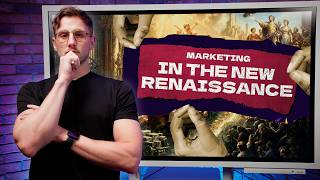
In this presentation Elliott Botterill argues that we are entering a new Renaissance driven by AI, and that business owners must become "Rainmakers"—people who can consistently generate revenue. He introduces the "Rainmaker Flywheel," a four‑stage marketing system designed to dominate the AI era. The first stage, Driving Traffic, combines paid ads (primarily Meta) for control with organic long‑form content (to build deep trust) and short‑form content (to amplify discoverability). The second stage, Converting Traffic, replaces traditional lead magnets with "micro‑magnets"—quick, high‑value freebies delivered via highly optimized, human‑branded landing pages. The third stage, Lead Nurture, uses multi‑channel sequences (email, SMS, WhatsApp) and a "Slow Burner" paid video series to compress relationship building and move prospects toward purchase. The fourth stage, Closing & Proof, emphasizes frequent, well‑crafted sales asks (FATS and "silver bullets"), a repeatable sales process (calls or offer documents), rapid time‑to‑value, and systematic collection of testimonials and case studies that are fed back into the traffic stage to accelerate the flywheel. Throughout, Botterill stresses the necessity of injecting a raw human brand into every element, using AI as a tool but not letting it replace genuine human nuance, thereby creating an AI‑proof moat.
Chapters
Several hundred years ago, the Renaissance marked the spark of a rebirth of creative arts and science. And I truly believe that right now a new Renaissance is taking place. And the tasks that used to take our fingers and indeed our brains are more and more being taken over by the robots. And what is going to happen? It is going to lead to a new Renaissance. It is my belief that as As this new Renaissance takes place, the only way to survive as a business owner in this new age economy is to become a Rainmaker. Somebody that has the exceptional ability to drive and create revenue and make it rain. You see, right now, marketing is well and truly harder than ever. Ever, despite having such a plethora of tools available at our fingertips. Actually getting results is very difficult. Tons of factors, whether it's the economy, cost of living, increased competition, AI slop, you name it, there's a lot. And that is why in order to succeed, we have been crafting, we have been perfecting the Rainmaker Flywheel here at Entrepreneur's Circle. Where we comfortably spend around £100,000 per month on paid ads and turn that into £1,000,000-£1.1 million per month in gross revenue. And the Rainmaker Flywheel, I believe, is the future of marketing. And this is something I've been working on ourselves and with a very select small group of my private clients. And in this video, I'm going to reveal the entire Rainmaker Flywheel for you so you can stay ahead of the game and ensure you become a Rainmaker. The Rainmaker Flywheel has 4 main components. I'm going to go through all of them. The first part of making it rain is your ability to consistently drive traffic. You have got to be able to capture eyeballs and turn them into clicks. This is a fundamental part of advertising. You must be good at making yourself aware. Now, as you know, I'm a paid ads man. I worked in an ad agency, I built my own advertising agency, and now we do the majority of our marketing here at Entrepreneur Circle through paid ads. But relying purely on paid ads is no longer a viable option, at least not if you want to scale and become a true rainmaker. So there are really two elements to driving traffic in the modern age. We do have paid ads, but also we now have to invest in organic. And let me talk about the two and the relationship between them. I believe you should do paid ads first because paid ads give you control. You exchange money for a set amount of eyeballs and we're able to turn it into clicks through nice direct response creative. And you've got to think of your paid ads as the mechanism that drives the vast majority of action. Of clicks. That's really key. We are spending a lot on Meta right now. That's our primary channel and we love it. But you will need to spend in the places your ideal customers are hanging out the most. Interesting little story. I had a 17-year-old girl come into our office for work experience this week, and I spent the day with her indoctrinating her into the world of marketing and how we do it here at Entrepreneur Circle. One of the first things I did was got my phone out and got her phone out and we looked at our screen times. And on an average week, we could see where I spent my time being a 29-year-old, you know, CMO, co-owner of this business versus a 17-year-old who's interested in marketing and wants to go to university. What did we see? Well, my screen time, most of it is getting spent on YouTube, consuming great content like this. Don't forget to like and subscribe. But on the flip side, This girl, Erin was her name, her screen time, 23 hours in a given week on TikTok and a further 11 hours on Snapchat. No time on YouTube, barely any time on Instagram. What does this mean? It just shows you different types of consumers have different behaviors and they show up on different platforms. That's why we believe in choosing the right platform that makes sense for your customer. Paid is good and that gets you up and rocking, but now we have Number 2, invest in organic content. And organic content comes in two forms. We have obviously the long form and then we have short form. Both are important, but the second thing you want to start with is long form. One of the biggest challenges we face in this new economy is trust, and the best way to build trust is by producing and sharing high-quality long-form content that demonstrates your expertise, much like these videos that I'm creating. Right now. Because if someone is able to sit and consume a series of, you know, 15, 20, 30-minute videos of you talking about your thing, demonstrating your expertise, your stories, how you got there, how you understand all this stuff, then eventually they are going to trust you. And people go through binging patterns where once they discover someone, they will start to consume all of their stuff if they're interested in it. And next thing you know, they've gone from not even knowing about you and trusting you to all of a sudden really, truly trusting you. And this has an incredible flywheel effect, especially when layered on to the paid ads that you're running, because now if someone has seen your long-form stuff and they see an ad, boom, happy days. Short-form is a very critical pillar as well, but it is the third and final piece of driving traffic to Muster. And that is really because of the intensity of creating it. If you do it at a high level, the purpose of short-form is to leverage the algorithms on the short-form platforms to drive discoverability of you and ultimately push people to consume the long form and to then get retargeted by your ads. And so it's a great amplifier. We do it, we invest in it, but we prioritize our paid ads because that is what ultimately drives the vast majority of the clicks. And we drive and we've prioritized the long form as that drives the vast majority of people spending time on brand with us and building all of that trust. Short form is the cherry on top of the cake. So that is how we master driving traffic. And then that brings us to the next stage where we must convert traffic. Traffic is only good if we can actually convert it into a useful form. And the useful form for us is leads, contact details. And so we used to use lead magnets, creating useful guides, even videos, masterclasses that we would just give away. And to an extent they still work. However, the primary focus of our converting traffic strategy now is micro magnets. You see, as people's expectations and timelines of receiving value continue to shorten by how quick AI is producing stuff, we must follow that. And so one of the best ways we can convert traffic is to create a micro-magnet, which is a free thing that delivers one very specific result with very minimal effort, input, and time from the prospect. This is the best way to start a relationship, A, because we get a very high conversion rate because we're actually delivering something useful, and B, it gets the relationship off on the right foot because we start by proving to someone we can help them with a specific result. So one of the best forms of doing this are specific diagnostic tools that can reveal the precise problem and give personalized recommendation and advice. It can be custom GPTs that create copy or help produce a specific asset. It can be AI replicas of people's brains that they can converse with and get personalized advice from someone's own intellectual property and experience on their scenario and situation. All of them work great. This is the future. So far of these micromagnets, and that is how we capture them. Of course, the mechanism by which we capture is a lander or a landing page. And so we must have truly beautiful landing pages. Right now there's an insane amount of very good AI landing page builders and everybody's writing their copy using AI. And so whilst we do both of those things, there is a massive gain to be had by the people that are able to inject real human nuances and experiences to make their pages stand out. Not relying too much on AI-generated templates and AI-generated copy is really key here, and investing in great photography, fantastic videos to bring the human element to life, we are seeing having a disproportionate impact on our conversion rates. Obviously, the landing page is where they actually land in, but there are additional elements we bake into this. We make sure we qualify people at the point in which they opt in so we can season our pixel and only send back high quality data to train and prime the algorithms. And we also make sure on the thank you pages that we fill them with value-dense content videos to further encourage consumption, which further builds additional trust. And speaking of building additional trust, this is where our lead nurture comes in. Still a humongous bottleneck for most businesses. They do not nurture and put enough time and energy into building relationships with their prospects before asking for the sale. And this is where your work in the driving traffic stage comes into play, because we now build very expansive nurture sequences with emails, SMS, WhatsApp, and we do that, yes, in standard plain text, but we will take our latest and greatest long-form content, our latest and greatest short-form content, and make sure we can distribute that to them. And so we will create emails around it, drive them to view the videos to further aid the consumption, all with the goal of building better and deeper relationships. We do also use paid ads here as well, as we have a campaign called the Slow Burner Super Nurture Sequence, which is a series of 20 to 30 short-form videos that we put money behind. So anyone that has opted in, we can sequentially show them all of these videos in order, and there's a specific setup we do to achieve that. But as a result, we can compress consumption around our entire journey and story into a short period of time to nurture them along, because that then gives us the ability to close some frickin' deals and make it rain. So closing deals is critical, okay? And a lot of people, they do the hard work driving traffic and converting traffic, and then they slip up here. They slip up turning all of these warm leads that now have a relationship into cold hard cash. And so there's 3 things that we achieve here. Important acronym: FATS. You've got to flippin' ask for the sale. You've got to ask for the sale. There's a direct correlation between the amount of times you ask for the sale and how many sales you actually make. And so we do this and we do this frequently and we do this properly in a way that doesn't extract all the goodwill from our audience and in a way that is just being very helpful and making our thing available. And so we do this via silver bullets. And so silver bullets are specific emails, pieces of correspondence that we send out that are carefully crafted to get people to raise their hand. And so we have all sorts of silver bullets, hand raisers, 3-line emails, and just plain simple asks. And it's important we dot these in and don't get too carried away with long-term nurture because we must repeatedly and systematically be asking people for their business. We must then, of course, have an RSP, a repeatable sales process. Now, this will depend on your business and what you sell, because you will either have a call or you will not have a call. Either or work. You know, I sit in the camp where I like phone calls because I actually believe speaking to humans is a good thing. And we have a sales team and they're great people and we get a lot out of it. So we do a lot of cool related stuff. We do a lot of no-call stuff as well. But let me talk about the cool stuff first. So with calls, we got to have a sequence to make sure people book calls. We've got to have a sequence to make sure people show up to the calls, and then we've got to do the calls properly. And so it's less about having like scripts, more about having structure, because the purpose of any call for us is all about Ensuring mutual fit, ensuring and clarifying that this person truly has the problem that we're trying to help them with, and then letting them know exactly how our solution would be a fix for that. And if we believe there's a mutual fit, boom, we extend the offer and we close the deal. As simple as that. It's not sleazy, it's not crazy, it's not high-pressure sales tactics. We're in the business for the long term and we can guarantee will be around in many, many years because we just try and genuinely be helpful to the people that need our stuff. So we follow that very diagnostic and prescriptive Mutual Fit sales approach and it works great. On the flip side, for some of you, you won't need any calls. And again, if you are particularly strong with the organic content and particularly fierce and engaging with your long form and short form, then normally you can build up enough goodwill that you can sell your thing to people by simply giving them all the information. And so this is where having a very clear offer doc comes into place. Literally a document that just outlines, here's what I'm selling, everything you need to know, and here's the price. Press this button to do this next. And so for me, it's easier to get sales with calls, but you have the friction of someone has to do the calls. Much harder to get someone to buy a complex product through just a document, but absolutely achievable in today's day and age when the driving traffic stage is done correctly. And the final part of this process is capturing proof, because this is where the flywheel element comes in. Once we have closed the deal, we must focus on the first result time to value. What that means is how quickly can we get this person the first result, whether that's the main result of our whole thing that we're offering or a key significant milestone, because at that point we want to systematically collect proof. We want to ask them for that testimonial, for that review, for that case study, because the quicker we can establish more proof, this pours fuel on the fire of this flywheel. Because again, skepticism is incredibly high. And the number one way to bust down skepticism is to have a ton of very positive reviews and to have a ton of video testimonials, case studies from your different clients in different situations. And you need a systemised approach to do this. So they constantly come in every single week and month. Now this becomes a flywheel because we then take that proof and we inject it all the way back into our driving traffic stage. We launch it as ads, we launch it as organic content, we add it to our nurture sequences. And it helps the whole thing spin faster and faster and faster. And that is how the Rainmaker Flywheel works. There's one critical element that will truly determine anybody's success using this formula, especially in the future, and that is the central piece is the human brand. And I cannot understate the importance of this. You have I believe that you have to inject your raw humanity into every single element of this in order for it to be successful. What do I mean by that? We cannot rely on the same copy-pasted AI-generated stuff at any stage here. We have to inject our raw human brand, our raw human energy, our own genuine thoughts, opinions, nuances, mannerisms, as that will be the key differentiator as to why the right people will want to work with you. And so whilst everybody is leaning into optimizing for efficiency and producing more and more stuff with AI generation, we are standing firmly in the camp of actually, yes, we're not going to ignore AI, we're going to utilize it, but we are going to spend extra time to do things that will make our output slower so we can pour our heart and soul into it. So we can inject our own little bit of love and care because that is the edge that AI will not be able to replicate. And that will differentiate us over many years to come and build an AI-proof moat that will keep us very successful when the robots get even smarter. So that is the Rainmaker flywheel. I hope you enjoyed this video. Don't forget to drop a comment and like and subscribe. And oh boy, I'll see you in the next one.








