Adrian Reid (Enlightened Stock Trading) warns that published trading rules often do not generalize across markets. He presents a case study: a long-running trading system that performed well on the Hong Kong market (≈17% CAGR, ~44% win rate, 20% avg win, ~7% avg loss, 18% max drawdown) but delivered poor results when applied unchanged to Taiwan (≈9% CAGR, 25% max drawdown, CAGR/MaxDD ≈0.36). Reid and his students then simplified and retuned the rules for Taiwan, achieving a final backtest around 18.8% annual return (including slippage and commissions).
Chapters
If you're a trader, how can you be sure that the rules you're using are actually profitable? My name is Adrian Reid. This is enlightened stock trading. And on that bookshelf there are dozens and dozens of trading books with heaps of different trading rules and trading ideas in there. And I can tell you for a fact that many of them don't trade actually work. Maybe they once did, but they don't anymore. Or maybe they do on one particular market, but don't on another market. And this is the problem if you're a retail trader sitting at home trying to learn to trade and you read some trading rules in a book or in a magazine or on a website somewhere, and you assume that they work because they've been published by someone who knows, you could be in for a world of hurt. I've tested dozens and dozens of systems that came from trading books and other people's websites that just don't work, or they don't work on the markets that I want to trade, or they used to work on the markets that the author claimed, but they don't anymore. I want to give you a personal example. This week in my System Builders Club session with my Trade Success System students, I've been working with them to adapt one of my existing trading systems to a new market. And I want to show you the results of the system on its original market. And then I want to take you through the results for the new market that we worked on. And it really demonstrates this concept that you can't just have blind faith that the rules will work if you read them somewhere. So on the screen here we've got. Let's start with the equity curve. Actually on the screen here I've got a backtest of a trading system that I've been trading for a long time, many years. And it's a system on the Hong Kong market. And as you can see, it's had nice, steady, consistent gains.
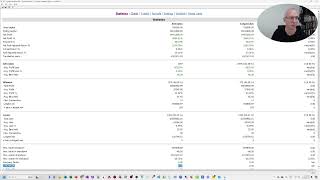
Modest to low drawdowns. And the equity curve has been pretty stable for a long period of time. And this is despite the Hong Kong market having some pretty significant challenges in the recent couple of years. It's actually managed to stand aside from that market pretty well. Now, if we look at the statistics of this system, the system made a compound annual return of 17% per year in backtest, and it was in the market 51% of the time or 52% of the time. It was right on 44% of trades. And the average win.
The average winning trade was 20%. And the average losing trade was a bit over 7% and the max drawdown was 18. So this system is pretty good, particularly considering it's only in the market. 32% of the time generates a nice smooth equity curve. So. So because this system is pretty great and I've made a ton of money out of it real time in my own accounts, I thought, I want to take this system and apply it to a new market. The system works well. Let's test it in another market. And the system, the original system is designed for Hong Kong. So I was testing it on the Taiwan stock market because the markets appeared to move somewhat similarly. I hadn't traded Taiwan before, so I thought it'd be a useful exercise to take this system and see if we could adapt it to Hong Kong. Now, here's the first trick. If you just said, well, the system works over here. Let's just trade it over there in this other market, then you might have been sorely disappointed. Just like if you got some systems out of some of these books from, say, for the US Market, you tried to trade them on the Australian market or vice versa, you could be sorely disappointed. So have a look at what happened. I took this system, which I really love. It's really great. I've made a ton of money on it in real time in my own accounts. I applied it to the Taiwan stock market. The only adjustment I made was for currency conversion to make sure the liquidity amounts were consistent. And what happened was the annual return in Taiwan stocks was only 9%. The max drawdown was 25%, and the compound annual return over max drawdown was.
0.36. So pretty terrible. Here's the annual return there.
And here's the max drawdown. So the system was pretty uninspiring when I applied it directly to the Taiwan stock market with no challenges. If we look at the charts, the equity curve doesn't look terrible. It's a nice upward slope. But it is pretty jagged and volatile. It spends a lot of time standing aside from the market. And it's only making 9% return per year. So not terribly exciting, particularly given the drawdown potential of the system. So the lesson is, you can't just take a system from one market and blindly apply it to another market. You can't just take a system out of a book that's been published how many years ago and apply it to any market and expect it to work. You've got to test it and validate it. And what I learned in applying the Hong Kong system to the Taiwan market is those markets have some quite different personality traits and you need to take those into account when you're designing the rules for your strategy. So after the exercise with my students from the Trader Success System this week, we basically went through all of the different rules of the system, fine tuned them and adjusted them for the Taiwan market. We simplified the system pretty dramatically, eliminated a bunch of rules that weren't necessary for the Taiwan market. And then we came up with a final version and here is the final version. We ended up with an annual return of 18%, eight and a half percent, which is much more interesting in backtest. Incidentally, this also includes slippage and commissions, a generous allowance for those.
And we ended up with a max system drawdown of 26% for compound annual return over max drawdown of 0.7. And more importantly, if we look at the equity curve, it's really quite nice and smooth now. The jaggedness has gone away and it's a consistent stable uptrend throughout the whole backtest period, period. And the drawdown profile is also stable and under control. So what are the lessons? First lesson one. You cannot just blindly take any set of rules that you read in a book, magazine, website or a system that you've got now and apply it to another market, hoping that it will work. Even if you take the rules and apply them to the market they were intended for, you need to test them yourself because the market might have shifted or changed and those rules might not work anymore. Second lesson. Different markets have different personalities and need slightly different rules or very different rules. So it's important that you learn how to test and adjust and adapt rules. Fine tune them for different market behaviors and personality types if you're going to diversify into different markets. And then finally, the most important thing of all is you need to take control of your trading. You need to learn how to back test and evaluate your systems to make sure they actually give you an edge in the market. And if you want to learn how to do that, if you want to learn more about this journey to trading mastery, what I'd love for you to do next is first hit the thumbs up on this video so I know you liked it. And then second click the link in the description to register for Market Mastery Bootcamp which starts tomorrow. And it's a two day live training where I'm going to take you on the journey from launch to mastery of systematic trading and show you step by step exactly what you need to know to master systematic stock trading. So click the link below, register for Market Mastery bootcamp. And I'll see you at the bootcamp. Bye for now.