10 Years of Honest Fat Loss Advice in 21 Min
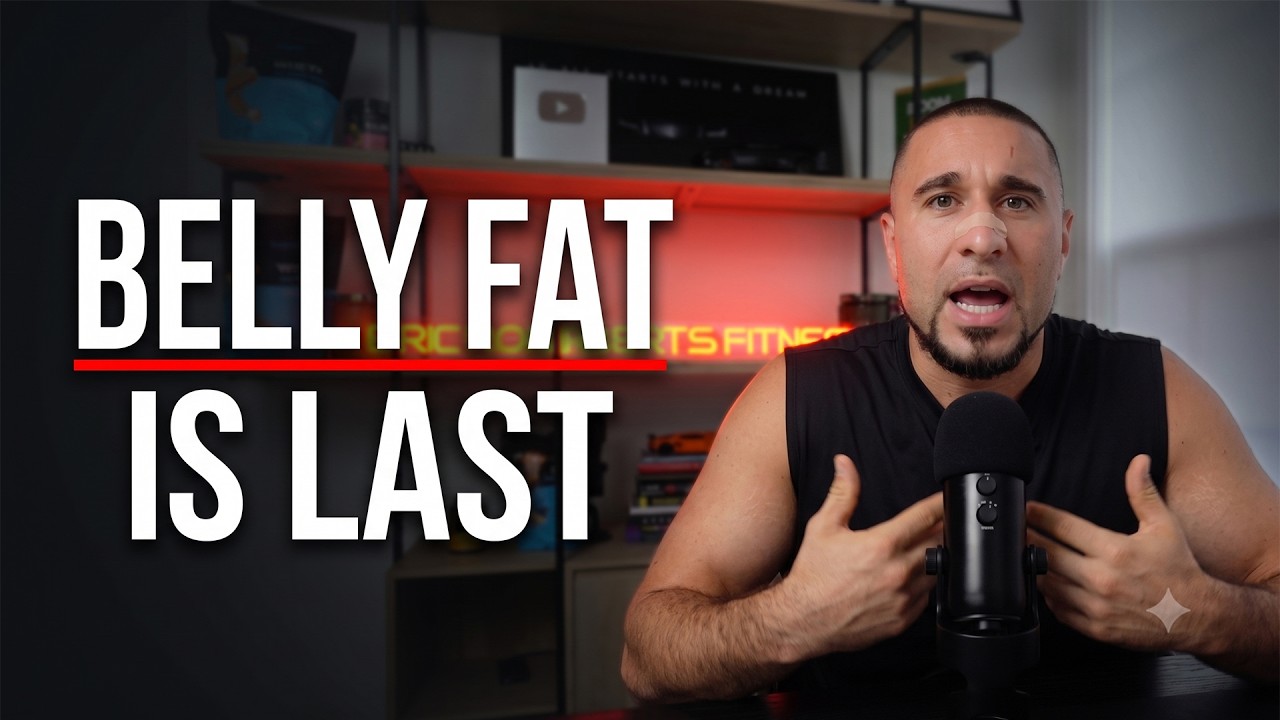
In this 21‑minute solo video, fitness coach Eric Roberts distills a decade of experience into ten concrete lessons for sustainable fat loss. He explains why lower‑belly fat is the last to disappear, using a “gas‑and‑brake” cell analogy and reduced blood flow to illustrate its stubbornness. Roberts then debunks common misconceptions: cardio is a minor contributor to daily calorie burn, excessive protein per pound is unnecessary, and high‑rep light weights hinder muscle growth. He offers precise, evidence‑based prescriptions—aim for a calorie deficit (free calculator linked), consume protein equal to 0.8 × your goal bodyweight in pounds, lift heavy in the 5‑10 rep range, and increase daily non‑exercise movement. Additional lifestyle hacks include eating the same meals each day to curb sensory‑specific satiety, fitting sugar into the calorie budget instead of cutting it out, limiting alcohol to 1‑3 drinks per week, and choosing either full public accountability or complete privacy to avoid social sabotage. Roberts stresses a realistic fat‑loss pace of 0.5‑1 % of total body weight per week, warns against crash diets and yo‑yo cycles, and emphasizes consistency over perfection. Throughout, he intersperses client anecdotes (Michael, Steph, James, Leanne) to illustrate each point and repeatedly promotes his 8‑week personalized coaching challenge, which provides custom nutrition and workout plans, weekly coach check‑ins, and ongoing accountability.
Chapters
I've coached over 25,000 clients with their fat loss in the last 10 years, and if I had to give you my most brutally honest advice to avoid wasting your time and help you lose fat faster, here's exactly what I would tell you. Lesson number 1, why your belly fat is always the last to go. You might start a diet and you might see it working on your face or your arms, but the one spot you actually care about, your belly fat barely move. And so you think there's something wrong with you, and you try to cut your calories more, do more cardio, get discouraged because you think you're doing something wrong, and you end up quitting. But nothing is wrong with you. Your belly fat is just built different. Literally every fat cell on your body has 2 switches on it. Think of them like a gas pedal and a brake pedal. The fat on your arms, your face, your chest— those cells are loaded with the gas pedal. They're easy to press, easy to burn. But your lower belly fat is loaded with the brake pedal. So when your body goes looking for fat to burn, it pulls it from the areas that are easy to burn first. And on top of that, your lower belly fat gets less blood flow. So even when your body sends the signal to burn it, the The signal barely reaches it. It's like delivering an Amazon package to your house if you lived at the end of a long dirt road. The truck will eventually get there, it's just usually the last stop. So your lower belly fat coming off last isn't a sign of failure or anything you need to fix. You just need to stay in your calorie deficit long enough, and eventually your time will come. And by the way, if you need to know exactly what your calorie deficit number should be, I have a free calorie calculator in the description below. It's the same one I use with my online coaching clients. And now here's a mistake you're probably making that will stop you from ever losing your lower belly fat in the first place. Lesson number 2, cardio isn't for fat loss. Most people think more time on the stair stepper, more time on the treadmill, more time running is going to get them to lose fat because cardio burns more calories, right? It does, but way less than you think. Your body burns calories in 4 different ways every day, and exercise, all of it, cardio included, is only about 5% of your daily calorie burn. Think of your daily calorie burn like a paycheck. Most of it The big salary is just your body being alive, breathing, pumping blood. This is the biggest chunk of calorie burn, and more muscle makes this calorie burn higher, which we'll talk about in a second. And the next piece that burns the most calories is your daily movement. And this isn't a workout, it's things like standing at your desk, walking between phone calls, carrying groceries, walking around the store. And then the next biggest piece is just digesting the food you eat. And then there's your workouts. And the workouts are like lost coins in your couch. You're looking for the lost coins in your couch and you're ignoring the salary you're getting paid. Now cardio isn't useless. It's great for your heart health and it does burn a bit extra calories to help you be in a calorie deficit. But if fat loss is the goal, you get way more out of feeding the other 3 ways your body burns calories. So you build more muscle to increase your daily calorie burn, you get more daily steps and overall movement, and you eat more protein. Because for every 100 calories of protein you eat, your body will burn up to 30 of those calories. So you can do cardio to make you healthy, but don't make it the main driver of your fat loss. And speaking of eating enough protein, You're almost definitely eating the wrong amount of protein, and it's because of what you've heard on social media. Lesson number 3, stop eating 1 gram of protein per pound of body weight. Let's say you weigh 220 pounds. 220 grams of protein, do you know how much food that is? It's like 6 or 7 chicken breasts on top of everything else you're supposed to eat. And so you'll white-knuckle your way through for a few days, And then eventually you'll just say, screw this, I'd rather be fat. And you don't just quit eating enough protein, you quit your entire diet in general. I had a client named Michael who came to me who was chasing eating 1 gram of protein per pound of body weight. And this is a guy who had been working out for a couple of years. He wasn't a beginner. And so when I told him, don't try to eat 1 gram of protein per pound of your current body weight, Instead, eat 0.8 times your goal body weight in pounds, and that's how many grams of protein to eat per day. And through doing this, Michael not only lost fat, but he built more muscle, he had better workouts and better recovery, and he actually stuck to his diet. Trying to eat 1 gram of protein per pound of body weight is like setting an alarm for 4 AM to get up and work out, But then the second that alarm goes off, you're like, screw this, you immediately snooze it and go back to bed. So however much you think you want to weigh, multiply that by 0.8, and that will be your daily protein intake. And the next lesson that helped Michael lose fat and build muscle is lesson number 4: stop lifting lightweight for high reps. Most people who are trying to lose fat think higher reps, lower weight is going to burn more fat and tone the muscle. And by doing that, Nobody ever builds muscle. And so they might end up losing weight, but they end up losing muscle, slowing down their metabolism, and ending up as that skinny fat where, yeah, you lost some weight, but you don't look the way you want to look. This happened to one of our clients, Steph, who wanted to body recomp, lose fat and build muscle. And her whole life she had been told she needed to lift lighter weight for higher reps, And don't lift heavy because it'll make you bulky. Well, when Steph signed up for our 8-week challenge, we built a workout program for her that had her lifting heavy weight in the 5 to 10 rep range. And at first she was a bit apprehensive, but as you can see by the results, she completely changed her body because she actually built muscle. Because remember, you don't just want to lose weight, you want to lose fat, and you want your body fat percentage to drop because that's how you'll actually see a change in your body. You could keep the same amount of fat, but if you build muscle, your body fat percentage will go down because now less of your body is fat and more of your body is muscle. Your body fat percentage determines how you look, not a number on the scale. And if you want a way to make losing fat easier, That's what this next lesson will do. It sounds boring, but I promise it will work. Lesson number 5: Eat the same foods every day. When you eat something different every day, you actually end up eating more calories without even realizing it. Have you ever noticed you could be completely stuffed after dinner, but somehow you always have room for dessert? That's not your stomach, that's your brain. There's something called sensory-specific satiety. And all that means is your brain gets bored of one flavor once it's had enough of it, but a new flavor or a new texture can reset your brain. And that means you'll have a new appetite for a new flavor. Every new food that you eat is like another pull on a slot machine. Your brain sits there going, oh, this might be a jackpot, let me pull it again. But if you eat the same meals every day, there's no jackpot To pool. And your brain goes, yeah, I know this, this is okay, I'm good. And you just stop eating without having to fight it. This happened to one of our clients, James, who was able to lose over 45 pounds, especially in his stomach area, because he stopped trying to overcomplicate his food and just ate the same meals every day. These were meals that he liked. He wasn't eating foods that he hates, but he took out the guesswork, ate the same foods, And now he's able to maintain his fat loss progress. So pick a few meals that you actually like, even if you weren't dieting, because remember, as long as you hit your calorie deficit, you'll still be able to lose fat no matter what foods you eat. And speaking of eating foods that you enjoy, you've probably been told to cut out this one food, and that's a lie, and I have proof. I lost 23 pounds eating it every single day. Lesson number 6, you don't need to cut out Sugar. I lost 23 pounds in 8 weeks eating sugar every day. And the problem is you decide sugar is the enemy, you completely cut it out, and for a small period of time you're like, oh yeah, I can do this. And then eventually you get to a point where you're too restricted, you miss having some of the foods that you enjoy, and when you do finally have the foods with sugar again, you don't just have a little bit, you have all of it because you restricted for so long and you know you're going to go back to not being allowed to have it. Anytime you tell yourself you can't have something, you're automatically going to crave it more. And when I lost 23 pounds, I ate all kinds of sugar every day. It could be sugar fruit, cookies, desserts, honey, you name it. Because you don't have to cut out sugar to lose fat. You just have to fit it in your total daily calorie deficit. And if you can do that, you'll lose fat no matter what food you eat. So stop banning foods and start budgeting them into your calorie deficit. And if you're like, wow, this sounds like something I could actually stick to, this is exactly what we do in my 8-week fat loss challenge. You'll get paired up with a coach on my team to build you your personalized nutrition plan, workout plan, and check in all throughout the week to hold you accountable so you actually stay consistent. If you want to see if you qualify for our 8-week fat loss challenge, click the link in the description of this video below. And for the next lesson, this is for you if you tend to drink alcohol. Lesson number 7, alcohol stops fat burn. And staying on the realistic fat loss train, I'm not going to tell you to cut out alcohol because that might not be realistic for you. But you have to know, the second alcohol hits your body, it's technically a toxin. And so your body has to drop everything else it's doing, including burning fat, to first get out that toxin. It's like if you were standing in line for a roller coaster, you might be at the front of the line That is your fat loss. But when alcohol enters your system, it cuts the line, goes automatically in front, and it gets to go on the ride first, and your fat loss has to wait. Plus, if you add in the calories you're drinking from alcohol and the calories from the food you're eating when and after you're drinking alcohol, you're typically not snacking on cucumbers and pickles when you're drinking alcohol. It's foods like nachos, pizza, burgers. And again, these foods aren't bad, but they are higher in calories on top of the calories from alcohol you're already drinking. So all these things combined make it substantially harder, and it delays your fat loss progress. And so that's why we tell all of our online coaching clients, if you're serious about losing fat, limit yourself to 1 to 3 drinks per week. And along this same note, it might not even be the alcohol that's problem. It might be the people that you're surrounding yourself with that is causing you to slow down fat loss. So lesson number 8: tell everyone you're on a diet, or tell no one you're on a diet. One drink won't hurt you. You're being boring. You're not gonna stick to this. They're trying to lose weight again. Does any of that sound familiar? That is sabotage, and usually it's not on purpose. When other people around you start noticing you're counting your calories, you're getting your workouts in, you're not drinking as much alcohol. They see you doing things that they know they should be doing but aren't, so they feel bad about themselves, and they have to try to make themselves feel better for not doing what you are willing to do. So they make comments, they try to get you into doing what they are doing so they don't feel as bad about themselves. It's like if you were an alcoholic and you were trying to quit drinking. If you keep going to the bar every Friday night with your friends, it's going to be very hard for you to quit drinking. And so what I have seen work for our online coaching clients is one of two extremes. Number one, you either tell everybody around you, have a very hard, tough, draw a line in the sand conversation and say, this is what I'm doing. You can either support me or don't talk to me about it because this is what I am doing. Or in the opposite direction, you tell no one, you go dark 30, You don't hang out with those people anymore, and you just focus on what you need to do. But if you're wishy-washy about it, you're always going to end up falling off track. And here's the hard truth: you're going to blame those people around you. It's not their fault, it's your fault, because this is your responsibility to lose weight and your goals. It's not theirs. So you need to do what's necessary to reach them. And speaking of reaching your goals, This next lesson is going to tell you what a realistic rate of fat loss progress should be looking like for you. Lesson number 9, a good rate of fat loss progress is 0.5 to 1% of your total body weight per week. Most people focus on the number on the scale, and I should be losing 2, 3, 4 pounds a week, but the reality is it's different for everybody for where you're currently at. Because losing 2 pounds a week might be something completely different for somebody who's 250 pounds versus 150 pounds. So if you are 250 pounds, losing 1% of your body weight would be 2.5 pounds per week, which would be very fast fat loss progress. And if you're 150 pounds, losing 1% of your body weight might only be 1.5 pounds, but it would still be the same percentage of your total body weight. So you shouldn't be comparing yourself to other people. Compare it to where you're currently at. And here's the part everybody gets wrong, because losing weight faster isn't better. And I know you want to lose weight as fast as possible, but you actually don't. When you crash diet and barely eat anything, do nothing but cardio and lose 3, 4, 5 pounds per week, your body doesn't just burn fat, it starts burning muscle too. And less muscle means a slower metabolism, which means the second you stop, you gain it all back. It's like if your company was panicked and it started firing all of its best employees. You might save some money in the short term, but eventually the company would go bankrupt because its best employees aren't there to keep it running. So do not get caught in the trap of trying to lose weight too fast. And when you think to yourself, this isn't going fast enough, Remember, 0.5 to 1% of your total body weight per week. If you're in that range, you are going fast enough. Which brings me to the next lesson of whether any of what I just talked about is going to work or not. You don't have to be perfect, and you won't be. Most people, when they try to lose fat, have one bad day or bad meal and they think, well, I ruined it, and they use that as an excuse to then stay off track the entire weekend. I'll restart on Monday. You ever said that to yourself? That's like if you got a bag of groceries and there was one bad apple in the entire bag of groceries. You wouldn't throw out the rest of the groceries. You would just take the one apple and throw that one out. So being perfect isn't the goal because that's not realistic. You're gonna have life craziness. Your kids are gonna get sick. Work is gonna be really busy. You're gonna travel, go on vacation. That's okay. You need to stop freaking out when that happens, because as long as you just get right back on track and stay consistent, you're going to see progress. And that leads me to the most important lesson of them all: if you lose fat right the first way, it will be the only time you'll have to lose fat. Most people, maybe you watching this, do something called yo-yo dieting forever. They lose 10, 20, 30, 50 pounds, and then they gain it all back 6 months later. They lose 10, 20, 30 pounds, they gain it all back 3 months later, and they just keep doing this yo-yo cycle. Why does this happen? It's because you're trying to lose weight in rapid, unsustainable ways, which you think is going to lead to fast weight loss. And in the short term it might, but in the long term Because you can't stick with it and you keep gaining the weight back, you're actually not making any progress. I don't care how fast the scale goes down, because in a 12-month period of time, you end up losing no weight or gaining weight. We had a client, Leanne, who had yo-yo dieted her entire life, and quite frankly, she thought she wasn't ever going to be able to lose weight and keep it off. But when she joined our 8-week challenge, we got her set up with a plan That was realistic for her to stick with because everything she had done before wasn't sustainable. Even though she could white-knuckle her way through for a couple of weeks or a couple of months, deep down she knew there's no way I'm going to be able to keep this up. So this time we got her on a plan that was fitting her lifestyle, that she didn't hate doing every week. And although she saw slower progress in the beginning up front, she has seen Faster progress over the period of a year where she has lost over 60 pounds and kept it off, because this time she's doing something that's actually able to be consistent with, so she'll never gain the weight back again. And that is actually fast weight loss. If you lose fat in a way you can't sustain, you will gain it back. So make sure from the beginning you have a plan that is fitting around your lifestyle and that you can be consistent with so you can keep the weight off forever. And if you want a plan that is built for consistency specifically for you, that is what we do with our clients in my 8-week fat loss challenge. You can click the link below to learn more. You'll get set up with a customized workout plan that fits around your schedule, the equipment you have available to you. You'll get set up with an exact nutrition plan to follow based around The foods you like, the foods you don't like, how much time do you have to cook, and you'll get paired up with a one-on-one coach on my team that checks in all throughout the week, holds you accountable, and makes sure you never fall off. Again, the link is in the description of the video below. And now remember those brake pedals I talked about with your belly fat? Your body will actually give you warning signs that you're about to lose a lot of your lower belly fat. And if you want to know what those 7 signs are, watch this video here next, and I will go through every single sign that you're about to lose your belly fat.










