5 Exercises That Burn More Fat Than Running
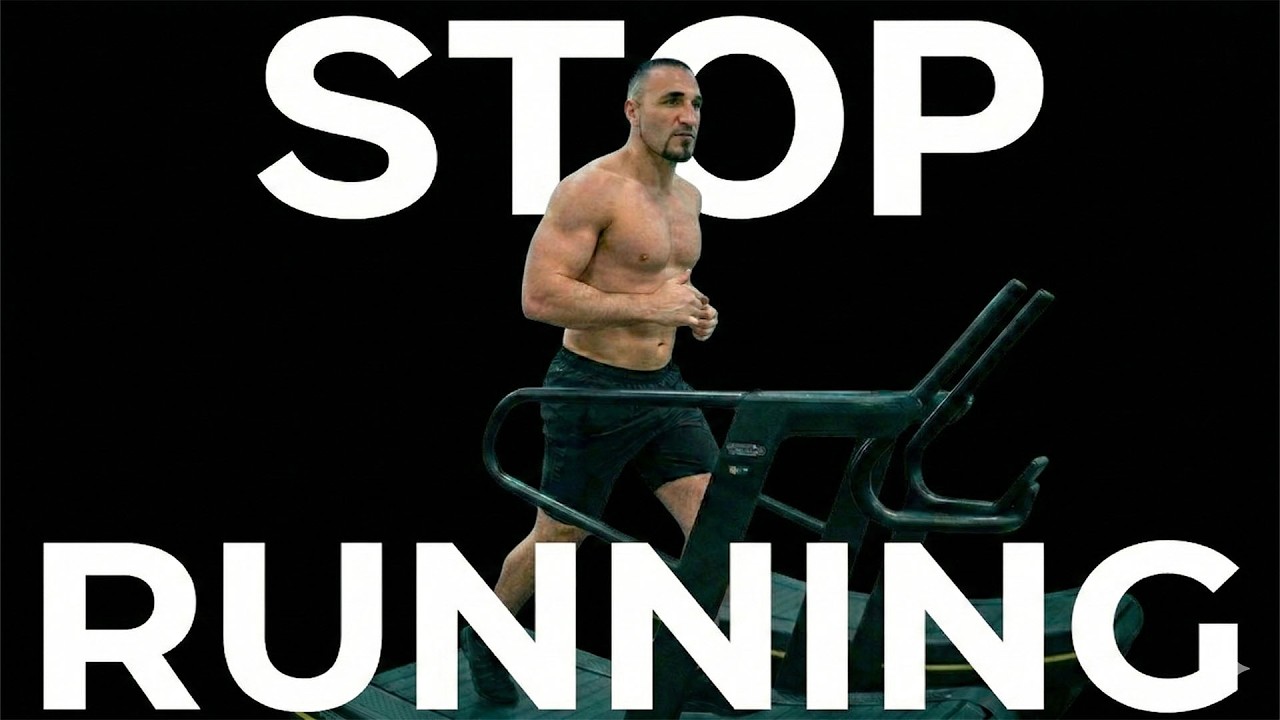
In this YouTube video, fitness coach Eric Roberts tests five cardio modalities—SkiErg, rowing machine, sled push, stationary bike, and incline treadmill walking—against running to determine which burns the most body fat during the workout. He explains the physiology of the body’s two energy “tanks” (fat vs. carbohydrate) and how exercise intensity and heart‑rate zones dictate which fuel is used. For each machine he describes typical user behavior, shows how that behavior pushes the body into the carb‑burning zone, and reports the resulting fat‑burn versus total‑calorie burn compared to moderate‑pace running. The SkiErg and rower both burn many calories but primarily carbs; the sled push is limited by leg fatigue, reducing time in the fat‑burn zone; the bike can either burn mostly carbs (high‑intensity spin) or match running’s fat‑burn (low‑intensity recovery ride). The incline treadmill walk, performed at a steady low intensity with a modest incline, keeps heart rate in zone 2 for the entire session, delivering the highest absolute fat‑calorie burn of all modalities, even though total calories are lower than running. Roberts emphasizes that regardless of the machine, fat loss only occurs when the individual is in a calorie deficit, likening the deficit to a bucket scooping water out of a pool while food intake is the hose filling it. He offers a free calorie‑deficit calculator and promotes his online coaching program for personalized deficit and workout planning.
Chapters
I tested 5 cardio exercises to see which ones burn more fat than running. The answers surprised me, especially because the exercise that burned the most fat didn't burn the most calories. There's a difference, and that difference is why your cardio isn't getting you lean. I'll show you all 5, how they compared to running, and which one you need to start doing today to see the most fat loss progress. First up, The SkiErg. If you've never used this one, it looks like you're trying to aggressively go skiing. It's brutal, and that's actually the problem. Here's what most people do on the SkiErg. They grab the handles and go as hard as they can. Every pull is max effort, and 30 seconds in, you can barely breathe. If you get to 2 minutes in, you're done. But you look at the screen and it says you burned a lot of calories. But that screen is lying to you. Not about the calories. But about where those calories come from, and that's the part that matters. Your body has 2 gas tanks. Tank 1 is fat. It's the big tank, it burns slow, and it lasts a long time. This is the tank you want to use. And by the way, this is heavier than you think. I'm getting a nice arm pump. Tank 2 is carbs. It's the smaller tank, it burns fast, And it's kind of like your emergency nitric oxide fuel. When you go cardio at a normal pace, your body pulls from the big gas tank. But when you go all out, when you're ripping the SkiErg as hard as you can, your body panics. It says, the fat tank is too slow, I need energy now. So it switches to the smaller tank, the carb tank. You're still burning calories, But you're no longer burning fat for energy because you switched tanks. So when I tested the SkiErg against running, the SkiErg burned more total calories, no question. But when I looked at where those calories came from, how much was fat versus how much was carbs, running won. Not because running is harder, because running at a moderate pace kept my body pulling from the fat tank. Whereas the SkiErg Kicked me out of that in the first minute. So does the SkiErg burn more fat than running the way that most people use it? No. It's not a bad machine. In fact, it's a great machine, but you just end up going too hard on it. And when you go too hard, your body stops burning fat. It switches the fuel. Now, this doesn't mean the SkiErg is worthless, because if you're in a calorie deficit, every calorie you burn does count. And we'll come back to that a bit later in the video. But if we're asking which one burns more fat while you do it, the winner would be running. And by the way, By the way, if you need to know how many calories you should be eating per day and burning per day to be in a calorie deficit, there's a free calorie calculator I made if you just click the link below in the description of the video. Now, the next question: what about the rower? It's a full-body machine. It's not just arms. So does spreading the work across more muscle groups mean it's going to burn more fat than running? Well, let's find out. Here's what happens with the rower. People sit down, they start pulling, And within a few minutes, they're going pretty hard. Not because they plan to or they're even trying to, but the rower tricks you into it. Every stroke you do— That's what she said. Has a pull and a push. So your legs drive, your arms pull, your back pulls, and your whole body is working. And because so many muscles are working at once, and most people tend to really rip on this thing, your heart rate starts to climb fast. You might feel like you're only working a 5 out of 10, but your heart rate says you're at an 8. You start to blow past the fat-burning zone without even realizing it. And that's the trap. The rower doesn't feel as hard as it actually is. Think of it like a car going uphill. On flat ground, you're cruising. The engine is calm. You're burning fuel nice and slow from the big tank. Now, if the road tilts uphill, you could be putting the same amount of pressure on the gas pedal, but automatically the engine has to work harder. And that's the rower. You don't necessarily push harder. You might not even try to go faster. But because your legs and your arms and your back and your core are all working at the same time, your engine is working way harder than you think. Your body starts to shift fuel tanks Without even asking you, and you start burning carbs for energy. The SkiErg, you knew you were going hard. The rower is sneaky. It puts you in the wrong zone and you might not even feel it. So when I tested the rower against running, the same thing happened. The rower burned a lot of calories, slightly less than the SkiErg, but typically more than running. But when I checked my heart rate to figure out which fuel I was using, running won again. because the moderate running kept me in the fat-burning zone longer. So does the rower burn more fat than running the way that most people use it? No, it might burn more calories. It's one of the best cardio machines for your overall cardiovascular health and fitness, but for burning fat specifically, it might end up working against you depending on how hard you're going with the rowing. All right, so the SkiErg, you went too hard on purpose. The rower, you went too hard without even realizing. Now let's talk about a cardio exercise that has a completely different problem: the sled push. The sled push is different from everything else on this list. There's no screen on it. There's no strokes per minute or settings to fix. Just you and some weight on the floor. And you can adjust it very easily with lighter weight on it, longer or shorter pushes, longer or shorter rest. But here's the potential problem with the sled push for fat burn. You're legs end up quitting before your cardio does. Think about what's happening. You're pushing a heavy object across the floor with your quads, your glutes, your calves. Every step you're pushing against resistance, you're pushing against load, your muscles are working pretty hard, and muscles have a limit. So your quads start burning, your legs start slowing down, not because your heart can't keep up, and not because you're out of breath, because the muscles themselves start to burn. So You stop. You rest, not because your cardio system told you to stop, because your legs told you to stop. And that's the potential problem. You can't stay in the fat-burning zone for a long period of time if your legs keep forcing you to take the break. Fat burning needs steady, continuous effort. Think of it like trying to take a road trip with a car that overheats every 10 minutes. The engine's fine, the gas tank is full, you could drive for hours, but the radiator in your car can't keep up. So So every 10 minutes you pull over, wait for it to cool down, start again, pull over again. You can never really get to that cruising speed for a long period of time, and that's where fat burning happens. So when I tested the sled push against running, I tried to keep it more moderate— moderate weight, longer pushes, shorter rest. But the problem was, after like 1 and 2 times down and back, my quads were on fire. My heart and my lungs, like, I could keep going, but because of that burn in my legs, I had to slow down, I had to stop, and then I would start up again and then stop again and start up again. My heart rate looked like a roller coaster. Whereas with running, you just keep the same speed, steady heart rate, sitting in that fat-burning zone, using fat for energy. And the sled push calorie burn was decent, but the fat burn ended up being the lowest on the list because I could never stay in the zone consistently enough. So once again, running, Beat the sled push for fat burn. Okay, so that's 3 machines down. All 3 lost to running. And now the question is, does anything on the list actually beat it? Well, this next cardio exercise might, and here's why. Section 4, the bike. Here's where it gets interesting because the bike gave me 2 completely different results based on how I used it. The first ride, I did more of a spin class style workout. I did hard intervals, high resistance, the kind of ride where you're drenched in sweat at the end and burned 600 calories. And ride 2, I did a recovery ride, easy pace, light resistance, and the kind of ride that honestly I barely felt like I was doing anything. I really wasn't sweating that much and I certainly burned less calories. And most people would look at those 2 rides and say, well, of course the spin class ride burned more fat, right? Wrong. Remember the 2 big gas tanks? Big tank is fat, small tank is carbs. And think of pedaling A bike like a faucet. You're trying to drain the fat tank, and the fat tank has a slow drain. You can't just like rip it open. It only flows at one speed, slow and steady. The spin class is like turning on every faucet in the house on full blast. Water is flying everywhere. There's tons of energy being used, but the fat drain can't keep up with that demand. So most of that energy comes from the carb tank. And the recovery ride is like turning on just one faucet. Low and slow, and at that speed, the fat drain can keep up. Less water will go through, but more of it is coming from the tank that you actually want to empty. So when I tested both rides against running, here's what happened. The spin class burned more calories than running, but the fat percentage was low. Most of the calorie burn came from carbs. Same story as the SkiErg and the rower. The recovery ride burned way less calories, but the fat percentage was higher because my heart rate sat in the right zone the entire time. And when I looked at the total calories from fat, the recovery ride and running were actually quite similar. And here's what's interesting. The bike is the first machine on the list where you can actually stay in the fat-burning zone without fighting the machine because your legs don't give out when you're doing a recovery ride. Your heart rate doesn't sneak up. You just pedal. So now we have 3 losses to running, 1 tie to running, and the thumbnail of this video told you to stop running. So either I lied, or there's one thing that changes everything. Section 5: The incline treadmill walk. Here's what makes the incline treadmill walk different from every other single machine on this list. The SkiErg? You went too hard. Wrong tank. The rower? Your heart rate snuck up. Wrong tank. The sled push? Your legs quit before your cardio could do the job. The spin class ride? Same trap. The recovery bike ride got close. It matched running because the effort was low enough to stay in the fat-burning zone. The incline walk does the same thing but better, and here's why. Remember the 2 gas tanks? Fat is the big one, carbs are the small one. Every machine on the list either pushed you into the small tank or broke down before you could stay in the long tank long enough. The incline walk is like getting on the highway with cruise control. You set the speed, you set the incline, you lock it in, and you just walk. No up and down, no traffic that makes you slam the brakes, just one constant low-intensity Speed. And at that speed, your body pulls from the fat tank the entire time. And here's what incline does that flat walking doesn't. The incline is like adding just a slight uphill to the highway. You don't go faster, you don't have to press the gas harder, but the engine works just a little bit more. It burns a little bit more fuel from the same tank. The incline increases the work without increasing the intensity. More fuel burned, Same tank, and that's the cheat code. So when I tested incline treadmill walking versus running, the total calorie burn was lower. Running burned more calories, and most people would stop right there because fewer calories means worse, right? Wrong. When I looked at where those calories came from, the incline walk crushed everything on the list, and it beat running. My heart rate sat in that perfect zone two heart rate the entire duration. Not once did it spike. Not once did my body switch tanks. It was 45 minutes of straight fat burning, no interruptions. Running was close. It kept me in zone 2 for a majority of the time. But depending on what speed I was going or depending on how tired I was, I had to work harder to keep going, which meant my heart rate would increase and take me out of the fat burning zone. So technically, the incline treadmill walk will burn more fat than running, not because it's harder, actually because it's easier. And easier is the point. Your body burns the most fat when the effort is low, steady, and sustained. But I have to admit, here's the part nobody really wants to talk about, and it's the most important part of the entire video— much more important than any machine I just showed you. It doesn't matter. Not the SkiErg, not the rower, not the sled push, not the bike, not even the incline treadmill walk. None of it matters if you're not in a calorie deficit, because burning fat for fuel during cardio versus actually losing stored body fat are not the same thing. And the mistake that most people make— you just watched me discuss those 5 modalities of cardio for fat burn, and the incline walk won. So now you're like, cool, I'll just do incline walks every single day and I'll lose fat. No, you won't. Not unless one other thing is in place. Think of it like a pool. Your body fat is the water in the pool. Your workout or your cardio is a bucket Scooping out the water. The incline walk is the biggest bucket. It scoops the most fat during the session. But there's a water hose running in the pool. That's your food. If the hose is putting water in faster than the bucket is scooping it out, the pool never drains. It doesn't matter how big the bucket is. It doesn't matter how many times you scoop it. If more water is coming in than going out, the pool stays full. And being in a calorie deficit means the bucket is winning because you've tightened the water hose so there's not as much water going in. And here's the thing, if the bucket is winning, the pool water drops no matter which bucket you use. You could do running, the SkiErg, the rower, the bike, the treadmill, incline walk— if you're in a calorie deficit, you will lose fat, period. So the real answer, yes, the incline treadmill walk burns the most fat during your workout, but the bucket matters if the hose isn't filling up the pool too quickly. So dial in your calorie deficit first. That's the thing that will actually make you lean. And then you can pick the incline walk if you want, because it's the most efficient way to burn fat when you're in a calorie deficit. And so now you know the 5 machines, you know which tank they pull from, and you know none of it works unless you're in a deficit. Knowing it and doing it are 2 different things. And that's exactly what my online coaching program does. We build your deficit, your workouts, your cardio, all personalized to your situation and your life, and we check in all throughout the week to make sure it's actually happening. The link is in the description below of this video if you want to learn more about my online coaching program. And if you're thinking, okay, Eric, this made sense, I'm in, but how long is it going to take for me to lose this stubborn belly fat? Well, I made a video with the real brutally honest timeline. You can watch this video here next to check it out.










