7 Strange Signs You're Burning Fat (Not Bodyweight)
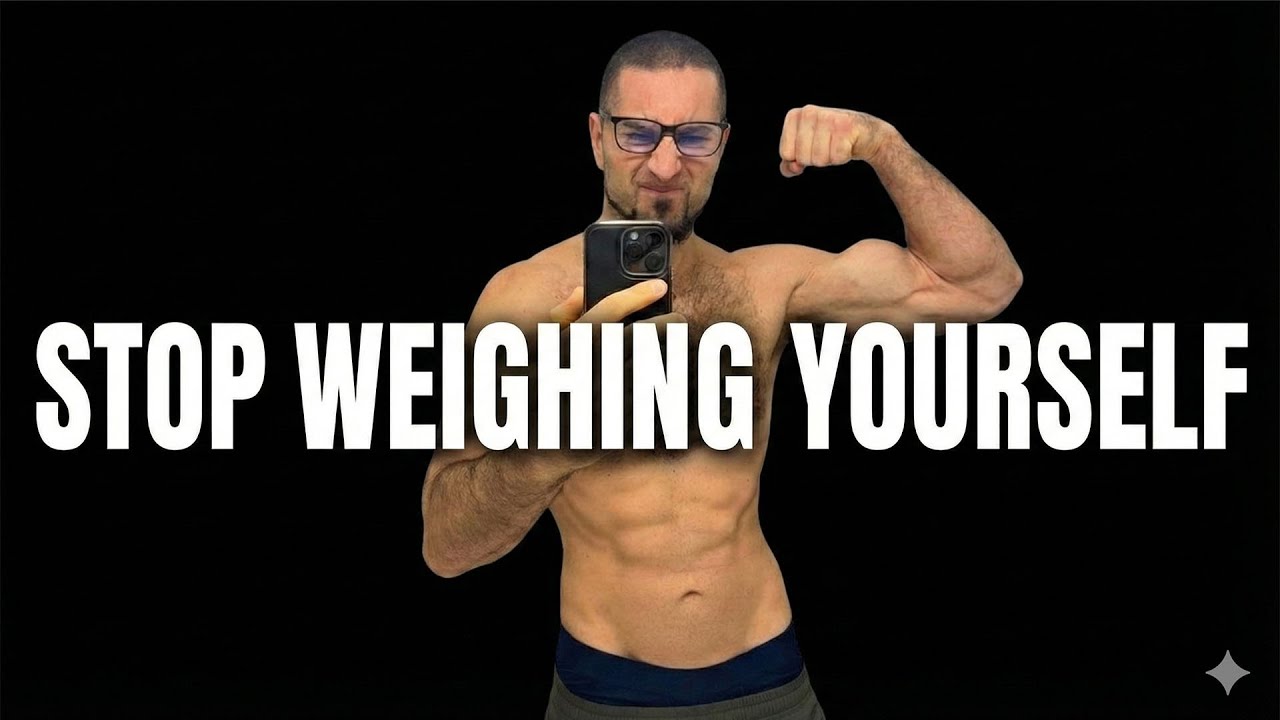
In this instructional fitness video, Eric Roberts explains why the number on the scale is an unreliable metric for fat loss and introduces seven unconventional but reliable signs that indicate the body is burning fat despite a stagnant or even rising weight. He first clarifies that muscle and fat weigh the same but occupy different volumes, and that inflammation, glycogen storage, and water retention can mask true fat loss on the scale. He then walks through each sign: (1) peripheral body parts like shoes, rings, and watches become looser, signaling fat loss from the extremities; (2) clothing feels tighter in muscular areas while looser around the waist, reflecting simultaneous muscle gain and fat loss; (3) a lowered internal thermostat makes hands, feet, and ears feel unusually cold due to reduced thyroid activity, thermogenesis, and insulation; (4) increased hunger, especially during the day or before bedtime, indicates the body is in a calorie deficit and tapping stored energy; (5) headaches arise as the body detoxifies from processed, high‑sugar foods and adjusts to a cleaner diet; (6) a feeling of laziness or reduced motivation is the body’s energy‑conserving response to fewer calories, which can be countered with a daily step goal; (7) other people notice visual changes before the individual does, because self‑observation is biased. Throughout, Roberts emphasizes that these signs are normal, encourages persistence, and offers a free calorie‑deficit calculator and a link to his online coaching program for personalized support.
Chapters
If you've been eating healthy and working out but can't really tell if you're losing fat or not, I've coached over 25,000 clients with their fat loss journey, and in this video I'm gonna give you 7 strange but true signs that your body is burning fat even if you don't see the number on the scale go down, or even if you don't see a change in your body just yet. And by the end of this video, you'll know if what you're doing is working and you should keep going, Or you'll know if it's not working, so you can change your plan. But before we get into sign number one, I need to tell you a dirty little secret about that number on the scale. The biggest mistake I see clients make on their fat loss journey is judging their fat loss by the number on the scale. If this is you, I'm about to show you why that is a terrible idea and probably why you haven't been able to reach your goals yet. This is one pound of fat, and this is one pound of. Muscle. If you put them on a scale, they both weigh a pound. The composition is different. You can see muscle is more hard and dense than fat, and it takes up less space, whereas fat is more squishy and soft, and it takes up more space. But that doesn't change the fact that both of these are 1 pound. So if you lose a pound of this and gain a pound of this, your body wouldn't weigh any different, but you would look different. Not to mention, when you're working out, especially lifting weights, your body is going to have inflammation in your muscles. And this is actually a good thing because your muscles need that inflammation to recover and grow stronger. It's like if you've ever seen an old small house on the beach, somebody buys the land, tears the house down, and then builds a mansion on top of it. That's what working out and inflammation is for your muscles. But the short-term inflammation inside leads to short-term water weight. So you could lose 1 to 2 pounds of fat in a week, but because you're lifting weights and have inflammation, you could be storing 1 to 2 pounds of water weight in your muscles. So you would lose this But the scale wouldn't reflect it yet because you have the inflammation. And on top of that, when you start lifting weights, your muscles store more of something called glycogen. Just think of glycogen as energy for your muscles. Your body says, oh man, we're working really hard. We better store some more glycogen inside of here to be able to handle the stress that it's giving us. Think of it like stuffing the stuffing inside of a pillow. When you put the stuffing inside the pillowcase, the pillow expands and it fills out. That's the same thing that happens to your muscles, and that's how you get that toned, defined look. But with storing more glycogen inside, you're also going to be storing some short-term water weight. So again, you could lose 1 to 2 pounds of this in a week, but because of the water weight, the scale wouldn't reflect it. So at this point, you could go 3, 4, 5, 6 weeks with losing fat, but the scale wouldn't show it yet. And then you think, well, screw this. Why am I working so hard and this isn't working? I might as well just quit. And then you quit. When the crazy part was, it was working. You just didn't know how to tell if it was working or not because you didn't know the signs of fat loss. So what are these 7 strange signs that you're losing fat? Well, the first one starts with your shoes. Sign number 1. Your shoes get looser. We all have areas of our body that we dislike. For some, it's your stomach. For some, it's your arms. For some, it's your back or your thighs. So we overly focus on those areas when we're trying to lose fat, and if we don't see them change, then we think it's not working. But the truth is, you can't pick and choose where your body loses fat from first. Your body's genetics determine that. And for some people, it's gonna be their face, their arms, their legs, their stomach first. But there are other places that we store fat from, like our feet. If you've been on a calorie deficit, which, by the way, a calorie deficit is the only way to lose fat. And if you need a free calorie deficit calculator, click the link in the description below of this video. And you feel like your shoes are getting looser or your toes are jamming into the front of your shoes more, This is why. You're losing fat from your feet. But it's not just your shoes. It's your hats, your ring sizes, your watches, even the glasses that you wear. If you've noticed any of those fitting looser or different, that's a sign you're losing fat. It might not be where you want it from right now, but you are losing fat and it is working. And if you just keep going and don't quit, you will eventually lose the fat from the areas that you want. And speaking of certain areas of your body, that's what sign number 2 is about. Sign number 2, your clothes fit tighter. And this may sound crazy because when we want to lose fat, we want our clothes to fit looser and better. But here's what happens when you're losing fat and building muscle at the same time. Remember that we talked about those glycogen stores? Well, when you start doing squats, Leg press, bench press, shoulder presses, rows, lat pulldown, hip thrust. Your muscles store more glycogen and they're more round and full. Plus, if you're building muscle in those areas, you're going to get that hard, lean, defined look. So those muscles like your quads, your glutes, your shoulders, your arms, your back are actually going to get a bit more dense and hard, whereas your stomach, which is where we store most of our visceral fat, that area is gonna lose surface area in inches from there. So the clothes that you're wearing, they'll probably start feeling tighter around your shoulders, your arms, your back, your glutes, and your thighs, and they will feel looser around your waist, your hips, and your stomach. And this is one of the golden signs that you're losing fat and building muscle at the same time. So if your jeans are feeling tight around the legs or your shirts are feeling tight around the arms and shoulders, This is not a bad thing. This does not mean it's not working or you're not seeing progress or you're gaining fat. Rather, it means you're building muscle and you're going to look more defined. Because remember, you don't just want to lose weight, you want to look good naked. And speaking of looking good naked, if the next sign is happening to you, you're about to be looking your damn best pretty soon. Sign number 3, if your internal thermostat lowers. Now, what does that mean? Well, we all have a core body temperature to us. This is determined by our calorie intake, our fat stores, and energy prioritization, aka where our body sends blood flow and calories. And when you're eating maintenance calories, everything is normal. But when you go into a calorie deficit, you are eating less than what your body is burning, aka less energy than you are burning. So a couple of things happen. Your thyroid reduces the production of a— of your T3 hormone. Your vital organs take priority over your extremities, like your toes and your hands. Your thermogenesis of food lowers, meaning the heat you produce from digesting food lowers. And finally, because you're losing fat, you have less in— You have less insulation on your body. Meaning you'll be a bit less warm. You can think of it like not bears hibernating. And all 4 of these things lead to you being fucking freezing. So if your hands, feet, fingers, ears, nose feel notoriously colder than you ever remember it being, this is a sign you're in a calorie deficit and losing fat. In fact, this is one of the most common signs our clients see When they first start coaching with us and they're like, Eric, coach, is this normal? I'm freezing. And we're like, yep, that is normal. That means you're in the calorie deficit. And by the way, if you're at all interested in working with myself and my team to become a client, to have us help you with a personalized plan and to have one-on-one check-ins to hold you accountable, click the link in the description below of this video to check out more on our online coaching program. Now, speaking of another sign that it's working, That leads to sign number 4. Sign number 4, if you're hungry primarily during the day or especially at night. You may know about hunger because that's what throws most people off of their diet, but here's why it might actually be a good thing if you're hungry. Going back to what a calorie deficit actually is, you're eating less calories than what you burn. What most people don't know about your body, it wants to maintain something called homeostasis. Doesn't want to lose weight, doesn't want to gain weight. It wants to stay the exact same because that's what's easiest for your body to be able to survive. Remember, our bodies are much smarter than us and they are wired for survival. So when you try to break this homeostasis, aka going to a calorie deficit, your body sends signals and it tries to break that and get you back To homeostasis, aka eating enough calories to maintain your weight. How does your body do this? It sends hunger signals to your brain. And this is why hunger happens. Well, there's many reasons why hunger could happen, and that's a different video for a different day. But if you're a little bit hungry during the day, or especially before you go to sleep, that is a clear sign that you are in a calorie deficit. There's not enough energy coming in, so your body is trying to make more energy coming in. But if your body doesn't have enough energy to maintain, what is it gonna have to do? It's gonna have to start using its stored energy to burn, aka this is how you lose body fat. Now, you should not be starving. I repeat, you should not be like, oh, Eric said hunger was a sign and now I'm just gonna starve myself. God, no, don't do that. That's idiotic. On a scale of 1 to 10, 1 being like, I'm stuffed, I can barely eat anymore, 10 being like, I would hurt small children for food, you will probably be somewhere around a 3 to a 7 on the hunger scale. If you're too hungry, that's likely a sign you're going to end up losing muscle, which you don't want because that slows down your metabolism and it makes you end up as that skinny fat and it's just not going to be sustainable and you won't be able to stick with it for the long run. But some hunger, especially before bed, is a sign that you're losing fat. Which brings me to sign number 5. Sign number 5, if you're getting headaches. Now stick with me here because you could be getting headaches for many reasons. For example, I get headaches when I try to watch my Cincinnati Bengals play football every week. But when most people start a calorie deficit, what happens? You typically go from eating a lot of processed junk food, sugary food, to now eating clean, healthy whole foods— fruits, veggies, protein— which is a good thing. But when this happens, it's almost like a bit of a shock to your body because your body is no longer getting these quick dopamine hits anymore that you were getting from these highly processed, highly sugar foods, and you're almost detoxing off of the highly processed foods that you used to eat. This coupled with less calories coming in during this period of time, your body is kind of going through withdrawal and you'll likely experience headaches, irritability, low energy, potentially poor sleep, brain fog for the first 1 to 2 weeks while you make these changes. But once you get through those first 1 to 2 weeks, it will become your new norm and you'll feel way better. And a side note, you always felt bad. That was just your norm, so you didn't even realize it. It's like when you step into somebody else's house and you can kind of smell— they have a certain smell to their house, whether it's dogs or whether it's a good smell. You notice it because you're not always there. They don't notice it because that's just what they live in every single day. And by the way, that's another sign that you're losing fat. If you feel physically bad when you eat processed or junk foods, because that's not your norm anymore. And that leads me to the next sign I'm about to tell you, and this will take away a lot of your guilt and shame around food. Sign number 6, you feel more lazy. The mistake a lot of people make when going into a calorie deficit is they just think their willpower just sucks. And that they suck and they're lazy and they can't stick to their diet or their workouts. I'm here to tell you that's actually a sign you're losing fat, and here's why. With less calories coming in, your body has less calories to burn. Your body needs to burn calories to keep you alive, so all of these things that are outside of survival— hormones, organ function, etc.— become less and less important. Getting up to go get the mail at the end of the street? No, I'm good. Waking up early to go and work out or get walks? No, I don't really feel like doing that right now. Subconsciously, your metabolism slows down and your brain tries to find ways to not work so much and try to conserve as much energy as possible. And this is why for all of our online coaching clients, we get them set up with a daily step goal. Because when you have the daily step goal, even when your body is trying to downregulate your calorie burn and decrease your metabolism, if you set your daily step goal up here and you hit that no matter what, then your body has to burn a certain amount of calories each day no matter how much it wants to come down. You're forcing it to stay up. And that's why you should be hitting a daily step goal in your calorie deficit as well. I would start with at least 6,000 steps per day, working up to 10,000 steps per day. So if this is you, you don't suck. You're not just lazy. It's actually your body trying to fight against you. That's why it helps to have someone motivate you and hold you accountable so that you stick with it. And that actually leads me into point number 7. Sign number 7, if other people notice your progress before you do. Let's face it, we are our own worst critics. The things that you say to yourself, you would never say to anybody else, not even your worst enemy, the person you hate the most. And as mentioned earlier, we all have areas of our body that we hate, so we hyperfixate on those areas. And plus, We see ourselves in the mirror every single day. That's like if you had a roll of paper towels. If you teared off one sheet each morning, every morning, day after day, would the sheet really look any different after 5 days, 10 days, 15 days? Hell, even 100 days? Because if you were there every morning seeing the roll, if you just teared off one sheet, that's just kind of your norm. You wouldn't Think, oh my God, there's 100 sheets gone. You just be like, oh, this is like what it's been going to. This is where it's been at. But if you ripped off 100 sheets at once, that thing would look pretty different. And that's what happens when other people see you versus you seeing yourself every day. And they aren't an asshole to yourself like you are. They don't hyperfixate on the problem areas that you hate so much, and they don't see you every single morning. So when they do see you after a couple of weeks or a couple of months and they say something like, damn, You look different. I can tell you've lost weight. You're kind of like, oh, I can't really tell. I don't really see it. Trust them. Do not trust you because they are right and you are wrong. And another analogy I want to give you is the Chinese bamboo tree. This tree, you need to water for 5 years before you even get anything to come up out of the ground. But when it does start to come out of the ground, it grows to like 90 feet. In 6 weeks. So a ton of visual progress happens in a short amount of time, but that doesn't mean the 5 years that you were watering it, there was no progress being made. In fact, there was a ton of progress. All of the progress was being made. You just couldn't visually see it yet. So even if you can't see progress right now, it doesn't mean that it's not happening. If you keep going and don't quit, eventually you will see the changes that you want to see in your body. And if you liked this video and my approach to fitness, fat loss, and you want help getting a personalized plan created for you and having a coach check in with you to hold you accountable, click the link in the description below of this video to learn more about our online coaching program. And after you do that, you can watch this video here next to copy my No BS Fat Loss System.










