Best Fitness Advice For 2026 in 47 Min
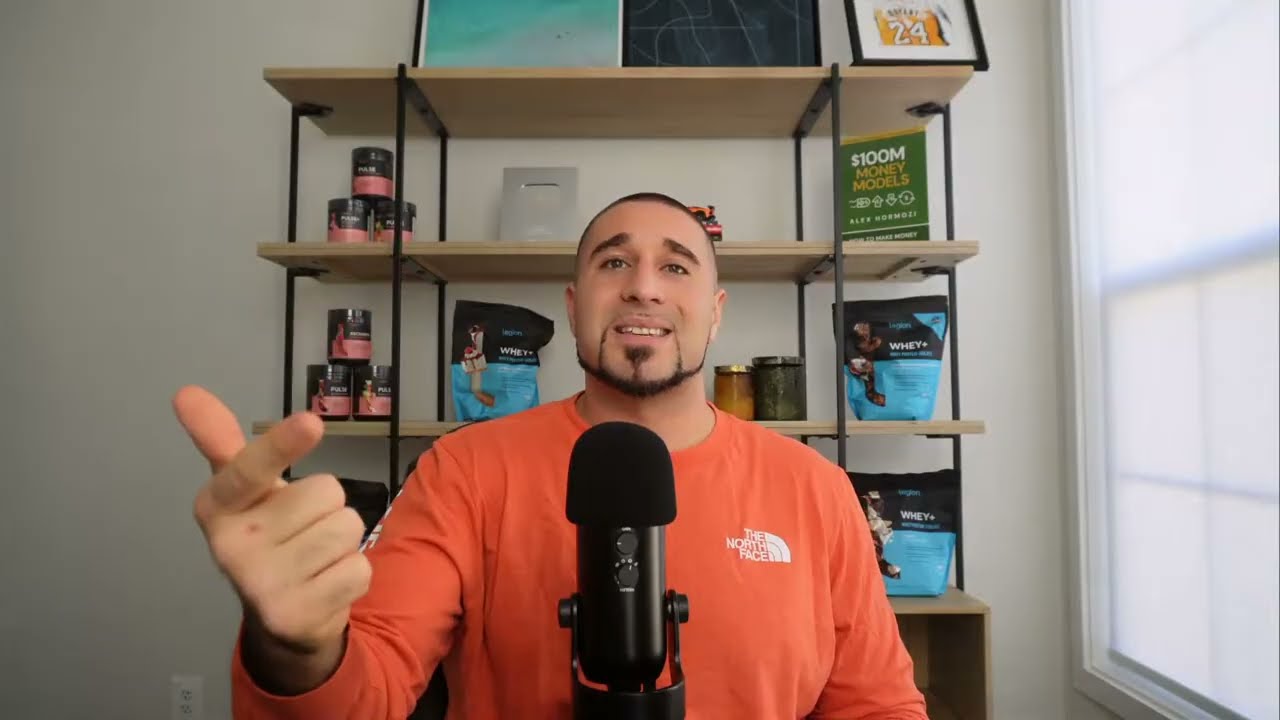
In this 47‑minute live session, fitness coach Eric Roberts answers a rapid‑fire series of viewer questions covering a wide range of topics. He explains how to train without equipment or with limited range of motion, emphasizes the importance of working within one’s mobility limits and using targeted mobility work. Roberts clarifies the role of body‑fat percentage versus scale weight, urging listeners to focus on building muscle through heavy strength training (5‑12 reps, near failure, 90+ seconds rest) while keeping protein intake high across all phases (deficit, maintenance, surplus). He outlines progressive overload methods such as double‑progression, recommends periodizing programs every 4‑8 weeks, and advises on rep‑range adjustments when plateaus occur. Lifestyle factors—including sleep, hunger cues, fiber, step count, outdoor walking, and timing of post‑meal walks—are discussed as modifiers of metabolism and adherence. He offers practical equipment guidance (weighted vests, walking pads, resistance bands) and a candid stance on supplements, stating they are secondary to a solid training and nutrition plan. The session also reveals his business philosophy: online coaching delivers more value and accountability than in‑person training, with a focus on personalized programs, habit formation, and ethical sponsorship choices. Throughout, Roberts balances a conversational, instructional tone with enthusiastic, supportive sentiment, aiming to empower viewers to make sustainable changes.
Chapters
Okay. Do you have any no equipment strength training to build muscle if they cannot take dumbbell? No, you're probably not going to build much muscle, but you can still maintain muscle. So doing bodyweight workouts will be able to help you at the very least maintain what you currently have. What would you suggest on building muscle when you have limited range motion in left arm? You can't straighten it out anymore. If you have limited range of motion, you just work within the range of motion that you can. You could do mobility work to be able to try to improve that range of motion. I don't know. This goes for any injury or any mobility restrictions that somebody may have. You may be able to improve that via proper mobility training. So that would be the first thing I would say. The second thing though is just work within the range of motion that you can go in. So for example, I know you said it was your left arm, but we have a lot of people, we've coached a lot of clients who maybe they have knee issues and they can't go like all the way down in a squat or a lunge. And so just being able to work within the range of motion that you can, that's all you can do. Um, and again, over time, if you can slowly improve and increase that range of motion, then it will help you with your muscle building. But Work with what you can for right now. The challenge is when I go too low in calories, like 600, I go back to the binge cycle. Well, then yeah, just don't go— you don't need to go that low in calories then. I know you said you were skinny fat before. So this is something that I think a lot of people here can take and benefit from, which would be number one, when we talk about changing your body, We have to remember it's your body fat percentage. So it's not just losing fat. Your body fat percentage takes into consideration your body fat, but also your lean muscle. So most people don't understand this. If you lose fat, you would lower your body fat percentage, but also if you build muscle, you will lower your body fat percentage because more of your body is muscle and less of your body is fat. So for someone like this, if you're skinny fat and you're finding that you're going very low in calories and it's causing you to like not be consistent or you're not changing your body, it may not be a scenario of you need to lose more fat. It's probably a scenario of you need to build more muscle. And the way you would build more muscle is via strength training on a proper program, lifting heavy, usually in the 5 to 12 rep range, pushing yourself close to failure, resting long enough in between your sets. So resting for at least 90 seconds and then hitting your protein goal and not going so low in your calorie intake because that will help you build muscle and that would then lower your body fat percentage and change the way your body looks. So hope that helped you. You've been doing the Ab Attack twice a week, alternating 3 different days. Should I swap out the exercises or just keep getting better at those? Yeah. And Elise, honestly, there's not that many ab exercises. And so I would just say keep rocking out with what you've been doing and just keep progressively overloading. Unlike training a tricep or a glute or your back, there's not that many different angles to work from. So I would say just keep rocking those out. Do you have to worry about protein to maintain weight loss? Yeah, absolutely. You definitely have to worry about protein to maintain weight loss for a couple of reasons. Number 1, protein will maintain your muscle mass, which will keep your metabolism high. So if you want to maintain weight loss, it's easier to maintain weight loss eating more calories than eating less calories. So that's number 1. Number 2, protein is the most filling macronutrient. So maintaining your weight loss means you have to stay within your calorie maintenance. If you go too low in protein, you'll be very hungry and you'll overeat on your calorie maintenance And you will not maintain weight loss. So absolutely, it's very, very important. And this is why your protein shouldn't really change much, whether you're in a surplus, in maintenance, or in a deficit. More or less, your protein is going to stay the same all of those times because it remains, you know, calories are the most important. Protein is the second most important. So that's what I would say for that. Can you still lose fat while being in a maintenance phase? No, but you can do what I just said. So you won't actually lose body fat, but you can lower your body fat percentage. Because again, in a maintenance phase, you will build muscle slowly, but you'll build muscle in a maintenance phase. So if you build more muscle and keep your body fat the same, that means more of your body is muscle. And less of it is fat. So your body fat percentage will go down. And that's what determines how you look. Everybody's obsessed with a number on the scale, but that number on the scale does not dictate how you look. Your body fat percentage does. So when you have a lower body fat percentage, you will look more lean. You will look more toned and defined. So you won't lose fat, but you can lower your body fat percentage, if that makes sense. Just wondering, does resistance band training build muscle the same way lifting weights does? No. Maybe if you're a complete beginner, you'll build some muscle, but beyond that phase, no. There's, you're not going to get, like I could sit here and lie to you, but it's just not true. You're not going to get the same amount of muscle building as you would with lifting weights and whether it's dumbbell, barbell, cable machines, those sort of things. So I would say if you're serious about building muscle, You just have to, you have to match your expectations to your level of commitment. So if you want to build muscle, but you're not willing to invest in dumbbells, invest in going to the gym, find time to go to the gym, then you need to lower your expectations or you need to raise your level of commitment. This goes for many things in life, but your level of commitment and your expectations have to match each other. Okay. Hi, I'm having a blast in maintenance while lifting heavy. Yeah, fucking absolutely. Yep. Maintenance is where most people should stay. Everybody talks about a calorie deficit, but that's not where you should stay the majority of time. The majority of time you should be in a calorie maintenance. Now, if somebody's watching this and you have 50 pounds that you have to lose, you might be in a deficit for 6 months, 9 months, 12 months, 15 months, however long it takes. But if you think about that in the grand scheme of life, that's not really that long of a period of time. You would do your deficit and then you would just hang out in maintenance. And again, maintenance is where you'll fluctuate 5 to 10 pounds either way, but you don't need to be in a deficit all the time. You should not be in a deficit all the time. You should have a period of time where you do your deficit, you lose the weight, you get to around your desired level of leanness, and then you maintain for most of the year. Maybe you go into a calorie surplus to build more muscle, or maybe periods of times you might want to go in a little calorie deficit to lose a bit more fat. For example, basically this entire year, in January and February, I was in a calorie deficit because I was going on a vacation in March and I wanted to lose some body fat. Went on the vacation. After that, I've been in maintenance, maybe even a slight surplus. Ever since. Now, this upcoming December-ish, January-ish, I'll go back into a calorie deficit to lose maybe 5 to 10 pounds of body fat for a vacation I have in February. After the vacation, I'll come back. I'll be in maintenance until I go on my next vacation. So you should be in maintenance most of your life. Thanks, Eric. You're the best. Thank you so much. Thank you, Annalise. I appreciate it. Yeah, guys. So by the way, if you are interested in joining our club, joining my Clubhouse app, it's basically my online fitness app, or we have our one-on-one coaching online as well. You can click the link in the show notes, show notes, in the description of this video to check out some more of that information. If you're like, hey, Eric, I need someone to hold me accountable. I want an exact plan to follow. I'm very confused. I don't know what to do. Click the link in the description if you're interested in that. Hello, Kim. Is doing a low-impact workout— I'm sorry, low-impact walking video in the house as good as actually walking? There are several walk away the pounds that track steps and equivalent miles. Yeah. So I don't— I mean, if you're just looking for a calorie burn perspective, I would say it's more or less equivalent, right? Whether you're doing it in the house or whether you're doing it outside. Now, I do believe there are other benefits that you get from walking outside or even on a treadmill. I'll go with outside for the most part, even though it's starting to get cold where some of us live. When you walk outside, you get natural sunlight, which improves your mood, improves your bone density. You're getting vitamin D, improves your mental clarity, mental health. It's been proven to improve your creativity, your production at your job, at work. So There are other benefits beyond just a calorie burning perspective of why I would encourage you to get outside and get more steps. Now, if, I don't know, you live in Canada and you got fucking 10 feet of snow, you're probably not going to go walk outside. Or maybe it's super late at night and you want to get some steps in. You might not go walk outside. But if and where possible, I would try to front load your day with steps and get outside, whether it's in the morning, whether it's at lunchtime, whether it's right when you get home, go take a walk because there are much other benefits from walking outside than just a calorie burn perspective. Yes, fiber is also important to maintain weight loss, mainly for the reason of you being full and satisfied. My goal is to remain lean going into 2025, my 2026, sorry. My routine will be at least 10K steps, 30 minutes of skipping rope, mobility stretching, and light strength training. Is my routine well-rounded? Yeah, I mean, that definitely sounds very well-rounded to me. I don't know. I mean, your goal is to remain lean. So, I mean, the other thing would be calories. I don't know exactly how many calories you are consuming, but you would be around your maintenance calories and just making sure you're hitting your protein goal as well. But yeah, that sounds very, very, very good. Lifting weights for a year and I have tennis elbow for 3 months. What should I do? Yeah, so got to change up the workout program. Whenever somebody comes to us with tennis elbow, we typically do a lot less pulling. So a lot less like rows, a lot less lat pulldowns, a lot less bicep curls. We focus more on pushing. So push-ups, bench press, shoulder press. And we have to fix— most people just have really bad form on their pulling exercises. So Pulling exercises are like lat pulldowns, bent-over rows, seated cable rows, bicep curls. So we stop those movements or do less of them in the beginning to rework people's forms. And then you have to get your form correct and make sure you're using the right muscles. Like, I would say 8 out of 10 people that I see work out, if they're doing a one-arm dumbbell row, they're using like 90% of their arm. and 10% of their back. Or the same thing with lat pulldown. They're using 80%, 90% of their arm and maybe 10% or 20% of their back just because their form is not correct. So if you have some sort of tennis elbow issue, I would focus on pulling back on the pulling exercises. Haha, funny. Increasing and keep doing the pushing exercises. Of course, keep doing lower body, things of that nature, and then reworking your form on pulling exercises. Yep, a weighted vest is also really good. I actually just bought one myself. Is walking before or after a meal better? It just depends on your goal. I would say if you want a general answer, walking after a meal is better for a couple of reasons. Number one, it will help your digestion. So like less bloating, less inflammation. Overall better digestion. Number 2, it'll help your insulin sensitivity because when you walk after a meal and you get your heart rate up even slightly, your body does a better job of something called nutrient partitioning. And that's just like a fancy term for like actually using the food that you just ate. So your body will take the protein, the carbs, the fats, whatever you just ate, and it will kind of push it into your muscles in a better way. in a more efficient way. So walking after your meals, I recommend doing that. And it's just kind of an easy way to increase your step count for the day as well. What protein would you recommend for a vegan? That's my struggle. So a couple of things here. Protein powders, like the company that I work with, Legion Athletics, they have a vegan protein powder. I actually have a couple of vegan or vegetarian assistant coaches on my team, and they eat like a shit ton of protein, like 150, 160 grams per day. It's crazy. But they do utilize protein powder. So I'd say protein powder is a big one. And then also as well, just finding the ones that you like and that work best for you and just like doubling down on those, whether it be tempeh, whether it be tofu, whether it be seitan, whether it be Greek yogurt. vegan, vegetarian. So whether it's eggs, depends on what you can do, but it's just like anybody else. I mean, you just got to find what's going to work best for you and you have to kind of double down on those. Use protein powder as a way to get an easy 20 to 50 grams a day and you get the rest through food. If somebody lost weight, can you maintain if you can't afford protein? For sure. If I can't increase weight on a specific lift in reps, should I lower the reps and increase Been stuck on one lift that I've had no progress in about a month. Okay. So if you've plateaued on an exercise with the weight that you're doing, you can do a couple of things here. Number one, I always encourage people to actually do less sets and less reps because the reason most people are plateaued is a strength issue. So if you're always doing 3, 4, 5 sets, And you're always doing 10, 15, 20 reps, you're not taking full advantage of the strength work. So I'll give you an example. One of my clients one time was having a really hard time increasing his bench press, but he would always do like 225 for 10 reps. And I was like, hey man, how about we do this? Let's do like 2 or 3 sets of 3 to 5 reps and do heavier weight. And like within one month, he was hitting a new PR pretty much every single week because he was able to lift way heavier and he was training strength a lot more. So that's the first thing I would do when anybody is plateaued. I would decrease the reps and increase the weight. How would I encourage a kid to be active? I would first lead by example. So if I wasn't doing the things, I would start doing the things. Number 2, I would try to include them if and when possible. So whether it's making a mandatory after-dinner walk, or if we're on the weekends, we have to start our weekends with a walk, for example. But you can't really force them. You just have to encourage them and make them a part of the things that you do. And number 3, for anybody, whether a kid or an adult, some sort of positive reward for that behavior, whether it be screen time, whether it be things that they want in their life, right? You have to tie in positive reinforcement to some sort of behavior to create behavior change. How often, Stephanie, how often should you work The one-off abs into your week, Stephanie. I would say 1 to 3 times a week is usually more than enough because we also have to remember your abs are a muscle just like any other muscle. So you don't need to train them 4, 5, 6 times a week. 1 to 3 times a week would be enough for dedicated ab exercise. And because you're in the clubhouse, Stephanie, we already have And you're working with Jamie. We have ab workouts already built into each of your programs. So doing specific ab exercises 1 to 3 times a week. Thoughts on waist trainers, sweatbands, corsets? Yeah, I'm not the biggest fan. I believe they could potentially even be harmful because they would take away from learning how to properly brace your core and properly engage your abs. And they're not like, they're not going to help you lose fat in your waist and stomach area. The thing that helps you lose fat is a calorie deficit. So, I mean, I kind of think they're a waste of money, but it depends on what you're using it for. Like some people use it for specific reasons, but I think generally speaking, that's what I would say. I ordered my body and should arrive in 90 days. Thanks for the help, advice, and endless encouragement. That's funny. There you go. Why is it easy to become fat but hard to lose it? The same way that all hedonistic things are easy. It's easily accessible. It's instant gratification. It's hard to practice discipline. It's hard to practice delayed gratification. It's hard to grow up in a time where everything is at our fingertips. Uber Eats, DoorDash, You know, having these highly palatable foods in your house that are very easy to overeat on. It's hard, but that doesn't mean it's impossible. And it doesn't mean that we can't do it. Awesome. Gonna try that next week's gym session. You got it, Felix. Starting from 1 and 2 kgs here, how to make sure you're increasing weights but not strain on your muscles? Like, shall we move on to the next set of weights after a month? Okay, so here's a very simple progression you can do with your weight training. It's called double progression for those of you who are nerds like me and want to know. Let's say you're doing a workout and you have a rep range of 8 to 10 reps. So week 1, you do 8 reps with 50 pounds. I'm just going to use 50 pounds as the example. Week number 2, you do 9 reps with 50 pounds. And then week number 3, you do 10 reps at 50 pounds. Once you hit the top end of your rep range, that's when you would decrease the reps back down to the bottom of the rep range and increase the weight that you are lifting. Because that way you've given yourself some time to work with the weight. You've progressed with it. You've gotten stronger. And now you're ready to lift the heavier weight. So that's how I would typically like to approach increasing weight. Hi, I probably went about weight loss all wrong. I focused only on cardio. You're 50 pounds down, but now you need to build muscle. Struggling knowing there will be a weight gain as a result. It should be expected, right? So a couple of things. Number one, losing 50 pounds is incredible. I don't care what anybody says. So congratulations to you. Number 2, I wouldn't say you went about it wrong. I would just say maybe it wasn't the most optimal way to build muscle, but like you're here now and now you want to build muscle. So it's totally fine. And I would focus less on, are you going to gain weight or not? Because this could go one of two ways. You could potentially gain weight because you're gaining muscle. But on the flip side, when you gain muscle, especially because you haven't been doing any strength training, You are going to increase your metabolism. So you very well may find that when you increase muscle mass, your metabolism increases and you might not gain any weight. I would worry less about the weight on the scale. I would focus much more on your body fat percentage because remember, like I've been saying this entire live, if you keep your body fat the same, but you build muscle, your body fat percentage goes down. This means you will look more defined. toned, lean, and you will be healthier. So that's number one. And number 2, I'd focus on how your clothes fit and how you feel because you'll probably have more energy. Your clothes will fit better. We just said you'll look better. So whether you gain 4 pounds or whether you lose 2 pounds or whether you gain the— stay the exact same, you guys, the number on the scale just doesn't really matter as much as most people think it does. I don't know. This is just the reality of building muscle and losing fat and being healthier and looking how you want. Nobody ever— and also, who's going to look at you and say, oh, wow, you've only lost 46 pounds instead of 50? Nobody fucking knows that. Only you know that. So why are you caring so much about it? Cool. I've been seeing too much protein can cause Cancer. I have no clue about that. I have never heard that. Hi, some days I'm always hungry. Please help. Yeah, I mean, there would be a reason why you're always hungry. It could be because you're undereating on some days. It could be because you're doing more exercise on some days. It could be because you have less sleep on some days. There's many reasons why you would feel hungry on some days and not versus the others, but I would number one, try to figure out why that is happening. And then number two, we have to understand this is a normal part of being a human. You're not supposed to never be hungry and hunger isn't like a panic button to go eat. You're gonna be okay if you're hungry for an hour or two. You're gonna be— luckily we live in a world where most of us are gonna be able to access our next meal. Like we have food accessible to us. We're not actually going to starve. So being hungry, even when you're at maintenance, for example, you could be hungry. Maybe it's because you've gone too long without eating. Maybe it's because you didn't get the best sleep. And when you don't get the best sleep, you automatically have more hunger and cravings. Like there's many reasons why this could be happening. Maybe it's because you're not eating enough protein and fiber. Maybe it's because your calories are too low. Like, I don't know exactly why this is happening to you. If you were a client of ours and we were working with you, we'd be able to tell you, but I would try to figure out why it's happening and then you would just kind of reverse engineer and make a plan for that. So if it's because you haven't eaten in a while, you got to implement more high protein snacks. If it's because your sleep is shit, we got to fix our sleep. So find out why and reverse engineer. And again, if you're somebody who you're interested in working with myself, my team, one-on-one, there'll be a link in the description of this video to learn a bit more about our one-on-one coaching. I love your videos. You're the perfect mix of firm but compassionate when it comes to losing weight. Thank you. I appreciate that. If I want to build big muscles, should I take 2 days off or 1? You can build big muscles taking 3 days off, 4 days off. Most of our clients work out 3 to 4 times a week. So that's what I'd recommend. What's up, Camille? How many incline treadmill cardio sessions should I do a week? Currently doing 4 weight training workouts a week. Just depends on your goals, Camille. If you're looking to improve zone 2 cardio, I would probably say 2 to 4 per week depending on how long they are because we're typically trying to be in zone 2 cardio 1 to 2 hours a week. So if you do 2 30-minute sessions, if you do, you know, 3 or 4 or 5 20-minute sessions, it just depends on how you kind of want to break it up. Afternoon, Eric. How are you doing today? I'm doing great, Cameron. How are you? Do we train clients in person? Currently we do not train clients in person. All of our coaching is online. And funny enough, I used to be an in-person trainer, like at your local gym or whatever. And honestly, the reason I started coaching people online was to get them better results because what I found training people is they would come for a one-time a week or a two-time a week or maybe three times a week if they were fucking rich as Because in-person training is expensive. But even working out for 3 hours a week, the other 23 hours of the day with their nutrition, with their activity, with their steps, they weren't getting any help with nutrition and they weren't having any accountability when they really needed it outside of the 1 hour in the gym. So I started training people online to get better results. And I can confidently say I've had that be able to happen because if you have a good online coach and a good online program, you're able to provide more accountability and more nutrition for actually less money. Like what we charge now is less than what I charge training people in person, but we're getting people better results and providing more. So that's why. And again, if you're interested learning a bit more about that, you can click the link in the description of the video. I have the time to go to the gym at night after a workout. I usually have some Greek yogurt. Sometimes I'm so full, already ate my protein, I don't eat. Would that diminish No, the most important thing is hitting your calorie and protein goal. So as long as you do that, that's the most important part. What are your thoughts on plant-based proteins, especially those lab-grown meat? Yeah, I mean, I don't know who am I to say what's right or what's wrong. I mean, if you want my opinion, I mean, if that's what you would like to consume with your protein sources, that's completely up to you. Are there better options? Like, For sure. I think there's better options, but if you're vegan or vegetarian and that's the way you get some of your protein in, I mean, you have limited options. And so sometimes you have to pick the option that may not be the most optimal, but is going to help you still reach your goals. So it just depends on the person really, man. Should we take creatine in the beginning of our workout journey or wait? So here's how I like to You see all these supplements behind me, right? Here's how I like to think about any supplements. Before you buy this protein powder, before you buy this creatine, before you do anything with supplements, supplements are meant to supplement your already good training program and nutrition plan. If you don't have a training program, And if you do not have a nutrition plan, you have no business spending money on supplements because you don't have the 2 things that are actually going to help you first. So many people focus on supplements when they don't even have a fucking plan to begin with. Like you're going into the gym just doing random fucking machines. And I'm not talking to you specifically. I'm talking more in generality here. But it's not going to fucking matter whether you take creatine or not. You don't have a fucking good workout program you're following. So take the same money that you were going to spend on all this supplement stuff and put it towards a proper strength training program or a proper nutrition plan or hiring a coach or whatever it is. Then you can worry about supplements. So if you're a beginner and you have that, cool, take creatine then. But if you don't fucking have that, do that first because that's going to be the 98% of results. Creatine is 2%, 3%, 4%, 5% maybe. So get that first. And again, if you want some help, click the link in the description below. How is your metabolism affected in a calorie deficit and for what duration does your body then adapt? So your metabolism will slow down in a calorie deficit. Stick with me. I want you to imagine you're wearing a 50-pound weighted vest all day long. You're wearing it to work, you're wearing it going upstairs, you're wearing it sitting at your desk, you're wearing it walking to your car, everywhere. And then at the very end of the night, you take off that 50-pound weighted vest. Do you think it would be easier or harder to move around and do all the things you need to do? It'd be easier, right? Because you don't have 50 fucking extra pounds on you. So when it's easier, your body doesn't have to work as hard because it's easier. So your metabolism will slow down and burn less calories, but that's not a bad thing because you've just lost 50 fucking pounds. Would you rather be 50 pounds overweight and have a higher metabolism, or would you rather have a slower metabolism but be 50 pounds less? So your metabolism is going to slow down, but this is a normal part of a calorie deficit and a normal part of losing weight. So that's number one. Number 2, when do people's bodies adapt? Everybody's metabolism is different. So some people, I've coached clients who have lost legit 50, 75, sometimes 100 pounds without changing their calorie deficit once. They've legit ate 1,800 calories the entire time and they've lost 100 pounds. I've also had some people where they lose 10 or 15 pounds and they start to plateau and we have to readjust their calories. So I can't tell you exactly how long it's going to be. This is why if we're coaching somebody, we will monitor their body weight, we'll monitor their measurements, we'll monitor their calorie intake, and we'll see Are we still making progress or is it time to make an adjustment? So you kind of have to just play that game of if you're seeing progress, keep going. If your progress is slowing down and plateauing, you're going to have to make some adjustments. And what adjustments would you make? You would either have to decrease your calories or you'd have to increase your energy expenditure, which is your steps or your cardio. One of those 2 things has to happen to re-get you into a calorie deficit. Morning, Eric. Does walking count as cardio or is it best to run? I walk 8,000 to 19,000 steps per day, but I'm not sure if that's productive. Well, I can assure you that's very productive. And yeah, it counts as cardio, but I don't know what you're doing the cardio for. So for example, if you're doing the cardio to lose weight, Yes, that is more than enough to lose weight. If you're doing the cardio to improve your heart health or your cardiovascular fitness and endurance, you may need to add in extra zone 2 cardio. So there are different heart rate zones that you can be in. So if you've been walking that for a while, that is probably zone 1 cardio. It's like your lowest form of cardio. If you want to improve your cardiovascular endurance and fitness, you would likely have to go up to zone 2 cardio to start to do that. And that would improve your heart health, your fitness. And how would you do that? You would walk on an incline. You would walk on a weighted vest. You would do the stair stepper or the elliptical or the rower or the SkiErg or swim at a zone 2 pace. Okay. So it just depends on your goal, but That's definitely productive, but you may need to do more or you may need to do less depending on what your goal is. How long should you stick with a workout routine? Like 6 weeks? Yeah, typically our clients, we change up workouts every 4 to 8 weeks. So for example, if you were to join my app or you were to join our online coaching, your workout program would usually change every 4 to 5 weeks. And the reason that we do this is Number one, people just get fucking bored doing the same things. Even me, I love working out, but I get bored doing the same thing. And number two, you want to be able to hit your muscles from different angles and ranges of motion to be able to fully maximize your strength and muscle building. So for example, if you're only doing a tricep extension, like a tricep press down, that is working your tricep primarily in the shortened range of motion. Whereas when you do an overhead tricep extension, then this is working it more in the lengthened range of motion. But if you only did one or the other, you would miss out, which means you wouldn't fully develop your muscles and build muscle and build strength and do all the great things that we want to do. So this is why I believe every 4 to 8 weeks. It also gives you a long enough time to be able to progressively overload, but also it's not so long that you don't hit other angles or get fucking bored. Hey, Eric, is a walking pad worth it? Oh yeah, I definitely think a walking pad is worth it. Absolutely. Yeah, I think it's one of the best investments besides signing up for our coaching. I think it's one of the best investments you can make, man, because daily steps are so important, not just for fat loss, but for overall cardio and overall health and longevity. So if you live in a place where it's cold as fuck, or if you have a desk job, And you start work when it's dark outside and you end work when it's dark outside. Like, yeah, a walking pad would be great. Ever thought of developing an energy bar to add to your products, Eric? An energy bar. That's an interesting concept. I am actually working with Legion Athletics to build my own supplement, so I'll have to take that into consideration. Can I break my fast with a protein powder shake? You don't need to fast. at all. So yeah, doesn't really matter. Do you think it's better to work out in the morning or evening? Doesn't matter. Whichever one you're most consistent with. Does it matter if I track calories? I'm at a healthy weight and height. I'm focusing on body recomp by getting enough protein, following 80/20 rule. I don't think it's necessary to track calories. No, I think it just depends on how accurate you want to be. So I'll give you an example. I tracked calories for the first 3 years of my journey, losing fat, building muscle, all that sort of stuff. But I learned what I needed to learn and I set up the habits I needed to have to be able to now maintain what I have. So in the past 3 months, I haven't tracked my calories at all. Literally, I weigh the exact same. I just weighed myself the other day. I was 250 3 months ago. And I'm 250 right now. So after tracking no calories for 3 months, I've still maintained. So if you want to maintain, sure. But on the flip side, when I go into my calorie deficit in about 2 to 3 weeks, I'm going to start tracking my calories again. Why? I don't want to maintain. I want to lose fat. And I got to make sure I'm getting enough calories, enough protein, so on and so forth. So you don't have to if you have the skills and the habits to be able to maintain, But it just depends on what your goals are there. Can I have one day of the week where I don't track calories and still lose weight? Sure. But it just depends on what you're doing that day. Are you eating as normal or are you stuffing your fucking face? You can't just eat whatever the fuck you want on one day and expect to lose weight still. That's probably not going to work for most people. Maybe it will for some, but from experience coaching a lot of clients with their fat loss, It's not going to work. So if you eat more or less the same, sure, you cannot track calories. But if you use that day to just like go out to eat 3 times that day and like way overeat, no, you're probably not going to lose weight. I know this is a funny question. What do you do if you have a client over 1,000 pounds? We would do what we can. We would help them with their nutrition. They probably wouldn't be able to move much. And so we would primarily focus on nutrition. And simple changes, whether they're 1,000 pounds, 500 pounds. I worked with a sumo wrestler one time. He was like 520 pounds or 400 pounds or something crazy like that. And we really just focused on a lot of nutrition stuff. So how do I feel about apple cider vinegar? Do I think it helps with weight loss? No, I do not think it helps with weight loss. It just doesn't. The only thing it helps— what helps with weight loss is calorie deficit, protein, eating fiber-rich meals, protein-rich meals, getting daily steps. A lot of people try to find these little quick fixes or little hacks for weight loss, and it just, in my opinion, takes you away from what matters the most. Focus on your calorie deficit. Focus on your protein intake. Focus on getting steps. Focus on lifting weights. Put all of your focus into those things and I promise you will see results. I went from 285 to 200, but when I first started lifting weights and eating for body recomp, I've been able to eat 2,100 to 2,200 per day. Yep. That's awesome. I like the way you get straight to the point. I'm going to get my finances in a position to invest in your coaching. That makes me super happy. And thank you so much for following along. And I'm here whether you join coaching or not. And this is, I want to, Cheers to everybody in the live and everybody who watches back. I make my living and put food on my table, and I'm able to put food on my employees' table from the business that I run. I run an online coaching business and we help people lose fat, build muscle, hold them accountable, check in. I have my own app, all the great things. Great. And yes, that's how I survive. That's how I live. That being said, I don't— that's the only way I make money. I don't do brand deals. I don't just make a post on my Instagram or put it in a social media video. I will get a lot of— here's a fun little tidbit for you guys, and I do have to go rather quickly, but a brand, a company that you know reached out to me and basically offered me multiple 4 figures, 4, 4, no, 5 figures. It was like 20 grand. They offered me like 20 grand to put like an ad in my YouTube video. And I said no, because that's just not how I do my business. The way that we, the way that I do my business, if I don't provide you enough value to at some point wanna join coaching, that's fine. Like, I'm just here to help you as best as I possibly can. If at any point You want to support me, you want to support our coaching, you want some help. I just want to be the guy where you're like, you know what? I need some help. I'm ready. Eric's the guy I want to go to. Eric's the guy I want to get some help with. And that's what we do. But if you don't ever do that, and trust me, 90 to 95% of people that I come across in my life on the internet are never going to sign up with us. They're never going to buy our coaching. They're never going to buy our program, join my app. They're never going to do it. And guess what? I understand that. I'm just here to help you as best as I possibly can. So if you want more help at any moment in time, we're here. But if not, I still love you and I appreciate you being here. Cool. Couple more questions, guys. And I do have to pop off here. Hey, Eric, I've kind of really admired you the past couple months. I'm 128 at 5'8 as a male trying to gain weight while working out. How can I gain weight healthily? So you're going to be in a 200 to 300 calorie surplus. So what I want you to do is click the link in the description of this video. There's a free calorie calculator. Fill that out and that will tell— and put the goal as gain weight and that will tell you exactly how many calories you should be eating. Okay? So that's where I would start. And then of course, you want to gain weight via muscle and adding lean muscle mass. So you got to have a proper strength training program. Again, if you want to join coaching, you can, but, you know, just make sure you're on a proper strength training program. Protein ice cream. Yeah. Well, Ninja Creami, that's what I would do. I love my Ninja Creami. Couple more questions. Can you do intermittent fasting to get over weight loss plateau? You could eat 10 times per day or you could eat 2 times per day. Your calories are what's going to matter the most. So you have to break a weight loss plateau by either decreasing your calories or increasing your I know you have a Chipotle day where you even order chips and not track. Do you know more or less how many calories you're consuming? Yes, I do. I do because I've tracked it before. I know how many calories I'm consuming because I've tracked it before. So yes, I absolutely know. And I factor that into the day and I also factor that into the week. So here you go. We're on the weekend, right? So what's today? Saturday. I'll probably go out to eat tonight. And so what I do, like during the day, I still eat during the day. But what I do is I typically eat more high protein, lower calorie, high fiber, high fruit and veggies. Because what that will do is I'll have a little bit less calories during the day to be able to have more calories at night. And that way I don't like blow my calories so far out of the water. Not just today, but overall in the course of the week. Because over the course of the week, like Monday through Friday, Sunday through Friday, I eat pretty fucking boring. I eat the same meals. It's like I know exactly what I'm eating. It's really just like 1 or 2 days a week where I'm going out to eat. So I'll eat a little bit less Sunday through Friday to eat a little bit more on Saturday. But I eat a little bit more, like maybe 300, 400, 500 calories over, not 3,000 calories over. So that's how I'm able to fit it into my whole week to be able to still maintain, if that makes sense. This is the type of ethical business the world needs right now. Eric, you're an inspiration. The world needs more people like you. Thank you so much. I want to say I've lost over half my body weight since August of last year. 175 owed a lot to you and your videos. Wow, that's incredible. Congratulations. I mean, I didn't do anything. You're the one who did all the work. So that's fucking awesome. Ever since I started listening to you, I've lost 30 pounds this year. Wow. Congratulations. You guys are fucking crushing it. Jesus. Let's fucking go. It's awesome. Let's go. When I look in the mirror, I don't see what they see. Is this common? Yeah, that's common because we're our own biggest critics and you see yourself every single day. So when you look in the mirror, you're not really going to notice much of a change. This is why for our clients, we make them take their progress pictures every 4 weeks. And what we'll do is like month after month after month after month, we take their beginning progress picture and we put their current a month later, put their current from the beginning, put their current from the beginning. And that way it forces you to see the progress that you are making. Hi, Eric. Hello, Eric. I'm 35% body fat. Want to go down to 12 or 11. How do I do that? Calorie deficit. I know it seems very simple, but you got to eat in the calorie deficit. You got to lift weights. You got to get high protein. If you want a starting point, I would click the link in my bio or click the link in my bio, but also the description of the video and use my free calorie calculator. It'll get you a starting point. Do you think 45 minutes can be just as effective as 1 hour plus? I don't think, I know. 90, I would say 90% of our clients do workouts that are under an hour. And actually, I just made a YouTube video on this today that will be out next week where I go in depth on how to set up a workout routine. So be on the lookout for that. When changing up the workouts, what weight would you start with? I don't know I'm strong enough to hurt myself after 48 weeks. Well, take the first week and figure out. Like the first week should kind of be a feel out week. And then the other weeks you'll be able to know exactly where you should be and be able to push yourself a little bit harder. From India, the calorie in Indian food is impossible to measure. Is tracking the raw material calories enough? Yeah, but we've coached people in India or who are from India and just, you have to do the best you can. So it might not be perfect, but you can still weigh and measure the food, whether it be the raw ingredients and what it comes out to, or even the cooked ingredients. Just try to be as accurate as you can because you need to get like around where you're at. And as long as you know around where you're at, you'll be able to work with that. Is incline walking Great to burn more fat. Incline walking burns more calories, but I wouldn't say it's like you need to do it. Like just hitting your daily steps is more than enough. Hitting your daily steps and improving your nutrition, eating in a calorie deficit is more than enough for you to lose weight. So if you want to add in incline walking, awesome. But if not, that's totally fine as well. So cool. All right. I got through every single question, guys. That is it for the live today. So I really appreciate you tuning in. And again, if you're watching this and you're like, shit, I want this guy, Eric, to help me out in my journey. And maybe you want a laid out plan personalized for you. You need some accountability. Click the link in the description of the video if you want to learn more about my online coaching program. And even if you don't, that's okay. I still love you. I still appreciate you. Thank you for being here. I'm going to try to continue to keep doing these YouTube lives. So be on the lookout. You should probably turn on your post notifications and like notifications for my channel. It'll alert you. when I go live if you want to tune in again. So I love you. I appreciate you. Thank you so much, you guys, and I hope you have a great rest of your weekend.










