Best way to measure fat loss progress I How to know if you are losing fat
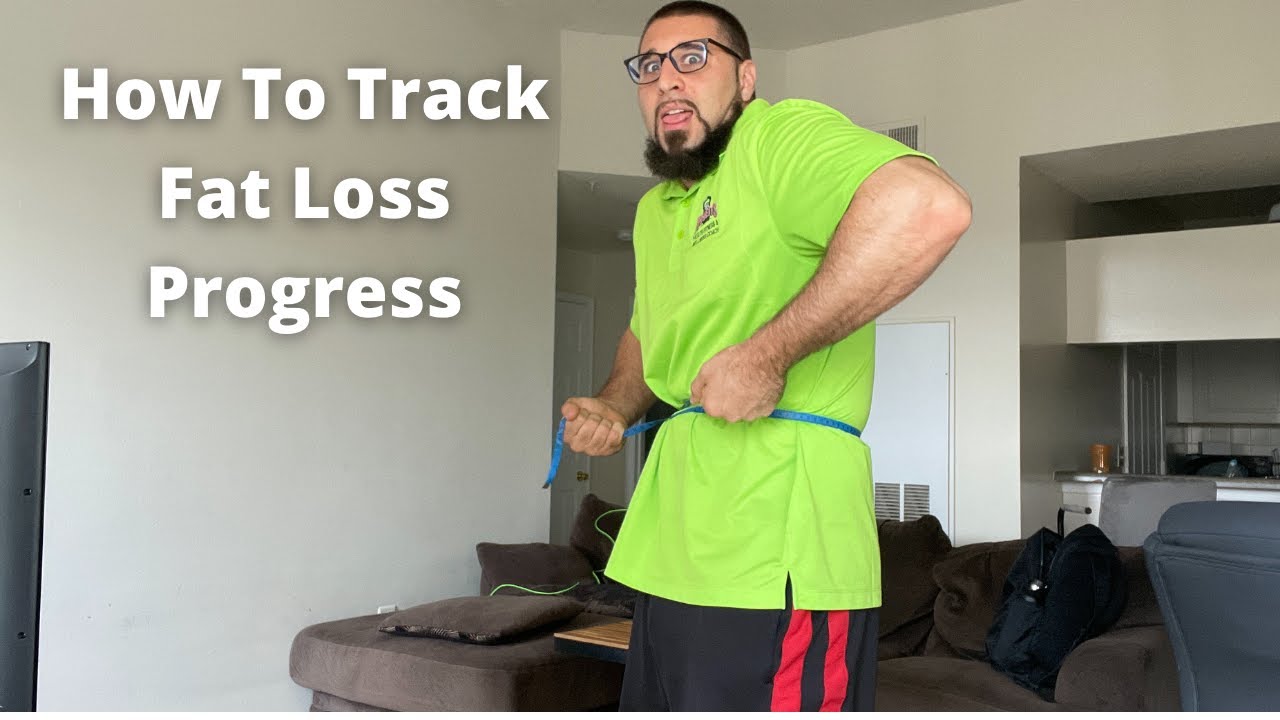
In this instructional video, Eric Roberts explains why tracking body weight alone is insufficient for assessing fat loss and outlines a comprehensive, data‑driven system for monitoring body composition changes. He begins by differentiating weight loss (which can reflect water, organ mass, or food contents) from true fat loss, emphasizing that scale fluctuations can be caused by hydration, carbohydrate intake, or muscle gain. Roberts warns against letting the scale dictate self‑worth and stresses that many people mistake short‑term weight changes for progress. He then presents four core tracking methods: (1) daily morning weigh‑ins taken after voiding and before any intake, recorded as raw data to observe long‑term trends; (2) body measurements taken every two weeks at key sites (thighs, glutes/hips, waist – optionally above, at, and below the navel) to capture changes in circumference; (3) progress photos captured every four weeks to provide visual confirmation and motivation; and (4) systematic workout logging (weights, reps, sets) to verify strength gains that indicate muscle growth alongside fat loss. Throughout, Roberts blends practical advice with motivational language, urging viewers to stay consistent, avoid emotional reactions to daily numbers, and view themselves as more than a number on a scale. The video concludes with a call to action to implement these tracking habits and stop letting the scale run one’s life.
Chapters
YouTube, what is going on? Welcome back to the video. Uh, why do I do that every time? YouTube, what is going on? Welcome back to the channel. Welcome to the video. It's your first time watching the video. In this video, we're going to cover how to measure your weight loss progress. I'm going to give you exactly what you should be doing to measure accurately measure your weight loss progress because you may have heard before whether from myself or from somebody else or From the internet, the scale isn't always the best way. And that's what we're going to kick this off with, is there's a big difference between weighing your weight versus weighing your body fat, lean muscle composition, so on and so forth, right? So number one, I need to ask you, do you want to measure your weight loss progress or do you want to measure your fat loss progress? Because those are two different things. When it comes to losing weight and/or gaining weight, that can come in various forms. For example, your weight is determined by your internal organs. I don't necessarily know if you want to lose your internal organs because— how did I just say that? Internal. I don't necessarily know if you want to lose your internal organs because that would probably be bad because you wouldn't be alive. Another thing, for example, if right now if I drank 16 ounces of water, if I weigh 260 right now, about 260, if I weigh 260 right now and I drank 16 ounces of water, I'm going to then step on that scale immediately after drinking the 16 ounces of water and I am going to weigh 261 on that scale. What does that mean though? Did I gain a pound of fat? No, I just have a pound of water in my stomach now. I just have more content inside of my body. Subsequently, 2 hours later, when I go to pee out that 16 ounces of water, I'm going to get back on the scale and weigh 260. Did I lose a pound of fat? No, I just peed out some water. So there is a big difference between measuring your weight loss progress Versus measuring your fat loss progress, and I think I don't know. You can tell me. I think you want to measure your fat loss progress because you want to see your body composition change. You want to lose your stomach fat. You want to be able to see excuse me muscle definition in your arms. Like you want to lose body fat, and there's a big difference in losing body fat versus losing overall weight. You can lose overall weight and not lose any body fat. Just like I said, if you drank water and then peed it out, you'd be losing weight, but that doesn't necessarily mean you're going to be losing body fat. That's why, fun fact, very early on when people start doing the ketogenic diet where they cut out all their carbohydrates, which I have to believe some people need to be put into a mental institution if that's what you do. I'm kidding. To each his own, but I'm half kidding. Either way, when they lose weight very rapidly, right? You might have seen, whether it's your friends or family member, whoever, they lose like, you know, 8 pounds in a week or 10 pounds in 2 weeks. And you're like, holy shit, that's a lot of weight. Yeah, it's a lot of weight because, for example, for every 1 gram of carbohydrate you eat, you're going to store 3 to 4 grams of water weight. So if you go from eating 200 grams of carbs per day to 30 grams of carbs per day, you're, you're going to lose a massive amount of water weight. You're not necessarily losing body fat. You're losing a massive amount of water weight. Again, this is why you can lose the weight on the scale, but that doesn't necessarily mean you're losing body fat. It doesn't necessarily mean you're going to look better, feel better, be healthier. So we have to make sure we determine what we are talking about here. Weight loss versus fat loss. And piggybacking right on top of that, there are so many reasons why your weight can fluctuate. You can go up and down, side to side, wherever. I did an entire video here on YouTube on why your weight can go up, go down, fluctuate. I'll, I'll link it here above. But again, point being, you shouldn't only be using the scale as your only form of progress because that doesn't accurately track your fat loss progress. And if you're watching this video still, you're probably focused on your fat loss progress. You want to look better, you want to feel better, you want to have more energy, you want to fit into clothes better, you want to look better naked. Fat loss progress. So, so realize there's a difference between losing weight and losing fat. Piggybacking right on top of that very quickly, you can also, especially if you are involved in a strength training program, you are lifting weights, you can easily lose body fat for sure while gaining lean muscle mass. So let's just say, for example, you lost 4 pounds of fat and you gained 3 pounds of muscle. Muscle weighs the same as fat. Muscle doesn't weigh more than fat. I don't know who came up with that. A pound of fat weighs the same as a pound of muscle. The composition is different. Muscle is more dense than fat. So if you have more muscle, it's going to take up less Yeah. But point— that's why you're gonna look different. But point being here, if you lose 4 pounds of fat and you gain 3 pounds of muscle, the scale would only be weighing 1 pound less because you've lost fat and you've built muscle. But again, that doesn't reflect your health. It doesn't reflect your body composition. It doesn't reflect how you look in the mirror. It doesn't reflect what, you know, how you fit into clothes, what you look like naked. I can put up some of it, some of the pictures here of some of my online coaching clients who have not necessarily lost a ton of weight, but they look incredibly different. That is what I'm talking about, where you can easily lose fat, build muscle, recomp— it's called body recomposition. You're recomping your body to look a certain way without necessarily losing a ton of weight on the scale. And the scale is not going to take into consideration— well, it will take into consideration you losing fat and building muscle, But it just won't change that much. 'Cause if you lose 4 pounds, gain 3 pounds, the scale isn't gonna look different. But you, my friend, you are going to look massively different. Alright, so first and foremost, that is the most important thing. I really need you to understand that firmly because so many people let the scale run their entire life. I don't want that to be you because if that is you, you are fucked. And I'm sorry, but it's just true. If you are only using the scale, I get this so often. People ask me, Eric, why is my weight not going down? What am I doing? And I'm like, cool, what do you— you know, we're going to talk about— I'm going to ask, ask them basically what I'm going to tell you here in this video. I ask them all this stuff over here and they're like, I don't know any of that. I'm like, okay, well start doing that, come back to me 8 weeks later and we'll see what's going on. And so please do not let that scale Run your life. And on top of that, just very quickly, you are worth more than the number on the scale. So many people also put their entire self-worth into a number on the scale. We're going to talk about things over here to measure your fat loss progress besides just the scale, but even so, you are more than just your body. You're more than just a number on a scale. You are a kind human being. You are a parent. You are a loving friend or spouse. Like, There's more to your life than just a number on the scale or your body. So let's kind of keep that in mind as well. So that is the first part, guys. Now, the 4 ways to accurately track your fat loss progress. I'm gonna almost contradict myself a bit here, but there's 4 different things that you should be tracking, and there's other things as well, but these 4 main things you should be tracking. Number 1 is gonna be body weight. But when I say body weight, I don't— so number 1, You should be weighing yourself every single day. And I say should, I'm gonna link a video here above on why I believe weighing yourself every day is the best. Very quickly put, it's just data. That's it. So I don't need you, when you weigh in on Monday and you're 205.7, and you weigh in on Wednesday and you're 203.4, number one, I don't need you going like, yes, this is great, 'cause it's been 2 fucking days. And then when Friday comes around and you weigh in at 206.2, I don't need you being like, oh my God, oh my God, I gained weight, what do I do? That's gonna drive you insane. So, but if you weigh in every single day and just get the data points and tally them up, then if you weigh in on June 1st, weigh in every single day for those 4 weeks, July 1st rolls around, what is your weight? August 1st rolls around, what is your weight? You can look over the trend of a long period of time. You don't take the day-to-day numbers and get emotional about them. They're just data. And you, the more data you have, the better. And again, I talked about this in that video, but the more data you have to look at your overall progress, the better, because you can see overall trends. And that's what you're looking for when you take your body weight is overall trends. I don't care what you weigh on Monday compared to Thursday. Or Thursday compared to the next Monday. It doesn't matter. What matters is the overall trend over the course of 30, 60, 90 days. And the more data you have, you can see trends. Like, for example, I'll put a picture up here of one of my clients, her trend. You can see your trend over a long period of time, and that's what matters. Because if your trend line is going down, that's all that matters, man. So taking your body weight every single day. When you wake up, after you pee or poop, before you eat or drink anything. That is the most accurate time to take your body weight. I don't need you to take your body weight 4 times a day. Like, I get people asking me, Eric, I weighed in at 204 this morning, but then 207 tonight. What, what happened? I'm like, number one, why are you weighing yourself 2 times a day? Like, that's— you don't need to do that. Because again, like I said, your weight's gonna fluctuate for so many reasons. If you're taking your body weight when you wake up, And then midday, and at the end of the day, like, you're gonna have more food in your stomach, you're gonna have more water in your stomach, like, your weight is gonna fluctuate. So do it in the morning when you wake up, after you pee or poop, before you drink or eat anything, and that is your data point. And you just get those data points over the course of 30, 60, 90 days. You are not allowed to— I'm gonna be very clear when I say this— you are not allowed to get emotional about your weight in the first 30 days. 'Cause it doesn't matter because you can't even look at that. You can't compare that. You need to go at least 30 days and then you can look at what did you weigh on June 15th to April— to August 15th, August 15th to, you know, uh, September 7th. Like you can look at that. You can't look at the first 30 days. So after the first 30 days, you can then start to see a trend and then go from there. By the way, a healthy rate of weight loss is anywhere from 0.5 to 1 pound per week On average when talking about losing body fat. So in 30 days, if you lost 3 pounds, that is fucking amazing fat loss progress. Okay. Got it. Got it. Cool. Number 2, you should be taking measurements every 2 weeks. That's what I do with my online coaching clients. By the way, this is exactly what I do with my clients. So you should be taking measurements every 2 weeks. There are 3 to 6 places you should primarily be taking measurements from. I just sneezed. So, Ah, now those 3 to 6 places are number 1, your legs, your thighs, number 2, your hips or your glutes, and number 3, your stomach. And I say 3 to 6 because I typically just use those 3 with my clients. We do legs, glutes, and stomach. If you wanted to go more in depth, you could do legs, glutes above your belly button, at your belly button, and below your belly button. So that'd make it, That'd make it 6, right? That'd make it 5, maybe. That'd make it 5 measurements. So you could essentially do those 3 measurements for just your waist, and then you would go glutes and legs. So you could do those measurements as well. Just take a measuring tape, wrap it around the biggest part, get the number, document it, make sure it's not overly tight, but make sure it's tight, make sure it's not loose, record the number. And again, every 2 weeks you look at the trend, right? So say, for example, on week 1, the very first day, your waist measurement is a 40. If, you know, 2 weeks goes by and you take measurements again and your waist measurement is now a 39.5, that is amazing progress. And then 2 weeks goes by, let's say you're 39. That is amazing progress. You might have some weeks where, for example, you've— this happens a lot when people first start, when they first start my program. Week 1, the very first day, let's say you have a 40-inch waist. Weeks, and then 2 weeks goes by. Those 2 weeks go by, you're at a 38.5. That is fucking nuts. That's absolutely insane. But let's say from there you quote unquote 2 weeks later only go down, you know, a half inch. That's normal because again, the average— you're not looking for rapid progress here. You're looking for the average over a period of time. And so if you go from 40, 38.5, 38, that means you would lose 2 inches off your waist in 1 month, which would be fucking Tremendous progress. I normally tell people I'm happy if you lose anywhere from 0.5 to 1 inch off your waist in a month's time. So if you lost 2 inches, that would be double what normal progress would be. So those 3 measurements— legs, glutes, stomach— again, if you want to, you can go above belly button, at belly button, below belly button if you wanted to go a bit more in depth there and just get more numbers. But that's up to you. But measurements every 2 weeks. And by the way, measurements are a, a better fat loss progress indicator than just the scale. When I go to check my client's progress, the last thing I look at is the scale. I look at all this other stuff we're going to talk about right now, but I look at measurements and the other 2 things I'm going to touch on right here. The last thing I look at is the scale because I just know the scale is not going to tell me the entire story. So that's my 2 cents there. So measurements, number 2. Number 3, Progress pictures every 4 weeks. These are very, very, very, very, very important, especially because at about the 4-week mark, number one, not only are you seeing changes, but number two, I've just seen coaching hundreds and thousands of people by now, you start to kind of get like, ah, I don't know if this is working, this is getting tough. Like, you know, having to be consistent for 4 weeks in a row, like it's getting a bit tough, your motivation's getting tested. And those progress pictures come around, you're like, oh, holy shit! You put them side by side, you see the difference, you're like, oh, perfect, let me keep going. And that kind of reignites that fuel, reignites that quote-unquote motivation, because you're seeing results. But the only way you're seeing results is because you've been taking the action over the course of those 4 weeks to see the results. And when you see the results, you're like, well, I want more results because I'm, you know, I'm killing it, I'm doing good. And so I want to keep taking these actions, which will then keep bringing the results, which will then keep bringing the The motivation to keep it going, keep it going, keep it going. And that's how you turn things into a change of your lifestyle because you just do it over and over and over and over again because it starts from you taking consistent action, seeing those results. I mean, I've had a lot of people who, you know, progress picture time rolls around and they're like, I don't know, Eric, if I saw a lot of progress. I don't really know that. And we take the progress pictures, I put them side by side and they're like, oh, holy shit. I didn't realize how insane the difference was. And that's because, listen, you see yourself every single day in the mirror. Like, it's hard sometimes to see these changes in your body. So when you take them side— you put them side by side over the course of 4 weeks, 8 weeks, 12 weeks, like for my clients a lot, like I'll go from the start and then 4 weeks, the start, 8 weeks, the start, 12 weeks, the start, 26 weeks. And you're so happy you had those starting pictures because you can go back and look and say, holy shit, look how far I've come. And that can really help you sometimes on those difficult days where you might be lacking motivation. It might be a bit more difficult. You don't feel like doing it. You might be stressed, whatever the case may be. You can look back at those progress pictures and say, man, like, number one, I've come a long way, but also number two, like, oh shit, I don't wanna go back to what I was there. It's almost like that sort of motivation where it's like, oh no, fuck that. Let me get up. Let me go get my workout in. Let me go meal prep, so on and so forth, right? So progress pictures, massively important. I definitely recommend taking them. I mean, again, it's a non-negotiable for my clients. We have to do them 'cause I just know How important they really are. So progress pictures every 4 weeks. And last but not least, most people forget this one. They don't do this one. Um, workout progress, tracking your weights, tracking your reps, tracking your sets, tracking your workout performance over a period of time. I talked over here about you could very well possibly could be losing fat and building muscle at the same time. People always ask me, Eric, how do I know if that's happening? The number one thing I go to is workouts. I go and check your workouts. I'm like, because for example, let's say the scale's not going down and I say, hey, you might be losing fat and building muscle. You're probably like, well, how do I, how do I know that? How do I know I'm not just not losing fat at all? I'd say, well, okay, let me see your workout progress. 'Cause I know if I go and look back at the previous 4 weeks of your workout program and you're increasing weight, you're increasing reps, you're, you know, you're, you're getting better form, you're getting stronger. I know you're building muscle. So I know now, okay. And I go and look at your measurements. Again, data. All of this is data. I go and look at your measurements now and I say, your measurements are going down. Your workout strength is increasing. You're doing more reps. You're doing more weight. Perfect. I know A plus B equals C. Your measurements are going down. Your progress pictures are looking better. You're increasing workout performance. You're losing fat and building muscle at the same time. Great job. Keep going. Whereas most people are not taking measurements. They're not taking progress pictures. They're certainly not tracking their workouts. All they see is the scale not moving. So they think— so you think you're not seeing progress, so you quit. That is the number one thing I see when it comes to people in their weight loss journey. They think they're not seeing progress, so they quit because they're only using the scale as their only indicator of progress. It could not be farther from the truth. So workout performance, Tracking your reps, track all of my clients. We track our reps, we track our sets every single week, week by week. And it's not, it doesn't take a ton of time. It's like, what weight did you do for the workout? And what this can do as well is it can push you to do a bit more. So, cause if you look back at your previous week and you did goblet squats for 45 pounds for 6 reps, you're like, all right, cool. Well, last week I did 45 for 6 reps. This week I want to try to get 50 pounds for 6 reps, or this week I want to get 45 pounds for 7 reps or 8 reps. You can look to push yourself a bit more. You can challenge yourself. And the more you can challenge yourself and you can be more invested into the workouts, the more you— the more you're going to look forward to it. I have a lot of clients who, they start out wanting to lose weight and it transitions into, I want to kill my workouts. They want to lose weight, still great, but like, it's more— they transition into more of like a strength training. I want to keep building muscle. I want to keep getting stronger. And it can motivate you to again keep going. And if you keep going, well, guess what? You're going to see all the progress That you wanna see. So, guys, that is the 4 main ways. One more time: bodyweight every single day, measurements every 2 weeks, progress pictures every 4 weeks, and tracking your workout progress and your workout stats every single time you complete a workout. Alright? If you have any questions, if you have any concerns, drop them below. Again, please do not let the scale run your life. Right now you probably are, and it's not— I'm sorry, it's not anybody's fault but your own. After you've watched this video, because now you've watched— if you've gotten this far, You've watched this video, so you know better now. So if you don't, if you don't go and do this shit, I have no sympathy for you. So don't leave a comment later on. Don't DM me. Don't email me nothing saying, Eric, my weight's not going down. Cause I'm going to ask you all of these things right here. If your measurements are going down, if your progress pictures look different, if you're getting stronger, if you're building muscle, I don't give a fuck about the weight on the scale. Now you know better. So stop letting the scale run your life. Okay, got it, got it. Thank you. If you liked the video, give it a thumbs up, subscribe to the channel, and we'll talk soon, okay?










