Dieting Plan For Weight Loss I What Is Flexible Dieting For Weight Loss
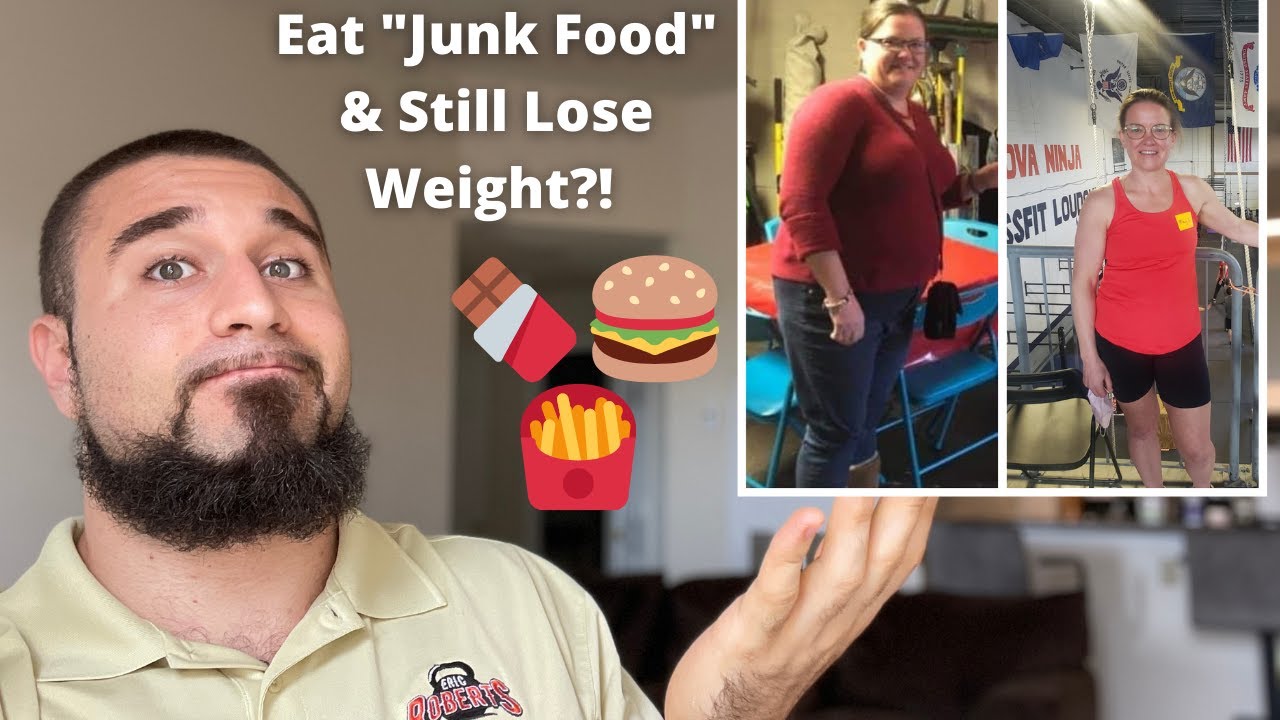
In this instructional video, Eric Roberts explains flexible dieting (If It Fits Your Macros, IIFYM) as a sustainable weight‑loss approach built on the fundamental principle of a calorie deficit. He first reinforces that weight loss only occurs when calories consumed are lower than calories expended, then dismantles common myths that flexible dieting means eating unlimited junk food or avoiding “clean” foods. Roberts introduces the 80/20 rule—80% of calories should come from nutrient‑dense whole foods (protein‑rich sources, vegetables, fruits, complex carbs) and 20% can be allocated to treats—while emphasizing that protein and overall calorie targets must still be met. He discusses practical tracking methods (counting calories and protein, optionally all macros) and uses a client story (Mary) to illustrate how modest treat inclusion (e.g., nightly ice cream) can coexist with steady weight loss. The video also covers how flexible dieting helps overcome the good‑vs‑bad food stigma, teaches individuals about food composition, improves satiety, and reduces binge‑restriction cycles by managing cravings through planned moderation. Finally, Roberts encourages viewers to apply the 80/20 rule, track their intake, and ask questions in the comments.
Chapters
YouTube, what's going on? Welcome back to the channel. Welcome to this video. In this video, we're going to be covering what is flexible dieting slash IIFYM, which is if it fits your macros, which macros are macronutrients, which macronutrients are protein, carbs, and fats. Okay, so we're gonna be talking about what that is. First and foremost, I'm gonna cover something very, very important. Second, we're gonna talk about how to enter flexible dieting slash if it fits your macros into your lifestyle and how that might go into it. And then we're gonna touch on what flexible dieting is not and then what flexible dieting is, okay? So, dropped my marker, but we're back. Got it? Now, before anything else, I need to cover this. The only way that you are going to lose weight is going to be eating in a calorie deficit. If you followed me for any amount of time now, you probably knew I was gonna say that. Mm-hmm. But I still have to drill it into your head as much as I possibly can because a lot of people think that, for example, I don't care if you cut out all your carbs, I don't care if you don't eat breakfast, I don't care if you do X, Y, or Z, whatever, doesn't matter because the only way that you are going to lose body fat is through eating less calories than what your body burns. It comes down to an energy balance. Balance equation. Calories in versus calories out. Calories in is the food you are intaking. Calories out is the energy and the calories you are expending. If you take in less calories than what your body burns, you will lose body fat. So knowing that, then you can enter flexible dieting because most people, maybe yourself, have either— they think right now, or they have thought, or they struggle with this, or they have people in their lives who tell them this. that when you go to lose weight, you can only eat clean foods. You can only eat chicken, you can only eat broccoli, you can only eat, you know, brown rice, you can only eat egg whites and all these things, right? You can't, like, you know, for example, when you go out to eat, God forbid you order a cheeseburger or you get a donut and one of your friends or the people around you, your family members, like, oh, thought you were on a diet. You're really gonna have some of that, huh? Like, does that fit in your diet? Because we're in this culture of We can only eat clean foods when you have to lose— when you want to lose weight, which is just quite simply not true. Because again, as long as you are in a calorie deficit, you will be able to lose body fat. So flexible dieting can be entered because flexible dieting essentially gives you a way to work in foods you enjoy and foods you like. And the typical quote unquote bad foods, you can work those in in a way To still see weight loss progress and still see your goals achieved. Now, knowing that, I wanna cover what it is and what it is not, because there's a lot of misconceptions about flexible dieting. Number 1, flexible dieting is not just eat whatever you want in whatever quantity you want with no regards of any thoughts or mindfulness at all. That is not what flexible dieting is. When people hear flexible dieting, sometimes they take it to the extreme. They're like, oh well, I'm a flexible dieter and I'm just working in foods I enjoy. So you know, for breakfast I'm gonna have the you know the hash browns and the this fat. Oh you know, for breakfast I'm gonna have the three muffins with two bowls of cereal. And then when lunchtime comes around, I'm gonna have the four slices of pizza from the office. And then when dinner time rolls around, I'm gonna go pick up the fast food and get the burger with the fries and the milkshake because. Hashtag flexible dieting. That's not flexible dieting. Flexible dieting is also, once again, not just eating shit foods all day long, eating very high processed foods all day long. It's not just, again, it's not just having, you know, chocolate chip muffins for breakfast and then pizza for lunch and then, you know, going to have Doritos and nachos for dinner. Like, that's not what flexible dieting is either. And last but not least, flexible dieting is not an excuse to not include those nutrient-dense whole foods, the typical quote unquote clean foods. It is not an excuse to do that. And that's the biggest thing I see with flexible dieting slash If It Fits Your Macros. Because when talking about, for example, If It Fits Your Macros, which means you're either counting calories or counting macros, if it hits your macros and you're good to go and you don't have to worry about, you know, Vitamins. You don't have to worry about the quality of food. You don't have to worry about vegetables or fruits because as long as you hit your calories and your macros, then it's good to go. You can get your macros from, you know, as opposed to getting 150 grams of carbs per day from fruits and oatmeal and sweet potatoes and, you know, those kinds of foods, you get your, you get all your carbs from fucking pizza and gummy bears and chocolate. It's like, okay, well, that's not an excuse to not focus on the good foods. It's not an excuse to not focus on the nutrient-dense whole foods. Okay, that's the biggest thing I see. You still have you. You're not going to get around eating vegetables. You're not going to get around eating protein. You're not going to get around eating fruit. You're not going to get around drinking your water. Like it's not a way to try to work the system. You are still going to have to focus on nutrient-dense whole foods whether you like it or not. Because what's going to happen is you're going to try to just focus on just hitting your calories, just hitting your macros. I'm going to get all my carbs from. Again, gummy bears and chocolate chips and muffins. It's the second time I've dropped my marker, but I have another one right here, so I'm gonna use this. You can't do that. You still are gonna have to focus on the nutrient-dense whole foods, which I'll touch on here in a second, because if that's all you do, if all you eat is just that very high processed food, bags of chips, you know, eating things out of the packages, never cooking your own meals, You're gonna be very hungry. You're gonna be much less satiated. You're gonna have much less energy. You're gonna have less workout performance, less quality of sleep. You're not gonna be able to sustain it. 'Cause eating that way, if that's how you're trying to eat, it probably got you to where you are right now. And clearly that did not work. So you're not gonna get around the work. And I'm not saying it's you in particular, but just speaking in general, you're not gonna get around the work. You're still going to have to include those typical quote unquote diet foods, which it's funny, like it's just nutrient-dense whole foods. It's just foods that are minimally processed. And we're going to touch on that right now. So that is not what flexible dieting is. Flexible dieting is a great way to include foods you enjoy in moderation. And this is done through something called the 80/20 rule. And I've done an entire video on the 80/20 rule. I'll link that here above. But essentially what the 80/20 rule is, is 80% of your foods should come from nutrient-dense whole foods. Things like eggs, things like chicken, things like sweet potatoes, things like oatmeal, things like fruits, things like vegetables. All of those good foods. 80% of your food choices should come from that. Not 50%. Not 40, not 20, 80% of your food choices, of your calories during the day should come from nutrient-dense whole foods. 20% can come from treats you enjoy, whether it's ice cream, whether it's chocolate, whether it's a muffin, whatever the case may be, 20% can come from things you enjoy. But that's only after the 80% is taken care of, you know your calories are in check, and you know your protein is in check. Personally, for me, I normally count calories and protein with my online coaching clients because normally it's just a bit easier. Not to say you can't track all of the macros— protein, carbs, and fats. Typically speaking, I just track calories and protein because if you hit your calories and you hit your protein, you're going to see tremendous progress. So, as long as you hit your calories and your protein and 80% of your food choices are coming from nutrient-dense whole foods, have treats you enjoy, man. Have at it. I have one client, her name is Mary. I'll put Mary here above. Mary's amazing. Mary vividly told me she had ice cream or some kind of treat every single night as she lost 80 pounds. Every single night. And again, that's because, coming back to, if you're in a calorie deficit, you will be losing body fat. There is no other way around it. That is the only way to lose body fat. It's just, it's the only way. So if you're in an overall calorie deficit, you will lose body fat. And so this is where you can implement this 80/20 rule and work in foods you enjoy. In moderation. But again, the 80/20 rule is not 80% of your highly processed Doritos and muffins and chips and this and that, and then 20% of fruits and vegetables. No, 80% of your food choices are coming from nutrient-dense whole foods. 20% of your food choices are coming from treats you enjoy. So that's number one. Number 2, it is a great way to overcome the stigma Of good and bad foods, which I know a lot of people, possibly yourself, struggle with the concept of, oh my God, can I really eat this if I'm on a diet? Can I really have this? It's a bad food. Which normally anytime you're labeling foods good and bad, it's going to be a bad time because you're probably going to lead to binging. You're probably going to lead to over-restricting. You're probably going to lead to unsustainability. You need to be able to enjoy foods that you like in moderation to make this sustainable. One of the biggest things I see with people is losing weight is not the hard part, keeping the weight off is. So if what you're doing to lose the weight is unsustainable, aka cutting out all bad foods and never having them, making them off limits, that's not— it's not realistic, it's not sustainable. So if that's what you're trying to do Any results you do see are going to be short-lived because when you stop doing that, you're going to eat the foods again. You're going to feel guilty. You're going to gain the weight back. It's going to happen over and over and over. That's the yo-yo dieting cycle. And so flexible dieting is a great way to overcome the stigma of good and bad foods and realize, like Mary that I showed you, you can have foods you enjoy in moderation and still lose body weight. Number 3, it is also a great way to learn about food because a lot of people simply— we weren't ever taught food, whether it's in high school or college or elementary school, whatever. We know eat vegetables, we know like fruit is good for you. We actually— I guess some people don't know fruit's good for you with the way nutrition in 2021 is going. But either way, we know what to do. But when you actually start tracking your calories, tracking your macros, seeing what's going on, you can learn What foods are high in protein? For example, you know, Greek yogurt or chicken or egg whites, or you know whether it's a protein shake or tuna packets or beef jerky. Whatever the case may be, you can learn what foods are high in protein. You can learn that protein fills you up. You can learn, for example, if you need 80% of your food choices coming from nutrient-dense whole foods, you can learn okay what food choices can I make that are going to help fill. me up and help satisfy me and make, make sure I enjoy them. For example, watermelon. For a whole pound of watermelon, it's a, it's only 150 calories for a whole pound. So you can pig out on watermelon, but it's very low calorie. So it will help you stay in that overall calorie deficit. It'll help fill your stomach up. You're gonna learn so much about food during this process. And then again, when you do have whatever food you wanna have in moderation for your treat, for your 20% treat, You can learn how that fits into your day. You can learn what true moderation looks like because again, 80% whole foods, 20% treats. So when you do this, you're going to learn like, oh, holy shit, I was trying to have this for lunch and this for a snack and this for breakfast. And then at the end of my day, I was still having the ice cream and I was having too much of it because it was, it was too high of calories and portion sizing. Now you're going to see, you know, as a, let's say you're eating right now, for example, You're trying to eat 1,800 calories. Let's say that 1,500 of— 1,400 to 1,500 of those calories are coming from nutrient-dense whole foods, and, you know, 300 to 400 are coming from the treat you enjoy. You can learn, oh wow, like, this is about what 300 calories of ice cream, let's call it for example, looks like. This is what a proper serving size looks like in a day. I was eating 3 of these. I was eating 900 calories from ice cream. Oh, that's probably why I wasn't losing weight. And so you can start to learn these things and learn what true moderation looks like, which again I said is a struggle for some people to actually learn what true moderation looks like. This is a great way to practice that again by following that 80/20 rule. And last but not least, flexible dieting is a great way to lose weight in a sustainable fashion and being able to keep it off forever. Because again, most people when they go to do diets, they do something that's just incredibly unsustainable. They, you, you, You try to cut out all your carbs, you try to do some sort of fasting, or you try to do this, you try to do that, and you can't stick with it. So if you can't stick with it, then you're not gonna see progress. I vividly remember I had a client one time who came to me from doing keto, and she was like, she was afraid of carbs, she was this, she was that, but she was telling me, she was like, man, I dreaded the weekends, 'cause I knew I was gonna go out with my friends or with my spouse or with my family, and I knew like, Wherever I ate wasn't going to allow for my plan. So I would always have this anxiety and I'd always freak out and sometimes I would just not eat and then I would get home and I would binge and like, it's just a bad cycle to be in. So the flexible dieting approach, if it fits your macros approach, is a great way to learn how to sustainably eat and keep that sustainability forever. Because again, you're not cutting out any food groups. You're not demonizing any food groups. You're allowing foods. you enjoy in moderation and still you'll see progress and still you'll be able to keep that progress because what you're doing is sustainable as opposed to trying to cut out all of your carbohydrates. And on the weekends you guys are going out to eat with your friends and you eat everything because again, you've gotten into the cycle of like you restrict during the week and then you binge during the weekends. Whereas opposed to, for example, like Mary, if you have some ice cream in moderation or you have some Reese's or you have this or you have that, whatever the case may be, It fits into your calories, it fits into your 80/20 rule, and you can do that. Well, when the weekend comes around, guess what? You're probably gonna be less likely to have these massive cravings for things. Remember, cravings start— they don't start on a scale of 1 to 10, they don't start at a 10, they start at like a 3, right? You're like, oh wow, I could really go for some Reese's right now. But because you're trying to do a diet, you tell yourself, nope, can't have those, they're bad, I'm not gonna lose weight if I eat those. So your craving goes from a 3 to a 6, and then at a 6 you're like, wow, I really, uh, really could go for some Reese's right now. And then you say, wait, nope, nope, I'm on a diet. I can't have it. Nope, not having it. So now your 6 increases to a 10 and you're like, holy fuck, I'm going to shoot somebody if I don't get my Reese's. So when you, when you let it get to a 10, you have a 10 response, which is I'm going to eat all of it because I've just restricted myself for the past 6 days of it. I've wanted this fucking Reese's for 6 days. But I told myself I can't have it because I'm on a diet. So when you do eat the Reese's, you're going to eat 17 Reese's, not 2 Reese's. 2 Reese's is 200 calories. 17 Reese's is 2,000 calories, right? So that will happen as well as you're going to think, you're going to say to yourself, well, you know, I'm going to have these Reese's, but I'm going to go back to not being able to have them again. So I'm going to eat all of them while I can. Once again, plays into the cycle of just restricting and then binging and then restricting and then binging. As opposed to flexible dieting, on fucking Tuesday when you had a 3 craving for Reese's, you would have had 2 fucking Reese's that were 200 calories that fit into your daily calorie allotment that would have hit your 80/20 rule. You already hit protein, you would have had the Reese's, and you would have been fucking done with it. But most people don't do that because they think they can't have it. So flexible dieting is a great way to work in these foods in moderation. help you deal with cravings, help you keep in foods you enjoy, reduce binge eating, all of those great phenomenal things. All right, so guys, that is what is and is not flexible dieting. That is how to implement it into your journey. Um, again, if you want more information on the 80/20 rule, I linked the video there above somewhere. Um, so feel free to check that out. But other than that, if you have any questions, any concerns, please feel free to drop a comment below. If you enjoyed the video, like the video, subscribe to the channel, and we'll talk soon. Okay.










