How I Lost 25lbs in 60 Days (Just Copy Me)
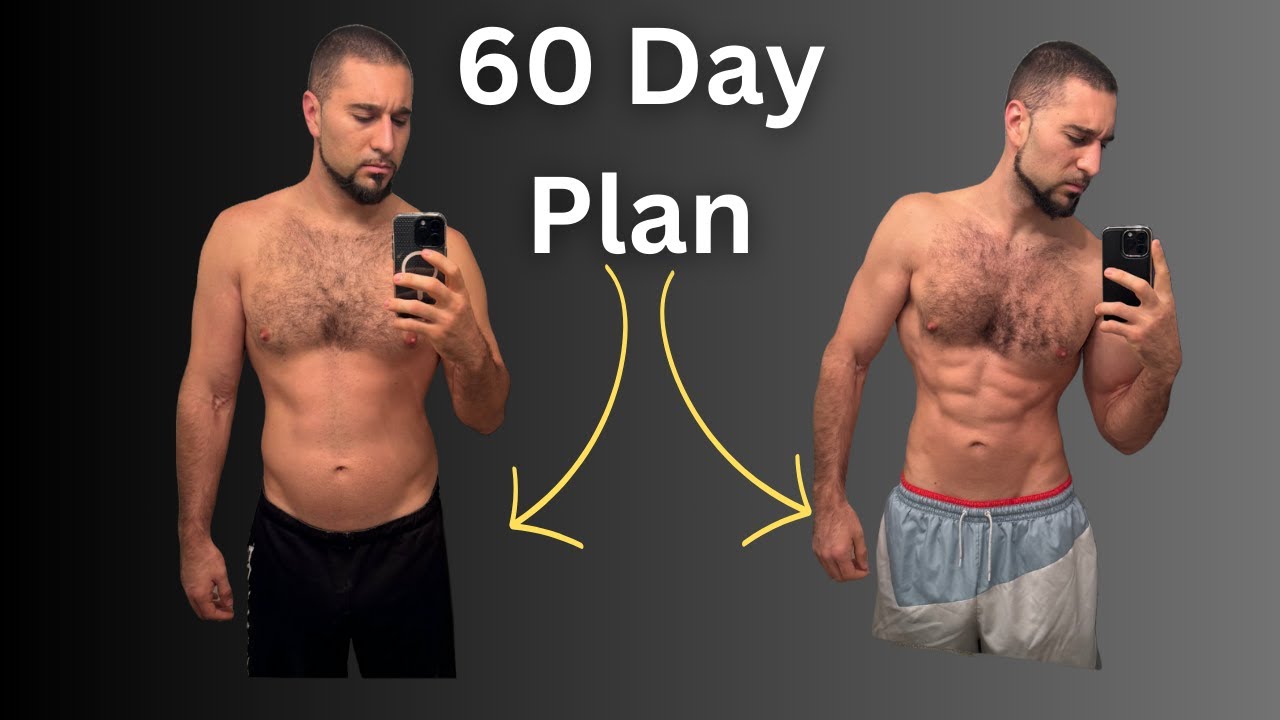
Eric Roberts lost 25 pounds in 60 days using a calorie deficit, 0.8 grams of protein per pound of goal weight, 6,000 daily steps, and weight training 3-4 times weekly. The key is tracking consistency on these four metrics rather than chasing perfect results.
Chapters
I was able to lose 25 pounds in 60 days, and I'm gonna give you the exact plan I followed for both my nutrition and my exercise and my cardio so that you can follow this exact plan, copy me, and see great progress yourself. And if you stick around for the end of the video, I'm gonna give you a little magic secret that most people on the internet don't tell you about seeing this much progress in this amount of time. For my nutrition, you've probably heard this first part before, but I have to say it anyway because you can't lose fat without this. You have to be eating in a calorie deficit. I do not care how healthy you are eating. I don't care how clean you're eating. I don't care how many salads you have. If you're not eating in a calorie deficit, you are not going to lose body fat. Now, how many calories should you be eating to lose weight? It is different for every single person. If you want a totally free calorie calculator, there will be a link in the description of this video. I literally use this same calculator For my paid online coaching clients. And so take it, use it. It will tell you how many calories you need to eat, but unless you do this, you will not lose any weight. Now, with that being said, just telling you to eat in a calorie deficit, I don't think is that helpful. So I'm going to give you some other actionable things that I did every single day to help me lose 25 pounds in 60 days. And so first and foremost is going to be the protein goal. That goes along with your calorie deficit goal. And you probably hear a lot about protein. Should you be eating 1 pound of pro— 1 gram of protein per pound of body weight? You need to eat protein every 2 hours, or you can't digest more than 20 grams of protein at once. Here's the simple formula you can use to find your protein goal. I want you to take your goal body weight. In pounds. And so for all of my people outside the US, please convert to pounds. But I want you to take your goal body weight, multiply that by 0.8. And so if, let's say for example, you want to weigh 150 pounds, if you multiply that by 0.8, you are going to get 120 grams of protein per day. And yes, that is going to be enough protein For you to see the progress that you want to see. You do not have to eat a gram of protein per pound of body weight, especially if you're somebody who's looking to lose body weight. This is going to be more than enough. And quite frankly, you could probably even go a little bit less than this and still see really good progress. And this is important because if you feel like, oh my God, I got to eat 150, 200 grams, 200+ grams of protein, You're probably like, fuck this, I'd rather be fat. There's no way you're going to stick to that. This makes it much more realistic and you'll still get all of the benefits. And really quickly, while we're on the protein thing, yes, you can digest more than 20 grams of protein at once. You don't have to have only 20 grams at a time. That being said, I have found it super helpful to spread out your protein intake throughout the day because that usually leaves you a little bit more Full and satisfied, which means you'll have less hunger and less cravings when you're trying to lose weight. Less hunger and less cravings obviously means to you losing more body weight. So that is for your protein goal. Try to hit that every single day. Now the next thing that I followed religiously while I was seeing this progress is having at least one serving— serving— one serving of veggie per day and one serving of fruit per day. And honestly, I did 2 servings per day, but I try to make it a minimum of 1. And don't overcomplicate the serving part of it. Just have fruit at breakfast and a salad at dinner. That to me is considered 1 serving of fruit and 1 serving of vegetable per day. Don't get too hung up on exactly how much you're having and so on and so forth. If you're having fruits and veggies, that is going to be a good thing for you. And actually, what I said earlier Me personally, what I did was in the morning I would usually have my eggs and I would throw in like spinach, I would throw in peppers, and that's what I would put into my egg white omelet. So that was one serving. And at night I actually had a big-ass salad every single day. It was actually right here. This one's from Trader Joe's, but you could really get any of these pre-made salad bags. They are so easy for you. And what I did was, and people often ask me, well, Eric, what about the dressing and the ingredients inside and so on and so forth? What I would normally do is I would use half of the dressing and half of the other ingredients that are inside because that way some of these salads can be higher calorie salads. And if we're looking to stay in a calorie deficit, we want to be mindful of that. But if I use half of it, it's just the lettuce and the other condiments that are inside and it won't rack up in calories. And so that's what I did every single day. And then for the fruit, I would make it a non-negotiable to have some sort of fruit at breakfast, whether it was banana, whether it was raspberries, whether it was strawberries. So I would have that every single day, and if I had more, that would be good too. Because remember, the 3 best foods, in my opinion, of what you can eat on a calorie deficit is going to be strawberries, raspberries, or watermelon. The reason being is they are a very low calorie high-volume food. So that means you can eat a lot of them without eating a lot of calories. You can fill yourself up on— a pound of watermelon is only like 150 calories. A pound of strawberries is like 160 calories. A pound of raspberries is like, I think, 180 calories or something like that. These are very low-calorie foods that are high in volume. So having those will help again, keep you more full, keep you more satisfied, and help you stick to that calorie deficit a bit better. And the last part I made sure of was I made sure to have a high protein snack. We'll use HPA— HPS. Have a high protein snack between lunch and dinner. And the reason this is so beneficial is because most people heading into the dinner time, that's when you start to overeat. It's either right when you get home and you're hungry and starving from work, or it's after dinner or around that dinner time. And so having a high protein snack, whether it is a protein shake, whether it's a tuna packet, hard-boiled eggs, Greek yogurt, cottage cheese, beef sticks, beef jerky, uh, uh, tuna— I'm sorry, I already said tuna packets— uh, deli meat. Like, I could go on and on of the high protein snacks. Edamame. Whatever works for you. Have some sort of high protein snack between lunch and dinner. That is going to make sure going into that dinner time you don't have as much nighttime cravings, which is probably where you normally fall off your diet. And this way you can stick to the calorie deficit, because like I said earlier, unless you're in this calorie deficit, you are not going to lose weight. So do this, and then all this other stuff is going to help you stick to it. All right, so I hope that gave you some actionable tips you can steal and copy with your nutrition. Now Let's talk about your exercise. And so the first thing that I made sure every single day, no matter what, that I walked at least 6,000 steps per day. So yes, 6,000, not 10,000, which you probably hear on the internet. You don't need to go get 10,000 steps per day, especially if you're somebody who maybe— let's say right now you're doing 2,000, 3,000, 4,000 steps per day. Going to try to get 10,000 steps per day, every day, 7 days a week, you're probably going to be like, fuck this, I'd rather be fat. So setting you up for realistic progress. And again, this is the amount of steps that I made sure I took when I lost 25 pounds in 60 days. It works if you are consistent with it. So don't think you have to go all the way up to 10,000. If you do more than this, that's incredible. If you do 10,000, 12,000, whatever, that's great. But shoot for at least that 6,000 mark per day. And a little fun fact here for this one, I am not somebody who I go out and take like, you know, an hour-long walk to go get this. What I do is I split my walks up and my steps up because I sit at a desk all day or I film these videos. That's what I do. I coach people, I run a business online coaching people. I'm not up and about all day every day, so I need to be intentional about getting my steps. Which, by the way, any steps count. So if you're just like at work or you're cleaning the house or whatever, any steps count. They don't have to be like a certain high intensity or something. But I split my walks up in just 10-minute chunks throughout the day. Actually, after I get done filming this video, I'm going to go take one of my 10-minute walks because if I take a 10-minute walk, usually that gets me somewhere around 1,200 to 1,500 steps. Around that range. And so if I take 3, 4, 5 of those per day, it's 30 to 50 minutes of walking where I can get 1,500 steps each time. But it's not like I'm carving out an hour to go take a walk. Do not underestimate little chunks of exercise throughout the day. I promise you they add up because that's the only way I get my 6,000 steps per day. Now number 2 is going to be I lifted weights at least 3 to 4 times per week. And actually I didn't lift any more than 4 times per week. So 3 to 4 times a week I lifted weights. When I was lifting weights, I was not trying to go lightweight for high reps. I was not trying to tone the muscle. I was trying to lift as heavy as I could within the 5 to 10 rep range. And I was trying to get stronger and build muscle. That's what I was doing. I told you, you can copy me in this video. That's what I would do if I were you. And by the way, again, if you need a free workout program, there's going to be a link in the description of this video for a totally free workout program that you can follow. It has all the exercises, the sets, the reps, everything. So I've given you a free calorie calculator, I'm giving you free help here, I'm giving you a free workout program. It's all there for you. You can copy exactly what I did. So lifting weights 3 to 4 times a week. And then this final one right here, I did no other form of exercise or cardio other than what you see right here. And I do mean that. I did not do any StairMaster. I didn't do any elliptical. I didn't do any extra cardio after my workout. There were days when maybe it was like raining and I couldn't walk outside, so I would go on the treadmill. But that was really just to get my steps. As long as I got my steps and as long as I lifted my weights, I did not have to do any other form of cardio in order to lose those 25 pounds in 60 days. And I'm harping on this because so many people— I'm not saying cardio is bad for you. It's really good for your heart health. It's really good for mental health, mental clarity, whatever. But you don't have to obsess over doing loads and loads of cardio because really your fat loss comes from Your daily steps and your fat loss comes from your nutrition, eating in that calorie deficit that we talked about earlier. You're not going to be able to cardio your way towards losing body fat. You're not going to be able to out-cardio a bad diet. So this is why it's important. And on the flip side of that, if you do too much cardio, it can actually backfire by making you have more cravings, making you have more hunger, not being recovered, um, those sorts of things, not sleeping well, which leads to More cravings and less energy, more exhaustion, all those sort of things. So if you want to do a little bit extra cardio, you can. I personally did not. This is what I did for my exercise and my cardio. Now, if you remember, I said if you stayed till the end of the video, I'm going to give you the magic secret that most people will not tell you, and we're going to dive into that right now. So here's the magic secret to all of this. I already gave you a free calorie calculator. I gave you a free workout program. I'm telling you exactly what I did with my steps, my cardio, everything. You've probably watched some videos like this before on social media, YouTube, whatever as well. Where I'm getting at is it is not you not seeing the progress that you want to see. It's not a lack of information. It's a lack of you actually staying consistent. with what it is that you know you need to do, right or wrong. You know what you need to do, you're just not doing it. You know you should be lifting weights, you know you should be walking, you know you should be getting in your steps and your cardio, whatever. You're just not doing it. Why is that? There are 2 goals that most people fall into. The first one is going to be a results-based goal. You are so focused on losing 25 pounds in 60 days. You're so focused on losing 10 pounds this month that you get obsessed with the results. Here's the thing, you can only control your results to a degree because the scale, for example, is going to fluctuate. You can't exactly control how many pounds you lose in 60 days. Even myself in my journey, I wasn't like, oh, I have to lose these 25 pounds in 60 days. That just happened as a result of the other goal that we're going to talk about in a second. But if you're so focused on the results, when progress isn't going as fast as you want it to, when you get unmotivated, when you get hit with some sort of obstacle, when you happen to go off track because you're not going to be perfect all the fucking time, when these things happen, you're like, oh my God, well, I need to see this progress faster. I need to lose 25 pounds in 60 days. You are going to say, fuck it, I already ruined all my progress. I'm not going to reach the progress I want to see. I'm not losing weight fast enough. And so you're going to quit and so you're going to go off track and so you're going to say fuck it and go binge eat on the weekend and you're going to do this until you get back to the point where you're like, I still don't like how I look. I don't like how I feel. I want to lose weight and you're going to restart with the same results. Based mindset. I am begging you, please do not go into a results-based mindset, and please, please go into a consistency-based goal mindset. And what do I mean by that? Let's think about it for a half second. If you do what I told you in the previous 2 sections with the steps and the nutrition and the cardio, do you think you're going to see progress? If you hit your calories consistently, if you hit your protein consistently, if you do your workouts, you have to see results. But if you're not consistent with it, then you're not going to see the results. Consistency leads to results. If you're just focused on being consistent with your day-to-day actions, eventually these results will have to come. And let me ask you this too. Let's say, you know, this video is about losing 25 pounds in 60 days. I don't really care how many pounds I lost in 60 days. I just wanted to be consistent with my plan that I was given. Whether I lost 22 pounds or 28 pounds or 18 pounds, it didn't matter. I just knew I needed to be consistent with what the plan was. And I'll ask you the same thing. Do you really care if you lose 25 pounds in 60 days, or if— what if you lost 21 pounds in 60 days? Would you be like, oh my God, this is a failure, I suck, I only want to lose 25 pounds? What if you lost 18 pounds? What if you lost 15 pounds? Wouldn't that be better than where you're at right now? And so instead of focusing on how quickly you can see results, I would encourage you to set a goal of being at least 80% consistent with the plan that you have. Now what does that mean a bit more in depth? Let's say there are 31 days in a month. If you are hitting your goals, let's say your calorie goal that I gave you, if you're hitting your calorie goal with 80% consistency, that would be 25 out of 31 days you're hitting your calorie goal. If let's say for example you are doing 3 workouts a week, which by the way is more than enough for you to see progress, but if you're doing 3 workouts a week, that is 12 workouts in the month. That means you would hit at least 10 of your 12 workouts that month in order to have that 80% consistency. Let's say you're doing your step goal. Same thing. If your goal is at least 6,000 steps per day, that means at least 25 out of the 31 days you need to hit that 6,000 per day step goal. It's about the consistency. If you consistently do the things you're supposed to do, you will see the progress you want to see. But if you're so focused on the results or if you're so focused on perfection, This is something people just, they lose their minds up to. If you're so focused on if you're not 100% perfect, you might as well not try. That is not being consistent. Perfection is the enemy of consistency. So ditch the results-based goals, ditch the perfection mindset, focus on the consistency-based goals because you can control if you hit your calories or not. You can control if you hit your protein or not. You can control if you hit your steps or not. These things are in your control. And what will happen is once you hit your goals one day, you're going to say, damn, I feel good about that. I'm building up some, some momentum. I will hit the goal the next day. I'll hit the goal the next day. Maybe you don't hit the goal one day, but again, your goal is 80% consistency. It's not 100% perfection. So you'll realize it's okay. I'm just going to get right back on track and hit my 80% consistency goal throughout the course of the month. And this is how you see progress. I promise. I really hope this video helped change your mindset around things. And if you want some extra personalized help, we coach people one-on-one online for a living. It's what myself and my team of coaches do. So there'll be a link in the comment section of this video. Feel free to check out that comment section, click that link, and we should be reaching out to you shortly. I hope you enjoyed the video, and we'll chat next time.










