How To Exercise With A Busy Schedule | Finding Time For Workouts
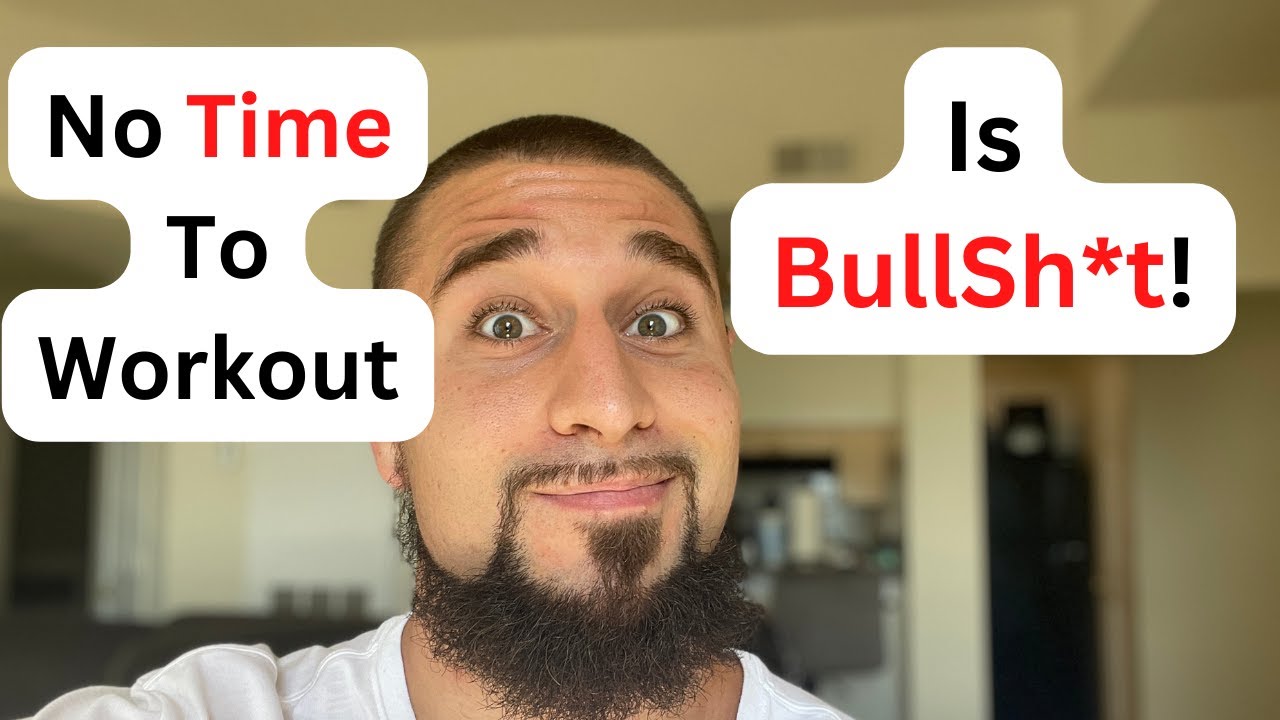
In this walk‑and‑talk video, Eric Roberts confronts the common excuse that people don’t have time to exercise. He argues that the problem is often a mindset issue rather than a lack of hours, and he offers a blend of psychological reframing and practical tactics to make fitness and nutrition fit into a busy life. Roberts debunks the all‑or‑nothing belief that workouts must be hour‑long or daily, promoting short 10‑15‑minute sessions as a sustainable path to consistency. He extends the same principle to meal prep, suggesting simple, flexible approaches instead of elaborate weekly batch cooking. The core of his strategy is to treat personal health as a priority, even for people‑pleasers, and to become honest about how time is actually spent. He introduces a two‑day time‑audit exercise—logging activities hour‑by‑hour (or in 30‑minute blocks) for one day, then planning the next day—to reveal hidden pockets of time that can be redirected toward workouts or nutrition tasks. Throughout, Roberts balances a candid, occasionally profane tone with empathy, urging viewers to accept the discomfort of making time, prioritize themselves, and adopt realistic, consistent habits that lead to lasting change.
Chapters
What is going on, guys? Welcome back to another walk and talk. Hope you're doing super well. Hope you are outside getting some of your steps in. It's been tremendously nice recently where I'm at, so definitely trying to get outside and get these steps in. But today we are going to be talking about basically how I am going to shit on your excuse of how you don't have time To work out, you don't have time to exercise. Listen, I'm not going to do it by being a dick. I know I kind of just came off very aggressive there, but I'm not going to be an asshole with it. I'm going to be empathetic with it, but I am going to just give it to you straight on why you saying you don't have time to work out, and not just you, but people in general, they have a lot of misconceptions about time, about the fitness journey, about— What is required, about how things get done. So I'm going to touch on all that right now. I think the first thing I want to touch on very quickly is, which is honestly the most important part, and I think a lot of like YouTube professionals would tell me that I should probably save the best information for the end of the video so everybody watches through the entire video and this, that, and the other. Um, I'm just kind of going to speak how I speak and I'm going to hopefully help you as much as I can. So the first thing is Understanding that when it comes to working out— for what, we'll use working out as an example, and then I'll use meal prepping and nutrition as a different example. When it comes to working out, it's not the fact that like you need to get an hour-long workout in, or it's not the fact that you need to work out 7 days a week. A lot of times when people— and again, this is where I'm very empathetic in this scenario because For the most part, I don't think you watching or most people out there, I don't think most people are malicious in the intent of being like, oh, fuck that. I'm just not going to make time, or I'm not going to do this, or I'm not going to do that. There are some people like that, sure, but I think it's more so the fact that a lot of people just don't— they don't have the right mindset around it because they think like, You have to work out 7 days a week. If I thought that I had to work out 7 days a week in order to see progress, I wouldn't be making the time either. If I thought I had to spend 2 hours in the gym every single time I go to get a workout, I wouldn't be making the time either. You know what I mean? I think the first thing, especially when it comes to your workouts, is you have to understand. I tell all of my clients this all the time, but it's like you just doing a 10 or a 15-minute workout, just you just doing a 10 or 15-minute workout. What you have to truly comprehend about this 10 or 15-minute workout here is— I need to go past this branch. What you have to understand about a 10 or a 15-minute workout, it's going to keep you consistent. It's going to keep you on track. How do you think you create change? You create change through consistent action day by day, week by week. So you don't have time to do a 60-minute workout 7 days a week, and that's fine because you don't need to have that kind of time. But do you not have time to work out 3 times a week for 15 minutes? Hell, do you not have time to just go get a 10-minute walk during Your days? This is where like people, you probably can relate to this as you're listening, you probably fall into this all-or-nothing mindset and you think you have to do like the absolute most or it's not worth it or it's not good enough. That is, that is the number one thing. You think it's not good enough, so you do nothing. Something is always better than nothing. And I promise you, you are going to have time when you start to reframe The way you think about— again, we're just using workouts as an example. When you start to reframe the way you think about workouts and you stop thinking from this 7 days a week, 2 hours a day, 100% perfection, when you go away from that, you can actually start to move towards more of a sustainable, realistic, less overwhelming. That's the biggest thing. Most people get incredibly overwhelmed with their workout plan and what they think they have to do, so they do nothing or they just say, I don't have any time. No, you have time, but you need to make it a realistic schedule. So that would be for workouts. And then again, the same thing for meal prep or nutrition, for example, right? Like, you think you have to do this meal prep, which I thought this too, but you think you have to do this like meal prep where like, all right, on Sundays, you know, you're gonna cook food for the entire week and you're gonna put it in your little Tupperware and you're gonna eat only chicken and broccoli out of the plastic containers and this, that, and the other. Guys, that's not what meal prep has to be. And I don't— again, I think when people think about, I don't have time to meal prep, I don't have time to— me, I'm talking about myself, I don't have time. And honestly, I'm not willing to make time to spend 3 hours, 4 hours, 5 hours on a Sunday, every single Sunday consistently, in order to meal prep. I I'm not willing to do it. But here's the cool part again, you don't have to end up doing that. And I'm sorry if the lighting changes a tad bit here. You don't have to end up doing that. You can, you know, when we talk about meal prep, for example, you can meal prep by just making some extra food at, you know, lunchtime to have for dinner, or vice versa, making some extra food at dinner to take for lunch the next day. Like very simple things that can go A very long way. But again, if you're thinking that meal prep or eating healthy only has to do with— walking next to a trash can— only, only doesn't, doesn't smell very good. That's why I said that. Only has to do with you having these perfect containers of chicken and broccoli. Well, of course you're not going to have any desire to make time because I think that's the second thing. So first thing, don't overwhelm yourself and don't Overcomplicate it. Something is always better than nothing. You don't have to be 100% perfect. You don't have to work out 7 days a week for an hour each day. Your meal prep doesn't have to be, you know, prepped for the entire week and perfectly in containers. Like, my, my meal prep is like, oh, I wake up at 4:30 and I don't want to cook anything, so I just have a protein shake, Rice Krispies, Excuse me, banana and Greek yogurt. And that really helps me because like all those are foods that take zero time to cook and I can be super consistent with that, right? So like that's my meal prep. Meal prep just means having a plan. That's really all meal prep is. It just means having a plan and setting yourself up for consistency. So consistency and success. So that's the first part. And then again, the second part I talked about Kind of like making time, right? And that's the, that's the one where I might be a little bit more aggressive on this, which is after the fact. You know, we just talked about not being so overwhelming with what you're asking yourself to do, but then on top of that, like, we all make time for the things that are a priority to us. And, you know, you could go any different kinds of routes here. And, you know, that old saying of like, we all have 24 hours in a day. I agree. I do think some people have to spend that 24 hours a tad bit differently. Like, for example, I've coached a lot of parents in the past. And like, parents, especially of younger kids, are like the busiest human beings I've ever met in my entire life, because you guys got a lot of shit going on. I don't know what else to say. But Yeah. You guys might have to spend your time a bit differently, but we all do have 24 hours in a day. And it's funny because when I'm thinking of this right now, I'm thinking of a lot of people who will DM me. Sometimes I'll talk about this on my Instagram stories and sometimes people will DM me and be like, oh, Eric, I'm a mom of 4. I wake up at 3:30 to go to the gym. Fuck these people's excuses. And I'm like, hey, I agree. Again, empathetic to the fact that your schedule might be a bit different than mine, but that doesn't change the fact that if something is truly important to you, you know you will get it done. You know you are the type of person where, again, if it's important to you, you will get it done. You just have to start to think of it in that frame of mind and start to accept— I've been thinking about this a lot too. Start to accept the fact that like you're gonna have to make time, for example, because I think a lot of times people get stuck in this like, I don't have time, because they just like are trying to not accept the fact that they need to make time. And just like accept the fact that it's going to be hard. Accept the fact that you might have to wake up earlier. Accept the fact that yes, even though you are very tired after you get home from work, you still have to get your workout in. The more you can— the more and the sooner you can just accept these things to be a reality. Once you accept these things to be a reality, it's just like, all right, well, it is what it is. You can like bitch about it for a little bit and be a little bit pissed about it for a little bit, but you just kind of move on, right? That's exactly how I want you to, you know, start to approach this, is just accept this is what it takes from you. Because when you accept it, it makes things a lot easier. So that's number 2. We all have time for things that we can prioritize and we want to prioritize and that are very important to us. Like, I'll use it again as an example. Like, I'm sure when your spouse or your friends or your kids ask you to do something, you're like bending over backwards getting it done for them. Absolutely, you're getting it done because it's very important to you. I would encourage you to treat yourself and treat your own fitness journey as, you know, if your friend randomly asked you out of nowhere to help them with something or things of that nature. That's how I would encourage you to start to think about it. And that leads me into, you know, number 3, which is like, you— a lot of people who are going to watch this, I think, because I think I know my audience pretty well, a lot of people who are going to watch this are lack of better terms, people pleasers. You, you are an empath. You want to help people. You want to be that person people go to for advice, and you want to be, like I said, super helpful, which is amazing. But what you also have to understand is you are probably going to have to get a little bit selfish in your journey in order to actually reach and accomplish the things you want to accomplish. Because the simple answer to this is If you don't start prioritizing yourself just as much as you prioritize other people, you'll never take the actions necessary in order to then get to where you want to be. And it's a tough pill to swallow, and it's, it's definitely not easy, or it's not comfortable for a lot of people to say, hey, you know what, no, I can't stay later at work because I have to make sure I get home so I can get my workout, so I can eat dinner on time, so I can get to bed at a decent time, so I can wake up the next day and get my workout in again, or whatever the case may be. That's uncomfortable, people. Or it's uncomfortable— again, I'm not a parent, but I feel like it's uncomfortable, and I've just heard from a lot of my clients— it's uncomfortable to be like, hey, you know, mommy or daddy wants to, you know, help you right now or do this, that, and the other, but I have to make sure I get my workout in because I'm taking my health very seriously. You know, I want to get stronger, this, that, and the other. So it can be hard to do those things, but you have to make yourself a priority. Otherwise, you are not going to take the actions necessary. Like, like I said, it's necessary for you to make yourself a priority because if you don't, you're not going to get your workout. You're not going to find time or make time for your workout, if you are consistently put on the back burner, you have to understand you got to start treating yourself a little bit differently. You have to start understanding you are in fact worth it. You have to make sure you get to that point. And it's not going to be easy and it's going to take time, but what the fuck is easy? And like, all, all good things take time. All good things in life that are worth having are not easy, right? So I think that would be probably the third thing. And then kind of more from like a practical standpoint, the last 3 things have been more of, you know, mindset standpoint, but from more of a practical standpoint, and I do this with my clients a lot, and I'm going to tell you it because I honestly, and maybe I'm being, maybe this is my somewhat negativity coming out, but I'm just being honest. I don't think 98% of people are going to do this. Who knows? I would love to be wrong about this. By the way, I would love to be 100% wrong about this, but what I've done a lot with my clients in the past who have struggled with finding time is we— I literally make them go. I make them do 2 things. The first day, they have to write down hour by hour what they did that day. Scratch that, they go 30 minutes by 30 minutes. You can go hour by hour if you want to. I think 30 minutes sometimes is a bit much, but it is helpful. But hour by hour, write down what did you do, and don't bullshit yourself. Write down from the time you wake up to the time you went to bed, what did you do? Did you find that, uh, you know, 3 of those hours were sitting at your desk at work scrolling on social media? I get this one a lot. Eric, I work at a desk, I work in an office, I can't go get my workout in. But then you're spending 3 hours on social media, you know, throughout the course of your 8-hour workday. How about if you take 30 of those minutes and like meal plan your lunches and dinners for the week ahead. You could do the same exact thing. You're sitting at your desk, how about you start to meal plan? How about you like pre-plan your calories in your calorie tracking app to know exactly what you're gonna eat, when you're gonna eat, maybe look up some new recipes to figure out exactly how you're gonna hit your calories that day. You're making excuses on that front. You spending an hour, 2 hours, 3 hours on social media, which like, listen, I'm super happy to hear you're— I'm super happy to see you're watching me. I appreciate that, but On that same token, you have time. So write down hour by hour what you did, and then the next day write down hour by hour what you are going to do. So the first day is write down what you did, the next day is what you're going to do. And I think you will find from you doing this very simple, very basic— takes 2 days, it's not fucking forever, takes 2 days long— from you doing this, you're gonna understand You probably have a lot more time than you think you have. And it'll be tough at first to be kind of like honest with yourself. But I think it'd be very eye-opening to allow yourself to get over those thoughts that you're having right now of the fact— and I'm sorry, there's a plane above. If you can't— where is it at? Right there. There's a plane above. So that was loud. I'm sorry. But it'll make you get over this thought process of you don't have time. 'Cause I promise you, with all of my heart, you do in fact have time. And I hope this walk and talk helped you. Almost back home now, so we're gonna wrap this up. Again, just a few different things. Again, I don't mean to be an asshole, and I hope, you know, you didn't take it as that. I hope the intro didn't scare you off, and I hope you took this to heart. And remember, I just want you to win. That's all I give a fuck about. I don't care about anything else. I just want you to win, and I hope you go out and do win. Take all this stuff I said, put it into your life. I promise you it will help. All right? Thanks, Eric.










