How To Get Lean So Fast It Feels Illegal
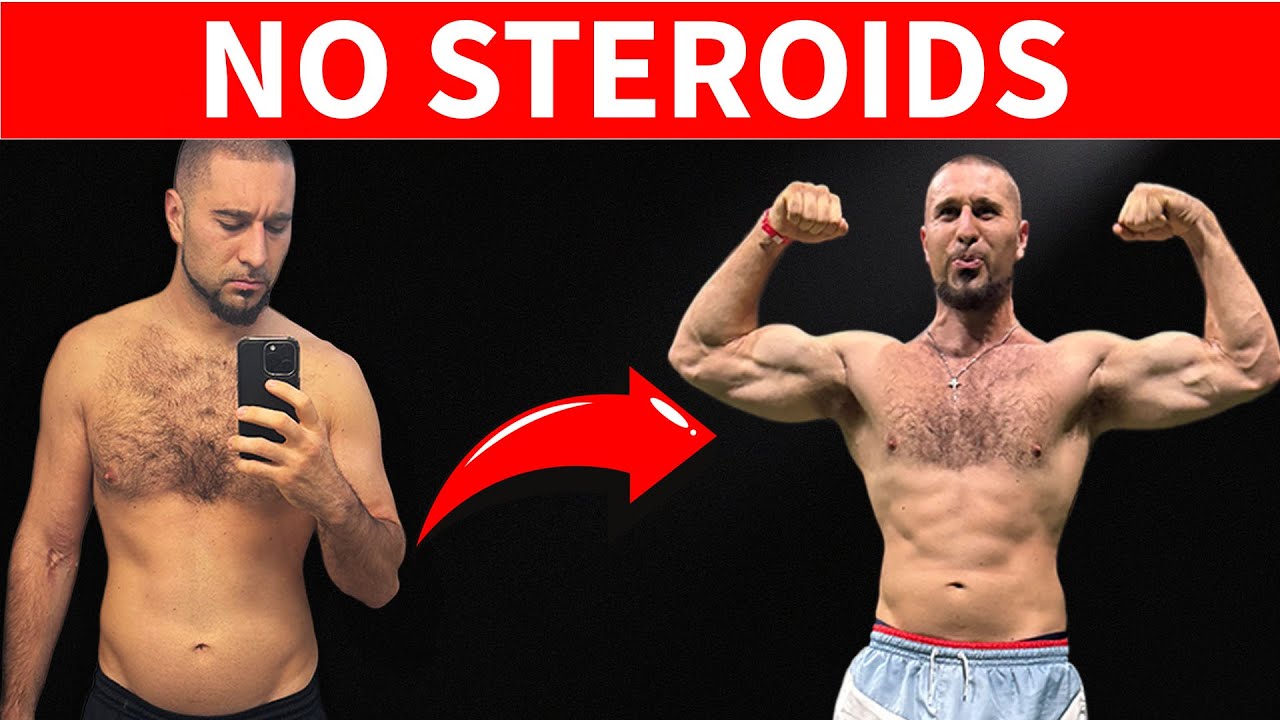
Eric Roberts shares ten training and nutrition hacks for building muscle fast without steroids. Eat protein every 2-5 hours, train close to failure with progressive overload, prioritize sleep, and switch programs every 4-8 weeks. Consistency and tracking matter more than any single trick.
Chapters
You ever seen somebody build muscle and transform their body so fast you thought, how the hell are they doing that? And yeah, maybe it's steroids, or it's these 10 simple hacks I'm about to share with you. And these are hacks that make muscle building feel so fast and easy, it should be illegal. And a quick heads up, when I say fast, I don't mean you're going to build 20 pounds of muscle in 4 weeks. I mean fast momentum, because these hacks are going to cut out the fluff, remove all the guesswork and get you growing bigger, more defined, stronger muscles without wasting years in the gym like I did. So let's dive into hack number 1. Hack number 1, top set and back off set. Most people in their workouts either lift too light and they're never going to build muscle that way, or they're lifting too heavy and eventually they're just going to burn out or injure themselves. And this was me. I was the guy who I would always do 12, 15, 20 reps for every exercise. And then I was the guy who only did 3 reps, 4 reps, maybe 5 reps if I was doing cardio that day. That was a joke. This was until I learned about the benefits of a top set and a back-off set. And what this means is for your first set, first working set where you're actually pushing yourself hard. You're going to do a top set with lower reps and higher, heavier weight. So this would look like maybe 3 to 6 reps lifting much heavier weight, trying to go to, you know, max weight you can lift. This is really beneficial because it'll get the strength component and you'll still build muscle if you push yourself close to failure, which we'll talk about a little bit later in the video. So that's your first set, and then your next The next set is a back-off set. This is where you strip the weight down a little bit to lift a bit lighter, and you'll increase the amount of reps you are doing to usually around 8 to 15 reps. And this way you get the best of both worlds. You'll get the heavy strength-based work where you're lifting heavier, and then you'll get some of the lighter-based work to get a little bit more of the pump. The only thing I would say is with this back-off set, don't just go lighter and not push yourself. You should still be lifting heavy for 8 to 15 reps, and you should still be pushing yourself with whatever weight you choose for that 8 to 15 reps. Because to build muscle, you're going to have to lift close to failure, which is our next hack. Hack number 2, train close to failure. Most people stop their sets way too early to ever actually get to the point of your body building muscle. If you get done a set and you think to yourself, maybe I could have done 5, 6, 7 more reps if I really tried to push myself, then your body never even got to the point of building muscle for that set. I don't want to say it was a waste of a set, but if you're trying to build muscle, it was kind of a waste of a set. If you were trying to maintain your muscle, you would have done great. But to actually build muscle, you need to give your body a reason to build that muscle. And if you're not pushing within 1 to 3 reps shy of true failure, where you're doing a bicep curl and you can't get the weight back up, that is the extent that you should be pushing yourself to build muscle. And a couple of key notes so you can know if you're actually doing that. Number 1, like I said, when When you get to the last 1 to 3 reps of a set, the speed at which you do the reps should slow down. Not because you're trying to go slower, you're trying to go as fast as you can. You just can't move it that fast because you're getting close to failure. And number 2, when you get done the set, you shouldn't think, I maybe could have done 1 or 2 or 3 more reps if I was lucky. Those 2 things aren't happening, then you need to lift heavier weight. But even if you're lifting close to failure, there's something else that needs to happen for you to build muscle. And that's our next hack. Hack number 3, progressive overload made simple. Most people lift the same weight for the same reps for months and wonder why they never see their body change. Or some people don't even track their weights and how much weight they lift and how many reps they do. And I know you think like, I'm going to go into my workout and I'm going to remember what I did last week. Trust me, with all the shit you have going on in your life, you are not going to remember what you did last week. And even if you do, it's only going to be partial. You build muscle by increasingly adding stress and giving your body a reason to adapt. Adapt equals build muscle. So if you're just lifting kind of the same weight for the same reps, there's not going to be a reason for your body to change. But when we talk about progressive overload, and the simple way of progressive overload is either you add more weight or you do more reps than what you did last week, even if it's just 2.5 pounds more weight, or even if it's just one more rep, you do that week over week, month over month. Eventually your body is going to get to the point where it says, this person is pushing me. I'm getting stress added to my body. I need to make sure I can handle This stress. And so it builds a little bit of muscle here, it builds a little bit of muscle there, and slowly over time you start to add 2 pounds, 3 pounds, 5 pounds, 10 pounds of muscle over months and years. And that's how you really change your physique. And this can happen in 2, 3, 6 months if you are intentional about this progressive overload. But if you're just going to the gym and like kind of pushing yourself and doing the kind of the same more or less weights, you won't see this. Also because when you go into the gym, maybe one day you feel great and one day you feel not so great. One day you're tired, one day you got great sleep. If you're just going by, I feel like I pushed myself hard, that's not good enough. You have to make sure the data and the numbers show you're lifting heavier weight or doing more reps over time. And to go along with pushing yourself and lifting heavier, if you're not properly recovering, Then you're not going to be able to build muscle. And that's what we're going to talk about in the next hack. Hack number 4, protein timing for muscle growth. Most people, even if you are trying to be more mindful of eating more protein, you've probably heard it a million times, are vastly undereating the amount of protein they should be having to substantially build muscle and change their physique. And not only are they undereating the amount of protein per day, but they're not taking advantage of their muscle protein synthesis and when they're eating their protein throughout the day. And really quickly, if you need to know how many calories and how much protein you should be eating per day for your body weight and your goals, there's going to be a free calorie and macro calculator in the description of this video. Just fill out your information, it'll send the information right over to you. But once you have how many grams of protein you should be eating per day, you also want to try to eat protein roughly every 2 to 5 hours. And the reason for this is it maximizes something called your muscle protein synthesis. This is just the very simple term for how your body actually builds muscle, the process of your body building muscle. And so if you can consistently have muscle protein synthesis going on, you're going to be able to consistently be telling your body, hey, Let's build muscle. Let's recover from that workout, which not only will help you with muscle building right now when you're doing it, but if you recover faster, you're going to go into your next workout more recovered, less fatigued, less exhausted, which means you'll be able to push yourself heavier with heavier weight. You'll be able to push yourself closer to failure, which will help you build more muscle, and the cycle keeps happening over and over. So make sure you hit your daily protein goal. That is the most important. But if you're really trying to optimize your muscle building, I would say at least 4 meals a day with high protein. And when I say meals, this could also mean you have breakfast, lunch, and dinner, and a protein shake with a scoop and a half of protein. And you could even buy my protein powder flavor right here. It tastes just like the Girl Scout Samoa cookie. It's from Legion Athletics. Has 110 calories, not 110 grams of protein. 110 calories, 22 grams of protein. There'll be a link in the description of this video if you want to check this out and try it out. Promise the flavor is really good. But it's not all just about protein. Our next hack is actually what your muscle uses for energy. And if you don't have this, you're not going to be building as much muscle as you could. Hack number 5, Carb up around training. One of the hardest things that lifters face is consistently having enough fuel and energy for their workouts, consistently being able to push themselves in their workouts. Because if you don't have fuel, it's going to be hard to push yourself close to failure or do the progressive overload that we talked about. This is why carbohydrates are so important. When you eat carbohydrates like rice or pasta Or even things like bread or cereal. These carbohydrates get stored as muscle glycogen. Just think of muscle glycogen as energy for your muscles. And so when it stores it in your muscles, your body says, okay, I'll use this at some point. If you're lifting weights, your body is going to be able to store that muscle glycogen because it says, oh, I know exactly when I'm going to use this. I'm going to use it when the psychopath is working out, lifting heavy weights. And so you should be getting carbohydrates both before your workout and after your workout. Before your workout, typically having it 30 to 90 minutes before your workout, generally speaking, 20 to 50 grams of carbohydrates beforehand. Now that number might go up if you're a little bit on the heavier side, but that's a good range to start with. And the same applies for after your workout because you want the fuel before your workout to have a great workout. But then when you work out, you deplete your muscle glycogen. So when you can replenish the muscle glycogen, you start to recover quicker and you'll be more ready for your next workout. Let's say you're working out tomorrow. You're going to go into your workout with the adequate amount of muscle glycogen versus if you don't have it, you'll probably lack in that workout tomorrow. And again, this could be things like Rice Krispies, white rice, cereal, sweet potatoes, regular potatoes, even things like fruit, bananas, berries, honey. Do not be afraid of carbohydrates if you're trying to build muscle. I promise not only will they help your performance, but they'll help you fill out your muscles a lot as well. And honestly, I'm probably going to get some people in the comments section of this video who haven't even watched this far who are like, fuck this guy, he's not even built, he's not even jacked, and he shouldn't be talking about muscle building. But I will say that I'm doing pretty well if you ask me. All right, now that we got that down, let's talk about the next hack, which is basically like a legal steroid. A-legal, not illegal. Hack 6, legal steroid. Most people try to work out hard. You try to push yourself close to failure. You've learned about progressive overload. But even if you do all of that and you don't do this next thing, you're never going to build muscle. And that is Sleep. And I saw this firsthand when my sleep was suffering. I was only getting 5 to 6 hours a week. I was trying to work out hard, but number one, I was exhausted and tired, so I couldn't push myself as much. I didn't have as much motivation, so it was harder to do the pushing close to failure and the progressive overload. But even if I was doing that, I noticed I really wasn't seeing my body change until I started taking priority of my sleep more, trying to eat— stop eating 2 to 3 hours before I go to bed, stop being on my phone 30 minutes before I go to bed, do some sort of deep breathing or reading to get my nervous system calmed down. And I noticed I was not able to only increase the hours that I slept, but I increased the quality of my sleep, especially deep sleep, because that is the stage of sleep that muscle growth occurs the most. And once I started to do that, I started to notice my muscles felt more full. I looked and felt more defined, and it made a big difference in my training. And so for you, if you're somebody who you're scrolling late at night, or if you know you're not taking your sleep as seriously as you should be, I strongly encourage you, if you care about building muscle, you should try to prioritize that sleep as best you can. Now, I know sometimes maybe you work night shift, Maybe you have a newborn or a young child, and so you're not able to sleep all throughout the night like us people who don't have those things. And I get it. I'm just saying try to prioritize it as best you can because it will make a massive difference. At least 6 hours, like at least, really I want to say 7, but at least 6 hours, close to 7 to 8 as you can. And once you get your sleep down, there's something else I want you to do with your workout program specifically that I think can make a big difference. Hack number 7, change your workouts every 4 to 8 weeks. Most people do one of two things, both being wrong. Number one, they change their workouts every week, or they change their workouts never, every 6 months. And you shouldn't be changing your workout every week because then you can't have progressive overload. If you're doing a barbell back squat one week and then a Bulgarian split squat the next week, And then a leg press the next week. How are you ever going to do more weight or do more reps than what you did last week if it's different every single time? On the flip side, if you keep the same workouts for 4, 6, 8 months at a time, you're not optimizing your workouts for a couple of reasons. Number one, you're more than likely going to have an overuse injury from doing the same workouts over and over. Let's take a sumo squat or a sumo deadlift, that wide stance deadlift. Maybe it's okay on your hips for the first 4 to 8 weeks, but after that it's a lot of pressure on your hips. And if you just keep doing that over and over and you don't switch the variation, some injuries may start to pile up. Or the same thing if you do the same chest press variations, The same shoulder press variations, you're always doing dumbbells, you're never doing barbells, or never doing cables. If you do the same things, it's easier to get an injury. So that's point number 1. Point number 2, you're not working your muscles from different angles or ranges of motion. So let's use your tricep as an example. Can I get a little tricep flex here? It's not as good as it used to be, but it's there. You have 3 heads of your tricep. If you only do rope press downs, you're not working all 3 of the heads of your tricep, which means you're not fully developing your tricep, both from how it looks but also the strength that you have. And so let's say 4 weeks in, you change it up and you go to an overhead tricep extension now. So now you've worked the medial and lateral head of your tricep Now you're working the long head of your tricep. You're working different parts of your muscle to fully develop it. And on top of that, you can hit the muscle from different ranges of motion. So when you're doing a bench press, you have to go down to the bottom, you have to press it all the way back up. You ever notice how some people get stuck at the bottom of a bench press and then some people get stuck and they just can't lock it out. That's because a certain range of motion of your muscle isn't built up enough to finish that movement. And this is where changing up your workouts every 4 to 8 weeks has been what I have found to be most beneficial, because you keep a workout long enough to have the progressive overload, but you switch it up often enough to hit your muscles from different angles, ranges of motion, and decrease your risk of injury. And if you need a workout program to try out, there's going to be a link in the description of this video to take a peek at some of the workout programs that I offer. And now, within changing your workouts every 4 to 8 weeks, there's something else that's a little hack that can allow you to build substantially more muscle. Hack number 8, lengthened partials or finishers. In the pursuit of building muscle, most people ignore science and just chase the pump. Like, you want to feel your muscle pumping and burning as much as you can, and that's fine. And trust me, I like that too. But when I introduced something called lengthened partials, I really started to notice that especially my isolation work— so things like bicep curls, shoulder raises, leg extension, leg curls, I noticed a lot of muscle growth. And so what is a lengthened partial? I'll use a bicep curl as an example since I can demonstrate it. So when you fully extend your arm, that is lengthening your muscle. When you curl, that is shortening your muscle. So lengthened partials are you get your muscle in the lengthened position, You come up halfway, then go back down. Come up halfway, then go back down. There's been research to show, and I'll link this in the description of the video as well, that lengthened partials can lead to more muscle growth. So does that mean you should always do lengthened partials? No, I don't think so. There's a couple of ways I like to include them in my workouts. Number 1, I just said it, for isolation exercises. Exercises. And the reason for this is generally these are pretty safe if you fail on them. So if you're doing a shoulder raise and let's say you're doing a partial shoulder raise, if you fail and you can't do any more, what's the worst that happens? You just drop the weight and you're fine. Or a bicep curl or a leg extension or leg curl. If you fail the movement doing the lengthened partials, it's okay. Point number 2, I like incorporating them on the last set of that exercise. And the reason being is if you go lengthened partials, you're typically taking your body even farther than failure. This is what we call an intensification technique, and it's pretty serious. So if you do that on your first set, your second set and your third set are going to be negatively impacted. So I would say on the last set, you can do it to kind of fully exhaust your muscle, squeeze out a little bit more muscle growth, but then not negatively impact your other sets that you did for that exercise. And I would do it after you completed your set. So if let's say you're doing 8 reps of a bicep curl, after you completed all 8 reps, that's when you might do 3 to 8 lengthened partials. And the idea here is you should only be able to do 3 to 8 because you still want to take your regular set close to failure like we talked about earlier. And this is actually a great segue into our next hack where if you do this especially on days that you are busy, you're going to see much more muscle building progress. Hack number 9, 1 to 2 hard sets when you're busy. Busy days leads most people to skip everything and restart on Monday. And let's be honest, Your life isn't perfect. You're going to have busy days where you have to work later, your kids have to be picked up early from school. Something is going to happen. Maybe you just don't have as much time, you woke up late. Life happens. Number 1, that's okay, and you're not a failure. Number 2, when this happens, here's my favorite strategy to still be able to get something in, but also still make progress and build muscle. We've talked thus far about pushing close to failure. We've talked thus far about progressive overload. We've talked about lengthened partials. So we're going to use all of these techniques to make sure that when we go in, if we're short on time or we're stressed or we're busy that day, you're just going to do 1 to 2 hard working sets of that exercise and you're going to move on to the next exercise. So if let's say you normally do 3 or 4 sets, you're only going to do 1 or 2 sets max and just move on because remember, muscle growth happens when you push close to failure and you have progressive overload. So if all else fails, you can get in, push yourself for that 1 or 2 set, you'll get the results, but you don't have to spend as much time in your workouts or as much mental energy in your workouts. And quite frankly, if I'm just being honest with you, I've done this myself and I've used this on hundreds of clients who are really stressed or busy and I just make this their entire program. I don't even make 3 or 4 sets of an exercise. I just do 1 or 2 hard sets and I still build muscle. So there's no excuse if you have busy days or a busy schedule. Both mentally and physically, you can not have to commit as much But still push yourself and see great progress because you're making the most of the time that you spend in your workouts. And that actually leads us to the next hack, which is making the most out of your workout split and setting up your weekly workouts in the most efficient way. Hack number 10, do the right workout split. Most people are doing push-pull-legs, or they're doing the classic bro split, chest on Monday, back on Tuesday, arms on Wednesday, and so on. And the issue with this workout split is you're only hitting your muscle groups one time per week. And many of you might be like, well, Eric, I do push-pull-legs 2 times a week. And so you're working out 6 days a week. That is very hard to recover from unless you're in a calorie surplus, sleeping 8 to 9 hours per night, and potentially on performance-enhancing drugs. So ask me how I know, because I used to be that person who was trying to do the bro split or do the push-pull-leg split, and I got plateaued. I saw some progress initially, but over time my progress plateaued. That is when I switched to a different weekly workout split, and since then I've seen more gains in the past couple of years than I did the first couple of years of training, which, if you know anything about working out, Usually not the case because the longer you work out, the harder it is to see progress. And so when I made this shift, I was able to make pretty substantial progress. And the shift is hitting your muscle groups 2 times per week instead of 1. You're going to allow yourself to do more weekly volume. When I say volume, I mean the amount of sets per muscle group per week that you are performing. So if let's say you only did 1 body part of chest for the entire week, you would have to do 5, 6, 7 exercises to get the recommended amount of sets per muscle group in that workout. And if you did that, there's research by James Krieger that shows roughly 8 to 12 working sets— so where you're pushing yourself close to failure— is where most natural lifters want to Stay around per workout. So if we're following that, all you can do is 8 to 12 sets in one workout. But if you only work out your chest once a week, then you could only do 8 to 12 sets of chest per week. Whereas if you did chest 2 times per week, you could do 8 sets here, 8 sets here. You would recover from both of it. You would double the amount of volume you have, and you would be able to make much more progress. So how would we set this up? If you're doing 3 times a week, I would do lower, Upper full body. If you're doing four times a week, I would do lower body, upper body, lower body, upper body. Those four workouts are all different workouts, by the way. If you're doing five times a week, I would do lower body, upper body, lower body, push, pull. And setting up your workouts like this allows you to hit your muscle groups two times per week, increasing the frequency, the volume, and the progress that you make. And again, if you're interested in getting a workout program, click the link in the description of this video. There will be a link that has. All of my programs right there. And now that you know more about workouts, let's be honest, if you really want to see your body change, you gotta dial in your nutrition as well. So watch this video here on how to lose fat so fast it feels illegal.










