How To Get Your Glutes To Grow I How To Grow Your Butt
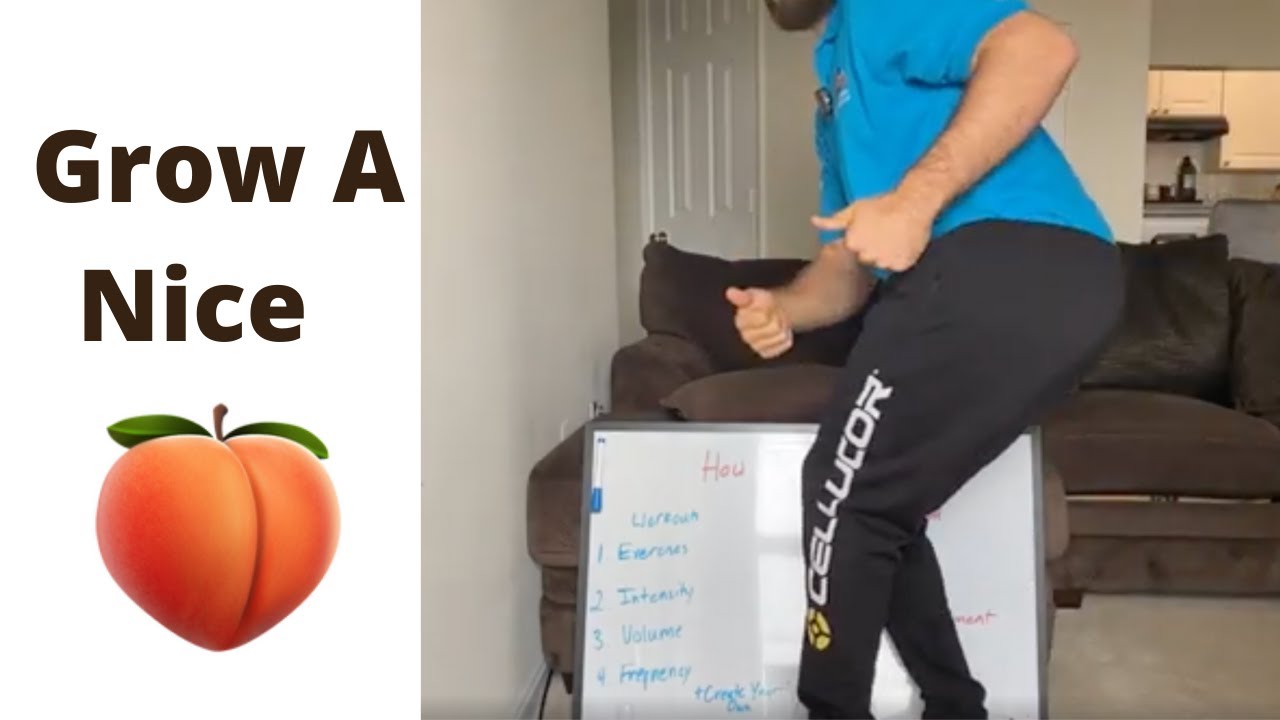
In this instructional video, Eric Roberts explains a comprehensive, 50/50 approach to building larger, stronger glutes, covering both training and nutrition. He emphasizes that without a structured strength program, nutrition alone won’t build muscle, and vice‑versa. Core training principles include progressive overload, selecting heavy compound movements (hip thrusts, deadlifts, squats, RDLs, cable pull‑throughs, etc.), and manipulating intensity, volume (10‑20 hard sets per week, ideally 15‑20), and frequency (2‑4 sessions per week). Roberts provides a sample two‑day program, recommends a 6‑20 rep range, and stresses the need to push close to failure on each set. On the nutrition side, he advises eating at calorie maintenance or a modest surplus (≈150‑200 kcal), consuming 0.8‑1 g protein per pound of body weight, and using simple methods to estimate maintenance calories (body weight × 14). He addresses the mental challenge of eating more, explaining expected weight gain, water retention, and the importance of tracking progress. Throughout, he encourages accountability—either via a coach or self‑monitoring—and offers his own coaching services. The video balances technical detail with motivational encouragement, aiming to give viewers a step‑by‑step plan to grow their glutes.
Chapters
How do the Instagram girls do it? Talking all about the butts today. Talking all about the butt today. Nothing but the butt. All right, let's do this. All right, YouTube, what is going on? Welcome back to the channel. Hope you're doing super amazing. In this video, we're going to be talking about how to grow your glutes. We're going to talk about both We're gonna talk about the workout aspect and we're gonna talk about the nutrition aspect. A lot of the times I hear people saying things like, oh, changing your body is 80% nutrition and 20% exercise, and you gotta focus on nutrition, or, or you should only focus on exercise. And listen, it's 50/50. They both matter a ton. All right, so I'm gonna cover both in depth. You might want to get a pen and a piece of paper like me because I'm very old school, or you can do it on your phone, but you're probably watching on your phone, so maybe not do it on your phone because you have to go back and forth. Probably just go get a notepad and a pen, write down what I'm going to talk about, because this is going to give you literally exactly step for step what you need to do to set up a plan to grow your glutes. All right, so let's dive in. First and foremost, we're going to talk about workouts. And again, when it comes to changing your body and when it comes to growing muscles in particular, nutrition is important, but without a proper strength training program in place, you will not be able to build muscle. The biggest difference between building muscle and losing body fat For you to lose body fat, all you have to do is be in a calorie deficit. It doesn't matter what else you do, as long as you're in a calorie deficit, you will lose body fat. But when it comes to building muscle, unless you follow a few principles we're going to talk about right here, unless you follow these principles, you can eat in a calorie surplus, or you can eat as much protein as you want, or you can think about it and dream about all you want, unless you do these few things, you're not going to be able to build muscle. So when it comes to actually growing your glutes, I would say workouts are going to be a very, very, very important thing because without following a structured program, it's not going to happen. I don't care how on point your nutrition is. You could have the best nutrition in the world, but if your program sucks, you're not going to build muscle because you build muscle through your workouts. All right, so what are these principles I'm talking about? Number 1, the way your body grows a muscle and the way your body builds a stronger, more defined muscle, which I'm sure if you're watching this video, you want your glutes to be bigger, more defined, whatever it is. Which is great for your body to build muscle. The adaptation process it has to go through is what builds muscle, right? So the way your body builds muscle is you put a stress on your body that your body has to respond to in order to grow stronger, more defined muscles. It's like the fight or flight, right? If you continuously put a stress on your body, your body's then going to say, you know, this person is hammering my freaking glute muscles. There's a bunch of stress being put on it. I have to adapt to be able to make sure I can handle this stress that it's being placed on this muscle. So what does your body do? Your body grows stronger, more defined muscles. That's how it adapts, right? So if you don't do that, I don't care what else is going on. Again, your nutrition could be perfect, but if you're not doing that with your training program, you will not build muscle, right? So that's the kind of overarching theme. I've taken that a step further is going to be something called progressively overloading, right? And what this means is, again, I just told you in order for your body to To grow a muscle, you have to put a stress great enough on it that your body has to respond to, to change. Here's the thing, that stress being great enough, that is going to change. It's not like you can just lift the same weight for the same reps and do the same workouts over and over and over again and your body's going to change because it's not, because you need to put a stress great enough, little asterisk, you need to put a stress great enough for your body that your body has to respond to it in order to see results. So over a period of time, progressive overload means you have to do more over a period of time. So for example, if you're doing a set of deadlifts with 100 pounds for 10 reps, by week 4, you need to be doing something like 105 pounds for 10 reps or 100 pounds for 11 reps or 110 pounds for 8 reps. Somewhere along the line, you have to be making sure you are chronologically increasing the stress you put on your body. And again, this is going back to, you have to actually follow a program. It is not going to be good enough for you to say, oh, let me go exercise, or let me just go do these quick workouts. Like, You have to follow a program to ensure you are progressively overloading your muscles. Again, in the simplest terms, progressive overload is just doing more over an extended period of time. So those are the 2 things. First and foremost, you have to make sure you're providing a stress great enough and you have to make sure you are having this progressive overload. Again, one more time, progressive overload could look something like week 1, you do 100 pounds for 10 reps. Week 2, you do 100 pounds for 11 reps. Week 3, you do 100 pounds for 13 reps. You're You're increasing, right? That is doing more over an extended period of time. Same thing with weight. You can do 100 pounds for 10 reps, 105 pounds for 10 reps, 110 pounds for 10 reps. Either way, over a period of time, you are doing more. So if you're not doing that, again, you could do all the exercise in the world, but if you're constantly lifting the same weight for the same reps, 6 months from now, your body's not going to grow glute muscles. So that's first and foremost. Now let's dive into the exercises that are going to be the best for growing glute muscles. First and foremost, I'm going to say I wrote an article on this topic. I'm going to link it here in the description below. So if you want to go read that article as well, feel free to go read that article on that topic as well. There are a few certain principles that are going to be followed here. You want to be able to use the exercises that are going to give you the most bang for your buck, that are going to recruit the most muscle, that are going to give you the best return on your investment, which again, your investment is your time exercising, your time in the gym. And what these exercises tend to be are bigger compound movements. Things like hip thrust, things like sumo deadlifts, things like Romanian deadlifts, things like glute bridges, things like single leg hip thrusts, things like cable pull-throughs. I'd probably go and rewind that and write down all those exercises. Again, hip thrust, deadlift, sumo deadlift, conventional deadlift, Romanian deadlift, cable pull-through, even things like a wide stance squat or a wide stance leg press. Because normally the more wide your feet are, the normally the more glute you are going to recruit. So if you're doing a squat with your feet super close, That's normally going to work your quad muscles. If you're doing a squat with your feet farther out, that's going to work normally more of your glute and hip muscles. So exercise selection is a big thing because you can't just go into the gym and follow what these Instagram models do and do all these random banded glute kickbacks and banded glute sidekicks and just like doing like no weight. Like, again, I understand it's one thing if you're home and you have— you don't have much weight to you, which if that is you, if you're at home right now and you don't have a lot of weight to you, again, I'm going to link an article here in the description below on ways to kind of like amp up your at-home workout. So if you want to, again, feel free to read that article. But point being, you want to use big compound movements, things that— again, a deadlift with you lifting heavy weight on a deadlift, that is going to recruit more muscle from your glutes than if you were on your knees doing some banded side kickback for your glutes, or if you're on some cable machine doing some freaking kickback for your glutes. You can use more weight with the deadlift. You can use more weight with the squat. You can use more weight with the hip thrust. These movements are what you want to focus all of your energy on because again, these movements also allow for better progressive overload. Because again, if you're doing a sumo deadlift, if you're doing 100 pounds, you can add 5 pounds, you can add 10 pounds, you can add 100 pounds over a period of time when you get stronger and stronger and stronger. This will allow you to progressively overload more because if you're just doing banded glute kickbacks, then what are you going to do? Like one week you do 15, next week you do 20, next week you do 40, next week you do 60. And you're doing sets of like 100 reps, it's not optimal. And that's the biggest thing. You want to make sure your plan consists of the things that are going to get you the most optimal, most maximal, most beneficial results. And doing exercises, basing your training program around bigger compound exercises are what you should be doing. All right, so that's first and foremost. And again, it allows for better muscle recruitment, allows for progressive overload better. It allows for you to spend your time in the gym or in your workouts wherever they are done Spend your time the most effectively. You will get the most bang for your buck. So focus on those movements and get stronger at those movements. And I say get stronger at those movements and I mean lift heavy weight. And that kind of goes into my next point, which is going to be intensity. For you to grow a muscle, you have to have adequate intensity to your workouts and to your sets and to your reps. What do I mean by intensity? I do not mean how fast you can do your HIIT workouts. I do not mean how sweaty you get. I do not mean how out of breath you get. What I mean is in the terms of what this means for growing your glute muscles, if you have a set of 10 reps, let's say you're doing hip thrust and you're doing a set of 10 reps. When you get done that set of 10 reps, if you get done and say, man, I probably could have done 5 or 10 more if I really pushed myself. If that's your thinking, you're not going to grow your glute muscles because for you to grow a muscle, you need to have adequate intensity. You need to get done that set of 10 reps and say, I maybe, maybe if I was lucky, could have done 1, 2 or 3 more reps if you're lucky. You need to be pushing the envelope and pushing the intensity because that is how, again, you recruit the most muscle fibers and you tear down your muscle fibers the most in order to have them recover and grow stronger. If you're not pushing intensity, you're not going to grow your glute muscles. And this is something that, especially for women, you guys don't know how fucking strong you are. I coach primarily women. I'd probably say 85% women is what my clientele are. And you guys are incredibly, incredibly strong. Do not be afraid to push the heavy weights. Do not be afraid to push the limits. Don't hurt yourself and don't injure yourself. Again, if you're not totally sure of what you're doing, this is where hiring a professional can come into play. This is where YouTube can come into play. Search how to do the exercises, those kinds of things. But beyond that, mainly do not be afraid to push yourself and push for adequate intensity. You need to make sure that's there or you will not grow your glute muscles. Again, you can have the best exercises. You can have the best nutrition, but if your intensity is not there, you need to make sure it is there if you want to grow your glute muscles. So that is number 2, intensity. Number 3 is going to be volume. And what I mean by volume is volume in the terms of this conversation is defined by number of sets per muscle group per week. Okay? So this is going to be number of sets per glute muscles per week. Normally to ensure you probably want to grow a muscle, Normally you have to do anywhere between 10 to 20 sets per muscle group per week to grow. So again, 10 to 20 sets of glute exercises per week. These are sets that are hard. I just talked about intensity. This is not like your warmup sets. This isn't like sets you're not pushing close to failure. I mean 10 to 20 sets where you are pushing yourself close to failure, 10 to 20 hard sets. Okay. I will say this. If you really, really, really want to hone in on growing your glute muscles, I would probably up that amount. To probably, I'd say 15 to 20 sets per glute muscle per week. Okay? So having adequate volume, you need to have adequate volume again in order to elicit the growth response your body is looking for. If you just do 4 sets of glutes per week, that's not going to be enough for you to grow your glute muscles normally, especially if they are a stubborn muscle group. You probably want to have more volume, which will lead to more muscle growth long-term. All right? So volume, that's number 3. Again, I would say honestly, probably try to get anywhere between 15 to 20 sets. sets per week. And again, these are hard, intense sets. Now brings me to my last point, which is going to be frequency, because we kind of have to— we have to round this out. Frequency is just how many times you're working out your glute muscles per week. I would say anywhere between 2 to 4 times per week you can exercise your glute muscles. Now we now have all these things kind of thrown there, right? How would we kind of put these things together? I'm going to go over it very quickly for you. I'm going to write down here on the board. All right, so Again, I want to talk about here about the exercises and sets. But again, just to recap very quickly, first and foremost, we talked about exercises, big compound movements. We talked about intensity. You have to be making sure you're pushing close to failure. We talked about volume, again, 15 to 20 sets per week. And we talked about frequency, how many times per week you want to train your glutes. Very quickly, I just want to quickly cover if you were to work out your glute muscles, say 2 days a week. Let's say you work out 4 days a week. You have 2 upper body days and 2 lower body days. First and foremost, I want to say I have 2 in-depth videos here on this YouTube channel about like how to structure your own workout program. So I'm not going to go too in-depth on it right here because I'm going to link that here above. I'm going to put those videos— if you want to know more in-depth about how to like structure your workout program, I'd watch those 2 videos first and foremost. Now beyond that, I will go a bit in-depth here. Let's say you work out 2 times a week for your glute muscles. Day 1, you have 4 sets of a hip thrust. Okay, so let's say again you start your workout with 4 sets of hip thrusts. Again, 4 working sets, 4 hard intense sets where you're pushing close to failure. That is your first exercise of the day. Let's say your next exercise is going to be 4 sets of an RDL, a Romanian deadlift. So again, you're having 4 hard sets where you're pushing close to failure. You're doing those sets. That is 8 sets already for that one day. I will say this. I probably wouldn't go past 8 to 10 sets per session because after you get past this 8-set point, your fatigue starts to accumulate so much and your muscle fatigue starts to accumulate so much. The load and the intensity of your workouts are going to drop, which is not going to allow for optimum and maximum glute growth. All right? So I'd say after you get to 8 sets, I would probably just back off and/or add it to a different day. All right? So, but day 1, we're having 8 sets, right? Day 2, let's say you now have 4 sets of a sumo deadlift and you have 4 sets of a cable pull-through. Now you've only worked out 2 days a week for your glutes, but you have 16 sets per week. So again, 4, 8, 12, 16. We talked earlier about volume. having 15 to 20 sets per week in this format, you now have 16 sets of hard glute training per week. A quick example of how to set up a possible workout program throughout the week. And again, when it comes to sets and reps and stuff like that, I would make sure to go watch those videos I talked about. I will go over all those things in depth there, but I'd say get stronger in the 6 to 20 rep range, anywhere in between there. If you're getting stronger in the 6 to 20 rep range and you're doing everything else we talked about here, you are going to grow your glute muscles. All right, so that was everything workout related. Again, if you have any questions, any concerns, let me know. If this seems like a lot to you, if it seems like this may be overwhelming, this is what I do for a living. So if you want to— I'm going to put the link for coaching here in my description below. I'll link that here. Feel free to fill that out and we can possibly see if we may be a good fit together for coaching. Again, I make all training programs for my clients, so I'll make everything for you. I'll tell you exactly how many reps to do, exactly how many sets, what exercises sizes, what days, everything. So if you want that, feel free to head there below. But beyond that, let's now dive into nutrition because again, it's 50/50. Both of these things matter. Number 1, the question I get oftentimes, Nadia, is I want to grow my glute muscles, but I also want to lose fat. And here's what I have to say about that. Number 1, I have a video here on YouTube. Again, I'm going to link it here above and below. I have a video here on YouTube about how to lose fat and build muscle at the same time. So feel free to watch that video after this video to go more in depth. Beyond that, normally you cannot lose fat and build muscle at the same time. There's 2 main scenarios. Number one, if you're a brand new trainee, or number 2, you've taken an extended time off from lifting, whether it's injury, whether it's COVID, whether it's whatever. All right, so those are the 2 scenarios where you can normally lose fat and build muscle at the same time. If you are not one of those 2 scenarios, I would say you have to pick, right? Because you can't be eating 1,200 calories and expect to grow your glute muscles because Normally if you want to grow a muscle, you have to eat at a calorie maintenance or a calorie surplus. And I'm going to remind you, there's basically 3 different things you can do. You could be in a calorie deficit, which is eating less calories than your body burns. You can be at a calorie maintenance, which is eating the same amount of calories as your body burns, or you can be in a calorie surplus, which is eating more calories than your body burns, right? There's 3 scenarios for you to build muscle. You need to normally be at a calorie maintenance or a calorie surplus. And the reason is because Can you technically build muscle in a deficit? Yes, technically. But the results you see are going to be so goddamn slow. You are going to get so frustrated at the lack of progress you are seeing. You're not going to make anywhere near amount of progress as you want to see. And it's going to be super frustrating. You're going to get super discouraged. You're going to think it can't happen for you. For this reason, I tell people, listen, spend time losing fat and spend time building muscle. All right, again, if you want to know whether you should lose fat or build muscle, I would highly recommend go watch that YouTube video, or I also wrote an article on this as well. I'm going to link that here in the description below. All right, so I kind of go over what you should do, whether you should lose fat or build muscle, which route you should go. Okay, so with that being said, again, normally to grow your muscles, you gotta be in calorie maintenance or a calorie surplus. This means you're probably going to be eating more calories than you are used to, which is scary, and I know, and we're going to talk about it, but Calorie maintenance or calorie surplus and making sure you get your protein around, I would say, anywhere between 0.8 to 1 times your body weight in protein. So for example, if you weigh 150 pounds, if you did 0.8 times 150 pounds, you would get 120 grams of protein. If you did 150 times 1, obviously you get 150 grams of protein. Anywhere in between that range is where you want to have your protein because protein is the only macronutrient that allows you to build lean muscle mass. It also helps speed up your metabolism, which is going to help. So I'd say you have to eat at a calorie maintenance, eat in a slight calorie surplus, and I mean like maybe 150 to 200 above your calorie maintenance. I'm sorry. And again, having high protein. Make sure all those 3 things are in place. And this is because in order for your body to build muscle, you need to fuel it with the nutrients it needs to grow stronger, more defined muscles. Again, there's a process. You work out and you break down your muscles, right? Unless you can then recover and build your muscles back up, You're never going to actually build your muscles back up because you can't recover from the things you are doing. And nutrition and sleep, but also nutrition is one of the biggest things that allows you to recover from your training. And again, if you don't recover, I don't care how hard you work out. Again, this is going back to both are 50/50. I don't care how hard you work out. If you can't recover from the workouts, you are not going to grow stronger, more defined muscles. And nutrition is how you do that. And if you don't have adequate fuel, which is calories, Calories. If you don't have adequate calories and protein, your body is simply not going to allow your body to recover and build muscle because it doesn't have the proper nutrients. Again, if you're only eating 1,200 calories, your body is fucking barely staying alive, let alone freaking building lean muscle mass, right? So you have to make sure you're feeding your body what it needs. So calories and protein are the 2 biggest things. Now you're probably going to ask, how many calories should I eat? What is my calorie maintenance? How do I find it? 2 things here. Number 1, you could do a reverse diet. Again, I put a video here on YouTube talking all about reverse dieting. So if you want to go watch that video, please go watch that video. It's way more in depth. It basically means you slowly work your calories back up to find where your maintenance calories are. It's a slower process, but if you want to do that, you can absolutely do that. Number 2 would be simply take your body weight in pounds times 14. That is around where your maintenance calories are going to lie. Again, maintenance calories are a range. It's not just one number. So if you take your body weight times 14, you get a number. It could be 200 below that and it could be 200 above that. It's a range, not an exact number. So what I would do is again, find your maintenance calories and either eat at maintenance or eat in a slight surplus. So for example, let's say your maintenance is 2,100 calories. If you want to optimize muscle growth and optimize growing your glutes, I would eat at either at the very least 2,100 or probably around 2,250 calories. Doing some quick math. math there, around 2,250 calories, which would put you in a 150-calorie surplus, which again, it's not a huge calorie surplus. It's nothing crazy, but it's going to be enough to allow your body to help you recover and grow stronger muscles. All right, so that's kind of that as far as how much weight to gain, because we're going to talk about this. Let's talk about a maintenance and a surplus first, because this kind of dives into the last point here, which is the mental side of eating more calories. As a girl, your entire life you've tried to eat less calories and you've tried to lose weight. And you've tried to see the scale go down. That's probably all you've been used to your entire life. And I totally get it because again, I coach primarily women. Here's the thing. When you eat at a calorie maintenance and you eat at a calorie surplus and you try to grow your glutes, the scale, it's going to go up and it's going to be 100% normal and necessary if you want to optimize growing your glutes. If you really have the goal of growing your glutes, this scale is going to go up a bit and that's not a bad thing at all whatsoever. Let's talk about calorie maintenance. If you are eating at calorie maintenance, you're not going to gain body fat. It's impossible. In the same way, if you're not in a calorie deficit, you won't lose body fat. If you're not in a calorie surplus, you will not gain body fat. But the scale may go up because number one, you're probably going to eat more carbohydrates. For every 1 gram of carb, you store 3 to 4 grams of water. So the more carbohydrates you have in your body, the more carbohydrates you're eating, you're going to store more water weight in your body, which is not a bad thing because Those carbs are going to get used for building muscle, and those carbs will get used for energy for your workouts. And again, if you want to have adequate intensity, adequate volume, if you want to recover from your workouts, you need those extra carbs because you need that extra fuel for those workouts because that's what's going to fuel— we talked about earlier, again, it's 50/50, both these things matter. The nutrition is going to fuel your workouts, which will allow you to get stronger, to recover, to push the envelope, to progressive overload, to have adequate intensity. All those things. All right, so that's calorie maintenance. And again, you can grow muscle in calorie maintenance. It's going to be a bit slower process though than if you were in a slight calorie surplus. So let's talk about a calorie surplus. When you go into a slight calorie surplus, this is going to be the most optimal for you if you want to grow your glutes or any muscle at all. If you want to grow muscle, being in a slight calorie surplus is the most optimal. What comes with a calorie surplus? Gaining some body fat. It's normal. It's going to happen. It happens to me, happens to you, happens to the best bodybuilders in the world, happens to all your favorite Instagram models, happens to everybody. It is a totally normal thing. And again, it's not like you're going hog wild. You're not eating whatever the fuck you want. You're not eating 10,000 calories. You're going in a 150-calorie surplus. First and foremost, you're not going to gain that much body fat. But second, I say it's a necessary evil if you want to actually spend the time growing your muscles. Again, whether it's glutes or whether it's shoulders, whatever, but in this video we're talking about glutes. If you want to get the most out of growing your glutes, I would personally probably go into a slight calorie surplus. Be okay with your clothes fitting a bit tighter. Be okay with your pants fitting a bit tighter. Be okay with knowing that you are going to gain a slight amount of body fat. And again, I say slight because it's going to be very, very slight. If you do this correctly, you probably won't even notice that big of a difference. You'll probably notice your pants fit tighter because you're growing your glutes, but you'll probably notice things feel A little bit different, but you're gonna have way better energy. You're gonna have way better sleep. You're gonna have way better workouts. You're gonna be getting strong as hell. You're gonna be hitting new PRs in the gym. It's gonna be an absolute amazing process. And I promise you with all my heart, it's fun as shit. And every girl I've ever done this with absolutely loves it. And they actually don't want to go back into a calorie deficit because they love this so much. But it's normal and the scale is going to go up a bit. And let's talk about how much is an acceptable rate of weight gain. I would say anywhere between 0.5 to 2 pounds per month of weight gain. At that rate, you're gaining lean muscle mass, maybe a little bit of fat, but you're gaining mostly lean muscle mass, which is what you want, right? So again, 0.5 to 2 pounds per month of weight gain. Once you start getting past the 2-pound mark, if you're gaining 4 or 5 pounds a month, if you're gaining 8 pounds a month, you're probably putting on too much body fat and you have to cut your calories back a bit. All right. But if you're in the range where you're tracking your weight every single day, as you should be, If you're tracking your weight every single day and you get, you get all the data for the month and you go back and say, over the course of this month, I've gained on average 1.7 pounds. Perfect. That means you're doing everything right. That means you're gaining lean muscle mass. That means you're growing your glutes. That means you're doing everything right. And again, it's a part of the process. It's a necessary evil. And my thing to you is, number one, if you overshoot your calories and you're gaining 5, 10 pounds per month, simply just cut back. But number two, if you get to a point where you say, hey, I've gained too much body fat, I don't like the way I feel, I don't like the way I look, At that point, I'd just say you know what to do. You just go back into a calorie deficit. You do the same thing you've been doing this entire time, right? So on top of that, little side note again: This is where I would say working with a professional or just having somebody to keep you accountable is so, so, so critical during these times because again, I know this is going to be scary for you. I know this is different for you. I know this is not what you normally do. It's not what you're used to. It's you always think eat less, eat less. Scale go down, scale go down, and now I'm telling you eat more, scale's gonna go up. It's a different scenario. It's not comfortable. It's not what you're used to. I've coached women through this process and I've had days where somebody will send me an email and say, Eric, I feel really fat. I think we need to cut back on calories. I should probably go back into a calorie deficit. I don't like this. And I'm like, first of all, it's been a week and a half. You can't gain that much fat in a week and a half. Second, you're just freaking out and that's okay. I understand. But number 3, it's like you're gonna feel at some points like, oh my God, this is scary. Oh my God, I'm gaining too much fat. Oh my God, I feel so bloated. It's like all those things are normal. Having somebody there to hold you accountable and say, listen, you told me we were going to spend 4 months growing your glutes and you were okay with going to a slight calorie surplus and you understood that came with the scale going up and your clothes fitting differently. Do you think this is still the right thing you want to do? Do you think you still want to grow your glute muscles? And at that point you can then say, all right, okay, you're right. You're right. Okay. I'm sorry. Let me get back to it. And it's like just having that person there to hold you accountable during this journey It's huge because I know how scary this can be. So all that being said, again, possibly think about hiring a professional, think about having somebody to hold you accountable. But I know it can be a big mental adjustment, and just know that you're not the only one. You're not bad. This isn't wrong. Gaining some scale weight, gaining some body fat, all those things are going to be different for you. But keep asking yourself what is right, not what is the easiest or most comfortable, because what is the easiest and most comfortable What's uncomfortable is you running back to your calorie deficit and not seeing the scale go up and not growing your glutes. Because again, if you're watching this video this far, you want to grow your glutes very fucking bad. So I would ask yourself, don't think about what is easiest or what is most comfortable. Think about what is right. And what is right is eating at calorie maintenance or calorie surplus, doing all the things we talked about on your strength training side, getting uncomfortable a bit, and realizing this is what it takes if you want to see a change in your body. If you want to see a change in your body, You got to do something different. This is something different. All right. So other than that, thank you so much for watching. I appreciate you. If you have any questions, if you have any concerns, feel free to drop in the comment section below. Again, I'm going to put my link for coaching here in the description below. So feel free to possibly apply and see if we may be a good fit for coaching. But other than that, I appreciate you watching. You got this. I know it's kind of scary, but you got this. Again, any questions, concerns, drop below and we will talk soon. Thank you so much.










