how to lose 30lbs by Christmas (do these 4 things)
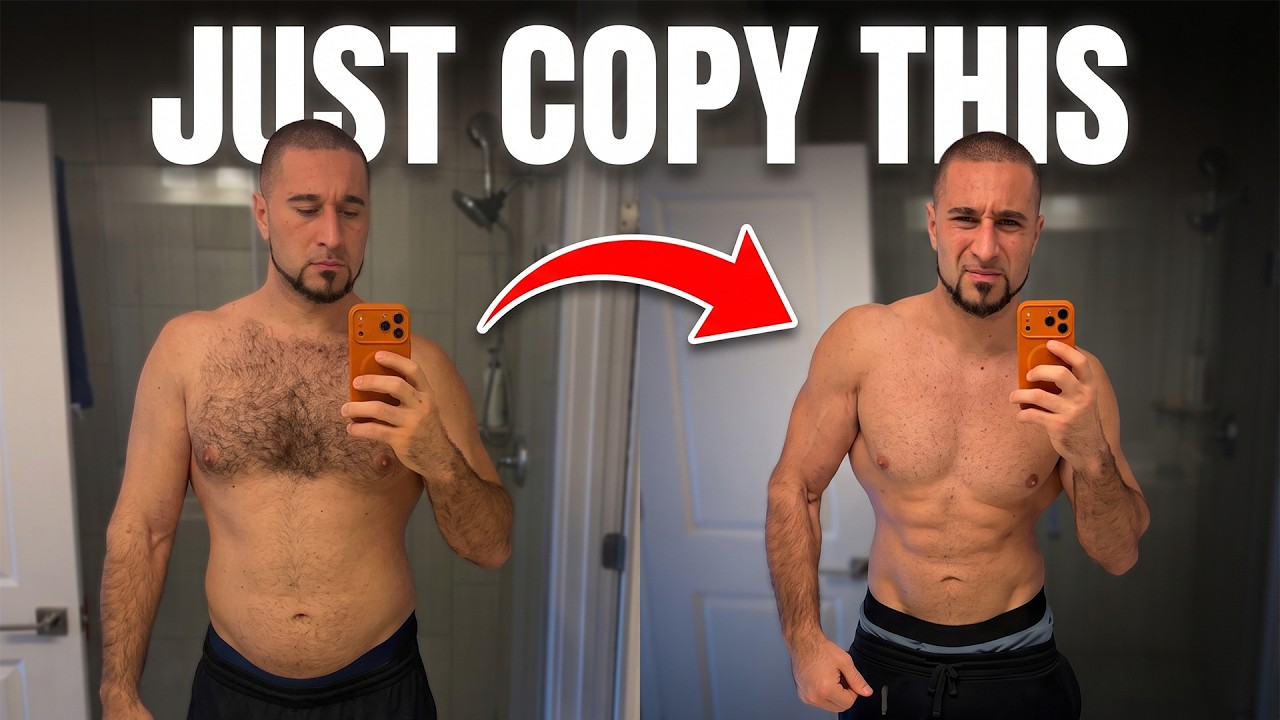
In this 15‑minute instructional video, Eric Roberts outlines a concrete, step‑by‑step system for losing 30 pounds in roughly 15 weeks (by Christmas). He begins with the math: a 2‑lb/week target requires a 1,000‑calorie daily deficit, which he splits into three sustainable components—~500 kcal from nutrition, ~250 kcal from low‑intensity (Zone 2) cardio, and ~250 kcal from extra daily steps. He explains how to determine and stay in Zone 2 (60‑70 % max HR or conversational breathing) and recommends 15‑60 minutes 2‑4 times per week. For steps, he suggests adding 2,000 steps to one’s baseline or aiming for a minimum of 6,000 steps daily. Roberts then stresses the necessity of strength training to preserve (or build) muscle, maintain metabolism, and avoid a “skinny‑fat” outcome. He prescribes 3‑4 weight‑lifting sessions per week (30‑60 min each), with lower‑body and upper‑body splits (or A/B variations). Each workout includes 4‑6 lower‑body or 6‑8 upper‑body exercises, 2‑3 hard sets of 5‑12 reps, and 90 seconds to 5 minutes rest between sets. Next, he provides a flexible meal‑planning framework: either 3 meals + 2 snacks or 3 meals + 1 snack per day, each meal containing protein and a fruit/vegetable, with snacks focused on protein, fruit, or veg. He emphasizes regular eating to prevent evening overeating and suggests simple protein‑rich breakfasts (e.g., protein powder + banana). The video concludes with a four‑pronged progress‑tracking system: (1) daily body‑weight logging with a weekly average, (2) waist circumference every two weeks, (3) progress photos every four weeks, and (4) strength metrics (weights/reps). He promotes a free calorie calculator, a free 3‑4‑day strength program, and an optional paid 8‑week fat‑loss challenge for personalized plans and accountability. Throughout, the tone is instructional, confident, and motivational, positioning the plan as proven (used with >25,000 clients) and realistic.
Chapters
By the end of this video, you're going to have a step-by-step plan to follow to drop 30 pounds by Christmas. Just so you know, this isn't theory. It is the same plan I have used with over 25,000 clients who pay me money to coach them to get them results. And it's the same plan I used to drop 22 pounds in 8 weeks. This works. All you have to do is follow it. And let's start with the fact that losing 30 pounds by Christmas, which at the time you're watching this video is roughly 15-ish weeks away, it all just comes down to simple math. And let me show you. If Christmas is 15 weeks away and you want to lose 30 pounds in 15 weeks, that would mean you need to lose 2 pounds per week on average to get to your goal. Well, you may have heard before, you need to eat in a calorie deficit. In 1 pound of fat, there is 3,500 calories. So that means if you wanted to lose 1 pound of fat per week, you would be in a 500 calorie deficit per day. But we're trying to lose 2 pounds per week. So that means to lose 2 pounds per week, you would need to be in a 1,000 calorie deficit per day. And to be clear, this doesn't mean you eat 1,000 calories per day. It means you eat the amount of calories that is going to put you in a 1,000-calorie deficit. Now, where most people go wrong with this is they only look at their food. I'm going to show you the way I set up the plan so that you don't have to eat 1,200 calories per day or starve yourself to lose weight. In fact, the way I set it up, it actually makes it pretty easy and realistic to follow. So creating your calorie deficit first comes from your nutrition. But what you do not want to do is try to put yourself in a 1,000 calorie deficit per day only by your food. Why? Because this will lead to you being absolutely starving, and it's going to be very hard to stick with long term. So what I would tell you to do instead Instead is actually just create a 500-calorie deficit per day from your food. And if you need to know exactly what this number is, I have a totally free calorie calculator you can use in the description below. Again, it is the same one I use with my online coaching clients who pay us money, so I am not holding anything back from you. So we have 500-calorie deficit per day taken care of. But we have to get to 1,000 calories per day deficit. So how are we going to do that to still allow you to make this sustainable and something you can stick with? Well, the second part of this is your cardio, but it's not just any cardio. And this is important. There's different types of cardio you can do. High intensity where you're pushing really hard and you're breathing really heavy. And then there's low intensity. Low intensity. Intensity cardio. We call this zone 2 cardio. For you to create an aid in your 1,000 calorie deficit, you are going to stick to this zone 2 cardio throughout the week. Why? When you're in zone 2, you will be burning calories because you're doing the cardio. But the most important part, when you're in low intensity cardio, you are not going to to add hunger, stress, or cravings to your body. When you're doing high-intensity cardio, you may burn a little bit more calories while you're doing it, but on the back end of that, it often leads you to be hungrier, have more cravings, and more cortisol and stress. All of these things lead to Sticking to your calorie deficit to be harder, which if you don't stick to your calorie deficit, you won't lose weight. And it also leads to more water weight storage because of the stress and cortisol. So you should be sticking to zone 2 cardio. What is zone 2 cardio? How do you know if you're in it? A couple of ways. If you're wearing a watch, it will be 60 to 70% of your max heart rate. And to find your max heart rate, just take 220 minus your age. So right now I am 30 years old, so 190 would be my max heart rate. So if I'm going for 60 to 70% of my max heart rate, usually this puts me somewhere around 130 to 150 heart rate for me to stay in zone 2. Now, if you don't have a watch or you're not tracking your heart rate, that's okay, because the second way to know you're in zone 2 is if you can still breathe through your nose and you can still maintain a conversation. That's how you'll know if you're in the correct zone 2 cardio. And what this is going to do is, like I said, burn some extra calories to aid in creating this 1,000-calorie deficit per day without any negative side effects. So it depends on exactly how much you do, but just for easy math, let's call it you're now going to create a 250-calorie deficit per day via your zone 2 Cardio. And how much zone 2 cardio should you do? Well, it should be somewhere between 15 and 60 minutes, and it should be between somewhere 2 to 4 times per week. Typically, you want this to be done either after you lift weights or on a rest day from lifting weights, and we'll talk about lifting weights in a second. So now we've created a 750-calorie deficit. There's one more part That will aid in this, and that is your daily steps. And you may have heard before, you need to walk 10,000 steps per day to lose fat. You don't. Will it help you? Sure. But you don't need to walk 2,000— 10,000 steps per day. Here's what I want you to do instead. If you're currently tracking your steps, you can track your steps through your phone, through your watch. But the first method of this is Just take wherever you're currently at. So if you're at 5,000 steps per day, just add 2,000 steps per day. It might not seem like a ton, but if you're doing this and you're doing this, adding in this is going to aid in creating this 1,000 per day calorie deficit. And again, the cool part about daily steps is it's similar to zone 2 cardio in that you'll burn the extra calories, but it's not going to add hunger, cravings, appetite, stress to your body. So you get all the benefits without any of the negative side effects that higher intensity cardio would be bringing. Now, if you don't know where you're at per day for steps, that's fine. Just start shooting for at least 6,000 per day as a minimum floor. And this can be broken up however you would like. You can do multiple mini walks throughout the day. You can do one longer walk throughout the day. You can walk after meals. It doesn't need to be at a certain pace. It doesn't need to be at a certain time. All steps count. So even if you're doing some fall cleaning, doing some winter cleaning in your house, and you're walking around your house, all of those steps count. And so again, for easy math, let's say this is now going to create an extra 250 calories calorie deficit per day. This is how we achieve this 1,000 calorie deficit per day and how you're going to lose 2 pounds per week for the next 15 weeks to get to your 30-pound weight loss goal. So now you might be thinking, okay, Eric, I'm good, I got it, this is all I need to do. Not at all. The next step is one of the most critical steps, and if you don't do this, you're not going to lose 2 pounds per week, and all of this will actually stall your progress. And so let's talk about What the next step of this plan is going to be. So we got your cardio covered, and for most people they think, well, I'm just going to do cardio to lose weight as quickly as possible. I'm not going to lift weights because if I do, I'm going to get big, I'm going to get bulky, I'm going to add weight to my frame. My friend, that cannot be farther from the truth, and let me explain why. If you are in a 1,000-calorie deficit And again, just to remind you, I have a free calorie calculator. Just click the link in the description below. If you are in this and you are not lifting weights, you will 100%, without question, I can assure you, lose muscle. Now, somebody may be thinking, well, I don't care about losing muscle as long as my scale goes down. You do care about losing muscle because If you lose muscle, number one, your metabolism, your daily total calorie burn is going to drop. It's going to plummet. So that means you think you're going to be in a 1,000 calorie deficit per day, but because every week you're losing muscle because you're not training, you're now in maybe a 500 calorie deficit per day instead of a 1,000 calorie deficit per day. So your metabolism will lower, on top of the fact you will be losing some fat, but also losing muscle. You ever seen somebody who has lost weight, but like, they don't really look toned, they don't look defined, they don't even look like they work out? They just look like a smaller, kinda saggier version of themselves? This is what we call skinny fat, where maybe you do lose the weight, but you don't look the way you wanna look. And I think for you, The reason you want to lose 30 pounds is to look better. You want to look a certain way. If you lose muscle, that will not happen. So to keep your metabolism high and to keep either the amount of muscle you have or even build lean muscle mass during this, which building muscle beyond just how you look and your metabolism is critical for your long-term health, your bone density, your metabolism, injury prevention. So what are you going to do to set up your weightlifting? Well, good thing you are watching this video because I'm going to make it very simple for you. You're going to lift weights 3 to 4 days per week. You don't need to lift weights 5, 6, 7 days a week. It'll probably be for somewhere around 30 to 60 minutes per day. That may not seem like a lot, but I'm going to show you. One of our clients, Natalie, and one of our clients, James. Natalie lost a little over 16 pounds in our 8-week fat loss challenge, and James lost a little over 20 pounds in our 8-week fat loss challenge. Both of them lifted weights 3 days per week. They also did the other stuff I told you in the first section of creating their calorie deficit, but all you need is 3 to 4 days per week. If you're going to lift 3 days, it will look something like lower body, upper body— oh, sorry— lower body, upper body, full body. That's how you'll set up your week's worth of workouts. And then 4 times a week will be lower body A, upper body A, lower body B, upper body B. And the ABAB, this just means they're different workouts. So you'll do one lower body workout and then a different lower body workout, one upper body, and then a different upper body workout. And that's all you need for lifting weights. Now, to go more in depth into this, you're going to do for your leg days, for your lower body days, 4 to 6 exercises per workout. Again, you do not need a ton. For your upper body/full body days, you're going to do 6 to 8 exercises per workout. With each exercise, you are going to do 2 to 3 Sets, and these are hard sets. You're pushing yourself close to failure. I'm going to tell you how many reps to do as well. For those sets, you're going to do somewhere between 5 to 12 reps because again, we're already taking care of your calorie burn and your calorie deficit via your nutrition, your cardio, and your daily steps. So for the lifting, we want to go heavier to keep and/or build muscle, And maintain our metabolism. And then the last part here is in between each set, you're going to rest for at least 90 seconds up to 2 to 5 minutes. And trust me, if you're pushing yourself and lifting heavy, you will need at least 90 seconds in your— in between your sets to make sure you can go into your next set fully recovered and push as hard as you can. So this is how you'll set up your lifting weights, which is critical. If you do not do this, I'm telling you right now, not only will you not lose 30 pounds by Christmas, but you will also end up skinny fat. You'll end up with a slower metabolism, and you're going to have to do this anyway to fix it. So if you don't do this now, at some point you'll have to do it. You'll end up worse, and you'll have to go back and try to fix this, which is harder when you are lower in your metabolism. Why wouldn't we want to eat more food Build more muscle, still lose weight, and look the way we want to look. So this is what you'll follow. And oh, by the way, what else does Papa Eric have for you for free? Well, I have a free 3 to 4 day a week strength training program that you can follow. The link will be in the description below. I'm telling you, I'm giving you everything for free. I'm giving you the calories, I'm giving you the cardio, I'm giving you the workouts. It's all for free. The reason— if you want to sign up with me and my team, the reason you would do that is 2 reasons. Number one, to get all of this personalized to you and take out all of the guesswork. So if you're like, I don't want to have to think about it, can you just make me a plan? This is a lot. That's why you would sign up. And number 2 is for accountability. If you kind of know what you need to do, but you can't stay consistent with it because nobody's holding you accountable, that is why you would sign up for our coaching with our 8-week challenge. So all of this is for free. And it works. But if you want this personalized to you, and if you want and need accountability to stay on track, there will also be a link in the description below to check out my 8-week fat loss challenge. So now we have the workouts, we have the lifting weights, we have the calories, but how do you actually set up a day of eating with your calories? Because let's be honest, just knowing how many calories to eat, that's nice and all, but like, how would you actually set this up? into a day's worth of eating? Well, that's what I'm going to tell you right now. There are 2 ways I like to set up a quote-unquote meal plan, and the reason I'm putting this in quotations is because most people will ChatGPT a meal plan and they'll say, tell me exactly what I should eat, these are my calories, this is my protein, which, fine, maybe you follow that. For a short period of time. But let's be honest, what happens when a couple of weeks goes by? If you make it a couple of weeks with this meal plan, you're not going to stay consistent with it. You can't just eat that same meal plan. What happens if you go out to eat? What happens if you get tired of the food? What happens if, God forbid, you have 12 almonds instead of 8 almonds? Does the world fall apart? This is why with what we do with our clients, we try to set up a framework of eating. We try to set up a meal plan, meal schedule of eating. And there's 2 ways that I like and I have seen be the most successful for our clients. So the first one is 3 meals per day and 2 snacks per day. The second one is 3 meals per day and 1 snack per day. Let me explain the reasoning behind this. I like the 3 meals per day because a lot of people who are trying to lose weight will skip meals During the day, and they think that's a good thing because I'm not eating a lot of calories. Eric just told me I got to be in a calorie deficit, so if I'm not eating, that means I'm in a calorie deficit. But what happens at night? You get home from work and you're starving. You're looking through the pantry. What can I eat? It's almost like you can't get full. And then maybe you go to have dinner, and then after dinner you're still hungry. You want something sweet. You're craving something, so you have some extra food at night. And although you didn't eat all day, from 3 PM until the time you go to bed, you overeat, you overconsume calories. And this is also the time period where your willpower and your energy is the lowest. Most people aren't overeating at 10 AM when they get to work. It's right when they get home from work. It's after dinner while they're watching TV because that's when you're exhausted from the day. Your mental capacity and your mental bandwidth is lower, and you just kind of want something to soothe yourself. Well, if you don't eat during the day, that's why that's going to happen even more. So starting your day and having frequent meals throughout the day— for the clients I have coached, I have seen this to be critical. So this will look like breakfast, lunch, and dinner. Now again, you might be like, well, Eric, I'm not a big Breakfast person. Number one, when you start eating breakfast, you will become a breakfast person. You will find that your body adapts. Your body's very smart. It will adapt to what you're doing. And on top of that, you don't need a huge breakfast. The breakfast could look something like 2 scoops of a protein powder with a banana. Can you do that? It also doesn't take a lot of time. But that way you'd be starting off your day with 50 grams of protein, more or less, And some good quality fiber and carbohydrates from a banana. This alone will probably wipe out your nighttime cravings and snackings when you normally go off track. So you're going to set up breakfast, lunch, and dinner. If you choose the 2-snack option, I like to have the snacks in between breakfast and lunch, and then in between lunch and dinner. Now, I will say, This snack right here, non-negotiable, non-negotiable. This and this. So both of these right here, no matter which of these options you choose to go with, you must have a snack between lunch and dinner. And again, the reason being is most people, when they fall off their diet, it's either right when they get home from work or it's after dinner when they're watching Netflix, they're watching TV, and they're snacking. If you do not have a snack in between this time, you're going to fall off. I'm just going to tell you right now, it might not be for a week, might not be for 2 weeks, but you will fall off. So having a snack in between this is critical for this option here. I've also seen having a snack between breakfast and lunch be helpful. But what you could also do is forego this snack between breakfast and lunch, and instead you could work in a snack or dessert after dinner. So if you're somebody who you do like having maybe a little, little snack, a little treat after dinner, that's fine. You can absolutely do that. You have to fit it within your calories for the day, but you can throw that in. So yours would look like breakfast, lunch, snack, dinner, snack. Or option B, breakfast, lunch, snack, dinner. You choose if you like having bigger meals. I'd go with option B. If you like kind of more snacking, a little bit smaller meals, I would go with option A. And now for a couple of more guidelines with how these meal plans should be. So for each meal, it has to include a couple of things: some sort of protein and some sort of veggie or fruit. Other than that, have whatever you want. And within The protein, have what you want. If you don't like Greek yogurt or cottage cheese, but you can do a protein shake, do the protein shake. If you don't like ground turkey, but you like ground beef, do ground beef. The whole point of this is you should be having foods that you actually like, because what happens when you eat foods you like? You stick with it. What happens if you eat foods you do not like? You will not stick with it long-term. And if you do this, it is going to not only help you hit your calorie goal, but it's gonna help you fill yourself up. So long-term throughout the day, you're going to stick to your calorie goal. And then for the snacks, let me change my color. For the snacks, I like the concept of the snack between lunch and dinner. Make it either a protein, a fruit, or some sort of veggies. And you could really, you could have all of this in one. But I like this because again, heading into dinner time, you want to make sure your body is fueled with nutrients and you're not going to be starving. So if you just have a bagel as a snack in between lunch and dinner, you're not really going to do what that snack is supposed to do. So protein, fruit, or veggie. And then if you're on option A and you're having 2 snacks per day, let's say you do have a snack or a dessert after dinner. To be very honest with you, have what you want. You can have some ice cream, you can have some Chips Ahoy cookies, you can have a few chips as long as you've done everything else during your day. I like to think of this as paying your bills. As long as you've hit your breakfast, your lunch, your snack between lunch and dinner, and a good dinner, if you want to have some dessert, 200-300 calories at night, go for it. You've already paid your bills, so you have the extra money to spend on whatever you want. And the really cool part about all of this too is once you do this, for a week or two. Like I said, your body is smart, it will learn. So it's going to learn to start to get hungry around breakfast, get hungry around lunch, get hungry for that snack, and get hungry for dinner. It'll make it easier to just stay on track with this plan and make sure your calories are hit because you're only getting hungry at these times. And you're never really having these overbearing cravings and hunger that you can't control. Because now you're actually following a plan. So now that we have all of this set up as your plan, the next part that most people skip, and it quite frankly ruins their progress and never lets them actually stick with it long enough to see progress, is how to track your progress. So I'm going to show you exactly what we do for our online coaching clients. So there's 4 ways that we track progress for our clients, and right before I show you what all 4 of these are that you should be doing. The reason it is important to follow what I'm about to tell you and track the way I'm about to tell you is why do most people quit? Most people quit because— not because they're seeing great progress and they're loving it. Most people quit because I'm not making progress fast enough. This isn't going fast enough. I'm working really hard and I'm not seeing a change. They get discouraged And they quit. But the reason they get discouraged is because they're not tracking all of these things I'm about to show you. You're probably only tracking your number on the scale, and the way you're tracking the number on the scale is wrong anyway. So to avoid that and make sure you stay consistent with your journey, here's exactly what you're going to do. First, you are going to track your body weight. And you are going to track it every day. Now stick with me. The reason you track your body weight every day, I don't care what you weigh on Tuesday to Friday, that could not be more irrelevant. What you're going to do is you're gonna get your body weight all 7 days, and then you're gonna add that up and you're gonna divide that by 7 to get your weekly average. So if you weigh 201, 199, 200, 202, 198, 197, 198. You'll add all of that up, divide it by 7, and that is your weekly average for your weight. And then what do you do with this weekly average? You compare it week over week. So what was your weekly average last week? What was it 2 weeks ago? What was it this week? What is it next week? You're comparing on a weekly basis, not a daily basis, because your weight is going to fluctuate. It is going to spike up. And if you remember earlier in this video, I talked about how you'll need to lose 2 pounds per week on average. Some weeks you might lose a pound. Some weeks you might lose 3 pounds. Some weeks you might lose 0 pounds. Some weeks you might lose 4 pounds in a week. But on average, as long as you stick with this consistently, you'll lose 2 pounds per week. But you have to stick with it long enough for that to happen. You can't quit if you only lose a pound per week. So that is how you'll track your body weight and how to compare it week to week. The next part is you will be tracking, and most people don't do this, and even when I tell you, you're not going to do this, but whatever. They will track and you should track your waist measurement. So just get a tape measure, put it right under your belly button. And measure your waist in inches. This is because sometimes what will happen, you won't be losing a lot of weight, especially initially, but your waist measurement will be going down. And if you're not losing a ton of weight, but your waist measurement is going down, the only answer to that would be you're losing fat and building muscle at the same time. Because if your waist is coming in, how else could that be happening other than if you're losing stomach fat? It wouldn't. There's no way. So you should be tracking your waist measurement, and you should do this every 2 weeks. Try to do it first thing in the morning after you use the restroom and before you eat or drink anything. This will be the most accurate reading for your waist measurement. This will also be the most accurate reading for your body weight. And I say every 2 weeks because, in my opinion, every week is a bit of an overkill because you're not going to be able to get as accurate data. For example, if you're a woman On your period, you might be super bloated a couple of days out of that, and you might take your waist measurement and it might be up. But that's not really true because it's just some short-term water weight that you're holding. Same thing with the scale, by the way. So every 2 weeks, and then again, you'll just compare. And as somebody who has coached over 25,000 clients, if you are losing 0.25 to 0.5 inches off of your waist in a 2-week period, that would be amazing progress. When we coach our clients, and we look at their waist measurement, if really, if it's gone down at all, that's good progress. But if it's somewhere between this, we know they're just ripping. They are absolutely killing it. So that is number 2 of how you will track your waist measurement. And again, this is important because if you don't lose a ton of weight 1 or 2 weeks, but you see your waist measurement go down, that is a sign that you are doing good and you should keep going and you are making progress. And if you don't do that, if you don't take this waist measurement, you'll just go by this and you'll quit. Do not do that. Third one, progress pictures. Because your body weight might not be going down as fast as you would like, your waist measurement even might be a bit slower. But if you take progress pictures and you put them side by side, you will be like, oh shit, I didn't even realize I was making that much progress. Why? Because you see yourself in the mirror every single day. You ever been on a weight loss journey and like you don't really think you're seeing that much progress and look that different, but then somebody at work or somebody who you haven't seen in a couple of weeks tells you, man, I can tell you're looking different, and you're kind of like, huh, like I don't think I look any different. They don't see you in the mirror every single day, so they can tell a difference. These progress pictures are the same exact thing, and it's so critical. I can't tell you how many times we've been coaching a client where they get 3 or 4 weeks in, maybe their scale has dropped a bit, maybe they have dropped a little bit of waist measurement, but they're kind of like, is this really working? Am I really seeing progress? We put their progress pictures side by side and they're like, oh shit, I am definitely seeing some pretty good progress. And it motivates them to then keep going and see more progress and lose more weight. So these are critical to take, and I would encourage you— what we do with our clients— every 4 weeks, take your progress pictures every 4 weeks. Again, every week is an overkill. You're just going to develop more body dysmorphia than you already have. You're not going to see that much difference on a week-to-week basis. But putting them side by side every 4 weeks in combination with your waist measurement every 2 weeks and your body weight every day, this will be another thing That you can track to make progress. So now you have these 3 things to track that are directly correlated to you losing fat and building muscle that you can track, as opposed to just one thing, which, by the way, this is the most fickle thing. Body weight is the most fickle thing that you can track for fat loss progress. And the last thing that you want to be tracking is strength in workouts. So track how much weight did you lift, track how many reps did you do. Our— by the way, our clients do all of this. Inside of my app. So I built my own app where you'll track your food, you'll track your calories, you'll track your body weight, you'll track your pictures. The workouts with the videos are right inside of there. So it's very easy to keep all of this in track and on, and on track. And also the app will tell you when these are due. So if you join my 8-week fat loss challenge and get a personalized plan made for you, It'll pop up in the app. Hey, today's picture day. You got to make sure you take your pictures. Hey, it's time to take your waist measurement. Make sure you input your new waist measurement. All of it very simply put inside of one app. Because again, we want this to be something that is simple and realistic for you to stick with. Because the more you track progress, the more progress you will make. That is the whole point of why you would do this. So, I hope you see losing 30 pounds by Christmas is absolutely not only doable, but it really is just simple math that you have to follow. And again, if you would like a personalized plan made just for you so you can make sure you're gonna lose these 30 pounds by Christmas, and you'll have someone there to hold you accountable every single week so you're making progress and not falling off track, that is what I do in our 8-week fat loss challenge. There's a link in the description below. Click that, don't waste any more time, and start seeing progress immediately. And right after you do that, if you're somebody who has a lot of extra belly fat that you're looking to lose and you want some signs that you're actually going in the right direction losing that visceral belly fat, I made an entire video on just that. You can click here to watch that coming up next.










