How To Lose So Much Weight It Feels Like CHEATING
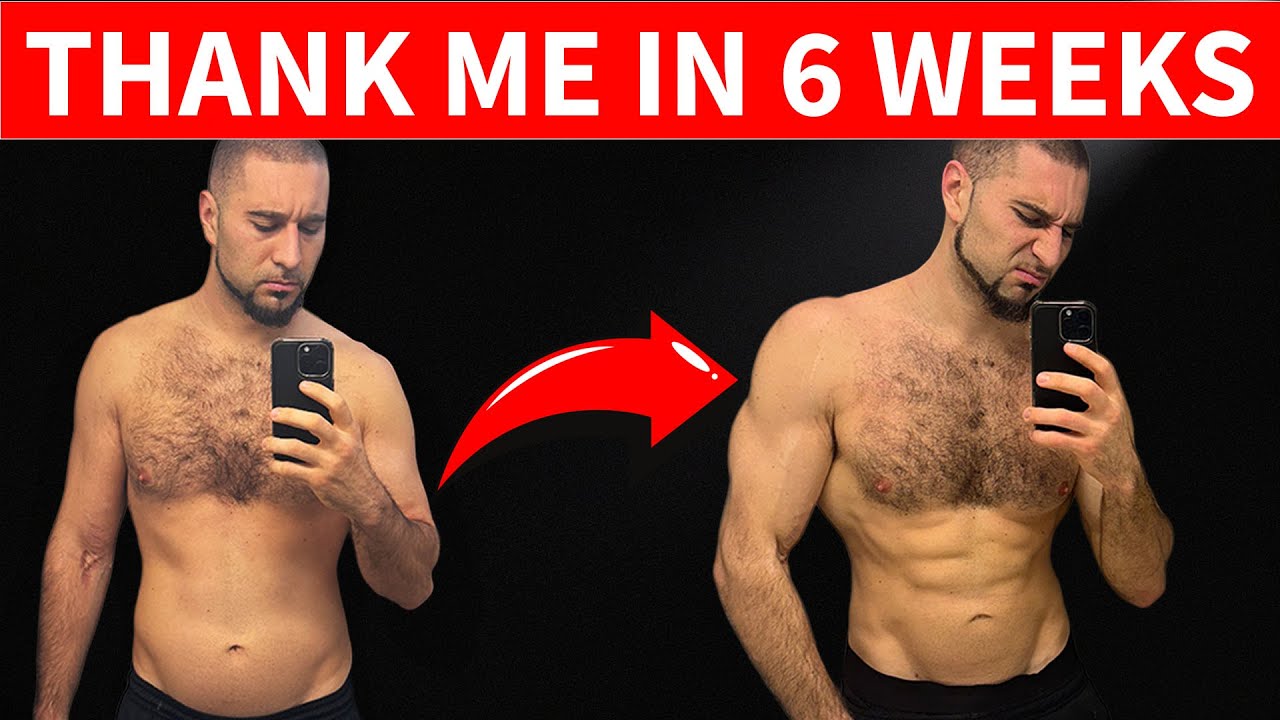
In this 2025 YouTube video, fitness coach Eric Roberts shares the five most common mistakes that prevent people from losing weight and outlines his evidence‑based solutions that make rapid fat loss feel like "cheating." He begins by highlighting his experience coaching over 25,000 clients and then walks through each principle: (1) stop starving yourself – adopt a modest 300‑500 calorie daily deficit and prioritize consistency; (2) limit high‑intensity training to no more than four days per week to avoid excess stress, hunger spikes, and burnout; (3) replace outcome‑based goals (e.g., “lose 20 lb”) with daily action‑based goals (hit calorie target, steps, workout time) to generate daily wins and momentum; (4) stop quitting when you’re imperfect – aim for 80 %+ consistency and get back on track quickly after slip‑ups; (5) understand body recomposition – recognize that muscle gain can mask scale loss, so use progress photos, measurements, and how clothes fit as better indicators. Throughout, Roberts illustrates each point with client anecdotes (Janet, Zach, Melissa, Monique, Bremer) and ends with a call‑to‑action to join his one‑on‑one online coaching program, offering free tools (calorie deficit calculator) and links to further videos.
Chapters
Do you want to hear something crazy? I've coached over 25,000 clients who've all spent years spinning their wheels, trying every diet, killing themselves in the gym, yet still not seeing the progress they want to see. Then I finally figured out how to help my clients lose weight so fast and effectively, it basically felt like cheating. And by the end of this video, I'm gonna show you exactly how you can do that for yourself. Point number 1, stop starving yourself. Most people think eating as few calories as possible is the quickest way to lose fat. Maybe you've thought this too. And let me be clear, sure, you might drop a few pounds right away, but here's the problem no one tells you. In the long run, your body doesn't reward you for starving yourself. It actually punishes you. When you cut your calories too low, Your energy levels tank, your hunger goes through the roof, you have way more cravings for junk food and sugar sweets, and your metabolism slows down quicker to try and protect itself. So most people, even if you do lose weight in the beginning, you end up binging, regaining the weight, slowing down your metabolism, and feeling even more frustrated than before just spinning your wheels. So what actually works? Consistency, not extremes. Here's what to do instead. Start with a smaller calorie deficit, somewhere around a 300 to 500 calorie deficit per day. That's it. And by the way, if you need to know what your calorie deficit number should be, there'll be a link for a free calorie deficit calculator in the description below. Because even though you might not lose weight as quickly in the beginning, if you take 2 people who are trying to lose weight. Person A is doing the starvation diet. Person B is taking a more consistent, sustainable approach. Over the course of 6 months, Person A might lose more weight in month 1 and month 2, but over the next few months, because they're not going to be able to stick with it, because they keep starting and stopping, binging, overeating, they end up in 6 months either not making any progress or staying the exact same. Whereas Person B, maybe they only lost 4 pounds the first month, 5 pounds the next month, but the rest of the months they consistently keep losing weight. So in 6 months, Person B would actually make much more progress than Person A. And this is exactly what one of our clients, Janet, came to us doing. She was trying to eat such few calories because she was trying to lose weight as quickly as possible. But it just ended up backfiring. She couldn't stay consistent with it, and she wasn't seeing any long-term change. So we bumped her calories up a little bit. This actually allowed her to stay consistent with her calorie deficit, and now she lost a little over 16 pounds in those eight weeks. That is more progress in eight weeks than she made the previous eight months, all because she stopped. Starving herself. And eating a bit more calories also means you can include some of your favorite foods and still be able to lose weight. When we talk about an adherence perspective and sticking with your diet, if you hate your diet less, you're going to stick with it more. That's some sort of scientific fact somewhere. You shouldn't be trying to eat as few calories as possible to lose weight as quickly as possible You should be trying to eat as many calories as you can and still lose weight. But here's the thing most people get wrong after fixing their diet. They think the secret is just work out more, more cardio, more sweating, more high intensity. And that's a big mistake. Point number 2, stop working out more than 4 days a week. More workouts doesn't mean more fat loss. In fact, it can actually backfire. We see it all the time with clients who come to us for coaching. People working out 5, 6, 7 days a week with high-intensity workouts where they're really pushing themselves. But here's the truth: doing more than 4 high-intensity workouts per week usually does more harm than good for your fat loss. Why? Because your body doesn't just burn calories when you work out. You're adding stress to your body. stress that your body has to then recover from. And if you're not recovering properly, here's what happens: your hunger and cravings skyrocket, your risk of injury increases, which could pause your entire journey, your willpower goes down the drain— good luck sticking to your diet or continuing to work out— you get burnt out. So even though you feel like you're working harder in the moment, you're actually making your journey so much harder to stick to and work for you, especially with your nutrition. And let's be honest, where do most people fall off with their fat loss? It's usually not your workouts, it's your nutrition. And on that same note, the same time that you are spending working out that 5th day, that 6th day, that 7th day of the week, if you're spending an hour in each of those workouts, guess what you could be doing instead with that hour? Spending that same hour, even 30 minutes meal prepping, getting your nutrition together, cooking dinner, which that would get you much faster results with your fat loss than doing an extra 1, 2, 3 workouts during the week. Might not be as fun. You might not have as much fun meal prepping, but that is what's going to get you faster progress and you know it. And now I know some people like working out 5, 6, 7 days a week. Mazel tov, do it. But I would keep your high-intensity workouts where you're really pushing yourself and getting a high heart rate. Keep those to 4 times per week. Let the other days of the week, if you want to work out, be low intensity where you keep your heart rate lower, kind of where we're able to keep a conversation just like this. This way you can still move your body and maybe mentally feel good without negatively impacting your recovery, your cravings, your workouts, your hunger, appetite, all the stuff we just mentioned. One of our clients, Zach, came to us who he thought he had to work out 5, 6, 7 times a week and push himself and lift heavy every single day and do a bunch of cardio because that's how he was wired. If he worked harder, he would see faster progress. But he came to us stuck at a plateau with both his fat loss and his strength training and muscle building. He wasn't losing fat, he wasn't getting stronger, so something had to change. He joined our coaching. We worked him out 4 days a week with weights. The other days he could do his walking or low-intensity cardio, and he spent more time on his nutrition, cooking dinner, meal prepping for the week and the weekends. And over time, you clearly saw his progress pictures. The results speak for themselves. Remember that more isn't better. Better is better. And you could be spending that time on your nutrition and you're just making the process harder than it has to be. And speaking of what makes it easier and actually moves the needle, here's another huge mistake I see. Everybody is obsessed with the outcome, but they often forget to focus on this one thing that actually matters much more to speed up your progress. Point number 3, change from outcome-based goals to action-based goals. Everybody says they want to lose 20 pounds, they want to fit into the dress better, look better on vacation, and those are fine goals to have. But what do you actually have to do on a day-to-day basis to get to those goals? I don't think losing 30 pounds is a great goal to have, and here's why. You can't control what the scale says tomorrow. You can't control if you drop 20 pounds this month, but you can control what you do today. And if you control what you can do today and focus on the actions, the outcomes are going to take care of itself. Think about it. If right now you're obsessing over the scale, imagine a world where you don't obsess over the scale. I know that sounds like Narnia, right? But instead of obsessing over the scale, think about if instead you put that focus to, I'm going to hit my calories today. What do I have to do to meal prep? What do I have to eat for lunch? How can I make sure I do the action today? When am I going to go get my steps and my walks? What time am I going to get my workout in? What time am I going to go to bed? If you focus on these actions, don't you think you'll hit your calorie deficit goal? And if you hit your calorie deficit goal consistently enough, don't you think you're going to end up losing the 20 pounds you want to lose? And here's the best part: when you focus on what you can control today, the actions you do today, you actually get to win every single day. So stick with me. If your main goal is to lose 20 pounds, you're not gonna get a win Until you lose the 20 pounds, which could take 2, 3, 4, 5, 6+ months depending on the person and how consistent you are. So you're gonna wait 6 months to get a win? You're— there's no way you're gonna stick with your journey that long. And that's why most people end up quitting and failing. Versus if you can check off boxes that you hit your calorie goal, you hit your steps, you did your workout, at the end of the day, you can look at that and say, damn, I did everything I was supposed to do today. You get a dopamine hit, you get a win. And when you start to stack those wins over the course of a week, number one, you feel great and you can see you're going in the right direction. And number two, you start to build a streak that you don't want to break. And so you start to build this positive momentum in the right direction by focusing on what you can do today versus if you focused on the scale, even if you were doing good and hitting your things all week, but one day the scale spiked up, Because the scale spiking up is normal, that is going to happen on your fat loss journey. Even when you're perfect, you might think, well, I failed. And then that causes you to spiral in the negative direction, you go off track. And that's where people never actually see any progress. You want to see progress faster, stop focusing on outcome-based goals, start focusing on your daily action-based goals. That's exactly what we did with one of our clients, Melissa, who has lost over 25 pounds with us. When she first started, she was so focused on losing a certain amount of weight, but we were able to move her away from that, dial in her calories, her water goal, her step goal, focus on today. And as you can see, once again, the results speak for themselves. And by the way, if you're interested in becoming a client of ours, there's going to be a link in the description of this video to check out our one-on-one personalized online coaching. And the final analogy I have is if, let's say, you want to have a beautiful baby, you can't get a baby until you do— well, you know what you have to do to get a baby. The actions come before, no pun intended, the outcome. When you start stacking those daily wins, you start to see them add up and results come no matter what. But here's the thing with those daily wins, you don't even have to be perfect with them. And that's the next mistake people make. Point number 4, stop quitting when you aren't perfect. Here's where most people go wrong. You're trying to be perfect. You think you have to hit your calories perfectly. So when you don't, you say, fuck it, I already ruined my progress. I messed this up. I'm not going to make progress this week. I might as well full send it, eat whatever I want the rest of the week and restart on Monday. Does that sound familiar? And then 1 day of being off track turns into 3 days of being off track, which is a 200% increase in the wrong direction of you being off track. Why would you want to increase the amount of time you are off track? Just get right back on track after. Because if you had 3 to 5 days throughout the month that you were off track, you would still be 80+% consistent with your plan. And I can assure you, all of the clients I've showed you thus far, none of them were perfect. They were just 80%+ consistent. But if you take those 3 to 5 days and you tack on 2 extra days to them because you think you fucked everything up or you might as well restart Monday, now that 3 to 5 days turns into 10 to 20 days that you're off track. And that's why you're not making progress. It's not the 3 to 5 days. It's the fact that you think you ruined it. So you kept going. I want to tell you about one of our clients, Monique. When she was coaching with us, these pictures are 8 weeks apart. Unfortunately, she had a death in the family during this time. And Monique was somebody who struggled a lot with emotional eating, binge eating. And, you know, she thought she might revert back to old ways during this emotional time. But She didn't. Yes, maybe a day or two she didn't hit her calories and it wasn't perfect, but she still stuck with it and she just got right back on track after. And she was able to lose almost 17 pounds in 8 weeks through our coaching. And it's all because the days that she overate, she just got back on track and didn't let it spiral. So stop trying to be perfect. You will never lose weight as fast as you can when you're trying to be perfect. It's counterintuitive to what you think, but moment you just let yourself be consistent, that's when fat loss speeds up faster than ever before. But here's the catch. Even when you start being consistent, sometimes that progress doesn't show up where you expect it to. Point number 5, understand how body recomp works. One of the biggest mistakes people make when they're trying to lose weight is only focusing on the scale and thinking that's the only measure of progress. Here's what you need to understand. If you're losing fat and building muscle at the same time, which is called body recomposition, the scale might not move as fast as you want. And here's the reason why. This is 1 pound of fat and this is 1 pound of muscle. If you put these both on a scale, They both weigh 1 pound. The composition is different. As you can see, muscle— muscle is more dense than fat and hard than fat. Fat is squishy and it's bigger, but that doesn't mean they don't both weigh a pound. And so if you're losing a pound of fat but gaining a pound of muscle, your body will look different. Your clothes will fit different. You will look better, but the scale will not change a ton. And that's why it's not the best indicator of progress. Now, to be clear, you're usually going to lose fat faster than you would be able to build muscle. But with that being said, it's still going to affect the scale. Let me tell you about one of my clients, Bremer. How much weight Do you think he lost in between these 2 pictures? Because he looks completely different, as you can see. You want to know the craziest part? There is only a 3-pound difference in between these 2 pictures, and that's because Bremer did an incredible job of losing fat and building muscle at the same time. He was somebody who we would call skinny fat, where he didn't have a ton of weight to lose. But he wanted to change his body composition. And if he was only looking at the scale, you would think, wow, 3-pound difference, you must not be making progress. But we clearly see he made great progress. And from that day forward, he no longer lets the scale dictate if he's making progress or not. And I hope this was able to show you, you shouldn't let the scale dictate if you're making progress or not. You should be taking your progress pictures. We do this every 4 weeks with our clients. And we like to take body measurements as well. The 3 places we typically take measurements are waist measurement, glute measurement, and quad or thigh measurement. And as mentioned, go by how are your clothes fitting, go by what are you seeing in the mirror, go by what are other people telling you. Because remember, at the end of the day, nobody's asking you what you weighed this morning on the scale. They might make comments like, hey, you're looking better, maybe you've lost some weight, but nobody asks you every morning what you weigh. They see you, they look you, and the same with yourself. Focus on how you're looking, focus on how you're feeling. Don't let the scale run your life. And if you need some help overcoming that number on the scale and helping you make weight loss so fast it feels like cheating, click the link in the description below to check out our personalized one-on-one online coaching. And if you want even more practical tips you can start to implement today, just like this, then watch this video here, and I'll see you in a minute.










