How To Push Through Your Heels | How Long Should Your Diet Last For
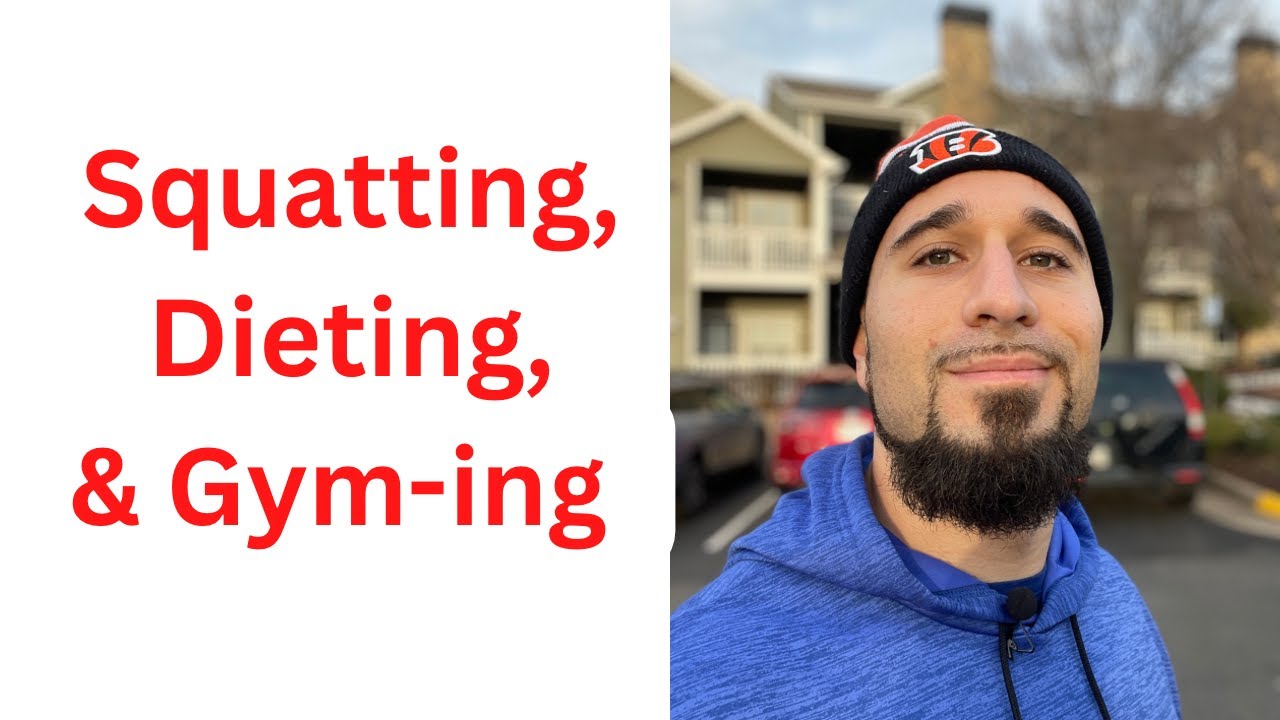
In this walk‑and‑talk Q&A, fitness creator Eric Roberts answers three viewer questions. First, he explains that the length of a calorie deficit depends on three factors: the amount of body fat to lose, the aggressiveness of the daily deficit, and the athlete’s ability to stay consistent. He illustrates how maintenance calories, deficit size, and weekly weight loss translate into weeks or months of dieting, and debunks the myth that a deficit should only last 8‑12 weeks. Second, he corrects the common “push through your heels” cue for squats and deadlifts, introducing a “foot tripod” model where the big toe, pinky toe, and heel all grip the ground, allowing the mid‑foot to bear load and enabling better quad activation, stability, and injury prevention. Third, he shares what he respects most about gym‑goers: the habit of consistently showing up, describing how the behavior shifts from hard to easy over years and why it should be celebrated rather than taken for granted. Throughout, Roberts uses a conversational, motivational tone, urging viewers to ask more questions, subscribe, and give themselves credit for consistency.
Chapters
YouTube, what's up? We are back with another walk and talk Q&A. Thank you guys as always for joining. Hope you're doing well. Hope you are getting out on a walk. That's been one of my main things. I gotta get out for some more walks. It's a really nice day, um, it's about 50 degrees, not too cold, not too hot. So yeah, it's nice. And, uh, remember, we're gonna do a Q&A here. If you want your question answered, you got to drop it below because I can't do these if I don't have the questions. So if you have a question, if you want some help, if you want an answer for something, just drop the question below and I will be more than happy to answer it for you. And I gotta hurry up before I get hit by this fucking bus that's gonna come by me. But the first question is talking about how long should you be in a calorie deficit? And there's a lot of people that say things like, oh my God, you should only be in a calorie deficit for 8 weeks. You should only be in a calorie deficit for 12 weeks. That's usually like The one. Like, you should only be in a calorie deficit for 12 weeks, and— or 20 weeks, or whatever the number is. And the God's honest truth to this is it's a couple of things here, so please stick with me. All this is going to make sense, I promise. The honest truth is it is going to depend on— it's going to depend on how much body fat you have to lose first and foremost. Because when you think about it just from a logical perspective, which it It boggles my mind that coaches don't think about it from a logical perspective, but when you think about it from a logical perspective, you have 10 pounds to lose versus if you have 100 pounds to lose. Hmm, don't you think somebody who has 100 pounds to lose is gonna be in a calorie deficit for a longer duration of time than somebody who has 10 pounds to lose? Just simply because they have more body fat to lose. The person who, you know, has 10 pounds to lose, Might take you anywhere from, I don't know, 5 to 15 weeks. Person has 100 pounds to lose, it— and so this is the second part— that could take you anywhere from, call it, you know, I don't know, 40 weeks to 80 weeks, anywhere between there. But that would then again depend on the second part of this equation. So the first part is how much weight you had to lose. The second part is how aggressive are you going? in this calorie deficit. Because remember, stick with me here, your maintenance calories are how many calories your body burns at rest. So for the sake of this video, let's just say your maintenance calories are 2,500 calories. That's how many calories you burn, and that's how many calories you eat to maintain your weight. If you eat 2,000 calories— not 200— if you eat 2,000 calories per day, That is going to be a 500-calorie deficit per day, which is going to then yield 1 pound per week of fat loss, okay? So let's just take the person who had, and again, this is all very, very, very just like basic relative, but let's just take the person who had 100 pounds to lose. If they lose roughly 1 pound per week, it would take you 100 weeks. Stick with me here once again. Let's say your maintenance calories are 2,500 calories and you're eating 1,500 calories. That would be a 1,000-calorie deficit per day, which would, over the course of a week, lead you to yield 2 pounds of fat loss for that week. So it would depend on how aggressive you're going. If you're somebody who has 20 pounds to lose and you're averaging roughly 1 pound per week, Then yeah, that would take you roughly about 20 weeks. If you're doing a 250-calorie deficit, that would be roughly about a half pound per week, which is going to take you 40 weeks roughly, right? So depends on how much body fat you have to lose, and it depends on how aggressive you are going in the, uh, in the actual calorie deficit. Now leads right into the third point. This is good stuff here. I hope you guys are getting this. If you enjoy this, drop it below. But the third point to this is how consistent are you? And that kind of goes right in line with how aggressive are you, right? Because the more aggressive that you go, the harder it's going to be to be that consistent, right? Because if you're in a, you know, 250 to 500 calorie deficit, you have some more wiggle room. You're not eating as low calories and you're able to usually be more consistent with that. It depends though, because if you've been a follower of mine for a while, you've probably seen me on my Instagram do my mini cuts. And I'm probably gonna do a little mini cut here, actually starting— today is Saturday as I'm filming this. I'm probably gonna start on Monday. But when I do my mini cuts, I go pretty aggressive and I'm very consistent. I'm usually in about a 1,000-calorie deficit per day. So this is not always the case, but generally speaking, you can be more consistent over the long haul with a little bit more of a less aggressive approach. So all 3 of those things come into play when you talk about how long should you be in a calorie deficit. And again, there, there's not a right answer here. People usually talk about you can only be in a calorie deficit for 12 weeks or whatever they say is because they talk about your metabolism and you're going to ruin your metabolism and this, that, and the other, and you're going to slow down your metabolism. I promise you If you have 20, 30, 40, 50, 60 pounds to lose, your metabolism is fine. You need to lose body fat and you need to continue to lose body fat to get to a healthier standpoint. It blows my mind the people who talk about, you know, you should only be in a calorie deficit for 12 weeks if someone has 80 pounds to lose. That is, that's very negligent and honestly downright, uh, I don't know what the right word is. I was gonna say hurtful. But it's not right for somebody to be telling somebody, oh, you're 80 pounds overweight, you are losing a pound of body fat for a week, it's been 12 weeks, you gotta stop. You gotta stop and go to maintenance calories. Like, that's fucking absurd. No, if you're doing good, if you're crushing it, if you're being consistent, if you feel really good, just keep fucking going. And that's another thing too, what a lot of these coaches don't understand about like real human beings You're not going to be 100% consistent 24/7, 365. Like, you're gonna have some days here and there where, you know, it's your kid's birthday, it's your, it's your neighbor's birthday, and you have a couple extra pieces of cake, or you have, you know, a couple extra drinks here and there, and you go over calories, and your, your 500-calorie deficit that week might be a 0-calorie deficit that week, or you might get sick, or you might have a vacation. Like, Life is going to happen. So this is also why, like, this whole 12 weeks thing, or you should only be in deficit for X amount of time— it's one thing that when people say you should only be in deficit for a certain amount of time, that's usually left to the people who, number one, are competing in like bodybuilding shows, or number two, who are very advanced and very lean, who like their entire life is Perfection because they have to for their sport. For the average person who has 20, 30, 40, 50 pounds to lose, I said all those things that will come into consideration with how long you should be in a calorie deficit. But the God's honest truth is just you should be in a calorie deficit for however long you need to be in order to get to a healthy, sustainable body fat percentage. And just a body— I don't say body weight because body weight can be you know, variable, but you get to, you get to how you like how you look. We all always want to improve how we look, but for the most, for the most part, you're healthy, you like how you look, you have good workouts, you know, you like what you see in the mirror for the most part. We can always all want to improve, but you get to that point. If that takes you 10 weeks, if that takes you 50 weeks, if that takes you 102 weeks, I don't know, nor do I care. The point is get to where you want to be. First, and then from there, that's how long you should be in a calorie deficit. There is no one-size-fits-all. It's dependent on you. So that is the first question. Now, the second question is actually talking about should you be pushing through your heels when you're doing things like squats or, or even deadlifts or things like that? I'm going to shoot it back over to my apartment really quickly to answer this question. All right, so should you always be pushing through your heels? The answer is actually going to be no. Let me explain. The way I want you— I'm pointing to my tripod— the way I want you to think about pushing through your feet, I want you to think about your foot is a tripod, right? So you have essentially, you have your big toe, your pinky toe, and your heel. I want you to think about all 3 of those things are gripping the ground, and you are using all All 3 of those things to almost like if I had this sheet of paper right here and I almost like gripped it, right? You see how like the paper scrunches up, so to speak? And I'll try to like get it off so you can actually see. So imagine if I was having this paper with my toes and I was like gripping it up, right? You're trying to almost like grip the ground with your feet. Just like you would— well, maybe not you would, but it's like a hawk's foot. You're trying to grip the ground, or like a monkey's foot. You're trying to grip the ground with your feet. Once you grip the ground with your feet, you're going to have some pressure up here, some pressure up here, some pressure back here. So that really means the middle of your foot is what you want to be pushing through. So this goes for if you're doing like a squat, for example. A lot of times people will do this thing where, okay, I'm going to push through my heels. So they'll go so far back on their heels, their toes will almost lift up and they'll fall backwards. And then once they get down there, they're not able to use a lot of their quad muscle, which is what is really powerful. They're not able to use a lot of their quad because they're so far back on their heels because they're only thinking push through heels, push through heels. You don't want to necessarily push through your toes and lift your heels off the ground when you're doing like a squat or a lunge or a leg press or whatever the movement is, but you don't only want to stay so far back on your heels because otherwise that is going to, again, number one, just decrease your strength, decrease your balance and stability. You want to have a nice strong stable base with the ground where when I'm at the bottom of this squat, my weight, like I said, is centered in the middle, but I can have some weight on my pinky toe, I can have some weight on my big toe, and I can have some weight on my heel. And now I have this really strong and base that I'm able to push from using all of my lower body, my glutes, my— mainly glutes and quads, some adductors, inner thighs, but mainly glutes and quads. So you can be able to lift the most weight, work the muscles properly, also decrease your risk of injury, because if you're not using your quads in a squat or something like that, you might get some lower back pain, might put too much pressure on your hip joint, that kind of stuff. So Feet. Push through the middle of your foot after you've made that tripod with your big toe, your pinky toe, and your heel gripping the ground like a hawk's foot. All right. All right. So that was the second question that talked about pushing through your heels. Hopefully that answer helped you. Now, the third question, I'm actually pulling this from my Instagram story. I know I said I wasn't going to, but it's a really good question and I want to talk about it here on the channel, which is Somebody asked me, what do I respect about the most from people who go into the gym? And I answered it on my Instagram story. I'll put a little screenshot here somewhere. I'll put a screenshot right here. You can kind of read it as I am talking, multitasking. There you go. You're really good. Um, but the thing I respect about people the most is showing up. That's it. And let me explain why. Do you know how hard It is to show up week after week, month after month, year after year in your workouts? It doesn't have to be in the gym, but just in your workouts. Do you know how hard it is to do that? It's very hard, but it's also very easy at the same time. And let me understand— let me, let me make sure you understand what I mean by that. To initially get started in going to your workouts and getting your workouts in And showing up when you've had a really bad week at work or showing up when maybe you don't feel the best, maybe you're a bit tired, you got less sleep that week, showing up when you're super stressed because of various different reasons, whether it's work, whether it's kids, whether it's spouse, whether it's relationships, whatever it is. Do you know how hard it is to continuously show up through all of those things? It's incredibly hard. So what I respect about people is just, are you showing up? Are you showing up week after week? That's the thing I respect the most. And I said it's very hard because it is. When you first get started, it's very difficult, but it becomes easy. And let me explain. It becomes very easy eventually. I'll use myself just as an example because I can speak on myself. It's very easy for me to go to the gym every single week now. It's very easy to show up even when I don't feel like it. It's very easy for me to show up when I've had a really busy week or when I'm actually really fucking tired and I don't feel like waking up at 4:30 to go to the gym and work out. It's easy for me. Why is it easy for me though? It's easy for me now because I've done it every week, every month, every year for 11 years. This is a part of my life. It's no longer an option to not show up to the gym. It's no— The thought process of not getting my workout in doesn't even cross my mind. It's just like this is a this is what I do. This is who I am. This is a part of who I am. This is this is just this is just it, and that's what I say. It becomes easier when you're able to get to that point, man. Things get really good. Things things get really good at that point because like I said, it becomes a whole lot easier. You're not constantly fighting this battle anymore. You're not constantly, you know, having to overcome these obstacles. It's just, it becomes a part of you. Let's say it's such a— God, that's so fucking corny and cliché. I can't even begin to express, but like, it does, it really does become a part of you and a part of your lifestyle, and you won't have to fight those battles as hard every single time. And that's why I say Whether you're in that beginner stage or you're in that like advanced stage, because that's really what it is. Like, you'll get to this point where, like I said, in the beginning it's really hard, but then something will just click. Something will happen. Something, you know, there'll be somebody who pops up or whatever the case may be. Something will happen. You're just like, damn, this is just like who I am. This is just what I do. This is the lifestyle. That I now live. And you'll kind of like open your eyes a bit to that and see that. But that's why I say I respect it, because in the beginning, I respect you working hard, pushing through, still showing up, all of those things. But then I also respect you if you've gotten to that point where this is just your lifestyle now. Because again, both of those things tell me if you're showing up, one of those two things is happening every single time. That's what I want you to respect about yourself too. That's kind of the reason why I picked this question was because you should give yourself a lot of respect and a lot of props and a lot of credit for showing up in the beginning, even when it's hard, even when it's difficult, even when it's challenging. Give yourself credit for that. Give yourself props for that. Give yourself the love and the respect that you deserve. Then on the flip side of that, don't take it for granted. I see a lot of people, like, for example, you might be able to relate. People are like, man, you know, I'm really good with my workouts, but my nutrition isn't that great. I'm like, okay, but like, stop taking your workouts for granted. You know how many people— I always tell people who are like in the clubhouse or whatever, I'm always like, you know how many people don't work out? Do you know how many people don't work out consistently? Do you know how many people don't work out consistently with the proper program? If you are like, if you check off all 3 of those boxes, if you check off 1 or 2 of those boxes, but if you check off all 3 of those boxes, you work out consistently with a proper program, you are literally in the top 2% of the entire world. But let you're taking it for granted. Don't take it for granted, man. I want you to give yourself credit for that. So guys, that is the walk and talk Q&A today. Hope you enjoyed it. If you did, please feel free to let me know below. Also, if you're not subscribed to the channel, fucking subscribe to the channel. A lot of people are watching but not subscribed. What's up with that shit, man? Make sure you subscribe. I would really appreciate that. And again, if you have any questions or any concerns that you want me to help you answer, help you through, so on and so forth, drop them below in the comment section. I'll be happy to pick 3 of them and hopefully help you out as much as I can. So really hope you enjoyed this. Have a great rest of your day and we'll chat soon.










