How To Reduce Cravings I Sugar Cravings How To Stop Them
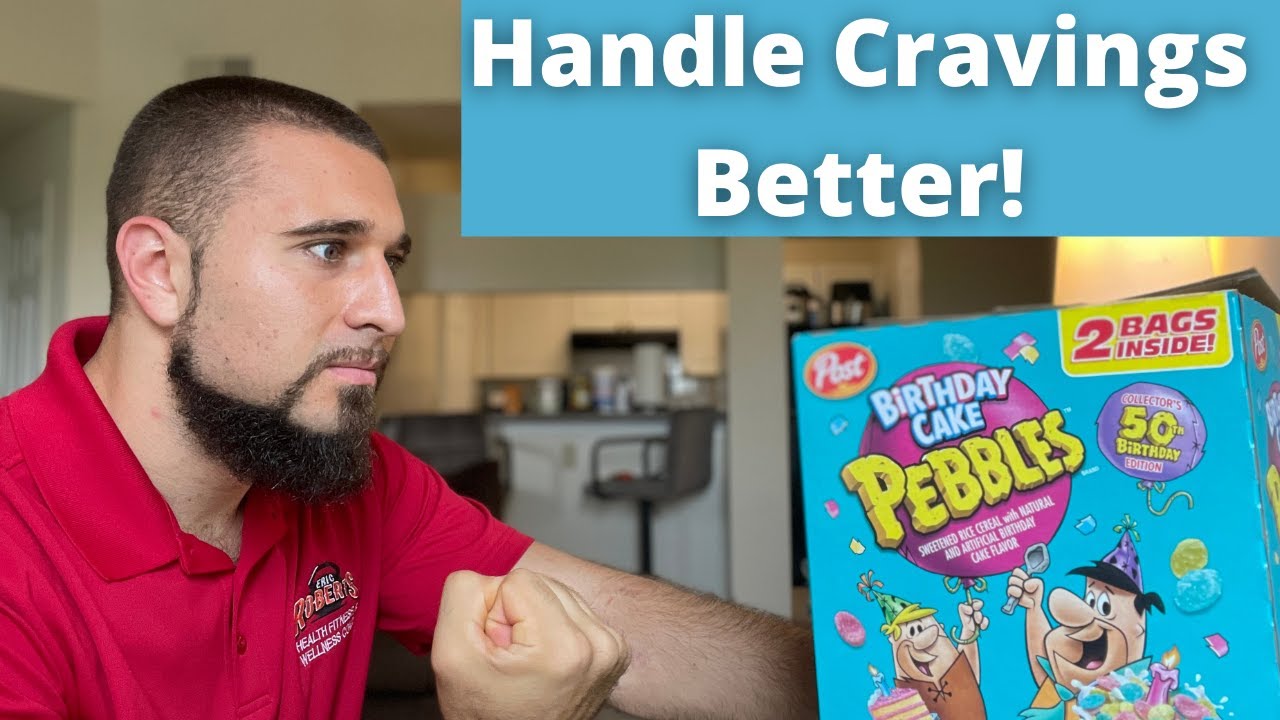
In this instructional video, Eric Roberts breaks down the six primary drivers behind food cravings—especially sugar cravings—and offers concrete, actionable strategies to curb them. He begins by explaining how over‑restriction creates a psychological “forbidden‑fruit” effect that escalates a mild desire into an intense urge, often leading to binge cycles. He then moves through physiological contributors: insufficient protein, insufficient total calories, excessive training without adequate recovery, and prolonged periods without eating that cause blood‑sugar crashes. The sixth factor is a gender‑specific consideration—hormonal fluctuations during the menstrual cycle—that may require temporary adjustments in calorie or protein intake. Throughout, Roberts intersperses client anecdotes (e.g., “Mary” and “Cindy”), references to his other videos and tools (protein guides, calorie calculator), and practical tips such as eating every 2–5 hours, aiming for 7–9 hours of sleep, limiting strength training to 3–5 days per week, and experimenting with maintenance calories during menstrual weeks. The tone is conversational yet instructional, with a supportive, slightly enthusiastic stance toward empowering viewers to manage cravings through moderation and evidence‑based nutrition and recovery practices.
Chapters
YouTube, what's going on? Welcome back to the channel. Welcome to the video. Got it right once again. In this video, we're gonna be covering Cravings 101. I'm gonna give you the top 6 reasons why you are having cravings, 'cause if you know anything about myself and this channel, it is a lot of education, 'cause I wanna educate you on the truth about what is going on in this whole fitness world that you and I are both trying to live in. So I'm gonna educate you on why they are happening and then how To stop them, deal with them, whatever term, whatever verbiage, verbiage, verbiage, not sure which word. I didn't really listen much in school. Whichever verbiage you want to use. Okay, so I'm just going to dive right in. There's six main ones, and the last one is kind of like a specialty item. We'll talk about that here in a second. So the first reason that you were having cravings comes from over restriction. Over-restriction is why you're having cravings. Think, I want you to think about a few things. When you tell yourself that you can't have something, you automatically want it that much more. It's like when you go into the store and you have your kids with you and you're like, hey, don't touch anything. 8 seconds into you going into that said store, they're touching everything. They're touching this, they're touching that, they're on the walls. You're like, I thought I told you not to touch anything. They're going to touch something because now it's off limits, right? It's like when you go past a fire hydrant, a fire alarm, you just want to pull it because like, you know, you're not allowed to, you're not supposed to, but you want to just see what happens, right? When you restrict something, you are going to then want it that much more. When I'm recording this, it's in July of 2021. The past year and a half essentially, The entire world has been on restriction. We couldn't leave our apartments, our houses, our homes. Now we wanna go out and do everything. We wanna travel, we wanna do this. Everybody's so eager to go places because that entire time you weren't allowed to do that, so you want it that much more. So over-restriction, what's gonna happen is— and this is a whole separate conversation which leads into binge eating, which we'll touch on right now. I've done videos on binge eating on this channel, so feel free to check those out, but— When it comes to, you know, I hear a lot of times, I think this segues in, people say their cravings lead to binge eating, right? If you over-restrict yourself and you're not allowed to have something, that entire time you're gonna want it, want it, want it, and then when you can finally have it, you're not going to have it in moderation because you're gonna go back to not being allowed to have it again. So when you do have it, you're gonna have all of it, and then you're gonna feel guilty, and then you're gonna feel like shit, and then you're gonna think, well, I fucked up, so I might as well keep going. And that's how that cycle happens. And you try to get back on track by restricting it again. So you have to think about over-restriction. And the second piece of this puzzle, which I kind of already mentioned right here, is you have to understand cravings on a scale of 1 to 10. Cravings don't start at a 10 out of 10, right? 10 being like you are gonna kill somebody to have said food, and a 1 being like you don't really want it. Cravings typically start at like a 3, right? Like, you're like, hmm, man, I could really go for this right now. Like, that'd be really good. I really— I kinda want this. But what happens is you're over-restricting, so you say, nope, nope, nope, not allowed to have this, so we're not gonna eat it. And that 3 then goes to a 5. And then like 2 days later, you're like, man, that cookie, I could really go for that thing right now. And you're like, alright, like it's kinda starting to get up there. You're like, no, no, nope, nope, nope, nope, I'm on a diet so I can't have this, which is total bullshit, as you know if you follow my channel, which if you don't follow my channel, follow the channel. But, you're thinking, no, I'm on a diet, I can't have this. That 5 goes to an 8. And now it's like 2 days later, wow! We're like, we're on Thursday, right? We started on Monday, now we're on Thursday. Like, holy shit, I could, I really want those cookies. Like, I really, really want those cookies. But, you're like, no, no, no, no, I'm just gonna use my willpower and I can't have those bad food. This all starts from labeling foods good and bad, but bad food, can't have that. Saturday rolls around, your cravings are now a 10 out of 10. You're like, you know what? I'm gonna fucking kill somebody if I don't get this food. Basically, what you just did to yourself was, think of a 2-liter can of soda, and I got this analogy from, I believe, Jared Hamilton, very good coach. I got this analogy from Jared. Jared said, when you think about a 2-liter can of soda, what happens when you shake that can of soda up, right? Creates a little fizzle in it and carbonation inside, right? That's what you're doing when you had a 3 craving and you said, no, no, no, I can't have this. You shake that can up, goes to a 5. You're like, I really want this. No, no, no, can't have it. You shake it up that much more, goes to an 8. No, no, no, can't have it. Really shake that motherfucker up. So now it's been 5 days Of this soda can just being shaken up nonstop, and Saturday rolls around, you're now a 10 out of 10. This soda can has been shaken up for 5 days, so when you finally open said soda can, what happens? Fucking explodes. It goes everywhere, right? That's what you're doing when you have these cravings. If you just would have handled the craving at a 3, you would have had a 3 response. AKA, you would've just had 2 cookies in moderation and moved on with it. But because you're telling yourself you can't have it, it goes from a 3 to a 10. And now you're having a 10 response. And a 10 response is not having 2 cookies in moderation, my friend. It's having the entire package of cookies, the entire pint of ice cream, because now it's at a 10 out of 10. So you're gonna have a 10 out of 10 response to this craving. As opposed to a 3 out of 10 response to this craving. And so that is the first thing that leads to cravings in general is this concept of over-restricting. Remember, there are no good and bad foods. You can have foods in moderation and still lose weight. I've talked multiple times about my client Mary who, she had some sort of dessert every single day. Wow, something's in my eye. She had some sort of dessert every single day while she lost 80+ pounds. You can have foods in moderation. If you wanna work on your cravings, that is the number one thing to work on. Now, going to number 2, you are under-consuming protein. Under-consuming protein. This is by far the second biggest thing when it comes to cravings. Protein is the most satiating macronutrient. This just means that it's gonna fill you up. It's gonna satisfy your body. Excuse me. If you are under-eating in protein, You are going to be more hungry, you're gonna crave more sweets, you're gonna crave more sugars, you're gonna crave more carbs, 'cause your body's not being satisfied. Protein isn't just for building muscle, it is absolutely used for that, but it also like has every cell function in your entire body has some sort of like amino acid to it, right? Which is like the building blocks of protein. Protein is massively important. If you're eating 40, 50, 60 grams a day, Yeah, you're gonna have a lot of cravings. That's just— it is the way it is. It's what's gonna happen. So you being able to increase your protein intake is by far the second most important thing in my opinion when it comes to controlling your cravings. I had a client— I have a client, she's amazing, her name is Cindy. I'll put a picture of Cindy here. Cindy has lost over 50 pounds by this point and she really struggled with binge eating 'cause she had struggles with cravings. So, we looked at her protein, we upped her protein intake, and she is now— she's been with me for almost 9 months. She is now 9 months binge-free, which, clap it up for Cindy, it's fucking amazing. Cindy's 9 months binge-free, and she said herself, 'cause I did a podcast with Cindy, and you can listen to that podcast in the link in the description here below. Cindy told me on this podcast that one of the biggest things for her was increasing her protein intake. 'Cause she no longer was hungry, she no longer had cravings, she could control those urges and so on and so forth because she increased her protein intake. So protein intake, you're under-consuming protein intake. I've done multiple videos here on my YouTube channel about protein. I've written articles on protein. I'll link a video here above on how to get more protein throughout your day. Feel free to check it out. But if you're under-consuming protein, that's why you're having a lot of cravings and you need to up Up the protein intake that you are eating per day. All right? That's number 2. Number 3, you're under-consuming overall calories. If you're eating— and this kind of goes with the over-restriction, but if you're under-consuming overall total calories, you know, you trying to eat 1,000 calories, 1,200 calories every single day, ooh, you are going to have more cravings because it's just, it's more restrictive. It's more restrictive. You have less flexibility. You can't fit in, you know, people ask me all the time, Eric, how do I, you know, eat X amount of protein with Y amount of calories? And I'm like, well, what do you mean? They're like, well, I can't fit in anything else. All I'm eating all day is protein. I'm like, well, you're probably eating too few calories then because you need to eat more calories to be able to fit these things in. If you're eating too few calories, number one, you are going to be substantially more hungry, which again is, I don't care how much protein intake you eat, you're probably gonna be hungry if you're undereating on total calories. And number 2, you just have less room for the treats or things you enjoy or cookies or things here and there, 'cause you gotta get, you know, 8 ounces of chicken every single meal and, you know, you have to hit these certain protein numbers and all those kind of things. You have less room for flexibility. You don't have room to go out to eat. You don't have room to, you know, fit in some ice cream or whatever the case may be because your calories are so low. So, for those 2 reasons, being very hungry and not having flexibility to work in foods you enjoy, that's when cravings come about. So, increasing your calories to a more moderate... calorie deficit and thinking about, thinking about how many calories can you eat and still lose weight. Not thinking about how few calories, how few calories can I eat to lose weight as quickly as possible? That is going to lead to cravings and binging. How many calories can I eat and still lose weight? That is what you should be thinking about, 'cause that's gonna help with cravings, binge eating, so on and so forth. If you need to know how many calories to eat to lose weight, I'll put a video here on my totally free calorie calculator. Watch it after this video, check it out, and let me know how you like it, alright? So, that's number 3. Number 4, you are over-exercising. Over-exercising leads to cravings for a few reasons. Number 1, you're under-recovering. I've done an entire video on this as well, so I'll link that here as well. But with that being said, when you under-recover, there's gonna be more fatigue. Fatigue. There's gonna be more exhaustion, there's gonna be less willpower, there's going to be more cravings, more hunger because you are overexercising. If, you know, if you're not getting very good sleep, that's, you know, one thing I hear as well. I'll kind of loop this into overexercising, but the whole— I probably should've put underrecovering, but either way, underrecovering, overexercising, all those things play a role because when you're underrecovered, when you're not sleeping very well, when you're working out too much, you're working out 6, 7 days a week, You know, you're not recovering from it. You never have any rest days. You're not letting your body recover. That's what leads to your body saying, hey, knock, knock, knock on your head, your stubborn head. Knock, knock, knock on your head. We're not recovering. So, you know what? Like, you have to feed me more. I need more food. I need more calories. You get cravings for sugar and cravings for sweets 'cause your body needs something now, which is— this is gonna play into the next part here, but when your body, like, when you need something now, What does your body say? Quick source of energy. What is a quick source of energy? Sugar, sweets, all those kind of things. You eat those things, but they're very short, right? They're very short-lived. They don't really fill you up for a while. So you eat those things, and then 30 minutes later you're hungry again, and your body says, I need more now. So you go to sweets again, and then you're hungry, and that cycle happens in perpetuity. And so this is why don't under-recover. Get 7 to 9 hours of sleep per night. Work out 3 to 4, 3 to 5 days a week. Don't you know? And when I say 3 to 5 days a week, I mean like 3 to 5 days a week of intense strength training, like proper strength training. If you want to do cardio, do cardio. It's good for your heart health, good for your mental health, good for your cardiovascular system. Do it, but don't overdo it. Like I see so many people like, oh yeah, well, I lift weights 6 days a week and I take my Zumba class 4 days a week and I do in my HIIT workout 6. 6 days a week and I try to get 20,000 steps every single day. And I'm like, no fucking wonder that your cravings are through the roof. Like, you're not recovering. And so, finding that balance is very important. And again, if you want some more kind of insight on workouts and so on and so forth, please feel free to check out my YouTube channel. I have a few different videos on that as well. But, over-exercising, under-recovering. Number 5, long breaks. And what that is, is long breaks of eating. So, when you go 5, 6, 7, 8, 9 hours without eating, what happens is your blood sugar levels drop drastically. And when your blood sugar levels drop drastically, your body says, I need something quick to get my blood sugar back to normal. Well, what is quick? Your body thinks, and this kinda ties in with protein as well, your body thinks, or you think, quick energy is sugar, right? So it's like sugar, sugar, sugar, carbs, carbs, carbs, cravings, cravings, cravings. 'Cause your body just needs something, right? So you eat the sugar, you get hungry. Again, like I just said, you eat the sugar, you get hungry. You eat sugar, you get hungry. And this happens over and over and over, which is going to lead to you overeating. If you like, stop going 8 hours, 9 hours, 12 hours without eating food. Like, that is not good. If you're struggling with cravings, and some people might comment, I intermittent fast and I love it. Great. This video is not for you then. If you do that, that's perfect, but if you're struggling with cravings, stop going hours upon hours without eating food. Your blood sugar level's gonna drop, your energy levels are gonna drop, you're gonna get very hungry, you're gonna get less willpower, more fatigue, more exhaustion. All those things are gonna lead to more cravings. And so, I like to eat every, you know, I like to have my clients eat every 2 to 5 hours. More so than eating every 2 to 5 hours, which I do think is a great thing, especially for protein, which by the way, very quickly, if you just would've ate, let's say, you know, you go 9 hours without eating and like you're very, very hungry and you have cravings, if you have protein, you're gonna be totally fine because your body actually wants protein. It doesn't want sugar, it wants protein because like I said, protein is the most satiating macronutrient. And so if you have protein, Your body's gonna be satisfied. So if you would've just gave it protein from the beginning, you'd be totally fine. But what most people do is they have cravings for sweets or carbs or so on and so forth. And so they eat those things and then again, they get hungry, eat more, get hungry, so on and so forth. That's where people are like, oh, I have, you know, there's a whole separate conversation I'm not gonna get into because some people might get mad at me. But, you know, people talk about sugar addiction and I'm like, well, if you just would've ate protein the first time, like, you probably would've stopped that cycle. And so, and again, that's a very complex topic. I'm not gonna get into it today. But eating protein can help with that. So your body's actually craving protein. But with that being said, getting ourselves back on track, I do believe eating food throughout the day more frequently, eating protein throughout the day more frequently can keep your hunger levels at bay and keep your cravings at bay as well. Because again, if you're constantly getting protein every 2 to 5 hours, your body's gonna be full, your body's gonna be satisfied. You won't have these extraneous cravings for all these things because Throughout the day, your body's good to go. But if you go, you know, if you go from 7 PM to 2 PM without eating, that entire night, the entire morning, yeah, you're probably gonna be hungry. And then when you get to dinnertime, you're probably gonna be even more hungry. And so not having long breaks without eating, eating more frequent meals throughout the day, not to say you have to, like again, as long as you're in a calorie deficit, you will lose body fat. But I've just seen With clients, eating more throughout the day, you know, every 2 to 5 hours, especially protein every 2 to 5 hours, can help with cravings. So I would definitely say if you're struggling with that, stop going hours upon hours without eating food. It is not the best thing for you right now. So that is number 5. And number 6, kind of an asterisk for ladies out there, your special time of the month. And I'm not a female, obviously, so you know that I don't know about that, but I have I've coached a ton of females and we go through their time of the month every single month. And, you know, there's no— for this right here, it sucks to tell you, but there's no right or wrong answer. Like, it depends. I've had some clients where during that time of the month they say, hey, for these 4 days I'm gonna eat at my maintenance calories as opposed to a calorie deficit. So if their calorie deficit's 1,500, they say, hey, I'm gonna eat at 2,000 calories because I want to make sure I can have more food. I know during these four days I'm a bit more hungry. They do it, da da, rock it out, sweet, and we move on, right? I have some ladies who say, "No, you know what? I'm just going to increase my protein intake during these times. I'm going to increase my fruits and vegetables. Like I want to make sure I stick my deficit." Awesome, cool. Like I have people who take the whole week, and they say during this whole week I'm going to eat at maintenance. Like it's just it depends on what works best for you. I would say try some things. And see what works best for you. If you feel like maintenance calories for a few days works best for you, do it. If you feel like, hey, no, I'm just gonna be more diligent during this time and make sure I really rock my protein, make sure I really get, you know, a big-ass salad every single day, have vegetables every single meal to keep myself full, awesome, do it. Like, there's no right or wrong answer here, so do what works best for you. But people don't like to hear this, but it will probably take some trial and error to see what's going on. Yeah. See what works, what doesn't work, so on and so forth. And so that could be a reason as well, but there's no steadfast answer I can give you. More so just kind of try things out, see what works best for you. All right? So guys, those are the 6 reasons why you might be having cravings and what you can do about them. If you have any questions, comments, anything, please feel free to drop below. If you enjoyed the video, feel free to give it a nice thumbs up, subscribe to the channel, and hit that little notification bell to get notified when new videos come out. All right? Thank you for watching, and we will chat soon. Bye.










