How To Shoulder Press With Dumbbells | Shoulder Press Correct Technique
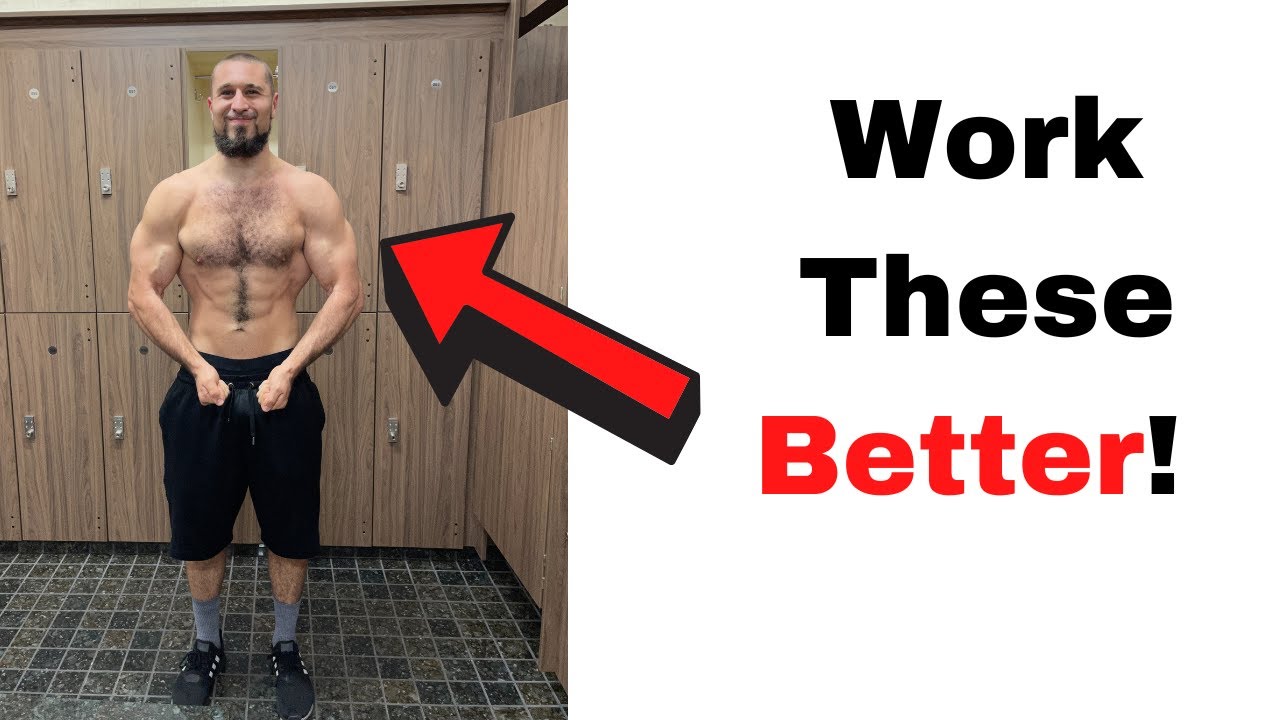
This content was created by Eric Roberts. This content was uploaded by Eric Roberts. This is a YouTube video titled "How To Shoulder Press With Dumbbells | Shoulder Press Correct Technique" (created 2022-10-25) featuring Eric Roberts delivering an instructional monologue in English. The content is a fitness tutorial covering the most common shoulder-press mistakes and correct technique for both standing and seated variations—topics include core and glute bracing, elbow positioning (tuck elbows ~45°), range of motion limits, scapular movement, and programming advice. The video ends with calls to like/subscribe and links to coaching and a Clubhouse offering.
Chapters
YouTube, what's going on? In this video, you and I are going to be covering the most common shoulder press mistakes, and we're going to cover the standing shoulder press, and then we're also going to cover the seated shoulder press. This is a movement where 9.9 times out of 10, you're going to be doing some sort of shoulder press in your workouts. So when you do it, I want you to do it correctly. And number 2, it is often the cause of a lot of shoulder pain and/or shoulder issues. And I want you to have confidence knowing that you can perform this exercise the correct way and minimize or diminish your risk of injury as much as humanly possible. So without any further ado, let's hop right into the shoulder presses. We are first going to cover the standing shoulder press because there'll be a slight difference between standing and seated, and you'll see that towards the latter half of the video. But number one, if you are doing this standing shoulder press right here, you first want to make sure things outside of just your shoulders are set up as they should. Primarily 2 main things: your core and your glutes. I know this is a shoulder exercise and you have to focus on your lower body and your core, and the answer is yes, because a lot of times when people end up doing their shoulder presses, this will end up happening. They'll press above their head They'll arch their lower back and they'll end up getting a lot of not only shoulder pain because the way you're doing the movement inherently puts more stress on your shoulders, but they're also going to get some lower back pain. So if you are doing the standing shoulder press variation, you have to be sure you are trying to pull your ribs down to your belly button and brace your core like somebody is trying to Punch you, or if you're trying to sit down on the toilet and you— oh, gotta push one out really hard. That's how you need to brace your core. And I say bring your ribs down to your belly button because what a lot of times will happen is people will press up with the shoulder press and their ribs will flare out. You really want to make sure you're keeping your ribs Pulled down to your belly button when you're doing this standing shoulder press. And then number 2, you want to make sure you also squeeze your glutes. If somebody was trying to stick their finger up your butt, this time while you're working out, leave that stuff for at home. You are going to deny access and you are going to squeeze your glutes in combination with bracing your core and keeping your ribs down. And the combination of these 2 things will then allow you to do your shoulder presses properly without overextending and arching from your lower back. Because as you can already see, if you flare your ribs, you don't squeeze your glutes, you don't brace your core, when you go above your head, you can already see how there's some arching in your lower back. So that would be number 1 for standing shoulder press. Now, some of these will also intertwine with the seated shoulder press. So just keep this in mind as well. But the next mistake is going to be having your elbows out wide at a 90-degree angle versus keeping your elbows tucked at more of a 45-degree angle. And there's a few reasons for this. Number one, when you are out wide at a 90-degree angle, number one, typically you do not have stacked joints. This means it's just— notice how my wrists is in here and my elbow is out here. You typically want to have your wrist stacking over your elbow at the bottom of the movement. If your elbows are out wide, unless your hands are coming all the way out here, then your wrists are not going to stack over your elbows, which can create some wrist pain, some elbow pain, some shoulder pain. And then number 2 if your elbows are out wide, you are opening up your shoulder joint. So when my elbow is out here, my shoulder joint is getting opened. For a lot of people, this automatically can just put more stress on your rotator cuff muscles and your shoulder joint in general. But if you can get your elbow more tucked at a 45-degree angle, this is automatically going to close your shoulder joint, and therefore you'll be able to perform this movement a bit more pain-free. I challenge you even right now, put your hand out wide like this and then tuck your hand more in like this. Which one feels more comfortable and which one feels more natural? Again, 9.9 times out of 10, it's the tucking the elbow at the 45-degree angle. So take your elbow from this like out wide pressing position, tuck it more in. And the third reason for this is because when we're doing this shoulder press, we are mainly trying to work your anterior delt, which is just your front delt. That's the main reason you are working a shoulder press. So when we talk about that muscle, it starts like right here and it goes up to about right here. When we think about, let's say, a bicep curl, for example, okay? At the bottom of a bicep curl, you are stretching your bicep, and at the top you are squeezing your bicep, right? There's a stretch and there's a contraction. The same thing happens for your front delt. If your hand is in the elbow or out wide like this, you are inherently limiting the range of motion you can stretch at the bottom for your front delt. But if you tuck it, you can already see it's going to stretch a bit more at the bottom. So as opposed to this right here, you're automatically stretching more at the bottom. You're lining things up better. You're having a safer press, and you'll be able to build more muscle and more strength in the long run. And I say in the long run because when you're out here, you might be able to do a little bit more weight, but remember, there's more stress on your shoulder joint. You're not stretching your muscle as much at the bottom, which is going to over time decrease how much strength you can get. Just Just because you are stronger and can lift more weight doing these half reps like this doesn't mean that is the variation you should be doing. So while you may need to drop the weight a bit to perform these correctly, it will be worth it because you doing, let's say, 20 pounds with a shoulder press like this is going to give you more results than you shoulder pressing like this, and it will leave you more injury-free. So no elbows out wide, tuck them more at a 45-degree angle. And that's massive mistake number 2. Mistake number 3, getting to the top of the movement and feeling like you need to overextend your shoulders. Again, if we are trying to work our front delt, we are trying to bring this point of our shoulder closer to this point of our shoulder. So if you're doing this shoulder press, once you get to about right here, that's the end of a shoulder press. Going up here is only going to end up arching your neck up, elevating your scapula super high, and again putting a lot of stress on your rotator cuff muscles and your shoulder joint as a whole because your humerus, your upper arm bone, is like smashing into your shoulder joint, which is just— it's not what it's supposed to do. So when you're doing this exercise, once you get to about right here, stop. That's it. You don't need— you don't need to go up here and finish and elevate your shoulders up like that. I sometimes tell people, or you might have heard, bring your shoulder closer to your ear, which I think is correct, with the only caveat of once you get to right here, you don't need to keep bringing your shoulder closer to your ear. Once you have gotten to about right here, the movement is done and you need to just control it on the way down. So now let's go into the third mistake. I already lost count. Third or fourth? 4. Elbows out wide, overarching. Fourth. Fourth mistake. The fourth mistake of a shoulder press is going to be trying to press out in front of you way too much. And I think sometimes people get mixed up because I just said don't elevate your shoulders, and sometimes people will try to push back really far, which ends up elevating their shoulders. But you also don't want to push out in front of you. Remember, the shoulder press is a press So, as opposed to you pushing out in front of you, you're thinking about trying to press up and almost like right about where your like forehead to mid-head is. You don't want to go back. You also don't want to go in front. Press up to about where your forehead towards the middle of your head are. Because the more you try to press out in front of you, Whether you're standing or you're sitting down, you're going to end up putting a lot of pressure on your lower back because trying to get that weight out in front of you, when the weight's out here, you're automatically going to have to use your lower back to not just fucking nosedive in front of you. And then number 2, again, you're supposed to be fighting a force, the resistance. This, this dumbbell is pulling you straight down, right? That's why you typically just want to press Straight up and then straight back down, straight up, straight back down. When you start to add movement this way, either that way or that way, you're now not only trying to fight a force that's up and down, which is okay, you're now trying to fight a force that's up and down and back and forth. That's just not— that's not what your body is supposed to be doing in this movement. It's supposed to be a vertical resistance, not a vertical and a horizontal resistance. So that would be the 4th mistake. The 5th mistake is going into letting your arms get a little bit too low at the bottom. Again, remember what did we say earlier? We want your joints to be stacked at the bottom. You see how right now I'm so low that my elbow is back here And my wrist is up here. Do you also notice how this is then pulling my shoulder to round forward? What happens a lot of times is people will come down so far that they'll end up getting this shoulder— that actually hurts my shoulder, so I don't want to do that with weight anymore. Um, which is, you can imagine if you're doing that on— I was just showing you. Can you imagine if you were doing that with actual weights and trying to do a workout like that? Um, when you're coming down so low, this rounds forward. Again, your humerus, your upper arm bone, it's just smashing into your shoulder joint, and it's just creating a lot of pressure that you don't— a lot of stress you don't want to have. So what we're going to do instead is just, again, simply come down to where your wrist and your elbow are stacking over. Don't let it roll forward. Once you get to about right here, you're done. You don't need to go down any further because then again, your elbow is going to start kicking back your shoulder is going to start rounding forward and you are going to have some pain with this movement. So just come on the way down again, our elbows are tucked at more of this 45-degree angle. And then once you get down to about right here, that's when you should stop before you have any rounding forward. Mistake number— sometimes you might hear people tell you, you need to keep your shoulder blades squeezed together the entire time. You do not want to keep your shoulder blades pinched together or down and back the entire time. I said earlier you don't want to have your shoulder round forward at the bottom, or you don't want to overextend your arm at the top, but that doesn't mean there's not going to be some movement In your scapula area. When you are doing shoulder presses, there has to be some natural movement in your scapula, which is just your shoulder blade area. There has to be some natural movement. If I tried to keep my shoulders pinched together and then pulled down and back, and I tried to do this, after about right here, like, my shoulders are just going to end up getting grinded together. And there's going to be a lot of stress being put on my rotator cuff muscles in the thing because I'm trying to go this way, but then my shoulder blades are getting pinched together so they can't move, and they're trying to stay down and back the entire time. I'm trying to go this way, but everything else is pulling me this way and this way. You need to be able to make sure instead of trying to— like, this is literally it. Like, if I went past here, All of this pressure beyond there is going straight on my shoulder joint and my rotator cuff because again, like I just said, pulling in opposite directions. So you need to make sure you don't want to start with like your shoulders rounded forward or things like that, but you need to make sure you're letting some natural movement go with your shoulder blades as you press on the way up. Like as you can see here, I'm not pulling them and keeping them down and back, but I'm also not letting them up and then round, up and then round. I'm, again, really all I'm thinking about is elbows tucked at a 45-degree angle, and then I'm trying to bring this point closer to that point. That's really all I'm thinking about, and the rest, I promise you, is going to fill itself out if you do that right there. So do not think you have to keep your shoulder blades squeezed together, the entire time, that's probably adding to your shoulder pain. All right, so like I said, all of that, what I just talked about, besides maybe the first mistake, applies for both a standing and a seated shoulder press. But let's now get into specifics with a seated shoulder press. Now, what's the difference between a seated and a standing? The main difference is when you're seated, you won't have to necessarily support yourself staying upright with your core as much. So when you're standing, there's a little bit more core work involved. When you're sitting, there's less core work involved, but you typically can go heavier when you're doing seated because you don't have to brace yourself with your core. And then number 2, because you have the extra stability, you'll be able to go a bit heavier. One isn't necessarily right nor wrong. They just have different benefits, like I said. So you can do a standing shoulder press and you can do a seated shoulder press. You should be working both into your program, maybe over the course of a week or even the course of a few months' time. But when we talk about specifics, when it comes to a seated shoulder press, there's one main thing that I like to point out when doing a seated shoulder press. It actually goes right in line with one of the mistakes we talked about earlier. Remember how we talked about not having your elbows out at a 90-degree angle when you are doing a seated shoulder press? I don't like to have the seat up completely at this 90-degree angle because inherently, as you can probably see, it's going to be very hard for me to tuck my elbows at a 45-degree angle without rounding my shoulders forward. Again, if you can see right here, if I try to tuck my elbows, my, my shoulders are automatically going to be rounding forward. So it almost forces you to do this like 90-degree angle shoulder press. So what I like to do instead is I like to get the bench set up more at an angle because that is going to allow you to number one, tuck the elbows a bit more, and then number two, stretch your front delt a bit more at the bottom. And how much of an angle should you have? I would say maybe somewhere around like a 15-degree incline. As you can see, I'm not doing like an incline dumbbell chest press. If I was doing an incline dumbbell chest press, I would probably have the incline more set up at like a 30-degree angle. But with a shoulder press, I'm getting it set up more around this, probably 15-ish degree And I would also just add to this too. I mentioned that the seated shoulder press, you don't have to work your core as much inherently because you don't have to support yourself staying upright. But you do still want to make sure you're pulling your ribs down to your belly button and you're trying to brace your core. Because if you let your core not be braced and let your ribs flare and all these things, you're probably still going to eventually fuck up the form. And you also just won't be able to lift as heavy of weight, and you'll end up creating bad habits and bad movement patterns for when you have to go embrace your core in other exercises. So that is the shoulder— so that is the entire video for shoulder press mistakes. Hope you enjoyed this video. Hope you learned something from this video. If you did, please feel free to give the video a thumbs up and subscribe to the channel if you like Eric. And if you were interested in joining my Clubhouse where we have new workouts every single month, and I basically just take all the guesswork out of your training for you, I'll link that here in the description of this video, as well as if you're maybe more interested in some direct one-on-one coaching with myself or my team, I will link that here below in the description of this video as well. Hope you enjoyed and we'll chat soon.










