How to stop overeating on junk food I how to start eating healthier food
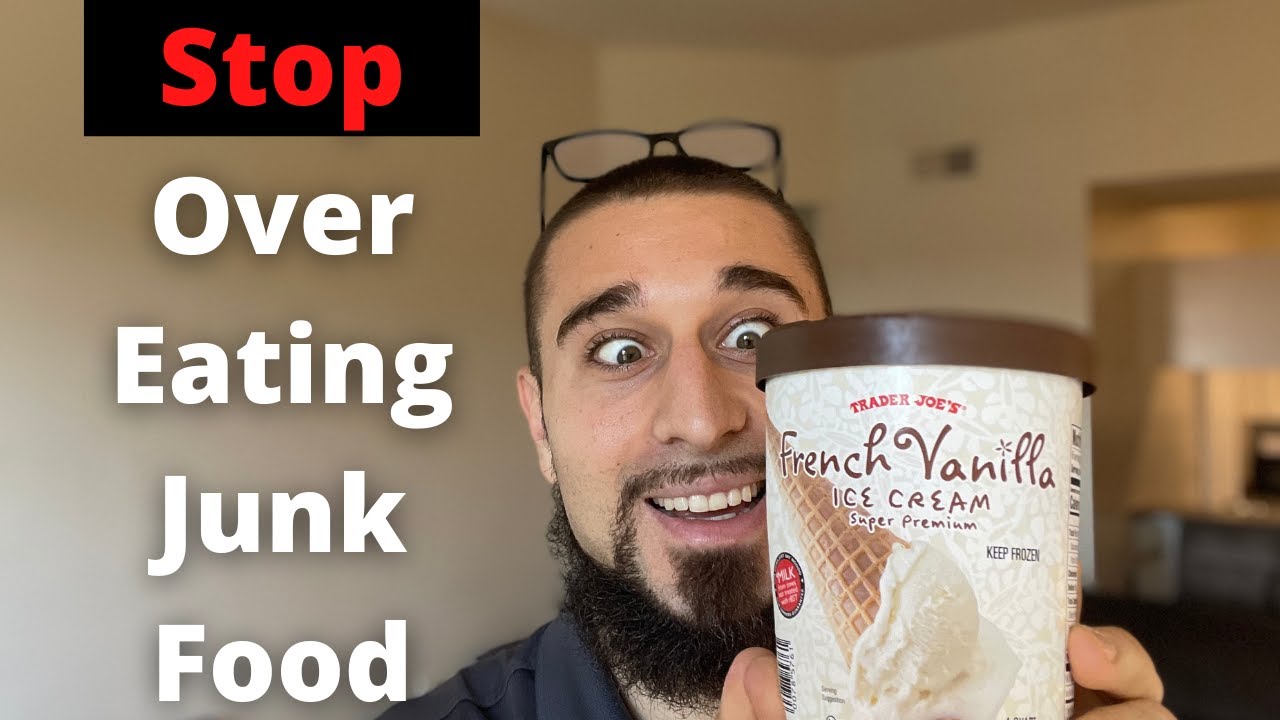
In this 2021 YouTube video, Eric Roberts delivers a conversational, coaching‑style guide on reducing junk‑food consumption. He begins by debunking the “good vs. bad food” mindset, emphasizing that foods themselves aren’t inherently good or bad and that weight outcomes depend on overall intake. He then advocates an inclusion‑over‑exclusion approach, suggesting viewers add nutrient‑dense items (fruit, home‑cooked meals, water) rather than trying to eliminate favorite junk foods outright, and stresses setting realistic, incremental goals. The third strategy focuses on habit awareness: identifying personal triggers (e.g., stressful Fridays) and creating pre‑emptive plans such as a protein shake and a brief mindfulness pause. The fourth tactic is the “fruit rule,” where one eats a piece of fruit before a treat to increase mindfulness, assess true hunger, and often reduce overall calories. The fifth principle is the 80/20 rule—aim for roughly 80 % of calories from single‑ingredient, nutrient‑dense whole foods and 20 % from treats—providing a balanced, sustainable framework. Finally, he recommends proactive meal planning and prepping to replace convenience junk food with prepared, healthy options, highlighting realistic planning and quick, nutrient‑dense frozen or pre‑packaged foods. Throughout, Roberts mixes actionable tips with motivational encouragement, urging viewers to experiment, track progress, and adjust gradually.
Chapters
YouTube, what is going on? Welcome back to the channel. Welcome to the video. In this video, we, you and I, best buds, are gonna be talking about how to eat less junk food. Junk food. And, uh, by the way, I hope you like my haircut. I got it especially for this video today, so please let me know below if you like my haircut. Um, we're gonna be talking about how to eat less junk food. So there's 6 main things that we're gonna talk about here in this video, some actionable tips, some mindset tips, All these things are gonna help you if you have an issue with eating a lot of junk food. And listen, so first off, here's what I wanna make very clear, and if you know me, you probably know what I'm gonna say, but I'm gonna say it anyway just because. There are no good and bad foods, okay? So just because you're eating a donut or just because you're eating McDonald's or just because you're eating whatever food that you're gonna label as junk food, Excuse me. There is nothing inherently wrong with that. And I really, really, really, really, really need you to understand this because the— what I believe the root of all things like unhealthy relationship with food, the root of, if not one of the main causes, is having this good and bad food relationship. You think salad's good, donut's bad. This is good, that's bad, right? Listen, there are no good and bad foods. You can eat a donut and still lose weight. You can eat a donut and maintain your weight. You can eat a donut and gain weight. You can eat salad and lose weight. You can eat salad and maintain your weight. You can eat salad and gain weight. Yes, sometimes those salads that people get are, you know, higher calories than donuts. And so please, just first and foremost, understanding that the premise of all this is, this is not to say you have to stop eating any foods or cut out any foods or cut out processed foods Or cut out junk foods. No, that is not what this video is saying. On that same note, there is, you know, just from facts, speaking facts here, straight facts, speaking facts, you know, those foods that tend to be a bit higher in processed and those foods that tend to be a bit higher on the junk food side, like typically speaking, they offer less micronutrients, they offer more calories for less food volume, so there's like less food But actually there's more calories. They tend to offer way less macronutrient, a favorable macronutrient profile, usually lower in calories, higher in fats, higher in carbohydrates. I'm sorry, lower in protein, higher in fats, higher in carbohydrates. And so it's not to say that you have to cut these foods out or you can't have certain foods, but it is to say that there's a big difference between, you know, having some watermelon versus having a donut or having, you know, a salad versus having McDonald's. Like there's, there's, there's a difference in that, right? Not to say it's right or wrong, but there is a difference in the nutrients you're getting, micronutrients, vitamins, minerals, macronutrient profile, calories overall. Like there is a difference there. And so just want to make sure you kind of walk that fine line where I'm not going to say you got to stop eating those foods, but there is to say, you know, there is some merit to not just from a like losing body fat or maintaining a healthy body fat standpoint, but it's also like, yes, maintaining a healthy body fat, but also like micronutrients, minerals, vitamins, those kind of things within the foods that could help you have more energy, have a healthier blood profile, those kind of things, right? So that is number 1. Now, number 2, probably the most important thing I'll say here, and people are like, oh, leave your most important thing for the last thing. I never really end up doing it. Well, sometimes I do it, but that's just kind of how it ends up. Either way, number 2, include, not take away. And this is kind of what I just, you know, piggybacking off this right here. Most of the time when you say, oh, I'm going to stop doing this, I'm going to cut this out, I'm going to take away this, automatically us as humans, we want that thing that much more. So, if you say, I'm going to cut out McDonald's, or I'm going to cut out soda, or I'm going to cut out whatever the case may be, 9.9 times out of 10, we just want it that much more. So, it might be— you might be able to stick to it for a few days, Maybe a week, maybe a few weeks, maybe a few months if you're lucky, but the strategy of trying to cut things out and say no, it's just been shown to work way less effective than the strategy of simply incorporating things in. So like for example, instead of saying, hey, I'm going to cut out my soda, start saying, hey, I'm gonna drink at least one diet soda a day. Awesome. Instead of saying, hey, I'm gonna cut out my McDonald's, start saying, hey, I'm gonna incorporate 1 serving of fruit per day. Instead of saying, hey, I'm gonna cut out eating junk food 7 days a week, start saying, hey, I'm gonna have dinners from home that I cook 2 times a week. Include things, not exclude things, because through the process of osmosis, think about it, if you start to incorporate diet soda instead of regular soda, if you start to incorporate 1 serving of fruit per day, If you start to incorporate cooking from home and eating from home 2 times a week and all of these things start to add up, let's say you're incorporating 1 serving of vegetables per day. Let's say you're incorporating 1 protein shake per day and all these things just start to kind of like trickle into your diet. Guess what? 9.9 times out of 10, those things are going to work their way in and the junk food is going to kind of work their way out just through a simple process of osmosis because when you're having more things incorporated, all these good quality nutrients, good quality foods, nutrient-dense foods, all these kind of things, just through osmosis the other stuff is typically going to work itself out because you're going to be less hungry, you're going to have less cravings, you're going to have more energy, you're probably going to see some results from a body composition standpoint, losing body fat, building muscle, whatever the case may be. And so it's going to motivate you that much more to keep going. And so try to not think about Excluding, try to think about including and keep including things. Keep including 1 serving of vegetables. Keep including 1 serving of fruit. Keep including 3 glasses of water per day. Include things as opposed to taking things away. And this way, nobody's sitting here saying you can't have McDonald's or this or a donut or that or whatever the food is. We're just saying incorporate these things. And so— That has been a massive help to a lot of the clients I've worked with. My only thing is make sure you make it realistic. So for example, if you're eating out 7 times a week and you're eating McDonald's 7 times a week right now, don't go to say, okay, cool, I'm gonna, I'm gonna start incorporating 7 times a week instead I'm gonna incorporate healthy dinners. Like, that's just not— like, it's not realistic, right? Start from saying, hey, I'm gonna incorporate, you know, 2 dinners at home instead of, you know, 7 dinners out. Hey, I'm going from drinking, you know, 4 sodas a day. I'm going to go drinking 4 diet sodas. Maybe say, hey, you know what? I'm going to drink 1 diet soda a day and slowly over time you can work your way up, work your way up where you add in, you go from 1 diet soda to 2 diet sodas or whatever the case may be. Think about it from that perspective too. Don't include something that is way too high of an expectation right now because then you won't hit it and you'll fail, quote unquote fail. Again, you won't hit it and you'll think you're a failure and you think you're going to mess up and all these things. Come into play. Okay, so make sure it's a realistic goal that you're trying to include, right? So that's number 2. Now number 3, when it comes to eating less junk food, noticing your habit patterns. And this can be something where, um, I had a client one time where every Friday it seemed to be that she was overeating— insert fast food here, could be Taco Bell, could be Chick-fil-A, could be whatever, insert fast food— she was overeating, right? And so we noticed every Friday this tended to happen, every Friday after work. Why was this happening? Well, we dug deeper and you know what, every Friday after work she had a meeting on Friday that was always super stressful. It was like the end of the week, it was super stressful, you know, she felt like it was way too overwhelming and then, you know, even though she had food at home, she was still going out to eat, you know, in these fast food places and just not really caring because she was so stressed and so she would order it, she would eat it, she would feel guilty. I'm sure you can probably relate, right? So whatever that is for you, start to notice the habit pattern. Habit patterns. Start to notice the habit patterns that you are, you know, kind of dealing with. Again, this could be, hey, every time I go out to eat, something happens where I overeat. Hey, every time— it could be a good thing. Hey, every time that I stick to my diet for a few days, I feel like I need to reward myself and I go out and have these foods. Hey, every time I, you know, hang out with this one group of friends, we always tend to eat like shit, or whatever the case may be, okay? Notice those things and then make a plan for it. So, what we started to do was, with that client in particularly, we said, hey, on Friday, before you leave work, you are going to, number 1, have a protein shake and some fruit, and number 2, you're gonna sit in your car for 5 minutes and literally set a 5-minute timer on your phone And just be mindful. Take some time, chill out, take some deep breaths, catch your breath, unstress, unwind, destress, unwind, and then go from there. And that right there, for her, that was able to break that pattern. She did not feel the need to go to Taco Bell or Chick-fil-A or McDonald's or whatever the case may be. She went home, and because also she was not hungry, right, because she was eating that protein shake and a piece of fruit. Right before she left work, and she was taking that time to be mindful. So she went home, she was crushing it, she got her workouts, the whole nine, right? Notice the habits that are happening for you. Notice the pattern that is happening. And then once you notice that pattern, you can then make a plan around how to then fix that particular habit, that particular pattern that you are seeing. Because being aware of it, number one, is by far the most important thing. Because when you're aware of something, there's this— there's a saying, awareness creates change. So when you're aware of something, That's what's creating you to then say, okay, cool, I need to make a plan, I need to change this, and you're more hyper-aware of it so you can like, you know, kind of be in the moment, be mindful a bit more. So that is number 3. Now, number 4, this is gonna kind of help, and I'm gonna intertwine number 4 here with a few different things, but it's called the fruit rule. And if you've ever watched or listened to any of my content, you may have known this, but I'll say it again just really quickly. The fruit rule is this. Let's say you wanna have whatever junk food you were going to have, right? Awesome. Here's the fruit rule. The fruit rule is before you have said junk food, we'll just say a donut, before you have said donut, you have to make sure you eat 1 piece of fruit before you have that donut. So let's just say it's an apple, right? You are going to eat 1 apple before you eat that donut. This is gonna do a few things automatically. Number 1, it makes you more mindful of the food you are consuming. It makes you more aware. Awareness creates change. It makes you more aware. So that's number one. And you very well could say, wait a minute, like, why am I eating this junk food? Am I, am I even hungry? Am I just bored? Am I just stressed? You might start to notice some habits, notice some, some patterns going on. You'll be more mindful and you might say, wait a minute, I'm not even hungry. Why would I eat this apple or this other thing? Because I'm not even hungry. So that right there can make you more mindful. But let's just say you do end up eating it, right? Cool. You're hungry, whatever. You eat the apple. Okay. After this, 2 things can basically happen. Number one, you can say, all right, I had the apple, I'm actually not hungry anymore, I'm satisfied, I'm full. Like, that was— I just wanted something and that was good to go. Cool. Probably way less calories than, you know, eating 1 or 2 donuts, and that's a positive, right? But let's just say you eat the apple and you're like, man, I still want this thing. Awesome, go and have it. It's not bad, it's not off limits, you're not doing anything wrong by having it. What's probably gonna happen is if you do end up having said donut, for example, You're probably going to have that donut in much more moderation than you would otherwise, because now you've taken all of this time to be mindful, to make yourself aware, to fill your body with a very good nutritious food. With some fruit has some micronutrients, has some fiber, has some vitamins, minerals, all those kind of things, giving your body something very nutritious, and you're being mindful during that period of time. And so that fruit rule can help with you being mindful and There are many ways to help you be mindful. You can make sure, let's say you're tracking calories, for example, whatever food you're about to eat, input your food into MyFitnessPal beforehand. That could be a great way to be mindful. A way to be mindful could be no matter what you eat, you have to make sure you sit down and you put it on a plate. I don't care if it's a donut, I don't care if it's pretzels, I don't care if whatever the case may be, you got to sit down and you got to eat it off a plate. A way to be mindful could be Before you have that said food, you have to drink a glass of water. That could be a mind— all these simple things where, like, for example, if you're eating something, between every single bite you have to put your fork down, take a sip of water, and then you can go back and have one more bite. All of these ways are ways to be mindful, and literally being mindful is just going to create more awareness. The more awareness you create, the more change you can then create. So that is the fruit rule. Now, Number 5, kind of piggybacking off that somewhat, the 80/20 rule. I did an entire video on the 80/20 rule, so I'll link that here above. But essentially what the 80/20 rule is, 80% of your diet is coming up of nutrient-dense whole foods. Think of this as one-ingredient foods. For example, chicken breast, one ingredient. Oatmeal, one ingredient. Apple, one ingredient. Eggs, one ingredient. Rice cakes, one ingredient. Protein shake, like— One-ingredient foods, okay? Making sure your diet comes from 80% one-ingredient foods. Take an honest look at your diet right now, and whether you track your calories or whether you just kind of like write your food down, either one's cool. But take an honest look at your diet and look at like how many foods are nutrient-dense whole foods, not like processed foods, not junk, quote-unquote junk foods. How many foods are like vegetables, fruit, lean proteins, like good quality carbohydrates, potatoes, like things like that? And then how many foods are chips, cookies, treats, this, that, the other, like more highly processed foods? Your food consumption should be roughly 80% nutrient-dense whole foods and then 20%, you know, treats you enjoy. And this is a way where, you know, you can still eat it, you're just eating a bit less of it. Whereas most people, A lot of people have 20% of their diet coming from nutrient-dense whole foods. They have like one piece of fruit per day and they're like, oh, I got my— I'm eating healthy today. And then the rest of their diet's like this highly processed foods, just whether it's chips, cookies, pretzels, like whatever the case may be, highly processed. And so you wanna flip that on its head essentially and have 80% coming from nutrient-dense whole foods and 20% coming from treats you enjoy. Done an entire video on my channel about this, so feel free to check it out. But that is number 5. And number 6, think ahead. There you go. Think ahead. So what I'll say here is meal prepping, meal planning can be huge. It can be so beneficial for you. It can be hugely beneficial in this because why do we grab junk food most of the time? Maybe because it tastes good, whatever, but also because we normally don't have time, right? It's so quick. It's so convenient. It's so easy. So we're just kind of like grabbing the easy option, right? Great, but this is where meal prepping and meal planning ahead can kind of come into play to make things easier on yourself so that you can kind of almost take out that kind of work on the back end. If you do some work on the front end, you can take some work out on the back end. So when, you know, when this time rolls around over here, when you're getting off of work or you're going in, you know, early in the office or whatever the case may be, You have a plan already. You already got food, you already have a plan for what you're doing, and you don't have to go and grab the junk food. And so what I'll say on meal prepping is, again, I've done an entire video on meal prepping, so I'm gonna link it right here above. I could go super in-depth, but I already did go super in-depth, and so please take the time to check out that video. It's probably not what you think, because people think meal planning, meal prepping is like, oh, I'm gonna, you know, have my chicken and broccoli, and like that's all I'm gonna eat the entire week, every single day, every single meal. No, that is not what I mean when I talk about meal planning or meal prepping. I mean like number one, simply just having a plan for your meals can be absolutely massive. But number two, like finding easy options. Like I talk about frozen options in that video. I talk about, you know, very quick like prepackaged things you can buy that are still very good, very nutrient dense, tons of minerals, tons of vitamins, nutrient dense whole foods. Again, talking about that 80/20 rule. You know, very, very, very quick things that can help you in terms of having this quote unquote healthier diet. That's how you can do that through meal prepping and meal planning. It's probably not what you think, so check that video out. All right guys, that was the video, how to eat less junk food. Hope it helped you. If it did, please feel free to let me know below. Leave a comment, like the video, subscribe to the channel. Let me know if you like my haircut and we'll chat soon. Okay.










