How to strengthen lower back I Walk & Talk Ep 013
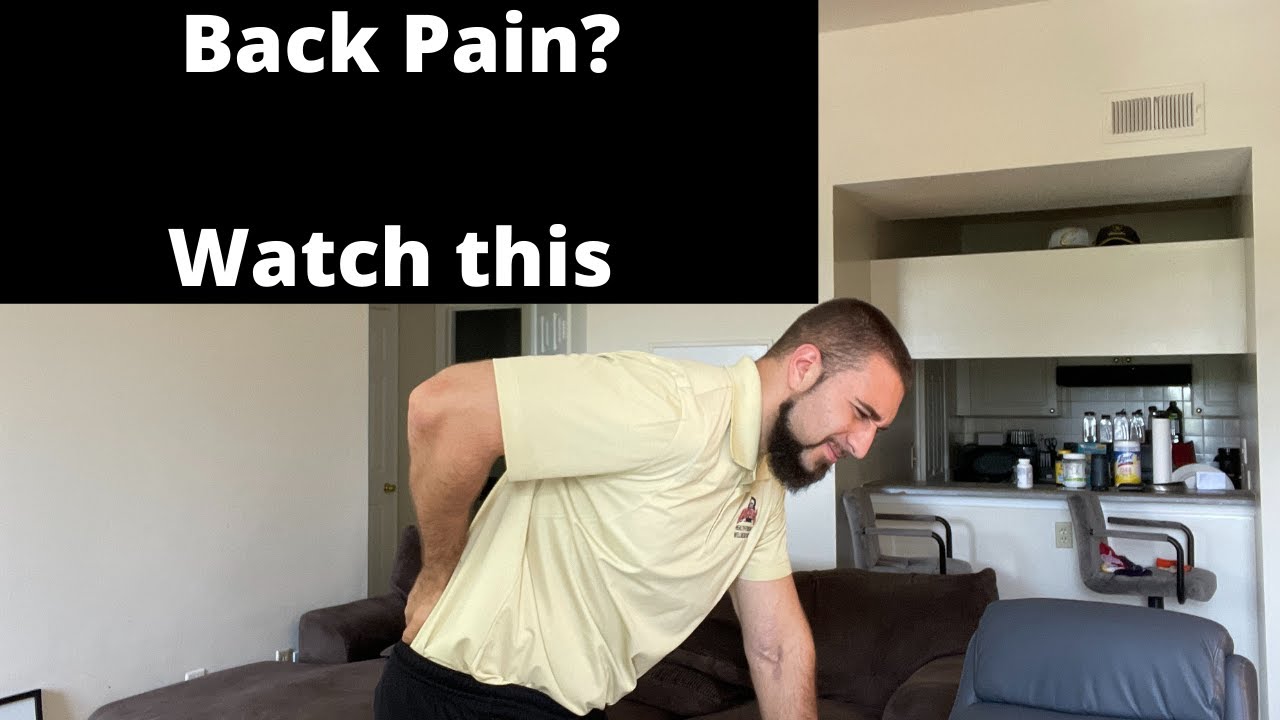
In this informal Walk & Talk episode, Eric Roberts shares his personal history of severe lower‑back pain that lasted nine years and explains how he overcame it. He argues that most lower‑back pain originates from a weak or improperly braced core, which forces the lumbar spine to compensate. Roberts teaches a concrete method for core bracing—visualizing a punch to the stomach and the pressure of a backed‑up toilet—to create intra‑abdominal pressure. He then recommends three core‑stabilization exercises (plank/side‑plank, bird‑dog, dead‑bug) performed for quality and duration rather than high reps, describing his own 12‑week daily routine that yielded significant relief. Next, he highlights the role of the glutes in hip extension; weak glutes shift load to the lower back, so he advises a glute‑focused routine (glute bridges, hip thrusts, single‑leg and regular RDLs). Throughout, Roberts dismisses passive modalities such as foam rolling, massage, Theragun, and short‑term chiropractic work as ineffective band‑aids compared to active movement. He concludes by urging viewers to adopt the three pillars—core bracing, core stabilization, and glute strengthening—to achieve lasting lower‑back health, and invites questions in the comments.
Chapters
What is going on, guys? Welcome back to another Walk and Talk with E. Hope you're doing well. Very quick story. Um, I like never leave my house, and it's funny because like I can— like I walk to the gym, for example, if I wanted to. I could walk to grocery store. I don't walk to the grocery store because I like to go to a different place. But either way, I left my house today to go see my father for his birthday and Father's Day, which I never leave because like I drive my car one place and that's the grocery store. So the one time I drive, somebody rear-ends me today, which— listen, I'm fine, obviously, and my car doesn't have too much damage. Like, I don't know what it'll cost, but whatever. Point being, like, I just never leave my house, and the one time I leave my house to go somewhere, like, somebody hits me. Whatever, right? But I thought you'd find that funny. Um, so today in this walk and talk, we're gonna be talking about what to do if you have lower back pain. And coming from somebody who had severe, very severe lower back pain for upwards of 9 years, um, I know it sounds weird because I'm only 25, but I mean, I had very severe lower back pain for a while. Um, it started around when I was in like 9th grade, and ever since then, up until about— knock on wood, wherever wood is— up until about A year and a half ago, 2 years ago, about a year and a half ago, um, finally started to see some progress with it. But I mean, it was to the point where I couldn't brush my teeth without like bending over on the sink and holding myself up. I couldn't vacuum my apartment without like taking a break every 10 to 15 seconds because being in that like bent over position like that hurt my lower back. I had to take, you know, it would take me a good 5 or 10 minutes to kind of get out of bed because My back just hurts so bad. I'm like literally rolling over to the side or something. And so, you know, not only from my own anecdotal experience, I want to talk about this here, but obviously like the science and the research and stuff like that. So first and foremost, what we have to realize about most, most lower back pain is that a lot of it stems from your core. Because if your core is not being braced properly and it's not being used properly, Then the thing behind it is going to do the most work. So what's the thing behind it? Your lower back, right? If you know where your abs are, right behind your abs are your lower back. So if your abs aren't doing the work, your core— yeah, if your abs aren't doing the work, your lower back is going to do the work. And so a lot of lower back pain stems from instability, either number one, instability through the core and/or just not knowing how to properly brace your core. And what I'm going to do is— I used to have this video for just my clients, but I'm going to put it up here on YouTube. I'll put a link here above. I'm going to link a video on how to properly brace your core. If you don't know how to do that, even if you think you know, I would strongly recommend go watching that video. Because most people— like, for example, when I ask somebody, hey, how do you, you know, brace your core if you're gonna go squat? They say, oh, well, I'm gonna suck my stomach in and pull my butt— pull my belly button to my spine. No, please don't do that. That is going to leave you so injured. I made a video about this one time on TikTok, I believe, and somebody like reposted it and they're like, man, this helped me so much. And so when you're bracing your core, you want to think about 2 things. I tell people 2 things. Number one, think about somebody's gonna punch you as hard as they can. In your stomach, right? What are you gonna do? You're not gonna just like let them punch you and like just suck your stomach in, right? You're going to probably bear down, and if they're gonna punch you, like, right, if somebody's gonna punch you, they're go— you're gonna almost like fight back to a sense, right? Where it's like you're gonna push your stomach out to brace yourself for that punch. So you can think of it like that. If I'm gonna punch you as hard as I can, that's what I want you to think about when you're doing a squat or a deadlift or an overhead press or any type of lifting movement. You wanna make sure that's you brace your core. So that's number one. Number 2, what I want you to think about is also— it's gonna sound weird, but imagine you're on the toilet, a little backed up, and you got to get one out. You got to push one out. That's how— oh, that's how I need you to brace your core, because that is core stability. Think about it like if you had an unopened can of soda and you were tapping the outside of that can, right? You're not going to dent the can because there's so much internal pressure inside of that can. So when you tap it, it's just going to basically tap you right back, right? Because there's so much pressure inside. That's what your core needs to do when you're going to do a squat, bench, deadlift, any bicep curl— I don't care, any type of movement. You want to be able to brace your core like that. So that honestly Solves a lot of lower back pain because most people just don't know how to do that correctly. And if you don't do that correctly, you're going to get injured. That's— it's just, it's just the way it is. And so definitely learn how to brace your core. Again, if you don't, if you don't know, watch that video after this video. There's gonna be a few other things I cover in this video. So that's number one, learning how to brace your core. And number 2, strengthening your core, but not Probably not what you think. Most people think, oh, I'm going to strengthen my core. I'm going to do you know sit-ups and crunches and these kind of things. No, don't do that because when we talk about lower back pain in specific, your core—the main function of your core—is to stabilize your spine. Again, when talking about this in particular lower back pain, you need to stay. Stabilize your spine, right? Doing exercises like sit-ups or crunches, that actually flexes your spine. It bends your spine. We don't want to bend your spine right now. We want to stabilize your spine, have you in a nice, neutral, safe, strong position, right? Like, for example, when you're going down to do a deadlift, you don't want to round your back super bad because that is flexing your spine, putting a lot of pressure on your lower back. And if your core is not working, which again, if you don't know how to brace your core, bracing your core normally helps that. But let's just say it's not strong enough to do that. That's where you have to get into core strengthening exercises that are going to help you strengthen your core to stabilize your spine. So I will also attach here an article I wrote on, I believe it's called the 3 Best Exercises for Your Abs. I'll link it here in the description below. But either way, I'm going to link an article here. I talk about, I believe, the bird dog, the plank, and the dead bug. I talk about those 3 movements. Again, go look at that article because I have videos of how to do those movements. Everyone always asks me, Eric, you got to show me the videos. Go look at the article, please. The videos are in there. So movements like planks, Or side planks, or the dead bug, or the bird dog, like movements like that. And again, go look at the article, the videos are there. But movements like that are going to help teach you and get you stronger at stabilizing your spine, right? Because right now your spine is not being stabilized, it's moving all over the place, right? That's why you're creating this lower back pain, is because your spine is not stabilizing, whether you're doing a deadlift, whether you're doing a squat, whether you're bending down to pick your kid up, like, this is why right now you're having some issues because your core is not working to stabilize your spine correctly. And so doing core stabilization exercises is one of, if not in my opinion, again, speaking from experience, um, I went about 12 weeks of doing those 3 exercises every single day. The side plank, the bird dog, and the dead bug. I went about 12 weeks of doing those every single day for about 2 to 3 sets per day. And honestly, it— that made— that plus learning how to brace my core, those 2 things made by far the biggest impact in my own personal journey. And honestly, I've had a few clients since then who have come to me with lower back pain, and I've implemented the same kind of strategies. helped them as well. So, and again, you know, now I'm back doing, you know, this past week I just did 435 pounds on my Romanian deadlifts for 6 reps, right? My back feels great, right? And so, you know, again, knock on wood, back feels great. But those things are, those 2 things in combination are, in my opinion, some of the biggest, the 2 biggest things by far, actually. Learning how to brace your core, doing core stabilization exercises, and doing them for Quality, not quantity. A lot of people think more, more, more, more is better. When you're doing a movement like a plank, for example, I don't need you doing like 40 million sets of planks, but like you want to work on maintaining proper form, proper position in a plank for duration. Same thing with a side plank: duration, longer duration, longer periods of time. Where you hold that side plank. Same thing with the bird dog that we talked about. Again, go watch the video for the bird dog and the article. For the bird dog, you want to— basically what you're going to do is you're going to get on hands and knees, you're going to lift your left— your right arm and your left leg, and you're going to hold that there. But point being, you want to extend the hold, the duration of the hold, because that's what's stabilizing your spine. And the better The more endurance you can get with stabilizing your spine, that is going to transfer into strength as well, because your body is going to get used to, no matter where you're going, what you're doing, stabilizing your spine. So those are the 2 biggest things. Now, number 3, also want to touch on this. A lot of people don't properly train their glutes. If you have underdeveloped or underactive or whatever you want to call it, just weak glutes, a weak ass, you're probably going to have some lower back pain. Um, because again, think about what's going on. If your glutes aren't doing the work, what's the next thing in line? It's your lower back. So if your glutes are supposed— so your glutes help extend your hips. That's the function of your glute muscle, right? So if your glute muscle is not strong enough to help extend your hips, or you just don't know how to use it properly, or it's not firing properly, whatever the case may be, what's the next thing in line? Glutes are right here, lower back's right here. So guess what? If you're not using your glutes, you're going to use your lower back. And using your lower back to try to extend your hips, you're creating that impingement on your back, and that is not a good thing. thing. So point being, train your glutes. Um, again, I also have an article. If you just Google glute workout routine, my article should be the first or second one that pops up on Google, which I'm pretty proud about. Um, but either way, my article should be the first or second one that pops up on Google. So just go to Google, type in glute workout routine, my article on ericrobertsfitness.com will pop up. Start doing— again, you talk about ex— Eric, show me the exercises. Go to the article, it has the exercises on there. Please go look at it. Um, start doing some of those exercises. Start doing glute bridges, start doing hip thrusts, start doing single leg RDLs, start doing RDLs, start doing the movements that are going to help strengthen your glutes. Because if you, if you have that trifecta right there Strengthening your glutes— excuse me— learning how to brace your core and doing core stabilization exercises. Those 3 things, you're golden. You're golden. And I want to end with this. This video is probably not what you thought it was going to be if you've watched this far, which if you have, thank you. I said nothing about foam rolling. I said nothing about stretching. I said nothing about massaging. Whatever is getting done to your body, massaging, foam rolling, whatever it is, is not nearly as effective than what you do to— with your own body. So sitting there, if you have one of those Theraguns where it just like massages you, sitting there with a gun on your lower back, it's not going to help you, man, because you're not fixing the issue. You're trying to put a Band-Aid over it. Do you know, and it's a lot easier to just sit there With a fucking gun that massages you and just like, all right, like I'll sit here and watch TV. Do you really think you're gonna make that big of a difference with your lower back pain? I can tell you it don't fucking work because I've tried it. It doesn't work. Things like doing core stabilization exercises, things like doing glute bridges, things like doing strengthening exercises for your glutes, learning how to brace your core. That's gonna take a lot more time, a lot more effort, a lot more consistency, a lot, a lot of everything. But that— this lighting sucks. But that is going to be what makes the biggest impact, the biggest difference in your journey. Don't stick to things that you do to yourself. You need to move your body, right? Don't just stick to the massages or I'm gonna go to the chiropractor. Nothing wrong with chiropractors, but again, like, you need to be doing exercises that are going to help strengthen that position and learning how to Whether it's brace your core, strengthening your core, doing glute work, doing glute workouts, whatever the case may be, you need to do that stuff because that is what's going to be your unlock. Again, coming from somebody who did all the chiropractic work, did all the massages and self-guns and whatever the case may be, none of it worked. And if it did, it was very short-term because I wasn't actually getting to the root of the issue, which is you don't know how to brace your core, you're not doing core stabilization. Stabilization exercises. When I get amped up, I talk really fast. Um, so I'm trying to slow down. But point being, do those things, those 3 things. I wouldn't really worry about foam rolling, wouldn't worry about stretching, wouldn't worry about any of that stuff. Do those 3 things I just taught you, and I promise you, if you do that, at the very least, you're going to see a positive benefit from those 3 things. So hope this walk and talk helped, guys. If you have any questions, feel free to drop below. Again, like I said, I've dealt with lower back pain for a while, but knock on wood, it's been pretty good thus far. And, uh, yeah, so if you have any questions, drop below and we'll chat soon. Okay.










