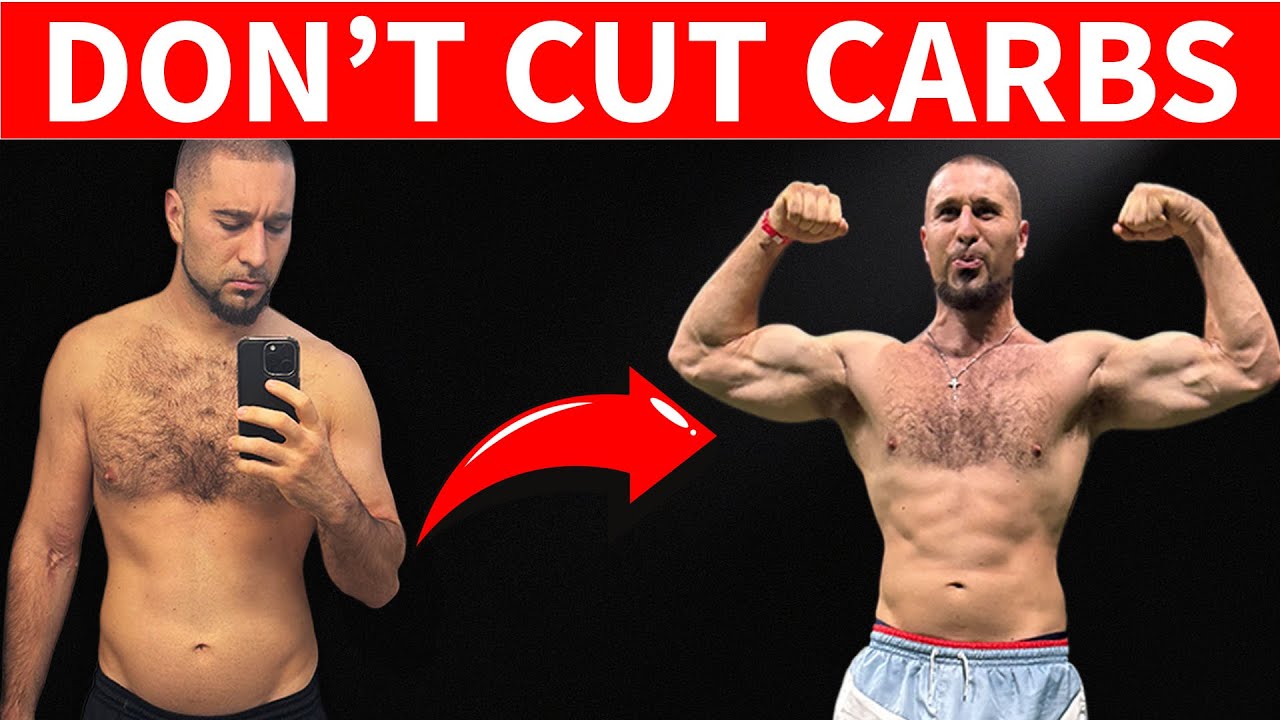
In this 10‑minute YouTube monologue, fitness creator Eric Roberts breaks down the five actionable lessons he derived from shedding 20 lb of fat in ten weeks. He begins by debunking the common “eat less” myth, explaining that he succeeded by consuming a moderate calorie deficit of roughly 500–750 kcal below maintenance (about 2,400–2,600 kcal/day), which eliminated constant hunger, preserved energy, and protected muscle. Lesson 2 focuses on low‑calorie, high‑volume foods (e.g., spinach, broth‑based dishes) that fill the stomach without adding many calories, illustrated with a client case study (Jen) who lost 40 lb after adopting 2–4 such foods daily. Lesson 3 offers a three‑step framework for dining out: front‑load calories earlier in the day with protein‑rich, low‑calorie foods; apply a “1‑of‑3” rule (choose only one of appetizer, dessert, or alcohol); and request half‑portion boxing to reduce intake and create leftovers. Lesson 4 presents “lazy” meal‑prep tactics for people who dislike cooking: rely on pre‑packaged salads, protein powders, Greek yogurt, frozen carbs; use hands‑off appliances like air‑fryers and pressure cookers; cook extra for next‑day lunches; prioritize foods you actually enjoy; and limit cooking to one meal per day while using quick options for the rest. Lesson 5 emphasizes increasing non‑exercise activity thermogenesis (NEAT) as a major calorie‑burning lever, recommending a 10–20 minute morning walk (aiming for 6–8 k steps daily) and incorporating standing or walking while working. Throughout, Eric plugs a free calorie‑calculator link, his online coaching program (with a client testimonial), and a next‑video teaser. The overall message is that modest, sustainable adjustments—rather than extreme restriction—lead to faster, easier weight loss.
Chapters
I lost 20 pounds in 10 weeks before a vacation this year, and there are 5 key lessons that I learned that I will teach you in this video so you can apply it to your weight loss and immediately start losing weight faster and easier than ever before. Lesson number 1, eat more calories. To lose those 20 pounds in 10 weeks, I was eating 2,400 to 2,600 calories per day. And now I know some people in the comments might say, Eric, you're a young guy. It's easy for you, and I get it. But stick with me. I started out at a lower calorie intake than that, and I was hungry all day. My workouts and energy sucked, and I had this constant 24/7 food noise where all I could think about was what was my next meal, how many calories did I have left for the day, and not to mention, I was starting to look. softer because I started to lose muscle mass. So I raised my calories on purpose and ate in more of a moderate calorie deficit. So I was eating about 500 to 750 calories below my maintenance calories. And by the way, if you need to know exactly what your calorie deficit should be for your age, your height, your activity level, Click the link in the description of this video. I have a totally free calorie calculator you can use. And once I increased my calories, I immediately noticed less hunger, more energy and better workouts, less of the food noise, and it instantly became easier to stick to that new calorie number and stay consistent with my diet. I know it seems opposite to eat more calories to lose weight, but instead of trying to starve yourself to weight loss, which you and I both know won't work, think about How much calories can I eat and still lose weight? Which brings me perfectly into point number 2. Lesson 2, eat low-calorie, high-volume foods. This is 150 calories of peanut butter. And this entire container of spinach is 50 calories. This bowl represents your stomach. When you put 150 calories of peanut butter in the bowl, how much space does that really take up? Not much at all, right? But if you put this entire container of spinach in the bowl, but you don't have to eat the plastic, but you get what I mean, this spinach is gonna fill up your stomach more than the peanut butter does, correct? Right, and this is what we call low-calorie, high-volume foods. You can eat a ton of food without eating a ton of calories. One of our online coaching clients, Jen, came to us really struggling to stick to her diet because she was always hungry and had crazy cravings, especially at night. We got her to implement 2 to 4 low-calorie, high-volume foods per day, and almost instantly this solved her hunger and cravings problem. And now she's lost a little over 40 pounds in our coaching program. And by the way, if you're interested in learning more about our online coaching program, You can click the link in the description below of this video. I'm gonna put some more of my favorite low-calorie, high-volume foods on the screen right here, so feel free to take a second and screenshot these to use for later. I would implement 2 to 4 of your favorite of these foods per day to ensure you can stick to your calories without being starving. And speaking of saving for later, that's exactly what we're gonna talk about in lesson number 3. Lesson three: How to eat out and still lose weight. The first few weeks of my journey, I didn't go out to eat. Yes, I know I'm boring. But a few weeks in, I joined some of my friends for a dinner out, and I thought, shit! I've been doing so good and seeing great progress. How am I gonna go out to eat and still stay on track? Well, that's when I had to get creative. I knew I wasn't going to be able to stick to my calories perfectly, but I also knew I could do some things to put myself in the best position. To stay on track, and I'll lay those out now. First, control earlier in the day. I knew I may have some more calories at dinner, so I pulled back on my calories earlier in the day. But this is important— this does not mean I fasted and ate nothing all day, because that backfires every time. If you do that, you'll go into the dinner starving and end up way overeating. So what I did was focus on having high protein to keep me full— fruits, veggies, and those low-calorie, high-volume foods that we just talked about in lesson 2— because that allows me to eat a lot of food still but not eat as many calories, so I could save some for the dinner out. And the second thing I did when I went out to eat, I followed the 1-of-3 rule. So between appetizer, dessert, and alcohol, you pick one of those things to have, not all 3. This automatically saves calories when going out to eat, and it still allows you to enjoy something in moderation without having it over-restrict you or ruin all of your progress. And the third one— I don't personally do this because I love to eat, but a lot of our online coaching clients utilize this to help them When they go out to eat. Whatever you order, tell the waiter or waitress to bring out half of the serving size and box the other half up to go. So before they even bring it out, you don't even see the full serving size. You just see what they give you and they box up the other half. And this is great for 2 reasons. Number one, it saves you a ton of calories at the dinner, but also number two, you can take that home and then you can have a meal for tomorrow. that is great tasting and you don't have to cook. It's a win-win all around. Eating out doesn't have to ruin your progress, and neither does hating meal prep. So let's talk about the lazy and most efficient way to meal prep. Lesson number 4, lazy meal prep. I hate cooking. I'll do it because it's necessary to help me reach my goals, but I want to spend as little time as possible doing it. I just can't do the 69 million different high-protein, low-calorie recipes that most people see on the internet. Because I'll never make them. I'll just end up ordering DoorDash. So I have to find ways to meal prep in a lazy and easy way so that I don't have to spend a lot of time but can still be successful with my goals. Let me share a few things I do that might help you as well. First, I buy pre-packaged foods. So as an example, those pre-made salad bags— I eat one of those every night for dinner. Protein powder I will use, and that's a quick way to get in some protein. Greek yogurt in the prepackaged things, so I don't have to do anything else with it, just pop it open and eat it. I also buy foods like frozen sweet potatoes that I can just pop into the microwave and have as an easy carbohydrate source. So don't sleep on these prepackaged foods, even if you think, oh, that isn't the healthiest option. When it comes to weight loss, the most important thing is your overall calories, and just staying consistent. And so if these foods that are prepackaged allow you to stay more consistent with your diet, they are going to be a good thing over the long run. Second, using cooking strategies that don't actually require me cooking. As an example, using the air fryer. All I have to do is put stuff in there, press a couple of buttons, I can walk away, do some work, do something else, come back, and it's done. Or the same thing with a pressure cooker. I will put a whole thing of sweet potatoes in the pressure cooker, press a couple of buttons, come back here, film a video, do some work, and then when it's done, I just go grab it when it's ready. Number 3, cook extra for lunch the next day. So at dinner, I will intentionally cook more food than what I'm going to eat so that I can have it for lunch the next day. That way, all I have to do is reheat it up and eat it for lunch. Number 4, buy foods that you actually like eating. For example, I hate brown rice. If you also hate brown rice, put it in the comments below. I hate it. I forced myself to eat it for like 5 years because I thought it was healthy and I had to, and white rice was going to make me fat. I'm glad I know better now, but I ate it for so long, and now I'm like, I don't like it, I'm not gonna eat it. I can eat white rice, or I can eat sweet potatoes, or I can eat fries, or something else that is a good carbohydrate. I don't want to eat the brown rice. So if you hate brown rice, don't buy it and eat it. If you hate broccoli but you like asparagus, eat the asparagus. If you don't like chicken but you like ground beef, eat ground beef. Buy the foods you actually enjoy eating. And number 5, pick one meal per day that you're gonna cook and try not to cook for the other meals. As an example, let's say your breakfast is a protein shake and a banana. Let's say your lunch is the reheated food you had the night before from cooking dinner. Let's say your snack is a prepackaged tuna packet, beef jerky, cottage cheese, Greek yogurt. For dinner, that's when you're going to cook the food. But cooking one meal a day is much easier than cooking two or three. And now that these lessons are getting your diet in check, let's talk about the final lesson that has probably made the biggest difference. Lesson five: Exercise for weight loss. This is how your body burns calories in a day. Most people only focus on the calories you burn during the workouts that you do, but this only takes up. 5 to 10% of your daily calorie burn. So there has to be a more efficient way to increase your calories burned to help you lose weight faster, right? Well, 15% of your daily calorie burn comes from something called your NEAT— non-exercise activity thermogenesis. This is just a fancy phrase for saying how many calories do you burn throughout the day through any sort of movement that isn't a dedicated workout. So me moving my hands like this, that's considered NEAT. You fidgeting and tapping your toe, that's considered NEAT. You going for walks or standing up, that is NEAT. Walking to and from the fridge or the bathroom or parking farther away at the store, that is NEAT. I'm someone who sits at my desk a lot during the day making these videos, answering emails, and so I knew if I wanted to lose weight, I was gonna have to find ways to increase my NEAT. And I did that in 2 main ways. Number one, I took a 10 to 20 minute walk within 2 hours of waking up. And you may have heard before, you should walk 10,000 steps per day if you want to lose weight. Personally, my step goal is around 6,000 to 8,000 steps per day. And yes, your daily step goal will help you lose weight, but what most people overlook is how you're actually going to hit That total number of steps. I found if I didn't get a walk earlier in the morning, it would get to 3 PM, 4 PM, 5, 6, 7 PM, and I only had 1,500 steps for the day. So at 7 PM, after I worked all day, I'm tired, I didn't want to go outside and get extra steps, or I didn't want to do anything. I just wanted to lay on the couch. You can probably relate to that. So making sure you get a 10 to 20 minute walk within 2 hours of waking up can assure You get anywhere from 1,000 to 3,000 steps in the early part of your day. Now, combined with all the other stuff throughout the day, you'll get to 3, 4, 5 PM and you will probably have 4,000, 5,000, 6,000 steps, which that in and of itself will help you burn more calories, but it'll be easier to get to that 8,000-step goal or 10,000-step goal that you have. And the second part is I got a standing desk that I'm not using right now, But I got a standing desk to stand up while I'm doing some work, and it may seem so simple, but from sitting to standing is a big calorie difference. And so if you have work that you can do while standing, whether it's emails, whether it's on a Zoom call, I even made time out of my day to take phone calls while walking around my house because any sort of movement or standing is going to help increase that NEAT. You might not think it's much, but if you do it every day, a couple of times a day, this stuff adds up quickly. And that's how you end up losing weight faster and easier than ever before. And it's also a way where you don't have to add a lot of time commitment as opposed to going to make another 60-minute workout. You take a 10-minute walk here, a 10-minute walk there. Stand at your desk for 15 to 20 minutes, 1 to 2 times a day. That's more realistic than trying to fit in more exercise. And speaking of, that's exactly what we do with our online coaching clients in our online coaching program. We build a personalized plan around your lifestyle to make some of these little changes that add up to big results. Plus, we hold you accountable every day so you actually stick with it, because Everybody knows what to do. Most people just aren't doing it. So if you're interested in learning more about our online coaching program, you can click the link in the description below of this video. And after you do that, if you want to learn 9 years of honest weight loss advice, you can watch this video here coming up next.