I Lost 8lbs in 1 Week On A Calorie Deficit (Here's How)
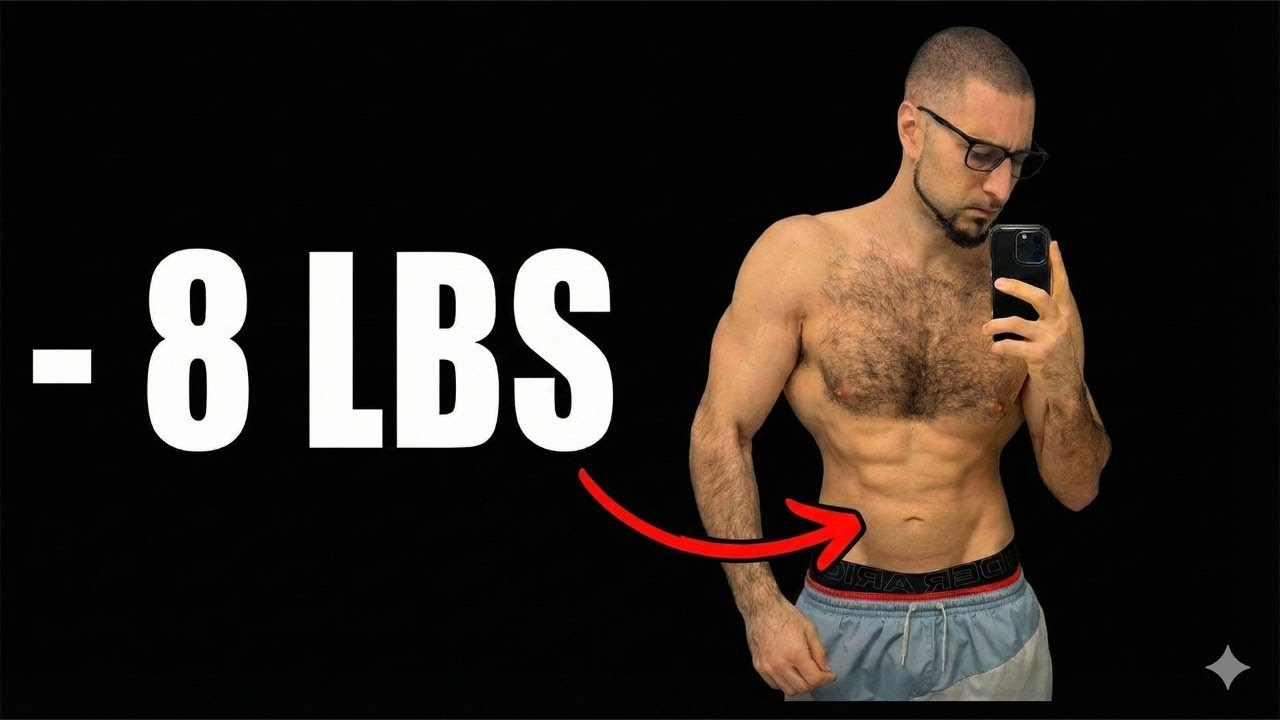
In this live‑style YouTube video Eric Roberts walks viewers through how he lost eight pounds in a single week by entering a controlled calorie deficit. He begins by sharing his daily weigh‑ins, explaining that most of the early loss was water weight caused by reduced carbohydrate intake after a high‑carb Thanksgiving. He then details his structured eating plan across three day‑types (non‑workout weekdays, workout weekdays, and weekend days), each targeting 2,600‑2,800 kcal and at least 200 g of protein. Eric shows how he budgets calories throughout the day—using lower‑calorie protein sources, a pre‑workout Rice Krispies‑banana‑protein shake, and a high‑protein “Ninja Creami” snack—to free up ~1,200 kcal for a restaurant dinner while still staying within his daily limit. He emphasizes the “big‑purchase” analogy for dining out, the rule of choosing only one of appetizer, dessert, or alcohol, and the importance of not letting a single meal derail progress. Daily weighing is presented as a data‑driven way to monitor trends rather than single‑day fluctuations. Eric also discusses his strength‑training regimen (four heavy‑lifting sessions per week) and debunks myths that a deficit must cause muscle loss or require excessive cardio. He admits he missed his planned extra cardio sessions but argues that consistent strength work, step goals (8,000 steps/day), and proper nutrition are sufficient for sustainable fat loss. Throughout, he weaves in coaching philosophy—minimal macro changes, long‑term consistency, and real client success stories (e.g., Kathleen’s 120‑lb loss). Practical tips include using meal‑prep services, the Ninja Creami for high‑protein snacks, and timing meals to regulate hunger hormones. The video ends with a call‑to‑action for viewers to subscribe, watch related content, and consider his online coaching programs.
Chapters
Let's go, let's go, let's go. What's up, YouTube? What's up, guys? Happy Thursday. Hope you're having a great day thus far. We got another live today. Where I'm going to be going over my calorie deficit update. And as you may have seen from the title and the thumbnail, I'm down 8 pounds. So I'm going to cover exactly what I've done. I'm going to cover my nutrition, my cardio, how I went out to eat. I'm going to go through my daily calories with you, my daily food logs. I'm going to go through everything. So it's going to be a good video today. And for those of you who are here live right now, what I'm going to do is I'm going to go through my actual video. So I'm going to kind of go through the whole thing. And at the end, I'm going to take— if I have time, I'm going to take questions. I do have an 11 AM podcast that I have to get on as well, but I'm going to go through the video. And if I have 5, 10, 15 minutes afterwards, I'm going to do some Q&A related to the video today. So it's going to be a good one. It's going to be a fun one. I basically prepped the entire morning for this. And so hoping that's going to bring you a lot of value and it's going to be helpful for you. So excited for it. What's up, guys? Mimi, hello. Hello. Sin City, hello. What's up, Annalise? Hello. Uh, Flower Power, hello! You've lost 16 pounds. Well, if you're stuck, this might help you. This video is going to help you potentially. Sarah, what's up? Uh, Nonso Faith, what's up? Let's go, guys! Again, super excited to have you here live, um, and you get to, uh, you get to see how the sausage is made. So if you guys follow me on YouTube, then you'll know, um, obviously how I do my videos, but I'm gonna do it live and that way you can also— it's also challenging me to go live and kind of not have any edits. So this is going to be a no-edit podcast— or no edit podcast, I do do podcasts— but a no-edit podcast, a no-edit video, and that's gonna be good. It's gonna be fun. So I'm excited for it. I'm gonna give it a couple more minutes here, maybe let some more people join. Um, Hello, what's up Karen? How are you? Karen just officially joined the Clubhouse. I'm not mistaken. Um, maybe actually, I don't know if that was you, Karen. Maybe it was. I know a Karen just joined the Clubhouse. Um, Sonia, what's up, Sonia? How are you, my friend? So glad you caught the live stream. Well, I'm glad you're here as well. And, uh, yep, we're gonna get rocking and rolling here in, uh, in just one second. So for those people who are just joining live, I'm gonna go over my calorie deficit update. And then, uh, at the end, we're going to— if I have time, I'll take some, uh, some Q&A. questions as well. Cool. All right. I think we're going to get it rocking and rolling. One more sip of caffeine and we'll be good to go. All right. And at any point in time, if you guys are ever interested in— I see some of our clients and Clubhouse members here. If you're ever interested in joining, you can click the links below in the description to check out our online coaching. All right, cool, let's go. All right, let's do this. If you guys see me look off to the side a little bit, I have some notes that I want to make sure I cover, um, for this, for this video as well. Okay, cool. All right, ready? 3, 2, 1. Last week I started a calorie deficit and I'm officially down 8 pounds. I only did one day of cardio. I went out to eat and had dessert and I'm still eating my favorite foods every single day. In this video, I'm going to peel back the curtain of what I am doing and show you everything so that you can copy it for yourself and see the same results. progress. But first, let's talk about how I lost 8 pounds in 1 week. So I want to give some context to this. I'm going to pull up my daily weight as well. So I started this calorie deficit a couple of days after Thanksgiving. So my first official weigh-in was 254.6. Now, after Thanksgiving, I ate more food, both food in general, so there's more food in my stomach, and I had more carbohydrates than I normally did. Both of those 2 things are generally going to lead to a little bit more water weight on the scale. So the scale was kind of artificially inflated than what it normally was. On top of that, to create my calorie deficit, I ate less carbs. That's not because carbs are bad. In fact, they're very good. But to create a calorie deficit, you have to decrease calories. I did not want to decrease my daily protein intake for reasons we'll talk about later in the video. And I also don't eat that much dietary fat to begin with. So I didn't want to decrease that as well. So the only thing left was to decrease carbohydrates to create my calorie deficit. When for every 1 gram of carb you eat, you're going to store 3 to 5 grams of water weight. So that means if you decrease your carbohydrate intake, you're also decreasing your water weight as well. And for both these things combined, you can think of this like a sponge. When you eat more carbs and you have more food, it's almost like your body soaks up all of the water. And then when you go back to eating normally or you decrease the amount of carbs that you're eating, you're kind of like squeezing out and wringing out that sponge so it goes back to normal. And that's essentially what happened for me the first couple of days of my calorie deficit. And I want to go through my daily weigh-ins with you. I'm recording this on December 11th. I officially started my calorie deficit on December 1st. So I'm going to go through and you can see right here, just so you know, I'm not lying. This is my Clubhouse app where I track my weight every single day. And I could go day by day on this and I will. But just to show you again, I'm going to show you my daily weigh-ins. They're tracked every single day. So December 1st, 254.6. December 2nd, 252.3. December 3rd, 250. December 4th, 250.1. December 5th, 248.1. December 6th, 247.9. December 7th, 248.1. December 8th, 247.8. December 9th, 248.1. December 10th, 246.6. And then December 11th, this morning, 246.8. So as you can see, the weight fluctuates. So you'll go up some days, you'll go down some days. But from December 1st until now, my weight is trending down. And that is what matters. We— I weigh myself daily and our online coaching clients weigh ourselves daily. And some of you might be thinking, that's insane. You shouldn't do that. Well, The more you weigh yourself, the more data points you have, because that's really all weigh-ins are. They're just data. So the more data you have, the better you'll be able to see if there is a trend or not. And this is important because if your weight does spike up one day and you only weigh yourself once a week, well, you may weigh in on the day your weight spiked up and then you might think you're not seeing progress. But you missed all the other days of the week where maybe your weight was trending down. So this is why we weigh in every single day and focus on the trend. Now, out of those 8 pounds that I have lost thus far, I would say 6 to 7 of those are likely water weight. And then 1 to 2 of those are body fat. And this is normal. I do not want to see the scale go down 8 pounds every single week. In fact, right now I'm weighing 246.8. I don't want to keep going past 240, 235 at the lowest. So if I lost 8 pounds a week, I'd be done my deficit like in 2 weeks. And that's not what I want to do. And we'll talk about that for later reasons in the video as well. But I expect the scale to slow down with weight loss this upcoming week and the weeks after. Now remember, I'm doing this for 10 weeks. So this is a great time for you to subscribe to the channel, turn on post notifications, and make sure that you are tuned in to the videos to see the updates that I'm going to do every single week. And this is important for you to understand, a lesson for you to take away. In the beginning, when you start a calorie deficit, typically the scale will go down faster at first for the reasons I just mentioned. But this is important because when the scale stops going down so fast and you're only losing 0.5, 1, 1.5 pounds per week on average, that's actually normal. It doesn't mean your diet's not working. It doesn't mean you did something wrong or your metabolism is slowing down. This is normal and this is what you want because if you kept losing 5 pounds a week, you're going to end up losing muscle. Your biofeedback, how you feel, your energy, your mood, your sleep, your workouts is going to suffer. And that would cause you to not be consistent or at the very least slow down your metabolism. So this is what I expect. This is what I want to have happen. So all of that being said for my body weight really quickly, If you want to use the same exact calorie calculator that I used to create my calorie deficit, and you'll see that right here, how many calories I'm eating per day, right? And I'll go through that in this video as well. If you want to use that calculator and the same one I use for our online coaching clients, there'll be a link in the description of the video below to use that calorie calculator. Now, like I said, I'm going to show you exactly what I ate every single day. I'm going to show you my food logs here in a minute. But before I do that, I want to talk about what surprised me the most this past week. Going into this calorie deficit, I decided that I did not want to hate my life. Most people make the mistake of going on a diet, going into a calorie deficit, cutting out all of their favorite foods, not allowing themselves to go out to eat with friends or social events, and they end up hating their life. Or at the very least, they end up overly stressed out, anxious about food, and it causes them to have a disordered relationship with food. That is not what I wanted to have. I enjoy going out to eat 1 to 2 times a week, trying different restaurants, trying different foods. That's something I enjoy. So I wanted to continue to do that because I knew that would allow me to be consistent and make this calorie deficit sustainable. And that's what we preach to our online coaching clients. And what I want to preach to you is you got to set up your calorie deficit so that you can still, at the very least, somewhat enjoy it because you need to be able to be consistent with it. So I didn't want to stop doing that. So this past Saturday, I went out to eat. And the way I think of going out to eat to a restaurant or a social event on a calorie deficit It's kind of like making a big purchase. If you know you're about to make a big purchase, typically you kind of pull back the spending in other areas of your life and you kind of save up for that big purchase, whether it's a trip, whether it's a car, TV, whatever big purchase means for you. So in the context of a calorie deficit, the way I like to think about going out to eat and still being able to enjoy myself, but also still being able to stick to my goals is I'm going out to dinner. That means I'm going to spend less at breakfast, lunch, snacks throughout the day so I can make a bigger purchase at dinner. Now, the mistake that people make is I'll spend nothing during the day and I'll make a huge purchase at dinner. That's like, I don't know, going— I've never been gambling, but that's like going to Vegas I don't know, drunk and not eating all day and then trying to go gamble at night. You're probably going to lose your house or something. It's not going to be a good ending. So I don't want you to do that. And that's not what I do. I don't fast. I don't eat nothing, but I do spend less in specific ways that allow me to save calories for the dinner without going into dinner starving and then end up overeating. I want to talk about exactly what I did to have that happen right now. So at breakfast on Saturday, I work out in the mornings on Saturday, and I have a couple different ways that I set up my meal plans for the day. We'll touch on that a little bit later in the video when I show you exactly what I eat. But on Saturday, I have my pre-workout meal, which is a bowl of Rice Krispies. I make a protein shake with protein powder and I pour it over the Rice Krispies. I have a banana, I have some peanut butter, and I have honey. So that was my pre-workout. That was my breakfast. And then coming back from my workout, post-workout, typically I'll have a pretty good-sized meal here to kind of replenish my glycogen, replenish my carbs, eat more protein, recover from the workouts, all those good things. I did that, but I just kept it a little bit lighter. So instead of, let's say, having You know, 400 grams of sweet potato fries. I had 200 grams of sweet potato fries. Instead of having maybe a fattier version of protein, let's say a steak or ground beef or something like that, or maybe if I was having eggs, I had like 3, 4, 5, 6 whole eggs. I had a leaner version of protein. So this would be like 96/4 ground beef. This would be eggs, but the majority of it is egg whites. So 1 or 2 eggs and the rest Just egg whites. But the point being, I had a lower fat, lower calorie version of protein to go along with that. Those 2 things combined usually save me about 300 to 600 calories for the day. And that's just from decreasing the portion size. I'm still eating what I want to eat and then changing up the protein source to be a lower fat version. So I did that as a post-workout. And then later in the day, I would typically have another meal. Let's say it's ground beef and let's say it's ground beef and sweet potatoes or rice or some tortillas, some tacos, something like that. I didn't do that. What I had instead was I love ice cream. Maybe some of you out there can relate to this as well. So I have a Ninja Creami. By the way, this is not a plug. I don't work with them. It's just I have one every single day. If you like ice cream and you don't have a Ninja Creami, you need to get one. And if you If you guys have one in the comment section below, drop it and let people know how good it is because it really is a game changer. But that's what I had and I pushed it back a little bit later in the day. So if I normally eat around 1 PM, I ate around 3 PM. This way I'm getting 45 grams of protein, only about 200 calories because all I do is mix it in water or maybe unsweet almond milk. I add a scoop and a half of protein. It freezes overnight. And then I make that. So it's about 200 calories, 45 grams of protein. It's in this big kind of Tupperware or Tupperware, but a big container. So there's a lot of food volume that I'm eating. I like it because it feels like I'm eating ice cream. And I ate that around 3 PM before I went out to dinner. So that right there also saved me about, let's say, 300 to 500 calories for that meal. So now between breakfast or my second meal, and then my snack, my third meal, I saved myself 500 to 1,000 calories on those specific meals. So then I could go into dinner not hungry because I still had a ton of protein that day. And I still had other carbs and other fruits and veggies and those sort of things. But then on top of that, I now have about 1,200 calories to play with at dinner. that I can now enjoy myself without overdoing it. I still have to be mindful, and I'll talk about exactly what I ordered when I went out and my thought process, which hopefully you can steal and copy for yourself. But I went into dinner with a— knowing I'm going to make a bigger purchase without over-restricting myself and being starving. And that is the key that I tried to do and that we try to teach all of our online coaching clients. So That being said, now time for dinner. So the first thing I did was I picked one of 3, and this is a rule that we give all of our online coaching clients, and I follow myself. Out of appetizer, dessert, or alcohol, you have to pick one of those 3 things, not all 3. I don't personally drink alcohol, so it was between appetizer or dessert. I looked at the appetizers. They weren't really appetizing. So I was like, I'm going to have dessert today. I didn't know what I was going to have, but I was going to have dessert. So I skipped the appetizer and then I went into the entree. Now, again, me knowing I have about, let's say, 1,200, 1,300 calories to play with, I know I had some room, but I didn't want to overdo it because when you go out to eat, you don't really know the exact calories you're consuming. You can guesstimate, which is what I did, but you don't know exactly. So I picked a meal that was high in protein. Number one, I believe I got the pork chop. So that was high in protein, moderate fat, but not overly fatty protein source. I also picked a meal that wasn't high in like a lot of heavy sauces or high-fat sauces that came along with it. I wanted something a bit more lean. And so it came with, I believe, mashed potatoes. And it also came with some veggies on the side. It was something that I wanted. Now, were there other options on the menu that maybe I could have had that I wanted? Yeah. But sometimes you have to balance what you want with what you need to do. So I know I needed to stay a little bit more lean, but I still wanted something that I wanted. So you sometimes you just make these compromises or sacrifices and I knew I was going to have dessert. So that's what I picked for the entree. High protein, some sort of carb, some sort of veggie. Had that. And then it came to the dessert time. And once again, I am somebody who I like ice cream, all kinds of desserts. If you don't like desserts, some people are like, I like salty. I'm like, I don't. Who are you? What is this? Dessert is the best. But so I wanted to have dessert. Now, there's a lot of dessert options that were good. And one of them was this like chocolate ice cream, apple pie, something, something. And I was like, man, that looks really good. But I knew I wanted to stick to my calories. So instead of picking that one, I went with— it was like a banana bread with some ice cream, caramel, something. It was a little bit lighter. Now, it wasn't, you know, it wasn't 200-calorie, like, Greek yogurt and berry dessert, but I wanted a real dessert. So that's what I ordered and I ate about half of it. So between my meal and between the dessert, I guesstimated around 1,300 calories. Was it exactly 1,300? It could have been 1,200. It could have been 1,500, but you're not going to be perfect. So you guesstimate to the best of your ability. That's exactly what I did. And guess what? I woke up the next day and I still lost weight. So this is how you can navigate social events, going out to eat, And still make your fat loss progress in a calorie deficit. You're not going to be perfect, but that's okay. So a quick rundown of that one more time. You spend less during the day to make a bigger purchase at night. When you're at the dinner or the bigger purchase, you pick one of 3. You pick an entree that's high protein, some sort of carb, some sort of veggies, and then whether it's dessert or alcohol or appetizer, you picked one of those 3. Understood. Awesome. And remember, one last point before we move on to exactly what I ate in a day. Remember, one meal is not going to make or break you. A lot of our clients who sign up for coaching with us, they really struggle with this all-or-nothing mentality. You think if you go out to eat, it automatically ruins your progress because you're not perfect. One meal doesn't make you skinny or make you fat. So this one meal that I had, because the rest of the week I was on point and I was hitting my calories, hitting my goals, hitting my steps that we'll talk about, this one meal is not going to make or break me. And it's not going to make or break you either. So stop freaking out when you can't be perfect. Make the best you can. Guesstimate to the best of your ability. Be on point the rest of the week. And I promise you will make progress just like myself, just like all of our online coaching clients. And by the way, if you're interested in learning more about our online coaching program and getting a bit more personalized help, you can click the link in the description of this video below. Now let's go ahead and talk about exactly what a day of eating looks like for me. I think the biggest mistake that people make with their meal plans or their days of eating in a calorie deficit is they just have no plan. They have no structure. That's like driving from New York City to California with no GPS. Could you get there? You might, but you're probably not. And even if you do, it's gonna take you longer than it already is to drive across the country. So you gotta get set up with a plan. And this is what I'm really excited to show you. The plan can look a little bit different. I have essentially 3 different days of eating that I'm going to show you. Now, I want to talk about my overall goals stay the same. So my calorie goal and my protein goal stay the exact same. So as you can kind of see right here, my calorie goal, this is what I've done thus far today. It's about 2,600 to 2,800 calories per day for my calorie deficit. I know. You're going to be like, Eric, oh my God, that's so many calories. That's double mine. I'm 6'4, 245 with somewhat decent muscle mass. Okay. That's the perks of this. Okay. I get it. It's easier for me, harder for you. I understand. That being said, 2,600 to 2,800 calories per day. And my bare minimum protein is at least 200 grams per day. This says, you know, 194, but I like to round up at least 200 grams of protein per day. Personally, I love eating protein, so it's very easy for me to hit that number. But let's talk about the 3 main days of eating that I like to get set up. So the first one is a non-workout day during the week. So yesterday, as I'm recording this on Thursday, Wednesday was a non-workout day during the week. So what my day of eating will look like is Again, and I want to bring up an exact example so I can, so I can show you this. And I'll actually, I'll pull up last Wednesday so we can use this as an example. So last Wednesday I had 2,677 calories, 220 grams of protein. Okay. When I wake up, I wake up around anywhere between 5 to 6, just depending on the day. I'll wake up, I will drink 20 ounces of water. I'll have a caffeinated drink and then that takes about 2 to 3 hours and then I'll go have breakfast around 8 or 9 AM. And my breakfast is this right here. I have 3 whole eggs. I have 190 grams of egg whites. I have 50 grams of avocado. I have 170 grams of Greek yogurt. I have 75 grams of blackberries, 75 grams of raspberries, 6 grams of chia seeds, and then some sort of protein. It's usually either chicken thigh or ground beef. And so that's exactly what I had. I'll show you. It's exactly what I had for breakfast, right? And if you can maybe see, it's about 761 calories, 79 grams of protein. I try to front load my protein and my fiber. That meal also had about 15 grams of fiber. I personally need to front load those 2 things to make sure I hit my goals for the day. So that was breakfast. Again, that was around 8 to 9 AM. The next thing I had was lunch. And so for me, lunch was this right here. Show you. So it was chicken thighs, it was potatoes, it was avocado and a banana. Lunch came out to about 624 calories. With about 45 grams of protein. That was somewhere around 1 to 2 PM. And then my dinner was my biggest meal of the day. This is typically the case when I don't work out and it's during the regular weekday, because during the day I'm busy, I'm working, much like I'm sure you are. So dinner ended up being this right here, almost about 1,300— fuck, sorry. 1,300 calories, about 95 grams of protein. So I had a, I buy these, and I'll talk about this in a second, but I buy these meal prep from this meal prep service company. So I had, it was like jambalaya with brown rice. I had a bagged salad. I had some potatoes on the side and I had my Ninja Creami. So that's how that ended up being about 1,300 calories with 95 grams of protein. And I just ate 3 meals that day. That's typically what I do during the week when I'm not working out. And that comes out to 2,677 calories. And that's what my day 1 type is. Now, the day 2 type is a workout day during the week. So this is kind of, again, the second column here. And I'll go to what that day looked like. This was a little bit of a higher calorie day because my goal is 2,600 to 2,800. But this was about 2,785 calories with 240 grams of protein. And the way this day looks a little bit different, my breakfast is the exact same. So I'll have the same exact breakfast around the same exact time. When I work out during the week, I work out usually around 1 PM to 2 PM. That's when I start my workout. So I'll have the same breakfast, but then I will have the pre-workout meal that I talked about earlier in the video. So you can see that right here. It's about 600 calories. So I have the Rice Krispies cereal, banana, protein shake, peanut butter, and honey. So that's about 600 calories, 40 grams of protein, about 100 grams of carbs in that one specific meal. So I have that as my pre-workout. That's around 12 to 1. I come home and have my post-workout around 3 to 3:30. Now, I want to be able to refuel, but I also have to be mindful I'm having that meal and I'm also going to have dinner at night. So when I have that post-workout meal, I got to be conscious of I need some protein, I need some carbs, but I don't want to go too high in calories. Otherwise, I'll eat nothing at night for dinner. So what I did for lunch, and again, everybody's calorie range is a bit different, But I had some, if you can see, I had some ground beef with some sweet potatoes and I had a little bit of honey on top of it, just kind of drizzled on top. That was about 550 calories with 51 grams of protein. That allowed me, because my ground beef portion size was less than I normally do and my sweet potato portion size was less than I normally do. That allowed me to get some refuel without blowing my calories or not having enough calories left for the day. And then going down to my dinner about 6, 6:30 PM, it was about 1,050 calories for dinner. So again, I had, you know, a pork chop. It was a meal prep service meal. I'll talk about in a second. Had a bag salad, had a little bit of avocado, and I had my Ninja Creami. So that is day 2 of my typical days of eating. You see how it's a little bit different, but you're still hitting the overall goal. And this is what you need to think because maybe you go into the office Monday, Wednesday, Friday, and you work from home Tuesday, Thursday. Those 2 types of days might look different, but you're still having a structure for those days. And then let's say the weekend, that might look completely different, but you still have to have a structure. And that's the third day that I want to talk through right now is my weekend. So on Friday, Saturday, Sunday, I work out each of those 3 days and I work out early in the morning. So this day looks a little bit different. I'll wake up and I'll immediately have my pre-workout meal. And so I'll show you this past Friday, 2,700 calories, 220 grams of protein. So this is when I'll have that pre-workout meal of the Rice Krispies and the banana and the peanut butter. I'll have that and then I'll come, that's usually about 6 to 7 AM. I'll go work out about an hour, hour and a half later, and I'll come back and have my post-workout. Again, with the post-workout, it's similar to what I said for day 2. I want to refuel, but not have a ton of calories because that means I won't be able to have any extra calories. Well, I'll have to really decrease my calories the rest of the day. So when I got back home, the meal that I had was again a meal prep meal with a little bit of extra protein because having to hit at least 200 grams of protein per day, I added a little bit of extra ground beef in that, but that came out to about 740 calories. Then around 3 to 4 PM, I have my Ninja Creami. So I have that now instead of later because I'm hungry during the day. I got to make sure I get some protein to keep my hunger at bay. So I had that and then I had dinner, which was once again, I had a bag salad, I had a meal prep meal, and then I had some Greek yogurt and berries as a dessert for that meal. But that's how my weekends would go. So those are 3 days of eating and you don't have to copy exactly my foods or like you might Fucking hate raspberries, but you love strawberries. Eat strawberries. You might not like brown rice, but you love white rice or white potatoes versus sweet potatoes. Eat the foods that you like within the calories and protein that you have and make structures for the day that you can follow. Because if I didn't have these structures and I'm just kind of winging it and like, oh, well, maybe I'll do this or maybe I'll eat at this time. Number one, my hunger hormones would be all over the place. And so I'd be hungry all day. But when you eat at these specific times on these specific days, you train your hunger hormones to only be hungry at those times. And that will help you with your calorie deficit. So that's number one. And then number 2, did you notice it wasn't like I was hitting an exact number each day? My range of calories was 2,600 to 2,800. Some days might be lower, some days might be higher, but you're within a range. And that is something for myself and all of our online coaching clients that we work with, they find that to be really helpful because the flexibility allows you to be more consistent over the long term because you're not like, oh my God, I went 72 calories over. It's not that big of a fucking deal, I promise you. So the flexibility is huge. Number 3, as you saw, I eat more or less the same foods every single day. So I eat eggs, I eat ground beef, I eat the meal prep that I buy. I eat the Rice Krispies and the banana. Like, and by the way, I typically don't track the veggies, and you don't have to track it. Like, I'm not tracking fucking spinach or peppers. Nobody ever got fat because they ate too much spinach. So I'm personally, I'm actually lazy, so I'm not tracking vegetables. But I do include, like, with my eggs, I'll include spinach and peppers and those sort of things. So, but I'm eating more or less the same foods. And this also really helps me because Number one, it's less decision-making and less guesswork. And then number two, I know I can look at the food and basically know the portion size. I'm still weighing it out on my food scale, but it just helps me know, I know I'm in my calories versus like having all these crazy meals and different ingredients and making it really hard to track. That would send me down a spiral and I just make it as simple as humanly possible. And the last thing I'll say is, again, with the meal prep service, I've been using that recently and it's saved me a ton of time. Like even this morning as I was going through my outline for this video to hopefully make it as good as I can for you guys. If you're enjoying the video, let me know in the live chat down below or let me know in the comments if you're watching this back. But I had a meal prep breakfast this morning. So it took me 5, 10 minutes to warm up and eat and I got back to work. So that has also saved me a ton of time. And for you too, think about this. If you're typically spending an hour at the grocery store and then an hour and a half, 2 hours cooking and prepping. Is there a way you could save some time? Could you get groceries delivered to your house? Could you invest in a meal prep service? Could you buy specific foods that you don't have to cook, whether it be frozen rice or frozen sweet potatoes or frozen veggies? Like, think about ways that you can make your calorie deficit easier for yourself. And that's what I tried to do. And You know, it's worked out well for me thus far. And the last thing I'll say is this. Some people, when they start their calorie deficit, a mistake they make is over-restricting their foods, but also their calories, which then causes them to be starving. This past week and a half, I really have not been hungry. I've lost 8 pounds. I've been consistent 11 and 11 days. I've not been hungry once. Why? Because my calories are set to the correct amount, not too few, not too long, or I'm sorry, not too few, not too much. I'm hitting my protein. I'm hitting my fiber. I'm eating at the specific times of the day. I'm somebody who, if I go too long without eating, I get hangry. Like, you're gonna— it's not gonna be good. I'm gonna be a dick. Like, it's not gonna be a good sign. So all those things combined in my plan allows me to not even be hungry. So And I hate to say this because some of you guys are going to get mad at me. It's not hard. Like, it's not hard to follow my calorie deficit, but that's what I want for you. And that's what we really try to do with our online coaching clients as well as set up your plan to make it easy to stick with and follow. And again, if you're interested in learning more, getting some personalized help with our online coaching program, you can click the link in the description below of this video. Now that I've talked about diet, your nutrition, my nutrition, isn't the only thing that contributes to fat loss. Your workouts and your cardio does too. And I have a confession to make about cardio. So let's get into it. Most people think your workouts should change when you go into a calorie deficit. Should do higher reps, less weight, shorter rest times, Workout more, cardio more? No, my workouts have not changed heading into this calorie deficit. And I can pull up the workouts that I'm doing because I'm doing all the workouts inside of my Clubhouse app. Personally, this is the cool thing for me. I don't just like talk about doing the workouts and this is my workout for today. So it doesn't have anything there, but I do the exact workouts that I program for all of our clients because I know They work. So my workouts have not changed. I am trying to lift heavy. I'm trying to push myself close to failure. I'm trying to get stronger. I'm trying to progressively overload. Currently strength training 4 days a week, upper, lower, upper, lower. And this is something else that people still are shocked at this or they don't typically understand. Like, how do you do all upper body in one workout? I do all upper body in one workout and I'm in and out of the gym. in under an hour because I run my own business. I have to make content. I have to work with clients. I have to help my team, help my employees. A lot of stuff during the day. I can't spend 2 hours in the gym, nor do I want to spend 2 hours in the gym. So I have to get in and out in under basically an hour. But if you have a smart program, you can do that. It's exactly what I do, and it's exactly what we do for our clients. So 4 days a week trying to get stronger and The good part about my calorie deficit, because I'm not going too few, too low in calories, I still have energy for my workouts. I'm still getting stronger. I'm still progressively overloading. I can still recover from them. I haven't lost any strength. And this is a big mistake people make too. They think, oh, well, I'm going to go into a calorie deficit. I'm going to lose muscle or I'm not going to be able to lift as heavy still. If that's happening for you, Something's wrong. Your plan is off, especially in the beginning. Now, I'm going to do this calorie deficit for about 10 weeks. Maybe towards week 7, week 8, week 9, week 10, it might get a little bit more challenging to progressively overload and still be stronger and still lift heavier weight. But especially early on, if you go into a calorie deficit and automatically your strength is gone, something's wrong there. Your calories aren't right. Your workouts aren't right. You're not eating at the right times during the day. There could be many things that are happening, but you should still be able to get stronger in a calorie deficit. And you can still build muscle in a calorie deficit. This is another misconception that people have. You can't build muscle in a deficit. You absolutely can. You might build muscle slower, especially for someone like myself who I've been following a proper strength training program for over 13 years at this point. So I'm personally not going to build a ton of muscle in this deficit. I might build some, but at the very least, lifting heavier and pushing myself close to failure will allow me to keep the muscle that I have, which is critical because we want to not just lose weight, but we want to look a certain way. We want to keep our metabolism high. We want to stay healthy and not lose muscle. So you can definitely still build muscle in a calorie deficit and you should. So that's my workouts. I've been really happy with that because if you watch episode 1 of this series, you'll hear me talk about the last time I did a calorie deficit, it didn't go so well. My workouts really suffered. So I didn't want to have that happen this time around. And thus far, knock on wood, it has not happened. So I'm happy about that. Now, the cardio confession that I want to say in the first video, and it's on record, so I will own it. I said, I was going to do 2 to 4 extra cardio sessions per week. That has not happened. I have done my— so one day a week I will do sort of like a HYROX style of cardio session. And this is like you'll run for half mile, you'll do the rower for a half mile, you'll SkiErg for a half mile, you'll do 20 wall balls, kind of like a somewhat of like a circuit style training. You could think of it like that. And I've incorporated that. Less about fat loss. I was doing that before I started my calorie deficit. I incorporated that more because number one, I wanted to challenge myself and I enjoy it. And number two, for heart health. That's really why I'm doing it. So I'm still doing that. But I said I was going to do an extra couple of sessions per week of zone 2 cardio, whether it be the treadmill or the walking with a weighted vest or the bike. I haven't done it. I'm just going to come clean. That is not what I've done. I did zero of that last week. I've done none of it this week. And I'll just be honest, and hopefully you can take this with you and you can see I'm a real human being just like yourself. Running my business is a higher priority than doing my extra cardio, especially because I'm still seeing progress without it. But when I'm faced with the decision of like, I got to get back home and Do the content, answer emails, get on meetings, get on calls. That takes priority over doing my extra cardio sessions. And I'm okay with that because again, I'm still seeing progress. It would be one thing if I'm not seeing progress, I would have to figure it out. But currently I'm okay with putting more effort, energy, and time into our clients, into my business, into this content. than doing the extra cardio sessions per week. But again, I still lost 8 pounds in one week. Not that I'm going to keep losing 8 pounds per week, but I'm still making progress. So I'm not feeling bad about it. And this is something that we talk with our online coaching clients a lot. So I hope you can take this with you as well. I don't feel guilty about it. I mean, yeah, I would have loved to come here and tell you guys that I hit all my goals, but I didn't hit my cardio goal last week. But guess what? Just because I didn't hit that one cardio goal doesn't mean I'm not going to hit my nutrition goal or I'm not going to hit my workout goal or I'm not going to hit my step goal because that's the other part of this too. In the first episode, I talked about I wanted to increase my steps to at least 8,000 per day. And I can say I have done that every single day over the weekly average. So I'm still hitting my step goal. I'm doing the extra 1 day of cardio. I'm doing all 4 workouts per week. I'm hitting my nutrition, hitting my calories, hitting my workouts, hitting my protein. I'm okay with letting my cardio drop off a little bit. Now, again, when it comes to week 5, week 6, week 7, week 8, I might have to add in that extra cardio to still see progress. So at that point, I'm going to figure it the fuck out, but I'm not at that point yet. And I think this is the kind of the real formula that I want to give to you. This is the same thing we do with our online coaching clients. I'm telling you, anybody here who's a client of ours can vouch for this. 3 main parts. Your calorie deficit via your food, and under calorie deficit, I'll put like protein 1A and 1B. Your calorie deficit and your protein via food. Your strength training, lifting weights. And your daily steps. If you do those 2 things, you are going to see sustainable, consistent fat loss progress. You don't need a ton of extra cardio. You don't need a ton of extra running. You need to do 30 minutes of cardio after every single workout. I'm not doing that. I don't have time for that right now. And if I have to make time for it, I will, but not right now. And I promise you, you don't have to do that either. It can be that simple. I'm not saying it's easy, but it can be that simple. And I also think this is why a lot of our clients have a lot of success, not only losing the weight, but keeping the weight off long-term. Because, you know, ask yourself right now, if all you had to do was 3 to 4 strength training workouts per week, walk 6,000, 8,000, 10,000 steps per day, make sure your overall calories for the week are in check. I feel like that would be pretty sustainable, right? You're not working out 6 days a week. You're not doing cardio for an hour a day. That's why I think it's really helped myself and our clients be consistent. So we'll see in future videos if I have to add in cardio. If I get some extra ones, I'll pat myself on the back, but I'm not going to overly freak out about it right now. Speaking about— speaking of progress, Let's now talk about what changes I'm going to make leading into week number 2 of this 10-week calorie deficit. And I'll start by saying the mistake a lot of people make is just changing things when they don't need to. And I see this a lot with online coaches as well. We've had a lot of clients come to us thinking that like, oh, well, my last coach changed my macros every week and changed my workouts. Every week and my cardio every week. And I'm like, why? If it's working, why would you need to change anything? And so for me, I lost, let's just say, 2 pounds of fat last week. We talked about some of the water weight. Let's just make it simple. 2 pounds of fat. Why would I change anything this upcoming week? I wouldn't. I'm not going to change anything. I'm going to keep my same steps. I'm going to keep my same calories and macros. I'm going to keep my same 4 workouts per week. I'm not going to change anything because the old saying of if it ain't broke, don't fix it, that applies here. We've had clients that we've coached. Actually, let me pull this up really quickly just so I can, I can show you guys proof of this. One of our coaches who used to be a client of ours, her name is Jamie. I'm not— some of you guys in the chat may know Jamie. I can't find the picture. I apologize. I'll use one of our other clients, Kathleen. Kathleen has lost over 120 pounds. You can see right here. And by the way, she's a woman in her 50s. So for anybody out there who's like, oh, my age is why I can't lose weight, I promise you can if you're on the right plan. Link in the description below if you want to learn more about coaching. Kathleen changed her calorie goal maybe 3 times. During that 120-pound weight loss, she would lose 20, 30, 40, 50 pounds before having to change anything about her calories. And so people just change shit way too often and way too much. And this is also because you think it's not working. Like I talked about earlier, oh, well, I only lost 1 pound this week, or my scale's been stalled out for 4 or 5 days. I got to change something. No, you don't have to change anything. In fact, let me go back to the beginning of the video where I went through my daily weigh-ins. And so after the first couple of days, my weight really kind of just stalled out for— so December 5th, it was 248.1. December 6th, it was 247.9. December 7th, 248.1. December 8th, 247.8. December 9th, 248.1. So that was 5 days of really no scale change. My scale didn't change at all in those 5 days, really between 0.1 and 0.2 pounds. And most people would be like, oh my God, this isn't working. What do I do? I got to check. I got to lower my calories, do more cardio. No, you don't. You have to stick fucking with it and be consistent because yesterday, December 10th, My scale dropped to 246.6. Today, 246.8. So I'm 2 pounds down or a pound and a half down from what I was fluctuating around. And I would imagine my weight will probably fluctuate around 246.5 to 246. Uh-oh, my camera died. Give me one second, you guys. Crap. No good. Sorry. Hold on. This is not good. The live was going so well. Oh, I'm so upset. Give me one second, guys. I apologize. Stick, stick with me here. I promise I will make it up to you. Damn it. Well, I guess if you're live in the chat right now, um, I can edit this out from future video. But if you're live in the chat right now, please let me know if you're enjoying this. Please let me know your biggest takeaway thus far from the live, from the video thus far? What is, uh, what is your biggest takeaway? Is it not changing anything? Is it the scale is going to fluctuate? What is the biggest takeaway that you have thus far? Again, I'm really sorry about the camera turning off for a second here. It looks like it's been, uh, overworked. Overworked. All right, let's try this. Let's see if we can, uh, get it back. Rocking and rolling here. All right, maybe we're back. I only have about 2 minutes left of the live too, so I'm hoping I can finish. Oh, let's go! We're back live. Let's fucking go. Okay guys, I'm gonna make sure I finish this because I gotta, I gotta finish. So like I said, all of this, my calories are gonna stay the same, protein will stay the same, everything will stay the same, and I'm gonna probably drop another 1 to 2 pounds This upcoming week. That's what I anticipate. If not, cool, I'll make some adjustments, but that's what I anticipate. So for now, I'm going to keep everything. And that's why stay tuned for next week's video. If you haven't yet subscribed and turned on notifications, please go ahead and subscribe and turn on notifications. And if you want to also learn my most important and effective calorie deficit cheat codes, You can watch this video here next. Awesome. Let's go, you guys. Thank you for being here. Thank you for the live. Thank you for being down in the comments section. I apologize for the camera. It looked like it overheated. So that's what happened. And I really apologize for that. But nonetheless, I am super happy and I'm going to try to get maybe 1 to 2 questions. If my camera shits the bed again, I'm just gonna have to stop, and I apologize. I think it'll be fine, but I guess we will see here. But yeah, I'll try to get some questions, and so you know, kind of go back up in the chat and see if there's any specific questions I can answer. Do do do do. Got a lot of Clubhouse members. Dude lost the amount just so he can make a joke. Let's go, Ninja Creamy. Yep, people are talking about Ninja Creamies. You definitely need to get Ninja Creamy. For sure. Um, are the Rice Krispies just for quick processing carbs? Yep, essentially. So before your workout, having some quick digesting carbs can be really beneficial because they're going to be into your system and you can use them for that workout. So absolutely. Um, let's go, let's go. I followed one of your other videos and this is what really helped me with not overeating. Let's go, that makes me super happy. Uh, Sonia is 55 and lost 25 pounds in the clubhouse. Let's go, Sonia! Absolutely killing it, fucking crushing it. Congratulations, let's go! And again, guys, if you're at all interested, if you're here live or watching back, if you're at all interested, you can click the link in the descriptions here below to learn more about what we do with our clients and just see if it's a good fit. Like I always say on these lives and all my videos, 95% of you, I understand you're never going to sign up, and that's fine. I still love you. I still appreciate you. I'm still going to show up every single day and do the best content that I can. But for the 5% of you who are interested in joining and want some extra help and want some community and want some accountability and want the guesswork taken out, you can click the link in the description of the video below to learn more about our online coaching programs. We have a one-on-one coaching program. It's a bit more personalized, weekly check-ins. Or I took the same process of one-on-one coaching and I put it into an app for a fraction of the cost. So both of those 2 things will be down in the description below. It looks like we don't have a ton of questions and my— I'm worried about my camera. So that'll be the live for today, you guys. I really appreciate you joining. Um, we'll be back next week for some more. Actually, I might do one Saturday. So if you want to pop in on Saturday, probably around 11 to 12 AM. 11 AM, 12 PM, not 12 AM, um, Eastern Standard Time. Probably be there. So again, turn on your notifications, subscribe to the channel, and hopefully I will see you guys on Saturday. Thank you so much.










