I'm Starting A 10 Week Calorie Deficit Diet (Copy My Plan)
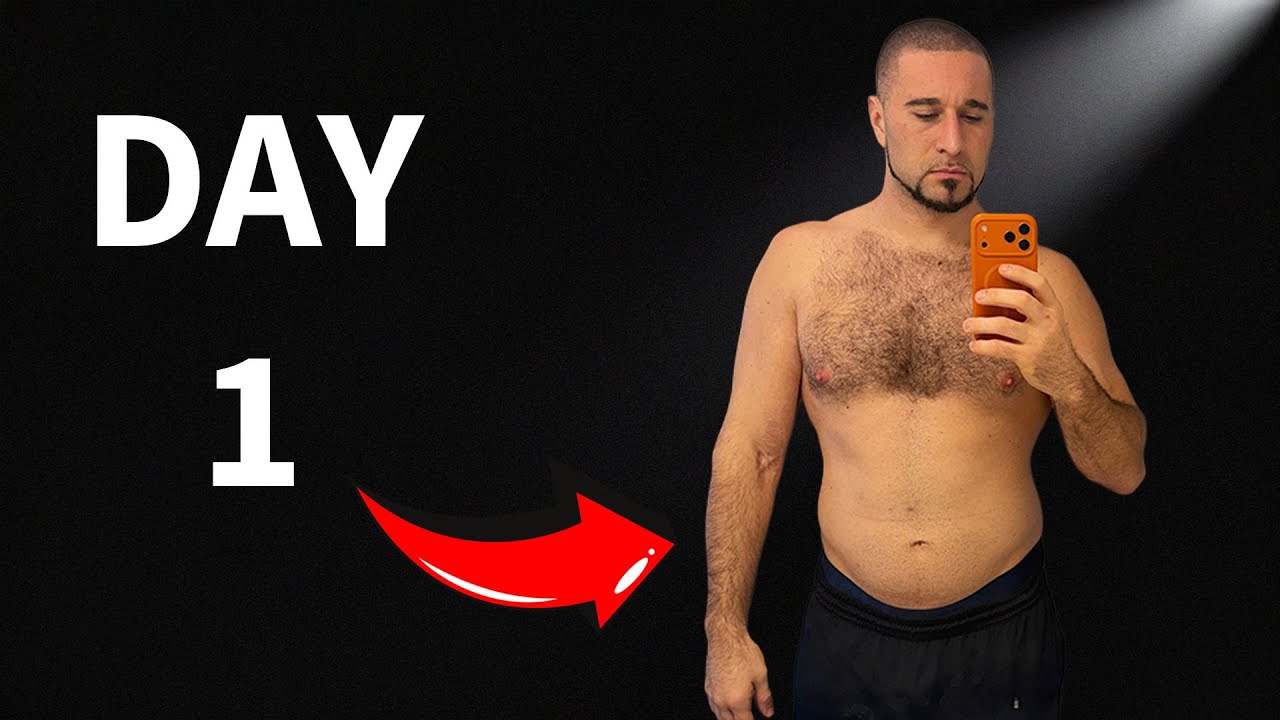
In this introductory video, Eric Roberts outlines his 10‑week personal fat‑loss experiment designed for an upcoming trip. He starts by sharing his baseline metrics (254.6 lb, 6'4", ~18 % body fat) and past experience with rapid weight loss that caused poor performance, hormonal issues, and food anxiety. His primary goal is a sustainable loss of 1–1.5 lb per week, targeting ~240 lb while maintaining strength, energy, and quality of life. He presents a five‑lever system to achieve this: (1) Calories – reducing from ~3,000‑3,500 kcal to 2,600‑2,700 kcal, tracked with a food‑scale and his Clubhouse app; (2) Protein – setting a minimum of 200 g/day (≈0.7 g per target‑body‑weight pound) while allowing carbs/fats to flex; (3) Strength training – a 4‑day upper/lower split with progressive overload, heavy loads (5‑12 rep range), and program details delivered via the app; (4) Cardio – primarily low‑stress Zone 2 sessions (2‑4 × week) plus occasional HIIT circuits, used for heart health rather than fat loss; (5) Daily steps – establishing an 8,000‑step floor (aiming for 10,000) and front‑loading walks to ensure consistency. He explains how he will monitor biofeedback (sleep, energy, hunger, workout performance) and adjust calories, cardio, or steps weekly while keeping the overall goal unchanged. Tracking includes daily weight, bi‑weekly measurements, and monthly photos, all logged in the Clubhouse app, with optional coaching support. The video serves as a transparent plan that viewers can copy or adapt for their own calorie‑deficit journeys.
Chapters
For the next 10 weeks, I'll be putting myself through a calorie deficit. I'll show you the exact calories, workout routine, and cardio routine that I'll be following. The goal? To lose some body fat for an upcoming trip I'll be taking to Turks and Caicos without over-restricting my foods, ruining my workouts, or not being able to live life. This video is week 0 of a 10-week series. Every week I'll update you with my weigh-ins, my progress pictures, the workouts I did, what I changed, what I adjusted, and I'll be tracking everything inside of my Clubhouse app. If you've ever wanted to see a fat loss coach actually walk the walk of a calorie deficit, this is it. In fact, you could even start your own and copy my plan exactly for yourself. So let's talk about where I'm starting from with my body weight, body fat percentage, and what I'm doing now. At the time of this video, I weighed in at 254.6 pounds, and for reference, I am 6 foot 4 feet tall. My rough body fat percentage estimate is around 18%. This is what my current front, side, and back progress pictures look like unflexed, and this is what they look like flexed. There is a difference, and over the course of the 10 weeks, you're going to see a difference with the flexed and unflexed as well. Currently, I strength train 4 times per week. I do 1 day per week of a dedicated cardio workout. I hit around 6,000 to 8,000 steps per day and currently eating around 3,000 to 3,500 calories per day with at least 250 grams of protein per day as my maintenance calories. And I know you're probably like, what the hell? That is so many calories. That is the perks of being 6'4, 250, with I think a little bit of muscle mass at least. So as you can see, I'm not starting from being obese, but I'd say this is the higher end of the body fat percentage I would like to be around. And before I show you exactly what I'm changing to my plan, let's talk about the goals and the expectations I have for this calorie deficit phase. As weird as this may sound to you, my goal is to not Lose weight too quickly. And you might be thinking, why not, Eric? That doesn't make any sense. Well, last year I did a calorie deficit phase similar to this and ended up losing about 2 to 3 pounds per week. It sounds cool, but trust me, it wasn't. I had terrible workouts. I fucked up my hormones. My energy and libido were next to nonexistent, and I just felt awful. Not to mention, I was starting to get a lot of food anxiety. Because my calories were so low to lose weight that quickly, I had constant food noise. I was almost afraid to go out to eat with friends or family because I thought it was going to ruin all of my progress. And last but not least, when I finally got to my final look, at that time I was weighing around 220 pounds. And for me personally, I thought that was too skinny and I didn't even like the way that I looked. So this year I'm looking to lose about 1 to 1.5 pounds per week on average. This would put me around 240 pounds, which is where I'll be looking to get down to. Now beyond that, my secondary goals while losing fat are still lift heavy and push myself in my workouts. We'll talk about that in a second. Be able to recover from my cardio sessions and not feel like death the rest of the day and not feel over-restricted. Or like I can't still enjoy my life because my calories are too low. This is exactly how we coach our members in my Clubhouse app, and this is the same approach I want to take as well. Now let me show you exactly what changes to my plan I'm going to make to get into this calorie deficit. There are 5 simple levers I am going to pull to create my plan. Lever number 1, Calories. Like I said, I was eating 3,000 to 3,500 calories per day maintaining my weight. Per my Clubhouse app, because I put in all of my starting information— my weight, my height, my activity level— I'm getting my daily calorie intake set up around 2,600 to 2,700 calories per day. And that's in order to lose roughly 1 pound per week. And yes, I know it's a lot, but again, I'm 6'4, 250 pounds. I'll be using a food scale to weigh out my food and track my calories inside of my Clubhouse app because I built a calorie tracker with a barcode scanner inside. If you want access to my Clubhouse app to use the same one that I am using to get set up with a plan, you can click the link in the description below of this video. Now, this is just a starting point, and I very well may need to make adjustments to my calories along the way depending on my energy, my mood, my recovery, my hunger. We'll talk about exactly what adjustments I might make a bit later in the video, and I'll show you exactly what those adjustments are going to be on a week-to-week basis. So remember, feel free to hit subscribe and turn on the notifications to my channel so you can get updated every single week. Now, within my calories, that brings us to lever number 2. Along with my calorie intake, I will be tracking my protein intake. I was eating 250 grams or more of protein per day, and that's just because, quite frankly, I love eating protein, but with the decreased calorie intake, I'll likely have to decrease my protein intake a bit as well. Right now, my Clubhouse app is calling for around 200 grams of protein per day. So as long as I hit that as a minimum, I'll be happy. A lot of people think you need to eat at least 1 gram per pound of body weight in protein, and that's just not true. The minimum that research shows for your daily protein intake is take your goal body weight in pounds and multiply that by 0.7. That should give you your minimum daily protein intake. So technically, if I want to weigh 240 pounds and I multiply that by 0.7, technically 170 grams of protein would be enough to still keep and/or build muscle. Now personally, I like eating protein, so I'll go a little bit higher than that. And this will ensure I'll not only keep muscle, maybe even still build muscle slowly. And a high protein intake also allows you to stay more full and it allows you to keep your metabolism high. So even as I decrease my calories, my metabolism will stay high. And because I'm more full, I won't be tempted to overeat. And now you may be thinking, okay, Eric, you're tracking your calories and protein, but what about your carbs and fats? Well, I'll track those inside of my app, but I'm not really gonna worry about them or set a goal for them because research shows if your calories and your protein are equal, your carbs and fats can be variable and you're still going to lose the same amount of fat. And if you think about it, what I teach our members inside of our app is if you hit your calories and hit your protein goal, there's only so much room to then go around for carbs and fats. So typically your carbs and fats will just fall right in line where they need to be. Our Clubhouse members find this incredibly helpful because they only have to really track and worry about 2 things as opposed to 3, 4, or 5 things with their nutrition. Now that I have my calorie and protein goals, the next is going to be the foundation of my exercise, strength training. A huge mistake people make when they're trying to lose fat is either only doing cardio because you think you're going to lose weight faster that way, or lifting weights but doing too much, lifting 6 to 7 days per week. And this is hard because in a calorie deficit, you're already intaking fewer calories, which is fewer and less energy. Less energy means it's harder to recover from the workouts that you're doing and have energy from the workouts you need to do. Plus, you're not going to build a ton of muscle in a calorie deficit, Especially if you're more an intermediate or advanced trainee like myself. Maybe if you're a beginner, you'll still be able to build some muscle, but the more advanced you are, the harder it gets. So trying to do a ton of workouts or a ton of high volume, a ton of reps and sets in your workouts usually backfires by making you more exhausted. You have more cravings and hunger because your body is trying to recover, and overall you have less energy less willpower. You're not able to stick to your diet as well. You're not able to push yourself as hard in your workouts, and you just feel like shit. And again, that's what I'm trying to avoid. So instead, I'll be continuing to lift weights 4 times per week, following a lower body, upper body workout split. And I'll be following an exact program that I have inside of my Clubhouse app, where it's going to tell me exactly what exercises to do, how many sets, how many reps, all the form videos. I'll track my workouts on a week-to-week basis. Everything will be inside of there to take out the guesswork for me. And each week I'll try to progressively overload, either trying to add at least one extra rep than what I did last week, or if I can lift heavier weight, I'm going to try to lift heavier weight as well. And I'm still going to try to lift heavy within that usually 5 to 12 rep range. Another mistake people make when they're trying to lose weight— you think doing high reps and light weight is going to tone your muscle. No. I want to continue to lift heavy because even if I don't build a ton of muscle, lifting heavier signals to my body we have to keep the lean muscle that we already have. We cannot lose it. Again, this keeps your metabolism high and it gives you that lean defined look that you want when you want to lose fat in the first place. Like, you don't just want to see a lower number on the scale, you want to look a certain way. You want to look good naked. At least that's what I do, and that's why I'm doing this. So you should still be trying to lift heavy and push yourself in your workouts. This is also why I'm not going to go too low in my calorie intake. Otherwise, I wouldn't be able to keep pushing myself In my workouts. And again, if you're like, damn, I wish I had an exact workout program to follow, you can when you join us inside of my Clubhouse app. There will be a link in the description below to learn more about our app. You can start your journey with me. Now that we have strength training covered, let's talk about the cardio that I'll be doing. Now let me be clear, for weight loss, cardio kind of sucks. Why? Because it takes 50 minutes to burn 500 calories. It takes maybe 5 minutes or less to eat 500 calories. The math is never gonna work. Plus, usually the more cardio that you do, especially the more high-intensity cardio that you do, the more hunger and the more cravings you are going to get. This makes it exponentially harder than what it already is To stick to your calorie deficit. So I'm not going to do cardio to help with my fat loss, although yes, it may burn some extra calories. I want to continue to do cardio for my heart health and my cardiovascular fitness. The main form of cardio that I will be doing is something called zone 2 cardio. This is cardio where you can maintain a conversation without gasping for breath. And this cardio is great while in a fat loss calorie deficit phase because it does not add stress to your body, it does not add hunger or cravings to your body, and it prioritizes fat burn when you're doing it. And this form of cardio can be done anywhere. It could be an incline treadmill walk, it could be outside walking with a weighted vest, which I will be doing some of, it could be the rower, it could be swimming, it could be a light jog. Anything. Just pick the form of cardio that you hate the least. And I'll usually do 2 to 4 dedicated sessions of zone 2 cardio per week, usually on the bike or the incline treadmill. Like I said, I'll also be getting some of my daily steps walking with a weighted vest, and we'll talk about daily steps in a second. But the other form of cardio I'm going to be doing is something called HIIT workouts. And you may have seen this before, you may have not, but essentially this is just like, I'm gonna run for 500 meters, and then I'm gonna ski erg for 500 meters, I'm gonna do the rower for 500 meters, and then I'm gonna do wall balls and sled pushes. So it's kind of like a circuit cardio routine, and this cardio will be a mix of zone 2, zone 3, And maybe even some zone 4 cardio. And again, the higher the zone, the more intense the cardio is, aka the higher the heart rate and the harder it is. Now to note, this is going to burn some extra calories. And like I mentioned earlier, I may need to tweak my initial calorie intake because if I'm finding that because I'm doing this extra cardio, I'm hungry, I'm tired, it's really hard to stick to my diet, I'm gonna need to adjust my calories. So it's something to be on the lookout for in the upcoming videos. So now that we have cardio, there's one final lever that I'm gonna pull, and that lever is gonna be daily steps. If you remember, I was getting 6,000 to 8,000 steps per day. So now I'm gonna make it mandatory that I have a floor of 8,000 steps per day, and I'll try to get as close to 10,000 steps as I can, but I won't make 10,000 steps per day the floor. And what does this mean when I say floor? Well, most people set goals and they're like, I'm gonna walk 10,000 steps per day. And that's a great goal to have, but that is like your ceiling. What is your floor? What is no matter what, even on days I don't feel like it, even on days that are busy and I'm stressed, what am I gonna do as a bare minimum no matter what? And so my floor, it used to be 6,000 steps per day. Now that I wanna go into this calorie deficit and I wanna burn a bit extra calories, setting my daily step floor at 8,000 per day. I don't care what else is going on, if it's snowing outside, if I have a crazy busy day at work, I have to get 8,000 steps per day. If I go up to 10,000, I'm a rockstar, but the floor is 8,000. And I would encourage you to don't just set a ceiling goal, Set a minimum floor no matter what. And a big part of me hitting this daily step goal is going to be getting early walks in the day, front-loading my day with steps, because I don't know about you, but especially now that it's in the winter and it's getting darker in a lot of places, it gets dark at fucking 5:00 PM. When 6:00 PM, 7:00 PM, 8:00 PM rolls around, I'm tired. I really don't want to go get a ton of extra steps. So if I'm at 2,000 steps per day and it's 7:30 at night and I got to go walk 6,000 steps to hit my goal, that's gonna suck and I don't want to do that. So what really helps me is trying to front-load my day with steps, making sure I'm either up walking around my house or I get outside for at least a 10 to 20 minute walk. This will set it up so that I find an easier time throughout the day hitting my daily step goal. But here's the thing, just setting up these 5 levers really isn't the hard part. Adjusting along the way when I need to is. And let's talk about how we do that now. Each week I'm going to review my progress and my biofeedback. And biofeedback just means Sleep, energy, hunger levels, workout performance. I'm going to assess what's working, what isn't working, and make the adjustments necessary to keep making sustainable progress without hating my life. Because anybody can white-knuckle their way through to see some short-term progress, but it's only going to last for so long. I want this calorie deficit phase to be steady, Sustainable, and like I said, feel as good as I can. So as an example, if I'm finding myself feeling tired, lethargic, not being able to progress in my strength training workouts, really hungry, I might have to make an adjustment of increasing my calories by 200 per day, or maybe just increasing my calories on workout days so I can have a bit more energy. And vice versa, if I'm finding that maybe I'm not losing a pound to a pound and a half per week. I'm going to have to assess and look at my cardio. Maybe I have to add in more cardio. Maybe I have to decrease my calories by 100 calories per day. So my plan may need to adjust, but my goal won't. And the same goes for you. If something isn't working, don't change the goal, change the plan. And so every single day I'm going to track my body weight. I believe tracking body weight every day is the best way because you get more data. I don't care what I weigh on December 2nd versus December 5th, but if I can get 31 data points in the month of December, I can see where my body weight is trending overall versus if I only took it once per week, I would only have 4 data points to look at, and that would give me less of an overall picture of where I'm trending. Then I'm going to take measurements every 2 weeks, primarily my waist measurement, and I'm going to take progress pictures every 4 weeks because week to week you're not going to see that much of a difference in your progress pictures. So we encourage our clients inside of our Clubhouse app to take their progress pictures every month, and that's what I'll be doing as well. And again, everything I'm using to create my plan— my workouts, my calories, my protein, my steps, cardio, tracking body weight, tracking measurements, All lives inside of my Clubhouse app. So if you want to follow an exact plan and have everything in one place, click the link in the description below to learn more about my Clubhouse app. You can even get one-on-one check-ins with a coach on my team if you upgrade to the one-on-one coaching aspect. So I will see you next week for my first update to let you know how everything went. And in the meantime, you can check out this video here to learn my 29 best cheat codes when you go into a calorie deficit phase.










