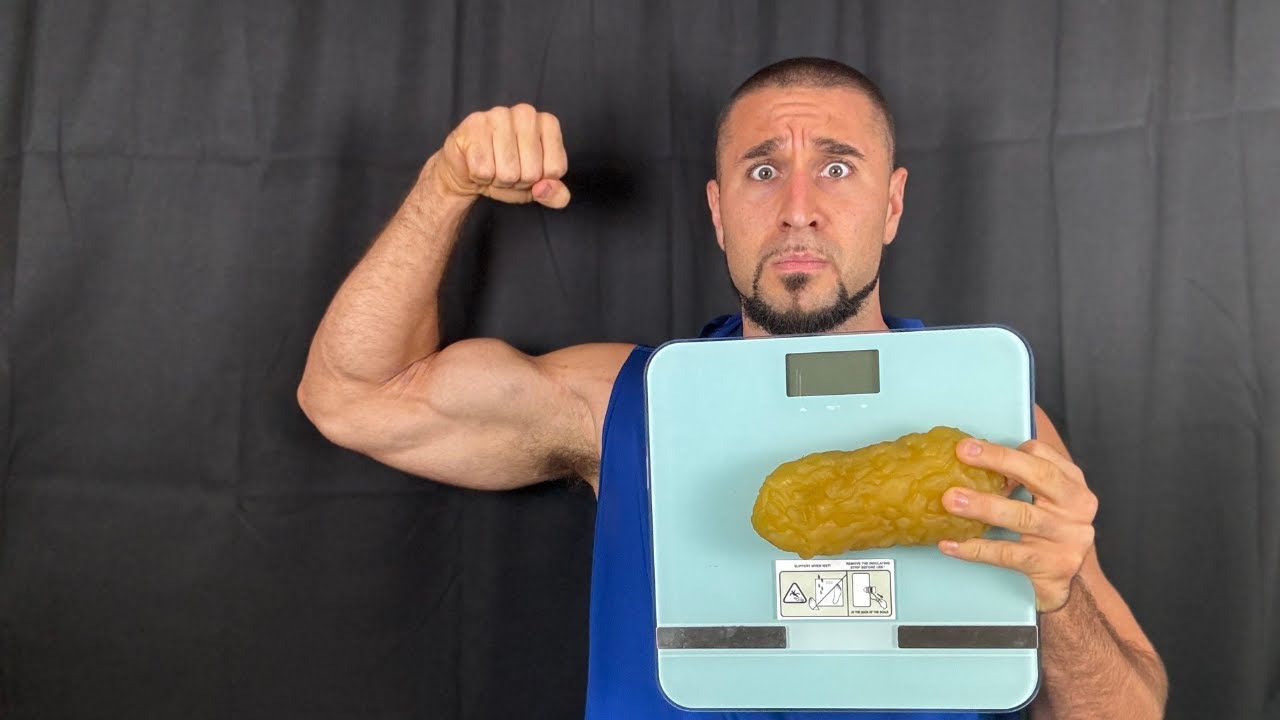
In this video Eric Roberts explains why people who start lifting weights often see the number on the scale stay the same or even rise despite trying to lose weight. He first clarifies that the scale measures total body mass—not just fat—and that water, bone, and muscle all affect the reading. He then outlines three short‑term physiological reasons for a stagnant scale: (1) increased glycogen storage in muscles, which brings extra water weight; (2) post‑workout inflammation and muscle damage, which also traps water; and (3) the density difference between muscle and fat, meaning you can lose a pound of fat while gaining a pound of muscle with no net change on the scale. Roberts emphasizes that as long as you remain in a calorie deficit you will continue to lose body fat, even if the scale doesn’t reflect it immediately. He advises using better progress indicators—clothing fit, photos, and body measurements—and explains that heavier individuals typically see scale drops after 4‑8 weeks, while “skinny‑fat” people may experience body recomposition where the scale stays flat but the physique improves. He ends by urging viewers not to panic, to stay consistent, and points them to a free calorie‑deficit calculator in the video description.
Chapters
If you started lifting weights but you're trying to lose weight and the scale isn't going down, then here are 3 reasons why and how to fix it. Now, before we get into the reasons why, I want to remind you of something. You want to lose fat. You do not just want to lose weight on the scale. And let me explain what I mean here. Let's say, for example, I drank 16 ounces of water and then I went ahead and stepped on the scale. The scale would be 1 pound heavier because 16 ounces of water equals 1 pound. Did I gain a pound of fat? This is actually a pound of fat. No, I just have 16 ounces or 1 pound of water now in my system. The same thing applies for if, let's say, I used the potty and I peed out the 16 ounces of water. The scale is going to go down a pound. Does that mean I lost a pound of fat? No, it's just water weight. So remember, the scale measures more than just how much fat you have on your body. It measures water weight, it measures bone density, it measures muscle mass, which we'll talk about in a second. It measures everything. And you don't just want to lose weight, you want to lose fat because you want to be healthier and look good naked, correct? That's what I thought. Now let's get into the 3 reasons why, if you're lifting weights, the scale might not be going down right now. Reason number 1, when you're lifting weights, your muscles— this is 1 pound of muscle— Your muscles are going to store more of something called glycogen. I just want you to think of glycogen as like energy for your muscles, because what happens is your body basically says, okay, we are now lifting weights and we're using this energy. We have to be ready. We have to be prepared to be able to use this energy, which is in the workouts. You're using the energy in the workouts. And so your body says, We got to store a lot of this energy. The main way you're storing glycogen is from carbohydrates. So when you eat carbohydrates, you are going to store more of this glycogen in your muscles, which is a good thing because it allows you to work out. It allows you to push yourself. It allows you to get stronger and build muscle and do all the great things you want to do. But when you have this more glycogen stored inside of your muscle, remember what we talked about. This Scale right here, this scale measures more than just how much fat is on your body. So when you are storing more glycogen in your muscles, you are going to store more water weight along with that. Now again, this is not a bad thing because this is what allows you to get stronger and have really good workouts. But storing this extra glycogen in your muscles is going to have a short-term effect On the scale, where you might not be losing as much weight on the scale because of the water weight. It is not because you're not losing fat, or God forbid, you're gaining fat. And now let's just say you are still eating in a calorie deficit and you're like, Eric, I should be losing body fat because I'm eating in a calorie deficit. You— here's the thing, you will still be losing body fat. So as long as you're in the calorie deficit, You will be losing body fat regardless. Now again, it just may not show up on this scale right now for you because of this short-term water weight, but it doesn't mean you're not losing fat. All right, now the second reason: when you work out, you are actually going to create damage to your muscles and you are going to be breaking down your muscle fibers. I know this sounds kind of weird, But stick with me. Most people think that you build muscle when you're inside of the gym doing your workouts. It's not when you build muscle. In the gym, you break down your muscles, and then after you break down your muscles, you recover from it, and then your body actually builds, recovers, and builds muscle outside of the gym, outside of your workouts. So that's what happens, but in the short term, if you are breaking down and damaging your muscles, what's going to happen is, you guessed it, you are going to be storing some short-term water weight due to the inflammation inside of your muscles. If you ever had like an injury, like let's say you had like an ankle, you rolled your ankle, your ankle swells up, or when you have an injury, something swells up on your body. That is the inflammation inside of your body. Within that inflammation, there is a lot of nutrients and there is a lot of water that is being stored. So if you're breaking down your muscles working out two, three, four, five days a week, there is going to be some short-term water weight that is being stored, and this is normal. Again, this has nothing to do with you losing or gaining fat because again, as long as you're in a calorie deficit, you will still be losing body fat. It just may not reflect. reflect on this scale right away because of this inflammation in your muscles. Which, if you take the glycogen from the last point and the inflammation from this point, your scale— you could easily be storing 2, 3, 4, 5 pounds of water weight easily. And once again, this has nothing to do with you losing or gaining fat. And again, if you're in a calorie deficit, you will still be losing fat. It just might not show up right now. All right. And reason number 3, you may have heard before, muscle weighs more than fat. If you've heard this, that is not actually accurate. And let me show you and explain what this means. What people actually mean is the composition of muscle and fat are different. If let's say you had a pound of feathers and a pound of bricks, both of those things are going to weigh a pound on the scale, The composition is different. Let's look at 1 pound of muscle, and you're looking at 1 pound of fat. Do you see how muscle is more dense than fat? Meaning it takes up less space on your body. Also, you can see the muscle is kind of like hard, whereas the fat is kind of like squishy. The composition of muscle and fat is different, but they both still weigh a pound on the scale. So if let's say you lose 1 pound of fat, but you gain 1 pound of muscle, the scale— oh, the scale is not going to change on the number because you lost a pound and gained a pound, but you essentially quote unquote replaced a pound of fat with a pound of muscle when it comes to the scale. And this is why if you now combine the water weight from the glycogen and the inflammation, plus the fact that you easily could be gaining muscle, this number on the scale is not going to change that much. But this is why if your clothes are fitting differently, or maybe your progress pictures and your measurements are looking different, or if people are telling you that you look different, this is a better indicator of if you are making fat loss progress while also building muscle at the same time, because this number on the scale is not going to tell the full So how do you fix if the scale isn't going down? Well, you don't, because even if the scale isn't going down, you are still doing the right things. And 2 last points for you: if you're somebody who's 30, 40, 50+ pounds overweight, as long as you continue to eat in a calorie deficit, you will see this number on the scale go down, usually after about 4 to 8 weeks. The clients that we coach inside of my Clubhouse, which is just my online coaching program, usually start to see their scale drop if they're in this situation after about that 4 to 8 week mark. Or if you're somebody who is skinny fat, maybe where you don't have, you know, 30, 40, 50 pounds to lose, but you just don't look the way you want to look, you are going to end up doing something that we call body recomposition, which is just losing fat and building muscle at the same time, meaning your scale might not change much, if any at all. Because if you're losing 1, 2, 3 pounds of— 5 pounds of fat and you're gaining 1, 2, 3, 5 pounds of muscle, your scale is not going to change but you will look different. And that's what you want. Remember, you don't want to just lose weight on the scale. You want to lose fat and you want to build muscle. You want to look good naked, have a great life, be healthy, do all the cool things, alright? So, I want you to please stop freaking out. Please keep going. I know I mentioned a calorie deficit a few times. If you don't know what your calorie deficit number should be, there's going to be a free calorie calculator in the description of this video. Go down below, check it out, and I hope this helped.