Live Fat Loss Q&A (No BS Advice)
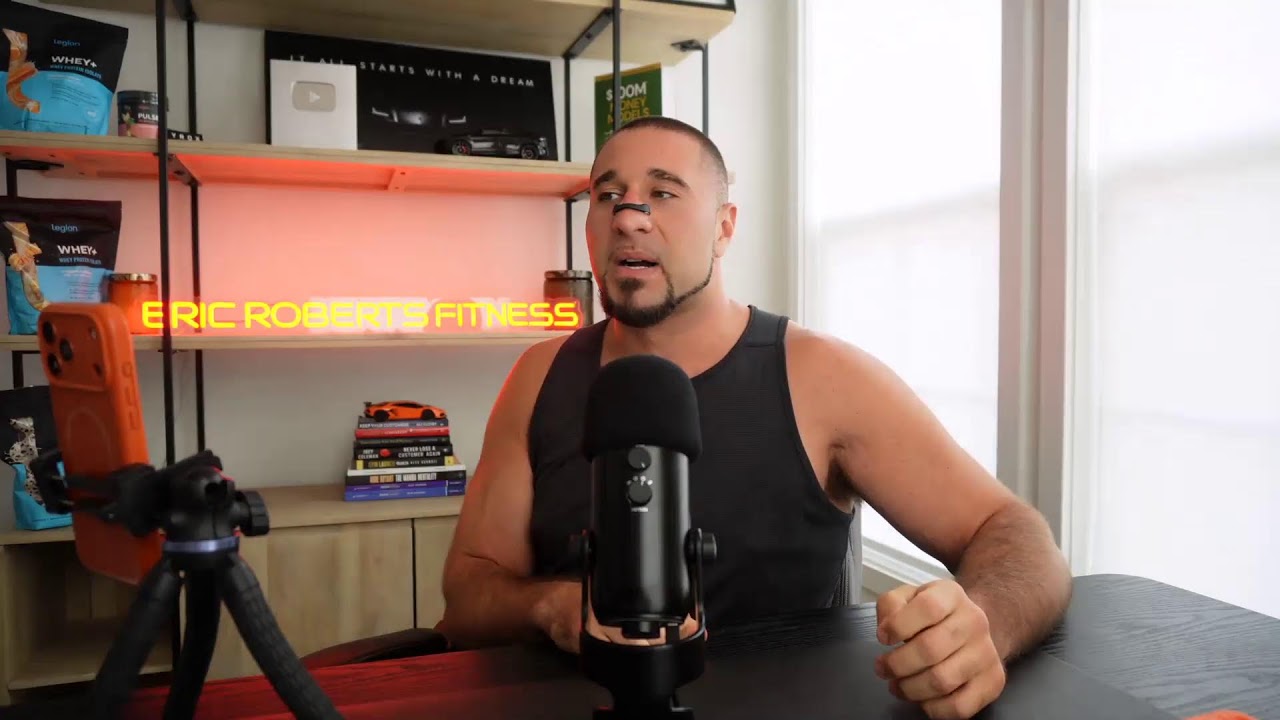
In this hour‑long live session, fitness coach Eric Roberts fields a rapid stream of questions from YouTube and TikTok viewers, offering blunt, no‑nonsense advice on fat loss, nutrition, and training. He emphasizes that sustainable weight loss hinges on behavior change rather than information alone, urging viewers to adopt consistent calorie deficits, prioritize protein, and lift weights close to failure while avoiding overly restrictive diets. Roberts critiques fasting for hunger control, recommends frequent protein‑rich meals, and suggests practical tactics to curb sweet cravings, such as post‑meal walks and ensuring adequate protein, calories, and fiber. He outlines exercise programming, contrasting group cardio‑heavy classes like Orangetheory with dedicated strength training, and shares his own HYROX‑style split (lower‑body, upper‑body, cardio days) as a template for hybrid runners. Nutritional nuances are covered, including the impact of different whey protein types on bloating, the role of FODMAPs, and why low‑carb to carb transitions cause temporary weight gain due to glycogen and water storage. Roberts addresses common pitfalls—plateaus, prolonged diet breaks, and the dangers of rapid‑weight‑loss mindsets—advocating modest, steady deficits and gradual macro adjustments. He also discusses diet trends (carnivore, keto) and why they’re often unsustainable. Throughout, he promotes his proprietary 90‑day Clubhouse app and 8‑week Fat Loss Challenge, positioning his coaching as a solution for accountability, mindset work, and personalized programming. The session ends with a candid warning about the “yo‑yo” cycle of fast weight loss, urging viewers to adopt a long‑term, realistic approach and consider his coaching services.
Chapters
All right, all right, all right. What is going on, YouTube? Hope you guys are having a great Weekend thus far. Those of you who are joining, welcome in, welcome in. Give me a second to getting this party started. What's up? All right, we're rocking and rolling, we're rocking and rolling. Let's go. Let's go. Happy Sunday to those of you who are joining in. We got a Q&A that we are going to rock out here in a second, so if you do have questions and you're joining live— what's up, YouTube? Hope you're having a great Sunday. If you have questions and you're joining live, go ahead and drop those questions down in the chat. Be more than happy to answer any questions you have, and I'm also going to be pulling from TikTok. So if you see me looking down at my phone, then I'm also going to be pulling some questions from TikTok. So hope you guys are having a good weekend thus far. All right, uh, Dassel says, love your content. Thanks, man. Would love tips on staying consistent in a calorie deficit. Well, give me why you fall off So I don't just give you general tips. So why are you not consistent in your calorie deficit? Is it you're hungry? Is it you don't like the foods? Is it going out to eat? There's a reason that you're not being consistent. I need to know that so I can help you to the best of my ability. All right, what is going on, guys? Welcome in, welcome in, welcome into the live here. If you're on YouTube Live, thank you so much. If you're on TikTok, Welcome in. Please drop any and all questions below and, uh, looking to help as best as I can. Uh, is that a movie? Or Legally Blonde is a movie. Uh, just saying hi, you're hilarious. I lost over 170 pounds. Wow, that's incredible. Congratulations. Uh, hunger and fasting. So you don't need to fast. So that would just be my number one thing for you if you are somebody who's trying to fast. and you're dealing with a lot of hunger, just stop fasting. Just eat more frequent meals throughout the day, especially meals with protein. You'll be more full. You'll have better muscle protein synthesis. You'll be able to recover and build more muscle, and you'll typically stick to your calories a lot better versus trying to fit it in 1 or 2 meals throughout the day. So I would just tell you just to, uh, just to not fast. All right, what's going on? What's going on, guys? What's going on? Happy Sunday! Hope everybody's doing well. Gonna get a little Q&A going here. Uh, TikTok Live in Love, hello, how are you? Happy Sunday. Mario, I eat 30 minutes later and then I want something sweet. So if you are somebody who eats and then you immediately want dessert or something sweet after, I got a couple things for you. Number one, just so you know, I am also like this. I am somebody who I love my sweets. I love my ice cream. I love my chocolate. Like, I just like, I like sweets. So I would strongly encourage you, once you get done your meal, set a timer on your phone, get out of the kitchen, get out of just like going to watch Netflix and just go do something for 10 minutes. This is why I really like having a 10-minute walk after meals. Because not only will it physiologically help you with things like blood sugar, insulin, but it also just gets you out of the kitchen and it gets you out of thinking about food. So if you can go take a 10, 15-minute walk, I'd strongly recommend that. Now, number 2, if you do that consistently and you're still like really, really craving sweets, that would tell me you're either A, doing too much exercise. It sounds crazy. You're thinking, how does this correlate with exercise? But If you can't recover from exercise, then your body is going to crave carbs and especially sugar because that would mean your muscles are using up all of your carbs, your carbs are constantly depleted, and your body's always trying to replenish those. So that would be the first thing. And the second thing is you're probably just not eating enough protein and/or enough calories. Because if you're under eating protein and calories, You could have the cleanest diet in the world, but you're still going to be really hungry, especially for sweets. And then I would probably throw in there too, fiber. So protein, calories, and fiber. Those are the 3 kind of main things that we focus on with our online coaching clients to get them to stay more consistent in their calorie deficit. What's going on, guys? Happy Sunday. If you are joining on TikTok Live, welcome. If you're on YouTube Live, welcome. I'm going back and forth answering questions for the next hour or Or so. So, uh, we'll rock and roll on this. Okay, let's go. Uh, Chrissy asks, I started Orangetheory in May and feel better. Is it the best option for a 43-year-old woman who's trying to get back in shape? So number one, congratulations on getting back into exercise. By far the most important thing here, and it clearly sounds like you're staying consistent with it, which is incredible. So kudos to you. Now, number 2, is it the best? The best would depend on what your goal is. So if your goal is just to be consistent with exercise and that's it, that's awesome. Then you should be like patting yourself on the back. But if your goal is to lose fat, to build muscle, to lower your cortisol, to recover properly, to increase bone density, I recommend in what we program, like if you were my client, Here's how I would program for you. Number one, you'd probably have 2 to 4 dedicated strength training days. Orange Theory is more like you kind of combine cardio and weights. And I know there's like different stations, but the way they do weights is still cardio, even though you're lifting weights. So you would have 2 to 4 days a week of dedicated strength training. These are like you're lifting heavy for 5 to 10 reps. You're resting for 90 to 180 seconds in between your sets. And you're trying to practice progressive overload on basic compound movements. And then we would work in cardio. And this cardio could be, depending on your goals, an incline treadmill walk after a workout. It could be walking on rest days. If you do like running or you like cardio, maybe it's a spin class here and there or a run here and there. So it would depend, but we would program it separately. So strength training, cardio, we wouldn't combine the two because when you try to combine the two, you really just suffer from— you suffer on the weightlifting and muscle building side of things because you're never going to be able to have proper rest, recover enough to be able to build the strength and the muscle that you're looking to build. So that's how I would personally recommend. That's how we coach our online coaching clients is by setting something up just like that. Again, You might be like, hey, fuck off. I love Orange Theory and you keep doing it. That's totally fine as well. Who is some stranger on the internet to tell you otherwise? But that is my 2 cents. All right. Going to a question from TikTok here. Melodos says, you've tempted me to tap into HYROX, but I'm not physically there yet. Well, this is good for everybody. I wasn't physically there either. I started really taking my cardio. So for those of you who don't know, I am doing HYROX races. And so what a HYROX is, you run 0.62 miles and then you do a 1,000-meter ski erg, and then you run 0.62 miles, you do a sled push, run again, sled pull. So it's like you run, you do a station, you run, you do a station. So I didn't do any cardio before January of this year. Really, it was only this year where I actually dedicated myself to doing some more cardio. And like, I've been able to make really good progress with it. So you're not physically there yet. How are you ever going to physically get there unless you start? Nobody starts there. Nobody starts like perfect with it, but you have to start to get there. That's like saying, I'm going to wait to save money until I'm rich. You don't get rich without saving money. You have to save the money first. So I would just say you got to start, man. And the next person asked me, I'm trying to become a hybrid runner. How often should I go for runs? So again, if you were my online coaching client, the way I like to program this is it really is dependent on your goals and how many calories you're eating, but a rough range— actually, I'll give you what I'm doing. So right now, let's just take my week's worth of workouts. On Monday, I'll usually do Lower body. If I feel like I have the energy, I'll throw in like some 0.62-mile runs at the end, but maybe 2 to 3 max, nothing crazy. Tuesday, I'll do upper body and I will run after my upper body day because I'm trying to improve my run time. Wednesday, I'll do a full cardio high rocks day. So this might look something like I'll do a run and then I'll do the SkiErg. I'll do a run and then I'll do the rower. I'll do a run and I'll do walking lunges. And that might be like my cardio day. Thursday, I'll do lower body again. Friday, I'll do upper body with runs. And then Saturday, I'll probably do another cardio day. And this might look something like runs, wall balls, run, rower, run, and a farmer's carry. Like all those things are kind of specific to the HYROX, but I'm just giving you examples. So running Maybe 2 to 3 times per week and then doing your lifting 2 to 4 times per week as well. And again, everybody's different, but that would be a good range to start with. And I'm going to come back over to YouTube Live and kind of get some more questions here. Should low carb diet and fasting be done while pregnant? Check with your doctor. I don't know what's going on health-wise for you, but no, those do not have to be done while pregnant. Somebody asked, how do I deal with bloating? I feel like it's the extra protein. It could be the extra protein. Actually, if you want a really, really, really good podcast on this, I just released a podcast last Monday. The podcast is Eric Roberts Fitness Podcast, and it's titled Why Your High Protein Diet Might Be Wrecking Your Gut. For you, who's this? Envy. Or Evie, for you, Evie, please go listen to that podcast. Please. And if anybody here struggles with like bloating or their stomach, like, and you're eating these high protein foods, high protein diets, Eric Roberts Fitness Podcast, Why High Protein Diets Might Be Wrecking Your Gut. I would go listen to that because it could be. It could be the type of protein you're eating. For example, whey protein. There's different kinds of whey protein. There's a whey protein concentrate. And there's a whey protein isolate. The whey protein isolate is the cleanest, cleanest, cleanest, easiest to digest form of protein. And it basically strips all the lactose out of it. And especially if you get a grass-fed whey protein, very easy for your stomach to digest, not going to cause a lot of bloating. But if you get a whey protein concentrate, That's not as clean. It's not as easy to digest, and that can cause some bloating issues. And so that's why I personally use Legion Athletics for their protein powder. You can just head to legionathletics.com. You can use my code ERIC at checkout. I believe it'll get you buy one, get one half off on their website. But that's the brand I use. That's the brand I trust. And then also, for high protein snacks and cookies and this, that. A lot of these high protein snacks will have a lot of artificial sweeteners. It'll have a lot of emulsifiers. It'll have a lot of these ingredients, sugar alcohols, that may cause extra bloating. So this is why you have to be mindful of the foods that you're consuming as well, not just like, oh, high protein. Like, yeah, we should be eating high protein, but we should be trying to prioritize nutrient-dense whole foods. And the last thing I'll say with protein and bloating, if you rapidly increase your protein intake all at once, that is usually going to lead to some gut health issues as well. So there was a lot there, but feel free. Okay, going over to TikTok Live, going over answering some questions. Somebody says, I love your content. Thank you so much. I appreciate that. Let's go. Let's go. Let's go. If I weigh 270 pounds and don't work out, what's the first move to get fit? Well, the first move would be go walk. Walking is the most underrated exercise for fat loss, for heart health, for longevity. You don't have to overcomplicate it. And the approach that I personally take with our online coaching clients that we coach in my program is we meet the person where they're at. So if this person, they're not lifting weights, they don't work out, we probably won't tell them, oh, go work out 4 times a week on a progressive overload strength training program. Like, if you can handle that, sure. But we might just say, hey, we're going to work out 1 time a week, full body, and we got to make sure we hit our steps every single day. Or someone else might come to us and they might be a bit more advanced and we might be able to say, all right, cool. We're going to do 4 times a week. We're going to do zone 2 cardio. We're going to walk with a weighted vest. We're going to dial in macros. It just depends on where you're at. But for you specifically, Jesse, 270 pounds, don't work out. Just start with walking. It's the easiest thing you can do. All right, let's go. A couple of other questions here. We got a lot of questions on both TikTok and YouTube Live. So doing the best that I possibly can to answer as many questions as I can, you guys. If I don't get to your question, I apologize. I'm not ignoring it. I'm just trying to get to as many as I can. Can. Okay. Question from YouTube Live here. Somebody asked me, I find it easy to go to failure when doing upper body, but find it harder for legs and lower body. Wow. It's usually the opposite for people. What is your advice for trying to hit close to failure on lower body? Thank you. Love your content. My advice would be the same for lower body or upper body, which is You have to intentionally safely go to failure. That's just the bottom line. Like, so for lower body, for example, this might look something like you're going to do a leg extension to complete failure. You're going to aim for your rep range you're supposed to do, but you're going to tell yourself, I'm not stopping until I physically cannot get the legs up or a leg curl or a hip thrust. Pick a safe exercise that you can go all the way to failure. We're like, what's the worst that's going to happen if you don't get your legs up on a leg extension, you're just going to drop the thing. Or if you don't get the weight up on a hip thrust, you just drop it back down to the ground. But you have to be able to— this is more mental than it is anything else. You have to be able to push yourself to failure, know what that feels like, to then be able to lift close to failure. And that goes for both lower body and upper body. So for those watching, an upper body example might be like a side lateral raise. You might be saying, okay, I'm going to do a side lateral raise to failure. I'm going to aim for 12 reps, but I'm just not going to stop until I get to complete failure where I can't lift my arm up. And you might end up doing 20 reps, for example, but you have to know what failure feels like to be able to go close to it. And that's the last thing I'll say. If you're somebody who's trying to build muscle, you don't need to go to failure. You need to go close to failure. 1, 2, maybe 3 reps shy of failure. You'll get the same muscle building. without as much systemic and local fatigue on your body. So that's what I'm saying. All right, let's go. Uh, popping over to TikTok Live. What's going on, guys? Happy Sunday. Somebody said I was 340 pounds. I followed you. I walked my ass off. Now I'm 262. Congratulations, man. That's awesome, man. That's so cool. Um, let's go, let's go, let's go. Congratulations. Um, Let's go. If I just want to lose fat and maintain muscle, shall I go close to failure? Yes. If you do not give your body a reason to maintain muscle, it will get rid of it. So think of your body like if you were paying $30,000 a month for a New York penthouse apartment. If let's say you were rolling in the dough, you make a lot of money, and all of a sudden You go broke. The first thing you'd probably have to do is downsize your apartment. That's like your body. If your body is not getting in the amount of calories it needs, it's going to look for places to decrease its energy expenditure. So muscle is very expensive and it's the first thing that will go when you're on a calorie deficit if you do not give your body a reason to keep it. Now, you could give it a reason by eating high protein. That's good. But even if you eat high protein and you don't lift heavy, which is the stimulus your body needs to build and keep muscle, it's going to lose it. So yes, you should still be lifting close to failure. All right, let's go. I'm going to go pop over to YouTube Live and do a question from YouTube Live here. Let's go. Hope everybody's doing super well, both on TikTok and YouTube Live. Somebody says, Eric, I love your content. I've lost 114 pounds. I use a GLP-1 but stopped due to price. Should I prioritize protein? I have a YouTube video coming out tomorrow about this exact topic. Funny enough you say this. And this is actually very, very, very common right now. People are— the amount of people who are taking GLP-1s are doubling every single year. And I don't give a fuck. I don't care if you take it, don't take it. It does not matter to me. But what's happening is a lot of people are getting it covered by their insurance, but then a couple months goes by, maybe they lose some weight, they're no longer in that insurance coverable range and they drop off. And so what happens? A lot of people are gaining a lot of the weight back and the weight they're gaining back is all fat. It's not muscle. It's all fat. So This is a big problem right now. And so again, I have a YouTube video coming out tomorrow on this, but a little sneak peek preview would be, yes, of course you have to prioritize protein. Yes, of course you have to still lift weights. And this is the thesis of my, personally, my entire online coaching business that I have built coaching people all across the world, which is We don't just want to lose the weight. We want to lose the weight in a sustainable way so we can keep it off forever. And you do that by changing your habits and behavior. Fat loss is not about information. Every single person here, you know what to do. You're not a fucking moron. You know to eat in a calorie deficit. You know to lift weights. You know to eat protein, but you're not doing it consistently enough. Why? That's behavior change. You need to change your habits and your behaviors to be able to do the things you know you need to do. So it's not just about information. And that's what I'll talk about in tomorrow's YouTube video. So stay tuned and check it out. All right. Going over to TikTok here, a couple of questions that they are asking. What's going on, TikTok? How are you guys? What's going on? How are you? Let's go. Let's go. Let's go. Happy Sunday, everybody. Happy Sunday. Okay, so is it— oh, sorry, I lost that question. Is it— oh, fuck. Whenever a question comes in, it moves the other one up. All your advice is always so generic. You should just leave the live, my friend. I think it's the absolute different thing from generic, but you're funny. Where did this question go? There it is. Is it okay to do 3 times a week full body strength training workouts instead of target areas? Well, so a couple of things here. You can't spot reduce fat. So even if you're doing a chest workout, that doesn't mean you're going to lose fat in your chest. Or if you're doing a glute workout, you're not going to lose fat in your glutes. What workouts do is building muscle. So you're going to build muscle in those areas. So if you're doing a row, you're going to build muscle in your back. You're doing a hip thrust, you're going to build muscle in your glutes. You can do full body compound exercises, for example, like a squat, a deadlift, a bench press, a pushup, RDL, lunges. Those are more of your compound full body movements, and you should be doing those. But that doesn't mean you also can't do a bicep curl to isolate your biceps or a tricep extension or a glute kickback or a shoulder raise. But just knowing that you're not doing those exercises to burn fat in those areas, you're doing those exercises to build more muscle in those specific areas. So if you're working out 3 times a week, you can do 3 times a week full body exercises, or you could do like what I program for our clients who work with us. Usually if it's 3 times a week, it's lower body, upper body, full body. And on those days, you'll have deadlifts and you'll have lunges and you'll have RDLs, but you'll also have a leg curl or a glute kickback if you want to work on your glutes. On upper body day, you might have a bench press and a pull-up and a row, but you might also have a side lateral raise and a bicep curl. So the answer to the question is like, You want to do all of it. It's not just one or the other, if that makes a bit more sense. Okay. Next question coming from YouTube Live. Somebody asked me, will I gain weight if I switch off keto diet I've been doing to regular lower calorie diet with carbs? Yes. You will gain weight in the short term. And here's why. If you are switching from a low-carb diet to a normal carb diet, your muscles store carbs as energy. So think of your muscles like a pillowcase with the pillow inside. When you're on a low-carb diet, you just have the pillowcase. There's no pillow inside. But when you start eating carbohydrates again, now you have the pillowcase and you're going to put the pillow inside of the pillowcase. And so now the pillowcase looks more full. That's what happens when you eat more carbs. But when you eat more carbs and they get stored more, your body has more storage inside of your muscles. And typically these carbohydrates are going to store a bit more water inside of your muscles as well. Which isn't a bad thing. This is not like bloating water weight storage. This is like if you were putting a pillow in the pillowcase. And so yeah, you will probably gain some weight on the scale, but you know what's going to happen? You're going to look more defined because visually imagine a pillowcase with no pillow inside versus a pillowcase with a pillow inside. Which one looks more full? Which one looks more defined? The pillow with the pillowcase inside. So you're actually going to look better. So you can't just go by a number on the scale. And on top of that, as long as in the long term you're in a calorie deficit, you'll lose body fat still. You might gain— you will gain more muscle and you'll store more carbs inside of your muscle, but you'll still keep losing body fat as long as you're in a calorie deficit. Now, I don't know your exact scenario. Like maybe you don't have much more weight to lose. Maybe you still have 100 pounds to lose. I don't know. But I do know when you introduce carbs back in, you're going to look better. You're going to feel better. You're going to have more energy in your workouts. You're going to be able to lift heavier in your workouts. So hopefully that helped you out. All right, guys, popping back over to TikTok Live here. Hope everybody's having a great day. Hope everybody's having a great day. Oscar, really quickly, Oscar asked, how do I inquire? about my online coaching. Well, if you're on TikTok, you can just click the link in my bio. Or if you're on YouTube Live, there will be a link in the description of the video below. Or just Google Eric Roberts Fitness 8-week challenge. It should pop up right there and give you all the information that you need. So hopefully that helps you. And I look forward to hopefully hearing from you soon, Oscar. Really quickly, guys, if you are on TikTok or on YouTube Live, Please do not ask the same question 20 times. It's really annoying for me and for everybody else. So please don't do that or you will be muted. Okay, wonderful. Let's go. Let's go. Happy Sunday. Jenny asked, is it possible to be in a calorie deficit for too long? I'm down 50 pounds, but my weight loss and fat loss has stalled. You are in a calorie deficit until you reach your goal body weight or your goal body fat percentage, I think is a better way to go about it. Now, there's a couple of things to unpack here. That doesn't mean that if you want to take a break along the way, this is called a diet break or some people call it a refeed. You can take a break along the way. It's more for mentally giving yourself a break than it is for physiologically giving yourself a break. Sure, you might take a 4-week diet break and maybe you'll burn a bit more calories during that time. But when you go back to a calorie deficit, it's going to be the same thing and you're going to have to kind of grind it out. So it sounds like you're down 50 pounds, but your fat loss and weight loss has stalled. This is either a couple of things. Number one, you got to adjust your calories. And this is normal. Like if you've lost 50 pounds, your maintenance calories are different than what it was before, especially because you've been in a calorie deficit for a long time. So you may just have to adjust your calories. Typically, if you were our client, we'll probably do one of a couple of things, either number one, slightly decrease your calories by let's say 100 to 150 per day. Number 2, increase your cardio and or daily steps per day. Or number 3, a combination of both. That way you don't have to cut as many calories and you don't have to do as much extra cardio. in your workouts. So you got to recreate the calorie deficit, but that's if you actually have to lose more fat. Most people who think they need to lose more weight don't actually need to lose more weight or lose more fat. They need to build more muscle because remember everybody, if you want to look a certain way, that's not just about weighing a number on the scale. That's about having a specific body fat percentage. You get that body fat percentage by, yes, losing fat, but also building muscle. If you keep the same level of body fat that you have, but you add muscle, your body fat percentage will go down because now more of your body mass is muscle and less of your body mass is fat. And you'll never get that toned, lean, defined look that you're going for unless you have enough adequate lean muscle mass. So for someone like yourself, if you were our client, I would probably venture to say you don't need to lose more weight. You need to build more muscle to end up looking the way that you want to look. So hopefully that advice helped you. Um, okay, next question, pulling from YouTube Live here. We got 40 people live on YouTube, let's go! And we got 130 people live on TikTok. Thank you guys so much for being here. Sarah asked, I've taken a week off from a calorie deficit, been drinking a lot of alcohol. I'm trying to go back to my deficit, but you're fine at being hungry all the time. What are your thoughts? Yup. That sounds about fucking right. That's what happens. That's what happens when you introduce— when you've been in a deficit for a while and you introduce a lot of higher palatable foods and you increase a lot of alcohol, your body is going to crave those things and it's not getting the nutrients that it normally gets. You can also think of it like a TV. Think of it like TV, like a cable TV. When you're in a calorie deficit, what are most people doing? They probably flip back and forth between the same couple of channels. You watch ESPN, you watch Netflix, you watch ABC, you watch the news, you maybe watch some other shows that are not going to be talked about on this live right now, but you watch the same couple of things. What you just did was You went from 5 channels where like you watch them, but like you kind of get bored of them to now you just watch every single channel. Every single time you change the channel, change the channel, you have now all these channels and your brain's like, oh wow, what about this? What about this? What about that? It's wanting so much more because you gave it so much more. This is called sensory-specific satiety. Look it up. If you give your body and brain all of these different foods, all these different flavors, it has an appetite for all of those. And so it's going to want all of those. So my best advice to you is like, it's going to be hard to get yourself kind of back into that rhythm, but you just got to push through the first couple of days. And like, I'm sorry, losing body fat is hard sometimes. It's not going to be sunshine and rainbows. Being in a calorie deficit isn't really easy. But as you already probably saw, Once you get into it, you build some momentum and you keep it going. That's why it's really important that once you have the momentum, you keep it going. Not to say you can't enjoy yourself every now and then. Of course you can, but keep this in the back of your mind. So my advice to you would be like, push through the first couple of days that you're finding hard and you'll regain that momentum and you'll kind of reset your palate. You'll reset your hunger hormones and it'll be a little bit easier to get back into the calorie deficit. So hopefully that was some non-generic advice. Somebody asked that. Remember guys on TikTok, if you are asking questions, please do not ask the same question every single time, 10 times in a row. That is a perfect recipe to get blocked because that is really annoying. Okay. Okay. Awesome. Let's pop over to TikTok Live and get a question here. Um, let's go, let's go. Um, does a calorie deficit slash building muscle help with facial slimming? So you can't spot reduce fat, so your face is gonna look how it looks. If you lose some body fat, you may get a slimmer face, but there's nothing that would like specifically work on your face or your hip dips or your love handles. You just have to lose overall body fat and build overall muscle. So hope that helps. Okay, cool. Pop in a question from YouTube Live. Somebody says, your best advice I ever followed was to remove eating almonds, which helped me reduce bloating. Why is this? I now eat Greek yogurt and blueberries at 8 PM. I don't want to act like I know. One of the reasons may just be like your body doesn't digest those well. Everybody's a bit different. I think we all have foods that digest better and/or worse. And there are some specific, it's called FODMAP, F-O-D-M-A-P, that can help you with like directional what foods you should be consuming that digest well for you. But that's typically why. So yeah. All right, cool. Popping back over to TikTok Live here. Um, let's go, let's go. Am I in Miami? No, I wish I was in Miami. I'm not in Miami yet. I am, uh, looking to move there rather soon, hopefully around the end of this year. Um, let's go, let's go. Is 1 hour of cardio 6 times a week sustainable long term? I, I don't know, Tina. Um, obviously what is sustainable for you may not be sustainable for me and vice versa. That would not be sustainable for me. I could probably tell you that much. That sounds like fucking prison to me. So no, that would probably suck. But if you're enjoying it, I mean, that's good for you. I'll give you my 2 cents because I have coached people for the past 10 years with their exercise and their weight loss and their fat loss. And so what I have seen be the most sustainable is Lifting weights 2 to 4 times per week, hitting your daily steps, and then adding in 1 to 3 days a week of cardio, dedicated cardio on top of that. Like, that doesn't mean sometimes people might lift a bit more or they might do a bit more cardio at times. But generally speaking, as like a longevity, lift 2 to 4 times a week, walk 7,000 steps or more per day, and then do dedicated cardio 1 to 3 times per week. That is what I have typically seen be the most sustainable for the average person. But again, everybody's a bit different. All right, let's go. Okay, pulling a question from YouTube Live here, and thank you guys so much for all the love in the comments here and all the questions. Trying to go through as many as we possibly can. Somebody asked me, uh, hi Eric, quick question. I've got bilateral tennis elbow. Any tricep and bicep exercises I can do to keep building muscle while reducing strain? Uh, I would first and foremost check with your doctor and check with a PT if you are working with them. Um, I don't know what equipment you have available to you either, so this is a bit hard for me to answer for you. That being said, I would probably lean more towards cable and/or machine-based exercises. I have found when anybody has any sort of elbow pain, the cables allow you to set it up and go through a range of motion that is going to be most advantageous for your specific body, which I have found to be helpful. And same thing with machines. You can kind of like remove the stability and kind of put yourself into the machine that allows for the best range of motion for you personally. So that would be my two cents. All right, let's go. Pulling a question from TikTok Live as well. Hopefully you guys are doing well. Let's go. Let's go. Happy Sunday, everybody. Do I calorie count? And if so, what app do I use? Well, I built my own app where it has workouts. It has calorie counting. You can scan barcodes. You track your steps, you track your body weight, you input your body measurements, your pictures. Literally everything is inside of this app. I spent well over $200,000 building this app, and I think it's pretty fucking cool. So if you'd like to learn more about my app, you either get access to it when you are a client of ours, or you can just join and download the app. So the link is in my bio, or if you're on YouTube Live, you can click the link below. It is called my Clubhouse app. It's the Clubhouse 90-Day Kickstart. So that's the app I use because I spent $200,000 on it. So that would be the case. Um, okay, next question, uh, coming from TikTok Live here. Let's go. Um, happy Sunday, happy Sunday. Hope you guys are doing well. What's the best way to transition from walking into running for cardio Like you did? And they're asking about my own journey. So quite transparently, I just kind of ripped the bandaid off and did it. I would only walk. So I would like regular walk outside, incline treadmill walk. But one day I was like, I got to start running. So actually, I remember the day I was in San Diego. This is a funny story. Not really funny, but just ironic. I was in San Diego. I was walking on, I think it was Mission Beach. They had like that boardwalk there. Beautiful place if anybody's ever been there. If not, highly recommend going. Very clean, very nice people. It's incredible there. But I was on Mission Beach on the little boardwalk they have or the sidewalk they have. And I was like, I'm just going to start running. And so I was walking and it's, you know how like it's just weird. Like you're walking and then all of a sudden you just like decide to start running. It's just like a weird thing to think about. But that's literally what happened. I was like, I'm walking. I was going to start running and I just started running. And so I ran until the end and I ran back and then I was like, all right, cool. I can run. And then I just, when I got home, I would go on the treadmill instead of walking. I would walk for a minute or 2 to warm up and then I would start running. So I would just say you got to start. Now, I would be smart about how much volume you're doing. So I wouldn't go start running a 10-speed on the treadmill. I wouldn't go start running 10 miles a week. Like, if you're doing no running at all whatsoever, I would start running a half mile per week. And then if you feel good from that, I'd start running a mile per week. And then I'd start running a mile and a half per week. So you just have to start, start slow, work your way up. You'd rather start slow and prevent injury than start fast, get injured, and then screw everything up. So that's what I would say if, uh, That helps. Cool. Somebody asked me on YouTube Live, what are your thoughts on carnivore? Much like keto, much like, well, actually, I was going to say fasting, but not like fasting. I think carnivore is not the smartest thing to do. And it's funny because the guy who created carnivore, he wrote all these books about it. He made his entire thing about it. Like, he doesn't even do it anymore because of the health complications he was having from Which I find so fucking funny, but it's just lacking so many nutrients, specifically fiber. And it's just so restrictive. Like, don't get me wrong. I like meat. Pause. I like eating protein, but I also like eating carbs. I like eating fruit. I like eating vegetables. I like going out to eat every now and then and having a meal that may not be the most healthy thing or like carnivore approved. So I just find it to be not only bad from a nutrient and health perspective, but I also find it to be incredibly restrictive, which most people can't keep up with for the long term. When I say long term, I mean like you might be able to do it for a couple of months. Fuck, I've had clients come to us who have done carnivore for a couple of years, but eventually they're just like, I can't keep doing this. Like, it's not realistic for my life. It's not realistic for my family. When I go out to eat, I can't fucking have anything. And so, yeah, I just You don't need, and that's the other part. You don't need to do it. Like you don't need to do carnivore to see progress. So yeah, I am not a, not necessarily a fan. All right. Next question, pulling from TikTok. Faith, you asked, how do you become a client? So if anybody's interested in what we do with our online coaching program, we have 2 main options. The first one is what I call our 8-week Fat Loss Challenge. It's our fully personalized one-on-one high accountability program. So you'll get workouts, nutrition, and accountability. If you're interested in that, there's a link in my bio, or if you're on YouTube Live, there's a link down below for the 8-week Fat Loss Challenge. Or if you're somebody who maybe you don't need as much accountability or maybe budget is an issue for you, I also built what is called my 90-day Clubhouse Kickstart. And you'll get access to my app where it has all workouts and nutrition and calorie counting and our coaches and a community and a group inside. So those are our 2 main options. If you're somebody who you need accountability, I would go with the 8-week fat loss challenge. If you're someone who doesn't need as much accountability, I would go with the 90-day Clubhouse kickstart. So again, if you're on TikTok, both of those you can find in my bio. If you're on YouTube Live, both those you can find down below as well. Next question that we have. Does a barbell class at my gym count as strength training? I don't know what your barbell class entails, and so it's very hard for me to answer the question honestly. I can give you a general answer, which is usually no. And the only reason I say that is because most classes I have personally seen that are classes at the gym, it's very high reps and it's very short rest times. That is not strength training. That is cardio. Even though you're lifting weights, the heart rate that you are getting to and the amount of weight that you are lifting and the amount of reps you're doing tends to lean more towards your cardiovascular system, not your muscular muscles on your body's muscular system, which I guess is technically correct, but not like fatiguing your muscles. It's fatiguing your cardio and your heart health more than anything else. So I don't know. Now, again, it may be better than doing nothing. Like if you're doing something, it's better than doing nothing. But I always like to take the approach of I'm trying to be efficient with my time. If I'm going to spend 45 minutes working out, I want that 45 minutes to be the best thing I can do to get me the most results. I wouldn't want to spend 45 minutes and get C-minus results when I could be getting A-plus results. So again, I don't know exactly, but that is my 2 cents there. Okay, let's go to a couple more questions here left, you guys, which I'm going to pull from YouTube Live right here. Somebody asked me, Um, uh, I'm— should I sacrifice the foods I like for losing weight? No. I don't even know what else is— the rest of the question is irrelevant. Um, no, the answer is no. The way that you lose the weight is the way you're going to keep the weight off. So if you're cutting out and sacrificing the foods you love, you better be ready to do that for the rest of your life to be able to keep the weight off. And some people, maybe that's right for you. For most people, it's not right for you. So I'd say no, doesn't matter. The rest of it, you asked like 3 other questions and I'm not trying to be mean, but no, the answer is no. You should not cut out your favorite foods while losing weight because you're going to end up gaining the weight back. So why would you want to lose weight just to gain it back? It makes no fucking sense. So don't do that. All right. Question coming from TikTok here. Happy Sunday. Happy Sunday. Let's go, you guys. Hi, Eric. I always struggle choosing the weights to train with. Any advice? So even when I was an in-person trainer, I'm not— I would make people lift heavier, but I can't pick the weight for you. The way you're going to pick the right weight for strength training, if you're doing a set of 8 reps, you need to pick a weight that is heavy for 8 reps. If you're doing a set of 5 reps, you need to pick a weight that is heavy for 5 reps. If you're doing a set of 15 reps, you need to pick a weight That is heavy for 15 reps. And how do you know what is heavy? The last 3 reps of your set should be difficult, challenging. You're wondering if you can actually get those last 3 reps. So if you're doing a set of 10 reps, the 8th rep, the 9th rep, and the 10th rep, those should be very difficult reps. You should almost not be able to complete those reps. If you're not doing that, it's very simple. You're not lifting heavy enough and you have to lift heavier. And it's that simple. So if you're lifting 50 pounds and you're not struggling those last 3 reps, you got to go to 60 pounds or 70 pounds. It's that easy. And you just keep going up until those last 3 reps are difficult. And if you're there, awesome. You're lifting heavy enough. That's as simple as I can make it. Somebody asked me for a protein powder. This is the protein powder that I use. It's called Legion Athletics. It's a whey isolate. It digests very easy. No sugar, no fat, low calorie, high protein, mixes great in water. LegionAthletics.com. You can use my code Eric at checkout. All right, one or two more questions, guys, and I do have to pop off after this. What's up, Victor? How are you, man? Hope you're doing super well. That's funny. Should you weigh your rice raw or cooked? Doesn't matter, either one. Just so if you were using my app, for example, and you were logging your food, just either scan the barcode And put that if you're going to weigh it raw or just type in cooked brown rice, cooked jasmine rice, and put in the amount that you just weighed. So it doesn't matter. If you want to lose weight like you're on Ozempic, what would that look like? I just want to see fast results here. I'm going to say this with love. You're fucked. You are never going to see progress. And I'm being kind of like brash right now because I need you to fully understand this. With that mindset that you have, you will never see the progress you're looking to see. You're going to stay fat. You're going to stay frustrated. You're going to stay unhealthy. your entire life. And I'm just being so fucking real with you. I have literally helped coach over 25,000 clients with their fat loss. And so I'm saying this with love. If you keep that mentality, you will do this yo-yo cycle for potentially the rest of your life. You'll lose some weight fast because you want to lose weight so fast. You won't be able to keep up with it. You won't be able to sustain what you're doing. You're gonna gain all of the weight back. And then you're gonna feel frustrating and feel like shit about yourself because you gained all the weight back. And you're gonna try to start to lose the weight fast again. And this cycle will just repeat itself for the rest of your life. And quite frankly, it's a miserable life. So I don't want that for you. Versus if you just accept it's gonna take time, you're not gonna lose 20 pounds in a month. But if you lose four pounds this month, and four pounds next month, and four pounds the month after, and you do that month over month over month, fuck! You probably would be at your goal weight by now if you would have started that a year ago versus trying to continue to lose weight fast and restarting every other fucking month. So you're not going to see progress until you change your mindset. And you take it for what it's worth. You could tell me to go fuck off and that's fine, but I've done this a lot more than you have done this and you should probably listen to me. So, all right. I think that's honestly, that's where I want to end at because I think that was a good place to end on. So yeah, guys, listen, I hope you enjoyed the Q&A. Hope you enjoyed the live. Again, if you, if that last thing kind of hit you, I would tell you to sign the fuck up for coaching with us. Like this is exactly what we do with our clients. And this is exactly what we do. Like, you're not going to tell yourself this, like what I just told you guys. Most people can't be that brutally honest with themselves, but I'm going to be honest with you because I actually want you to win. And I know the person who asked me that question, they're going to struggle for the rest of their fucking life unless they change their mentality. And that's what we do in coaching. It's not just about a workout plan or a nutrition plan. We help fix this. We help fix what's going on in your mind. We help you stay consistent. We hold you accountable. We tell you the hard shit you don't want to tell yourself. So if that sounds like something that would help you reach your goals, if you're on YouTube, you can click the link in the description below. If you're on TikTok, you can click the link in my bio to learn more about how we help our online coaching clients in my 8-week Fat loss challenge. All right, guys, I love you. I hope you have a great rest of your weekend and we will chat next time. All right. Thanks, guys.










