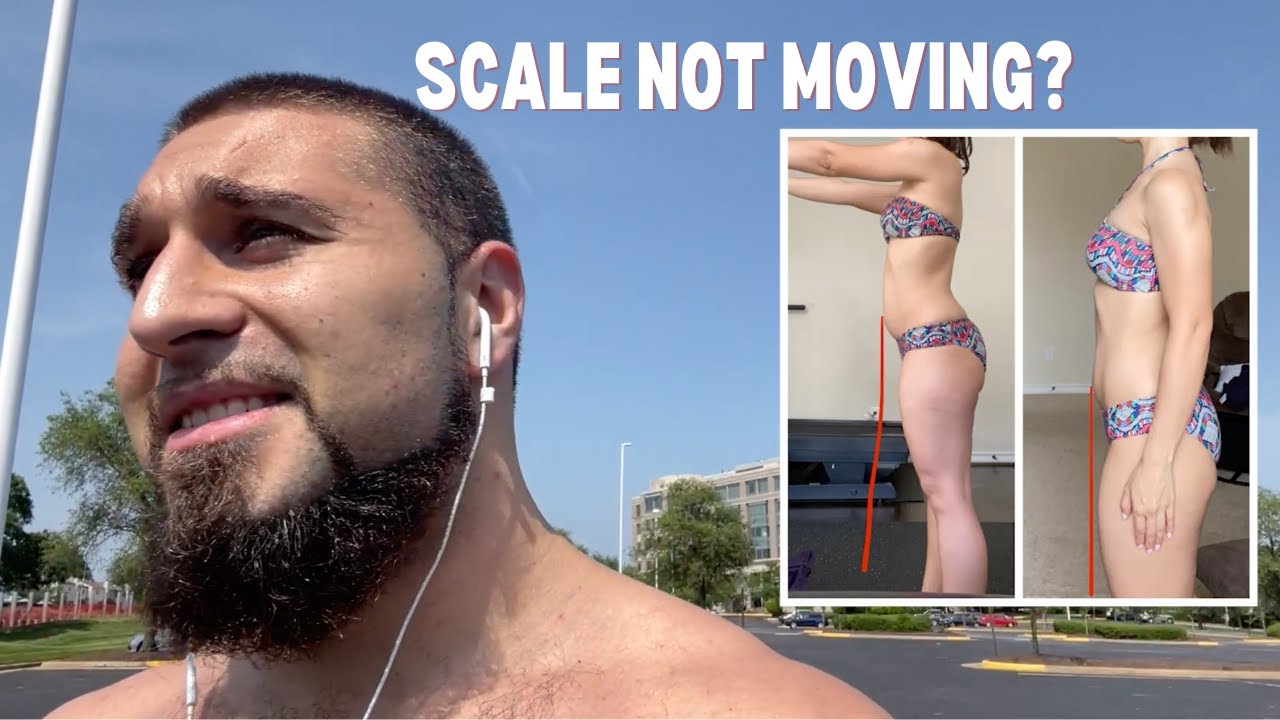
In this Walk‑and‑Talk vlog, Eric Roberts explains why many people see their clothes fitting looser and measurements shrinking while the number on the bathroom scale stays the same. He emphasizes that the scale is a fickle metric and that true progress should be tracked with tape‑measure measurements, progress photos, and how garments feel. Roberts clarifies the difference between fat loss and weight loss, describing body recomposition—simultaneously losing fat and gaining muscle—as the most challenging yet rewarding goal. He debunks the myth that muscle “weighs more” than fat, explaining that a pound of muscle and a pound of fat weigh the same, but muscle is denser, so it occupies less volume. He outlines physiological factors that can mask scale changes: increased muscle glycogen (which stores water), post‑workout inflammation (also water‑retentive), and the natural water weight fluctuations that accompany strength training. Roberts advises viewers to adopt a structured strength‑training program, maintain a calorie deficit with high protein, and record three key body measurements (stomach, hips/glutes, quads) every two weeks on the same day. He stresses the importance of mindset—celebrating body‑recomposition progress, using visual evidence, and not letting the scale dictate self‑worth—to prevent discouragement and dropout. The video concludes with a call to action to like, subscribe, and continue the journey.
Chapters
What is going on, guys? Welcome back to another Walk and Talk with E. Hope you're doing super well. In this Walk and Talk, we are going to be talking about what is going on, what should you do if you are— if your clothes are fitting differently but you're not seeing the scale go down. Let's say again, your clothes, your pants are fitting looser, your dress is fitting better, your shirts are fitting better. If you are taking measurements, which I can start this off by saying this, If you're not taking measurements, then I have— after this video, if you're not taking measurements, I have no sympathy for you because you need to be tracking more than just the scale. The scale is the most fickle way to track your fat loss progress. And remember, there is a difference between fat loss and weight loss. Fat loss, you can lose fat without necessarily losing weight On the scale. And actually, it happens all the time, and we're going to talk about why in this video. So if you're just tracking the scale, that is the worst way to go about what you're doing right now. So that's number one. So after this video, if you are not already, you're going to go get a measuring tape. You're going to measure your stomach, you're going to measure your glutes/hips, and you're going to measure your quads. You're going to get those 3 measurements, and you're going to take new ones every 2 weeks on the same day. That is going to be your new routine, okay? So that's number 1. Number 2, let's talk about why you might be losing inches, clothes fitting differently, but the scale isn't going down. This can happen for a few reasons. Number 1, you are losing fat and building muscle at the same time. So let's remember, a pound— I hear this all the time— muscle weighs more than fat. That's why I'm not losing weight. No, muscle doesn't weigh more than fat. Muscle weighs the same as fat. A pound of fat weighs the same as a pound of muscle. What? Muscle, just like a pound of bricks weighs the same as a pound of feathers. The composition is different, and in this case, muscle is more dense than fat, so it takes up less space on your body. And again, this is why— let's say you lose 3 pounds of fat and you gain 3 pounds of muscle. Let's just say that the scale ain't changing, honey. It ain't changing at all. That scale is going to stay the exact same. But this is where, again, since muscle is more dense than fat, your measurements are going to go down, your clothes are going to fit different, but that scale isn't going to move. And this is especially, you know, if you are— I get a lot of clients who come to me all over the world who are primarily started with like a HIIT background slash like P90X or Zumba or just like random YouTube. You see that branch, man? Random YouTube videos or stuff like that, which again, it's better than nothing. But there's a big difference between exercising and following like a real structured strength training program. Those are 2 fundamentally different things. Okay? So if you are new, it's like to not just lifting weights, yes, lifting weights, but like also following a real program, then you are going to body recomp, which body recomp is— What's that? The pinnacle of fitness. It's the hardest thing to do. Body recomp. Lose fat and build muscle at the same time. It's the hardest fucking thing to do. Which, again, if you're doing that right now, you should be incredibly proud of yourself. I don't know which way I wanna go here on this walk. I'll take a right. You should be incredibly proud of yourself because, again, that's like the hardest thing to do is body recomp. So if you're doing that, fucking, you should be really proud of yourself. Huge fucking congrats to you because that's fucking awesome. So that's number one. That's what you're doing right now. Number 2, when it comes to like why the scale might not be going down— actually, I'm sorry, I want to finish that thought. If you're new to strength training, you're gonna build muscle at a much more faster rate, right? And if you're in a calorie deficit, you will lose body fat. So those 2 things can happen simultaneously— lose fat, build muscle at the same time. This lighting sucks. Maybe I'll walk backwards. You can lose fat and build muscle at the same time. Now, the second thing is when you're on a strength training program and you're eating high protein, what can happen is when you work out, you literally tear your muscle fibers apart. It sounds crazy, that's what you do. You tear your muscle fibers apart, which is good though because you need this to change your body, right? But what comes with this tearing your muscle fibers apart? 2 things. Number one, when you start strength training, your, your muscles are going to have more muscle glycogen, which muscle glycogen is just Basically, you have more fuel basically in your muscles, and this will help your muscles recover and also perform better. So this is gonna help you grow stronger, more defined muscles. That is a good thing. Make sure I don't hit that thing right there. This is a good thing, right? 'Cause you want this. You want to grow stronger, more defined muscles 'cause you wanna change the way your body looks. Because going back to what we talked about earlier, it's not just about weight loss, it's about fat loss, right? So that's how you change the way your body looks is you lose fat and you build muscle. And by the way, you can't like— I've heard this too— you can't like replace muscle with fat. That's not how that works. You lose fat and you build muscle. You don't replace one or the other. Um, so that's a random topic, but so this muscle glycogen, right? Back to the point. Muscle glycogen. This is going to store some water weight. Okay? So it's natural. It is what it is. And it's not a bad thing. It's a good thing because again, this is what's going to lead to your body changing the way it looks, which again. I'm pretty sure you don't necessarily care so much about the number on the scale. You care about looking good naked. That's what you care about, right? So this is gonna help you with that. But in the short term, especially earlier on, you're going to kind of store some water weight, which can almost like mask your fat loss progress in a sense because the scale wouldn't go down. It's not gonna mask your progress in terms of like, you're still gonna see amazing progress 'cause you're still gonna be losing body fat, which you'll know from your measurements and your progress pictures. But in the short term, that the scale might not move that much because of this muscle glycogen. So that's number one. Number 2, again, I talked about your muscles literally tear apart. So how do they get repaired? Because if you just tear them down and don't repair them, then you're not gonna change your body either. So how they get repaired is your body has to send inflammation to your muscles. Think about when somebody sprains their ankle, their ankle swells up really bad, it gets inflamed. This helps, this is the recovery process. Your body is sending signals to your ankle to push nutrients, get bad nutrients out, push good nutrients in, so on and so forth, right? So that's what's going on, inflammation. But with inflammation comes water weight. So again, especially when you're new to training, but also like if you have a really hard strength training session, like you're really sore, so on and so forth, your body's gonna store some extra water weight, which again, it's not a bad thing because your body needs this in order to have that recovery process to change the way your body looks. But again, in the short term, that is going to lead to some extra water weight in the short term, which again can like mask weight weight loss, fat loss progress, because in the short term the scale wouldn't go down. But with both those things, as long as you consistently stick to your calorie deficit, you're going to keep losing body fat. And again, whatever part of journey you're in, if you're watching this, you're probably body recomping, losing fat, building muscle at the same time. You're going to keep doing that. It's just that scale is going to be fickle. So you cannot spend that much time on it, man. You can't spend that much effort on it because it's not going to tell you the entire story. I'm going to put a video here. I'm going to put a picture here of one of my online coaching clients. And as you can see in these 2 pictures, she looks insanely different, right? Like, she looks amazing. Stomach's down, shoulders look awesome, arms look awesome. I think she actually gained a pound or 2 during this time. Yeah, I'm pretty sure she gained a pound or 2 during this time, which goes to show it's not all about the fucking scale, man. You have to stop letting the scale dictate and run your life. And it is right now because you're letting it. Whether it's because— And you're probably letting it because you're not you're not tracking your measurements and you're not taking progress pictures. Like, I can't tell you how many clients I've had who we've taken progress pictures and like they look completely different and they're like, wow, not gonna lie, I thought I wasn't making any progress. I thought I was fucking, you know, doing shitty. I thought I wasn't seeing any progress. I was doing things wrong. I was thinking of quitting. And like they see the picture side by side, they're like, holy shit, like you just blew my fucking mind. If you don't have that though, And you're not tracking other forms of data, you're gonna go down that path of like, I'm not making progress and I'm gonna quit and this isn't worth it. And so you got to be tracking other things than just the scale. But that's why you would be losing fat. I'm sorry, that's why you would not be losing weight but losing fat. You know, your clothes fit differently, the measurements are going down. That's why, because you're losing fat and building muscle at the same time. And for those other reasons when it comes to the scale not going down in the short term. And, uh, you know, again, like that individual I just showed you, she didn't have much weight to lose necessarily. But even if you do, let's say, let's say you have, you know, 50 pounds to lose or whatever it is, and I can put a picture of a different client here. Even if you have whatever it is, more weight to lose, numbers irrelevant, but more weight to lose. If your measurements are going down and your clothes are fitting differently and you're seeing change in your body, don't do anything differently. And you're not doing anything wrong. Like, People ask me all the time, like, what am I doing wrong, Eric? I'm like, your clothes are fitting differently. You're seeing change in your body. You're feeling better. You look better. You're not doing anything wrong. Like, everything I just listed is good. So you're not doing anything wrong and you don't need to change anything. Like, if again, if one of my clients is measurements consistently going down, going down, going down, looking better, looking better, I'm not changing dick. Like, I'm not changing anything. Because it's working and they need to keep going. And that's, again, I say it in— I guess it depends who it is, but I say it in a kind way. I'm like, listen, we're not changing anything because like what you're doing, you're killing it. Like you're absolutely crushing it. Like we're gonna keep going, but you don't need to do anything differently. You don't need to change anything. You're not doing anything wrong. It's actually the, again, the pinnacle of fitness is what you're doing right now. So I just walked back and forth in a fucking straight line. The lighting is so good, so I don't want to fuck it up. But that's why you are not losing weight on the scale, but you're losing inches, clothes are fitting differently, so on and so forth. So hope you enjoyed this walk and talk. Well, backwards walk and backwards talk. Um, I'm gonna turn around. See, the lighting sucks, man. I couldn't do it. I couldn't do it to you. So listen, hope you enjoyed this. If you did, please feel free to leave a thumbs up. Thumbs up. And subscribe to the channel? Yeah, subscribe to the channel. All right, cool. Talk soon.