Never Struggle With Motivation in 2026
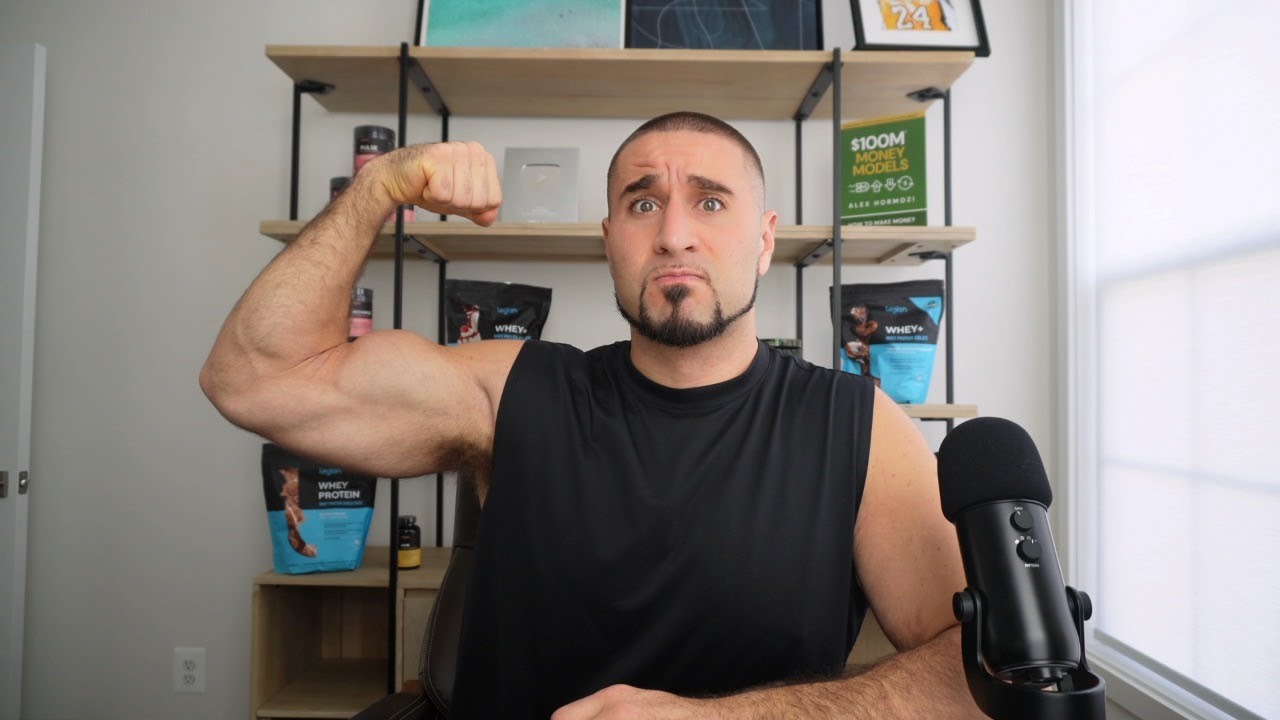
Fitness coach Eric Roberts outlines four pillars to maintain motivation through 2026: defined end programs (8-12 week blocks), dual-mirror visual cues (reminders of current and desired states), decision-fatigue elimination (pre-planned meals and workouts), and external accountability through coaches or groups.
Chapters
What is up, YouTube? Happy Saturday to you all. Hope you're having a great day thus far. Doing a little master class, hopefully, on motivation. Doing a masterclass on how to stay motivated, never struggle with motivation again in 2026. I'm gonna let Instagram know that we are officially live. Give me one second. Live on YouTube, talking all how to Never struggle with motivation again. There we go. What's up guys? What's up guys? What's up guys, YouTube? What's going on? Hope you guys are having a great Saturday thus far. I need to get this link so I can share it. If you guys want to share the live as well, please feel free to share the live as well. Let people know we're rocking and rolling here. So for those of you who are just joining, I'm going to be doing a live kind of like video, and then at the end I'll open it up for some Q&A if you have some questions on the information I'm going to be talking about in today's video. So stick around for that. And, um, yeah, let me get this uploaded here onto Instagram. Cool. All right. And by the way, guys, if you see me kind of just look off to the side, I have some notes that I have on my other screen that I would like to just make sure that I cover. And, uh, yeah, we'll get things rocking and rolling here. You can't find our podcast channel? Um, so my podcast is just Eric Roberts Fitness Podcast. If you go to Spotify, if you go to Apple iTunes Podcasts, and I actually do think we just got it on YouTube if I'm not mistaken. So, um, Yeah, we just got it live on YouTube not too— I think it was literally yesterday. Actually, I have it right here. Yep, the Eric Roberts Fitness Podcast. So if you see that right there, Eric Roberts Fitness Podcast, it's, uh, the videos are going to start uploading on YouTube ASAP, so be on the lookout for that. We're excited about that. Getting the video pods going. All right. Cool, guys. Well, like I said, I am going to do a video first about motivation and hopefully how you can never lose motivation ever again heading into 2026. And at the end, I will open it up for some Q&A if you just have general questions about fitness or if you have questions about the content that we're going to talk about in today's episode. episode. All right. So we're going to go ahead and get started. Let's rock and roll here. So I want to start right away with just saying, I know exactly who's going to watch this video. If you go hard for a couple of weeks and you're really dialed in, but then inevitably life happens, you fall off track, the honeymoon phase is over, and you find yourself struggling to get workouts in, Struggling to still count your calories and stick to your healthy diet, don't want to go outside and get your cardio, get your steps, get your walking in, this video is going to be for you. I'm going to give you some tactical advice on exactly what you can do to keep your motivation high even after the first initial couple of weeks wears off. So the first analogy that I want to hit you with is I think I heard this from Alex Hormozi. Maybe it was somebody else. I think it was him, but he was— somebody was saying, think about if I told you go run and you'd be like, okay, I can probably do that, but for how long? Is it half a mile? Is it a mile? Is it 10 miles? And I just said, just go run. You don't know when it's going to end. How awful does that sound? Running in and of itself sounds pretty bad, but how awful would that sound for you? Your brain quits, or at the very least struggles to keep going when there's not a finish line. And so the first tip that I have for you, and this is something that we do with our online coaching clients all the time, which is give yourself a defined And program. So what do I mean by this? Maybe you're somebody who has 50 pounds that you need to lose. You could say, well, I'm just going to keep going until I lose 50 pounds. For most people, that is not going to work because you're going to be too long of a period of time before you actually start to see progress because losing 50 pounds takes a long time. It might take you a year. So if you have no sort of end in sight for a year, for most people, that's a very long time. So I like to get set up with maybe something like an 8-week, a 12-week, a 16-week program. That way you can kind of see the light at the end of the tunnel. You've probably heard this analogy before, but the other analogy I like to use is you can see the top of the mountain. Because your fitness journey is going to be a climb up the mountain. Once you get to the top, it's really cool, but you got to climb up to get there first. But if you don't even see the top, most people won't even start the climb. And if they do, they'll take a couple of steps and be like, no chance I'm doing this, and they'll go back down. So the first tip for you is to create a defined end program. Give yourself some sort of finish line. This doesn't mean everything's going to stop after 12 weeks, but it does mean you just give yourself a block of time to be consistent, to dial it in, to push yourself hard, and then you reassess. If you have 50 pounds you need to lose, you might not lose all 50 pounds in those 12 weeks, but in those 12 weeks, you would be more consistent amongst those versus if you just said, I'm just going to keep going until I lose all the 50 pounds. So that's the first part of not struggling to have motivation because when you have a defined end, your brain can actually fixate on the defined end and it will keep you motivated because when you're in week 5 of a 12-week program, you can at least say, I got 7 weeks left, right? For example, right now, some of you may have seen, I am doing my own calorie deficit journey. And it's a 10-week calorie deficit. So when I get to week 3, week 4, week 5, week 6, if I have a day where I'm like, I don't feel like tracking calories or I don't feel like sticking to this today, I'm going to tell myself, dude, you only have 4 weeks left. It's not that big of a deal. You can push through. Whereas if you don't have that defined end, you'll probably just say, well, I'm going to have to keep doing this forever. So what's one day off? What's 3 days off? What's a week off? And you just start to spiral and that's when you quit. Define end program. Okay? Now, the second thing that you can do to never struggle with motivation again is every day find a way to look at your current state and look at your future. state. So let me explain what this means. And this might sound harsh, but I still think you should do it because we've done this with some of our online coaching clients and it's worked incredibly well. Whether it's the screensaver on your phone, whether it's the first picture that you see when you open your phone, whether it's a picture on your bathroom mirror, you need to have something in front of you every day that reminds you where you're currently at or where you started from. Why? Because if you're 50 pounds overweight right now watching this, you don't like where you're at. You don't like how you feel. You don't like the energy you have during your day. You don't like the lack of self-confidence and the lack of self-belief in yourself that you have every day. And I need you to remember that day after day after day because That's why you started in the first place. That's what got your motivation in the first place. Because quite frankly, we as humans don't act until something is so uncomfortable that we can't bear it. Think about if you're outside in the middle of summer in the Sahara Desert, you're going to find a way. It's so uncomfortable. You're going to find a way to go get some water, to go find somewhere cool. Same thing in the winter. If it's the middle of winter in Antarctica, it's so uncomfortable, you're going to find something to do to change that environment, to change how you feel. So when you get started, because you are uncomfortable with where you're at, if you can remember that feeling every single day, every single day, you'll at least have a sliver of that motivation that got you started in the first place. So when you have a Friday, a Saturday, a Sunday where you say, well, I don't feel like it. I had a really long week. I'm just going to go out to eat. I'm going to go out to drink. I'm not going to care about my calories. You pull up your progress pictures and you're like, nope, I'm sticking to my fucking calories today. Nope, I'm going outside to get my walk today because you didn't like where you were at, which is why you started. You have to find a way to remind yourself and visually see that every single day to keep that motivation spark going. And it's the same thing flip side. It's not only reminding yourself of what you don't like, but it also is reminding yourself of what you do like and what you do want to get to and where you do want to be. So find a way— screensaver on your phone, some sort of thing you write down every day. I have a whiteboard on my wall over here. Find a way to remind yourself of the future you. What is it going to look like when you lose the 50 pounds? What is it going to look like when you actually finally stay consistent for once in your life? What is it going to look like when you can go up and down the stairs and play with your kids without being out of breath? What is it going to look like when you can go shop for clothes and you actually like it and enjoy it and you don't hide from the mirror? Remind yourself of where you currently are and where you started and remind yourself of where you want to be. When you feel these kind of polar opposite emotions, it will be much harder to not be motivated to do the things you know you need to do. It's just the day-to-day life usually beats people down. You have work, you have kids, you have social events going on. It's the holidays. You got to deal with that. A lot of these things pull you away from why you got started and why you wanted to change in the first place. So you need to intentionally remind yourself and put these things in front of you to be able to keep that motivational flame going. Does that make sense? Cool. So that is the second tactical concept you can take with you. I like the screensaver on the phone or something in the bathroom because those 2 things you see every single day and it forces you to do it. Even if it makes you a little bit uncomfortable, you have to do it. So that's number 2. Number 3, what I kind of call the decision fatigue killer. And this concept is, like I said, day to day, you have so many decisions that you have to make. And if you leave your nutrition, your workouts, How you're going to get your steps, how you're going to stay on track over the weekend. If you leave these things up for debate and you don't make the decision beforehand, you're going to get to the time of making the decision and just say, fuck it. How many people watching this, you get to 5:00 PM, 6:00 PM on a Thursday afternoon, you've been at work all week, you've been at work all day, you're tired, you're Your kids are driving you crazy. You got pissed off at work. You get to dinner time and you're like, what am I gonna eat? And then you say, who cares? I'm just gonna order something. I'm gonna order DoorDash. I'm gonna order out to eat because you don't want to make the decision. If the decision was already made and you already knew exactly what you were gonna eat, the food was at least laid out. You know you have the food in the house. You know how long it's going to take. You know how many calories and macros that it's going to be. You know that it's going to fit into your calories for the day. How much different of a place would you be in if that was the case? And do you think if that was the case, you would stay more on track and you would be more motivated to stay on track or less? I think we can both agree it's more. So the more that you can take out the The decision-making, the more you are going to be motivated to make the right decision. And this goes for workouts as well. If you get to the— if you know you get to the end of the day and you're tired and exhausted and you don't want to leave the house, it gets dark early, but you're still going to try to get a workout in, that might not be working for you anymore. You may need to make the decision to move your workouts to the weekends. where you have a bit more time on your hands. This is a hack that we've done with a lot of our online coaching clients. Saturday and Sunday, people typically have a little bit more free time. So in the mornings of those weekends, you don't even have to wake up that much earlier, but wake up a little bit earlier and just knock out your workout. That way you get 2 days out of the week to get your workouts in. And we have a lot of our clients who will work out Saturday, Sunday, and then all they need is just one day during the week. They need to get one workout in during the week as opposed to all 3 or all 4 during the week. But if you make that decision ahead of time, you plan ahead of time, you already know what workouts you're doing. You know what time it is. You know what days of the week, what time you're waking up. It takes the decision fatigue out. Remember this, The more decisions you need to make, the less motivated you are going to be. So whatever you can do to take out those decisions is critical. And point number 4 that I want to talk to you about is getting some form of accountability, something besides yourself. Think about how easy is it for you to kind of wiggle your way out or talk your way out of doing something if it's Only you. And this is for fitness. This is for your nutrition. Oh, you know, I know I should stay on track with my diet, but nobody's gonna know. It's just me. I'm not having to report to anybody. I'm not in some sort of challenge. I'm not going back and forth with my coworkers. It's just you. It's so much easier to fuck off. And even if we talk about work, if let's say you had nobody to bring a project to or nobody to report to or nothing due by a certain time, How much harder would it be for you, do you think, to get your work done and be productive and complete tasks and complete projects? There's no end date. There's nothing due. No time it's due by. There's nobody else checking in, making sure it got done. There's nothing else that's relying on you. It's much easier to just kind of fall off and kind of creep back into the shadows with your health and fitness. And this is what a lot of people do. When they start to kind of lose motivation, they stop taking the actions, they stop staying on track, and they just kind of like slowly wean themselves back of being accountable to anything anymore. And that's when you start to get people falling off. That's when you get people quitting. That's when you get yourself thinking, well, I've already ruined all of my progress. Why keep going at this point? I might as well just stay off track. And then you stay off track until You feel like shit again about yourself until you take a picture and you hate how you look again until you hide from another family picture and you start up again. You have a motivation for a couple of weeks and this cycle continues to repeat itself over and over. So you got to get some sort of accountability. Willpower is not enough. Discipline is not enough. And if you would like to keep going at it on your own with just trying to do all the willpower you can, It's your life. It's not mine. You can do whatever you'd like. But how has that worked out for you thus far? How has trying on your own worked out for you thus far? You got to get some sort of accountability so you stop breaking promises to yourself, even if it's just in the short term. I was talking to one of our clients about this on our podcast recently that'll be out this upcoming week. Her name is Niraja. She's incredible. She's lost over 30 pounds. She's a grad student. She's really busy. And she talked about how because her coach was there checking in, caring about her, holding her accountable, she wanted to show up for her coach. But eventually that has turned into because she got in the habit of showing up even when she didn't want to, she's now starting to show up for herself. She wants to build these habits for herself. She wants to take care of herself now. But at first she needed, really needed that external accountability to get her going and to get these habits built. And so whether it's signing up for our one-on-one coaching, you can click the link in the description below if you'd like to learn more. Whether it's starting some sort of collaboration at work, whether it's posting on social media, I don't really care what it is. I know what works because this is what I do for a living, but you need to get some sort of extra accountability. Do not keep trying on your own. Okay, cool. All right, guys, those were the 4 main points that I wanted to cover for keeping your motivation as you go into 2026. And so just a quick recap, the reason you're starting and stopping is your lack of motivation, but you don't have systems in place to fix your motivation that you can call upon at any time. So point number 1, you need a defined end. You wouldn't just get on the treadmill or go start to run outside without knowing how long you were going to do it for. You need to have something that says, I'm doing this for 8 weeks. I'm doing this for 12 weeks. This is going to be until May. I'm going to lose the first 10 pounds, whatever it is. You'd have some sort of finish line. And you can also think of it like the mountaintop. You're going to have to climb the mountain, but there's going to be a reward at the top, but at least you see it. So that's number 1. Number 2, using the 2 mirrors. And so you have to remind yourself of where you started, where you currently are, how bad you felt, How uncomfortable you felt, put yourself back in that stage so you can remember what that feels like, and that will trigger the motivation for you. And you also have to look in the mirror of your future. What is it gonna look like when you lose the weight? What is it gonna look like when you can actually shop for clothes that you enjoy? What is it gonna look like when you go on your next beach vacation? You can actually wear a bathing suit that you wanna wear. Remind yourself of those things. And those 2 things combined, when you don't feel like tracking your calories, those 2 things polar together will make you track your calories. So that's point number 2. Point number 3, remove the decision fatigue. Make as many decisions as you possibly can before the time to actually make the decision. So don't get into your week and think, well, I need to do 3 workouts this week and it's already Wednesday. When am I going to do them? On Sunday, you should have already planned out what days you were working out, what time of the day was going to work out, what are you doing in those workouts? All of that should be already taken care of. That's how our one-on-one clients get successful. They don't have to think about anything. They just show up and they know exactly what to do. You shouldn't have to think about, is this meal going to fit within my calories today? You should try to pre-track that the night before. You should try to think about what are my dinners I'm going to have this week. If you're going out to eat on a certain day, you should be able to say, this is what I'm eating before I go out to eat, and I've looked ahead at the menu in the restaurant, and I'm going to guesstimate my calories for this meal that I'm going to have. All of that decision-making should already be taken care of. So it's point number 3, because that will motivate you to stick with it as well, because you've put more effort into it. We have this sunk cost fallacy. If you've heard what that is, if you've already put a lot of work, effort, time, energy into something, you want to see it through. So if you take the time before to plan, to look ahead at the menu, to plan your workouts, to plan what time you're doing them, you've already put in more effort and that's going to cause you to want to follow through with it. And then point number 4, getting accountability. You got to get some form of external accountability, hiring a coach, Getting a group with your coworkers, posting on your social media, something that's making it not just you. Because in those moments where you don't want to stay on track and you don't want to push yourself and you don't want to go get that extra workout, you need to have something other than yourself, somebody relying on you for you to actually show up, because that will motivate you to push past what you even may want for yourself at times. For any of those of you who have been on a sports team or even just on any sort of team, what do you want to do? You want the team to win. You want to be a contributing member to that team. You want to win with that team. So that motivates you to put in more effort than you would have if it was just yourself. Okay? So those are the 4 main pillars. To keep your motivation high heading into 2026. And again, if you're like, Eric, you're the man, you're really handsome. Thank you so much. And I would like to work with your team one-on-one. You can click the link in the show notes in the description of this video to learn more about our one-on-one online coaching program. It's a very easy weekly payment. I don't do like you get signed up for $7,000 fucking dollars. It's a weekly payment to get signed up. It's It's very simple. So you can click the link in the description to learn more. Cool. All right. I feel like that was fucking good. I don't know. Maybe it wasn't fucking good, but I feel like that was good. All right, guys. I hope you enjoyed that video and I'll do some Q&A really quickly. So if you guys have any questions, I'll take a couple of questions live right now. I am on a schedule here, but I do have some time for some questions. So Let me know if you enjoyed that. Let me know if you have any questions down below and we'll start rocking and rolling. Christine says the 6-week window when you start weight loss. Christine, I apologize. I do not know what that question is. And so maybe if you could reword it, that would be super helpful. What's up, Annalise? How are you? Should the muscles be sore after a workout? Soreness doesn't really indicate whether you've Built muscle or not built muscle. On a scale of 1 to 10, you might be like a 3 to a 7 out of soreness. Typically when you start a new workout program, you'll be a bit more sore. And that's just because your body doesn't really know the movements. And so it's going to kind of work your muscles in different ways and you kind of do different exercises at different times. So when you start a new program, you might be a bit more sore than normal, but that doesn't mean you're making more progress as long as you are lifting heavier weight or doing more reps over time. That is the only real way to build muscle. So I would track your progress via that versus am I sore or not? Hi, Eric. Is the food app in the Clubhouse suitable for UK foods as in brands? Also, can Fitbit be connected to your app? On the verge of joining the Clubhouse. Thanks. Amira, well, we would love to have you inside of the Clubhouse and I want to be very honest with you as I always am with any of my, any of the businesses that I run. So the food scanner, it works with some UK foods, not all. I'm gonna be very honest with you. That being said, if you do just scan the barcode, actually I can show you if I open up my app right now. If you do just scan the barcode, it will save the food. So if you eat a lot of the normal regular foods, then you'll just have those saved in your app. So like, for example, recently I have been ordering a bunch of like a meal prep company. And so when I scan their meals, they're not in the database. But what I do is, and hopefully you can see this, what I do is I just like track it and I save it. So you can see I have all these meals there from Mighty Meals. I just have those saved in my app. And so now when I reorder those meals, I can just go in here and easily track it. So you can add foods and it will save it in your database. And the second part was, can Fitbit be connected? Yeah. So if you connect Fitbit to your phone, so if let's say you have an iPhone, if you connect the Fitbit app to your Apple Health, then yes, it'll be able to be connected with our app. So yeah. And like I said, we'd love to have you inside of the clubhouse. All right, let's go. Let's go. How do I do a mini cut? A mini cut is just a calorie deficit. So that's really it. It's just a shorter amount of time. So a mini cut is typically 8 to 12 weeks versus when somebody has 50 pounds to lose, they would need to be on a calorie deficit for much longer than that. But a mini cut is a great way to do what we talked about in the live that I just did, which is kind of give yourself a defined end program. How much water should a person drink per day? Does water help with weight loss? Drinking water, of course, helps with weight loss, not from like a fat-burning perspective, but when you're properly hydrated, you're going to have less cravings and less hunger, and you'll have just more water in your stomach, which makes you more full. Both of those things will help you stick to your calorie deficit better. And typically the general range is half of your body weight in ounces of water per day. So if you weigh 200 pounds, you would try to drink 100 ounces of water. That being said, like with anything else, I would just start tracking your water intake and try to improve from there. So like, for example, in my app that I built, hopefully you can see this, we track our water intake. So today I'm at 64 ounces of water. And my goal is 125. So I would just start tracking your water and then just try to improve from there. So if you're at 60 per day, go to 70 or 75 per day. If you're at 50, go to 60. So that goes with anything really. Do I have to work out for 40 minutes 3 to 4 times a week or can it be 20 minutes with 4 times different exercises? I don't know exactly what your goals are. So that would kind of depend on your goals. Typically, you're not going to get a ton done in a 20-minute workout. That being said, you may not want to get a ton done and you may not want to build a ton of muscle. Maybe you just kind of want to build a little bit of strength and stay active and maybe you don't want to really change your physique that much. So it would depend, but typically a 20-minute workout, it's better than nothing for sure, but it's not going to drastically change your body. Started at 290. I hit 3 to 4 times a week. I lost no weight, but I kept motivation. Let's go. Congratulations, brother. Now I'm rolling. Congratulations, dude. Down to 263. Let's go. Let's go. Let's go. Let's go. If I can lose weight quicker than 1 to 2 pounds per week, it doesn't feel like I'm depriving myself. Are there any concerns besides the risk of falling off and binge eating? Losing muscle would be a concern. That being said, you're 263. I'm not sure how tall you are because that would make a big difference. But if you have a lot of weight to lose, you might lose more than 1 to 2 pounds 1 to 2 pounds per week in the beginning, but eventually that should start to level off and you should start to be around that 1 to 2 pound per week mark because typically speaking more than that, you're going to lose muscle mass. It's very hard to lose 3, 4, 5 pounds per week of pure body fat. It's just not, that's just not going to happen. So you would typically end up losing muscle. How much dietary fat is needed in a day? Typically, you would take your current body weight and you multiply that between 0.3 and 0.4. So let's, let's do some math while we're here. If you weigh 170 pounds, 170 times 0.3 is 51, and 170 times 0.4 is 68. So you would eat between 50 and 70 grams of fat per day. You're welcome, Marwa. I've been eating chicken breast, veggies, and rice for 3 years. I lost over 80 pounds, but my hair is thinning bad. Yeah. So a calorie deficit is going to make your hair fall out a little bit. So that's number one. But number two, what it sounds like, you're not getting enough nutrients if you're only eating chicken breast, veggies, and rice. You're missing out on a lot of vitamins and minerals that are essential for hair health, essential for energy production. Honestly, I'm surprised that it's not worse at this point. So I would definitely start to incorporate some different foods. I would incorporate some red meat. I would incorporate some eggs. I would incorporate some Greek yogurt. I would incorporate some potatoes. I would start eating some different foods. For sure. Like, yeah, I'm trying to think if you were our client, what would be the first thing I would do? We would probably start to work in some different, one different protein source and one different carbohydrate source. And if I had to give you one, it would probably be eggs and potatoes. I would work in those 2 things. And by the way, if there's anybody watching and you're like, wow, Eric, you're awesome. And I want to work with you guys as a client, you can click the link in the description of the video. To learn more about our online coaching. Your videos motivated me to lose weight. I've lost 25 pounds since March. Congratulations, my friend. That's incredible. Thanks for answering my questions. That's made up my mind. I am joining. Let's fucking go. That makes me super happy, Amira. You can actually, I don't know if the link is in, link is in my bio or not, but if you go to my YouTube page and just click on that, it should be there. Or you can just head to erf clubhouse.com and you can join there as well. So we'd love to have you. All right. And I'm super glad you're joining. Let's fucking go. Thank you for that. That really means the world to me. All the way from UK. Damn, that's just so cool. That makes me really happy. Okay. A couple last questions. Are there some signs we can watch for starting the second month of weight loss? No real— I apologize. I don't understand the exact question, but No, no real signs. I would just look at your progress. So, okay, I'll use the example if you were our client. Every month for our clients, we look over their daily weigh-ins. We look over their measurements they take every 2 weeks. We look over their progress pictures that they take every 4 weeks. And we look over their workouts that they do every single week. So every month we kind of look over all these things and we assess and we say, okay, Is our body weight trending in the right direction? Your body weight's going to fluctuate, but is it trending in the right direction? Are you slowly over time losing fat? Are your measurements trending in the right direction? Are you slowly losing fat in your measurements and your measurements are going down slowly over time? Are your progress pictures side by side looking different? Are we getting stronger in our workouts and hitting PRs in our workouts? So we look over all these things. And if yes, awesome. We're going to keep the plan going. We're going to keep rocking and rolling. If the answer is no, that's okay. And this is where a lot of people, I think a lot of people freak out when this happens because they don't know what to adjust. But for us as coaches, when we look over this data, if let's say your body weight isn't trending down, for us, that's not like a panic. It's just like, okay, we have to make some adjustments. Maybe we lower calories. Maybe we stop going out to eat so much. Maybe we get more accurate with our tracking. Maybe we have to add an extra cardio. There's just adjustments that would need to be made. So you have to look over all these things. If you're going to do it on your own, you have to look over all these things and you have to assess these things and you have to make the adjustments necessary to be able to continue making progress. And I'll be honest, most people just don't know how to do that. So again, if you're interested in coaching, You can click the link in the description below. Can you lose fat and gain muscle for a woman over 40? Of course. What the fuck are we talking about? 40 is fucking young. Who the fuck is this? This is you. 40 is young. Come on. 40 is not old. Yes, you absolutely can. A couple of things here. Really, 40 is young. I don't know how else to say that. 40 is young. I'm only 29, so I'm a baby. But 40 is young as fuck. So you can absolutely still build muscle. We coach so many ladies. If you click the link in the description below, you'll see some of our clients that we've worked with and their transformation pictures. They're in their 30s, 40s, 50s, 60s, 70s. We have multiple clients who are in their 70s and they're losing fat and building muscle at the same time. The age truly is just a number as long as You're on a proper strength training program, as long as you're eating enough protein and your calories are where they need to be, as long as you're prioritizing your recovery and making sure that you can recover from your workouts. Because in your 40s, for a woman, I'm not naive. I understand there's things like perimenopause going on. So it may make it harder. There may be more challenges that come along with it as you get older, but it's Certainly not impossible. It just makes it even more important that you're following a structured science-backed plan. Just the days of going into the gym or going into your workouts and just doing random workouts is not going to work anymore because it's harder. There's more challenges. It's harder to recover. So you have to make sure, I don't know exactly what's going on, but I would get on a plan, get on our plan, get on a strength training plan. I have a free strength training plan you can download. Yes, you can absolutely see results. Your age is not a limiting factor. And if you— I'm not trying to be mean here, but if you think it is, go listen to my podcast, the Eric Roberts Fitness Podcast. I'm going to pull it up right now just so you guys can see it. But we have so many. I have almost 1,000 fucking episodes on my podcast, by the way. But we have so many podcasts with our clients. There's going to be one coming out on Monday. We have so many podcasts with our clients who are in their 40s, 50s, 60s, 70s. For example, Holly. You see this? The title of this says, How Holly Lost 100 Pounds and Found Herself Again. Holly is a client of ours, actually Amira. She's in the Clubhouse. So there you go. Holly's in the Clubhouse. She's in her late 30s, early 40s. I forget her exact age. She's lost 100 pounds, more than that because that podcast was like a month ago. She's lost more than that. One of our clients, Kathleen, I think I can pull up her progress pictures really quickly. This is really good because this one gets all the people who think they can't ever make progress. It gets them out of the way. Kathleen here is 53. She's lost over 110 pounds. Okay? So, Yeah, it's more than possible. You just got to get on a good plan. And lucky for you, I happen to know somebody who has a pretty good plan that you could get on. If you've been watching this live and you're like, this guy Eric's pretty cool, I want him to help me, I, I want to stop feeling frustrated, I want to stay consistent, I want to get back on track, I want to finally start losing the weight, click the link in the description of this video to learn more about my online coaching program. I've dedicated my entire life to this. If you can't tell by the amount of content that I put out, this is all I do. It's a Saturday at 1 PM for me. I've been working all morning. I'll work the rest of the day because I love doing this. I love helping you guys. And you know what? 98% of you are not going to fucking sign up. And guess what? I still love you. I still appreciate you. And I'm still going to be here to help however I possibly can. So if you're in the 2% and you want to take the next step forward, click the link in the description below. And if you're in the 98%, I love you. I appreciate you. Hope you have a great rest of your weekend and we will chat very soon. Okay.










